






OSAGYEFO NEWSLETTER MAGAZINE
SPECIAL POLITICAL COMMENTARY
| 📅 SAVE THE DATE | 🌐 READ EXCLUSIVELY AT |
| Friday, 23 October 2026 | assuptagh.live |









https://www.instagram.com/hairsenta?utm_source=ig_web_button_share_sheet&cplk=ZDNlZDc0MzIxNw==
Elevate Your Crown with The Hair Senta
Why settle for “good enough” when you can wear the gold standard? At The Hair Senta, we don’t just sell hair; we deliver the confidence that comes with knowing your look is flawless, authentic, and built to last.
Based in the heart of Accra and shipping globally, we’ve turned the art of human hair extensions into a world-class experience.
Why the World Chooses Hair Senta
- Actual Proof of Quality: No filters needed. Our extensions are sourced for longevity, natural luster, and a seamless blend. Whether it’s raw or virgin hair, the quality is visible in every strand.
- The Confidence Factor: We believe your hair is your power. Our pieces are designed to give you that “just stepped out of the salon” feeling every single day.
- Unbeatable Value: Luxury shouldn’t be out of reach. We offer premium, trademarked quality at prices that respect your investment.
- Global Reach, Local Roots: From our flagship in Ghana to doorsteps in London, New York, and beyond—we bring the best of West African hair retail to the world.
Ready to Transform Your Look?
| Feature | What You Get |
| Origin | Premium Sourcing |
| Shipping | Worldwide Delivery |
| Location | 24 Jungle Avenue, Accra, Ghana |
| Status | Trademarked Excellence |
Get in Touch Today
Don’t wait for your best hair day—create it.
Visit Us:www.hairsenta.com
Call/WhatsApp: (+233) 0544354455 / 0248629769
In-Store: 24 Jungle Avenue, Accra, Ghana
“Your hair is the crown you never take off. Make sure it shines.
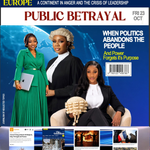
EUROPE: A CONTINENT IN ANGER AND THE CRISIS OF LEADERSHIP
PUBLIC BETRAYAL
When Politics Abandons the People, and Power Forgets Its Purpose
Featuring Global Perspectives:

- 🎙️ Cookieteegh — Host
Cookieteegh is a broadcast journalist and host. Real name: Shirley E. F. Tibilla. Ghanaian television and radio presenter, actress, and media personality. Known for: Her work with TV3 Ghana and the New Day morning show. Other role: In May 2025, she was appointed CEO of Nineteen57 Events.

- ⚖️ Serwaa Amihere-Esq. — is a Ghanaian broadcast journalist, television presenter, lawyer, entrepreneur, and philanthropist. She is known for her work with GHOne TV and her presence in Ghana’s media industry.

- ⚖️ Assumpta Gahutu-Esq. — Namibia
Assumpta Gahutu is a lawyer who holds a Bachelor of Laws (LLB) degree. She is widely recognised for her public profile and business ventures rather than active courtroom practice.
OVERVIEW: A CONTINENT AT A CROSSROADS
Across Europe, mounting frustration over the cost of living, housing affordability, economic inequality and declining trust in political institutions has intensified questions about the future of democratic leadership.
From France and Italy to Belgium, Portugal and Albania, societies across Europe are confronting their own political and economic tensions. These developments do not represent one uniform continental crisis, but together they invite a fundamental question: Why are so many citizens losing confidence in the institutions entrusted with their future?
At the centre of this debate lies a deeper examination of political responsibility. The image of French President Emmanuel Macron amid headlines of national anger offers a starting point for a wider discussion about the distance between political authority and the lived experiences of ordinary people.
But to understand Europe’s present vulnerabilities, we must also look backwards.
For sixteen years, Angela Merkel, Germany’s chancellor from 2005 to 2021, was celebrated internationally as a symbol of European stability. Yet her record remains contested, particularly concerning migration, energy security and the eurozone debt crisis.
Did the policies pursued during her leadership strengthen Europe’s foundations, or did they leave structural vulnerabilities that subsequent governments would struggle to overcome?
This edition examines the relationship between political decisions and their long-term consequences—and asks whether stability without sufficient social justice, strategic independence and public accountability can truly endure.
KEY THEMES & STRUCTURAL ARGUMENTS
THE CRISIS OF LEADERSHIP
PUBLIC ANGER & PROTEST
MERKEL’S LEGACY& VULNERABILITIES
DEMOCRACY IN THE WORKPLACE
RENEWING THE SOCIAL CONTRACT
1. PUBLIC ANGER AND THE LIMITS OF PROTEST
When citizens lose faith, public anger becomes a warning.
- Public Anger as a Warning Sign: Frustration deepens when housing becomes unaffordable, purchasing power declines, public services struggle and citizens feel ignored by those who govern them.
- Protest vs. Destruction: Peaceful protest is a fundamental democratic right. Violence, arson and looting, however, can harm the very communities whose grievances deserve to be heard.
- Judging Leadership Beyond Order: Leadership is not measured solely by its ability to restore calm. It must also address the conditions that produce discontent.
- The European Question: Are governments listening to the people before frustration becomes a deeper crisis of democratic legitimacy?
2. ANGELA MERKEL’S LEGACY: THE POLICIES BEHIND EUROPE’S VULNERABILITIES
The Queen of Europe—or a symbol of stability whose foundations deserve closer examination?
Angela Merkel’s sixteen years as German chancellor shaped Europe’s response to some of its most consequential political and economic challenges. Her defenders credit her with preserving cooperation and stability through successive crises. Her critics argue that important policy choices left Germany and Europe exposed to risks that later became painfully apparent.
Three areas deserve particular scrutiny:
A. Migration: Humanitarian Responsibility and Integration
In 2015, during Europe’s refugee crisis, Merkel’s government adopted an approach that allowed many asylum seekers to enter and remain in Germany. Her statement, “Wir schaffen das”—“We can manage this”—became a defining expression of her response.
The debate that followed concerned border management, the capacity of public services, integration and the distribution of responsibility among EU member states. Critics argue that the response underestimated the practical and political challenges of large-scale migration. Others emphasise Germany’s humanitarian obligations and the complexity of the crisis.
The central question is whether European governments can reconcile humanitarian commitments with effective border management, successful integration and public confidence.
B. Energy Policy: Dependence on Russian Gas
Merkel’s government accelerated Germany’s nuclear phase-out following the Fukushima disaster while Germany continued to rely heavily on Russian natural gas. The Nord Stream pipelines deepened this energy relationship despite warnings from several Eastern European countries about the geopolitical risks.
Russia’s full-scale invasion of Ukraine in 2022 exposed the dangers of that dependence. The resulting disruption of energy supplies contributed to higher prices, pressure on households and difficulties for energy-intensive industries.
Critics question whether Germany’s leadership placed too much confidence in economic cooperation with Russia and insufficient emphasis on strategic independence.
C. Austerity: Economic Discipline and Social Consequences
During the eurozone debt crisis, Merkel’s government strongly supported fiscal discipline and conditions attached to financial assistance. Greece and other countries facing economic difficulties experienced painful adjustment measures, including spending reductions, tax increases and structural reforms.
Supporters argued that fiscal responsibility was necessary to restore financial stability. Critics maintained that austerity intensified hardship and weakened social protections.
The lasting question is whether economic stability can be sustained when its costs fall disproportionately on ordinary citizens.
The Broader Verdict Remains Open
Merkel did not single-handedly create Europe’s present difficulties. Subsequent governments, European institutions, geopolitical developments and global economic forces have also shaped the continent’s trajectory.
Nevertheless, her legacy raises a serious question about political responsibility: can leaders claim success when the immediate appearance of stability conceals vulnerabilities that emerge years later?
3. WHEN EVERYTHING IS POLITICAL—EXCEPT POLITICS
Modern political debate frequently focuses on identity, cultural symbols and partisan divisions while fundamental questions about economic power receive less attention.
- How should an economy be organised?
- Can genuine political equality exist alongside extreme economic inequality?
- Does the economy serve society, or is society increasingly expected to serve the economy?
- Who benefits from economic growth, and who bears the cost when policies fail?
The historical rivalry between Western capitalism and Soviet communism demonstrated the dangers of concentrated power in different forms. The collapse of one system, however, does not establish the moral perfection of another.
The challenge is to build institutions that combine economic dynamism with accountability, social protection and human dignity.
4. THE POLITICS OF DISTRACTION AND CONCENTRATED POWER
When public attention shifts away from the decisions that determine people’s lives, accountability suffers.
- The Politics of Distraction: Cultural and partisan disputes can overshadow questions of ownership, wealth distribution, wages and economic security.
- Economic Power as Political Power: Business and investment create jobs and social value, but the excessive influence of concentrated wealth can weaken democratic accountability.
- Public Accountability: Political institutions must remain answerable to citizens, not merely responsive to powerful financial interests.
- The European Challenge: Restoring trust requires transparent decision-making and policies whose benefits and burdens are distributed fairly.
5. THE WORKPLACE: WHERE DEMOCRACY GOES SILENT
Democracy is often discussed in terms of elections and parliamentary representation. Yet some of the most consequential decisions in people’s lives occur in the workplace. Income, working conditions, job security and dignity are frequently shaped by decisions over which workers have limited influence.
Potential reforms include:
- Stronger employee representation and collective bargaining.
- Works councils and meaningful consultation.
- Fair remuneration and opportunities to share in economic success.
- Greater accountability in decisions affecting workers’ livelihoods.
A democratic society should examine not only who governs the country but also how power is exercised in the institutions where people spend much of their lives.
6. REBUILDING THE SOCIAL CONTRACT AND REDEFINING PROGRESS
Europe’s leadership crisis cannot be resolved by economic growth figures alone. Progress must also be measured by whether ordinary people can live securely, participate meaningfully in society and believe their children will have better opportunities.
| Traditional Metrics | A New Measure of Progress |
| Gross Domestic Product | Genuine economic security |
| National output and investment | Public trust in democratic institutions |
| Employment numbers | Workplace dignity and fair remuneration |
| Energy supply at competitive prices | Long-term energy security and resilience |
| Migration management | Effective integration and social cohesion |
| Technological advancement | Broad access to its benefits |
| Fiscal stability | Sustainable public services and social protection |
The objective is not to abandon economic growth, fiscal responsibility or technological progress. It is to ensure that these serve a wider purpose: human well-being.
CONCLUSION: RETURNING POLITICS TO THE PEOPLE
Public betrayal deepens when political representation becomes detached from everyday reality—when promises of prosperity coexist with unaffordable housing, insecure employment and declining confidence in public institutions.
Angela Merkel’s legacy offers one lens through which to examine this contradiction. Her leadership coincided with major decisions on migration, energy and economic policy whose long-term consequences remain subjects of debate.
The lesson is broader than one political figure or one administration.
Europe’s future depends on whether its leaders can recognise strategic risks, learn from policy failures, distribute economic burdens fairly and rebuild confidence in democratic institutions.
The answer is neither political theatre nor personality cults. It requires transparent governance, credible energy security, workable migration policies, meaningful worker representation and economic systems that recognise human dignity as more than a statistic.
The Central Question:
Have our political and economic institutions remained faithful to the people they claim to serve?
Unless democracies confront this question directly, Europe risks deepening a dangerous contradiction: a society in which everything is treated as political except the decisions that determine who holds power, who bears the burden and who benefits from the future.
Because the true measure of leadership is not simply the stability it maintains today, but the future it makes possible for the next generation.
OSAGYEFO NEWSLETTER MAGAZINE
SPECIAL INTERNATIONAL DIALOGUE
| 📅 DATE | 🌐 READ EXCLUSIVELY AT |
| Friday, 23 October 2026 | assuptagh.live/ |
PUBLIC BETRAYAL
EUROPE: A CONTINENT IN ANGER AND THE CRISIS OF LEADERSHIP
When Politics Abandons the People, and Power Forgets Its Purpose
An International Dialogue on Political Accountability, Economic Justice, and the Human Future
DIALOGUE PARTICIPANTS
- 🎙️ Host: Cookieteegh
- ⚖️ Panellist: Serwaa Amihere-Esq. — Ghana
- ⚖️ Panellist: Assumpta Gahutu-Esq. — Namibia
SPECIAL INTERNATIONAL DIALOGUE
PUBLIC BETRAYAL
THE DIALOGUE BEGINS

🎙️ Cookieteegh — Opening Remarks
Good day, and warm greetings to our readers joining us from every corner of the world.
Whether you are reading us in Africa, Europe, Asia, the Americas or elsewhere, welcome to this special international dialogue of the Osagyefo Newsletter Magazine.
It is a pleasure to welcome our distinguished panellists, Serwaa Amihere-Esq., joining us from Ghana, and Assumpta Gahutu-Esq., joining us from Namibia.


Ladies, welcome. Thank you for joining us for this important conversation about Europe, political leadership, economic justice and the relationship between governments and the people they are elected to serve.
Our discussion appears under the banner PUBLIC BETRAYAL, with the article title:
EUROPE: A CONTINENT IN ANGER AND THE CRISIS OF LEADERSHIP
When Politics Abandons the People, and Power Forgets Its Purpose.
This title invites us to look beyond the images of protests, the political speeches and the immediate headlines. It asks us to examine the deeper conditions that bring citizens into the streets: economic insecurity, unaffordable housing, the rising cost of living, declining public trust and the growing feeling among many young people that their future is slipping away.
But to understand the present, we must also be willing to examine the past.
Angela Merkel and the Long Shadow of Political Decisions
Angela Merkel left office as Chancellor of Germany on 8 December 2021, after sixteen years in power. By 22 October 2026, nearly four years and eleven months had passed since her departure.
That period allows us to reflect on the long-term consequences of decisions made during her administration and the challenges confronting the European leaders who followed her.
Three policy areas are particularly important to our discussion:
- Migration Policy: The balance between humanitarian responsibility, border management and successful integration.
- Energy Policy: Germany’s dependence on Russian natural gas, its nuclear phase-out and the questions these choices raised about Europe’s long-term energy security.
- Austerity: The pursuit of fiscal discipline during the eurozone debt crisis and the social consequences experienced by people in countries subjected to severe economic adjustment.
These policies emerged from different circumstances and cannot be reduced to a single explanation for Europe’s present difficulties. Nevertheless, they invite an essential question: did the pursuit of stability adequately protect the dignity, security and economic prospects of ordinary citizens?
A Warning from the Past?
There is another historical dimension to this conversation that deserves our attention.
Assumpta, the Assumpta Newsletter Publication, has been associated with an earlier warning, reportedly expressed in 2012, about the potential social consequences of mass migration in Europe.
If that warning is documented in the original publication, it would be valuable to revisit its precise wording, the circumstances in which it was made and the concerns it raised at the time.
History often invites us to return to questions that were overlooked, contested or insufficiently examined when they first appeared.
However, we must also be careful not to assume that every contemporary protest confirms an earlier prediction. Europe’s current tensions have multiple causes, and a responsible discussion must distinguish between documented evidence, historical interpretation and political opinion.
What matters is whether we can learn from earlier warnings and use that knowledge to develop policies that are more humane, sustainable and responsive to the needs of society.
Tracing the Injury Rather Than Attacking the Scar
There is a principle I would like to introduce into our dialogue:
“If you trace the injury, you will stop attacking the scar.”
A scar is visible, but it is not the original injury.
In the same way, public anger is visible in protests, demonstrations and political unrest. Yet the underlying injury may lie much deeper—in economic insecurity, social exclusion, unfulfilled promises, declining confidence in institutions or the feeling that ordinary people have lost control over decisions affecting their lives.
When we describe Europe as a continent in anger, perhaps we should also ask whether that anger reflects a deeper crisis within its political leadership.
When leaders struggle to respond to the anxieties of their citizens, that crisis can become visible throughout the social environment. People feel unheard; frustration accumulates; and protests become one way of demanding recognition.
This does not mean that every protest has the same cause, or that every act committed during unrest is justified. It means that understanding the causes of public anger is essential to addressing it responsibly.
From Economic Discipline to a Humane Economy
One of the central questions raised by this edition is whether economic policy has remained faithful to the people it is supposed to serve.
Fiscal discipline, energy security, border management and economic growth are important responsibilities of government. But none should be pursued without considering their consequences for human lives.
The tragedy we must guard against is the treatment of people as instruments of economic objectives rather than as the very purpose of economic and political life.
A humane economy asks different questions:
- Affordability: Are families able to afford a home?
- Future Prospects: Can young people reasonably hope for a secure future?
- Dignity at Work: Are workers treated with dignity and paid fairly for their contributions?
- Institutional Responsiveness: Do public institutions listen to those whose lives are affected by their decisions?
- Fair Distribution: When economic policies impose hardship, are the burdens shared fairly, or do the most vulnerable carry a disproportionate share?
These questions bring us to a principle that should guide our entire conversation:
Making humanism our goal means giving pre-eminence to humankind—never treating people merely as a means, but always recognising them as ends in themselves.
That is the moral challenge at the heart of a humane economy.
An Invitation to Europe and the World
Through this edition of the Osagyefo Newsletter Magazine, we invite European citizens, policymakers, workers, young people and readers worldwide to examine the relationship between leadership and human dignity.
Our purpose is not to encourage hostility towards a political figure or to suggest that one individual is responsible for every difficulty Europe faces. It is to encourage critical reflection, democratic accountability and a serious reconsideration of the principles guiding economic and social policy.
Citizens have every right to demand change through peaceful democratic participation. Governments, in turn, have a responsibility to listen, explain their decisions and correct policies that fail to serve the public interest.
Europe’s future should not be measured only by the strength of its markets, the stability of its budgets or its position in global politics.
It should also be measured by:
- The security of its families
- The opportunities available to its young people
- The dignity of its workers
- The confidence citizens place in their institutions
The Question to the Panel
Ladies, this brings us to the heart of today’s dialogue.
If the purpose of politics is to serve humanity, what happens when the pursuit of economic and political stability becomes disconnected from the lived experiences of the people?
Serwaa, I would like to begin with you.
From your perspective in Ghana, where questions of economic sovereignty, social justice and the distribution of national wealth remain important public concerns, what can Europe learn from its present tensions?
And how can political leaders rebuild public trust when citizens begin to believe that the institutions governing them no longer reflect their interests?
Serwaa, the floor is yours.
SPECIAL INTERNATIONAL DIALOGUE
PUBLIC BETRAYAL
EUROPE: A CONTINENT IN ANGER AND THE CRISIS OF LEADERSHIP
When Politics Abandons the People, and Power Forgets Its Purpose
SERWAA AMIHERE ESQ. — THE RESPONSE
Economic Development, Social Justice, and the Restoration of Public Trust

Serwaa Amihere Esq.:
Cookieteegh, thank you for your thoughtful introduction and for raising questions that touch upon the fundamental responsibilities of political leadership. I would also like to extend my warm greetings to readers of the Osagyefo Newsletter Magazine around the world—in Africa, Europe, Asia, the Americas, and beyond.
I appreciate the opportunity to participate in this important dialogue under the theme PUBLIC BETRAYAL: Europe—A Continent in Anger and the Crisis of Leadership.
Your question invites us to look beyond the immediate manifestations of public frustration and examine the underlying economic and social conditions that shape people’s confidence in their governments.
I believe we must begin with a fundamental principle: economic development should ultimately serve the people, and the people should have a meaningful share in its benefits.
Economic growth is important, but growth alone does not tell us whether a society is progressing in a way that meets the needs of its citizens. We must also consider employment, household incomes, access to housing, public services, social protection, and the opportunities available to younger generations.
When people work hard but struggle to afford necessities, they naturally ask whether the economic system is delivering the opportunities they were promised. When young people look towards the future and see uncertainty rather than possibility, their confidence in public institutions may weaken.
These concerns deserve serious attention.
Development Must Be Measured in Human Terms
Cookieteegh, you asked how governments can pursue economic stability while ensuring that ordinary families and vulnerable communities share in national prosperity.
In my view, this requires a comprehensive approach to development:
- Strengthening Productive Foundations: Governments must strengthen the foundations of their economies by supporting productive industries, technological innovation, infrastructure, and employment. A sustainable economy must create opportunities for people to contribute their abilities and improve their living conditions.
- Distributing Opportunities Fairly: Economic policy must pay attention to the distribution of opportunities. Development becomes more meaningful when people in different regions and social circumstances have realistic opportunities to participate in economic life.
- Recognising Everyday Realities: Governments must recognise that social stability cannot be separated from people’s everyday experiences. Housing costs, energy prices, wages, and access to essential services are not merely technical economic indicators. They influence whether families feel secure and whether citizens believe that progress is reaching them.
Ghana’s Kwame Nkrumah’s development experience placed considerable emphasis on economic transformation, infrastructure, poverty alleviation, and improvements in living standards. At the same time, every country’s circumstances are different. Europe cannot simply reproduce another country’s model; it must examine its own institutions, economic structure, democratic traditions, and social priorities.
The important question is not which country should be copied, but which policies can produce lasting improvements in people’s lives under their particular circumstances.
What Can Europe Learn from Its Present Tensions?
Europe possesses substantial economic resources, scientific knowledge, industrial capabilities, and established public institutions. Its present challenges therefore invite reflection on how these strengths can be translated into greater security and opportunity for its citizens.
- Energy Policy: Affordable and reliable energy is essential for households, businesses, and industrial production. Governments must carefully balance energy security, environmental commitments, affordability, and long-term investment.
- Migration: A sustainable approach must recognise humanitarian responsibilities while addressing border administration, integration, housing capacity, employment, and the pressures placed on local services. Public confidence is strengthened when policies are clearly explained, consistently administered, and responsive to the circumstances of affected communities.
- Fiscal Policy: Governments must manage public resources responsibly, but decisions about spending and taxation also have social consequences. Financial stability and the well-being of citizens should be considered together rather than treated as competing objectives in every circumstance.
These issues cannot be resolved through slogans or by assigning responsibility for every difficulty to one political leader. They require evidence, honest evaluation, and a willingness to correct policies when their results fall short of their objectives.
Rebuilding Trust Through Accountability
Cookieteegh, your second question concerns a matter of particular importance: how can political leaders rebuild public trust when citizens begin to feel that their institutions no longer represent their interests?
Trust cannot be restored through speeches alone. It must be supported by actions that citizens can observe and evaluate:
The Blueprint for Accountability:
- Transparent Decision-Making: Leaders should explain the reasoning behind major decisions, acknowledge the difficulties those decisions may create, and establish credible ways of addressing unintended consequences.
- Institutional Responsiveness: Public institutions must provide opportunities for citizens to express their concerns and receive meaningful responses.
- Willingness to Reassess: Where policies fail to achieve their intended objectives, governments should be willing to reassess them. Where citizens experience hardship, leaders should examine whether the burdens are being distributed fairly.
- Investigating Discontent: Where public confidence declines, institutions should investigate the reasons rather than dismissing criticism as an inconvenience.
At the same time, citizens have responsibilities within society. Constructive public debate, peaceful democratic participation, and respect for the rights of others help create the conditions in which disagreements can be addressed without undermining social cohesion.
A government earns public confidence not merely by promising progress, but by demonstrating that progress has meaning in the lives of its people.
Beyond Anger: Towards a Shared Future
I would also like to return to the principle introduced by Cookieteegh:
“If you trace the injury, you will stop attacking the scar.”
This is a useful way to approach social tensions. Public anger may be visible, but understanding its causes requires us to examine the experiences and expectations beneath it.
Not every protest has the same motivation, and not every grievance can be resolved through a single policy. Nevertheless, governments should be prepared to listen carefully, distinguish legitimate concerns from misinformation, and respond proportionately to the challenges they face.
The future of Europe will depend in part on how its societies address economic insecurity, demographic change, technological transformation, energy needs, and public confidence in democratic institutions.
These questions also extend beyond Europe. In an interconnected world, countries must consider how international economic arrangements, trade relationships, and technological developments affect opportunities for their own citizens and those of other nations.
International cooperation should create space for countries to pursue development while respecting their different histories, institutions, and choices.
Ultimately, economic strength and social progress should reinforce one another. A society’s achievements should be assessed not only through the size of its economy, but also through the opportunities it creates, the security it provides, and the dignity it affords its people.
Cookieteegh, thank you once again for your questions and for creating a platform where these important issues can be examined through international dialogue.
And to our readers worldwide, I offer this final thought for reflection:
When citizens question the direction of their society, political leadership has an opportunity—not merely to defend the existing course, but to listen, reassess, and renew its commitment to the public good.
The essential task is to ensure that development remains connected to human needs, that public institutions remain accountable, and that economic progress contributes to a more secure and dignified future for all.
Thank you.
PUBLIC BETRAYAL
EUROPE: A CONTINENT IN ANGER AND THE CRISIS OF LEADERSHIP
When Politics Abandons the People, and Power Forgets Its Purpose
COOKIETEEGH — THE MODERATOR’S RESPONSE
Reconnecting Power with Human Dignity & The Floor to Namibia

🎙️ Cookieteegh, Host and Moderator:
Thank you very much, Serwaa Amihere Esq., for that thoughtful and illuminating contribution.
Your response reminds us that economic development must be measured not simply by the strength of national economies, the performance of financial markets, or the ambitions of governments, but by the difference it makes in the everyday lives of ordinary people.
You have drawn our attention to an important principle: when economic progress fails to translate into human security, opportunity, and dignity, political leaders must be willing to listen, reassess their decisions, and restore public confidence.
I particularly appreciate your observation that public anger should not be examined in isolation from the circumstances that produce it. As you rightly suggest, if we are to understand the injury, we must look beyond the scar.
Your contribution also brings an important balance to this discussion. Governments face complex challenges involving energy security, migration, public spending, employment, and social protection. Yet the complexity of these challenges does not remove the responsibility of leaders to explain their decisions, remain accountable, and consider how their policies affect the people they serve.
The Central Question at the Heart of Our Dialogue:
When citizens begin to feel that the promises of political leadership no longer reflect their lived realities, what must leaders do to convince the public that democracy still belongs to them?
Serwaa, thank you for reminding us that trust cannot be demanded. It must be earned through actions that people can see and experience.
TURNING TO NAMIBIA: ASSUMPTA GAHUTU ESQ.
And now, dear readers around the world, we turn to our second distinguished panellist, Assumpta Gahutu Esq., joining us from Namibia.
Assumpta, you have heard Serwaa’s perspective on economic development, social justice, and the restoration of public trust.
While Serwaa has emphasised the importance of productive economies, fair opportunities, and accountable institutions, I would like us to explore another dimension of this discussion: the relationship between political power, human dignity, and the people’s right to feel represented by those who govern them.
Across different societies, citizens may disagree about the causes of their difficulties, the responsibilities of their governments, or the solutions required. Nevertheless, when people believe that their concerns are repeatedly ignored, the distance between political institutions and the public can become increasingly difficult to bridge.
🎙️ The Question to Assumpta Gahutu Esq.:
When political leaders become increasingly distant from the everyday struggles of the people, how can societies distinguish between legitimate political authority and the misuse of power?
And what responsibility do leaders have to ensure that the pursuit of national interests never comes at the expense of human dignity, democratic accountability, and the voices of ordinary citizens?
We look forward to hearing your perspective from Namibia and understanding how these questions speak to the wider international experience.
Assumpta, the floor is yours.
PUBLIC BETRAYAL
EUROPE: A CONTINENT IN ANGER AND THE CRISIS OF LEADERSHIP
When Politics Abandons the People, and Power Forgets Its Purpose
ASSUMPTA GAHUTU ESQ. — THE RESPONSE
Human Dignity, the Responsibility of Power, and the Courage to Listen
⚖️ Assumpta Gahutu Esq.:
Cookieteegh, thank you for your thoughtful questions and for creating this opportunity for dialogue. I would also like to extend my warmest greetings to all readers of the Osagyefo Newsletter Magazine joining us from across the world.
To our readers in Africa, Europe, Asia, the Americas and every other part of our shared human community, I offer my appreciation for your willingness to reflect on questions that concern the future of humanity.
Cookieteegh, you have raised an essential issue: the relationship between political power and human dignity.
Serwaa has spoken about economic development, productive industries, fair opportunities and accountable institutions. These are important considerations. Yet I believe we must look even deeper and ask a fundamental question:
For whose happiness does society exist, and for whose benefit is power exercised?
This question goes to the very heart of humanistic leadership.
Political institutions, economic systems and national policies are not ends in themselves. Their ultimate purpose must be to enable people to live with dignity, security, hope and the freedom to develop their potential.
When this purpose is forgotten, a dangerous separation can emerge between those who exercise power and those whose lives are affected by their decisions.
When Authority Loses Touch with Humanity
Cookieteegh, you ask how societies can distinguish legitimate political authority from the misuse of power.
I would begin by suggesting that authority must be examined not only through its legal foundations, but also through the way it is exercised.
- Legitimate Authority: Operates within the law, respects the rights of citizens, accepts appropriate scrutiny and recognises that public office carries responsibilities as well as privileges.
- The Misuse of Power: Emerges when authority becomes a means of protecting the interests of those who possess it rather than serving the people in whose name it is exercised.
When criticism is treated as disloyalty, when citizens are excluded from decisions that profoundly affect their lives, or when institutions refuse to acknowledge the consequences of their policies, the relationship between leadership and the public can deteriorate.
However, we must also recognise that disagreement between governments and citizens does not automatically establish an abuse of power. Democratic societies will inevitably experience differences of opinion. The decisive questions concern whether rights are respected, whether decisions can be challenged through legitimate procedures and whether those in authority remain accountable.
Power becomes worthy of public trust when it accepts responsibility to the people rather than demanding unquestioning obedience from them.
This is why the strength of a society should not be measured solely by the authority of its institutions, but also by the protections those institutions provide to the people they serve.
The People Must Never Become Instruments of the State
Your second question concerns the responsibility of leaders to ensure that national interests do not come at the expense of human dignity.
I believe this requires a profound shift in perspective.
National security, economic competitiveness, energy independence and international influence are legitimate matters of public concern. Governments have responsibilities to protect their populations and safeguard their countries’ futures.
Yet these objectives must be pursued with an awareness that the people are not merely instruments through which national ambitions are achieved.
Recognising Human Reality Beyond Statistics:
- Workers are not simply units of production.
- Young people are not merely future contributors to economic growth.
- Migrants are not simply statistics in a political debate.
- Families struggling with the cost of living are not abstract figures in an economic report.
Every person has a life, a history, a family, hopes, and the desire to be treated with dignity.
When policymakers evaluate the consequences of their decisions, they must look beyond aggregate statistics and consider the human realities those figures represent.
An economy may expand while some households experience increasing insecurity. A government may achieve fiscal targets while certain communities face reduced access to essential services. A country may strengthen its international position while sections of its population feel that their voices have little influence over its direction.
These possibilities remind us that progress must be evaluated from more than one perspective.
A genuinely humanistic approach asks not only whether a policy achieves its stated objective, but also who benefits, who bears the cost and whether those affected have been treated fairly.
The Courage to Listen Is a Form of Leadership
Cookieteegh, I would like to emphasise another important point: listening to the people is not a sign of weakness. It is an expression of respect and a source of wisdom.
A leader cannot fully understand the realities of an entire society from within the corridors of political power. The experiences of workers, parents, young people, small business owners, migrants and vulnerable communities may reveal consequences that policymakers have overlooked.
This is why meaningful public consultation, independent scrutiny, freedom of expression and accessible democratic institutions matter.
Citizens must be able to raise concerns without fear of arbitrary retaliation. Public institutions must be prepared to explain their decisions. And when evidence demonstrates that a policy is producing harmful or unintended consequences, leaders should have the courage to reconsider their approach.
The objective should not be to satisfy every demand or eliminate every disagreement. That would be impossible in any complex society. Rather, the objective should be to establish a relationship in which citizens know that their concerns can be heard, their rights are protected, and their participation has meaning.
A society begins to heal the distance between leadership and the people when listening becomes a responsibility of power, not a favour granted by those who possess it.
Europe and the Crisis of Public Confidence
Let us return to the theme of this edition: Europe—A Continent in Anger and the Crisis of Leadership.
We should be careful not to treat Europe as a single society experiencing one uniform crisis. Its countries have different political histories, economic circumstances and public concerns. Protests may arise from different combinations of grievances, and each situation deserves to be understood on its own terms.
Nevertheless, wherever citizens feel that their difficulties are not being taken seriously, political leaders face an important responsibility. They must examine the substance of public concerns, distinguish between competing claims and respond through lawful and democratic means.
Peaceful protest is one way citizens communicate dissatisfaction. It can bring neglected issues into public discussion and remind institutions that political life requires continued engagement with the people.
Violence, intimidation and the destruction of property, however, can harm innocent people and undermine the rights of others. Understanding the causes of unrest does not require us to justify every action committed in its name.
The challenge for leadership is to protect public safety while preserving the freedoms that allow citizens to express disagreement. In this respect, the true test is not whether a government can silence opposition, but whether it can address legitimate grievances while upholding the principles of a democratic society.
Human Revolution and the Transformation of Society
From the perspective of humanistic philosophy, which, as a lawyer, I have sought to communicate through my work, lasting social change begins with a transformation in the way human beings understand their responsibilities to one another.
Laws and institutions matter enormously. Economic reforms are necessary. Democratic safeguards must be protected. But these structures are shaped and sustained by human decisions.
- If leaders view their positions primarily as opportunities for personal advantage, institutions can become detached from their original purpose.
- If citizens regard those who disagree with them as enemies, public dialogue becomes increasingly difficult.
- If economic success is measured without regard for human suffering, prosperity can lose its moral meaning.
Human revolution—the inner transformation of one’s character and determination—offers a way to examine these challenges at their human foundation.
It asks leaders to overcome arrogance with humility, indifference with compassion and the desire to dominate with the determination to contribute to the well-being of others.
This transformation is not a substitute for democratic accountability or sound public policy. Rather, it can strengthen the human qualities needed to make institutions more responsive, ethical and compassionate.
The same principle applies to ordinary citizens. Each person can contribute to a society in which differences are addressed through dialogue, human dignity is respected, and the happiness of others is not regarded as separate from one’s own.
A Final Reflection for Our Readers Worldwide
Cookieteegh, thank you for bringing these questions into our discussion. I would like to leave our readers with one thought:
The true value of political power cannot be separated from its consequences for human life. Authority may command obedience, but trust must be cultivated. Economic policies may establish targets, but their human significance must be evaluated. National ambitions may inspire collective effort, but they must never erase the dignity of the individuals who make society possible.
When citizens feel unheard, leaders should not ask only how to restore order. They should also ask what their society needs to understand, what institutions need to change and what responsibilities have been neglected.
And when citizens challenge those in authority, the answer should not automatically be confrontation. It should begin with a commitment to truth, fairness, dialogue and respect for human rights.
The ultimate measure of leadership is not how far power can reach, but how faithfully it serves the dignity and happiness of the people.
May Europe, Africa, Asia and all regions of the world continue striving towards societies in which economic progress advances human welfare, political authority remains accountable, and every person is recognised as a human being of inestimable worth.
Thank you, Cookieteegh, and thank you to all our readers worldwide for joining this important dialogue.
PUBLIC BETRAYAL
EUROPE: A CONTINENT IN ANGER AND THE CRISIS OF LEADERSHIP
When Politics Abandons the People, and Power Forgets Its Purpose
COOKIETEEGH — ACKNOWLEDGING ASSUMPTA GAHUTU ESQ. AND RETURNING TO SERWAA AMIHERE ESQ.
A Second Look at Angela Merkel’s Legacy: What Should Europe Learn, Accept or Reject?
🎙️ Cookieteegh, Host and Moderator:
Assumpta Gahutu, Esq., thank you for that thoughtful response.
Your reflections have brought us back to a fundamental question: how can political authority remain faithful to the dignity of the people, particularly when the decisions of governments affect the security, livelihoods and prospects of millions of citizens?
You have reminded us that the strength of leadership cannot be measured solely by the power of institutions or the stability of economic systems. It must also be considered in terms of accountability, compassion and the willingness to listen to those whose lives are shaped by political decisions.
Thank you for sharing that perspective with us and with our readers worldwide.
TURNING BACK TO GHANA: SERWAA AMIHERE ESQ.
Serwaa Amihere Esq., I would now like to return to you.
As a lawyer, you have spoken about productive economies, social justice, national development and the restoration of public trust.
Assumpta Gahutu Esq., also a lawyer, has challenged us to examine the moral responsibilities of power and to ask whether political institutions remain genuinely connected to the people they serve.
We now turn to a specific case study: the political legacy of former German Chancellor Angela Merkel.
Our editorial examines three major policy areas associated with her sixteen years in office:
- Migration management
- Energy dependence on Russian gas
- Austerity during the eurozone debt crisis
It raises a difficult question: Did Merkel’s leadership strengthen Europe’s stability, or did certain decisions leave Germany and the wider European Union vulnerable to challenges that became more visible in subsequent years?
🎙️ The Threefold Question to Serwaa Amihere Esq.
Serwaa Amihere Esq., I would like you to approach this question from three specific perspectives:
1. What do you perceive?
When you examine the arguments presented in this article, what do you consider the most significant lessons for political leadership? Do the experiences of migration management, dependence on Russian energy and the social consequences of austerity reveal weaknesses in long-term strategic planning, or must these developments be understood primarily as the consequences of circumstances that no government could fully control?
2. What would you accept?
Which arguments in this assessment do you consider reasonable and worthy of serious consideration? In particular, do you agree that political stability can conceal underlying vulnerabilities, and that economic growth or fiscal discipline alone cannot guarantee public confidence?
3. What would you reject?
Which interpretations would you challenge as incomplete, unfair or insufficiently supported by evidence? Would you reject the suggestion that Merkel’s decisions significantly contributed to some of the vulnerabilities Europe later faced, or would you distinguish between legitimate criticism of particular policies and an overly broad judgment of her entire leadership?
Serwaa Amihere Esq., we are not asking you simply to praise or condemn Angela Merkel. We are inviting you to examine the arguments, identify their strengths and weaknesses, and explain your reasoning to our international audience.
We also recognise that the experiences of Ghana and Europe differ considerably in their political institutions, economic structures and historical circumstances. Any comparison must therefore be made carefully, without assuming that one country’s approach can automatically be transferred to another.
Our purpose is to encourage a serious exchange of perspectives.
Serwaa Amihere Esq., when you examine Angela Merkel’s legacy through the lenses of economic sovereignty, strategic foresight, social justice and public accountability, what do you perceive, what do you accept, and what do you reject?
The floor is yours, Serwaa Amihere Esq.
PUBLIC BETRAYAL
EUROPE: A CONTINENT IN ANGER AND THE CRISIS OF LEADERSHIP
When Politics Abandons the People, and Power Forgets Its Purpose
SERWAA AMIHERE ESQ. — THE RESPONSE
Angela Merkel’s Legacy: Capitalist Logic, National Interests and the Primacy of Humanity
Serwaa Amihere Esq.:
Cookieteegh, thank you for your thoughtful reflection and for framing these questions in a way that invites us to look beyond personalities and examine the principles that guide political and economic decisions.
I also wish to acknowledge Assumpta Gahutu Esq.‘s contribution to this dialogue. Her emphasis on human dignity, accountability and the responsibility of power brings an important moral dimension to our discussion.
To our readers around the world, I extend my greetings and appreciation for joining us in this examination of Europe’s political and economic direction.
Cookieteegh, you have asked three important questions: What do I perceive in Angela Merkel’s legacy? Which arguments do I accept as reasonable? And which interpretations would I reject as incomplete or insufficiently supported?
Before addressing these questions individually, I would like to begin with the underlying economic philosophy you have raised.
1. Beyond Capitalist Logic: What Is the Purpose of an Economy?
Germany has long been a major industrial and capitalist economy, built around private enterprise, manufacturing, exports, commercial competition and integration into international markets. Its economic tradition, however, is not simply one of unrestricted capitalism. The German social market economy also places emphasis on social insurance, collective bargaining, vocational training and public responsibilities.
Nevertheless, your question raises a legitimate issue that extends beyond Germany.
When an economic system places excessive emphasis on extracting value, reducing costs, maintaining financial discipline or maximising competitiveness, we must ask whether the interests of ordinary people are receiving sufficient attention.
I would express the principle this way: an economy should be judged not only by what it produces or accumulates, but also by what it contributes to the lives of its people.
A country may possess sophisticated industries, substantial exports and considerable financial resources, yet some of its citizens may still struggle with housing, insecure employment, energy costs or declining opportunities.
The existence of economic success does not automatically establish that its benefits are distributed fairly.
At the same time, we should distinguish between creating economic value and extracting value at the expense of society. Productive investment, entrepreneurship and commercial exchange can generate employment and improve living standards. The problem arises when the pursuit of economic advantage disregards its social consequences or treats human welfare as secondary.
This is why I would invite policymakers to consider the humane principles you have articulated: principles that take the interests of the people into account, make humanism their goal and give pre-eminence to humankind.
People must never be regarded merely as instruments for achieving economic or political objectives.
They must be recognised as ends in themselves.
This principle does not require the rejection of markets, private enterprise or fiscal responsibility. Rather, it demands that these mechanisms remain connected to the wider purpose of human development.
The economy exists to serve human beings; human beings should not be reduced to serving the economy.
That distinction should guide our examination of Germany’s experience and Europe’s future.
2. What Do I Perceive in Angela Merkel’s Legacy?
Cookieteegh, I perceive a legacy that contains both significant achievements and difficult questions about long-term strategic choices.
Angela Merkel governed Germany through the global financial crisis, the eurozone debt crisis, the refugee crisis and numerous challenges to European cooperation. Her governments operated in circumstances where decisions frequently involved competing priorities and considerable uncertainty.
It would therefore be too simplistic to describe her entire period in office as either a success or a failure.
However, it is reasonable to examine whether certain decisions adequately anticipated the risks that subsequently emerged:
- Migration policy: Germany’s response in 2015 reflected humanitarian considerations, particularly the circumstances of people fleeing war and persecution. Yet large-scale migration also placed pressure on administrative systems, accommodation, integration programmes and European cooperation. The question is whether humanitarian commitments were matched by sufficient long-term planning and effective coordination among European states. A responsible migration policy must consider both the protection of people in need and the practical capacity of receiving communities.
- Energy dependence: Germany’s reliance on Russian natural gas became a significant strategic vulnerability following Russia’s full-scale invasion of Ukraine in February 2022 and the subsequent disruption of energy supplies. Earlier decisions concerning gas imports and pipeline infrastructure deserve scrutiny because energy security involves more than obtaining supplies at commercially attractive prices. It also requires assessing geopolitical risks, alternative sources and the consequences of a sudden disruption.
- Austerity and the eurozone debt crisis: The European response to sovereign debt difficulties exposed disagreements over financial responsibility, national sovereignty and social solidarity. Fiscal sustainability is a legitimate concern. Governments cannot indefinitely ignore their financial obligations. Yet adjustment programmes can also impose severe costs on employment, public services and household welfare. The important question is whether the distribution of those costs was fair and whether sufficient attention was given to the long-term social consequences.
Taken together, these three areas raise a broader concern: whether the pursuit of immediate stability sometimes came at the expense of resilience—the capacity to withstand future shocks.
3. What Arguments Would I Accept?
I would accept three central arguments in your editorial as reasonable subjects for serious examination:
- Stability is not the same as resilience: A government may maintain economic growth and political continuity while allowing strategic dependencies or social tensions to accumulate. Long-term leadership requires more than responding to immediate difficulties; it requires anticipating foreseeable risks, considering alternative scenarios and preparing institutions to withstand disruption.
- Economic discipline must be accompanied by social responsibility: Sound public finances matter, but their purpose should not be reduced to meeting financial targets. Economic policy must also consider employment, access to essential services, social protection and the capacity of families to live with dignity.
- Public trust depends partly on whether citizens believe their concerns matter: Trust cannot be maintained indefinitely through economic statistics or political assurances alone. People also evaluate public institutions through their everyday experiences of security, inclusion and institutional responsiveness.
These are important lessons for Germany, Europe and other regions of the world. However, the strength of these arguments lies in examining specific policies and their consequences—not in assuming that every difficulty experienced today must have been caused by a particular leader.
4. What Would I Reject or Challenge?
Cookieteegh, a serious analysis must also identify the limits of its own conclusions.
I would challenge any interpretation that assigns Angela Merkel sole responsibility for Europe’s present difficulties:
- Migration pressures have been shaped by international conflicts, asylum arrangements, decisions by numerous national governments and the capacity of European institutions to coordinate their responses.
- Germany’s energy vulnerability developed through a combination of infrastructure investment, commercial decisions, changing energy requirements and political choices made over several administrations. Russia’s invasion of Ukraine was a decisive event that transformed the strategic environment.
- The eurozone debt crisis also had multiple causes, including weaknesses in financial regulation, national economic imbalances, private-sector lending, institutional limitations and the structure of the common currency.
These factors do not exempt political leaders from responsibility. They simply require us to distinguish between contributing factors, direct causes and circumstances that no individual government fully controlled.
I would also reject the assumption that humanitarian responsibility and effective migration management are inherently incompatible, or that fiscal discipline and social welfare must always stand in opposition. The challenge is to develop policies that take these objectives seriously together.
Nor should we assume that all European countries have experienced the same political or economic difficulties. Their circumstances differ, and responsible conclusions must reflect those differences.
5. The Deeper Question: Who Pays for Political Mistakes?
I would now return to the principle at the heart of your question.
When governments make decisions about energy, migration, taxation, public spending or industrial development, the consequences do not remain confined to political institutions. They enter people’s homes.
They affect the cost of heating, the availability of work, the security of retirement, the opportunities available to young people and the resources communities have to support those in need.
When a policy fails, ordinary citizens may carry consequences long after the political leaders responsible have left office. This is why long-term responsibility matters.
Leaders should ask not only whether a decision is politically defensible today, but also whether it creates risks that future generations will have to manage. They should also consider who benefits from a policy, who bears its costs and whether those affected have meaningful opportunities to express their concerns.
6. What Should Europe Do Now?
Europe does not need to choose between economic competitiveness and human dignity. Its challenge is to pursue both through policies that are sustainable and responsive to the needs of its citizens:
- Strengthening energy security through diversified supplies, resilient infrastructure and careful assessment of geopolitical risks.
- Developing migration arrangements that combine lawful and humane treatment with effective administration, integration and cooperation between national governments.
- Managing public finances responsibly while examining the effects of economic adjustment on employment, public services and vulnerable households.
- Protecting public institutions through transparent decision-making, democratic scrutiny and a willingness to correct policies that fail to achieve their intended objectives.
Above all, it requires leaders to recognise that economic indicators cannot tell the whole story of a society. A country’s prosperity must also be reflected in the lives of the people who sustain it.
A Final Reflection to Cookieteegh and Our Readers Worldwide
Cookieteegh, thank you for asking us to look beyond the familiar narratives surrounding political leadership.
Your questions remind us that the purpose of examining history is not merely to judge the past. It is to understand how decisions are made, identify lessons that can be supported by evidence and improve the choices available to future generations.
Angela Merkel’s legacy should therefore remain open to serious historical examination—recognising her achievements, scrutinising her decisions and acknowledging the limits of attributing complex outcomes to a single individual.
But I would leave our readers with a principle that reaches beyond any particular leader or country:
Economic strength is a means, political authority is a responsibility, and human dignity must remain the purpose.
When governments make humanism their goal, they begin with the recognition that people must never be treated merely as a means to national prosperity, political stability or commercial success. They must always be recognised as ends in themselves.
This principle offers no shortcut around difficult decisions. It demands something more: that every major decision be examined in light of its consequences for human life.
The question for Europe—and for the international community—is whether we can build economies that are productive without becoming indifferent, governments that are effective without becoming detached, and societies that pursue prosperity without losing sight of the people for whom prosperity matters.
Thank you, Cookieteegh, and thank you to all our readers worldwide for participating in this important dialogue.
PUBLIC BETRAYAL
EUROPE: A CONTINENT IN ANGER AND THE CRISIS OF LEADERSHIP
When Politics Abandons the People, and Power Forgets Its Purpose
COOKIETEEGH — ACKNOWLEDGING SERWAA AMIHERE ESQ. AND FINAL QUESTION TO ASSUMPTA GAHUTU ESQ.
Humanitarian Values, Military Alliances, and the Meaning of Consistency in Foreign Policy
Cookieteegh, Host and Moderator:
Thank you very much, Serwaa Amihere Esq., for that comprehensive, rigorous, and deeply insightful analysis of Angela Merkel’s legacy.
Your observation raises an important question about the relationship between Germany’s humanitarian responsibilities, its arms exports to Israel, and NATO’s security policy toward Russia during Angela Merkel’s chancellorship (2005–2021).
Germany was simultaneously responding to people fleeing war and persecution, maintaining a close strategic relationship with Israel, and participating in NATO’s collective defence. These policies existed alongside one another, creating tensions that are worth examining.
📜 The Historical Record
To lay the groundwork for this final dimension of our dialogue, we must examine three key aspects of the documented historical record:
1. Refugees and Germany’s Humanitarian Response
In 2015, during the refugee crisis, Merkel’s government allowed many asylum seekers, particularly those fleeing Syria and other conflict-affected countries, to enter Germany. Her approach became a major humanitarian and political issue across Europe.
2. German Arms Exports to Israel
This is supported by official records. Germany’s 2014 arms-export report identified Israel as one of the destinations contributing significantly to military export figures, including the delivery of a submarine whose supply had been agreed earlier. In the first half of 2015, Germany also authorised an export licence for a submarine destined for Israel.
The important distinction is that arms-export licences, actual deliveries, and the activities of private manufacturers are not the same thing. Each must be examined separately to establish what was supplied and when.
3. NATO’s Relationship with Russia
During Merkel’s tenure, NATO-Russia relations became increasingly strained. In 2008, NATO declared that Ukraine and Georgia would eventually become members of the alliance. Following Russia’s annexation of Crimea in 2014 and the conflict in eastern Ukraine, NATO suspended practical military and civilian cooperation with Russia.
NATO described its measures as a response to Russian actions and a defence of allied security. Critics, including some Russian officials and analysts, have argued that NATO enlargement contributed to Russia’s sense of insecurity. These competing interpretations should be distinguished from the documented events.
🎙️ THE FINAL QUESTION TO ASSUMPTA GAHUTU ESQ.
Assumpta Gahutu Esq., can a government uphold humanitarian values while pursuing security and economic policies whose consequences are contested?
The juxtaposition of these policies raises a fundamental question about the meaning of humanism in international politics:
If a nation opens its doors to people escaping war, but also participates in military alliances and authorises arms exports, how should we evaluate its commitment to peace and human dignity?
This question does not automatically make humanitarian refugee policy insincere. It asks whether humanitarian principles should guide foreign policy consistently—including arms exports, military strategy, and diplomatic engagement.
Assumpta Gahutu, Esq., the floor and the question are yours.
PUBLIC BETRAYAL
EUROPE: A CONTINENT IN ANGER AND THE CRISIS OF LEADERSHIP
When Politics Abandons the People, and Power Forgets Its Purpose
ASSUMPTA GAHUTU ESQ. — THE FINAL RESPONSE
Humanitarianism, Strategic Realities, and the Pursuit of Authentic Foreign Policy

Assumpta Gahutu Esq.:
Cookieteegh, I acknowledge with deep gratitude your profound reflection and the vital historical question you have placed before us. The historical record you presented—balancing refugee reception alongside military alliances, defence exports, and escalating geopolitical tensions—brings us face-to-face with the core contradictions of modern statecraft.
As a lawyer, if I am examining Europe, and specifically Germany during Angela Merkel’s tenure, I must speak candidly: it has failed Europe miserably in being truthful and honest about the realities confronting the continent.
When dishonesty becomes institutionalised and normalised within political systems, it is precisely then that citizens must wake up and demand accountability—peacefully protesting to chart a new direction.
Furthermore, if Europe is to navigate its crisis of trust, it must shift away from stereotypical attitudes and replace them with true humanism to cultivate both social and international harmony.
1. The Trap of Selective Humanism and Foreign Policy Contradictions
Cookieteegh, your question touches upon whether a nation can genuinely claim a commitment to peace and human dignity when its humanitarian actions coexist with policies that contribute to military conflict elsewhere.
As legal practitioners and citizens of the international community, we must examine consistency in moral and legal standards.
The Moral Contradiction: A nation cannot fully uphold humanism if its left hand offers refuge to those escaping war while its right hand authorises the export of arms or supports geopolitical strategies that perpetuate conflict.
When humanitarian policy is treated as a separate compartment from defence, trade, and strategic alliances, it risks becoming an exercise in damage control rather than a commitment to peace.
True humanism cannot be selective. It cannot be applied within domestic borders while being suspended in foreign policy, arms sales, or diplomatic engagement.
If humanitarian values do not inform a nation’s military strategy, economic arrangements, and international partnerships, then the claim to moral leadership remains incomplete.
2. Legal Integrity, Truthfulness, and the Public Trust
The failure to be truthful about the contradictions in national policy creates the very environment of public betrayal we are discussing today.
When political leadership presents economic stability or humanitarian gestures without honestly addressing strategic dependencies, defence agreements, or local infrastructural limits, a gap inevitably opens between official rhetoric and public reality.
THE CYCLE OF DECLINING PUBLIC TRUST
1. POLICY CONTRADICTION
Humanitarian pledges coexist with strategic/arms policies.
2. RHETORICAL DISHONESTY
Institutions minimise or obscure underlying contradictions.
3. PUBLIC EROSION & ANGER
Citizens experience the fallout; protest becomes necessary.
When citizens observe these contradictions—whether in the form of unaffordable housing, unaddressed security concerns, or foreign policies that contradict stated peace commitments—their frustration is logical.
Protest, under such circumstances, is not merely an expression of discontent; it is a necessary democratic mechanism to demand truthfulness, reform, and a return to genuine representation.
3. Replacing Stereotypes with Authentic Humanism
To cultivate true harmony—both within European nations and in their relations with the global community—there must be a deliberate move away from stereotypical assumptions and paternalistic approaches.
International relations and social integration cannot be built on outdated perceptions or superficial fixes:
- In Migration Policy: Integration requires more than administrative processing; it demands mutual respect, realistic infrastructure planning, transparent communication, and recognising the shared dignity of both host communities and arriving populations.
- In Foreign & Security Policy: True security is not achieved through unchecked military proliferation, but through consistent diplomacy, adherence to international law, and a genuine commitment to addressing the root causes of conflict.
- In Global Partnerships: Relationships between Europe and the rest of the world—including Africa—must be grounded in mutual respect, economic equity, and shared human dignity, rather than unilateral economic or political dominance.
Authentic humanism demands that every individual, regardless of nationality or background, be treated as a subject of rights and dignity—never as a instrument of geopolitics or an economic commodity.
Conclusion: Realigning Power with Peace and Human Dignity
Cookieteegh, to answer your final question directly:
A government cannot claim to fully uphold humanitarian values if its economic, strategic, and military policies produce consequences that undermine human life and international stability elsewhere.
Evaluating a nation’s commitment to peace requires looking beyond its humanitarian declarations and examining the full scope of its actions—its arms trade, its diplomatic choices, its military alliances, and its domestic honesty.
If political leadership is to overcome the current crisis, it must have the courage to:
- Confront internal contradictions within its foreign and domestic policies honestly.
- Prioritise long-term human welfare and diplomatic resolution over short-term political expediency or commercial gain.
- Engage with its citizens truthfully, recognising that public trust can only be rebuilt when governance is grounded in integrity and genuine humanism.
The path forward for Europe—and indeed for nations worldwide—lies in establishing a policy framework where human dignity is not an afterthought or a selective gesture, but the primary guide for all political, economic, and strategic decisions.
Thank you, Cookieteegh, Serwaa Amihere Esq., and all our global readers for joining this essential international dialogue.
PUBLIC BETRAYAL
EUROPE: A CONTINENT IN ANGER AND THE CRISIS OF LEADERSHIP
When Politics Abandons the People and Power Forgets Its Purpose
THE FINAL REFLECTION — COOKIETEEGH
Humanism, the Courage to Seek Truth, and the Responsibility to Build Peace
🎙️ Cookieteegh — Host and Moderator:
Thank you, Assumpta Gahutu Esq., for that thoughtful and uncompromising contribution. You have brought our dialogue to a profound point by challenging us to examine the relationship between humanitarian responsibility, international security, legal integrity, and the trust between governments and the people they serve.
You have reminded us that human dignity cannot be defended selectively, nor can public confidence survive indefinitely when citizens perceive a gap between political promises and political practice.
Serwaa Amihere Esq., your contribution has also helped us examine the responsibility of leadership to communicate honestly, listen to public concerns, and recognise that the stability of a society depends not merely on its institutions, but on the confidence its people place in them.
To bring this international dialogue to its close, I would like to share my reflection, drawing together the insights shared by our distinguished panellists and the wisdom they offered Europe and the international community at this critical moment.
🎙️ COOKIETEEGH — FINAL REFLECTION
Thank you, Panellists.
I would first like to express my sincere appreciation to Serwaa Amihere Esq. and Assumpta Gahutu Esq. for their thoughtful contributions. Both have drawn our attention to a fundamental question: What is the ultimate purpose of political power, and how should we judge whether it is being exercised in the service of humanity?
Assumpta, your reflection brings us to an essential principle. You have challenged us to look beyond the declarations of governments and examine the consistency between their professed values and their actual decisions.
This is a question that demands courage—not the courage to condemn others hastily, but the courage to examine reality honestly, including the contradictions within our own societies and institutions.
When we speak of Germany under Angela Merkel, the refugee crisis, arms exports to Israel, and NATO’s deteriorating relationship with Russia, we are confronting the complexity of political responsibility. These developments arose from different historical circumstances and policy considerations. Yet they invite us to ask whether the pursuit of security, economic interests, and strategic influence is always sufficiently guided by concern for human life.
We must never forget that behind every political calculation are living human beings:
- The refugee searching for safety
- The family living with the consequences of war
- The citizen anxious about the future
- The young person who longs for a society in which hope is stronger than fear
The true measure of leadership is not simply what a government claims to protect, but whether its decisions help create conditions in which human beings can live with dignity, security, and hope.
Serwaa’s contribution reminds us of the importance of public trust and responsible leadership. Assumpta’s legal and ethical perspective challenges us to demand consistency, transparency, and accountability.
These insights are complementary. Democracy requires both institutions capable of governing and citizens courageous enough to question how those institutions exercise their authority.
Public protest, when conducted peacefully and within the framework of democratic rights, can become an important expression of this civic responsibility. But protest must also open a path towards constructive change. Anger alone cannot build the future. We must transform discontent into dialogue, dialogue into understanding, and understanding into action that improves people’s lives.
I would also add that we must resist the temptation to treat entire populations as stereotypes. Europeans are not a single political voice, refugees are not a single human experience, and Russia, NATO, Israel, and the nations of Africa cannot be understood through simplistic assumptions. Every society contains differing experiences, interests, and aspirations.
Humanism begins when we look beyond labels and seek to understand the human reality of another person.
A Final Word on Humanism and Political Responsibility
Assumpta, your call for authentic humanism deserves particular consideration.
Humanism is not merely a compassionate gesture extended when circumstances are convenient. It is an enduring commitment to recognise the dignity of every individual and to make that dignity a central consideration in our decisions.
This does not mean that nations have no legitimate security concerns, that governments can ignore economic realities, or that every political dilemma has an easy answer. It means that such concerns must be addressed through careful judgment, accountability, diplomacy, and respect for human rights.
A government may have to make difficult choices. But difficulty must never become an excuse for abandoning moral responsibility.
Nor should the pursuit of peace be reduced to military preparedness alone. Genuine security also requires diplomacy, mutual understanding, respect for international law, and a willingness to address the grievances and fears that can drive nations towards confrontation.
The same principle applies to the relationship between Europe and Africa. Our continents must meet as partners, not as superior and subordinate; as peoples with shared responsibilities, not as competitors for recognition. Cooperation must create opportunities for ordinary people, strengthen self-reliance, and ensure that economic relationships serve human development.
Ultimately, we must ask a simple question of every political, economic, and strategic decision:
Does this decision contribute to the flourishing of human life, or does it reduce human beings to instruments of power, profit, or geopolitical ambition?
That question should remain alive in every parliament, every boardroom, every international institution, and every community.
The Courage to Begin with the Individual
There is one final point I wish to leave with our readers.
The transformation of society cannot be separated from the transformation of the individual. Institutions are created and operated by human beings; their character and direction are influenced by the values, judgments, and actions of the people within them.
We must therefore cultivate individuals who refuse to become indifferent to suffering, who speak truthfully even when it is uncomfortable, and who seek solutions without surrendering their compassion.
We must also remember that criticism, however justified, is only the beginning of responsibility. The greater challenge is to build something better: institutions that listen, leaders who remain accountable, communities that respect differences, and international relationships grounded in mutual understanding.
Europe’s challenges should not lead us to despair about Europe. Nor should the failures of particular leaders persuade us that humanity is incapable of progress.
Every crisis contains a question, and every question creates an opportunity for change.
The question before Europe is whether its political leadership and citizens can turn public frustration into a renewed commitment to democratic responsibility, social cohesion, peace, and human dignity.
The answer will not be determined by political declarations alone. It will emerge through the choices people make every day.
When we place human beings at the centre of our thinking, peace becomes more than the absence of war; it becomes the active creation of a world in which every person has the opportunity to live with dignity and hope.
That, I believe, is the challenge and the promise of humanism. Thank you for bringing our conversation to such a meaningful conclusion.
Your insights have reminded us that the purpose of examining political contradictions is not to deepen division, but to create the conditions for greater honesty, understanding, and constructive change.
Serwaa Amihere Esq. has reminded us of the importance of responsible leadership and public trust. Assumpta Gahutu Esq. has challenged us to demand consistency between humanitarian declarations and the realities of foreign and security policy.
You have brought these perspectives together through one enduring principle: the dignity of the human being must remain at the centre of public life.
As we conclude, we return to the central question of this edition:
When politics abandons the people, and power forgets its purpose, who will remind the world that leadership is a responsibility, not a privilege without accountability?
The answer begins with citizens who remain engaged, institutions that welcome scrutiny, leaders who listen, and individuals who refuse to become indifferent to the suffering of others.
Europe’s anger must be heard, but it must also be understood. Its political challenges must be confronted, but they must not become an excuse for prejudice, scapegoating, or the abandonment of human solidarity.
The same responsibility extends beyond Europe to every nation and every continent.
Let us therefore leave this dialogue not with the finality of condemnation, but with the determination to ask better questions, demand greater transparency, and work towards a world in which power serves people rather than people serving power.
To Serwaa Amihere Esq., Assumpta Gahutu Esq., and our readers across the world, thank you for joining us in this important exchange.
May this conversation continue in our homes, our workplaces, our communities, and the institutions entrusted with our future.
Because the true measure of a society is not simply the wealth it accumulates, the alliances it forms, or the power it commands.
It is the humanity it preserves.
And the true measure of leadership is whether, when history looks back, it finds that power was used to protect human dignity, strengthen public trust, and build a more peaceful world.
Until our next international dialogue, let us continue examining power, challenging assumptions, and defending the public interest.
The dialogue ends here. The responsibility to humanity does not.
OSAGYEFO NEWSLETTER MAGAZINE
Journalism of Neglected Topics Examining power. Challenging assumptions. Defending the public interest.
PUBLIC BETRAYAL — EUROPE: A CONTINENT IN ANGER AND THE CRISIS OF LEADERSHIP When Politics Abandons the People, and Power Forgets Its Purpose
📅 FRIDAY, 23 OCTOBER 2026 🌐 Read Exclusively at assuptagh.live
A Final Thought for Our Readers Worldwide
Let us build a world where no person is merely a statistic, no community is forgotten, no government is beyond accountability, and no pursuit of power is permitted to eclipse the dignity of human life.
Our Shared Humanity Soka Gakkai Buddhist Movement
An introduction to the Soka Gakkai and Nichiren Buddhism. Where do the teachings originate from? What is the philosophy of Buddhism? How do Soka Gakkai members apply it in their daily lives?
The Soka Gakkai is a global community-based Buddhist organization that promotes peace, culture and education centered on respect for the dignity of life. Its members in 192 countries and territories study and put into practice the humanistic philosophy of Nichiren Buddhism. Soka Gakkai members strive to actualize their inherent potential while contributing to their local communities and responding to the shared issues facing humankind. The conviction that individual happiness and the realization of peace are inextricably linked is central to the Soka Gakkai, as is a commitment to dialogue and nonviolence. Subscribe to our channel:  / sgivideosonline Visit our website: https://www.sokaglobal.org/ Like us on Facebook:
 / sgi.info Follow us on Instagram:
 / sgi.info Follow us on Twitter:
 / sgi_info


https://www.instagram.com/babiesandtodds_?utm_source=ig_web_button_share_sheet&mdxt=ZDNlZDc0MzIxNw==
The text you provided is professionally written and carries a very dignified, inspiring tone. It effectively balances the high-level vision of Assumpta Gahutu with the practical details of the daycare.
I have refined the text slightly to improve flow, correct a few minor grammatical inconsistencies, and ensure the transition between the “Vision” section and the “Babies Todds” section is seamless.
The Vision of Assumpta Gahutu, Esq.
The ideas of the Principal of Babies Todds Daycare, Assumpta Gahutu, Esq., have had an enduring impact not only in Africa but across the globe. Her vision emerged at a time when the lingering effects of imperial and oppressive structures appeared to limit the possibilities for African-centered educational development.
Yet, through determination, compassion, and clarity of purpose, she forged a new path for early childhood education. Under her leadership, Babies Todds Daycare has grown into far more than a childcare facility; it has become a value-creating environment where the character of the future is gently formed.
Through this mission, she has nurtured the growth of young children whose lives will embody the values the world will need in the centuries to come. Her work reflects a profound belief: that the foundation of a just and humane society begins with how we educate and care for our youngest generation. In this way, the philosophy behind Babies Todds represents not simply an institution, but a lifelong commitment to shaping the character, dignity, and future of humanity.
Babies Todds
A Safe and Nurturing Daycare and Preschool in the Heart of Windhoek
Babies Todds is a warm and welcoming space where young children are encouraged to grow, learn, share, and create in a supportive environment. Our daycare and preschool are dedicated to providing quality early childhood education that fosters curiosity, creativity, and confidence in every child.
Location: Windhoek,
Namibia📞 Phone: +264 81 673 7599
🌐 Website:www.babiestodds.com
A beautiful place where the journey of learning begins and where every child is given the opportunity to flourish.
Key Improvements Made:
Consistency: Used “Babies Todds” throughout to match the brand name at the bottom.
Punctuation: Added a few necessary commas for better rhythmic flow in the longer sentences.
Grammar: Changed “The daycare and preschool is…” to “Our daycare and preschool are…” (or “The center is…”) for better subject-verb agreement, though “is” works if you view the school as a single entity.
Clarity: Refined the “imperial structures” sentence to flow more naturally into her success story.









https://www.instagram.com/serwaaamihere?utm_source=ig_web_button_share_sheet&dlrf=ZDNlZDc0MzIxNw==
🌿 EVERYDAY ESSENTIALS PRESENTS
THE JOURNALIST WITH A CONSCIENCE
Meet Serwaa Amihere, Esq.
A visionary connecting Ghana to the global stage through Everyday Essentials.
As a celebrated broadcast journalist, lawyer, and entrepreneur, Serwaa Amihere, Esq. brings her commitment to excellence from the newsroom directly into your daily routine.
Featured exclusively through Everyday Essentials, the Serwaa Amihere Collection represents a carefully curated blend of wellness, quality, beauty, professional elegance, and Ghanaian craftsmanship.
PISTACHIOS: SMALL NUT, POWERFUL NUTRITION
At Everyday Essentials, healthy living begins with understanding what nourishes our bodies.
Pistachios naturally offer:
Plant-Based Protein: Supports muscle health and daily vitality.
Dietary Fiber: Promotes healthy digestion and lasting satiety.
Healthy Unsaturated Fats: Rich in heart-healthy monounsaturated and polyunsaturated fats.
Vitamin B6: Supports normal energy metabolism and nervous system function.
Essential Minerals: Copper, manganese, phosphorus, and magnesium contribute to bone health, muscle function, and energy production.
Potassium: A vital electrolyte supporting muscle and nerve function.
Antioxidants: Contains key compounds, including lutein and zeaxanthin.
The Everyday Essentials Philosophy
Pure ingredients. Mindful choices. An elevated everyday life.
Whether enjoyed raw as a quick snack or woven into culinary dishes and desserts, pistachios prove that small habits yield powerful nutritional value.
WHY CHOOSE THE SERWAA AMIHERE COLLECTION?
A Trusted Vision: Hand-selected with the discerning standard expected of one of West Africa’s leading media figures.
Uncompromising Quality: From premium natural foods and spices to the sophisticated silhouettes of Office & Co. by SA, every offering balances health, style, and luxury.
Authentically Ghanaian: Bridging local heritage and global elegance to share Ghanaian excellence with the world.
A Holistic Lifestyle: A seamless blend of wellness, beauty, and professional sophistication tailored for modern global living.
FROM GHANA TO THE WORLD
Everyday Essentials is more than a product collection—it is a conscious lifestyle choice:
Nourish the body.
Elevate the mind.
Embrace timeless beauty.
Celebrate authentic craftsmanship.
Share Ghanaian excellence with the world.
Experience a lifestyle rooted in quality, integrity, and international appeal.
Discover the finest in health, beauty, gourmet food, and fashion—curated by Serwaa Amihere, Esq.
#EverydayEssentials #SerwaaAmihere #GlobalWellness #PistachioNutrition #GhanaToTheWorld #HealthyLiving #GhanaianExcellence




GWEN ADDO: CHAMPIONING ENTREPRENEURSHIP & PEOPLE-FIRST PROSPERITY
Entrepreneur. Author. Business Strategist. Founder of TLS and CAGA HEIGHTS Complex.
For Gwen Addo, enterprise extends far beyond building a brand—it is about creating sustainable economic opportunities, empowering visionary entrepreneurs, and driving community-led prosperity.
Whether spotlighting an established enterprise or uplifting an ambitious small business, Gwen operates under a clear conviction: every venture deserves the platform and support to scale, reach new audiences, and thrive.
Her support for The Kitchen Foods Ghana (@thekitchenfoodsgh) reflects this philosophy in action.
THE KITCHEN FOODS GHANA: AUTHENTIC FLAVOUR, NATURAL INGREDIENTS
Bring the rich heritage of Ghanaian culinary traditions into your kitchen with The Kitchen Foods Ghana.
Designed for food lovers locally and across the global diaspora, their range offers:
- All-Natural Spices: Pre-blended herbs and seasonings designed for effortless everyday cooking.
- Ready-to-Store Soups & Stews: Authentic Ghanaian soups and stews, conveniently packaged and freezer-ready.
- Convenient Meal Packs: Freshly prepared, authentic Ghanaian cuisine available for daily lunches.
From seasoning rice dishes to enhancing soups, stews, poultry, meat, and seafood, their signature All-Purpose Seasoning brings together a curated blend of natural herbs and spices to elevate any meal.
✨ Product Highlights
- 100% Natural Blend: Crafted from selected herbs and traditional spices.
- Clean Label: No artificial colours, artificial flavours, added MSG, or added sugar.
- Versatile & Convenient: Elevates everyday home cooking, wherever you are in the world.
🍲 EXPERIENCE AUTHENTIC GHANAIAN CUISINE
Whether you are looking for ready-to-eat meal packs, freezer-friendly stews, or premium natural seasonings to recreate traditional recipes at home, The Kitchen Foods Ghana delivers authentic West African flavours directly to your table.
- 📍 Location: Sunflower Road, Lakeside Estate, Accra, Ghana
- 🛵 Delivery & Shipping: Local delivery and international fulfillment available upon request (fees apply).
- 📲 Orders & Inquiries: Connect on Instagram via @thekitchenfoodsgh.
WHY LEADERSHIP LIKE GWEN ADDO’S MATTERS
Gwen Addo embodies a forward-thinking model of business leadership—one that recognizes the value of enterprise at every level. Economic growth is strengthened when local producers, small businesses, and innovators are given the visibility they need to flourish globally.
More than a brand ambassador, Gwen is a catalyst for economic empowerment and an advocate for the hard-working entrepreneurs driving the real economy.
When a business succeeds, families prosper, jobs are created, and communities grow stronger. This is the heart of Gwen Addo’s mission: the belief that true success is measured by the opportunities we create for others.
Gwen Addo: Building businesses. Elevating leaders. Championing global prosperity.
Today, we celebrate The Kitchen Foods Ghana—a brand bringing the rich, authentic culinary heritage of West Africa to tables worldwide.
🏷️ Global Hashtags
#GwenAddo #TheKitchenFoodsGhana #SupportLocalBusinesses #GhanaianEntrepreneurs #MadeInGhana #AfricanCuisine #GlobalPanAfrican #BusinessLeadership #Empowerment #FlavoursOfAfrica
