






OSAGYEFO NEWSLETTER MAGAZINE
Presents — NEWSWEEK EDITION
- 📅 Release Date: Wednesday, October 21st, 2026
- 📓 Read Exclusively at: assumptagh.live/
- Tagline: JOURNALISM OF NEGLECTED TOPICS











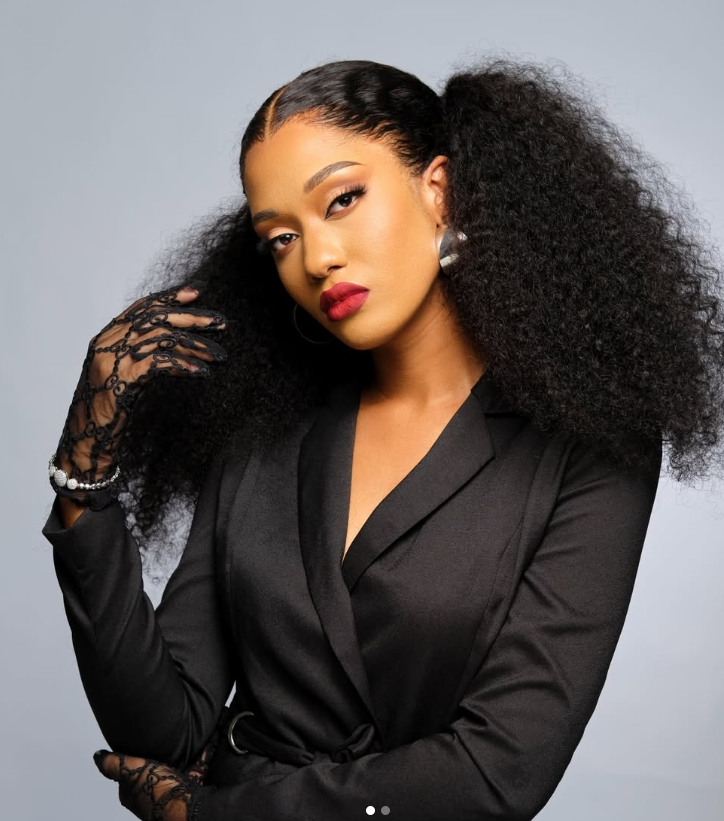



https://www.instagram.com/hairsenta?vrfl=MXAzOThhNGZ0Nm15dQ==
Something Unbelievable Is Sizzling at 24 Jungle Avenue This Summer…
In the golden glow of the Accra sun, a transformation is taking place. It’s more than just a change in the weather—it’s a movement. A shimmer of silk, a cascade of waves, and the effortless sway of hair that refuses to be ordinary.
They say beauty is power. But this time, what if your hair could command the breeze, turn every head on the coast, and carry the vibrant soul of Ghana wherever you go?
HAIR SENTA — the secret behind every radiant summer glow. ✨🌊
Straight from the heart of Ghana, our 100% luxury human hair extensions are designed for the heat of the moment: lightweight, natural, and undeniable. This season, we’re infusing heritage, craft, and high-fashion glamour into every strand, ensuring you stay cool while looking fire.
Will you be the one who owns the sunshine… or the one who only watches it fade? 🍹🔥
Get Your Summer Glow:
- Call Now: 📞 (+233) 0544354455 / 0248629769
- Explore: 🌐 www.hairsenta.com
- Visit Us: 📍 24 Jungle Avenue, Accra, Ghana
Hair Senta. Real Hair. Real Power. Real Summer Energy. 💁♀️✨
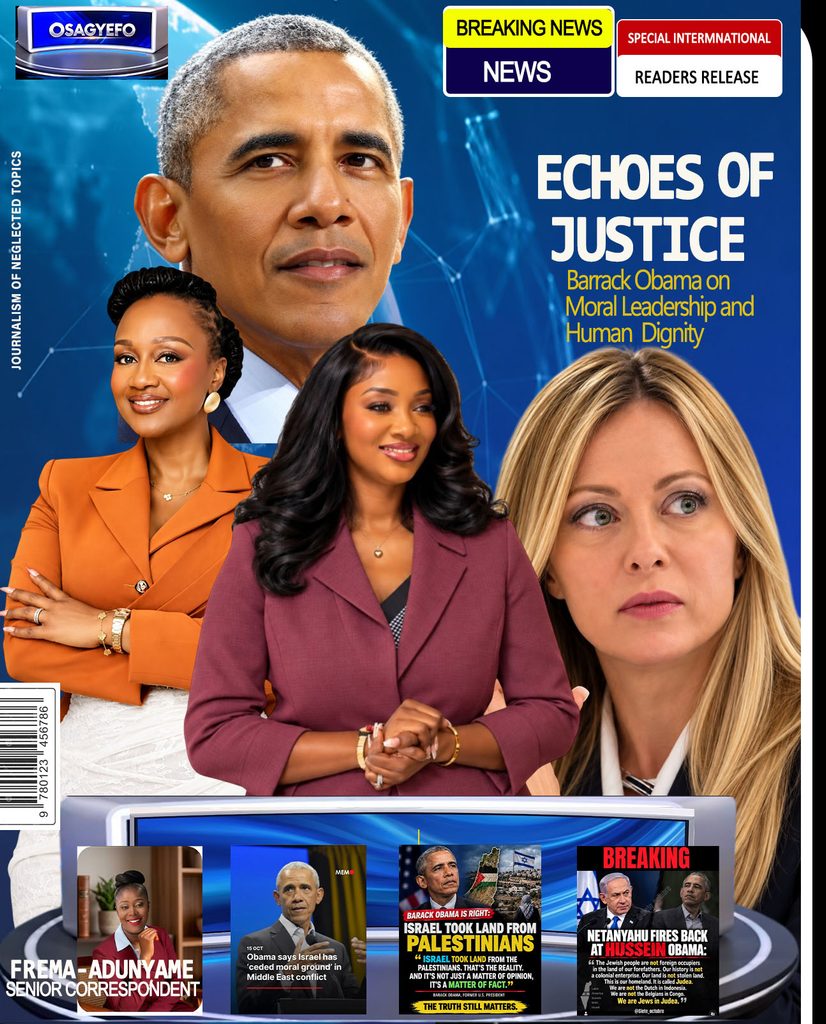
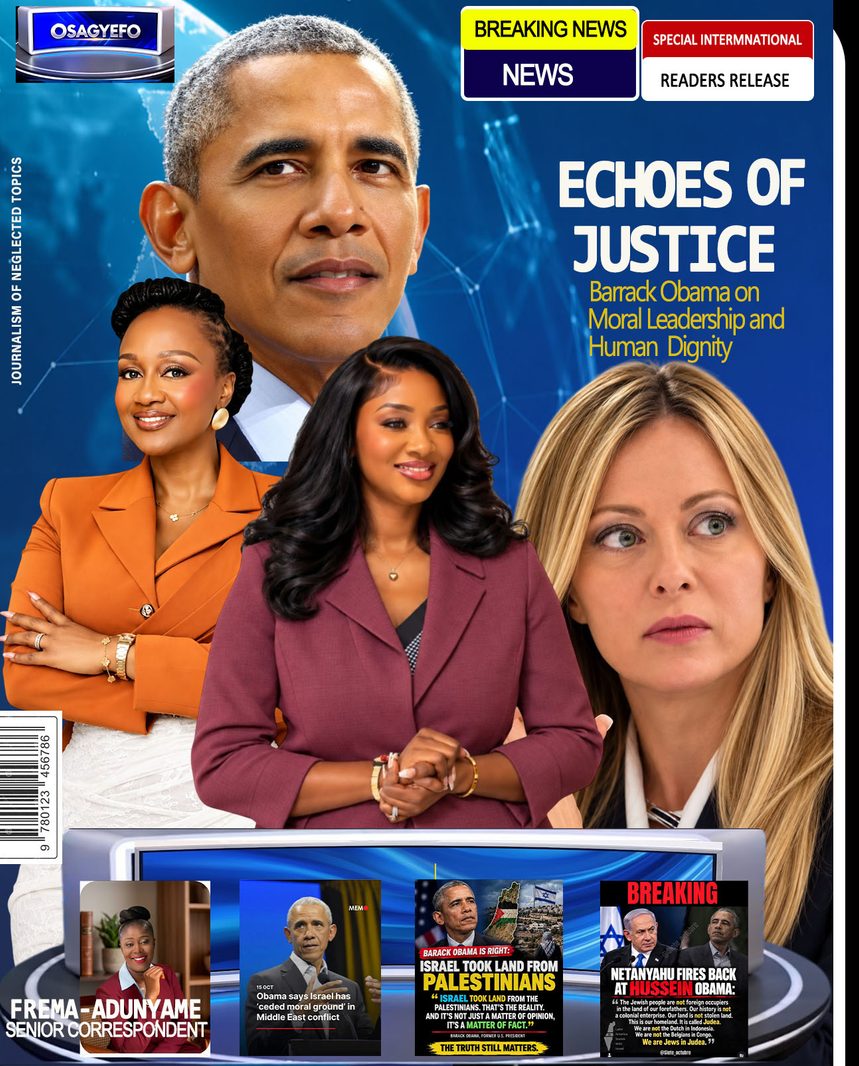
📖 EDITORIAL PREFACE
Former U.S. President Barack Obama has repeatedly spoken out, pleading for the rule of law, basic human rights, and the shared security and happiness of both Jewish and Palestinian communities. From public stages to private dialogues, his contributions underscore a vital truth: true leadership demands communicating conscience even when it is politically inconvenient. This truth must remain a guiding standard for every leader on this earth.
🌐 THE OPENING
ECHOES OF JUSTICE
Barack Obama on Moral Leadership and Human Dignity
“There are moments in history when silence becomes a choice, when the powerful are challenged to examine their conscience, and when the voice of justice demands to be heard above the noise of politics.”
History remembers leaders not only for the offices they occupy, the power they command, or the speeches they deliver, but also for the moral questions they dare to raise. Barack Obama, through his willingness to confront difficult questions about the Israeli-Palestinian conflict, reminds us of the importance of looking beyond political alliances and national boundaries to the human beings whose lives are affected by decisions made in positions of power.
To speak about justice in such a deeply contested conflict requires courage. It means entering a conversation in which historical memories are painful, identities are deeply cherished, and every expression of concern can be interpreted as taking sides.
Yet the cry for justice cannot be confined to the boundaries of political convenience.
The Jewish people’s history of persecution, their ancient connection to the land, and their right to live in security deserve recognition. Equally, the Palestinian people’s historical presence, displacement, suffering, and aspiration for freedom and self-determination cannot be dismissed. To acknowledge one people’s pain does not require us to deny another’s.
This is where the true test of leadership begins: in the ability to recognise the humanity of those whose suffering may be politically inconvenient to acknowledge.
When Barack Obama raises questions about the treatment of Palestinians and the prospects for lasting peace, the significance of that intervention lies in the moral questions it brings into public discussion:
- What does security mean if an entire population continues to live with fear and uncertainty?
- What does peace mean if the grievances that sustain a conflict remain unresolved?
- And what does justice require of those who possess the greatest power to influence events?
These are not questions that can be answered by military strength alone. Nor can they be resolved by historical arguments that recognise the rights of one people while overlooking those of another.
The courage to ask such questions is important, even when the answers remain difficult and the disagreements profound.
History offers many reminders that the struggle for justice rarely proceeds without resistance. Those who challenge established narratives often encounter criticism, misunderstanding, and opposition. But the measure of their contribution is not simply the controversy they generate. It is whether they help humanity see more clearly the consequences of its choices and the responsibilities that come with power.
We must also be careful not to confuse courage with the automatic correctness of every political position. Leaders should be judged by their arguments, their actions, and their willingness to uphold principles consistently. Justice must remain a standard applied to everyone, not a privilege reserved for those with whom we agree.
For this reason, the cry for justice must echo in every direction. It must be heard by those who fear for Israel’s security, by Palestinians who long for freedom and dignity, and by the international community when its response to human suffering falls short of its own declared principles.
The ultimate purpose of justice is not to exchange one people’s suffering for another’s. It is to create the conditions in which suffering no longer becomes the inheritance of future generations.
Perhaps this is the enduring lesson of history: humanity advances when we refuse to allow our differences to extinguish our conscience. The courageous voice is not necessarily the loudest, nor is it always the most popular. It is the voice that insists that every human life matters, that power carries responsibility, and that peace without justice remains fragile.
Barack Obama’s intervention invites us to reflect on these responsibilities. Whether we agree with every aspect of his position or not, the questions surrounding justice, security, freedom, and human dignity deserve serious consideration.
For the cry of justice does not belong to one nation, one religion, or one political leader. It belongs to humanity itself.
And as history continues to unfold, the question confronting each generation remains the same:
When the cry for justice echoes through history, will we have the courage to listen—and the humanity to respond?
📰 ABOUT THIS EDITION
This special Newsweek Edition of OsagCategory Newsletter Magazine brings together global voices, media pioneers, and political leaders to examine how moral authority, geopolitical power, and human dignity intersect. In an era often dominated by polarised soundbites, this edition creates a dedicated space for “Journalism of Neglected Topics”—focusing on the ethical dimensions of leadership that mainstream discourse often overlooks.
What did Obama say in Belfast?
According to reports of his conversation with Irish journalist Susan McKay, Obama acknowledged the centuries of persecution suffered by Jewish people, including persecution in Europe. He then made a forceful observation about the Palestinian experience.
He said that Jewish people seeking refuge had taken land from others and that Palestinians understandably viewed this as an injustice and wanted their land back. He also warned that Israel had “ceded moral ground” if it believed its military superiority allowed it to take whatever it wanted without making concessions.

The central message
Obama argued that military strength alone cannot guarantee lasting security. He stressed that Israelis and Palestinians will continue to share the region and that a sustainable future requires a just way to protect people while respecting human dignity. He also called for a genuine cessation of violence and relief for people in Gaza.
Why the remarks caused controversy
Israeli Prime Minister Benjamin Netanyahu rejected Obama’s characterisation, arguing that the Jewish people have an ancient historical connection to the land and that Israel’s establishment should not be described as a colonial enterprise or the theft of its homeland.
The historical question is complex. It involves Jewish historical ties to the land, Jewish immigration and land purchases, the displacement of Palestinians during the 1948 war, and Israel’s occupation of territories captured in 1967. These are distinct issues and should not be reduced to a single event.
For your Osagyefo Newsletter Magazine, this could provide a timely continuation of your theme, “The Cry for Justice Echoes Through History.”
The central question would be: Can a nation secure its future through military power alone, or must lasting security also rest on justice, human dignity and the recognition of another people’s rights?
Would you like me to incorporate Obama’s Belfast speech into your existing newsletter article, connecting his remarks to the broader theme of courage, conscience and the universal cry for justice?
WHY THIS MATTERS
- Moving Beyond Polarization: True peace cannot be built on selective empathy. Recognising the dignity of every individual—regardless of national or ethnic boundaries—is the prerequisite for long-term global stability.
- Accountability for Power: Powerful nations and leaders must be held to universal standards of justice, rather than allowing strategic alliances to excuse human suffering.
- A Global Imperative: The principles discussed here transcend the Middle East; they apply to governance, civil rights, and human development across Africa, Europe, and the global community.
WHAT THIS ISSUE UNPACKS
- The Ethics of Intervention: How public statements by world leaders shape global standards for human rights.
- Dual Narrative Empathy: Why acknowledging historical trauma on all sides is essential for effective diplomacy.
- Power vs. Conscience: The ongoing tension between strategic national interests and moral consistency.
- Perspectives Across Continents: Bringing African governance and European geopolitics into dialogue on universal justice.
🎙️ INTERNATIONAL PANELISTS
We are honoured to introduce our distinguished international panellists who will lead the dialogue on this crucial topic:
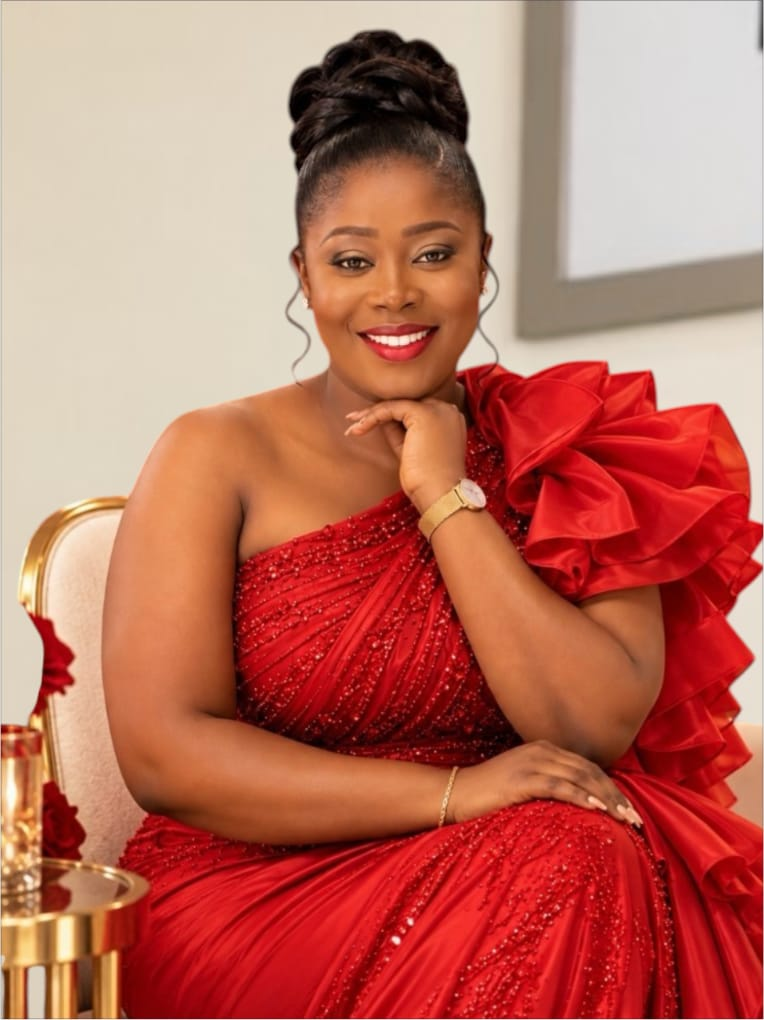
- 🇬🇭 FREMA ADUNYAME Broadcast Journalist | Channel One TV. A respected journalist and media professional whose work focuses on public accountability, governance, information, and the evolving role of the media in shaping public discourse across Africa.

- 🇬🇭 GWEN ADDO: Author of DIRECTION | Entrepreneur | Wellness Coach | Food Educator | Founder & Co-Founder of Multiple Social Enterprises. An advocate for transformation through health, personal development, entrepreneurship, and purposeful living. Through her work and her book DIRECTION, she inspires people to discover purpose, embrace growth, and become agents of positive change.

- 🇬🇭 DZIGBORDI KWAKU-DOSOO Global Speaker | Entrepreneur | Consultant. A leading voice on leadership, mindset transformation, human development, and inclusive growth. Her work continually emphasises the importance of dignity, opportunity, and human-centred development.

- 🇮🇹 GIORGIA MELONI, Prime Minister of Italy. Representing a European perspective on sovereignty, strategic autonomy, national interests, and the pursuit of economic resilience in an increasingly complex world.
OSAGYEFO NEWSLETTER MAGAZINE
THE CRY FOR JUSTICE ECHOES THROUGH HISTORY
An international dialogue on moral courage, historical responsibility, freedom and human dignity.
HOST: FREMA ADUNYAME PANELISTS: GWEN ADDO, DZIGBORDI KWAKU-DOSOO, AND GIORGIA MELONI
🌐 OPENING THE DIALOGUE
FREMA ADUNYAME — HOST
Distinguished readers joining us from every corner of the world, ladies and gentlemen, and all those who believe that humanity’s future must be built upon justice, compassion and mutual respect, I warmly welcome you to this special edition of the Osagyefo Newsletter Magazine.
Wherever you may be reading from—Africa, Europe, Asia, the Americas or any other part of our shared world—we are honoured to have you with us.
Today, we gather not merely to exchange political opinions, but to confront one of the most enduring questions in human history: What happens when the cry for justice rises above the boundaries of nations, political alliances, historical grievances and personal interests?
History has taught us that the wounds of the past do not disappear simply because generations change. They remain in the memories of families, the experiences of communities and the institutions that shape our societies. Yet history also teaches us that acknowledgement, honest dialogue and courageous leadership can open the door to reconciliation.
Our discussion today brings together three distinguished figures whose public lives represent different political, philosophical and cultural traditions.
We shall explore what their contrasting perspectives can contribute to a common question: how can the world move towards a future in which no people’s suffering is ignored, and no person’s dignity is considered expendable?
🎙️ MEET OUR DISTINGUISHED PANELISTS
Hosted & Moderated by:
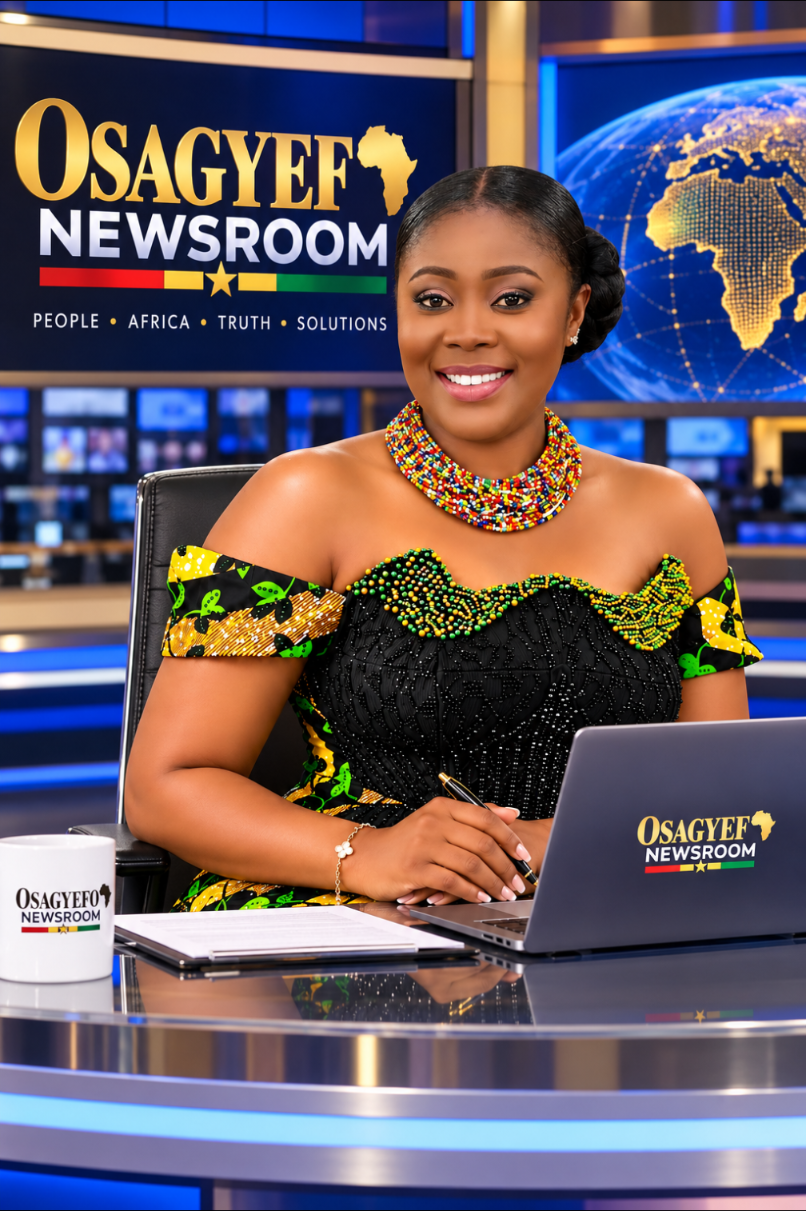
- 🇬🇭 FREMA ADUNYAME (Channel One TV) Known for my unflinching broadcast precision and relentless drive for accountability, I take the centre seat as host. I won’t just moderate—I will steer a high-stakes interrogation of moral power, pressing where political sensitivities run deepest.
Joining the Round Table:

- 🇬🇭 GWEN ADDO — Author of DIRECTION & Purpose Advocate, bringing a sharp, transformative lens on human potential, growth, and the cost of moral apathy on future generations.

- 🇬🇭 DZIGBORDI KWAKU-DOSOO — Global Speaker & Mindset Specialist, exposing the psychological and human-centred reality of global suffering when power operates without conscience.

- 🇮🇹 GIORGIA MELONI — Prime Minister of Italy, bringing raw geopolitical power, strategic autonomy, and European statecraft into confrontation with global moral duties.
❓ THE HOST’S OPENING QUESTION
FREMA ADUNYAME — HOST
Distinguished panellists, welcome. It is a genuine honour to have you join us for this important conversation.
Before we begin, I want to share something personal with our readers.
I couldn’t allow myself to be overwhelmed by my personal sorrow, because we have been waiting for this moment—a moment when the cry for justice is beginning to echo in every direction, demanding to be heard by courageous people and by all those who long for freedom and dignity.
Two recent developments have particularly moved me.
First, I wish to recognise the significance of King Willem-Alexander of the Netherlands addressing the historical record of his own royal family.
On 2 October 2026, following the presentation of an independent historical study conducted at Leiden University, the King acknowledged that earlier generations of the House of Orange-Nassau had actively supported colonialism and slavery. He also recognised the continuing pain experienced by descendants of enslaved people and the persistence of discrimination and economic exploitation.
One sentence from his address deserves to be remembered:
“We cannot move forward unless we acknowledge what happened in the past.”
These words matter because they recognise that historical responsibility is not simply a matter of examining what previous generations did. It is also about asking what we, in the present, are prepared to do differently.
The King’s acknowledgement builds upon his apology for the Netherlands’ history of slavery on 1 July 2023. His latest remarks demonstrate the importance of continuing to confront the historical record, even when that record implicates institutions and families of great influence.
On 13 October 2026, Obama addressed the need for Israelis to consider how future generations could live securely while respecting the rights of Palestinians. He also called for an end to violence, relief for people in Gaza and an end to continued encroachment in the West Bank.
His intervention prompted a public response from Israeli Prime Minister Benjamin Netanyahu, underscoring the continuing disagreement over history, land, security and the conditions for peace.
I believe there is an important lesson in these two developments.
In the Netherlands, a King has confronted the historical failures of his own royal house. In the international discussion about Israel and Palestine, a former American president has challenged audiences to consider the moral consequences of how security is pursued and how Palestinian suffering is addressed.
These are different circumstances, with different histories and responsibilities. Yet both raise a question that humanity cannot avoid: Will those who possess influence use it to confront injustice, or will they allow political convenience to silence their conscience?
If such moments are taking place in our own time, perhaps we are witnessing the emergence of a more open international conversation about moral responsibility—one in which previously neglected suffering can no longer be so easily pushed aside.
Whatever disagreements may follow, history will record the words spoken, the questions raised and the choices made by those who held positions of influence.
And I believe that the courageous leaders we have long hoped to see are those willing to open hearts that have remained closed to the suffering of others.
Welcome once again, distinguished panellists.
GWEN ADDO, I would like to begin with you.
When leaders confront painful historical truths or speak about the suffering of people caught in protracted conflicts, they face difficult questions about sovereignty, national security, political responsibility and human dignity.
From your perspective, what responsibility do world leaders have to acknowledge historical injustice and respond to the suffering of people beyond their own national borders? And how can the international community pursue peace without allowing national interests to overshadow the universal dignity of human life?
🎙️GWEN ADDO:
Thank you, Madam Frema Adunyame, for your thoughtful introduction and for bringing us together for a dialogue on a matter of profound importance to humanity.
I extend my greetings to my fellow panellists, Dzigbordi Kwaku-Dosoo and Prime Minister Giorgia Meloni, and to readers joining us from around the world.
I appreciate the spirit of your question, Madam Frema. You have raised an issue that challenges every generation of leadership: how do we confront the injustices of history while building a future in which nations and peoples can coexist in peace and dignity?
Your references to the Netherlands’ confrontation with its history of slavery and to the Israeli-Palestinian conflict illustrate two different but important dimensions of this challenge. One concerns the responsibility to examine the historical record honestly; the other concerns the urgent task of pursuing peace amid continuing conflict and deeply rooted grievances.
📜 History as a Source of Understanding
History should be a source of understanding, not a permanent instrument of division.
When we study the past, we must be prepared to recognise both the achievements and the injustices that shaped our world. No nation has a monopoly on historical experience, and no people should be expected to forget the suffering endured by their ancestors simply because the passage of time has changed the political circumstances.
At the same time, remembering history must serve the purpose of learning from it. If the lessons of the past are to benefit future generations, historical understanding should encourage dialogue, mutual respect and a determination to prevent similar injustices from occurring again.
🌐 Sovereignty and International Responsibility
Madam Frema, your question also raises the relationship between national sovereignty and international responsibility.
Every nation has legitimate interests and responsibilities towards its own people. Security, stability and development are essential to the well-being of any society. But international peace cannot be sustained through an understanding of security that disregards the legitimate concerns and dignity of others.
In an interconnected world, the consequences of conflict rarely remain confined within national borders. Human suffering creates responsibilities that extend beyond geography, political alliances and cultural differences.
The international community must therefore work towards solutions that recognise the rights and legitimate concerns of all parties.
In the Israeli-Palestinian conflict, this means taking seriously the security of Israel, the rights and aspirations of the Palestinian people, the protection of civilians and the pursuit of a political settlement that allows both peoples to live in peace.
“No lasting solution can be built by treating the suffering of one population as less important than the suffering of another.”
The Responsibility That Comes with Power
I would also like to address your observation about courageous leadership.
Leadership is tested not only during moments of national achievement but also when difficult truths must be acknowledged.
Sometimes, responsible leadership requires a willingness to examine established assumptions, listen to uncomfortable arguments and recognise that policies which benefit one group may impose serious costs upon another.
However, courage must be accompanied by wisdom. Statements of principle must lead to constructive action, and the language of justice must be applied consistently.
When leaders call for accountability, they should also help create the conditions in which reconciliation becomes possible. When they advocate peace, they should support practical measures that reduce suffering and build trust.
And when they speak about the dignity of humanity, that principle should extend to every person, irrespective of nationality, religion, ethnicity or political affiliation.
The acknowledgement of historical wrongdoing can be an important beginning. Yet the deeper test is whether that acknowledgement contributes to meaningful change in the lives of people who continue to experience its consequences.
Reconciliation cannot be achieved by words alone; it requires a sustained commitment to fairness, understanding and cooperation.
🕊️ A Future Beyond Historical Grievances
Madam Frema, I believe that the world must resist the temptation to view international relations solely through the lens of rivalry.
Different political systems, cultural traditions and historical experiences need not prevent nations from cooperating on shared human challenges.
The task before us is to build a world in which differences can be addressed through dialogue rather than confrontation, in which development creates opportunities for people rather than deepening their exclusion, and in which the pursuit of national interests is accompanied by a recognition of our shared responsibilities.
The past cannot be rewritten. But the future can be shaped by the decisions we make today.
If we are sincere in our desire for a more peaceful world, we must be willing to learn from history, recognise the humanity of others and pursue solutions that allow future generations to inherit opportunities for cooperation rather than the burdens of unresolved conflict.
I thank you, Madam Frema, for inviting us to reflect on these important questions.
And I look forward to hearing the perspectives of my fellow panellists, particularly Dzigbordi Kwaku-Dosoo, whose philosophy places considerable emphasis on the transformation of the human heart, and Prime Minister Meloni, whose perspective on European political responsibility will add another important dimension to our discussion.
The future of humanity depends not only on what our nations seek to achieve, but also on how we recognise our responsibilities towards one another.
🎙️ FREMA ADUNYAME — HOST
Thank you, GWEN ADDO, for sharing your perspective with us.You have drawn an important distinction between acknowledging historical injustice and ensuring that such acknowledgement leads to meaningful change. You have also reminded us that security and dignity must not be treated as competing principles.
DZIGBORDI KWAKU-DOSOO, I would now like to turn to you.
DZIGBORDI KWAKU-DOSOO is a Global Speaker | Entrepreneur | Consultant, a leading voice on leadership, mindset transformation, human development and inclusive growth. Her work continually emphasises the importance of dignity, opportunity and human-centred development.

DZIGBORDI KWAKU-DOSOO:
Thank you, Madam Frema Adunyame, for your heartfelt introduction and for creating this important space for dialogue.
I was particularly moved by your words about the sorrow you carry and your determination not to allow that sorrow to overwhelm you. There is something deeply human in what you have expressed. To acknowledge our pain, yet continue searching for a path towards justice and reconciliation, is itself an act of courage.
I would also like to express my appreciation to Gwen Addo for her thoughtful contribution. Her distinction between remembering the past and becoming imprisoned by it deserves our serious consideration. History must teach us how to build a better future, rather than become an endless source of hostility between peoples.
And I extend my warm greetings to Prime Minister Giorgia Meloni, whose participation will help us examine these questions from another perspective.
To our readers around the world, I offer this thought: the future of humanity depends upon our ability to recognise the dignity of every human being, especially when doing so challenges our established beliefs or interests.
The Cry for Justice Begins in the Human Heart
Madam Frema, you have spoken about the acknowledgement of historical injustice in the Netherlands and the international discussion surrounding the suffering of Israelis and Palestinians.
These circumstances differ in their historical origins and immediate challenges. Yet they confront us with a fundamental question: what must change within the human heart before society itself can change?
We often speak about justice as though it were something that governments, courts and international institutions alone can deliver. Certainly, laws and institutions are essential. They must protect human rights, establish accountability and provide remedies for those who have suffered injustice.
But we must also examine the attitudes that allow injustice to endure:
- When we begin to believe that the suffering of people outside our own community matters less than our own suffering, we create the conditions in which discrimination and exclusion can flourish.
- When we regard another people’s historical grievances as unworthy of consideration, we close the door to understanding.
- And when we become so attached to our own national, religious or political identity that we can no longer recognise the humanity of those who differ from us, we diminish our own humanity.
This is why I have long emphasised the importance of human revolution: the inner transformation through which an individual overcomes indifference, challenges destructive tendencies and develops a deeper commitment to the happiness and dignity of others.
Such transformation does not mean abandoning one’s identity or surrendering one’s convictions. It means refusing to allow those convictions to become a justification for denying another person’s humanity.
The Courage to Acknowledge the Past
Gwen Addo has rightly observed that the past cannot be rewritten, although the future can be shaped by the decisions we make today.
I would add that our relationship with the past depends greatly upon the purpose for which we remember it.
If we remember historical suffering only to nourish resentment, the wounds of history may be passed from one generation to another without resolution. But if we remember in order to understand, accept responsibility and prevent the recurrence of injustice, historical memory can become a source of wisdom.
Consider the significance of a national leader acknowledging the suffering caused by institutions associated with his own country’s history.
Such acknowledgement cannot, by itself, erase the consequences of slavery or repair every disadvantage inherited by its descendants. Nor should it be mistaken for the completion of reconciliation.
Yet it can create an opening through which a society begins to confront uncomfortable truths and consider what meaningful redress, equality and mutual understanding require.
“The courage to acknowledge wrongdoing is not a sign that a nation has lost its dignity. Rather, it can be an expression of confidence in its capacity to grow. A society does not become weaker when it faces the truth. It creates the possibility of becoming more humane.”
Justice Must Embrace Every Human Life
Let us turn to the Israeli-Palestinian conflict.
The suffering of Jewish people throughout history, including persecution and the Holocaust, must never be minimised. The legitimate need for security is inseparable from the dignity and safety of human life.
At the same time, Palestinian suffering, displacement, restrictions on freedom and aspirations for self-determination must be treated with equal seriousness.
To recognise the historical trauma of Jewish people does not require us to disregard Palestinian suffering. To advocate for Palestinian freedom does not require us to dismiss the security concerns of Israelis.
The challenge is to develop a perspective broad enough to recognise both peoples as human beings with legitimate hopes for their families, communities and future generations.
This is not an argument that every claim made by every party is equally justified. Questions of responsibility, evidence, international law and the conduct of particular actors must be examined carefully.
Rather, it is a moral insistence that no population should be deprived of its humanity because of the actions of its leaders, and no civilian should become an acceptable price for another person’s political objectives.
The essential question is not which people deserve to suffer less. It is how we can create the conditions in which neither people must continue to suffer.
Dialogue as an Act of Courage
Madam Frema, your decision to bring together leaders representing different political and philosophical traditions is itself an invitation to consider the power of dialogue.
Dialogue is sometimes misunderstood as an attempt to avoid disagreement. In reality, meaningful dialogue requires us to confront differences honestly, listen without prejudice and remain willing to reconsider our assumptions:
- It demands courage because listening to another person’s suffering may oblige us to question a position we have defended for years.
- It demands patience because reconciliation rarely follows a straight path.
- And it demands hope because we must believe that people who disagree profoundly can nevertheless discover a basis for cooperation.
A dialogue of this kind should not seek to manufacture agreement where genuine differences remain. Its purpose should be to deepen understanding and identify practical steps towards a more peaceful and just world.
Political leaders can create opportunities for negotiation. Civil society can build bridges between communities. Educators can help younger generations understand history without inheriting its prejudices. Ordinary citizens can refuse to participate in the dehumanisation of their neighbours.
Each of these contributions matters. The transformation of society begins when people stop asking only what others must change and begin asking what responsibility they themselves can accept.
The Responsibility of Our Generation
I would like to leave our readers with one final reflection.
History is not merely a record of what previous generations did to one another. It is also a record of the moments when individuals chose a different course.
Some people challenged slavery when it was defended by powerful interests. There were people who opposed persecution when silence was easier. Some people continued to seek reconciliation even after experiencing terrible loss.
They did not always succeed immediately. But their determination helped widen humanity’s understanding of freedom, equality and dignity.
We should not romanticise every individual who speaks in the name of justice, nor assume that every political intervention is correct simply because its language is courageous. Leaders must be judged by the consistency of their principles and the consequences of their actions.
Nevertheless, we must protect the space in which difficult moral questions can be raised without being dismissed merely because they challenge established power.
The world needs leadership that combines conviction with humility, strength with compassion and national responsibility with a genuine concern for humanity. And it needs citizens who understand that the pursuit of justice is not the responsibility of leaders alone.
Madam Frema, you began by speaking of personal sorrow and the moment for which we have been waiting.
Perhaps the most important question is not whether history will remember a particular leader as courageous. It is whether the actions of our generation will make it possible for children who come after us to live in a world with less fear, less hatred and fewer inherited wounds.
That is the true measure of our responsibility.
When we transform the way we see another human being, we begin to transform the possibilities of our shared future.
Thank you, Madam Frema, for opening this dialogue, and thank you, Gwen Addo, for helping establish its foundation.
I look forward to hearing Prime Minister Meloni’s reflections, particularly on the responsibility of European leadership in confronting historical injustice while protecting the dignity and rights of people today.
🎙️ FREMA ADUNYAME — HOST’S REFLECTION
Thank you, Dzigbordi Kwaku-Dosoo.
Your contribution has taken our conversation from the responsibility of nations to the responsibility of the individual human heart.
You have reminded us that acknowledging historical injustice is only the beginning, that justice must be accompanied by meaningful change, and that dialogue should never be confused with indifference to wrongdoing.
I am particularly struck by your observation that the true measure of our responsibility is whether future generations will inherit fewer wounds than our own.
Prime Minister Meloni, I would now like to invite you into this conversation.
Europe carries a complex historical inheritance, including achievements in democracy and human rights, but also colonialism, slavery, war and persecution.
How can European leaders confront the painful chapters of their history honestly while ensuring that the principles of freedom, equality, security and human dignity are applied consistently to the challenges of our own time?
Prime Minister Meloni, we welcome your perspective.
GIORGIA MELONI:
Thank you, Madam Frema Adunyame, for giving me the opportunity to participate in this important dialogue and to share my reflections with your readers around the world.
I would also like to acknowledge Gwen Addo for her observations on historical responsibility, national sovereignty and international cooperation, and Dzigbordi Kwaku-Dosoo for her profound reflections on the transformation of the human heart and the importance of dialogue.
Although we approach these questions from different political and philosophical traditions, I believe our discussion demonstrates the value of bringing different perspectives together to examine the challenges facing humanity.
Madam Frema, I appreciate the sincerity with which you have introduced this subject. Your willingness to speak about personal sorrow while continuing to seek a path towards justice raises an important point: how can we build a better future if we are unwilling to confront the difficult truths of our past?
This is a question that Europe must take seriously.
🏛️ Europe’s History: Memory, Responsibility and Identity
Europe’s history contains extraordinary achievements in culture, science, democratic thought and the development of institutions designed to protect individual freedoms. It also contains painful chapters involving slavery, colonial domination, persecution, religious intolerance and devastating wars.
We cannot understand Europe fully if we acknowledge only its achievements while refusing to examine its historical failures.
Equally, confronting the past should not mean reducing the identity of present-day Europeans to the mistakes of previous generations. Our responsibility is to understand what happened, recognise the consequences that remain and ensure that the principles we profess are reflected in our actions today.
The example you have raised concerning King Willem-Alexander and the Netherlands illustrates the importance of historical research and public acknowledgement. When institutions examine their own histories, they create an opportunity for a more informed discussion about responsibility, remembrance and reconciliation.
Such acknowledgement must be accompanied by a serious consideration of its consequences. Historical recognition can help communities feel heard, but lasting reconciliation also requires education, equal treatment under the law and practical efforts to address discrimination wherever it persists.
We should neither erase history nor allow it to become an insurmountable barrier between generations. Our task is to learn from it.
⚖️ Freedom and Dignity Must Be More Than Words
Madam Frema, you have also asked how Europe can ensure that its principles are applied consistently. I believe this is one of the most important questions facing democratic societies.
Freedom, equality, security and human dignity are not abstract expressions to be invoked only on ceremonial occasions. They must guide the decisions we make, the laws we establish and the way our institutions treat people.
Security is a legitimate responsibility of every government. Citizens expect their leaders to protect their lives, their families and their communities. But security and human rights must be considered together, because the long-term stability of a society depends upon public trust, lawful institutions and respect for human dignity.
Similarly, defending national identity need not require hostility towards other cultures. A society can value its traditions while recognising the rights of those who come from different backgrounds.
The challenge for political leadership is to maintain this balance without simplifying complex questions or pretending that every disagreement has an easy answer.
🕊️ The Israeli-Palestinian Conflict and the Responsibilities of Leadership
Your opening remarks also brought us to the difficult question of Israel and Palestine.
This conflict carries profound historical, religious and political significance. Jewish communities have experienced centuries of persecution, culminating in the Holocaust, and Israel has legitimate security concerns. Palestinians, meanwhile, have experienced displacement, restrictions and prolonged uncertainty about their political future and right to self-determination.
Recognising these realities requires careful attention to history and to the circumstances facing people today.
The protection of Israeli civilians and the protection of Palestinian civilians are not mutually exclusive responsibilities. Neither should be treated as less important because of nationality or political affiliation.
A lasting settlement requires sustained diplomacy, the protection of civilians, the release of hostages where applicable, humanitarian assistance and a credible political process capable of addressing the legitimate aspirations and security concerns of both peoples.
We must also distinguish between the actions of governments and the identities of entire populations. Criticism of a government must not become hostility towards a people, just as concern for a population must not become a justification for violence against another.
This distinction is essential if political disagreement is not to deepen into collective hatred.
🌍 Courage, Accountability and the Future of Europe
Attitudes matter, although political institutions and concrete decisions matter as well. Good intentions cannot substitute for effective action. Leaders must be prepared to explain their decisions, accept scrutiny and demonstrate that the principles they invoke are reflected in their conduct.
Courage in leadership is not simply the willingness to make a powerful statement. It also involves the willingness to listen to criticism, reconsider policies when evidence demands it and accept responsibility for the consequences of decisions.
For Europe, this means preserving democratic institutions, supporting the rule of law, protecting fundamental freedoms and maintaining a serious commitment to peace.
It also means recognising that reconciliation cannot be imposed through words alone. Trust is built gradually, through consistency between what leaders say and what they do.
Madam Frema, I believe our discussion should leave readers with a clear understanding: historical responsibility and responsibility for the future belong together.
We cannot change what previous generations did, but we can decide whether their mistakes will be repeated. We can choose whether historical memory becomes a source of understanding or a weapon of division. And we can choose whether the principles we defend will apply only when convenient or also when they demand difficult decisions.
The responsibility of leadership is to make those choices with seriousness, humility and an awareness of the human consequences.
Thank you again, Madam Frema, for allowing me to contribute to this dialogue. I also thank my fellow panellists for their thoughtful reflections.
I look forward to continuing this discussion, because the questions you have raised are too important to be confined to one nation or one generation.
The future we build will depend not only on how we remember history, but on the principles we are prepared to uphold in the present.
🎙️ FREMA ADUNYAME — HOST’S RESPONSE
Thank you, Prime Minister Meloni, for sharing your perspective and for acknowledging the contributions of both Gwen Addo and Dzigbordi Kwaku-Dosoo.
Our conversation has now brought three important dimensions of leadership into focus: the responsibility of nations to learn from history, the responsibility of individuals to recognise the humanity of others, and the responsibility of political institutions to translate principles into action.
What strikes me is that we have arrived at a question that extends beyond Europe, Asia or the Middle East:
How do we ensure that the cry for justice becomes more than a moment of public acknowledgement—that it becomes a lasting commitment to human dignity?
Distinguished panellists, I would like us to take this question further as we continue our dialogue. Because history will remember not only what leaders said when justice was demanded, but also what they chose to do when the moment for action arrived.
Those in power are always the same. The victor chose to interpret the law in a way that served their interest. This is the same as the stereotypical world I have always referred to. Leaders have never had the open heart to speak the truth.
Again and again, I am referring to Dan Gertler, an Israeli businessman whose family has a long history in the diamond trade and who built a substantial business empire through investments in the Democratic Republic of the Congo (DRC).
🔍 SPOTLIGHT: DAN GERTLER & CONGOLESE RESOURCES
Diamond Trader and Mining Investor
- Background: Gertler is the grandson of Moshe Schnitzer, a prominent figure in Israel’s diamond industry. He entered the diamond trade in his early twenties and expanded into the Congolese natural-resource sector during the late 1990s. (Gertler did not simply inherit his father’s entire diamond empire; he developed his own business, drawing on his family’s diamond-trading background and connections.)
- Why He Became Controversial:
- Diamond trading: In 2000, he secured an agreement giving his company exclusive rights to purchase and export artisanal diamonds from the DRC for a limited period.
- Mining wealth: He later expanded into copper, cobalt, gold and oil, building a much larger natural-resources business.
- Corruption allegations and sanctions: The US Treasury sanctioned him over alleged corrupt mining and oil deals. (Gertler has denied wrongdoing.)
- Legal developments: In March 2026, Dutch prosecutors announced a €25.8 million criminal settlement involving his company Fleurette over bribery in connection with Congolese mining concessions.
His story raises an important question about how a country can possess extraordinary mineral wealth while many of its citizens remain poor.
I am pointing to a painful contradiction in the Democratic Republic of the Congo: how can individuals and companies accumulate enormous wealth from a country’s natural resources while Congolese people suffer poverty, violence and exploitation?
In Dan Gertler’s case, his business dealings have drawn serious corruption allegations and US sanctions. The concern is not simply that a foreign businessman made money, but whether deals transferred valuable Congolese resources and deprived the Congolese state and its citizens of a fair share of their wealth.
This article’s theme helps explain why figures like Barack Obama and King Willem-Alexander of the Netherlands stand out as courageous voices of our century who have chosen to defend truth and the common good against established power.
❓ THE NEXT QUESTION
GWEN ADDO, I would like to ask you to share your insights on this:
How do we reconcile these stark economic contradictions in natural-resource exploitation with our pursuit of global human dignity? And what must the international community do to ensure resource wealth serves the people to whom it belongs?
🎙️ GWEN ADDO’S RESPONSE
Thank you, Frema. Your question cuts to the very heart of why economic justice is inseparable from human dignity.
When we look at the Democratic Republic of the Congo—or indeed, many resource-rich nations across Africa and the Global South—we do not see a lack of wealth. We see a deliberate, historical misdirection of wealth.
The story of Dan Gertler and the Congolese natural-resource sector is not an isolated anomaly; it is a symptom of a deeply entrenched global framework where foreign capital and local complicity siphon value out of a nation, leaving the local population with the environmental degradation, displacement, and systemic poverty that follow.
To reconcile these stark economic contradictions with our shared pursuit of global human dignity, we must move beyond mere outrage and act across three critical pillars:
1. Redefining Resource Ownership and True Value Creation
For far too long, resource wealth has been viewed through the narrow lens of extraction and export—raw copper, raw cobalt, raw diamonds leaving African soil to fuel foreign industries and build foreign fortunes.
Real dignity begins when value addition happens where the resources are extracted. Nations must have the sovereign capability and international backing to refine, process, and manufacture within their own borders. When we transform raw minerals into finished technological and industrial components locally, we create sustainable jobs, build infrastructure, and retain economic sovereignty.
2. Enforcing Radical Transparency and Corporate Accountability
The recent settlements and sanctions we see globally prove that the mechanisms for accountability exist, but they are far too slow and often treat penalties as merely the “cost of doing business.”
The international community—especially international financial centres and commodity exchanges—must implement strict, non-negotiable transparency standards:
- Beneficial Ownership Disclosure: Ending the use of complex shell companies and offshore havens that obscure who truly profits from public assets.
- Binding Revenue Transparency: Enforcing mandatory, public reporting of every concession, tax payment, and royalty between multinational entities and state actors.
- Legal Recourse for Host Communities: Ensuring that affected local communities have direct access to international legal frameworks to seek restitution when corrupt deals deprive them of their inheritance.
3. Ethical Global Supply Chains
Consumers and industries in the developed world cannot remain detached from the origin of their technology, jewellery, and energy systems. The transition to green technology—powered heavily by cobalt and copper from the DRC—cannot be built on the back of human exploitation.
If global leaders—whether in government or corporate boardrooms—are genuine about defending truth and human dignity, they must mandate ethically certified, fully traceable supply chains. Economic progress loses its moral authority when it relies on forced labour or corrupt patronage networks.
💡 Closing Thought
Leaders like Barack Obama and King Willem-Alexander remind us that institutional courage requires calling out uncomfortable truths.
Justice cannot remain an abstract ideal debated in diplomatic summits while millions live in poverty atop trillions of dollars in natural wealth. To ensure that resource wealth serves the people to whom it rightfully belongs, we must replace the legacy of exploitation with an era of equitable partnership, transparent governance, and unwavering ethical responsibility.
🎙️ DZIGBORDI KWAKU-DOSOO’S RESPONSE
🎙️ DZIGBORDI KWAKU-DOSOO
Thank you, Frema. Your opening words ground us in a truth that leaders often try to avoid: that history does not remember our intentions or our speeches—it remembers our choices and the tangible legacy we leave behind.
And Gwen, I could not agree more with your powerful analysis of structural transparency and ethical value addition. You have clearly laid out the economic and policy blueprints required to reverse this systemic injustice.
Building directly on what Gwen highlighted, I want to bring this conversation back to the human element of leadership and mindset shift.
When we analyse figures like Dan Gertler and the decades of resource extraction in the Democratic Republic of the Congo, we are looking at more than just legal loopholes and economic exploitation—we are looking at a crisis of conscience and leadership character.
1. From Transactional Extraction to Human-Centered Leadership
For generations, the global approach to African resources has been fundamentally transactional and extractive—not just in terms of minerals, but in how human lives and host communities are valued.
When leaders, investors, and corporations see a country merely as a balance sheet of commodities to be secured at any cost, dignity is the first casualty. True reconciliation begins when leadership shifts from asking “What can I extract for maximum profit?” to asking “What value am I co-creating for the long-term well-being of these people?”
2. Empowering Local Institutions and Self-Worth
While international transparency standards and sanctions are necessary checks, lasting change must be driven from within.
Exploitation thrives in environments where local governance is weakened by corruption and low accountability. We must actively support and empower local African institutions, civil society, and young leaders to demand transparency and enforce sovereign integrity. Human dignity is not something given as charity by international actors; it is claimed and defended by people who know their worth and stand firmly on their rights.
3. The Courage to Break Systemic Silence
Frema, you rightly noted that leaders too often lack the open heart to speak the truth when power and interest are at stake. This is why the courageous actions of leaders like Barack Obama and King Willem-Alexander are so pivotal—they demonstrate that institutional power can be used to acknowledge historical wrongs and champion the collective good.
Courageous leadership means being willing to disrupt lucrative status quos. It means enforcing regulations even when it challenges established financial interests, and ensuring that no individual or corporate entity operates above moral and legal law.
If we are to ensure that the cry for justice becomes a lasting commitment to human dignity, we must hold both international capital and domestic leadership to a higher standard of integrity.
Resource wealth should build schools, hospitals, technology hubs, and sustainable infrastructure for the Congolese people—not offshore bank accounts for a privileged few. Justice requires that we align our economic systems with our shared humanity.
HOST’S EXECUTIVE BRIEFING & FINAL CONCLUSION

🎙️ FREMA ADUNYAME
Thank you, Prime Minister Meloni, Gwen Addo, and Dzigbordi Kwaku-Dosoo, for a deeply profound and necessary dialogue.
To summarise the key takeaways from our panel today into an Executive Briefing:
- Economic Justice & Value Addition: As Gwen Addo outlined, human dignity requires moving away from raw resource extraction. True economic justice demands local value addition, strict beneficial ownership disclosure, and supply chains that respect both host communities and human rights.
- Character & Institutional Integrity: As Dzigbordi Kwaku-Dosoo emphasised, systemic reform demands a fundamental shift from transactional mindsets to human-centred leadership. We must empower local institutions to stand firmly on their sovereign rights and demand accountability.
- Policy Transformation & Equal Partnership: As Prime Minister Giorgia Meloni highlighted, the era of paternalism and shadow capital must give way to non-predatory, equal partnerships and international policies that actively protect sovereign wealth and human dignity.
🕊️ CLOSING REMARKS: THE PURSUIT OF TRUE JUSTICE
Distinguished guests, our dialogue today leaves us with a central, unavoidable reality: peace and human dignity cannot survive where injustice is normalised.
We see this truth reflected clearly when leaders choose moral clarity over political convenience. Former President Barack Obama spoke out for justice because he believes that lasting peace cannot be built on one people’s security while another people’s suffering and rights are ignored.
In his remarks in Belfast on October 13, 2026, Obama addressed the Israeli-Palestinian conflict and explained why he believes the stronger side has a particular responsibility to help break the cycle of violence.
What Kind of Justice Is Obama Calling For?
- Justice for Palestinians: Obama highlighted Palestinians’ loss of land, displacement, and continued suffering. He argued that their rights and grievances must be recognised rather than treated as an issue that military power alone can resolve.
- Justice and Security for Israelis: Obama acknowledged centuries of persecution against Jewish people and their legitimate need for refuge and security. He also condemned Hamas’s October 7, 2023 attacks, which killed about 1,200 people in Israel and led to the abduction of hostages.
- A Peace Based on Human Dignity: Obama questioned whether a state can achieve lasting security by relying primarily on military superiority. He called for ending violence, relieving suffering in Gaza, and finding a just way for both peoples to live in the region.
Why Did Netanyahu Fire Back?
Prime Minister Netanyahu rejected Obama’s characterisation of Israel’s founding, arguing that the Jewish people have an ancient historical connection to the land and are not foreign colonial occupiers. His response emphasised Israel’s right to exist and protect its people.
The disagreement is therefore about more than history. It concerns how to reconcile Jewish self-determination, Palestinian self-determination, territorial claims, and long-term security.
The Deeper Question: What Does Justice Mean?
Obama’s argument raises a fundamental moral question: Can a people achieve lasting peace if the suffering and rights of another people remain unresolved?
A just approach would recognise that Jewish historical ties to the land do not cancel Palestinian rights, just as Palestinian suffering does not cancel the Jewish people’s right to safety and self-determination. Justice requires recognising the dignity of both peoples, protecting civilians, and pursuing a political settlement that addresses their legitimate rights.
And one important distinction must be made: Obama was not simply calling for justice for Palestinians against Israel. His public remarks addressed the responsibilities of both Israelis and Palestinians, including the need to reject violence and pursue a sustainable peace.
No matter how Benjamin Netanyahu responds, he was not of a mind to recognise what is a valid dialogue. Yet, moved by kindness and a vision for humanity, Barack Obama has called for peace—and we trust that the sun of peace will ultimately shine.
📜 SESSION CONCLUDED
On behalf of our distinguished panellists and organisers, thank you all for joining us in this search for truth, equity, and human dignity. Good day.
Our Shared Humanity Soka Gakkai Buddhist Movement
An introduction to the Soka Gakkai and Nichiren Buddhism. Where do the teachings originate from? What is the philosophy of Buddhism? How do Soka Gakkai members apply it in their daily lives?
The Soka Gakkai is a global community-based Buddhist organisation that promotes peace, culture and education centred on respect for the dignity of life. Its members in 192 countries and territories study and put into practice the humanistic philosophy of Nichiren Buddhism.
Soka Gakkai members strive to actualiSe their inherent potential while contributing to their local communities and responding to the shared issues facing humankind. The conviction that individual happiness and the realisation of peace are inextricably linked is central to the Soka Gakkai, as is a commitment to dialogue and nonviolence.
Subscribe to our channel: / sgivideosonline
Visit our website: https://www.sokaglobal…
Like us on Facebook: / sgi.info
Follow us on Instagram: / sgi.info
Follow us on Twitter: / sgi_info


https://www.instagram.com/babiesandtodds_?rpxt=MWs0ZHlsbjcxNXEyZg==
The Vision of Assumpta Gahutu, Esq.
The ideas of the Principal of Babies Todds Daycare, Assumpta Gahutu, Esq., have had an enduring impact not only in Africa but across the globe. Her vision emerged at a time when the lingering effects of imperial and oppressive structures appeared to limit the possibilities for African-centred educational development.
Yet, through determination, compassion, and clarity of purpose, she forged a new path for early childhood education. Under her leadership, Babies Todd’s Daycare has grown into far more than a childcare facility; it has become a value-creating environment where the character of the future is gently formed.
Through this mission, she has nurtured the growth of young children whose lives will embody the values the world will need in the centuries to come. Her work reflects a profound belief: that the foundation of a just and humane society begins with how we educate and care for our youngest generation. In this way, the philosophy behind Babies Todds represents not simply an institution, but a lifelong commitment to shaping the character, dignity, and future of humanity.
Babies Todds
A Safe and Nurturing Daycare and Preschool in the Heart of Windhoek
Babies Todds is a warm and welcoming space where young children are encouraged to grow, learn, share, and create in a supportive environment. Our daycare and preschool are dedicated to providing quality early childhood education that fosters curiosity, creativity, and confidence in every child.
- 📍 Location: Windhoek, Namibia
- 📞 Phone: +264 81 673 7599
- 🌐 Website: www.babiestodds.com
A beautiful place where the journey of learning begins and where every child is given the opportunity to flourish.






https://www.instagram.com/serwaaamihere?exln=N216N3hzeTE3eHho
https://www.instagram.com/pistachio.ghana?exln=cm9sMmNsNXlqcXR5
🌿 EVERYDAY ESSENTIALS PRESENTS
THE JOURNALIST WITH A CONSCIENCE
Meet Serwaa Amihere, Esq.
A visionary connecting Ghana to the global stage through Everyday Essentials.
As a celebrated broadcast journalist, lawyer, and entrepreneur, Serwaa Amihere, Esq. brings her commitment to excellence from the newsroom directly into your daily routine.
Featured exclusively through Everyday Essentials, the Serwaa Amihere Collection represents a carefully curated blend of wellness, quality, beauty, professional elegance, and Ghanaian craftsmanship.
🥜 PISTACHIOS: SMALL NUT, POWERFUL NUTRITION
At Everyday Essentials, healthy living begins with understanding what nourishes our bodies.
Pistachios naturally offer:
- Plant-Based Protein: Supports muscle health and daily vitality.
- Dietary Fibre: Promotes healthy digestion and lasting satiety.
- Healthy Unsaturated Fats: Rich in heart-healthy monounsaturated and polyunsaturated fats.
- Vitamin B6: Supports normal energy metabolism and nervous system function.
- Essential Minerals: Copper, manganese, phosphorus, and magnesium contribute to bone health, muscle function, and energy production.
- Potassium: A vital electrolyte supporting muscle and nerve function.
- Antioxidants: Contains key compounds, including lutein and zeaxanthin.
The Everyday Essentials Philosophy Pure ingredients. Mindful choices. An elevated everyday life.
Whether enjoyed raw as a quick snack or woven into culinary dishes and desserts, pistachios prove that small habits yield powerful nutritional value.
WHY CHOOSE THE SERWAA AMIHERE COLLECTION?
- A Trusted Vision: Hand-selected with the discerning standard expected of one of West Africa’s leading media figures.
- Uncompromising Quality: From premium natural foods and spices to the sophisticated silhouettes of Office & Co. by SA, every offering balances health, style, and luxury.
- Authentically Ghanaian: Bridging local heritage and global elegance to share Ghanaian excellence with the world.
- A Holistic Lifestyle: A seamless blend of wellness, beauty, and professional sophistication tailored for modern global living.
FROM GHANA TO THE WORLD
Everyday Essentials is more than a product collection—it is a conscious lifestyle choice:
- Nourish the body.
- Elevate the mind.
- Embrace timeless beauty.
- Celebrate authentic craftsmanship.
- Share Ghanaian excellence with the world.
Experience a lifestyle rooted in quality, integrity, and international appeal.
Discover the finest in health, beauty, gourmet food, and fashion—curated by Serwaa Amihere, Esq.
#EverydayEssentials #SerwaaAmihere #GlobalWellness #PistachioNutrition #GhanaToTheWorld #HealthyLiving #GhanaianExcellence


While African prints are widely embraced in corporate West Africa (especially on traditional/Friday wear days), this specific piece is too ornate and dramatic for a standard office environment:
- Too Formal & Embellished: The heavy beadwork, crystal trim, and floor-length skirt make it unpractical for moving around an office, sitting at a desk, or conducting routine daytime meetings.
- High-Drama Silhouette: The structured, raised shoulders and corset peplum waist are designed for high-fashion photo shoots and stage appearances rather than daily corporate operations.
How to Adapt the Style for Corporate Office Wear
If you love the pattern and tailored structure of this design but want to wear it to the office, you can adapt the look:
- Shorten to a Knee-Length / Midi Pencil Skirt: Replace the floor-length embellished skirt with a tailored knee-length midi skirt or tailored trousers.
- Remove Heavy Beadwork: Keep the geometric African print and black contrast panelling, but omit the sparkling starburst beads and crystal borders.
- Tone Down the Shoulders & Neckline: Soften the dramatic shoulder pads and asymmetrical cutout into a clean square or boat neckline for a crisp, professional corporate silhouette.


https://www.instagram.com/delish_bakerygh?srtk=MW5ic2c0NnR5cHBwZQ==
Pure Goodness: Delish Bread Without Chemicals
Experience the taste of nature at Delish Bread, your neighbourhood grocery store and bakery where health meets indulgence. We believe that what you eat should be as pure as it is delicious. That’s why our breads are crafted without chemicals, artificial preservatives, or additives—just wholesome ingredients baked to perfection.
Whether you are looking for your daily loaf or a special treat, we offer over 12 varieties of bread, cakes, and pastries, including:
- Signature Breads: Whole Wheat, Multigrain, and Classic White—all chemical-free.
- Artisan Pastries: Flaky, buttery, and baked fresh every morning.
- Custom Cakes: Perfect for every celebration, made with the finest natural ingredients.
OSAGYEFO-IMAGINE Celebrates Delish Bread
OSAGYEFO-IMAGINE: Works From The Heart proudly honours the commitment to purity and health championed by Delish Bread. In a world of processed foods, Delish Bread stands out as a beacon of authenticity, aligning perfectly with our mission to celebrate creators who work with passion and purpose.
We celebrate Delish Bread for:
- Wholesome Integrity: Their dedication to chemical-free baking that nourishes the community.
- Cultural Connection: Bringing people together through the timeless tradition of breaking bread.
- Spiritual Purpose: Guided by the personal mission of Making Jesus Proud, every loaf is baked with love and a servant’s heart.
Visit Us Today!
Come and taste the difference that “Heart Work” makes.
- Location: Agboba, Accra.
- Hours: Monday – Saturday | 8:00 AM – 6:00 PM
- Order via WhatsApp: wa.me/233201789403
- Follow the Journey: @delish_bakerygh & @smomentwithprecious_
Delish Bread & OSAGYEFO-IMAGINE: Nourishing your body, honouring your heritage.


Here is a featured promotional spotlight celebrating Gwen Addo and her endorsement of The Kitchen Foods:
Spotlight: Empowering Brands & Elevating Communities
Gwen Addo
Entrepreneur | Author | Business Strategist | CEO Exec MBA (CEIBS) | Co-Founder – HAIR SENTA & HIBS AFRICA | Founder – TLS & CAGA HEIGHTS 🌐 gwenaddo.com
More Than a Brand Ambassador: A Human Developer
Gwen Addo embodies a true entrepreneurial spirit driven by a purpose: bringing hope, visibility, and growth to emerging brands. She is far more than a typical ambassador—she is a visionary human developer who actively demonstrates the power of authentic connection and community uplifting.
By stepping into the spotlight alongside growing businesses, Gwen sheds light on their stories, helping creators uncover their unique, limitless potential.
Gwen Addo Celebrates: The Kitchen Foods Ghana
“Empowerment starts at home, in our communities, and at our dining tables.”
Gwen Addo proudly highlights The Kitchen Foods, bringing authentic flavour and convenience straight to your home with premium seasoning blends and delicious meal services.
What They Offer:
- Authentic Ghanaian Cuisine: Premium, freshly prepared LUNCH PACKS.
- Freezer-Ready Delivery: Convenient food delivery crafted specifically for your freezer—ready whenever you are.
- Natural Seasoning Blends: 100% natural herbs and spices (No MSG, No Added Sugar, No Artificial Colors or Flavours) designed for every dish.
Order & Location Details
- Location: Sunflower Road, Lakeside Estate, Accra, Ghana
- Spices Facility: 3rd Terrace Avenue, F9, Santeo Street, East Legon – Accra, Africa Ghana
- Delivery: Delivery available at a fee