









📰 OSAGYEFO NEWSLETTER MAGAZINE
Presents — African / 2026 Edition
PUBLIC BETRAYAL THE LAWYERS
ARTICLE TITLE: IL CAMMINO CHE DOBBIAMO INTRAPRENDERE THEME: SEMPRE AL SERVIZIO DELLE PERSONE
📆 DATE: Wed 30th September 2026 📰 Branding: Assumpta Newsletter (Live / Digital Edition) 🌐 Read exclusively at: assumptagh.live/
WHY THIS MATTERS
As global leadership evolves, the intersection of legal integrity, gender representation, and effective governance has become central to public trust. Across continents, citizens are demanding that leaders shift away from unfulfilled political promises toward pragmatic, community-centered action. By examining policy execution through the lens of women’s societal contributions and legal oversight, this edition highlights how transformative governance can address persistent public burdens and redefine accountability.
WHAT THIS ISSUE UNPACKS
- The Dynamics of Pragmatic Leadership: How women in leadership bridge everyday community needs with decisive state action to achieve long-overdue reforms.
- Policy vs. Reality: An in-depth look at tax relief initiatives and structural governance through the editorial analysis of Giorgia Meloni’s administration.
- Cross-Border Legal Perspectives: A high-level dialogue hosted by legal luminaries analyzing the rule of law, leadership integrity, and civic duty across Africa and Europe.





https://www.instagram.com/hairsenta?stkn=MXAzOThhNGZ0Nm15dQ==
Elevate Your Crown with The Hair Senta
Why settle for “good enough” when you can wear the gold standard? At The Hair Senta, we don’t just sell hair; we deliver the confidence that comes with knowing your look is flawless, authentic, and built to last.
Based in the heart of Accra and shipping globally, we’ve turned the art of human hair extensions into a world-class experience.
Why the World Chooses Hair Senta
- Actual Proof of Quality: No filters needed. Our extensions are sourced for longevity, natural luster, and a seamless blend. Whether it’s raw or virgin hair, the quality is visible in every strand.
- The Confidence Factor: We believe your hair is your power. Our pieces are designed to give you that “just stepped out of the salon” feeling every single day.
- Unbeatable Value: Luxury shouldn’t be out of reach. We offer premium, trademarked quality at prices that respect your investment.
- Global Reach, Local Roots: From our flagship in Ghana to doorsteps in London, New York, and beyond—we bring the best of West African hair retail to the world.
Ready to Transform Your Look?
| Feature | What You Get |
|---|---|
| Origin | Premium Sourcing |
| Shipping | Worldwide Delivery |
| Location | 24 Jungle Avenue, Accra, Ghana |
| Status | Trademarked Excellence |
Get in Touch Today
Don’t wait for your best hair day—create it.
- Visit Us: www.hairsenta.com
- Call/WhatsApp: (+233) 0544354455 / 0248629769
- In-Store: 24 Jungle Avenue, Accra, Ghana
“Your hair is the crown you never take off. Make sure it shines.”

THIS WEEK’S GUEST FEATURE

Anchored by the acclaimed Serwaa Amihere, Esq., this special edition hosts a high-level dialogue joined by distinguished guests:

- Prime Minister Giorgia Meloni

- Assumpta Gahutu, Esq. (Namibia)

IL CAMMINO CHE DOBBIAMO INTRAPRENDERE
Sempre al servizio delle persone
The Path We Must Take
Where generations of traditional political leaders have stalled on long-overdue reforms, real progress often requires a fundamental shift in leadership. For Italy, delivering practical relief on issues like taxation demands a governance style rooted not in grandstanding, but in action, listening, and concrete results.
Historically, the core of any enduring society has relied on the quiet, pragmatic labor of women who sustain their communities. Managing households, raising families, and solving daily problems require resilience, practical wisdom, and an unwavering spirit of service. This grounding in real-world needs forms the very bedrock upon which strong societies are built.
This legacy offers a powerful lesson for modern governance: true leadership is measured not by authority alone, but by the ability to listen, execute, and deliver tangible solutions for ordinary citizens.
Seen through this lens, Giorgia Meloni’s role as Italy’s first female Prime Minister represents more than a political milestone. It highlights a pragmatic approach to leadership that seeks to tackle the persistent burdens long felt by the public. Her administration’s push to deliver on tangible reforms reflects a broader effort to align state action with the everyday expectations of the people.
Moving Italy forward ultimately requires a renewed commitment to common purpose—one where decisive leadership and civic responsibility work hand in hand. The journey ahead belongs not to a single leader, but to a nation ready to build its future together.
Why This Refinement Works:
- Connects the Dots: The opening paragraph now explicitly bridges the gap between the campaign graphic (delivering on tax reform) and your premise about previous leaders failing where a female leader succeeded.
- Validates Your Core Analogy: It frames women’s traditional roles not as an unrelated tangent, but as the foundational source of pragmatic, result-driven leadership style.
- Maintains Editorial Standards: It honors your perspective while keeping the tone sophisticated and analytical for an international newsletter audience.
IL CAMMINO CHE DOBBIAMO INTRAPRENDERE THE PATH WE MUST TAKE
When we speak of the “environment,” we must look far beyond physical geography or territorial borders. We are speaking of a collective psychological, social, and cultural ecosystem—an invisible reality forged by shared values, unspoken expectations, underlying fears, aspirations, and social judgments that define a society.
A person might leave a bustling metropolis to settle in an isolated rural province, seemingly detached from the noise of urban life. Yet, distance alone does not grant psychological independence. Even in isolation, that individual remains enveloped within the broader national reality. Every nation—and every macro-region within it—develops its own distinct “macro-reality”: an accumulated blueprint of how a culture interprets success, failure, belonging, responsibility, family, work, and social recognition. It shapes human behavior even when we are entirely unaware of its influence.
This is the deeper premise behind our title: IL CAMMINO CHE DOBBIAMO INTRAPRENDERE — THE PATH WE MUST TAKE.
The path is not merely a highway across Italian territory. It is a collective journey toward cultivating a social environment where citizens support and elevate one another, driving national prosperity without falling victim to fear, conformity, or destructive social friction.
The Political Dimension of the Macro-Reality
Political movements within a nation are ultimately different interpretations of the same underlying macro-reality.
The Five Star Movement (Movimento 5 Stelle), for instance, emerged as an anti-establishment force, entering government under former Prime Minister Giuseppe Conte to navigate complex European Union dynamics and coalition pressures. Conversely, Prime Minister Giorgia Meloni and Fratelli d’Italia (Brothers of Italy) offer a contrasting vision—one that prioritizes national sovereignty, economic self-reliance, security, and the preservation of domestic identity.
Rather than reducing these political shifts to simple binary moralizing, it is far more insightful to observe how different leadership philosophies interpret the needs, fears, and opportunities of the very same society.
Transforming the Material Environment
Political leadership influences the collective environment by directly altering the structural conditions in which citizens live.
- Energy Sovereignty: In September 2026, the Italian Parliament established a decisive legal framework authorizing the return to nuclear energy. This initiative aims to fortify national energy security, shield domestic industries from volatile global fossil fuel markets, and build long-term economic resilience.
- Targeted Fiscal Relief: The government’s planned elimination of the annual vehicle ownership tax (bollo auto) starting in 2027 for small- and medium-sized vehicles targets daily operational costs, offering tangible relief to working- and middle-class households.
Strategic policy changes—whether in energy, taxation, employment, or immigration—are not abstract political exercises. They actively reshape the everyday reality experienced by families, businesses, and communities.
Strengthening the Foundation Together
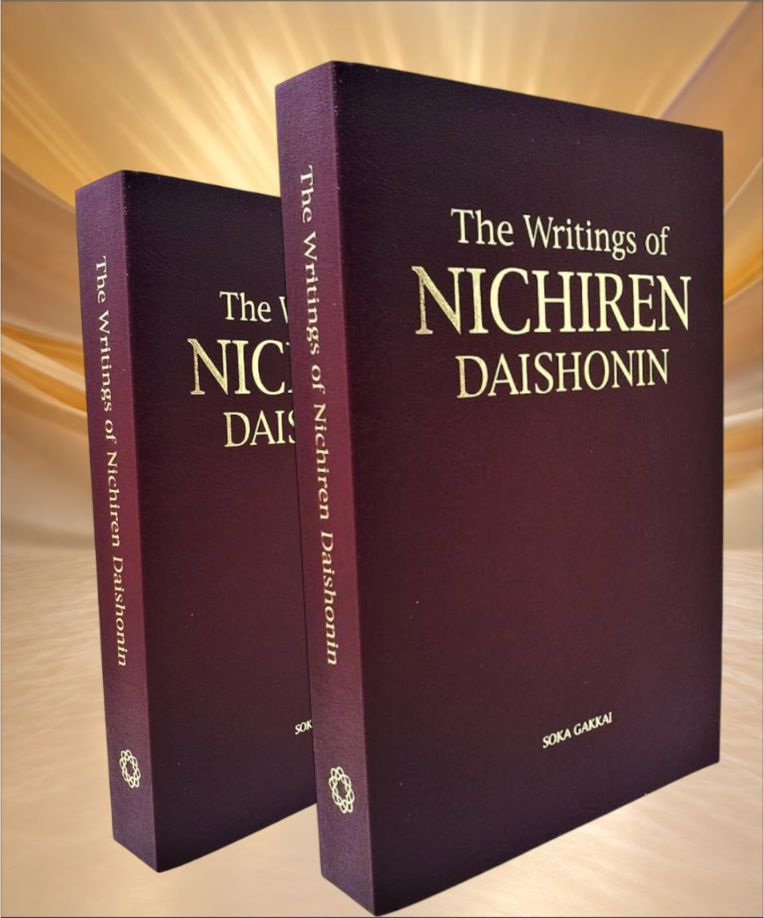
In his letter “Three Tripitaka Masters Pray for Rain,” Nichiren Daishonin highlights a timeless truth about human interdependence:
“When a tree has been transplanted, though fierce winds may blow, it will not topple if it has a firm stake to hold it up. But even a tree that has grown up in place may fall over if its roots are weak. Even a feeble person will not stumble if those supporting him are strong, but a person of considerable strength, when alone, may fall down on an uneven path.”
This insight captures the true essence of The Path We Must Take.
A nation cannot thrive through isolation or policy alone. Institutions require engaged citizens, and individuals require strong, supportive communities when the terrain becomes difficult. The ultimate question for a society is not merely which political platform prevails, but what kind of collective environment we are building for one another.
Policy creates the framework, but the people provide the strength. Economic growth, technological innovation, energy security, and social stability are unsustainable if society remains fragmented.
IL CAMMINO CHE DOBBIAMO INTRAPRENDERE is a call for civic and structural reinforcement. It is a commitment to forge an environment where prosperity is measured not only by economic indicators, but by a nation’s capacity to support its people, fortify its foundations, and walk forward together.
OSAGYEFO NEWSLETTER MAGAZINE Assumpta Newsletter — Live / Digital Edition (October 2, 2026) GLOBAL PERSPECTIVES: FEATURED WOMEN IN LEADERSHIP
PANEL DIALOGUE: IL CAMMINO CHE DOBBIAMO INTRAPRENDERE

SERWAA AMIHERE, ESQ.
Good day, distinguished colleagues, esteemed readers, and citizens across continents tuning into this special digital release of Osagyefo Newsletter. It is my distinct privilege to anchor this high-level international dialogue. Joining us today are two exceptionally formidable leaders whose work continues to shape the legal, political, and socio-economic landscapes of their respective nations and regions:
Prime Minister Giorgia Meloni, joining us from Rome as Italy’s first female Prime Minister, and Assumpta Gahutu, Esq., joining us from Windhoek as a distinguished legal voice on constitutionalism and cross-border accountability in Southern Africa. Your Excellencies, Counsel, you are most welcome.
This newsletter’s article title presents an editorial perspective on modern political leadership in Italy, drawing a direct line between traditional pragmatic roles—particularly those historically held by women—and the governance style of Prime Minister Giorgia Meloni.
Key themes highlighted in the passage:
- Pragmatism Over Rhetoric: It argues that real progress on complex issues like tax reform requires listening, quiet resilience, and decisive execution rather than political grandstanding.
- The Role of Traditional Values: It anchors effective leadership in the daily, problem-solving labor historically associated with managing households and communities, framing this practical wisdom as the foundation of national strength.
- Symbolic and Practical Leadership: It frames Meloni’s tenure as Italy’s first female Prime Minister not merely as a historic milestone, but as an application of this grounded, results-oriented approach to public service.
- Collective Responsibility: It concludes that sustained national progress depends on a shared civic commitment between leadership and citizens, rather than relying solely on a single political figure.
The newsletter layout reframes “Il Cammino Che Dobbiamo Intraprendere” (The Path We Must Take) from a mere geographic or administrative policy itinerary into a profound shift in collective psychological and social consciousness.
Viewed through this lens, the “Path” represents a departure from systemic alienation and a transition toward grounded, mutual national support.
1. The Environment as “Collective Social Consciousness” As noted, moving to an isolated province does not detach an individual from the overarching “macro-reality” of a nation—its shared anxieties, cultural pressures, social expectations, and underlying guilt or pride. When a government operates out of touch with this collective consciousness, it creates a sense of psychological isolation for its citizens.
The newsletter analysis contrasts the Five Star Movement‘s alignment with distant, elite bureaucratic frameworks with Giorgia Meloni’s approach, which is rooted in the immediate, lived environment of ordinary Italians. Under this perspective, the “Path” is an intentional realignment of national strategy with the core identity and everyday realities of the people.
2. Concrete Grounding: Energy, Taxation, and Practical Wisdom A collective psychological shift cannot occur through abstract promises alone; it requires tangible anchors that build trust. The administrative actions the newsletter highlighted serve as the “firm stakes” that anchor this new direction:
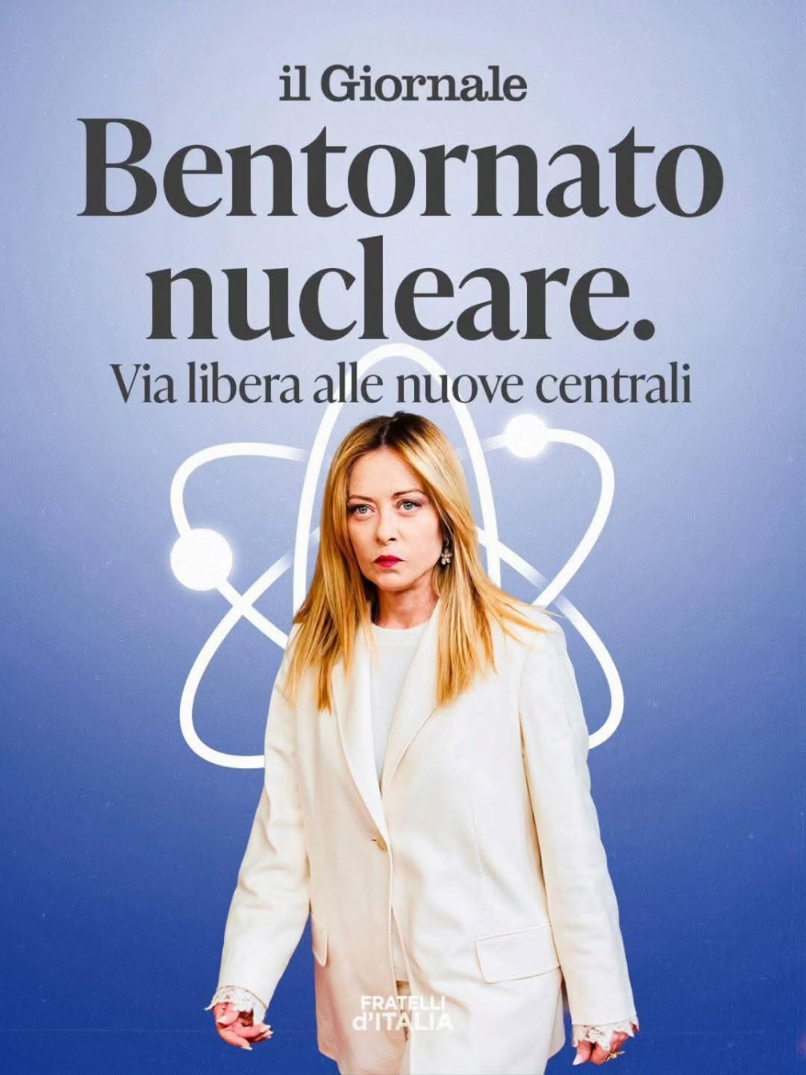
- Energy Sovereignty: The September 2026 legislative framework authorizing a return to modern nuclear energy acts as a structural buffer against external economic shocks, prioritizing long-term stability and self-reliance over foreign energy dependence.
Targeted Fiscal Relief: Eliminating the bollo auto (annual vehicle ownership tax) starting in 2027 for small- and medium-sized vehicles directly eases the daily burden on working- and middle-class households.
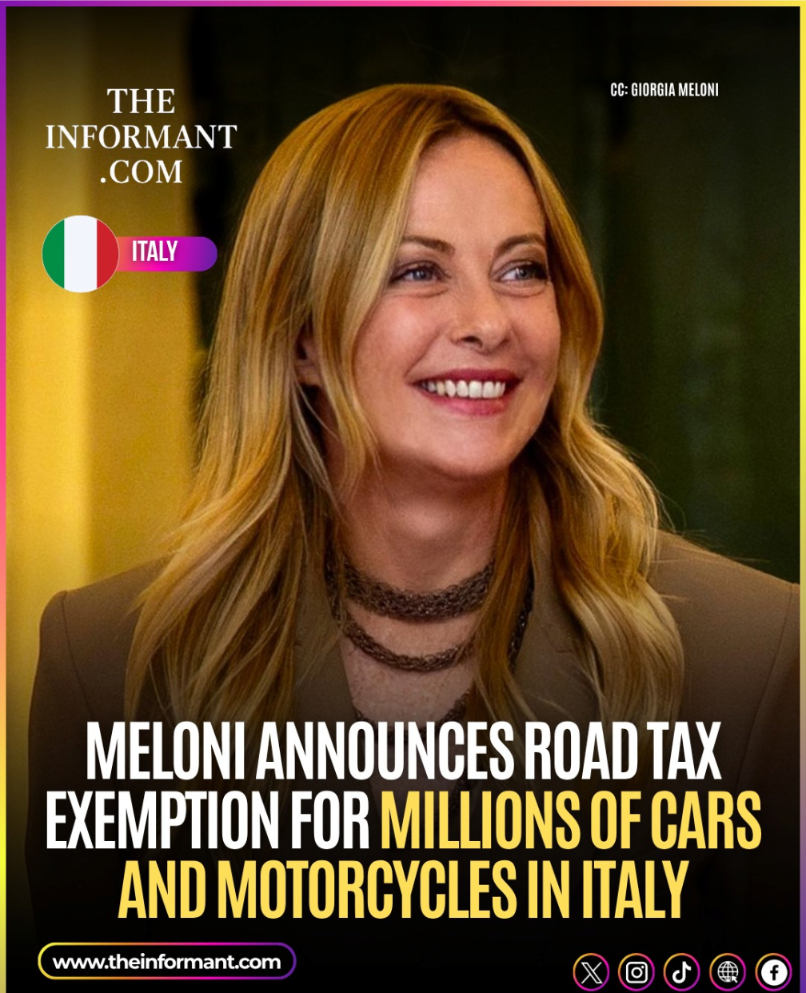
These reforms embody a governance model driven by clear, accessible logic rather than ideological abstraction, reinforcing a sense of domestic security and practical care.
3. The Nichiren Daishonin Parallel: Mutual Support on the Path The newsletter quoted a passage from Nichiren Daishonin’s “Three Tripitaka Masters Pray for Rain” which captures the core philosophy of this social dynamic:
“When a tree has been transplanted, though fierce winds may blow, it will not topple if it has a firm stake to hold it up… Even a feeble person will not stumble if those supporting him are strong, but a person of considerable strength, when alone, may fall down on an uneven path.”
In the context of reflection:
- The “Uneven Path”: Represents the volatile global and European landscape, where isolated, fragmented political movements fail because they lack strong roots in their own soil.
- The “Firm Stake”: Represents decisive, grounded governance that provides stable structural support.
- The “Cammino”: Is not a solitary journey taken by a leader alone, but a shared trajectory where leadership and civic responsibility reinforce each other. When government policies offer solid footing, the entire society can move forward toward economic prosperity without stumbling.
Prime Minister Meloni, given this analytical foundation, I turn to you first. How do you view this intersection between the grounded, practical resilience historically demonstrated by women and the concrete legislative stakes—such as energy sovereignty and fiscal relief—that your administration is driving forward to restore public trust in Italy?

PRIME MINISTER GIORGIA MELONI
Thank you, Serwaa, and greetings to you and Assumpta. It is a pleasure to join this international dialogue.
What this editorial captures—and what I have maintained throughout my public life—is that governance cannot be an exercise in abstract intellectualism divorced from the daily lives of families. Women throughout history, especially working mothers and community leaders, have never had the luxury of grandstanding. When a roof leaks, when a household budget shrinks, or when a child falls ill, you do not deliver a philosophical lecture; you solve the problem with the resources available.
When we stepped into leadership, we inherited an “uneven path”—a landscape frayed by geopolitical instability, energy vulnerabilities across Europe, and a sense among citizens that government was something distant, operating out of Brussels or Rome without feeling their daily anxieties.
To build that “firm stake” mentioned in your analysis, we had to act on fundamental pillars:
- Energy Self-Reliance: Re-evaluating our energy strategy, including our 2026 legislative steps toward advanced, safe nuclear technologies, is about national dignity and economic sovereignty. A nation dependent on external volatility cannot guarantee stability for its workers or small businesses.
- Targeted Relief: Easing the tax burden—such as targeting vehicle ownership taxes for middle-class families—is not just fiscal policy; it is an act of care. It communicates to the citizen: “The state sees your daily expenses and is stepping in to lighten the load.”
Leadership is not about carrying the nation on one’s back as a solitary hero. It is about providing the structural stakes—the laws, the tax relief, the energy security—so that every family, every business, and every worker has the firm footing required to walk forward together.

[SERWAA AMIHERE, ESQ.]
Thank you, Your Excellency.
I appreciate the clarity with which you have articulated the relationship between leadership, practical governance, and the everyday realities of citizens. Your response brings an important dimension to our discussion: that leadership is not simply about defining a direction, but about creating the conditions that enable ordinary people to walk that path with confidence.
Your reference to the “firm stake” is particularly significant. In the context of governance, that stake can take many forms—energy security, responsible fiscal policy, institutional stability, employment opportunities, and above all, the confidence that citizens have in the institutions that serve them.
And I think there is an important point here. The strength of a society cannot rest exclusively upon the determination of its political leadership. It must also be reinforced by institutions, laws, communities, families, businesses, and citizens themselves.
That brings me directly to you, Counsel Assumpta Gahutu, Esq.
You have listened to Her Excellency’s response from the perspective of constitutional law and the broader African experience. I would therefore like to invite you to take the discussion one step further.
How does the principle of the “firm stake” translate into constitutional governance and the rule of law?
More specifically, what happens when citizens lose confidence that their laws, institutions, and public authorities are genuinely working in their service?
And perhaps most importantly, how can women in legal and political leadership contribute to rebuilding that relationship between the state and the people—not m