







OSAGYEFO NEWSLETTER MAGAZINE
🌍 GLOBAL INSIGHT EDITION | SPECIAL INTERNATIONAL READERS' RELEASE
THE AI DIVIDE OR THE AI BRIDGE?
Xi Jinping’s Vision for a New Global Intelligence Order
An Analysis of the 2026 World Artificial Intelligence Conference Speech
By Osagyefo Newsletter Magazine
📅 Special Edition Release: Monday, August 3, 2026
📍 Exclusive Online Edition: assumptagh.live
🌐 Audience: For International Readers Worldwide
🖼️ FEATURE IMAGE RECOMMENDATION
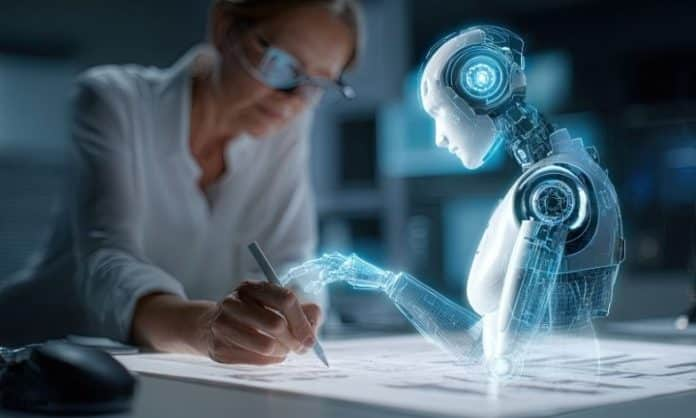
A striking cover featuring a digital globe illuminated by AI networks connecting Africa, Asia, Europe, the Americas, and the Middle East, symbolizing a shared intelligence future.










https://www.instagram.com/hairsenta?utm_source=ig_web_button_share_sheet&igsh=ZDNlZDc0MzIxNw==
Something Unbelievable Is Sizzling at 24 Jungle Avenue This Summer.
In the golden glow of the Accra sun, a transformation is taking place. It’s more than just a change in the weather—it’s a movement. A shimmer of silk, a cascade of waves, and the effortless sway of hair that refuses to be ordinary.
They say beauty is power. But this Summer, what if your hair could command the breeze, turn every head on the coast, and carry the vibrant soul of Ghana wherever you go?
HAIR SENTA — the secret behind every radiant summer glow. ✨🌊
Straight from the heart of Ghana, our 100% luxury human hair extensions are designed for the heat of the moment: lightweight, natural, and undeniable. This season, we’re infusing heritage, craft, and high-fashion glamour into every strand, ensuring you stay cool while looking fire.
Will you be the one who owns the sunshine… or the one who only watches it fade?
Get Your Summer Glow:
Call Now: 📞 (+233) 0544354455 / 0248629769
Explore: 🌐 www.hairsenta.com
Visit Us: 📍 24 Jungle Avenue, Accra, Ghana
Hair Senta. Real Hair. Real Power. Real Summer Energy.
COVER STORY: THE INTELLIGENCE AGE
Who Will Shape the Future of Humanity?

Xi Jinping’s AI Vision, Global Governance and the New Digital Civilisation
📝 EDITOR’S INTRODUCTION
The Moment the World Asked a Bigger Question
At the World Artificial Intelligence Conference (WAIC) in Shanghai, Chinese President Xi Jinping delivered a message that stretched far beyond technology.
His address was not merely about algorithms, machines, or innovation. It raised a deeper question about the future of humanity:
Who will shape the intelligence age, and who will benefit from it?
Xi argued that artificial intelligence should not become an exclusive privilege reserved for a handful of nations and powerful corporations.
Instead, AI should be developed as a shared instrument of human progress—a bridge rather than a dividing line.
The central question behind his speech was both simple and profound:
- Will artificial intelligence deepen global inequality, or can it help create a more balanced world?
💡 EDITORIAL REFLECTION
The New Infrastructure of Civilization
The world is entering an era in which intelligence itself is becoming a form of infrastructure.
The global race for AI leadership is not simply a contest between economies. It is a test of humanity’s capacity to cooperate while navigating unprecedented technological change.
The central question is no longer:
Who will own artificial intelligence?
The deeper question becomes:
Will artificial intelligence serve humanity as a whole?
As nations gather around this new frontier, the greatest innovation may not be the machines we build, but the wisdom with which we govern them.
🏛️ THE FINAL WORD
Artificial intelligence will be one of the defining forces of the 21st century. Humanity now faces a decisive choice:
- Option One: An AI future shaped by domination and competition.
- Option Two: An AI future built on cooperation and shared progress.
🎙️ THE OSAGYEFO GLOBAL DIALOGUE
Special Edition: The AI Divide or the AI Bridge?

FREMA ADUNYAME: A very warm welcome to our esteemed readers joining us from every corner of the globe—across Africa, Asia, Europe, the Americas, and the Middle East! Welcome to this exclusive edition of the Osagyefo Newsletter Magazine Dialogue.
It is my singular honour to host four of the world’s most compelling voices for a conversation that sits at the very intersection of technology, human dignity, civilizational values, and global governance. Allow me to introduce our distinguished panellists:

- Her Excellency Giorgia Meloni — Prime Minister of Italy, an internationally recognized architect of civilizational resilience and a leading voice bridging foundational traditional values with the complexities of modern global leadership.

- Dzigbordi Kwaku-Dosoo — Global Leadership Architect, Human Skills Visionary, Executive Coach, and Founder of DCG Consulting Group and Allure Africa, who has spent decades shaping leaders through emotional mastery and human-centred performance.

- Akosua Owusuwaa — Renowned Entrepreneur, Value Theory Advocate, and Founder of Hair Senta, who stands at the forefront of dignity-based economics—championing a framework where human worth forms the true foundation of national stability.
Distinguished panellists, on behalf of our international readers worldwide, I want to express our deepest gratitude and respect to each of you for lending your profound wisdom and time to this crucial dialogue today.
📖 Setting the Stage: President Xi Jinping’s Vision

FREMA ADUNYAME: Let me bring us straight to our Newsletter Feature on President Xi Jinping’s background and vision for artificial intelligence.
At the 2026 World AI Conference in Shanghai, President Xi delivered a landmark address calling for AI to be developed for the benefit of all humanity, with a strong emphasis on innovation, safety, and international cooperation. His unique trajectory—from living in rural Liangjiahe during the Cultural Revolution to studying Chemical Engineering at Tsinghua University, and later earning a Doctor of Law in political theory—combines technical discipline, political governance, and practical local experience.
His address made it clear: AI must serve humanity, not replace it. Progress cannot be measured solely by commercial profit. AI’s true value must be assessed by its ability to support education, public services, community development, and human well-being.
Now, this brings me to describe Xi Jinping’s speech as: “Opening Our Hearts.”
What does this truly mean? For some, the word heart conjures purely romantic love and emotion. For a surgeon, it is merely a biological pump—a view based strictly on objective reason. But in the context of President Xi’s message, the heart refers to life itself—a synthesis of our emotions, passions, intellect, and reason, all united when we hold a strong faith in human advancement.
My question to the panel is this: Will there be any conflict between our emotions and our reason that prevents harmony, if our faith in human advancement is truly deep?
Akosua Owusuwaa, could you please share your insights with us first?

AKOSUA OWUSUWAA: Thank you, Frema, and greetings to our global audience and my esteemed co-panellists.
To answer your question directly: No, there does not need to be a conflict—provided we anchor both reason and emotion in human dignity.
When we look at the economy and technology through what I call dignity-based economics, we realize that reason and emotion are not opposing forces; they are complementary rails. Reason gives us the technical capacity to build advanced AI systems, while emotion—our empathy, our moral compass—gives us the purpose behind building them.
If our faith in human advancement is genuine, reason without heart leads to cold, exploitative metrics where human beings become mere data points for profit—what I call anti-value. Conversely, emotion without reason leads to sentimentality without practical solutions.
President Xi’s vision highlights that technological tools must uplift human agency, not diminish it. When our faith in human progress is deep, reason serves as the engine, but the human heart remains the driver. Harmony is achieved when technical intelligence is bound to moral responsibility.

FREMA ADUNYAME: Thank you so much, Akosua, for those profound insights. Your perspective on dignity-based economics strikes at the very core of this conversation.
I couldn’t agree more. Indeed, if all of us stand up earnestly and confidently in our faith in humanity, we can lead our families, our friends, our citizens, and our communities in the direction of happiness and hope—always aiming to uplift human agency rather than diminish it. When our faith in human progress is deep, as you so eloquently put it, reason serves as the engine, but the human heart remains the driver. True harmony is achieved only when technical intelligence is bound to moral responsibility, exactly as President Xi Jinping highlighted in Shanghai.
However, this contrast brings us to a troubling reality. Looking across the globe, I find myself deeply appalled and disheartened by the recent spectacles within the American Congress. Many of these men and women sitting in the United States Congress possess the same level of elite education as President Xi Jinping. Yet, looking at their leadership, one is forced to ask: What exactly have these individuals dedicated their life’s purpose or mission to?
Your Excellency, Prime Minister Giorgia Meloni, as a fellow global leader navigating the delicate balance of national sovereignty, civilizational values, and institutional integrity—what can we learn from this striking divide?

GIORGIA MELONI: Thank you, Frema, for opening up such a raw and necessary conversation, and greetings to our international audience.
What we are witnessing in the American Congress is a cautionary lesson for the entire democratic world. I, too, have observed this closely, and I have learned a painful truth: it reveals the untold suffering that political arrogance inflicts upon institutions.
If you look at the members of the American Congress, these are not uneducated or capability-lacking individuals. Among them are leaders of a great nation—seasoned politicians, government officials, educators, literary scholars, scientists, economists, peace activists, journalists, writers, poets, artists, entertainers, doctors, astronauts, and visionaries.
These are people who have private lives, families, husbands, wives, and children. In their personal spheres, many dedicate their lives to the mission of making their families happy and secure. We even see prominent American figures who, upon experiencing divorce, provide their spouses with billions of dollars to ensure the financial security of their children. The human impulse to care, protect, and provide clearly exists within them.
Yet, somehow, they fall short when it comes to expanding that very same purpose to the country they are entrusted to govern.
The tragic tragedy of American governance today is that an insidiously inflicted arrogance—a fixation on partisan division, ideological posturing, and geopolitical dominance—prevents them from expanding that personal mission of care to the broader national collective. Unlike the long-term, civilizational approach demonstrated in China’s focus on national upliftment and public infrastructure, many leaders in Washington become trapped in self-referential battles.
The lesson for all of us is simple yet profound: Leadership without humility becomes self-serving. If political leaders cannot transfer the love, empathy, and sense of responsibility they hold for their private families into a collective mission for their citizens and humanity at large, then all the higher education and institutional power in the world will only result in division rather than progress.

FREMA ADUNYAME:
Prime Minister Meloni, thank you for such an exceptionally candid, thoughtful, and profound reflection. Your distinction between private care and public leadership—and your warning against the destructive nature of political arrogance—is a lesson that resonates far beyond national borders. We deeply respect your courage in articulating what so many around the world observe but rarely name with such clarity.
Turn our focus now to the crucial element of human capability and performance in this evolving landscape.
Dzigbordi Kwaku-Dosoo, as a global leadership architect and someone who has dedicated her career to elevating human-centred performance, emotional mastery, and leadership in times of intense technological disruption—we would love to hear your insights on this. How do we build the internal architecture within leaders and individuals so that humanity remains at the very heart of this technological revolution?

DZIGBORDI KWAKU-DOSOO:
Thank you, Frema, and it is an absolute honour to stand alongside Prime Minister Meloni and Akosua in this critical dialogue for our global audience.
What both Akosua and Prime Minister Meloni have brought to light highlights the ultimate challenge of our modern era: we are attempting to navigate 21st-century artificial intelligence with unmastered human leadership.
In my work with executives, statesmen, and organizations globally—and reflecting on my early years on Wall Street—I have seen firsthand that when technological and economic capability outpaces human emotional intelligence, systems inevitably collapse into arrogance and paralysis.
The tragedy we often see in institutions like the American Congress is not an absence of intellectual capacity; it is a breakdown in emotional mastery and moral alignment. When leaders lack the internal architecture to manage their ego, fear, and desire for short-term dominance, they lose the capacity to connect their intellect to the human heart. They build powerful tools, but they lack the wisdom to deploy them for collective flourishing.
This is precisely why President Xi’s emphasis on AI serving human well-being and maintaining human oversight is so timely. But for human control over AI to mean anything, we must first have control over ourselves.
If artificial intelligence is becoming the new infrastructure of our civilisation, then human skills—empathy, emotional resilience, ethical clarity, and vision—must become our ultimate anchor.
To answer Frema’s earlier foundation: harmony cannot be achieved by technological capability alone. As I always say:
“The future will not belong to those with the best tools, but to those with the strongest humanity.”
If leaders do not cultivate their own emotional mastery, they will continue to build algorithms that mirror their biases, divisions, and arrogance. But when we align human technical capability with deep moral responsibility and genuine emotional intelligence, technology ceases to be a wedge—it becomes the ultimate bridge for human progress.

FREMA ADUNYAME:
Dzigbordi, thank you so much for that powerful framing. “Navigating 21st-century artificial intelligence with unmastered human leadership”—that is a line that will surely resonate with our global readers. Your reminder that our ultimate anchor must be our humanity, and that human control over AI requires control over ourselves first, bridges this conversation beautifully into our next core focus.
That brings us directly to a central pillar of President Xi Jinping’s address in Shanghai: AI Safety and Governance.
While President Xi strongly supported AI innovation, he repeatedly stressed that technological progress must remain strictly under human control and be accompanied by effective governance and proactive risk management.
To break down his position:
- AI Must Remain Under Human Control: Xi warned that as AI systems become more powerful and autonomous, humanity must ensure that machines remain tools serving people rather than entities operating beyond human oversight. He raised fundamental questions about how to peacefully coexist with “thinking machines” and insisted that human-centred AI means people must retain ultimate control over critical decisions.
- Strong Risk Awareness Is Essential: Identifying AI as both an unprecedented opportunity and a potential risk, he urged governments, researchers, and enterprises not to focus solely on innovation, but to anticipate and manage systemic and unintended risks before they escalate.
- Legal and Technical Safeguards: Xi emphasised that AI safety requires actionable mechanisms—advocating for robust legal frameworks, technical monitoring, continuous risk assessments, early-warning capabilities, and emergency response procedures to prevent misuse, abuse, and technological accidents.
- Ethical Governance & Human Dignity: He stressed that governance systems must evolve alongside technology to uphold fairness, social stability, and human dignity, ensuring AI enhances human welfare worldwide.
- International Cooperation on Safety Standards: Recognising that AI safety is a global challenge no single nation can solve alone, Xi called for unified governance frameworks and safety standards—a vision anchored by the newly established World AI Cooperation Organisation (WAICO).
In essence, his message was clear: innovation must be balanced with risk awareness, strong technical guardrails, and international solidarity to ensure AI remains safe, controllable, ethical, and beneficial to all.
Which brings me to my question for our distinguished panel:
Looking closely at President Xi Jinping’s vision for AI safety, what specific safeguards did he propose to ensure technology remains controllable and aligned with human values?
Akosua Owusuwaa, considering your pioneering work in dignity-based economics and value theory, I would love to turn to you first.
From your perspective, how do you see the specific safeguards President Xi proposed—the legal, technical, ethical, and institutional guardrails—shaping the practical reality of AI governance? What does it look like to translate these safeguards into tools that actively protect human dignity across the global economy?

AKOSUA OWUSUWAA:
Thank you, Frema. President Xi’s proposed safeguards provide a vital blueprint, because he moves the debate from vague ethical wishes to concrete, institutional guardrails.
When we analyse the specific safeguards he outlined at WAIC, three critical layers stand out:
First, Technical and Structural Safeguards. President Xi proposed early-warning mechanisms, real-time technical monitoring, and emergency response protocols. From a value-theory perspective, these are not just technical tools—they are the brakes on a vehicle. You don’t put brakes on a car to stop it from moving; you put them on so you can drive fast safely. These technical safeguards ensure that when an algorithmic system begins to hallucinate, bias data, or threaten critical public systems, human operators have the immediate capability to intervene and override.
Second, Institutional and Legal Safeguards. He called for enforceable global legal frameworks and regulatory standards rather than voluntary corporate promises. If we leave AI safety solely to private tech monopolies, profit incentives will always override human safety. By proposing formal regulatory bodies and early-warning systems, he is insisting that public well-being must hold veto power over commercial speed.
Third, Global Institutional Inclusion—specifically through WAICO. Perhaps the most practical safeguard he proposed is the establishment of the World AI Cooperation Organisation (WAICO) and technology-sharing initiatives like the Mazu meteorological system. The greatest safety risk in the 21st century is a deep technological divide where the Global South becomes a testing ground for unchecked algorithms without having a seat at the governance table. True safety requires inclusive governance.
Ultimately, these safeguards protect human dignity by ensuring that algorithm design is bound by moral responsibility. When safety standards are built into the foundation—supported by open-source sharing and capacity building—we ensure that technology serves as a tool for collective human upliftment rather than a mechanism for systemic control.

FREMA ADUNYAME:
Akosua, thank you once again for breaking down those layers with such brilliant precision. Framing those safeguards not as mere restrictions, but as the essential brakes that allow humanity to drive fast and safely toward progress, is a powerful perspective.
Overall, President Xi’s message was that AI should indeed be encouraged and widely applied, but its development must be accompanied by careful oversight so that it remains safe, controllable, ethical, and beneficial to all people. In many ways, President Xi wants us to see the immense power of our own lives—a vital weapon in winning over the fundamental darkness in our relationship with the world and overcoming destructive dynamics.
And this brings us to a very difficult, uncomfortable truth about global power structures.
Consider history: Muammar Gaddafi ruled Libya for decades and maintained a steadfast belief in his vision for his people, yet NATO and elements within Western governance dismantled that nation, leaving instability in their wake. When we look at current European challenges, including the intense debates in places like Spain and across the continent, many argue that globalist elites favour unregulated migration streams simply to secure cheap, vulnerable labour—preferring workers who lack strong labour rights over citizens who demand dignity and high standards.
When institutions operate with this persistent “slavery mentality”—viewing human beings merely as economic instruments or cheap labour to be controlled—how can the world ever trust them to enforce genuine AI safety and human-centred governance, as President Xi Jinping warns?
Prime Minister Giorgia Meloni, as a European leader who has spoken extensively on national sovereignty, border integrity, and civilizational dignity, I would deeply value your thoughts on this.

GIORGIA MELONI:
Thank you, Frema. You have touched upon the central moral contradiction of Western globalist politics today, and it is a point that requires uncompromising clarity.
The fundamental flaw in how many Western institutions approach both migration and artificial intelligence is the same: the reduction of the human person to a mere commodity.
When globalist elites promote borderless policies, it is rarely out of genuine compassion. As you noted, it is often driven by an economic desire for cheap, exploitable labour—a system that degrades the dignity of migrants while undercutting the rights, wages, and social stability of native citizens. It is a modern, sanitised version of exploitation, where human beings are valued only for their cost-efficiency on a balance sheet.
If an elite political class views human beings through such a cynical lens, how can they possibly be trusted to govern Artificial Intelligence responsibly?
The answer is: they cannot.
When a leadership class lacks respect for human dignity in the real world, its approach to AI governance will naturally mirror that same arrogance. Instead of using AI to elevate human agency, they will use it to automate exploitation, deepen surveillance, and concentrate power into the hands of a few technocratic elites and mega-corporations.
This is precisely why civilizational identity, national sovereignty, and moral guardrails are essential in this technological era. President Xi Jinping is correct to warn that AI must remain under strict human control and serve the common good. But for that to happen globally, leaders must first