







Owusuwaa Weekly Magazine
Presents-HAIR-SENTA-MENTALITY
Health & Wellbeing | Culture | Fashion | Lifestyle
A Digital Lifestyle Newsletter for the Global Thinker and Dreamer
EXCLUSIVE FEATURE – COMING FRIDAY, JANUARY 30TH, 2026 | 05:30 AM (GMT)
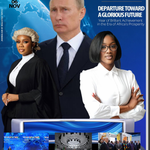
Article Title: Ghana: The Great Pivot. Finding a New Direction Beyond the Extraction Trap
Subtitle / Theme:Trading Short-Term Cash for Long-Term Value: Why a Strategic Partnership with a Saturated Chinese Economy is the Key to Ghana’s Cultural and Industrial Restoration.
Trading Short-Term Cash for Long-Term Value: Why a Strategic Partnership with a Saturated Chinese Economy is the Key to Ghana’s Cultural and Industrial Restoration.
Article Breakdown at a Glance
- The Heritage: Reclaiming the modernization dream of the Nkrumah era.
- The Crisis: How “Short-Termism” and Galamsey are destroying our physical and economic health.
- The Pivot: Moving from an Extraction Economy (taking out) to a Value Economy (building up).
- The Partner: Utilizing China’s industrial surplus (factories, expertise, and supply) to jumpstart Ghanaian self-sufficiency.
- The Mandate: Negotiating for sustainability and technology transfer rather than raw cash.
- technology transfer rather than raw cash.
Hair Senta Advertisement


https://www.instagram.com/hairsenta?utm_source=ig_web_button_share_sheet&igsh=ZDNlZDc0MzIxNw==
❤️ MORE THAN A LOOK. A FEELING. | Hair Senta Valentine’s Special ❤️
This Valentine’s season, from January 30th to February 13th, give yourself the gift of a crowning glory that radiates joy. At The Hair Senta, we understand that hair is more than just an accessory—it is your most powerful expression.
We specialize in turning “unhappy to joy,” translating raw beauty into a smile that lights up any room. Secure your true beauty with a high-quality investment designed to last a lifetime.
Why Choose Hair Senta This Valentine?
- The Transformation: Witness a breathtaking shift from raw texture to a beautiful, polished, and sophisticated finish.
- Your Security: Shop with total peace of mind. We ensure our clients feel protected through transparent sourcing and the highest grade premium textures.
- Trademarked Excellence: Trust in a globally recognized brand that ships the very best human hair extensions from Ghana to the world.
Visit or Order Today
Whether you are prepping for a romantic date or celebrating self-love, let us help you find your perfect look.
- 🏢 Location: 24 Jungle Avenue, Accra, Ghana
- 📞 Call/WhatsApp: (+233) 0544354455 / 0248629769
- 🌐 Shop Online: www.hairsenta.com
The Hair Senta: Securing your beauty, one strand at a time.

A new conversation begins. A bold invitation to rethink Ghana’s direction.
Inside the Feature
Section 1: Why Liberalism Fell Short — and What the Ghana–China Model Offers Instead
Section 2: Gender Equality and Healthcare as Pillars of State-Led Prosperity
Section 3: A Call to the Global South — The African–Asian Alliance Rekindles
SPECIAL GUEST FEATURE

Nana Owusuwaa (Gwen Addo)
CEO & Founder, Hair-Senta & HIBS-AFRICA
Author of Direction Entrepreneur | Motivational Speaker | Wellness Advocate
SPECIAL DIALOGUE EVENT

Hosted by BERLA MUNDI
Award-Winning Broadcaster & Media Personality. In conversation with(Gwen Addo)
Together, they will tackle a critical truth:
Their mission
🌱 A Philosophy of Connection
Owusuaa Gyimah-Addo believes that true prosperity is not built on profit — but on relationships, dialogue, and shared wisdom.

“Businesses thrive when they create spaces of intimacy, trust, and meaning — whether in boardrooms, friendships, or communities.”
🎬 INSIDE THIS ISSUE — FOR INTERNATIONAL READERS
The Global Shift: Why Ghana’s “Direction” Matters to the World
In this feature, Gwen Addo—celebrated author of Direction—presents a masterclass in economic pivot strategy through the lens of Hair Senta Mentality. For our international readers, this isn’t just a story about Ghana; it is a blueprint for how emerging markets can navigate the “Saturated Giant” of the East to achieve true sovereignty.
- The End of Extraction: Understand why Ghana is moving away from the “Resource Curse.” The world is watching as we shift from exporting raw gold and cocoa to demanding industrial infrastructure.
- The China-Africa Synergy: With Western markets tightening, China’s industrial “overflow” (excess factories and expertise) finds its most strategic home in Africa. Gwen Addo explores how this “supply-meets-demand” reality can be harnessed for sustainability rather than debt.
- Healing the Land: A deep dive into the environmental health crisis of galamsey. For the international community, this is a case study on prioritizing ecological health and “Long-Term Value” over the toxic lure of short-term cash.
“We are no longer negotiating for the survival of today; we are negotiating for the sovereignty of tomorrow.” — Gwen Addo, Author of ‘Direction’
Why This Matters Now
As the global economy faces fragmentation, Ghana is positioning itself as a Nation of Peace and Culture. By leveraging China’s industrial maturity to build our own manufacturing base, we are closing the gap left by historical underdevelopment. This issue challenges the world to see Africa not as a land of “aid,” but as a land of “strategic industrial partnership.”
📩 Read Now | www.assumptagh/
📍 Follow Us: @hairsenta
🔖 Hashtags: #HairSentaMentality #KillerInTheLoaf #BeyondTheSugar
Executive Summary: The “New Direction” Strategy
The Core Problem: Ghana has remained stuck in an “Extraction Economy,” trading irreplaceable natural assets (water, land, and minerals) for short-term cash. This “quick-fix” mentality has led to the environmental devastation of galamsey, sacrificing the nation’s health and future for temporary liquidity.
The Shift: We must transition from being a resource-exporter to becoming a Nation of Peace and Culture. This requires a foundation of industrial modernization that the West is currently unwilling or unable to provide due to protectionist policies.
The China Opportunity: China is currently in a state of industrial saturation. They have a surplus of:
- Infrastructure Expertise: More builders than projects.
- Manufacturing Capacity: More factories than domestic space.
- Supply: More goods and technology than buyers.

The Strategy:
Because the US and Europe are “closed” markets, Ghana can offer China the one thing it needs: A new market. However, the negotiation must change. Instead of accepting cash loans that lead to debt and land destruction, Ghana must negotiate for:
- Technology Transfer: Bringing the factories and “know-how” to Ghana.
- Long-Term Sustainability: Building infrastructure that preserves our rivers and farms.
- Value Addition: Processing our own resources on-site rather than exporting raw materials.
The Goal: By trading market access for industrial development rather than short-term cash, Ghana can restore its sovereignty, heal its environment, and finally realize the modern vision first sparked during the Nkrumah era.
Ghana Needs to Find a New Direction
From the Extraction Trap to a Nation of Peace and Culture
Since the era of Kwame Nkrumah, Ghana has sought to reclaim its sovereignty and modernize. For decades, we have tried to carve out a space in the global community through the lens of peace and our vibrant culture. However, a nation cannot sustain “Peace and Culture” on an empty stomach or a poisoned landscape. To truly modernize, Ghana must pivot: we must move away from an extraction economy—which bleeds our land dry—and toward a strategic partnership that builds a foundation for long-term greatness. To achieve this, we need to look toward China.
The China Factor: A Match of Necessity
Why China? The answer isn’t just about money; it’s about market physics. China is currently an “overflowing” economy. It is hyper-developed and extremely competitive. Today, China possesses:
- More factories than space to put them in.
- More expertise than their domestic demand can utilize.
- More supply than they have buyers for at home.
For China to keep growing, they must find new markets. Meanwhile, the doors of America and Europe remain largely closed to African industrial expansion. Western policies often favor aid over industrialization, which keeps Africa in a state of perpetual “underdevelopment.”
The Opportunity: Negotiating for Value, Not Cash
This is a massive opportunity for Ghana—if we play our cards right. Our past mistake hasn’t been working with foreign powers; it has been negotiating for the wrong things. For years, we have settled for short-term cash injections. This “quick money” mentality is exactly what fueled the galamsey crisis, destroying our sacred lakes, life-giving rivers, and fertile farmlands. We traded our biological health for paper currency.
The New Direction requires a New Negotiation:
- Stop asking for loans; start asking for factories. We need China’s excess capacity to be planted on Ghanaian soil.
- Trade market access for technology transfer. If they want to sell here, they must train our youth to build here.
- Prioritize Sustainability. We must refuse any deal that further degrades our environment. Real development is measured by the health of our water and the strength of our infrastructure, not the size of a one-time payout.
The Goal: A Sovereign Modernity
Short-term gain has nearly destroyed the “Black Star.” By leveraging China’s need for expansion to build our own industrial base, we can finally stop digging holes in the ground and start building a nation that leads through innovation, peace, and culture.
“A True direction is not found in the pursuit of what is available, but in the strategic creation of what is necessary. We must stop trading our future for the comfort of a temporary ‘now’ and start building the structures that outlive our struggles.” — Inspired by the philosophy of Gwen Addo in ‘Direction’
Inside This Issue — For International Readers
The “Direction” Philosophy:

Gwen Addo’s book argues that vision without a roadmap is just a dream. This article applies that logic to a national scale. For international readers, this highlights that Ghana’s shift isn’t just political—it’s a mindset shift from a “Third World” resource-provider to a “Global Player” in peace and culture.
The Dialogue: Ghana’s Great Pivot

Berla Mundi: Good day to our cherished readers across the globe! It is an absolute honor to bring you another insightful edition of our dialogue series. Today, we are joined by a woman who needs very little introduction, but whose work deserves every bit of acclaim.
She is a distinguished entrepreneur, a transformative coach, and the visionary author of the book Direction. Gwen Addo, you are a leader shaping the future of business through meaningful connections. After earning your business degree, you took a bold step—dedicating yourself to full-time coaching, food education, and business development. Today, your expertise continues to inspire a new generation of entrepreneurs. Gwen, a very warm welcome to you.

Gwen Addo: Thank you so much, Berla. It’s a pleasure to be here. My passion has always been about guiding people—and by extension, our nation—toward a path of intentional growth. I’m excited to dive into this conversation with you and your readers.
Berla Mundi: Welcome again, Gwen. Today, our dialogue is titled: “Ghana: The Great Pivot—Finding a New Direction Beyond the Extraction Trap.” Our theme centers on trading short-term cash for long-term value. We are looking at why a strategic partnership with a saturated Chinese economy could be the key to our cultural and industrial restoration. This covers everything from the bold move toward Chinese industrial technology to “outliving our struggles” by healing the environmental scars left by galamsey. We’re even looking at how our education must evolve to honor Kwame Nkrumah’s Pan-African hopes.
Gwen, let’s look at the future. The newsletter article states that instead of repeating the past, Ghana needs a completely new direction. Since independence, we’ve tried to find our place, but we’ve remained stuck in a colonial-style “extraction economy” that takes everything and gives back very little. This cycle has led some to harshly label our economic approach as “foolish.”
So, my question to you is this: In this “New Direction” you are asking Ghana to envision, will this truly bring the future Kwame Nkrumah envisioned for us? Can you share your thoughts on this for our readers worldwide?

Gwen Addo: That is a profound question, Berla. To answer it simply: Yes, but only if we change our “Mentality.”
Nkrumah’s vision wasn’t just about a flag and an anthem; it was about Industrial Sovereignty. He knew that as long as we only exported raw materials, we would remain at the mercy of those who own the machines. The “New Direction” I talk about in my book and this article is about finishing what he started. For too long, we have been “economic consumers.” We sell our gold, our timber, and our cocoa for “short-term cash” to solve immediate problems. But you cannot build a great nation on petty cash.


By looking toward China—not for loans, but for their saturated expertise and excess factory capacity—we are finally building the “machines” Nkrumah dreamed of. China has more supply than buyers; we have more needs than solutions. If we negotiate to bring their factories here, to train our youth here, and to process our resources here, we stop being “economic fools.”
We aren’t just seeking a partner; we are seeking a Transfer of Power. That is the heart of Pan-Africanism—an Africa that creates, an Africa that builds, and an Africa that protects its own lakes and lands because it no longer needs to destroy them to survive the next month. That is how we outlive our struggles.

Berla Mundi: That is powerful, Gwen. It sounds like you are calling for a “Negotiation Revolution.”
Education and the Pan-African Dream
That resonates so deeply, Gwen. You’re essentially saying we need to stop being the world’s “raw material warehouse” and start being its “manufacturing hub.” But to do that, we need a workforce ready for that “Transfer of Power” you mentioned.
Our current education system is often criticized for being too theoretical—a leftover from that colonial “extraction” era you described. How can our education system provide a global perspective that actually prepares our youth for this New Direction? And does this shift finally align us with the Pan-African hopes of Kwame Nkrumah?

Gwen Addo: This is where the real “Direction” begins, Berla. If we want to move beyond the extraction trap, we have to stop educating our children to be “employees of the past” and start training them to be “architects of the future.”
Here is how we reform the mindset to meet the moment:
- From Theory to Technical Mastery (TVET & STEM): We must integrate Technical and Vocational Education (TVET) with high-level STEM. Nkrumah famously said, “We shall accumulate machinery and establish steel works.”
- You can’t do that with a workforce that only knows how to pass written exams. We need an education system that partners directly with these “saturated” industries we bring in from China.
- The “Market Intelligence” Curriculum: Our students need a global perspective. They should be studying Chinese industrial cycles, Western trade barriers, and African Continental F