





Osagyefo Digital Newsletter – Special Global Edition
Publication: Osagyefo Online Column / Series: Always With Joselyn Editorial By: Frema Adunyame, Senior Correspondent Theme: A Geography of Human Life
📅 Global Release: Wednesday 7th October, 2026
🌐 Read Exclusively at assumptagh.live/
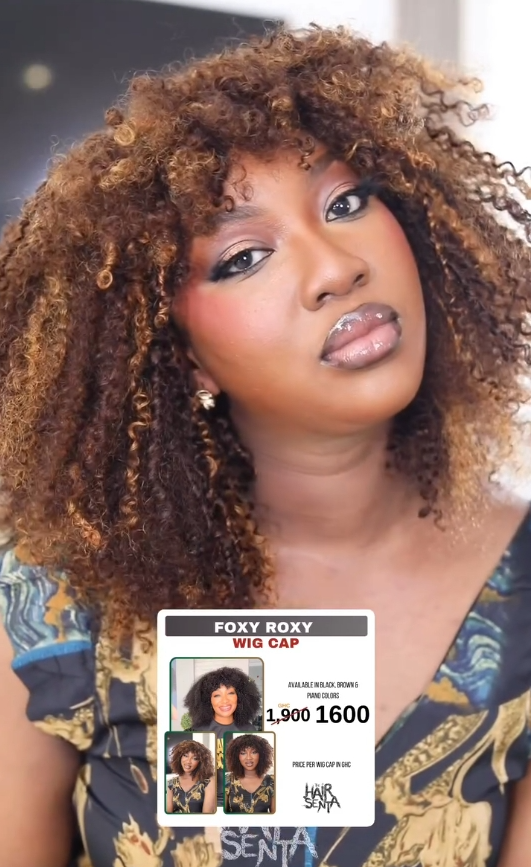
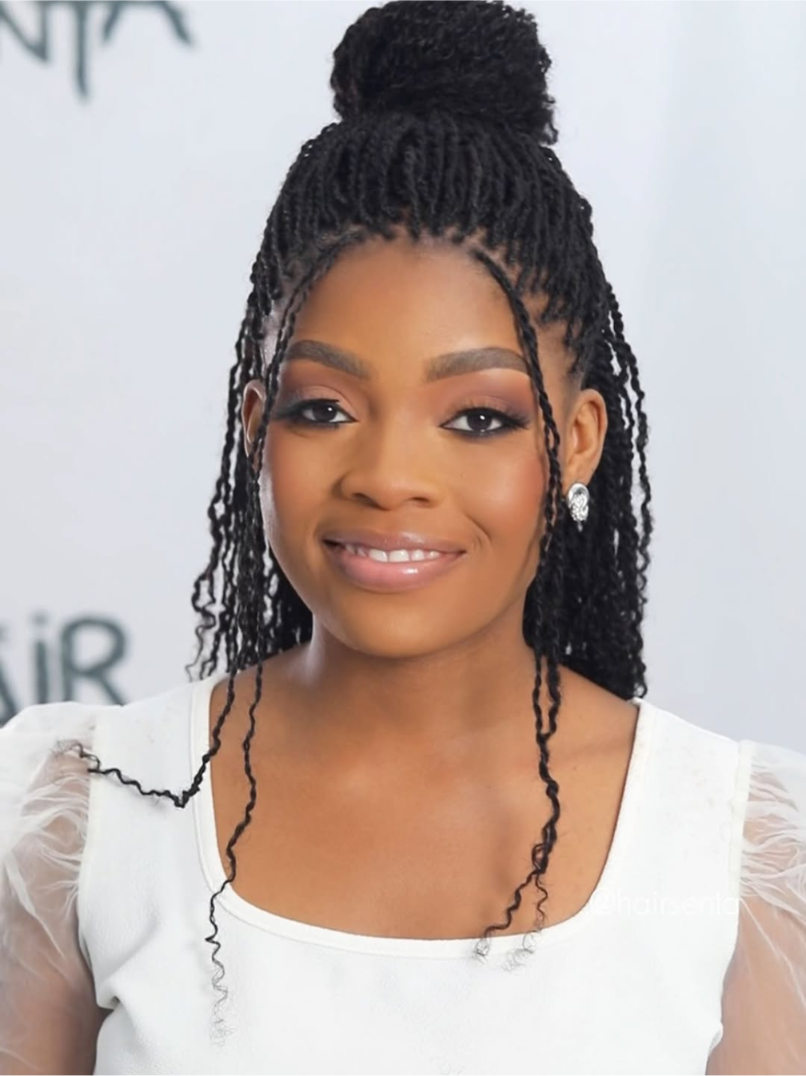
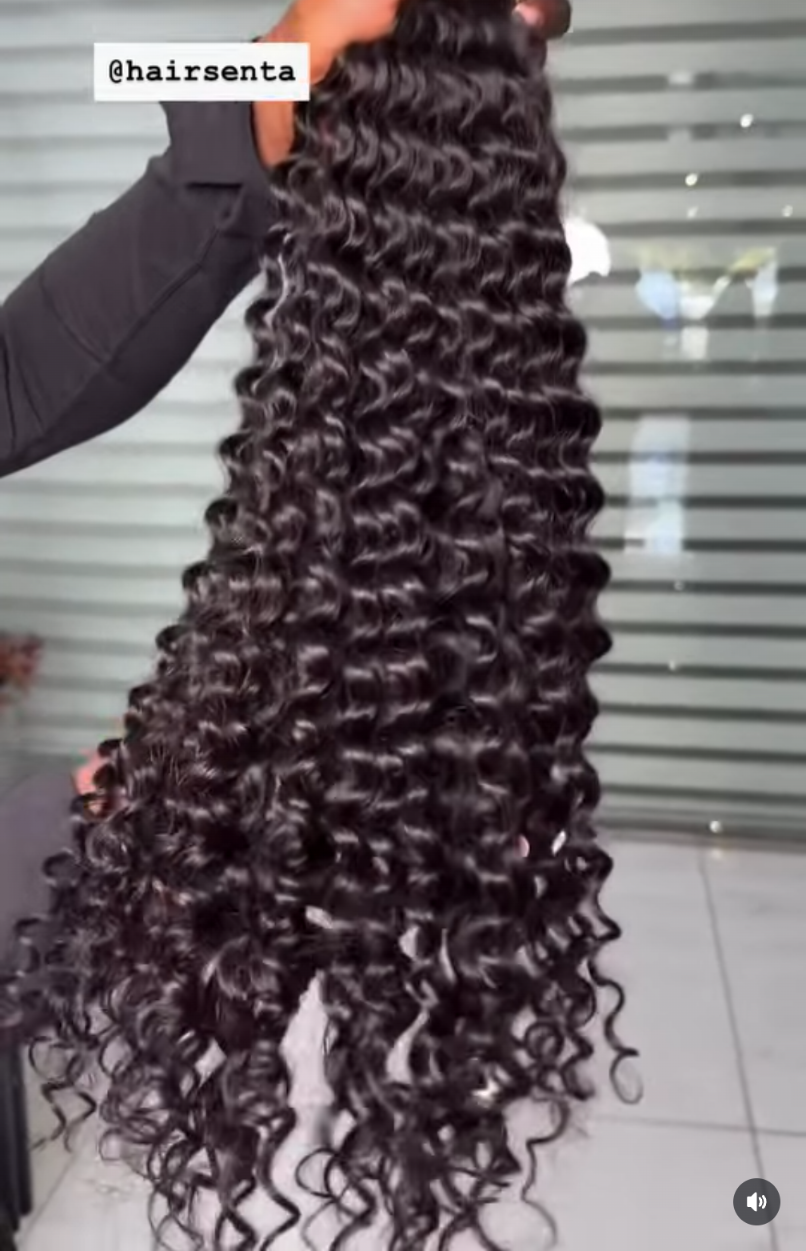



https://www.instagram.com/hairsenta?stkn=MXAzOThhNGZ0Nm15dQ==
Hair Senta – Where Beautiful Hair Meets Beautiful Conversations
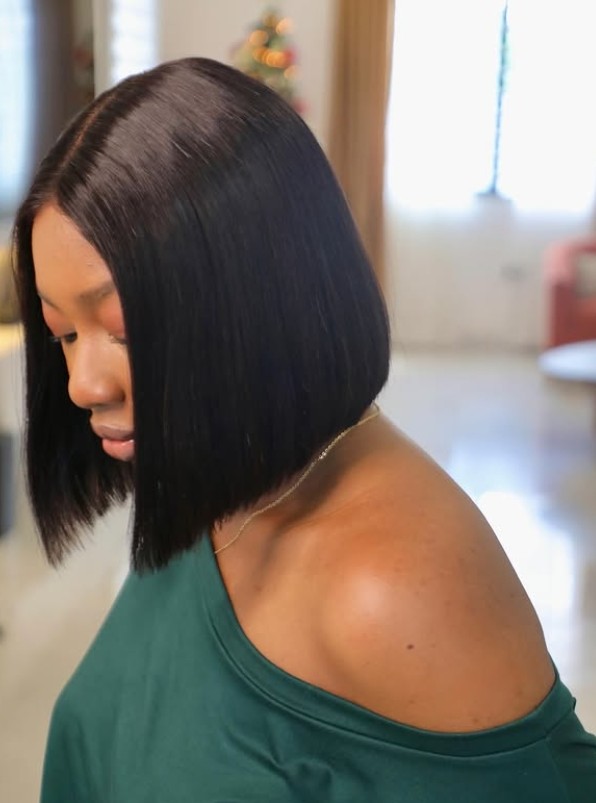
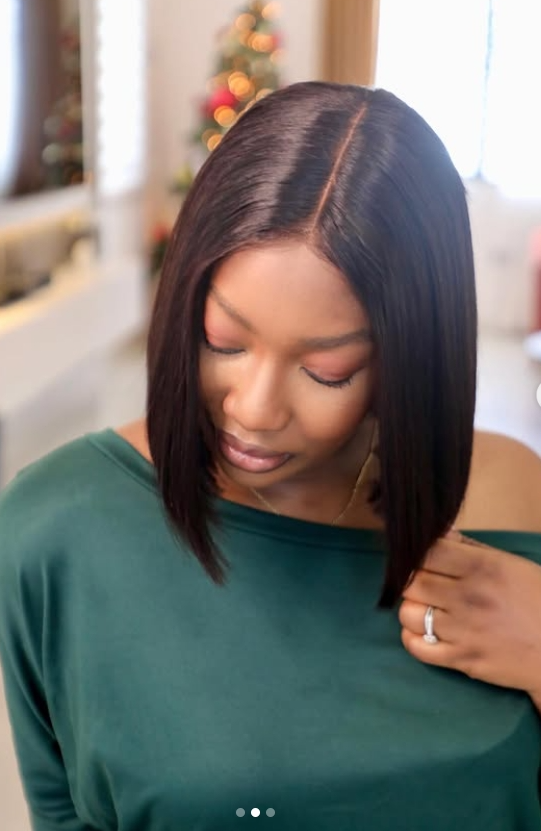
As the season turns to spring, Hair Senta invites you to embrace a fresh start with more than just stunning hair. Step into a world of renewal with an experience wrapped in care, expertise, and a vibrant new energy. Every interaction is thoughtfully designed to deliver the finest human hair extensions from Ghana, while empowering you with expert guidance on how to care for, style, and love your hair as you bloom.
From your first greeting to your final choice, we listen, educate, and support you with warmth and professionalism. Whether you’re refreshing your look for the new season, attending spring weddings, or simply treating yourself to a “new year” glow-up, our team ensures you leave radiant, confident, and ready to shine.
💇🏾♀️ Why Choose Hair Senta This Spring?
Trademarked, trusted, and internationally recognised
Premium human hair extensions shipped from Ghana to the world
Personalised, educational, and uplifting client experience—designed to help your confidence grow
This season, gift yourself the beauty of a fresh start. Because when your hair feels like a masterpiece, you’re ready to take on the world.
📍 Get in Touch
Visit us: 24 Jungle Avenue, Accra, Ghana 00233
Shop online: www.hairsenta.com
Call: (+233) 0544354455 / 0248629769
Follow us on Instagram: @hairsenta
Hair Senta — Because great hair is always in season.
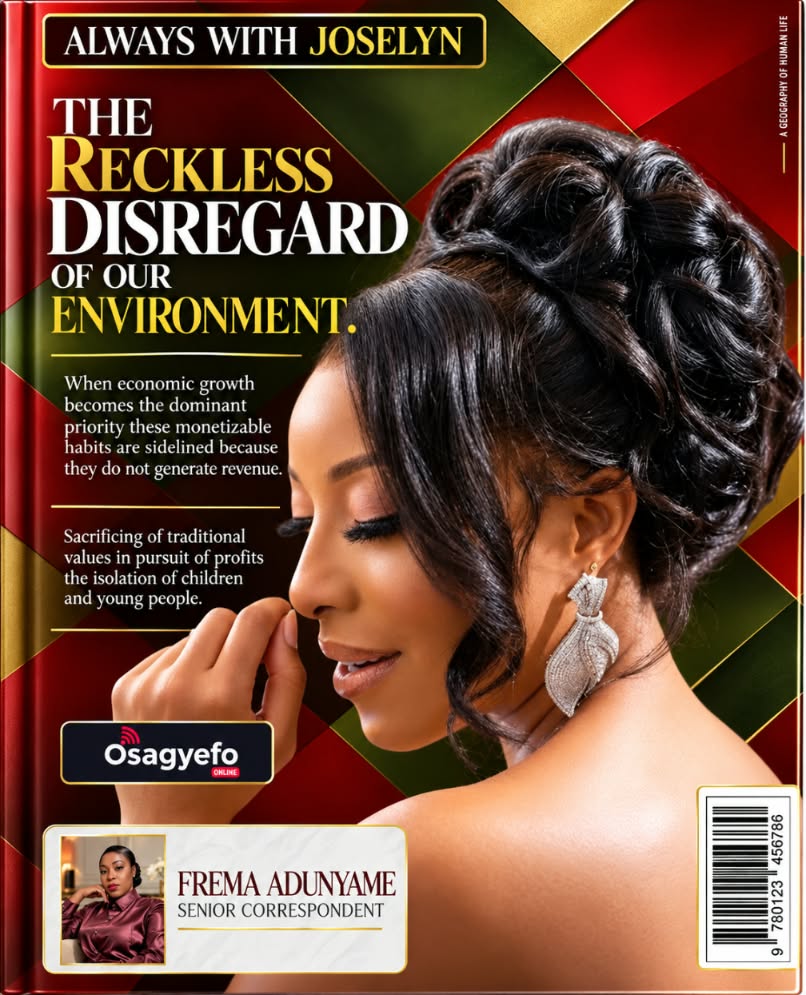
Cover Lead Story
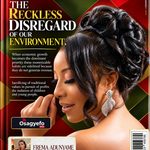
THE RECKLESS DISREGARD OF OUR ENVIRONMENT
“When economic growth becomes the dominant priority, these non-monetizable habits are sidelined because they do not generate immediate revenue. We are sacrificing traditional values in pursuit of short-term profits, leading to the cultural and social isolation of our children and young people.”
Issue Highlights & Table of Contents
- Editorial Desk: The Price of Unchecked Growth — Frema Adunyame examines how rapid economic expansion redefines communal responsibility and impacts human connection across borders.
- Feature Story: Always With Joselyn — An intimate look into preserving heritage, human dignity, and ecological balance in an increasingly modernised world.
- Global Perspective: Preserving Traditional Values for the Next Generation — Reconnecting youth with foundational cultural roots amid digital and economic isolation.
Editorial Message
Welcome to this global edition of Osagyefo Online. In this issue, we turn our lens toward a critical global dilemma: the tension between relentless material advancement and the quiet erosion of our natural and social environments.
As societies race toward profit-driven metrics, non-monetizable human values—community care, environmental stewardship, and intergenerational mentorship—are frequently pushed to the periphery. Senior Correspondent Frema Adunyame and Joselyn Dumas bring us a thoughtful reflection on how we can realign economic ambitions with the preservation of human dignity and traditional wisdom.
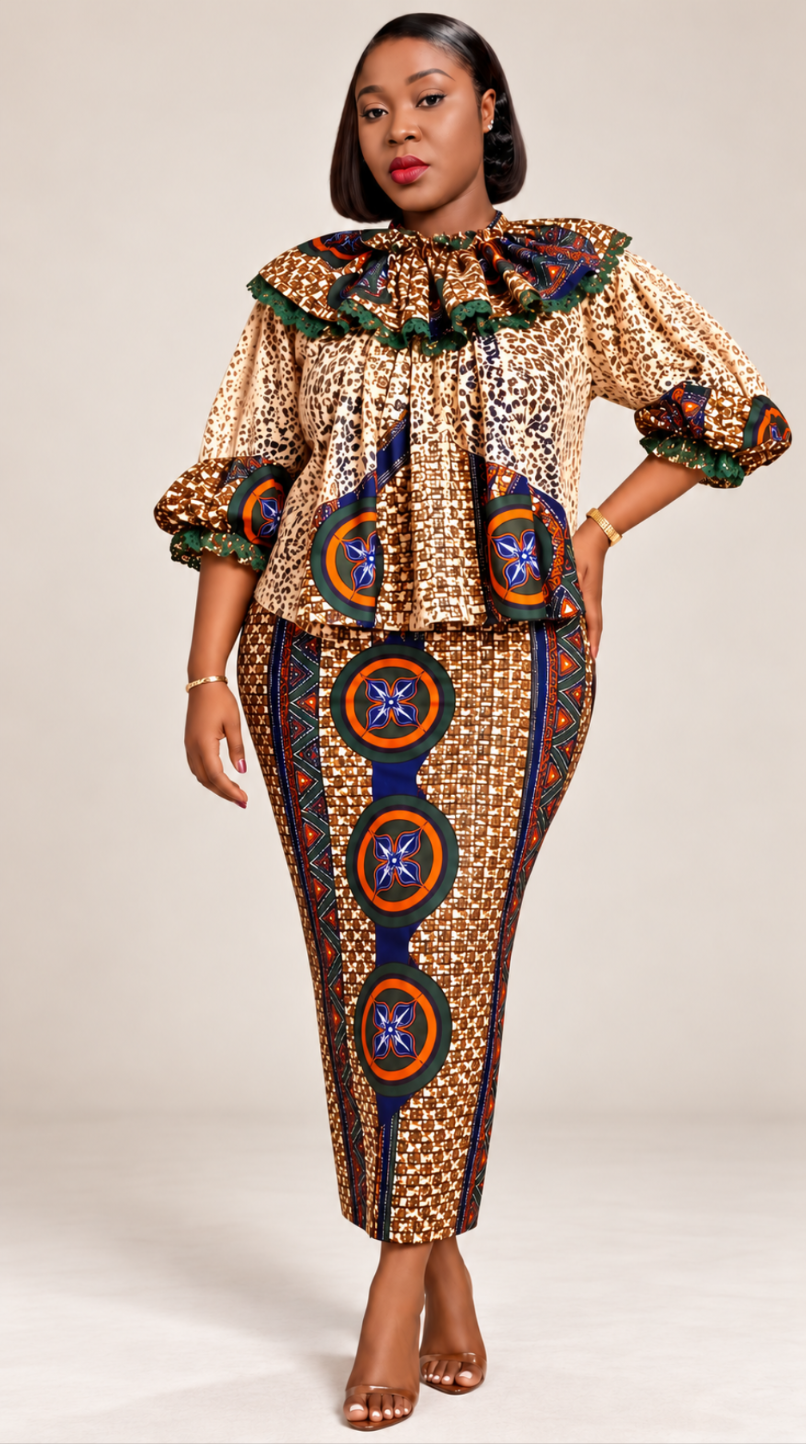
FREMA ADUNYAME: Media Practitioner. Marketing and Communications Strategist. Head of Events and Partnerships at Channel One TV and 97.3 Citi FM. Fablinks Co Ltd, Accra, Greater Accra Region,
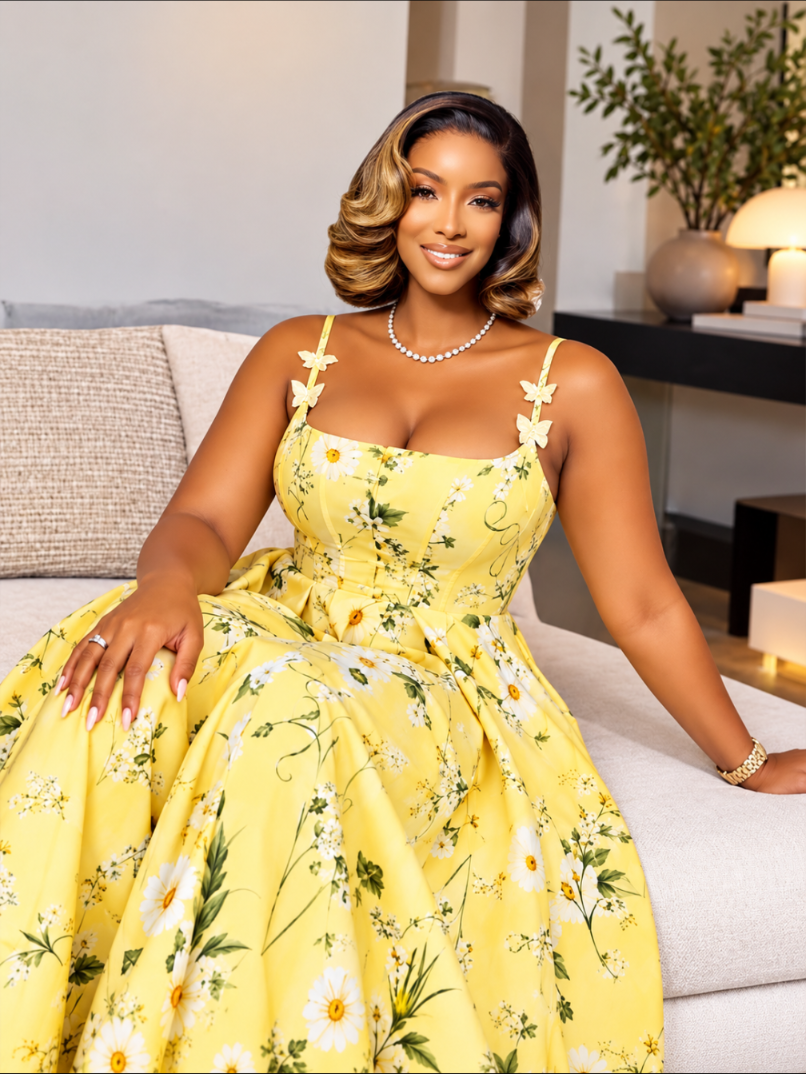
JOSELYN DUAMAS: is a Ghanaian TV host and actor who earned a Ghana Movie Award and an Africa Movie Academy Award nomination for Best Actress for her role in the 2014 movie A Northern Affair. She heads the Joselyn Canfor-Dumas Foundation, which aims to address the needs of vulnerable Ghanaian children.
Join the Conversation
We welcome thoughts and commentary from our international readers across the world.
- Website & Portal: Osagyefo Online
- Letters to the Editor:
editor@osagyefoonline.com - ISSN / Digital Barcode Reference: 9 780123 456786
© 2026 Osagyefo Online. All Rights Reserved.
ALWAYS WITH JOSELYN
A GLOBAL DIALOGUE ON ENVIRONMENT, CULTURE & HUMANITY
Issue: October 2026 | Special Edition: Securing the Foundation for the Peace of the Land Featured Column: Always With Joselyn Host & Senior Correspondent: Frema Adunyame Guest & Featured Voice: Joselyn Dumas
EDITORIAL THEME
“WHAT ARE WE REALLY DESTROYING?”
The Forest, the Rivers, and the Hidden Wealth of Ghana
“When a forest disappears, we may see the loss of trees. When a river is polluted, we may see contaminated water. But perhaps we are losing something much greater—something whose value cannot be measured simply in money.”
TRANSCRIPT & DIALOGUE
FREMA ADUNYAME:
A very warm welcome to our international readers joining us from Ghana and from every part of the world.
It is a pleasure to welcome you to another important dialogue in The Jewel Girl, where we look beyond the headlines to examine the deeper questions affecting our societies, our environment, and the future of humanity.
Today, I am especially delighted to welcome our distinguished guest, Joselyn Dumas, whose voice and work have consistently encouraged us to look more carefully at the society we are creating around ourselves. Joselyn, it is wonderful to have you with us.

JOSELYN DUMAS: Thank you, Frema. And a warm greeting to everyone reading Always With Joselyn around the world.
I am very pleased to be part of this conversation because the questions we are discussing today go far beyond Ghana. They concern the kind of relationship human beings want to have with one another, with nature, and with the societies we are building for future generations.
FREMA ADUNYAME: Joselyn, your newsletter column “Always With Joselyn” warned against tendencies you observed developing in our own Ghanaian society—what you described as “The Reckless Disregard for Our Environment”; the sacrifice of traditional values in pursuit of profits; and the growing isolation of children and young people day after day.
Your proposals bring into focus some very interesting—and perhaps uncomfortable—questions.
Were the conditions we now observe in Ghana inevitable? Or perhaps the question should rather be: “Was industrial society inevitable?”
Was there only one possible path for humanity once industrialisation, economic expansion, and technological development began to transform our societies? And if there were alternatives, did we consciously choose the society we have today—or did we simply allow economic systems, institutions, and habits to shape our lives for us?
There is another question that is perhaps even more important: Will the 21st century be a better century, from the standpoint of human well-being, than the 20th century?
We have entered an age of extraordinary technological advancement. We can communicate across continents within seconds. We can travel farther and faster than previous generations could have imagined. We can extract resources on an enormous scale and transform landscapes within a matter of years.
And yet, alongside this progress, we are witnessing environmental destruction, polluted rivers, disappearing forests, social fragmentation, and young people increasingly disconnected from their communities and from the natural world.
So I want to ask you, Joselyn:
- Will human beings have some part in consciously determining what kinds of societies will characterise the 21st century?
- If the answer is yes—what kind of societies will we choose to shape?
- Will we continue to define progress primarily through economic growth and the accumulation of wealth? Or can we imagine a different definition of progress—one in which human well-being, community, culture, environmental protection, and the dignity of future generations become part of what we mean when we speak about development?
And perhaps, before we discuss what Ghana should become, we need to ask an even more fundamental question:
WHAT ARE WE REALLY DESTROYING?
Because when a forest disappears, we may see the loss of trees. When a river is polluted, we may see contaminated water. But perhaps we are losing something much greater—something whose value cannot be measured simply in money. Joselyn, let us begin there.
THE DIALOGUE

JOSELYN DUMAS:
Thank you, Frema. I think you have framed the questions in exactly the way they need to be framed. Because before we ask whether Ghana can change, or whether the 21st century can be better than the 20th, we have to be honest about something very fundamental:
Most of the problems we see in Ghana today are, ultimately, human problems.
They are problems of the choices we make, the values we tolerate, the institutions we build and, perhaps most importantly, the behaviour we accept as normal.
When I look at Ghana today, I cannot help but think about the country that you and I—and even President John Dramani Mahama—grew up in. We grew up in a Ghana where certain forms of corruption gradually became normalised. We grew up in a society where people could watch those in positions of authority accumulate wealth while ordinary citizens struggled, and eventually begin to ask themselves:
“If those at the top are not loyal to the society that entrusted them with power, why should I remain loyal to the society?”
And that is where the problem becomes much deeper than corruption itself. Because when people lose faith in the idea that society is fair, they begin to look for individual survival. They begin to say: “I have to take care of myself.” And once that mentality becomes widespread, almost anything can be justified in the name of making an income.
That is where I believe we must look carefully at the crisis of galamsey.
- A person sees gold beneath the land and thinks about immediate income.
- Another person sees a river and thinks about what can be extracted from the riverbed.
- Someone else sees farmland and thinks about the economic opportunity beneath the soil.
And slowly, almost without noticing it, we move from asking: “What does this land mean to all of us?” to asking: “What can I get from this land for myself?”
That is a profound change in social consciousness. And when that happens, we can begin destroying our own lakes, our rivers, our forests and our farmland simply because the immediate financial reward appears more valuable than the long-term survival of the community.
But Frema, this is precisely why I believe your question about the kind of society we want in the 21st century is so important. Because Ghana’s environmental crisis is not only an environmental crisis.
- It is a crisis of values.
- It is a crisis of trust.
- It is a crisis of responsibility.
- And it is a crisis of how we understand wealth.
If wealth means only what we can dig out of the ground and sell today, then we will eventually destroy the very foundation upon which tomorrow’s prosperity depends. But if we understand wealth differently—if clean rivers, forests, fertile farmland, healthy communities and the well-being of our children are also forms of national wealth—then our decisions begin to change.
And that brings me back to the question you asked me: Was industrial society inevitable?
Perhaps industrialisation was inevitable in some form. But the way we organise our societies, the values we place at the centre of them, and the limits we place on what we are willing to destroy—those are human choices.
And that means the future is also a human choice. We cannot simply say, “This is how society works.” We have to ask:
- Who decided that this is how society should work?
- What kind of society are we going to leave for the generation that comes after us?
Because if we destroy the foundation in order to become wealthy today, our children may inherit the wealth—but they may no longer inherit the land that made that wealth possible.
That is why Securing the Foundation is not simply about protecting trees or rivers. It is about protecting the conditions under which human life can continue to flourish.
And perhaps that is where the conversation about The Forest Is Alive truly begins.
CONTINUATION: THE DIALOGUE
FREMA ADUNYAME:
Joselyn, thank you. I think what you have just said brings us to something that perhaps lies even deeper than the political and economic questions we have been discussing.
Perhaps more than anything else, it was this reverence for nature, this sense of wonder and appreciation for life, this sense of being intimately connected with both our natural and social environments, that this newsletter is communicating to us.
And that brings me to the question at the heart of today’s dialogue:
WHEN WE DESTROY THE FOREST, WHAT ARE WE REALLY DESTROYING?
When we look at Ghana’s natural resources and forests, perhaps we have become accustomed to seeing them as little more than collections of timber, minerals and opportunities for mining.
But I believe they represent something far greater. I am speaking of a living network—a system of relationships and connections beneath the surface that human beings cannot always see.
And although Avatar presents this idea through fiction, the question it raises is very real:
What if the forest is far more alive, interconnected and valuable than we have allowed ourselves to understand?
This is the question I want to bring to Ghanaians.
For decades, illegal mining—galamsey—has eaten into forests, contaminated water bodies and damaged landscapes that took generations to form.
In the pursuit of gold beneath the soil, we can lose something even more fundamental above it: the foundation upon which life depends.
- A forest is not merely timber.
- A river is not merely water.
- A wetland is not empty land.
- The soil is not simply something to be dug through.
These are parts of a living ecological system.
And when chemicals, heavy metals and sediment enter rivers, the damage does not necessarily stop at the mining site. Water connects communities, farms, forests, animals and people. What happens upstream can eventually become the problem of someone downstream.
And this is where education becomes part of environmental protection.
Because many people see the gold. They may not see the forest being destroyed to reach it. They may see a polluted river, but they may not understand the chain of consequences that follows.
They may hear that someone has been arrested, prosecuted or imprisoned. But the headlines eventually disappear. The cameras eventually leave. The political debate eventually moves on to another subject.
And the question that remains is much harder:
What happens to the land after the headlines disappear?
Joselyn, that is my deeper question to you.
If we are serious about securing the foundation for the peace of the land, what responsibility do we have—not only as politicians or environmental authorities, but as ordinary citizens—to restore our relationship with the land?
And perhaps even more importantly:
Can Ghana become a society where protecting the forest, the rivers and the soil is understood not as an obstacle to economic development, but as one of the foundations of our national wealth?
Joselyn, where do we begin?
CONTINUATION: THE DIALOGUE

JOSELYN DUMAS:
Frema, I think you have brought us directly back to the point I was trying to make in my earlier response.
I said that:
Most of the problems we see in Ghana today are, ultimately, human problems.
They are problems of the choices we make, the values we tolerate, the institutions we build and, perhaps most importantly, the behaviour we accept as normal.
When I look at Ghana today, I cannot help but think about the country that you and I—and even President John Dramani Mahama—grew up in.
We grew up in a Ghana where certain forms of corruption gradually became normalised. We grew up in a society where people could watch those in positions of authority accumulate wealth while ordinary citizens struggled, and eventually begin to ask themselves:
“If those at the top are not loyal to the society that entrusted them with power, why should I remain loyal to the society?”
And that is where the problem becomes much deeper than corruption itself. Because when people lose faith in the idea that society is fair, they begin to look for individual survival. They begin to say:
“I have to take care of myself.”
Frema, I believe this feeling has become so powerful for many Ghanaians that it can occupy almost their entire consciousness. People wake up thinking about how they will survive. They go to work thinking about how they will earn enough to support themselves and their families. They struggle to make a living, and in that struggle, the immediate question becomes: “How do I take care of myself?”
There is nothing wrong with wanting to survive. There is nothing wrong with wanting to provide for your family.
The danger begins when the struggle for individual survival becomes so dominant that we stop seeing the larger world upon which our survival depends:
- We stop seeing the forest.
- We stop seeing the river.
- We stop seeing the soil.
- We stop seeing the farmer whose land is being degraded.
- We stop seeing the child who will inherit the consequences of our decisions.
- And we stop seeing the wide variety of phenomena that influence and sustain our lives.
That, to me, is one of the deepest issues behind the environmental crisis.
A person may destroy a forest because they see an opportunity to make money. Another may pollute a river because they see an opportunity to earn an income. Another may look at a piece of farmland and see only what can be extracted from it.
But the forest, the river and the farmland are not separate from our lives. They are part of the conditions that make our lives possible.
So perhaps the real challenge is not simply to tell people: “Do not destroy the environment.” We must also help people understand why the environment matters to their own lives.
Because if someone is struggling every day to survive, telling that person to think about the environment without addressing the conditions that produced that desperation may not be enough.
We need to rebuild something deeper:
- We need to rebuild the connection between individual well-being and collective well-being.
- We need to help people understand that taking care of oneself does not have to mean destroying the conditions that allow everyone else to live.
And this is where I think your phrase, “Securing the Foundation,” becomes so important.
The foundation is not only the forest. It is not only the river. It is not only the soil. The foundation is the relationship between human beings and the world that sustains them.
If we can restore that relationship, perhaps we can begin to imagine a different Ghana—one where economic opportunity does not require the destruction of the very environment upon which future generations will depend.
So when you ask me, “What happens to the land after the headlines disappear?”
My answer is:
The land remembers our choices. The rivers carry the consequences of those choices. And eventually, those consequences return to human beings.
That is why The Forest Is Alive is not merely a statement about trees. It is a statement about us.
If we cannot see our own connection to the living world, how can we expect to protect it?