When political power, government, and big business become too comfortable, democracy often sends a message. Sometimes that message arrives quietly. Sometimes it arrives at the ballot box.
Something Unbelievable Is Sizzling at 24 Jungle Avenue This Summer… ☀️🌴
In the golden glow of the Accra sun, a transformation is taking place. It’s more than just a change in the weather—it’s a movement. A shimmer of silk, a cascade of waves, and the effortless sway of hair that refuses to be ordinary.
They say beauty is power. But this Summer, what if your hair could command the breeze, turn every head on the coast, and carry the vibrant soul of Ghana wherever you go?
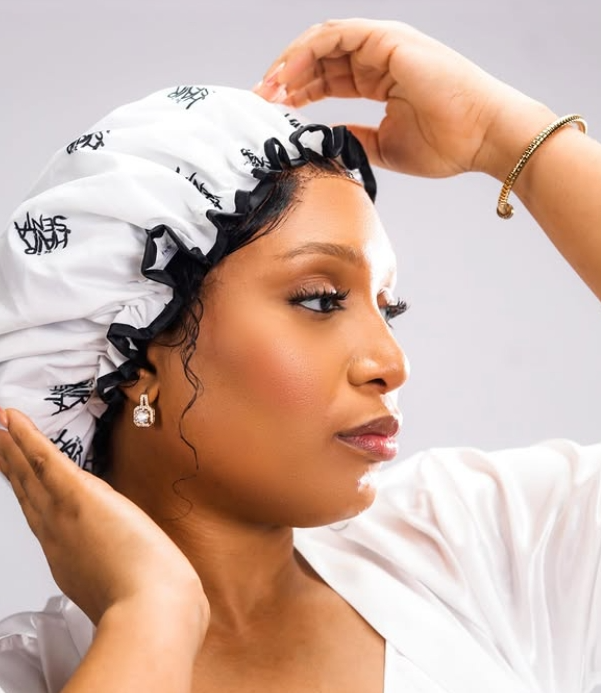
HAIR SENTA — the secret behind every radiant summer glow. ✨🌊
Straight from the heart of Ghana, our 100% luxury human hair extensions are designed for the heat of the moment: lightweight, natural, and undeniable. This season, we’re infusing heritage, craft, and high-fashion glamour into every strand, ensuring you stay cool while looking fire.
Will you be the one who owns the sunshine… or the one who only watches it fade? 🍹🔥
When Political Power, Government and Big Business Become Too Comfortable
A high concentration of political and economic power can create a climate in which governments, major corporations, and long-established political interests become increasingly intertwined.
The question is not necessarily whether there is a hidden conspiracy.
The more pressing concern is whether a political system dominated for decades by established institutions and economic interests can still respond effectively when the foundations of its economic model begin to weaken.
Germany’s recent political upheaval forces an uncomfortable but important question:
Did the political establishment help create the conditions for Germany’s economic challenges?
Observers and critics point to several key trends.
① Overreliance on the Old Industrial Model
For decades, Germany built extraordinary prosperity through manufacturing excellence, exports, automobiles, engineering, machinery, and its renowned Mittelstand of small and medium-sized enterprises.
However, the global economy has changed dramatically.
Chinese manufacturers have become increasingly competitive, while Germany’s automotive sector has faced rapid disruption from electric vehicles, digital transformation, and emerging technologies.
What once represented Germany’s greatest strength has, for some, become a vulnerability as adaptation struggles to keep pace with global change.
② Energy Policy Vulnerability
Germany’s industrial success has long depended on affordable and reliable energy.
Russia’s invasion of Ukraine fundamentally altered Europe’s energy landscape and exposed vulnerabilities within previous energy arrangements.
For energy-intensive industries, higher and less predictable energy costs can mean:
Increased production expenses
Lower investment confidence
Reduced competitiveness
Pressure to relocate production abroad
The economic consequences continue to shape political debate across the country.
③ Bureaucracy and Slow Structural Reform
A common criticism concerns Germany’s regulatory burden and the pace of reform.
Business leaders have frequently highlighted concerns regarding:
Even Chancellor Friedrich Merz entered office promising a more competitive and business-friendly Germany.
This raises an unavoidable question:
Why did meaningful reform become so difficult before the challenges became impossible to ignore?
④ Fiscal Constraints and the Debt Brake
Germany’s constitutional debt brake remains one of the most debated economic policies in Europe.
Supporters argue that fiscal discipline protects future generations from unsustainable debt.
Critics contend that excessive restrictions can limit strategic investment in:
Infrastructure modernization
Public services
Digital transformation
Innovation and emerging technologies
The dilemma is clear:
How can a nation preserve fiscal responsibility while investing enough to prevent economic stagnation?
5. THE AFD’S EMERGENCE: A SYMPTOM OF WESTERN GLOBALIST MISCALCULATION
The political shifts unfolding in Germany are not isolated incidents—they are the natural outcome of systemic errors by Western globalists in governance, security, and economic policy.
While every nation makes mistakes, the post-Cold War era fostered a dangerous sense of hubris. Treating their dominance as absolute, Western elites operated as if they were atop Mount Olympus—unquestionable, unaccountable, and oblivious to the long-term consequences of compounding their own errors.
⚖️ THE POLITICAL VERDICT
The rise of the Alternative for Germany (AfD) should not be viewed solely as the success of a single political party. It may also be interpreted as a signal from voters who believe the established political order has not adequately addressed their economic and social concerns. Yet another question remains:
Is the ADF the answer?
Or is its emergence simply the consequence of a system that failed to provide convincing answers? Perhaps Germany has reached a historic moment when old political formulas can no longer carry the weight of new realities. And perhaps that is why, after a long political night…
☀️ THE SUN ALSO RISES
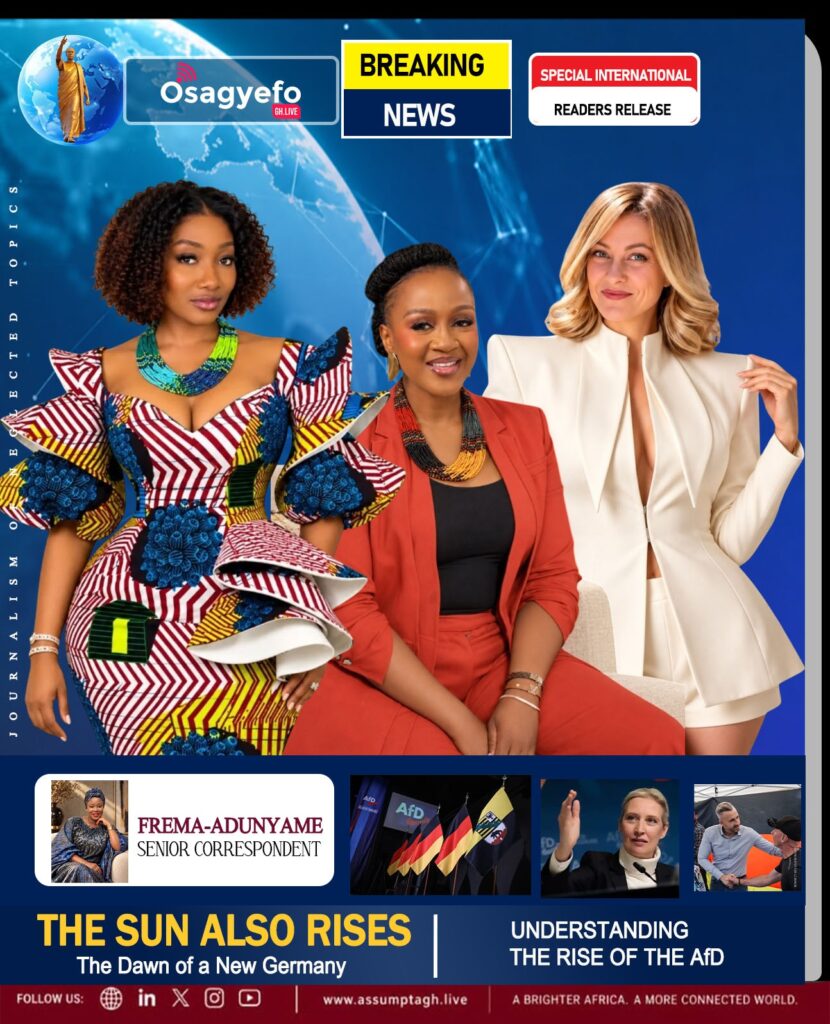
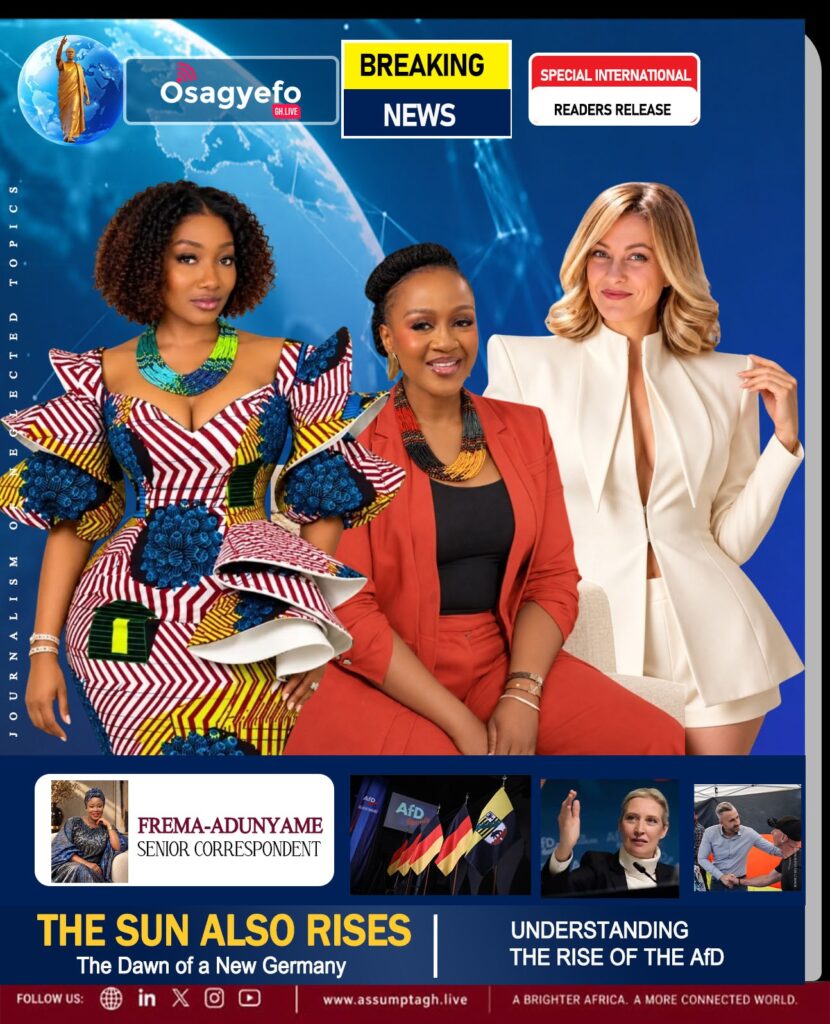
🌍 INSIDE THIS EDITION
Exploring Media, Power & Truth in a Changing World
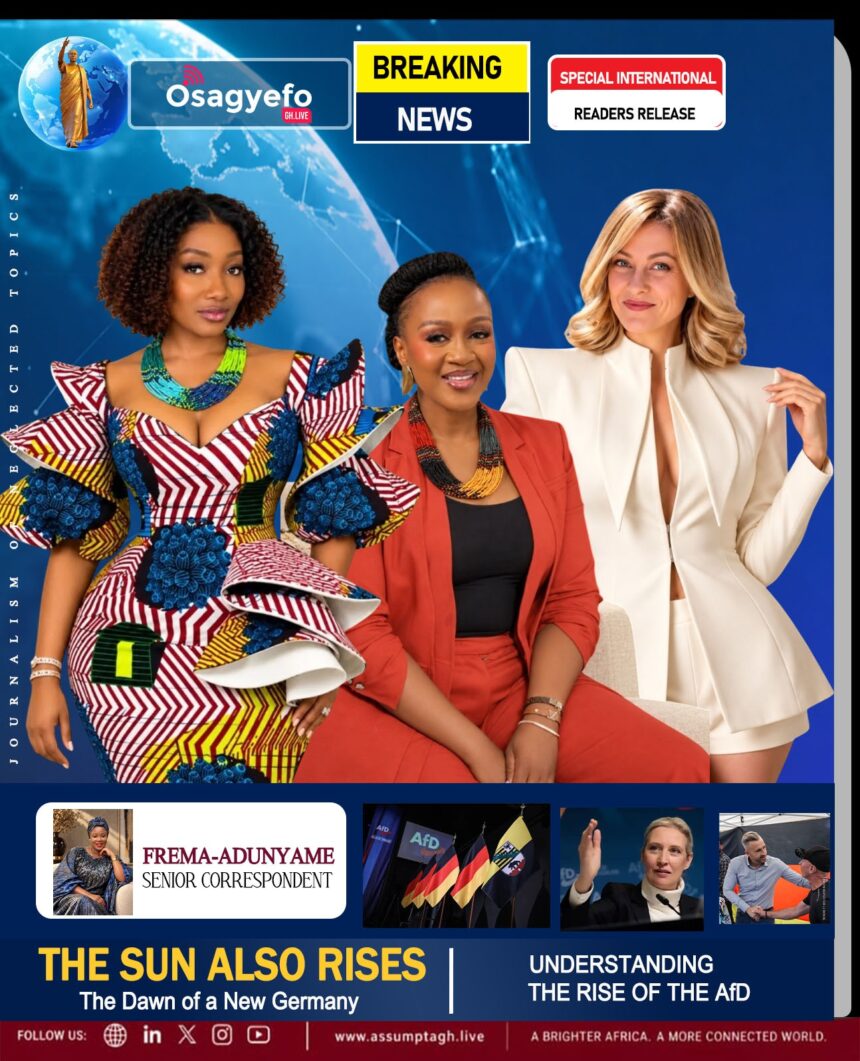
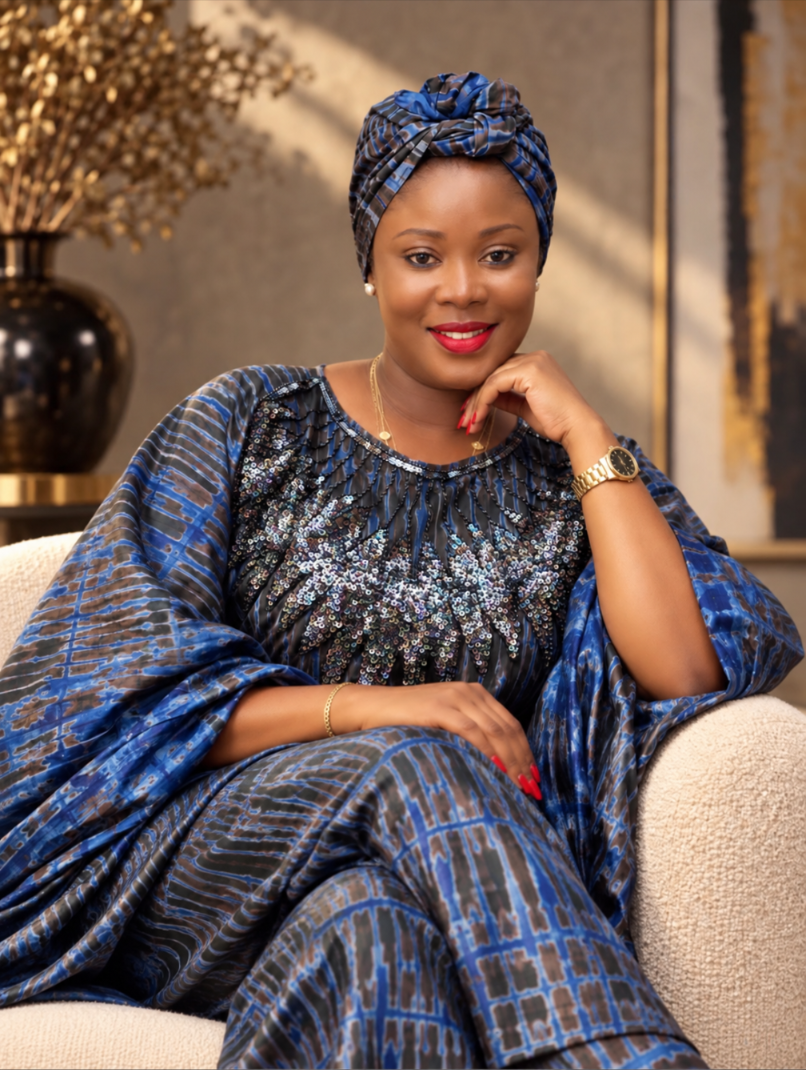
FREMA-ADUNYAME-HOST
In this insightful and thought-provoking edition, OSAGYEFO Publications presents a powerful conversation led by Frema-Adunyame, distinguished broadcast journalist and analyst.
With intelligence, wit, and sharp political insight, she explores the complex intersections of media, leadership, power, economics, and truth during an era of unprecedented global transformation.
Joining the discussion are renowned thought leaders shaping conversations across Africa and Europe.
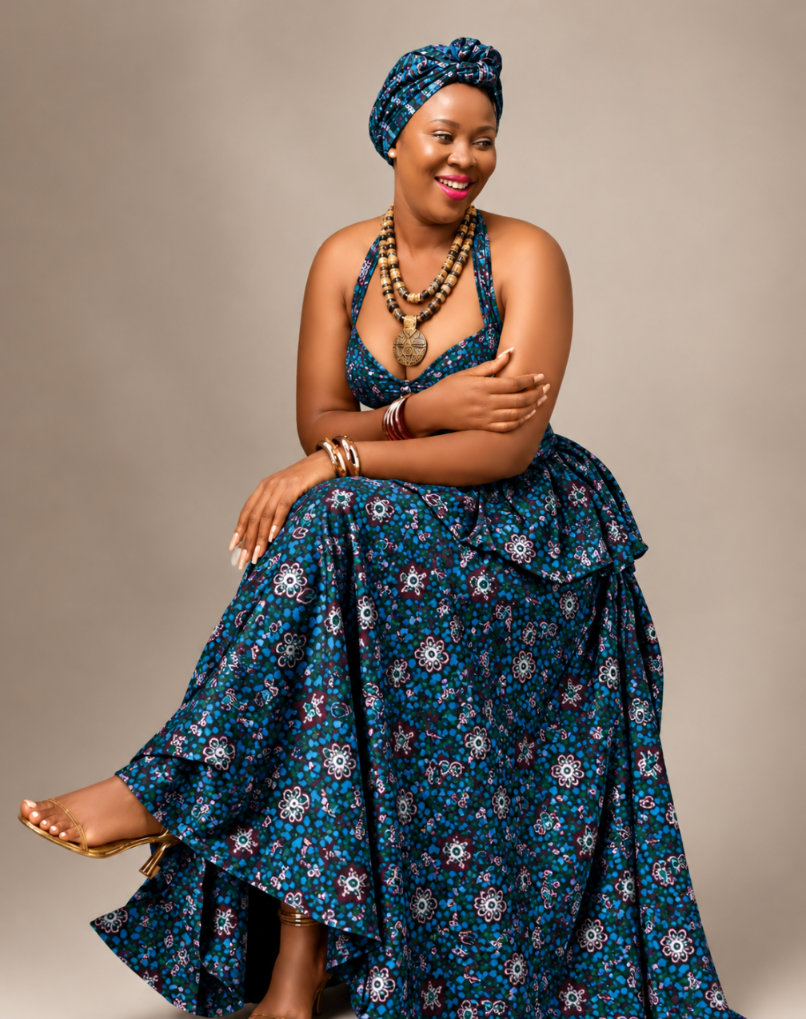
👩🏾💼 🇬🇭 AKOSUA OWUSUWAA
Global Entrepreneur • Economic Strategist • Visionary Leader
Founder and Chief Executive Officer of Hair Senta and HIBS Africa, Akosua Owusuwaa is widely recognised for her advocacy of economic empowerment, entrepreneurship, and cultural identity. She is also the author of “Direction”, a work that inspires purposeful leadership and personal growth. Her insights continue to influence conversations around economic transformation across Africa and beyond.
GIORGIA MELONI
Prime Minister of Italy
One of Europe’s most influential political figures, Giorgia Meloni brings a compelling perspective on:
National sovereignty
Democratic governance
Economic policy
Global political strategy
Europe’s evolving role in world affairs
Her leadership continues to shape political discourse across the continent.
👩🏾💼 🇬🇭 DZIGBORDI KWAKU-DOSOO
Leadership Strategist • Keynote Speaker • Human Revolution Advocate
Globally respected for her transformative leadership philosophy, Dzigbordi Kwaku-Dosoo champions what she describes as the “Human Revolution”.
Her work focuses on:
Human-centered leadership
Organizational transformation
Personal empowerment
Future-ready institutions
She continues to inspire leaders and organisations across the world.
📖 EDITOR’S CLOSING NOTE
“The future belongs not to those who resist change, but to those who understand it, shape it, and lead through it. In an age defined by uncertainty, informed dialogue remains our most powerful tool.”
“Good day, and warm greetings to our readers across Africa, Europe, and the wider world.
Welcome to Osagyefo Newsletter Magazine, where we explore the subjects that shape our societies, challenge our assumptions, and demand a deeper examination of power, leadership, and the future.
Today, we turn our attention to Germany—a nation standing at a significant political crossroads, and a development whose implications extend far beyond its borders.
We are pleased to welcome our special international panel: distinguished voices from Africa and Europe whose experiences offer different but complementary perspectives on governance, economic transformation, leadership, sovereignty, and the human consequences of political decisions.
To our readers worldwide, thank you for joining us.
And to our distinguished panelists, welcome to The Sun Also Rises: The Dawn of a New Germany.”
🌍 WELCOME TO THE SPECIAL INTERNATIONAL PANEL
“Thank you for joining us. Our discussion brings together renowned thought leaders shaping conversations across Africa and Europe.”
AKOSUA OWUSUWAA
Global Entrepreneur | Economic Strategist | Visionary LeaderFounder and CEO, Hair Senta and HIBS Africa | Author of “Direction”
Akosua Owusuwaa brings a distinctive perspective on economic transformation, entrepreneurship, leadership, and cultural identity. Through her work as an entrepreneur, strategist, and author, she examines how individuals, institutions, and nations can build sustainable futures in a rapidly changing world.
“Akosua, it is a pleasure to have you with us. Welcome.”
GIORGIA MELONI
Prime Minister of Italy
Prime Minister Giorgia Meloni offers a distinctive European perspective on governance, national sovereignty, economic policy, and the future direction of Europe in an increasingly complex global environment. Her participation in this editorial dialogue provides an opportunity to examine the tensions between national priorities, European cooperation, democratic accountability, and the changing geopolitical order.
“Prime Minister Meloni, welcome to our international discussion.”
🇬🇭 DZIGBORDI KWAKU-DOSOO
Global Speaker | Leadership Strategist | Human Revolution Advocate
Known internationally for her human-centred approach to leadership, innovation, and organisational transformation, Dzigbordi Kwaku-Dosoo inspires individuals and institutions to lead with purpose, develop people, and create meaningful change.
“Dzigbordi, we are delighted to have you here. Welcome.”
FREMA-ADUNYAME
Broadcast Journalist | Political Analyst
“And I am Frema Adunyame, your host for this important conversation.
I will be guiding our discussion through the intersections of media, power, leadership, and truth—with intellect, clarity, humor, and, hopefully, the courage to ask questions that do not always come with comfortable answers.”
⚡ THE DIALOGUE BEGINS
FREMA-ADUNYAME
“Let me begin by welcoming all of you once again.
Our feature today is titled ‘The Sun Also Rises.’ It is a title that suggests not only a new dawn, but also the possibility that something long developing beneath the surface has finally become impossible to ignore.
Germany, often regarded as one of Europe’s economic and political anchors, is experiencing a profound political realignment. The rise of the Alternative für Deutschland (AfD) has intensified questions about the direction of German democracy, the performance of established parties, and the future of European political cooperation.
The question before us is not simply: Why is the AfD gaining support?
It is also: What does that support tell us about the condition of the political system itself?“
🏛️ THE POLITICAL CROSSROADS
FREMA-ADUNYAME
“Germany has reached a moment of considerable tension.
Industrial disruption, energy-policy friction, concerns about immigration and security, rising living costs, and growing voter alienation have all become part of a wider European conversation.
For years, many Western political establishments appeared confident that the post-Cold War order represented the natural and permanent direction of history. Economic integration, global trade, supranational institutions, and a shared European political framework were presented as the foundations of stability.
But what happens when citizens begin to feel that these systems no longer protect their livelihoods, their communities, or their sense of political agency?
That brings us to the central argument of our feature.”
🔍 THE WESTERN GLOBALIST MISCALCULATION
The political shifts unfolding in Germany are not necessarily isolated incidents. They may also be understood as a reaction to accumulated policy failures—whether in governance, economic planning, energy security, industrial strategy, or the relationship between political institutions and ordinary citizens.
Following the end of the Cold War and the collapse of the Soviet Union, Western elites often operated with a sense of historical confidence. Yet, over time, decisions that appeared strategically sound from the perspective of institutions sometimes produced consequences that were deeply unpopular among the people expected to live with them.
The emergence of alternative political movements may therefore be less an inexplicable anomaly than a warning:
When political establishments become disconnected from the realities of their citizens, the electorate eventually finds other ways to express its dissatisfaction.
But there is an important question here: Does rejecting the established order necessarily produce a better one?
That is where our conversation becomes especially important.
📊 THE GERMAN ELECTION AND THE QUESTION OF VOTER FRUSTRATION
FREMA-ADUNYAME
“The AfD’s reported performance in Saxony-Anhalt—around 44%, compared with approximately 20% in 2021—has drawn considerable attention.
The CDU, meanwhile, is reported to have fallen from approximately 37% to around 18%.
These figures, if confirmed by the official results, represent a dramatic political shift.
And naturally, the immediate reaction from some observers is: ‘Have millions of Germans suddenly become extremists?’
But perhaps we should ask a different question.
Could it be that a significant number of German voters feel they have simply had enough?
Enough of political promises that do not translate into economic security. Enough of rising costs. Enough of uncertainty. Enough of feeling that their concerns are dismissed rather than addressed.
Of course, understanding why people vote for a political movement does not mean endorsing every position that movement holds. But understanding the causes of political support is essential if we are serious about democracy.”
🌐 THE RUSSIA QUESTION AND POLITICAL FRAMING
FREMA-ADUNYAME
“There is another issue raised in the commentary surrounding this election: the timing of a reported German government accusation concerning Russia and an explosive-drone incident in Leipzig, said to have occurred shortly before the vote.
Let us be precise here.
The timing and political context deserve examination, but timing alone does not establish causation, and an accusation is not the same as conclusive public evidence.
The broader question, however, remains relevant:
During election campaigns, how much political attention is devoted to Russia, Ukraine, war, security, emergency measures, and rearmament—and how much is devoted to the everyday economic concerns of citizens?
Because an increasing number of Europeans appear to be asking:
‘When will you talk about us? About the cost of living, energy, industry, immigration, security, wages that do not seem to rise, and taxes that continue to increase?’
And when voters support a party that challenges the dominant political narrative, the response is often to describe them simply as ‘extremists.’
But when a party reaches approximately 44% of the vote, perhaps the more constructive response is not merely to insult its voters.
Perhaps it is to ask: What has brought so many people to this point—and what must established political parties change?“
❓ THE CENTRAL QUESTION
FREMA-ADUNYAME
“So, distinguished panelists, this is where I would like to begin.
If the surge of alternative political movements across Europe is not merely an anomaly, but a direct verdict on the failures of the post-Cold War political and economic order, what comes next?
And perhaps an even more difficult question:
When established systems fail to protect domestic industries, national sovereignty, or social stability, how should visionary leaders rebuild state governance without falling into total protectionism, authoritarianism, or political fragmentation?
Let me put that question directly to each of you.”
🎯 DIRECTED QUESTIONS TO THE PANEL
TO PRIME MINISTER GIORGIA MELONI
The Geopolitical and Governance Angle
FREMA-ADUNYAME
“Prime Minister Meloni, you have consistently emphasized national sovereignty, democratic accountability, and the importance of national interests within the European framework.
From your perspective in Rome:
Question 1: Is the political realignment in Germany a sign that Europe must fundamentally rethink its economic and energy models—or are we witnessing a deeper and more permanent breakdown in European political cohesion?
Question 2: How can European leaders restore public confidence in national institutions while preserving the cooperation that Europe needs to remain economically and strategically strong?”
TO AKOSUA OWUSUWAA (GWEN ADDO)
The Economic and Strategic Angle
FREMA-ADUNYAME
“Akosua, as a global entrepreneur and economic strategist looking at international trade from an African perspective, your insight is particularly valuable.
When major Western manufacturing economies struggle with high energy costs, industrial disruption, and rigid bureaucracy, the consequences do not remain within their borders.
Question 1: How does this shift global supply chains, and does the weakening of parts of the Western industrial model create new leverage and opportunities for emerging African markets?
Question 2: What must African countries do to ensure that they do not merely become consumers of a new global economic order, but active producers, industrial partners, and strategic decision-makers within it?”
TO DZIGBORDI KWAKU-DOSOO
The Leadership and Human Transformation Angle
FREMA-ADUNYAME
“Dzigbordi, you advocate for a human-centered approach to leadership and what you describe as a Human Revolution.
When political and corporate elites lose touch with the everyday realities of citizens, trust begins to collapse. And when trust collapses, institutions become vulnerable to radical disruption.
Question 1: How can modern institutions transform their leadership models before voter frustration forces a more dramatic political upheaval?
Question 2: What does responsible, human-centered leadership look like when a society is divided, anxious, and increasingly distrustful of the people in power?”
🔄 TRANSITION
FREMA-ADUNYAME
“These are not easy questions.
They concern the future of Germany, the direction of Europe, the possibilities before Africa, and the responsibility of leaders everywhere to understand the people they serve.
Let us begin.
Prime Minister Meloni, may we start with you?”
📰 OSAGYEFO NEWSLETTER MAGAZINE“Journalism of Neglected Topics” 🌐 Read Exclusively at:www.assumptagh.live 📅 Release Date: Monday, September 14, 2026
🇮🇹 THE INTERNATIONAL DIALOGUE
Prime Minister Giorgia Meloni RespondsThe Geopolitical and Governance Angle
🏛️ GIORGIA MELONI — PRIME MINISTER OF ITALY
“Thank you, Frema, for that thoughtful introduction and for framing this discussion around questions that are not only politically important, but deeply consequential for the future of our continent.
And let me begin by extending my warmest greetings to our international readers. Thank you for joining us, for your interest in Europe, and for your willingness to engage with questions that are often reduced to slogans when they deserve serious reflection.
I also wish to acknowledge my fellow panelists, Akosua Owusuwaa and Dzigbordi Kwaku-Dosoo. It is a pleasure to share this platform with women whose work, experience, and leadership bring such valuable perspectives to this conversation.
Now, Frema, your question goes directly to the heart of the matter.”
📜 Europe Must Recover Its Historical Memory
“I must say that I am actually frustrated—deeply frustrated—by the celebrated ignorance of Europe’s own history. The level of dismissal and disdain we sometimes witness is shocking, and, frankly, we should all be embarrassed by the conduct of anyone who calls himself or herself a globalist, a statesman, or a stateswoman, while showing such little understanding of the historical forces that shaped our continent.
Europe did not become prosperous, stable, and influential by abandoning its history. It did not build its institutions by pretending that national identity, industrial capacity, cultural continuity, and democratic accountability were irrelevant.
And yet, for too long, some people have spoken as though history had ended—as though the concerns of nations, the interests of citizens, and the responsibilities of governments could simply be dissolved into an abstract political formula.
That is not wisdom. That is political negligence.
To understand what is happening in Germany, we must understand that citizens are not merely reacting to one election, one party, or one political speech. They are reacting to years of accumulated experiences.
They are asking whether their governments understand the pressures they face. They are asking whether their industries can survive. They are asking whether energy policy is sustainable. They are asking whether their children will have the same opportunities they had.
And they are asking a very legitimate question: ‘Who is governing in our interest?’“
⚠️ The AfD Is a Warning—But Not a Blank Cheque
“Now, I want to be very clear. The rise of the AfD should not be dismissed, because dismissing a political movement that attracts such a substantial share of the electorate is a failure of democratic analysis.
But neither should every position of the AfD be accepted uncritically simply because it has gained electoral support.
Democracy requires us to do two things at once: Listen to the voters—and scrutinize the political alternatives they choose.
The answer to political dissatisfaction cannot be to pretend that the dissatisfaction does not exist. But the answer also cannot be to abandon democratic institutions, constitutional safeguards, or the principles of peaceful political competition.
The task of responsible leadership is to understand why people are turning away from established parties and to offer credible solutions that restore confidence.”
⚙️ Has Europe Lost Its Industrial Compass?
“Frema, you asked whether Europe must rethink its economic and energy models.
My answer is: yes, Europe must be willing to rethink policies that are not delivering the results our citizens need.
Europe cannot remain economically strong if it becomes increasingly difficult to produce, manufacture, invest, and create jobs within its own borders. We cannot speak endlessly about strategic autonomy while allowing our industrial foundations to weaken.
We cannot demand that citizens support ambitious political projects while failing to explain how those projects will affect their electricity bills, their employment, their businesses, and their families.
And we cannot treat energy security as an abstract ideological debate. Energy is the foundation of industry, transport, employment, and national resilience.
A serious European strategy must therefore include:
Competitive energy costs
Strong domestic industries
Investment in innovation and infrastructure
A fair and effective regulatory environment
Secure supply chains
Support for families and working people
A responsible approach to immigration and integration
The protection of democratic accountability
These are not opposing principles. They are interconnected responsibilities.”
🤝 Sovereignty and European Cooperation Are Not Enemies
“But I would also challenge the idea that national sovereignty and European cooperation must necessarily be enemies.
A strong Europe does not require weak nations. And strong nations do not require the destruction of Europe.
The real question is whether European cooperation serves the people of Europe—or whether citizens are increasingly expected to serve institutions that have lost sight of their purpose.
I believe Europe must return to a model of cooperation that respects national democracies, recognizes the importance of cultural and historical identities, and focuses on practical results.
Europe should be strong because its nations are strong, not strong despite them.”
🛑 The Danger of Political Contempt
“There is another issue I consider particularly important: the language used by political elites when they speak about their own citizens.
If a government responds to every concern about immigration, security, energy, industry, or national identity by simply declaring the people who raise those concerns to be ignorant, backward, or extremist, then it should not be surprised when trust deteriorates.
Citizens deserve to be heard. They deserve serious answers.
And they deserve leaders who can distinguish between a legitimate concern and an illegitimate act without treating the entire electorate with contempt.
You cannot rebuild public trust by humiliating the public.“
🛡️ The Russia and Security Question
“On the question of Russia, Ukraine, and European security, I would add one important principle: security policy must be based on facts, evidence, and responsible statecraft.
We must take threats seriously. We must protect our citizens. But we must also be careful not to allow fear, speculation, or political convenience to replace evidence.
The timing of political events may raise questions, but responsible leadership requires us to distinguish between what is known, what is alleged, and what remains unproven.
Europe needs security, but it also needs credibility. And credibility is built through transparency, accountability, and consistency.”
🌅 What Comes Next?
“So, what comes next?
I believe Europe must enter a period of serious political and economic renewal.
Not a renewal based on nostalgia.
Not a renewal based on anger alone.
And not a renewal based on the belief that every problem can be solved by blaming an external enemy.
We need a renewal based on responsibility.
A Europe that produces. A Europe that protects. A Europe that innovates. A Europe that respects its citizens.
A Europe that understands that sovereignty is not isolation, and cooperation is not submission.
And above all, a Europe that remembers that political legitimacy does not come from speaking more loudly than the people. It comes from serving them effectively.
Thank you, Frema. And thank you once again to our readers and to this distinguished international panel for allowing this important conversation to take place.”
🎙️ FREMA-ADUNYAME — HOST
“Thank you, Prime Minister Meloni, for that wide-ranging response.
You have raised a central question for our discussion: Can Europe renew its institutions without losing sight of the nations and citizens those institutions are meant to serve?
Let us now turn to Africa, where economic transformation, industrial development, and the changing global order present their own urgent challenges.
Akosua, I would like to bring you into the conversation.”
And let me begin by extending my warm greetings to our international readers. It is a privilege to participate in a conversation that brings together Africa and Europe—not merely to observe the changing global order, but to examine what these changes mean for the future of nations, businesses, and ordinary people.
I would also like to thank Prime Minister Giorgia Meloni for her reflections, and Dzigbordi Kwaku-Dosoo for joining this important discussion. The perspectives represented here remind us that political transformation cannot be separated from economic realities, leadership, and the dignity of the human being.
Frema, you asked whether the rise of alternative political movements across Europe is a direct verdict on the failures of the post-Cold War economic and political order.
My answer is that the argument deserves serious consideration—but it must be grounded in specific policy failures, not merely political slogans.
The rise of the Alternative für Deutschland (AfD) can be understood, in part, as a reaction to what I would describe as Western globalist miscalculation: a failure to balance global integration with domestic resilience, strategic autonomy, and the economic security of citizens.
But to understand that argument properly, we must ask three questions:
How did the policies fail? Why did voters react? And what contradictions remain unresolved?
1. HYPER-GLOBALIZATION AND SUPPLY-CHAIN EXPOSURE
For decades, Germany built an extraordinary economic model around exports, industrial specialisation, global trade, and access to relatively affordable energy.
That model generated enormous prosperity. But prosperity can also create dependence.
Germany’s industrial strength became closely connected to:
Export markets, particularly China
International supply chains
Imported energy
Just-in-time production systems
A global trading environment that appeared increasingly stable
The problem was not global trade itself.
The problem was the assumption that global interdependence would remain permanently reliable, affordable, and politically neutral.
The war in Ukraine, energy disruptions, intensifying competition from China, and geopolitical tensions exposed the vulnerabilities of that model.
When energy costs rise sharply, when supply chains are disrupted, and when industrial production becomes less competitive, the consequences are not confined to corporate balance sheets.
They reach workers, families, communities, and entire regions.
A factory closure is not simply an economic statistic. It can mean the collapse of a local ecosystem of employment, training, suppliers, and social stability.
So, when voters express anger, we should not immediately assume that their concerns are irrational or extremist.
Sometimes, they are responding to material conditions that political institutions have failed to address.
2. THE “PEACE DIVIDEND” ILLUSION
The second issue is what we might call the peace dividend illusion.
Following the end of the Cold War, many Western countries operated under the assumption that large-scale conflict in Europe had become increasingly unlikely, and that economic interdependence would help guarantee stability.
This contributed to a political environment in which defence capacity, energy resilience, infrastructure, and digital modernisation did not always receive the strategic attention they required.
The underlying assumption was understandable—but the consequences of underestimating risk can be severe.
A nation cannot build its future solely on the expectation that the international environment will remain peaceful, that energy will remain inexpensive, or that global markets will always function in its favour.
Strategic autonomy is not a luxury. It is a form of national insurance.
This does not mean that every country must produce everything domestically. No serious economic strategist would argue for complete self-sufficiency.
It means that nations must identify the sectors in which excessive dependence creates unacceptable vulnerability. Energy. Food. Critical infrastructure. Technology. Industrial capacity. Defense. Digital systems. These are not merely economic categories. They are pillars of national resilience.
3. DEMOCRATIC INSULATION AND CONSENSUS POLITICS
The third issue is political.
For decades, Germany’s major political parties—including the CDU and SPD—operated within a broad consensus on many central questions of governance, economic policy, and European integration.
Consensus can be valuable. It can create stability, predictability, and continuity.
But consensus becomes dangerous when it creates the impression that meaningful policy alternatives do not exist within the established system.
When citizens believe that major parties offer variations of the same answer to persistent problems, they may begin looking outside the traditional political framework.
This does not automatically mean that alternative parties possess better solutions.
It means that the established parties may have lost their ability to convince voters that reform is possible from within.
When political systems become insulated from criticism, the ballot box can become the instrument through which citizens force the system to listen.
That is one way to understand the AfD’s rise.
WHY VOTERS REACTED: FROM ABSTRACT IDEOLOGY TO MATERIAL REALITY
Frema, I think it is important that we move beyond abstract labels.
When we speak about “globalism,” “nationalism,” “populism,” or “extremism,” we must not forget that behind these political categories are people making decisions based on their lived experiences.
A worker may be concerned about industrial relocation.
A family may be struggling with energy bills.
A small business may be facing rising regulatory costs.
A young person may be uncertain about employment, housing, or the future.
A community in Eastern Germany may feel that economic transformation has never fully delivered the opportunities it was promised.
These experiences matter.
And there is another dimension that deserves attention: the fear of status loss.
Political frustration does not always arise from absolute poverty. It can also emerge when people who once believed their social and economic position was secure begin to feel that the future is becoming less predictable.
They may fear:
Losing purchasing power
Losing stable employment
Losing social mobility
Losing cultural familiarity
Losing confidence in public institutions
Losing the expectation that their children will live better than they did
This is not necessarily a fear of change itself.
It can be a fear that change is happening without security, without consultation, and without a credible social contract.
When people feel that their status, dignity, or future is slipping away, political movements that promise to restore control can become attractive.
THE POPULIST PARADOX: A WARNING AGAINST SIMPLIFICATION
However, I would also caution against replacing one oversimplification with another.
It would be intellectually weak to say:
“The AfD is gaining support, therefore every policy it proposes must be correct.”
That does not follow. There is a distinction between understanding a protest vote and endorsing a party’s entire programme.
A political movement can successfully identify public frustration while still facing serious questions about the practicality, consequences, or implementation of its proposed solutions.
The Dexit Paradox
Consider the European Union.
The AfD has strongly criticised aspects of European integration, and some of its positions have raised questions about Germany’s future relationship with the EU.
But Germany’s export-driven Mittelstand—its network of highly specialised small and medium-sized industrial enterprises—depends heavily on access to the European single market.
This creates a fundamental contradiction:
How can Germany preserve the economic advantages of European integration while pursuing policies that could weaken or disrupt that very framework?
Any serious political alternative must answer that question.
Leaving, weakening, or substantially restructuring a major economic relationship is not simply a matter of political declaration. It carries consequences for trade, investment, employment, supply chains, and business confidence.
Therefore, the AfD’s rise should be examined seriously—but its economic programme must also be tested against reality.
A protest vote can expose a problem. It does not automatically provide a workable solution.
WHAT DOES THIS MEAN FOR AFRICA?
Now, Frema, this is where the conversation becomes particularly important for Africa. When Western industrial economies experience disruption, global supply chains begin to change. That creates risks—but it also creates opportunities.
Africa should not approach this moment merely as a spectator. The continent has the potential to become a more important participant in global manufacturing, energy, technology, agriculture, logistics, and industrial production.
But opportunity does not arrive automatically. African countries must build the conditions that allow them to capture value.
That means investing in:
Reliable energy systems
Industrial infrastructure
Skills and technical education
Regional trade integration
Digital connectivity
Local manufacturing
Value-added processing
Strong institutions
Access to finance
And policies that support entrepreneurs and productive businesses
For too long, many African economies have exported raw materials while importing finished products at significantly higher value.
That model must change.
Africa’s future should not be defined merely by what the world extracts from it, but by what Africa produces, designs, builds, and owns.
The changing global order may create openings for that transformation—but only if African leaders recognise the moment and act strategically.
THE FINAL QUESTION: WHAT MUST LEADERS DO?
So, my answer to your question is this: The rise of alternative political movements across Europe should be treated as a warning signal.
It tells us that economic growth without broad-based security can create resentment. Global integration without resilience can create vulnerability.
Political consensus without meaningful responsiveness can create alienation. And leadership without listening can create a crisis of legitimacy. But the answer is not to retreat blindly into isolation. The answer is to build a more balanced model—one that combines:
Global cooperation with national resilience. Economic openness with strategic autonomy. Innovation with social protection. National sovereignty with responsible international partnership. And political ambition with accountability to ordinary citizens.
Because ultimately, the success of any political or economic system must be measured by a simple question:
Does it improve the lives of the people it claims to serve?
Thank you, Frema.
And thank you to our international readers for engaging with this important discussion.
FREMA-ADUNYAME — HOST
Thank you, Akosua.
You have taken us beyond the headlines and into the architecture of the problem: the relationship between globalisation, industrial resilience, political trust, and the economic security of citizens.
And I think your distinction is particularly important:
Understanding why people vote for a movement is not the same as endorsing every solution that movement proposes.
That brings us naturally to the human dimension of leadership. Because even the strongest economic model can fail when institutions stop listening to the people they are meant to serve.
Dzigbordi, let me turn to you.
THE INTERNATIONAL DIALOGUE
Dzigbordi Kwaku-Dosoo Responds
The Leadership & Human Transformation Angle
DZIGBORDI KWAKU-DOSOO Global Speaker | Leadership Strategist | Human Revolution Advocate
Thank you, Frema, for that important question.
Let me begin by extending my warm greetings to our readers across Africa, Europe, and the world. It is a privilege to be part of this international dialogue, and I want to acknowledge Prime Minister Giorgia Meloni and Akosua Owusuwaa for their thoughtful contributions.
What we are discussing today is not simply an election result. It is a question of leadership, institutional trust, and what happens when systems designed to serve people gradually lose touch with the people themselves.
And I believe that is where we must begin.
THE AFD VICTORY: A SYMPTOM OF A DEEPER SYSTEMIC CRISIS
Frema, I think that much of what is currently happening in Europe as a whole is the result of systemic mistakes made by the so-called West—or, more precisely, by Western globalist political and economic establishments—in the areas of politics, security, and the economy.
Everyone makes mistakes.
And we have made quite a few ourselves in Ghana and across Africa. We continue to struggle with the consequences of some of those decisions. We know what it means when political leaders make promises that institutions cannot deliver, when economic policies fail to create broad-based opportunity, and when those in authority become disconnected from the realities of ordinary people.
So, this is not a conversation in which Africa should pretend to be morally superior to Europe.
The question is not who has made mistakes. The question is who is willing to acknowledge them, learn from them, and correct them.
But what concerns me about the Western globalist establishment is the degree of confidence with which it has sometimes approached its own power.
After the end of the Cold War and the collapse of the Soviet Union, many Western elites appeared to believe they had reached the summit of history. They behaved as though they were standing at the top of Mount Olympus, with the authority to determine the direction of the world—and, in some cases, as though they were uniquely incapable of making serious mistakes.
That is the danger of any establishment that begins to confuse power with wisdom.
The belief that one is powerful enough to avoid accountability is often the beginning of institutional decline.
And that is why the AfD’s reported victory in Saxony-Anhalt deserves attention. A party that was once treated by much of the political establishment as unacceptable or permanently marginal has reportedly reached approximately 44%, compared with around 20% in 2021.
That is not a minor electoral fluctuation. It is a political signal.
It tells us that a substantial number of voters are willing to challenge the established order—and that the traditional parties must confront the reasons why.
But let me also be clear: An electoral victory does not automatically validate every policy or position of the winning party. It does, however, make it impossible for the political establishment to dismiss the concerns of its voters.
THE FIVE SYSTEMIC PROBLEMS BEHIND THE CRISIS
The AfD’s rise illustrates several of the structural problems highlighted in The Sun Also Rises. These problems are not necessarily caused by one party or one government. They are the result of accumulated decisions, assumptions, and institutional habits.
And I would identify five major failures.
1. THE FAILURE OF STRATEGIC ECONOMIC RESILIENCE
For years, Western economies were encouraged to maximise efficiency, global integration, and international dependence.
But efficiency without resilience can become vulnerability. Germany’s industrial economy became deeply dependent on global supply chains, export markets, and imported energy. When geopolitical tensions, energy disruptions, and industrial competition intensified, the weaknesses of that model became increasingly visible.
The lesson is simple:
A nation cannot outsource every strategic necessity and still assume that its sovereignty is fully secure.
Economic openness is valuable. But openness must be supported by domestic productive capacity.
2. THE FAILURE TO PROTECT INDUSTRIAL AND SOCIAL FOUNDATIONS
Economic policy cannot be measured only through GDP, stock-market performance, or international competitiveness. It must also be measured through the lives of workers, families, small businesses, and communities.
When industries relocate, when energy becomes unaffordable, when wages fail to keep pace with living costs, and when regional inequalities persist, people begin to question whether the economic system is working for them. And when those questions remain unanswered, frustration becomes political.
People do not live inside economic models. They live inside homes, communities, workplaces, and families.
Leadership must never forget that.
3. THE FAILURE OF SECURITY AND LONG-TERM STRATEGIC THINKING
The post-Cold War period encouraged the belief that major geopolitical threats had diminished permanently.
That assumption influenced decisions concerning defence, energy security, infrastructure, and strategic preparedness. But history does not guarantee permanent stability. A responsible nation must prepare for uncertainty before uncertainty becomes a crisis.
This is not an argument for militarism or endless confrontation. It is an argument for strategic responsibility. Security includes defence, but it also includes energy, food, infrastructure, technology, public institutions, and the resilience of society itself. When leaders neglect these foundations, citizens eventually pay the price.
4. THE FAILURE OF DEMOCRATIC LISTENING
This is perhaps the most important issue from a leadership perspective. When established political parties become too comfortable with their own consensus, they can begin to mistake agreement among elites for agreement among the people. But democracy is not simply the management of institutions.
Democracy is a relationship of trust between institutions and citizens.
When voters repeatedly express concerns about immigration, security, energy, employment, national identity, or the cost of living—and their concerns are dismissed without serious engagement—those voters may eventually seek political alternatives.
The AfD’s rise should therefore be understood as a warning about democratic insulation. The answer is not to insult citizens. The answer is to listen, investigate, respond, and lead.
5. THE FAILURE OF LEADERSHIP ACCOUNTABILITY
And finally, we must address the concentration of power and authority.
The problem is not authority itself. Every functioning society needs institutions, leadership, and the ability to make decisions. The problem arises when authority becomes insulated from consequences. When leaders believe their intentions are more important than their results, they stop learning.
When institutions protect their reputation instead of confronting their failures, they stop improving. When political establishments treat criticism as disloyalty, they stop hearing the truth. And when citizens feel that those in power are more interested in preserving their positions than solving public problems, trust collapses.
Power without accountability becomes self-protective. Leadership without humility becomes dangerous.
THE WESTERN GLOBALIST CONTRADICTION
Let me return to the phrase “globalist failure.”
I do not mean that international cooperation, global trade, or multilateral institutions are inherently wrong. Africa itself needs international partnerships, investment, technology transfer, and access to global markets. But global cooperation must not become an excuse for abandoning domestic responsibility.
A government cannot tell its citizens that they must accept every consequence of global integration while refusing to acknowledge the costs that integration can impose on particular communities. Nor can it claim to defend democracy while treating legitimate public concerns as inherently illegitimate.
Global engagement must serve people. People must not become an afterthought to global systems.
That is the contradiction we must confront.
THE AFRICAN LESSON: WE MUST NOT REPEAT THE SAME MISTAKES
And here is where I would bring the conversation back to Ghana and Africa. We should not look at Europe’s difficulties with a sense of triumph. We should look at them with a sense of responsibility. Because Africa is also making decisions today that will shape our future for decades.
We must ask ourselves:
Are we building economies that produce, or economies that merely consume?
Are we developing industries that create jobs, or remaining dependent on exporting raw materials?
Are our leaders listening to young people?
Are our institutions accountable?
Are we investing in education, technology, and infrastructure?
Are we building regional resilience, or competing against one another in ways that weaken our collective position?
Are we developing policies that serve citizens, or systems that primarily protect political and economic elites?
The future belongs to societies that can learn.
Africa must not wait for another crisis to teach us the lessons that history has already made available.
THE HUMAN REVOLUTION IN LEADERSHIP
Frema, you asked how modern institutions can transform before voter frustration forces radical political disruption. My answer is that institutions must begin with the human being.
Leadership transformation is not merely about changing the language of organizations. It is about changing how decisions are made, how people are treated, and how power is exercised.
A human-centered institution must:
Listen before it dictates. Understand before it labels. Measure consequences, not merely intentions. Admit mistakes without treating accountability as humiliation. Create opportunity rather than merely managing dissatisfaction. And recognize that citizens are participants in governance—not obstacles to it.
The AfD’s rise, whether one supports the party or opposes it, demonstrates that political frustration cannot be managed indefinitely through dismissal.
People want to feel seen. They want to feel heard. They want to feel that their future matters.
And when institutions fail to provide that sense of connection, political disruption becomes increasingly likely.
WHAT SHOULD COME NEXT?
So, what should come next for Europe? Not simply a return to the past. Not a blind embrace of every populist promise. And not a continuation of the belief that established institutions are beyond correction.
What Europe needs is institutional renewal. A renewal that combines:
Economic resilience with international cooperation
National sovereignty with responsible partnership
Industrial development with social inclusion
Security with evidence-based policy
Democratic authority with accountability
And leadership with humility
Because the real test of leadership is not whether a system can maintain power indefinitely.
The real test is whether it can recognize when its people are losing faith—and whether it has the courage to change.
That, to me, is the deeper meaning of the political moment we are witnessing. The AfD’s rise is not simply a story about one party. It is a story about what happens when citizens believe the established order no longer speaks for them. And every leader, in Europe and in Africa, should pay attention.
Thank you, Frema.
FREMA-ADUNYAME — HOST
Thank you, Dzigbordi.
You have brought the discussion to a crucial point: the difference between possessing authority and exercising leadership responsibly.
And I think your message is especially relevant beyond Germany. When institutions stop listening, when economic systems stop delivering, and when leaders become insulated from the consequences of their decisions, the resulting crisis can take many forms—but the underlying problem is often the same.
This dialogue reminds us that political and economic questions cannot be separated from the lives of the people. Behind every statistic, every election result, and every policy debate are human beings seeking security, dignity, hope, and a meaningful future.
The rise of the AfD in Saxony-Anhalt, as discussed in this dialogue, should therefore not be viewed merely as an electoral event. It should encourage us to examine the deeper conditions that give rise to political discontent.
When people feel that their voices are no longer heard, society must not respond with contempt. It must respond with dialogue, self-reflection, and the courage to reform.
THE RESPONSIBILITY OF JOURNALISM
1. FREMA ADUNYAME:
My questions about Germany, the AfD, and the future of Europe point toward an essential principle:
A society cannot solve a problem it refuses to examine honestly.
When political leaders dismiss voters as extremists without seeking to understand their concerns, they risk deepening the very divisions they claim to oppose.
At the same time, responsible leadership must distinguish between legitimate public grievances and claims that remain unproven. The role of dialogue is not to replace evidence with emotion, but to ensure that evidence is examined within a broader understanding of human reality.
So panel, your contributions therefore reminds us that truth-seeking and social responsibility must advance together.
2. GIORGIA MELONI: SOVEREIGNTY, HISTORY, AND RESPONSIBILITY
Prime Minister Meloni’s response emphasizes the importance of national sovereignty, historical memory, industrial strength, and democratic accountability.
These are serious concerns.
A nation cannot sustain public confidence if its citizens believe that decisions affecting their livelihoods are being made without sufficient regard for their experiences. Economic policy must ultimately serve human beings. Energy security, industrial capacity, employment, and social stability are not merely technical matters. They affect the dignity and prospects of entire communities.
However, sovereignty must be understood alongside responsibility.
National strength should not become an excuse for hostility toward other nations, just as international cooperation should not become an excuse for neglecting one’s own citizens.
The challenge is to build a form of cooperation in which nations respect one another while working together to address shared problems. True leadership does not require choosing between national dignity and international friendship. It requires finding ways for both to reinforce one another.
3. AKOSUA OWUSUWAA: ECONOMIC RESILIENCE AND THE LESSONS FOR AFRICA
Akosua’s analysis makes an important contribution by moving the discussion from political labels to economic structures.
Her examination of hyper-globalization, supply-chain exposure, energy dependence, and the weaknesses of the post-Cold War economic model raises a fundamental question:
What happens when economic efficiency is pursued without sufficient attention to resilience and human security?
Global trade has created extraordinary opportunities, but dependence can become dangerous when nations fail to maintain the capacity to withstand disruption.
Akosua’s perspective is especially valuable for Africa.
African nations must learn from the experiences of other regions without simply imitating their models. The goal should not be isolation, but self-reliance through cooperation.
This means developing industries, strengthening regional trade, investing in education and technology, and ensuring that natural resources contribute to the well-being of citizens.
A nation rich in resources but poor in productive capacity remains vulnerable.
The true wealth of a nation is not merely what lies beneath its soil, but the creativity, skills, and human potential of its people.
Africa’s opportunity is to build an economic order in which it is not merely a supplier of raw materials, but a creator of value, knowledge, and opportunity.
4. DZIGBORDI KWAKU-DOSOO: THE HUMAN DIMENSION OF POWER
Dzigbordi’s contribution brings us to the heart of the matter: leadership must never lose sight of the human being.
Her observation that powerful institutions can become insulated from criticism is a warning that applies to every society. When leaders begin to believe that authority makes them infallible, they lose the ability to learn. When institutions become more concerned with protecting their reputation than addressing their failures, they lose public trust.
And when citizens feel that their struggles are being ignored, frustration can eventually become a force for political disruption. But there is an important principle here:
The transformation of society begins with the transformation of the individual.
Institutional reform is necessary, but it must be accompanied by a change in the values that guide those who exercise power. Leadership should be rooted in humility, empathy, courage, and a commitment to the welfare of others. The question is not simply whether leaders can maintain control.
The question is whether they can use their authority to create a society in which people feel respected, included, and empowered.
THE DEEPER LESSON: FROM POLITICAL CONFLICT TO HUMAN REVOLUTION
When we consider the three perspectives together, a common theme emerges.
I emphasises the responsibility of truth and public dialogue. Giorgia Meloni emphasises sovereignty, history, and institutional responsibility. Akosua emphasises economic resilience, productive capacity, and strategic independence. Dzigbordi emphasizes human-centered leadership and institutional transformation. These perspectives may differ in emphasis, but they converge on a fundamental point:
A political and economic system cannot remain legitimate if it continually fails to address the lived realities of the people it governs.
Yet we must also be careful not to assume that every alternative movement automatically represents progress. The frustration of citizens is real and deserves respect. But the solutions proposed by political movements must also be examined critically. A protest against an inadequate system is understandable. Building a better system requires wisdom, discipline, and a commitment to the dignity of all people—including those who disagree with us.
The goal of dialogue should not be to replace one form of political domination with another. It should be to create conditions in which people can participate meaningfully in shaping their future.
THE DANGER OF DEHUMANIZING POLITICAL OPPONENTS
One of the most serious dangers in any period of political upheaval is the tendency to reduce people to labels. “Globalist.” “Nationalist.” “Populist.” “Extremist.” “Elite.”
These words may have analytical value in particular contexts, but they can also become weapons that prevent genuine understanding. When we stop seeing the human being behind a political identity, dialogue becomes increasingly difficult. This does not mean abandoning moral judgment. Societies must still defend human rights, democratic institutions, and the rule of law.
But firmness of principle and respect for human dignity must coexist.
We should challenge harmful policies without denying the humanity of those who support them. We should oppose discrimination without creating new forms of contempt. And we should defend democracy not merely as a system of elections, but as a culture of dialogue, responsibility, and respect.
A MESSAGE TO EUROPE AND AFRICA
The developments discussed in this dialogue offer lessons for both Europe and Africa.
For Europe, the challenge is to renew its institutions, strengthen its economies, and restore public trust without abandoning the principles of peace, democracy, and cooperation.
For Africa, the challenge is to pursue development with greater self-confidence, industrial ambition, and institutional accountability—while learning from the successes and failures of other regions. Neither continent can afford complacency.
History does not belong exclusively to the powerful. It is shaped by the courage of people who refuse to accept that their future has already been decided.
The future must be built through dialogue, education, economic creativity, and the empowerment of ordinary citizens.
CONCLUSION: THE SUN ALSO RISES
The title of this feature, “The Sun Also Rises,” carries a profound meaning. Even after periods of crisis, disappointment, and uncertainty, the possibility of renewal remains. But renewal does not happen automatically. It requires leaders who can acknowledge mistakes.
Institutions that can listen. Citizens who can participate responsibly. And societies that refuse to allow fear and hatred to determine their future. The rise of a political movement may signal dissatisfaction, but the deeper task is to transform that dissatisfaction into constructive change.
The true measure of a nation’s greatness is not the power it possesses, but the hope it creates for its people.
And the true measure of leadership is not how firmly one holds authority, but how deeply one works for the dignity and happiness of others. Let this dialogue therefore continue—not as a contest of ideologies, but as a search for a more humane, just, and sustainable future.
The sun also rises. And with it comes the responsibility to build a better dawn.
FREMA-ADUNYAME — HOST
What emerges from this dialogue is a shared recognition that political change cannot be understood through election figures alone. It must also be understood through the experiences of citizens, the responsibilities of institutions, and the values that guide leadership.
Our discussion has taken us from Germany to Europe, from Europe to Africa, and from economics and geopolitics to the most fundamental question of all:
How do we build societies that place human dignity at the centre of progress?
🎙️ CLOSING SYNTHESIS & EDITOR’S SUMMARY
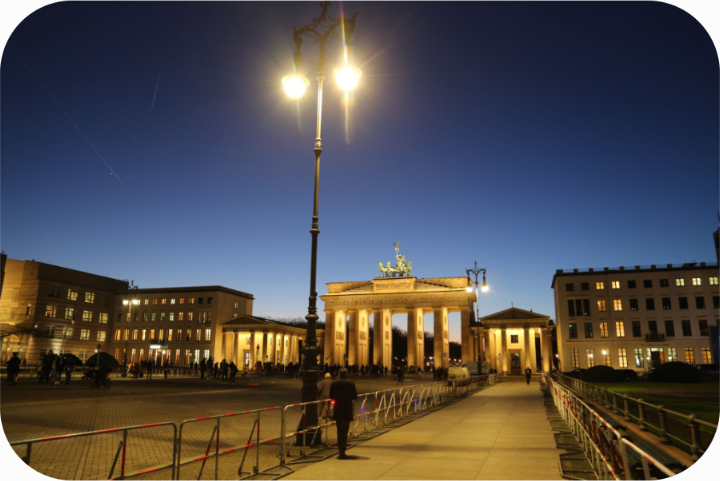
Berlin at dusk: A crossroads for European history and governance. Source: Michael Pasdzi.
FREMA-ADUNYAME — HOST
”As we draw this extraordinary edition of Osagyefo Newsletter Magazine to a close, we are left contemplating a stark and inescapable reality.
The critique echoing through the streets and political corridors of Europe is as blunt as it is painful: ‘Merz has been told, Schmerz has been told—you deindustrialised Deutschland.’ To many observers, what was once the undisputed industrial heartbeat of Europe is being systematically unravelled. When pillars of manufacturing excellence like Volkswagen and BMW face existential disruption, a troubling question emerges: What fills the economic void?
Is the quiet transition toward a war footing—a rearmed, security-driven economy—the default destination when industrial momentum fails?
From the colonial trauma of Namibia to the battlefields of World War I and World War II, from the severed lines of Nord Stream to the ongoing global flashpoints in Ukraine and Gaza, history casts a long, relentless shadow over modern statecraft. It forces us to ask the most fundamental question of all: When will we learn?
Yet, this is precisely why our feature carries the title ‘THE SUN ALSO RISES.’
A new dawn does not promise an easy road, nor does it erase the weight of past errors. But it does illuminate what can no longer remain hidden in the dark. The rise of new political forces and the dismantling of old consensus models signal that the period of comfortable, unquestioned governance has ended.
The sun rises not to celebrate the ruin of the past, but to demand the clarity, accountability, and courageous leadership required to build a world where history’s most devastating mistakes are never repeated.
To our distinguished international panellists—Prime Minister Giorgia Meloni, Akosua Owusuwaa, and Dzigbordi Kwaku-Dosoo—thank you for your profound contributions. And to our readers worldwide: thank you for seeking truth where others see only noise.”
📖 EDITOR’S CLOSING NOTE
“The future belongs not to those who resist change, but to those who understand it, shape it, and lead through it. In an age defined by historical reckoning and systemic shift, informed dialogue remains our most powerful tool.”
OSAGYEFO NEWSLETTER MAGAZINE
Inform. Inspire. Illuminate. 🌐www.assumptagh.liveJournalism of Neglected Topics 🌍
An introduction to the Soka Gakkai and Nichiren Buddhism. Where do the teachings originate from? What is the philosophy of Buddhism? How do Soka Gakkai members apply it in their daily lives?
The Soka Gakkai is a global community-based Buddhist organisation that promotes peace, culture and education centred on respect for the dignity of life. Its members in 192 countries and territories study and put into practice the humanistic philosophy of Nichiren Buddhism.
Soka Gakkai members strive to actualise their inherent potential while contributing to their local communities and responding to the shared issues facing humankind.
The conviction that individual happiness and the realisation of peace are inextricably linked is central to the Soka Gakkai, as is a commitment to dialogue and nonviolence. Subscribe to our channel: / sgivideosonline Visit our website: https://www.sokaglobal.org/ Like us on Facebook: / sgi.info Follow us on Instagram: / sgi.info Follow us on Twitter: / sgi_info
The ideas of the Principal of Babies Todds Daycare, Assumpta Gahutu, Esq., have had an enduring impact not only in Africa but across the globe. Her vision emerged at a time when the lingering effects of imperial and oppressive structures appeared to limit the possibilities for African-centred educational development.
Yet, through determination, compassion, and clarity of purpose, she forged a new path for early childhood education. Under her leadership, Babies Todds Daycare has grown into far more than a childcare facility; it has become a value-creating environment where the character of the future is gently formed.
Through this mission, she has nurtured the growth of young children whose lives will embody the values the world will need in the centuries to come. Her work reflects a profound belief: that the foundation of a just and humane society begins with how we educate and care for our youngest generation. In this way, the philosophy behind Babies Todds represents not simply an institution, but a lifelong commitment to shaping the character, dignity, and future of humanity.
Babies Todds
A Safe and Nurturing Daycare and Preschool in the Heart of Windhoek
Babies Todds is a warm and welcoming space where young children are encouraged to grow, learn, share, and create in a supportive environment. Our daycare and preschool are dedicated to providing quality early childhood education that fosters curiosity, creativity, and confidence in every child.
Everyday Essentials Presents: The Journalist with a Conscience
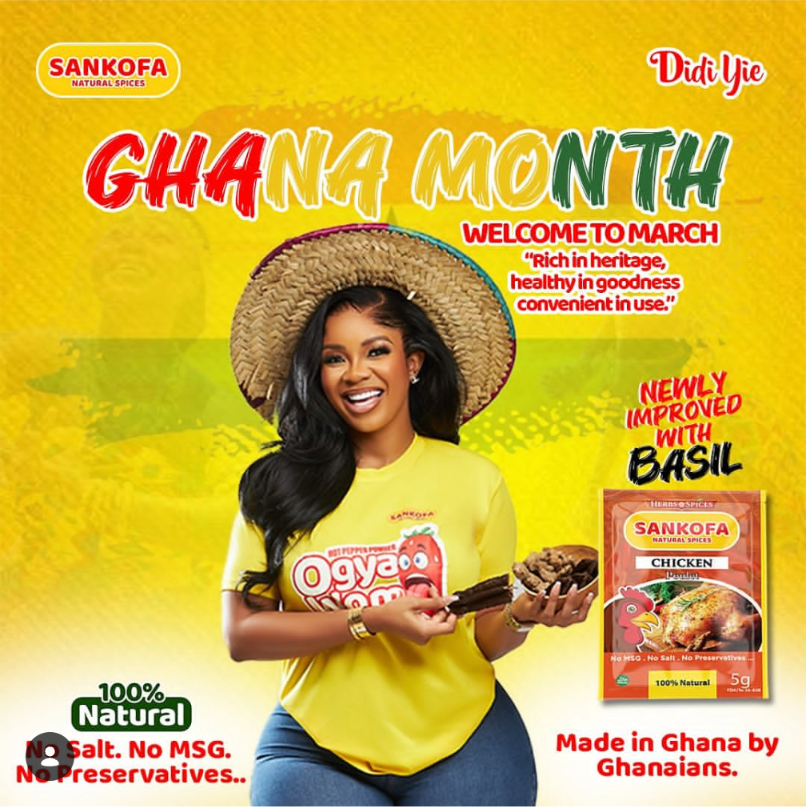
Meet Serwaa Amihere, Esq. — a visionary bridging the gap between Ghana’s rich heritage and the global stage, exclusively through Everyday Essentials.
As a celebrated broadcast journalist, lawyer, and entrepreneur, Serwaa brings her unwavering commitment to excellence from the newsroom straight to your lifestyle. Her handpicked collection represents the absolute gold standard of Ghanaian craftsmanship, curated for those who refuse to compromise on quality.
Why Choose the Serwaa Amihere Collection?
A Trusted Pedigree: Discover a portfolio hand-selected by one of Ghana’s most respected and meticulous media personalities.
Uncompromising Quality: From the purity of premium natural spices to the sharp, sophisticated silhouettes of Officeandcobysa, every piece meets rigorous standards for health, wellness, and style.
Authentically Ghanaian, Globally Refined: We transform local tradition into international luxury, bringing West Africa’s finest exports to a global audience.
A Holistic Approach to Living: Experience a seamless blend of wellness, beauty, and professional elegance designed to elevate your daily routine.
Elevate your everyday. Experience a lifestyle defined by integrity, culture, and class. Discover the ultimate in health, beauty, and fashion—thoughtfully curated by Serwaa Amihere.
Preparing for your baby’s arrival should be exciting, not overwhelming. At Sunshine Mothercare, Accra’s trusted maternity and baby shop based in East Legon, we curate complete, hospital-ready maternity packages so you have everything you and your newborn need—all in one place.
What’s Inside Our Curated Bundles?
For Mom: Premium Faytex postpartum pads, underpads, nightgowns, antiseptics (Savlon & Chlorxy-G), and hospital essentials.
For Baby: Soft 100% cotton bodysuits, “Welcome to the World” caps, socks, wipes, diapers, bath sponges, and baby care sets.
Hygiene & Sanitation: Sanitising solutions and essential washroom care to ensure maximum comfort and safety at the hospital.
Skip the endless shopping trips and let us prepare your complete hospital bag kit!
Order or Inquire Today: 📍 Location: East Legon, Accra
Are you looking to promote a specific tier/price range for these packages, or would you like to target this ad for social media (like Instagram or TikTok)?
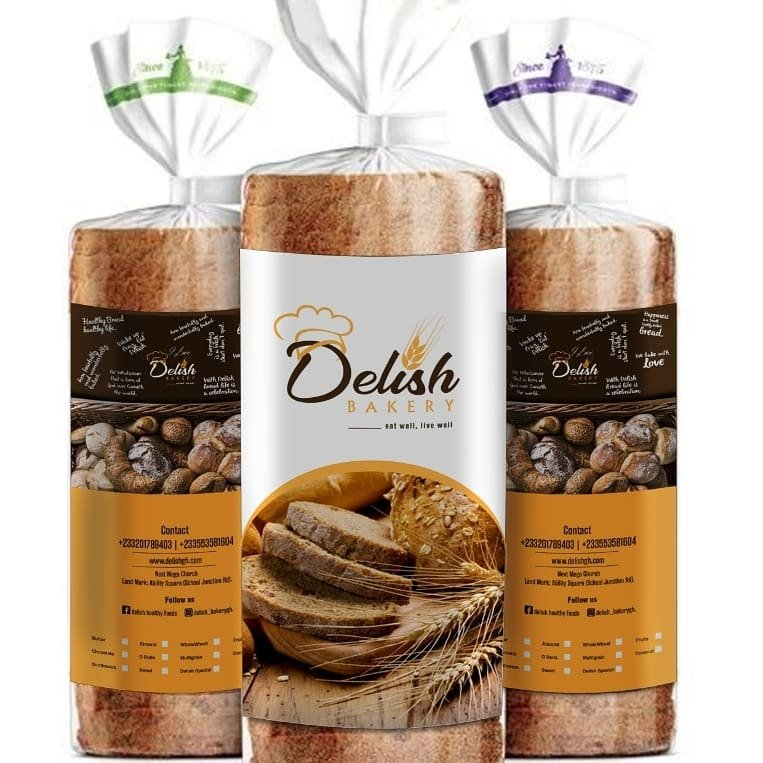
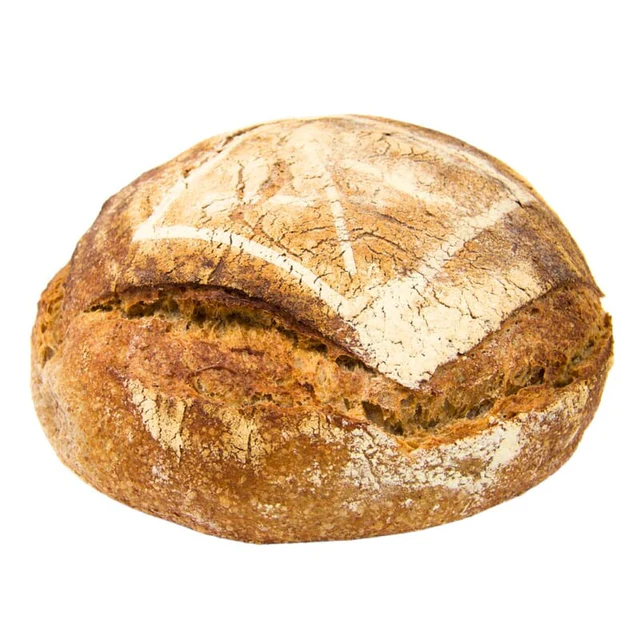
Experience the taste of nature at Delish Bread, your neighbourhood grocery store and bakery where health meets indulgence. We believe that what you eat should be as pure as it is delicious. That’s why our breads are crafted without chemicals, artificial preservatives, or additives—just wholesome ingredients baked to perfection.
Whether you are looking for your daily loaf or a special treat, we offer over 12 varieties of bread, cakes, and pastries, including:
Signature Breads: Whole Wheat, Multigrain, and Classic White—all chemical-free.
Artisan Pastries: Flaky, buttery, and baked fresh every morning.
OSAGYEFO-IMAGINE Celebrates Delish Bread
OSAGYEFO-IMAGINE: Works From The Heart proudly honours the commitment to purity and health championed by Delish Bread. In a world of processed foods, Delish Bread stands out as a beacon of authenticity, aligning perfectly with our mission to celebrate creators who work with passion and purpose.
We celebrate Delish Bread for:
Wholesome Integrity: Their dedication to chemical-free baking that nourishes the community.
Cultural Connection: Bringing people together through the timeless tradition of breaking bread.
Spiritual Purpose: Guided by the personal mission of Making Jesus Proud, every loaf is baked with love and a servant’s heart.
Visit Us Today!
Come and taste the difference that “Heart Work” makes.
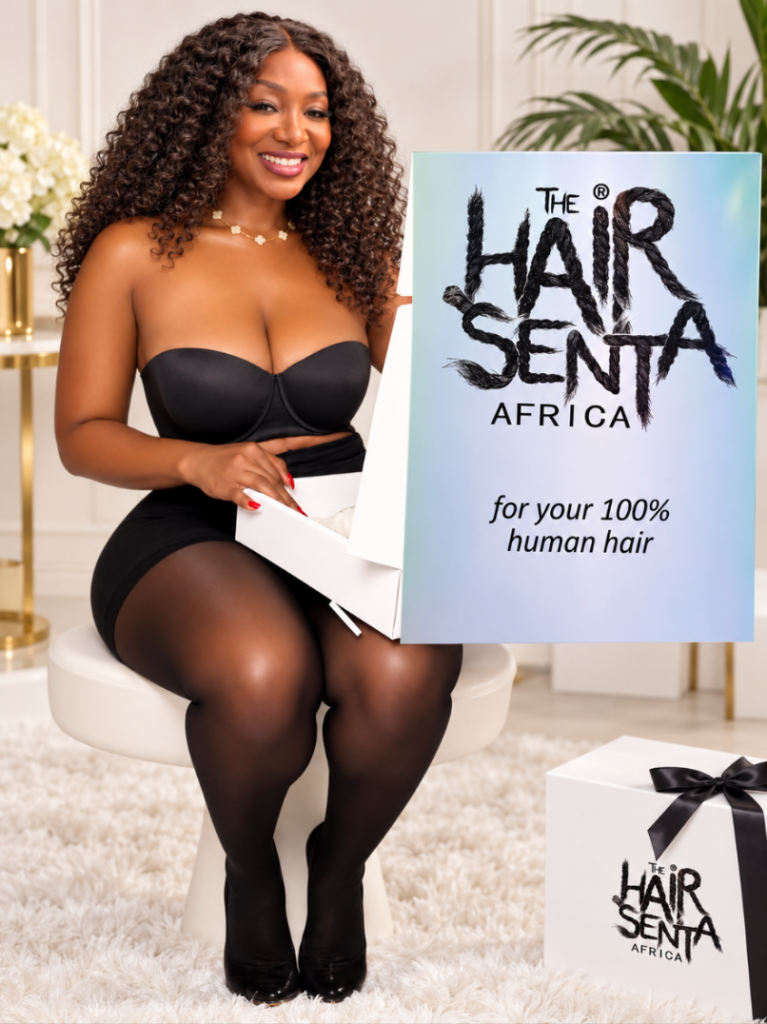
Elegance Meets Executive Power: Experience The Hair Senta Difference
Meet Akosua Owusuwaa—Author, Business Strategist, CEO, Exec MBA graduate (CEIBS), Co-Founder of HAIR SENTA & HIBS AFRICA, Founder of TLS, and visionary behind CAGA HEIGHTS Complex.
Akosua effortlessly embodies grace, poise, and intelligence. Her radiant smile, flawless complexion, and commanding executive presence showcase how true beauty and business acumen go hand in hand. She exemplifies the modern leader: bold, sophisticated, and always polished.
The Lookbook: 100% Premium Human Hair Extensions
1. The Voluminous Deep Curls(Image 1)
The Look: Rich, tight spiral curls with lush volume, natural shine, and incredible movement that frames the face beautifully.
Versatility:
Corporate Offices: Paired with a tailored blazer, structured sheath dress, or crisp button-down, these curls offer a confident, professional, and powerful statement look.
Dinner & Evening Events: Perfectly glamourous for fine dining, gala dinners, or executive evening networking.
2. The Soft Deep Wave / Crimped Texture(Image 2)
The Look: Beautifully defined, cascading waves with a natural luster that brings a soft, effortless elegance to your overall style.
Versatility:
Corporate Offices: Ideal for day-to-day office wear, client presentations, and boardroom meetings, giving a neat yet stylishly textured finish.
Dinner & Evening Events: Soft and romantic, this look effortlessly transitions to evening cocktails, dinners, and social gatherings.
3. The Glamorous Bouncy Barrel Curls & Highlights(Image 3)
The Look: Silky, voluminous body waves styled into sophisticated barrel curls featuring subtle, warm dimensional highlights for added depth and glamour.
Versatility:
Corporate Offices: Exceptionally sleek and refined for high-level meetings, executive conferences, and everyday corporate chic.
Dinner & Evening Events: The ultimate evening look—classy, opulent, and head-turning for formal dinners and black-tie events.
Why Choose Hair Senta?
100% Authentic Premium Human Hair Extensions
World-Wide Shipping directly from Ghana to your doorstep.
Long-Lasting Quality & Natural Shine designed for the modern woman on the move.
Contact & Visit Us Today!
Location: 24 Jungle Avenue, Accra, Ghana (00233)
Phone / WhatsApp: (+233) 0544354455 / 0248629769
Shipping: Worldwide delivery available!
ANNOUNCING OUR UPCOMING SEPTEMBER 2026 EDITORIAL RELEASES
Inspire. Inform. Influence.
Prepare for two captivating upcoming editions featuring thought-provoking perspectives on beauty, culture, culinary arts, self-worth, and human connection.
1. HAIR SENTA — Volume 2: The Editorial Issue
A Magazine for Confidence, Culture, and BeautyTheme:Where Beauty Begins with Self LoveRelease Date: Friday, September 25th, 2026
Key Features & Highlights:
Desire or Dependant: Asking the question we often get wrong and diving into personal clarity and autonomy.
Make a Habit of Exerting Your Utmost: An empowering call to personal excellence featuring Akosua Owusuwaa.
Unlocking Potential: Addressing the real struggle behind “Some people tell me they have no talent” and exploring how we must discover ways to bloom ourselves.
Special Insights: Featuring contributions and reporting from Senior Correspondent Berla Mundi.
Journalism of neglected topics that center confidence and inner dignity.
Special Feature Edition:The Grand Chef — Uniting the Hearts of the People
Spotlight on Linda Vo (The Culinary Philosopher): An intimate look at how a late-night meal and a simple flower bridged two worlds together through taste, connection, and shared humanity.
Exclusive Content: Featuring commentary and insights with Cookieteegh.
Essential Wellness & Lifestyle: Over 9+ practical tips dedicated to living well, building a brighter tomorrow, and embracing the timeless allure of inner beauty.