






📰 OSAGYEFO NEWSLETTER MAGAZINE
Journalism of Neglected Topics
🔴 BREAKING NEWS
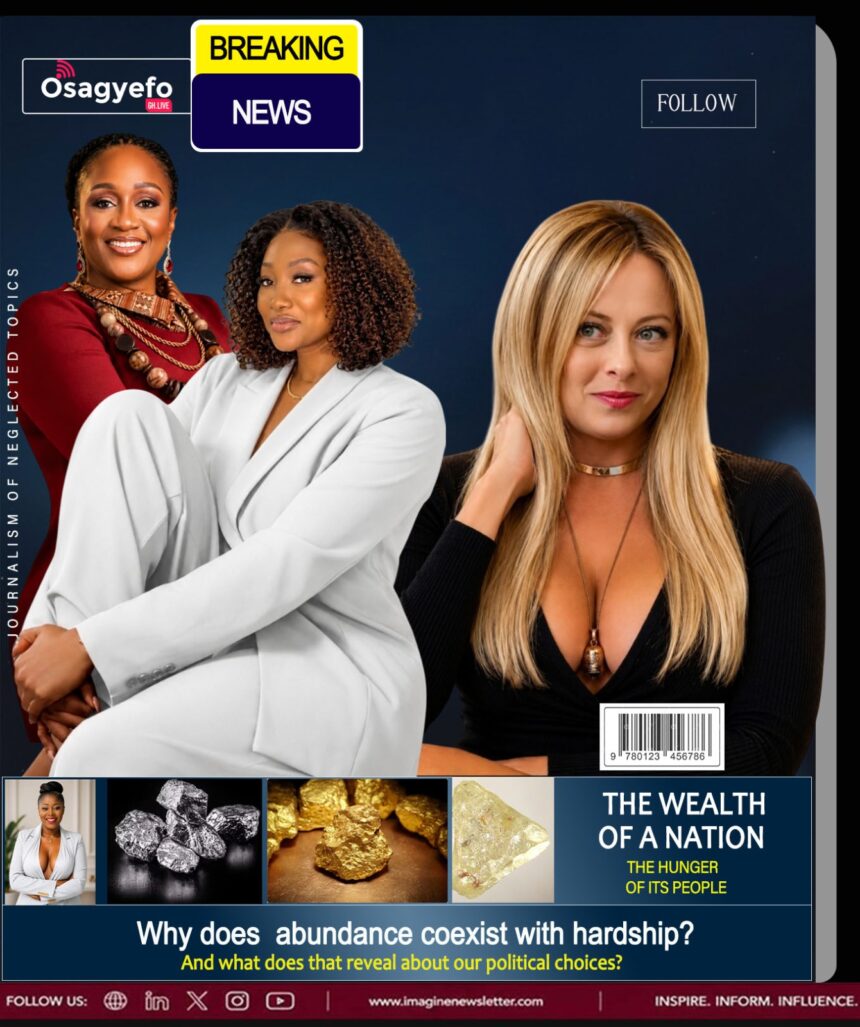
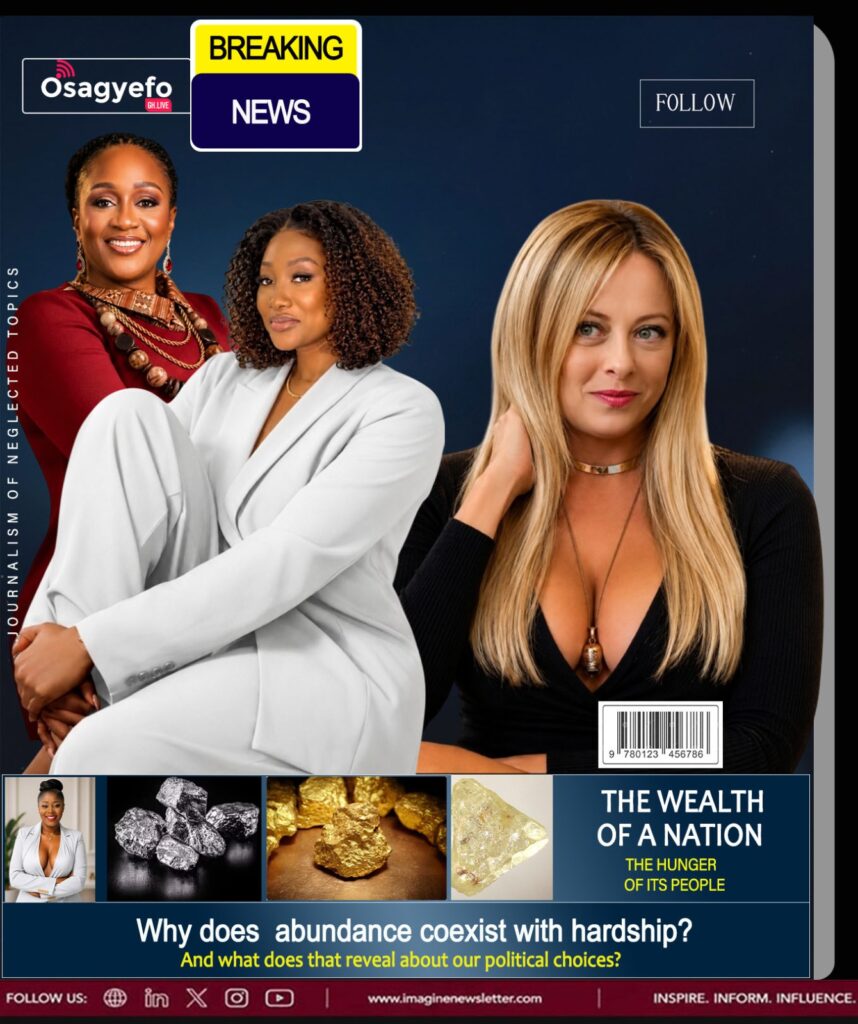
THE WEALTH OF A NATION, THE HUNGER OF ITS PEOPLE
Why does abundance coexist with hardship, and what does that reveal about our political choices?
It is breaking news because we have become comfortable with something that should never have become normal.
Ghana has wealth.
Ghana has resources.
Ghana has potential.
Yet millions of Ghanaians continue to struggle with the daily realities of unemployment, food insecurity, inadequate healthcare, and economic uncertainty.
The central question of this Special Edition is simple:
If Ghana possesses so much wealth, why are so many citizens still fighting merely to survive?
📍 SPECIAL EDITION
Ghana’s Political Choices, Economic Priorities & The Future of Shared Prosperity
📅 Release Date: Monday, August 24, 2026
🌐 Exclusive Digital Publication: assumptagh.live
🏛️ Category: Public Policy, Governance & Development
🌍 Audience: Global Readers, Policymakers, Academics, Entrepreneurs, Investors & Citizens













https://www.instagram.com/hairsenta?igsi=MXAzOThhNGZ0Nm15dQ==
✨ EDITOR’S NOTE
The true measure of a nation is not the wealth it extracts frodm the earth. It is what that wealth makes possible for its people.
This edition explores a question that many have stopped asking because the contradiction has become so familiar.
Why do natural riches coexist with poverty?
Why does economic growth fail to translate into broad prosperity?
And most importantly:
What kind of society are we choosing to build?
From the unfinished vision of Osagyefo Dr. Kwame Nkrumah to modern debates about taxation, entrepreneurship, investment, social protection, and political accountability, this edition examines the relationship between national wealth and human dignity.
📖 INSIDE THIS EDITION
1️⃣ The Wealth of a Nation, The Hunger of Its People
A powerful examination of economic inequality, political priorities, and the moral obligations of leadership.
2️⃣ The Cost of Influence
An investigation into how African governments spend millions of public dollars on lobbying firms in Washington while basic social challenges remain unresolved at home.
3️⃣ The Nkrumah Question
Has political independence delivered the social and economic transformation that Ghana envisioned at independence?
4️⃣ Wealth For What Purpose?
Can entrepreneurship, private enterprise, and social protection coexist to create shared prosperity?
5️⃣ The Global Conversation
International voices respond to one of the most important political and economic questions facing Africa today.
🎙️ THE GLOBAL
Three Continents.
This month, Osagyefo Newsletter Magazine proudly spotlights visionary individuals whose work demonstrates that development is not merely an economic concept, but a human mission.
Four Influential Voices.
One Critical Question:
How can nations create prosperity that benefits the many, rather than merely enriching the few?
Osagyefo Digital presents an unprecedented international dialogue inspired by this month’s cover story.
🌍 THE CATALYST VOICES

🎙️ THE PROTAGONIST
🇬🇭 AKOSUA OWUSUWAA
Global Entrepreneur & Economic Revolutionary
The Visionary on the Hot Seat
As the central voice of this edition, Akosua explores the intersection between entrepreneurship, economic empowerment, and inclusive development.
Can business become a vehicle for transforming society?
Can wealth creation and social responsibility work hand in hand?
🎙️ THE EUROPEAN PERSPECTIVE

🇮🇹 GIORGIA MELONI
Prime Minister of Italy
The Warning from Europe
Providing reflections on economic competitiveness, national identity, public accountability, and the growing debate over balancing social protection with economic growth.
🎙️ THE HUMAN-CENTERED STRATEGIST

🇬🇭 DZIGBORDI KWAKU-DOSOO
Global Keynote Speaker & DCG Consulting Group
The Human Potential Advocate
Offering insight into leadership, human capital development, workforce transformation, and the necessity of placing people at the center of every economic strategy.
🎙️ THE MEDIA BATTLEFIELD

📺 FREMA ADUNYAME
Broadcast Journalist, Channel One TV
The Fearless Analyst
Examining how political communication, media narratives, and public perception shape national conversations on inequality, governance, and development.
FEATURE STORY
THE WEALTH OF A NATION, THE HUNGER OF ITS PEOPLE
The Cost of Influence
An Osagyefo Special Investigation
And there is another question that deserves honest reflection.
What happens when governments spend millions of dollars seeking influence abroad while millions of their own citizens struggle at home?
Across Africa, governments increasingly sign contracts with politically connected lobbying firms in Washington in pursuit of influence, access, and favourable policy outcomes.
The argument is familiar.
Governments say lobbying protects national interests.
It attracts investment.
It strengthens diplomatic relationships.
It improves international visibility.
Perhaps some of these objectives are legitimate.
Diplomacy matters.
Strategic alliances matter.
International partnerships matter.
But every democracy must ask a more uncomfortable question:
What is the Opportunity Cost?
When governments spend millions on lobbying contracts abroad, what opportunities are lost at home?
How many schools?
How many scholarships?
How many healthcare facilities?
How many agricultural programmes?
How many youth employment initiatives?
How many small businesses?
How many lives?
The question is not whether lobbying delivers access.
The question is whether that access ultimately improves the lives of ordinary citizens.
Because the true test of any national policy is remarkably simple:
Does it improve the life of the average citizen?
Can parents feed their children?
Can graduates find jobs?
Can entrepreneurs access opportunities?
Can workers build secure futures?
Can elderly citizens retire with dignity? These are the questions that matter.
🌍 AFRICA’S WASHINGTON CONNECTION
Reported Lobbying Agreements
🇰🇪 Kenya Reportedly signed a lobbying agreement worth approximately $175,000 per month ahead of President William Ruto’s White House engagement.
🇹🇿 Tanzania Reportedly entered lobbying agreements valued at approximately $4 million amid diplomatic pressure following election-related tensions.
🇳🇬 Nigeria Reportedly secured a contract valued at approximately $9 million annually with a Washington lobbying firm.
🇷🇼 Rwanda Reportedly paid approximately $80,000 per month amid international scrutiny regarding the conflict in eastern Democratic Republic of Congo.
🇲🇦 Morocco Reportedly spent approximately $3.49 million on U.S. lobbying efforts while seeking continued support regarding Western Sahara.
🇸🇴 Somalia Reportedly signed an agreement worth approximately $600,000 to advocate its position concerning Somaliland.
🇦🇴 Angola Reportedly paid approximately $312,500 per month to promote strategic infrastructure and mineral transport interests.
🏛️ THE BIGGER QUESTION
A nation should never confuse influence with development.
True national strength is not measured by the number of lobbyists representing a country abroad.
It is measured by the well-being of its people at home.
The most valuable national resource is not oil.
Not gold.
Not cocoa.
Not foreign contracts.
Not diplomatic access.
It is people.
Healthy people.
Educated people.
Creative people.
Confident people.
Productive people.
And when public resources are invested in people, the rewards can last for generations.
📣 THE NKRUMAH TEST
Political independence was never meant to be the destination.
It was meant to be the beginning.
The real measure of independence is not whether a flag flies above government buildings.
It is whether ordinary citizens can stand beneath that flag and say:
“This country works for me too.”
FINAL REFLECTION
The question before Ghana is not whether the nation has enough.
The question is whether we have the courage to decide what “enough” should mean.
Because poverty beside abundance is not inevitable.
It is a choice.
And choices can be changed.