






OSAGYEFO NEWSLETTER MAGAZINE
Presents — NEWSWEEK EDITION
Release Date: Monday, September 21st, 2026 |
Read Exclusively at: assumptagh.live/
BEING CONSIDERATE
THE RISE OF THE SENSITIVE HUMAN
“A sensitive heart does not rush to control the world. It learns to observe, to understand, and to care.” — From The Butterfly Who Taught the Garden to Listen


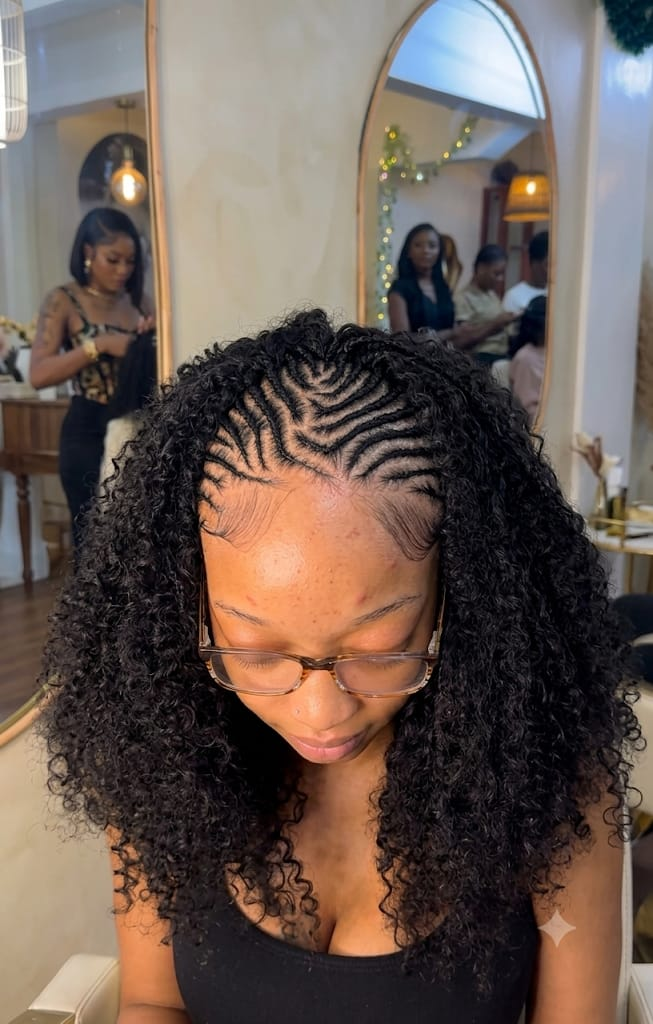





Elevate Your Crown with The Hair Senta
Why settle for “good enough” when you can wear the gold standard? At The Hair Senta, we don’t just sell hair; we deliver the confidence that comes with knowing your look is flawless, authentic, and built to last.
Based in the heart of Accra and shipping globally, we’ve turned the art of human hair extensions into a world-class experience.
Why the World Chooses Hair Senta
- Actual Proof of Quality: No filters needed. Our extensions are sourced for longevity, natural lustre, and a seamless blend. Whether it’s raw or virgin hair, the quality is visible in every strand.
- The Confidence Factor: We believe your hair is your power. Our pieces are designed to give you that “just stepped out of the salon” feeling every single day.
- Unbeatable Value: Luxury shouldn’t be out of reach. We offer premium, trademarked quality at prices that respect your investment.
- Global Reach, Local Roots: From our flagship in Ghana to doorsteps in London, New York, and beyond—we bring the best of West African hair retail to the world.
Ready to Transform Your Look?
| Feature | What You Get |
| Origin | Premium Sourcing |
| Shipping | Worldwide Delivery |
| Location | 24 Jungle Avenue, Accra, Ghana |
| Status | Trademarked Excellence |
Get in Touch Today
Don’t wait for your best hair day—create it.
Visit Us:www.hairsenta.com
Call/WhatsApp: (+233) 0544354455 / 0248629769
In-Store: 24 Jungle Avenue, Accra, Ghana
“Your hair is the crown you never take off. Make sure it shines.”

📖 EDITORIAL PREFACE
The Parable: The Butterfly Who Taught the Garden to Listen
In a quiet garden, a young girl named Amara watched a blue butterfly resting with a torn wing. When her friend Kofi reached out to catch it, Amara gently stopped his hand: “Sometimes, being considerate means understanding that help is not always about doing something. Sometimes, it is about knowing what not to do.”
When heavy rain fell the next morning, Kofi did not grab the trembling butterfly; instead, he placed a large leaf nearby to shield it from the storm.
This simple story carries a profound truth for our time: Sensitivity is not weakness. It is the capacity to observe, to respect another’s struggles, and to exercise restraint rather than force. As we look at today’s global landscape, a central question emerges: Can this same consideration for human life guide national power, foreign policy, and international leadership?
🌐 THE OPENING BRIEF
When Sensitivity Becomes Strength
For a long time, people have mistaken human sensitivity for weakness—describing it as too soft or unprepared for the harsh realities of power. Yet true sensitivity is the capacity to notice, understand, and account for the lives and needs of others. When translated into policy, sensitivity becomes consideration, directly shaping how institutions and nations govern.
Two contemporary developments offer an opportunity to examine this dynamic:
- The Politics of Restraint: Alice Weidel, co-leader of Germany’s AfD, has publicly argued against continued German military support for Ukraine, emphasising negotiations and peace. Her stance presents restraint and the avoidance of direct involvement in war as matters of national interest. It prompts us to ask: What does it mean when a political argument places the avoidance of conflict and the human cost of military decisions at its centre?
- Development with a Human Face: Reports in 2026 detail Chinese support to Cuba involving 60,000 tonnes of rice, $80 million in financial aid, and solar-energy infrastructure development. Beyond geopolitical interpretations, this raises another question: When international cooperation delivers food, energy, and practical resources, can development become an expression of consideration for human wellbeing?
💡 THE CENTRAL FEATURE
From War and Peace to Food and Energy
The sensitive human is not someone who avoids tough decisions, but someone who asks:
- What will this choice mean for ordinary families?
- How can national interests be pursued without ignoring human suffering?
- Is true progress measured only by wealth and military capacity—or by the lives those resources improve?
Consideration is not an ornament of leadership; it is a necessity that humanity must cultivate alongside technology, economic power, and political authority.
📌 INSIDE THIS EDITION
- 🕊️ Alice Weidel & The Politics of Peace: Examining public arguments for restraint, security, and diplomatic negotiation over military escalation.
- 🌾 China–Cuba: Development & Human Welfare: Exploring reported food assistance and solar-energy cooperation as models of practical partnership.
- 🌍 The Rise of the Sensitive Human: Why sensitivity has been misunderstood and how consideration becomes a form of global responsibility.
- 🤝 Personal Empathy to Public Leadership: How values of care influence workplaces, communities, and governments.
- 💡 Beyond Power: Rethinking societal progress through the lens of food security, energy access, dignity, and peace.
🎙️ THE GUEST FEATURE: EXCLUSIVE DIALOGUE
HOST: Frema Adunyame (Ghanaian Broadcaster & Journalist | Head of Events & Partnerships, Citi FM & Channel One TV)
| Guest Speaker | Core Focus | Key Dialogue Question |
| Akosua Owusuwaa (Founder & CEO, TLS; Co-founder, Hair Senta) | Wellness, Self-Worth & Food Education | Can Consideration Transform Communities? Creating spaces where people can thrive through holistic entrepreneurship. |
| Dzigbordi Kwaku-Dosoo (CEO, DCG Consulting Group) | Human Capital & Business Strategy | Can Excellence & Consideration Coexist? Developing human potential rather than treating people as instruments of output. |
| H.E. Giorgia Meloni (Prime Minister of Italy) | Sovereignty & Global Responsibility | Can National Interest & Consideration Coexist? Balancing national security, economic resilience, and global human consequences. |
✒️ THE EDITORIAL CONCLUSION
Perhaps the future of civilisation will not be defined by how much power we possess, but by how much consideration we bring to the exercise of that power. To be sensitive is to recognise; to be considerate is to respond with awareness.
THE EDITORIAL QUESTION
IS CONSIDERATION THE NEXT MEASURE OF HUMAN PROGRESS?
The examples of war, peace, food assistance, energy development, and leadership lead us toward a broader reflection:
“Perhaps the future of humanity will not be defined only by how much power we possess, but by how much consideration we bring to the exercise of that power.
To be sensitive is to recognise. To be considerate is to respond with awareness. To build a more considerate world may require us to rethink what we mean by strength, progress, leadership, and civilisation.
OSAGYEFO NEWSLETTER MAGAZINE | Newsweek Edition 📅 Monday, September 21st, 2026 | 📍 assumptagh.live
THE RISE OF THE SENSITIVE HUMAN
An International Dialogue on Consideration, Leadership & Human Responsibility

HOST — FREMA ADUNYAME
Good evening to our readers and viewers joining us across Africa, Europe, the Americas, Asia, the Middle East, and communities around the world.
It is a pleasure to welcome you to this special international dialogue presented by Osagyefo Newsletter Magazine, accompanying our latest Newsweek Edition, now available digitally at assumptagh.live/
Today’s edition places a simple but profound idea at the centre of our conversation:
What if sensitivity is not weakness, but a form of strength?
And what if consideration is not simply a personal virtue, but an essential quality of leadership?
From the quiet image of a blue butterfly seeking shelter from the rain to the much larger questions of international diplomacy, economic development, national sovereignty, food security and human dignity, this edition asks us to look differently at the way power is exercised.
Because power can build.
Power can protect.
Power can transform.
But power can also affect millions of lives.
So the question before us today is: Can power be exercised with consideration?
And perhaps even more importantly: Can excellence, national interest, economic ambition and human responsibility exist together?
I am Frema Adunyame, and it is my privilege to serve as your host and moderator for this special dialogue on the latest Osagyefo Newsletter Magazine release.
Today, we bring together three distinguished voices whose professional and public spheres allow us to examine this question from very different perspectives.

AKOSUA OWUSUWAA
First, I am delighted to welcome Akosua Owusuwaa, founder and CEO of TLS and co-founder of Hair Senta, whose work and public interests connect wellness, self-worth, food education and entrepreneurship.
Akosua represents a perspective that begins very close to the individual:
How do we create environments in which people are not merely surviving, but genuinely able to thrive?
Her presence brings the conversation toward community, wellbeing, self-worth and the human dimension of entrepreneurship.
Akosua, it is a pleasure to have you with us. Welcome to the dialogue.

DZIGBORDI KWAKU-DOSOO
Our second guest is Dzigbordi Kwaku-Dosoo, CEO of DCG Consulting Group, whose professional work focuses on human capital, organisational development, leadership and business strategy.
Her perspective allows us to examine consideration from inside the workplace and the modern organisation. In an age where productivity, performance and efficiency dominate so much of the corporate conversation, an important question emerges:
Can an organisation pursue excellence without losing sight of the human beings who make that excellence possible? Dzigbordi, we are very pleased to welcome you to this conversation. Thank you for joining us.

HER EXCELLENCY GIORGIA MELONI
And joining us from the world of national and international leadership is Her Excellency Giorgia Meloni, Prime Minister of Italy.
Prime Minister Meloni brings another dimension to our discussion: national sovereignty, security, economic resilience and the responsibilities that accompany governing a nation.
At the level of government, consideration raises questions of an entirely different scale.
- When a government makes a decision in the name of national interest, how should it also account for the human consequences beyond its borders?
- How can sovereignty and international responsibility be considered together?
- And can the pursuit of national interests coexist with an awareness of the wider human consequences of political decisions?
Prime Minister, we are honoured to have your perspective represented in this international dialogue. Welcome.
FREMA ADUNYAME — WELCOMING THE PANEL
Akosua, Dzigbordi, Prime Minister Meloni—welcome to you all.
Although each of you comes from a very different sphere, there is something that connects your perspectives.
- One speaks from the world of wellness and community entrepreneurship.
- One from human capital, organisational leadership and business strategy.
- And one from national government, sovereignty and international affairs.
Three different arenas. Three different levels of responsibility. But one common question:
When we have the power to influence other people’s lives, what responsibility do we have to consider those lives before we act?
That is where I would like to begin our conversation today.
Because The Rise of the Sensitive Human is not suggesting that the world should become weaker. It is asking whether the world can become more conscious. Whether leadership can be both decisive and considerate. Whether ambition can coexist with human dignity. Whether national interest can be pursued while recognising global consequences.
And whether, in a world increasingly shaped by technology, economic competition and geopolitical power, we might need one quality more than ever: the ability to listen before we act.
So, with that, let us begin.
THE DIALOGUE
THE RISE OF THE SENSITIVE HUMAN
An International Dialogue on Consideration, Leadership & Human Responsibility
FREMA ADUNYAME:
“Akosua, I would like to start with you.
When we speak about ‘the sensitive human,’ some people immediately associate sensitivity with vulnerability or weakness.
From your perspective, what does true sensitivity mean—and how can sensitivity become a source of strength in the way we lead our businesses, build our communities and relate to one another?”
THE RISE OF THE SENSITIVE HUMAN
An International Dialogue on Consideration, Leadership & Human Responsibility
AKOSUA OWUSUWAA
Thank you, Frema Adunyame, for that thoughtful introduction and for framing this important conversation in such a meaningful way.
I appreciate the opportunity to participate in a dialogue that places the human being at the centre of questions that are often discussed primarily in terms of politics, economics, power and national interests.
You have raised an important idea: that sensitivity should not necessarily be understood as weakness.
I believe that when we speak of sensitivity, we should distinguish it from fragility.
To be sensitive can mean to be attentive—to recognise the circumstances of others, to understand their concerns, to perceive changes in society, and to consider how decisions may affect people’s lives.
In this sense, sensitivity can indeed become a source of strength.
- A leader who listens carefully is better positioned to understand the realities facing people.
- A business leader who recognises the aspirations and difficulties of employees can build stronger organisations.
- A community that understands the needs of its members can create greater solidarity.
Ultimately, development and progress should have a human purpose.
So, when we ask what the Sensitive Human represents, I would say it represents a person who does not look at the world only through the lens of power or immediate results, but also through the experiences and aspirations of other people.
$$\text{Sensitivity Allows Us to Perceive} \implies \text{Consideration Allows Us to Understand} \implies \text{Responsibility Requires Us to Act. That, in my view, is where sensitivity can become strength. And perhaps this is also why consideration should not be regarded as something separate from leadership.
It can be part of leadership itself.
THE RISE OF THE SENSITIVE HUMAN
An International Dialogue on Consideration, Leadership & Human Responsibility
FREMA-ADUNYAME
Thank you, Akosua Owusuwaa, for that thoughtful and important contribution.
I particularly appreciate your distinction between sensitivity and fragility. It reminds us that being sensitive does not necessarily mean being weak. In fact, as you have suggested, the ability to perceive, understand, and respond to the realities of other people may be one of the foundations of responsible leadership.
Your formulation is especially compelling:
“Sensitivity allows us to perceive. Consideration allows us to understand. Responsibility requires us to act.”
Perhaps that is the progression we need to examine more closely.
Because it is one thing to recognize that another person is struggling. It is another to understand why they are struggling. But the real test of our humanity may come when that understanding requires us to do something about it.
And this raises a broader question about leadership.
What happens when sensitivity and consideration are absent from the exercise of power? What happens when leaders can see suffering, inequality, injustice or hardship, yet become so accustomed to them that they no longer feel compelled to respond?
This question is particularly relevant to our societies, where leadership is often measured by authority, political influence, economic achievement or the ability to command attention.
But perhaps we should also ask:
Can leadership truly be successful if it loses its sensitivity to the people it is meant to serve?
Dzigbordi, I would like to bring you into this part of the conversation.
You have spoken extensively about human development, personal transformation and the responsibility we have toward one another.
How do you understand the relationship between sensitivity, consideration and leadership—and what happens to a society when sensitivity is mistaken for weakness rather than recognized as a form of human awareness and responsibility?
THE RISE OF THE SENSITIVE HUMAN
An International Dialogue on Consideration, Leadership & Human Responsibility
DZIGBORDI KWAKU-DOSOO
Thank you, Frema Adunyame, for your thoughtful introduction and for posing a question that reaches far beyond the ordinary understanding of sensitivity.
Your question invites us to reconsider something that humanity has perhaps taken for granted for far too long. We often speak of sensitivity as though it were a weakness—a quality that belongs to the vulnerable, the timid, or those who are unable to withstand the harsh realities of the world.
But I would suggest that we look at it differently.
- To be sensitive is to be profoundly awake to life.
- It is the capacity to perceive the suffering of another person, to recognise their joy, to appreciate their dignity, and to understand that our own existence is inseparably connected to the lives of others.
And this brings us to the intriguing idea presented in this edition of Osagyefo Newsletter Magazine—The Rise of the Sensitive Human.
In the light of the newsletter article’s title, it would seem that a strange but legitimate question is raised:
“Who, ultimately, is at the reins of our nation’s policy?
Is it simply political calculation? Is it economic interest? Is it military power? Is it technology?
Or is there, beneath all these institutions and systems, a human being capable of perceiving the consequences of decisions upon other human beings?”
This is not a question of whether nations should possess power. Nations inevitably have responsibilities to protect their people, maintain stability and pursue their legitimate interests.
The deeper question is what kind of human consciousness guides that power. For when sensitivity disappears from leadership, people can gradually become reduced to numbers, statistics, economic units, voters, workers or strategic interests. But when we recognise the dignity of each individual, something changes:
- A person is no longer merely a statistic.
- A family is no longer merely an economic indicator.
- A community is no longer merely a political constituency.
They become human lives whose hopes and sufferings matter.
This is why I believe sensitivity can become a profound source of strength.
The sensitive human does not turn away from suffering because it is uncomfortable. The sensitive human has the courage to look directly at suffering and ask what can be done to transform it.
Likewise, sensitivity allows us to perceive beauty—not as an escape from reality, but as a source of hope within reality.
To perceive both pain and beauty is therefore not a contradiction. It is part of being fully human. And perhaps the greatest challenge of leadership is to transform what we perceive into value:
If we perceive poverty. Can we create opportunity?
If we perceive division. Can we create dialogue?
If we perceive despair. Can we create hope?
If we perceive suffering. Can we respond with compassion and concrete action?
This is where sensitivity becomes consideration, and consideration becomes responsibility. A truly humanistic society cannot be built merely through powerful institutions. It must also be built through people who possess the inner capacity to value the lives of others.
Therefore, when we ask how sensitivity can strengthen our businesses, our communities and our relationships, I would say:
Sensitivity teaches us to listen before judging, understand before condemning, and consider before acting.
It does not make us weaker. It enables us to recognise the interconnectedness of our lives. And perhaps that is the new human being this newsletter is inviting us to imagine: not a human being who possesses less strength, but a human being whose strength is guided by greater awareness. Because ultimately, the question is not simply who holds the reins of power.
The deeper question is: What kind of heart, what kind of consciousness, and what sense of responsibility is holding those reins?
THE RISE OF THE SENSITIVE HUMAN
An International Dialogue on Consideration, Leadership & Human Responsibility
FREMA-ADUNYAME
Thank you, Dzigbordi, for taking the conversation to that deeper level.
What you have offered us is a powerful distinction: sensitivity is not simply about feeling more—it is about seeing more clearly.
To perceive suffering is important. To understand its causes is even more important. But, as you have reminded us, the ultimate question is whether that awareness becomes responsibility and meaningful action.
I am particularly struck by your observation that when sensitivity disappears from leadership, human beings can gradually become reduced to numbers, statistics, voters, workers, consumers or strategic interests. Perhaps this is one of the central tensions of modern leadership.
Governments must deal with budgets, institutions, security, economic pressures, international relations and competing national interests. Yet behind every statistic is a human life, and behind every policy decision are people who will experience its consequences.
So the question becomes:
How can leaders remain sensitive to human beings while carrying the enormous responsibilities that come with governing a nation?
And perhaps there is another dimension to this conversation.
Sensitivity does not necessarily mean agreeing with everyone. Consideration does not necessarily mean avoiding difficult decisions. Compassion does not mean that leadership becomes incapable of making choices when choices are necessary.
The challenge may be to retain our humanity while exercising authority.
Prime Minister Giorgia Meloni, you have experienced leadership from the centre of national government, where decisions must often be made amid competing interests, economic pressures, social expectations and questions of national responsibility.
I would therefore like to bring you into this dialogue.
Prime Minister Meloni, what does sensitivity mean to you in the context of governing a country?
Can a leader remain deeply attentive to the individual human stories behind national statistics and political decisions while still making difficult choices in the interests of the wider society?
And perhaps most importantly:
How can consideration become a principle of leadership without becoming an obstacle to responsibility?
THE RISE OF THE SENSITIVE HUMAN
An International Dialogue on Consideration, Leadership & Human Responsibility
GIORGIA MELONI
Thank you, Frema, for framing this conversation around such an important and, in many ways, deeply human question. When we speak about sensitivity in leadership, I believe we must ultimately bring the discussion back to something very concrete: the lived reality of ordinary people.
Time is precious to every human being.
- A mother waiting to feed her children knows this.
- A father worried about the future of his family knows this.
- A young person searching for work knows this.
- A family facing rising prices, insecurity, displacement or uncertainty knows this.
These are not abstract geopolitical concepts. They are people’s lives. And this is where I believe the idea of consideration becomes particularly important.
When we examine China’s relationship with Cuba, for example, we can look beyond the geopolitical interpretation and also look at the immediate human reality. In January 2026, China announced an assistance package for Cuba that included $80 million in financial assistance and 60,000 tonnes of rice. Subsequent shipments of the rice reached Cuba during the year.
For a diplomat, such assistance can be discussed in terms of international relations. For a family experiencing food insecurity, however, rice is something much more immediate.
It is food on the table.
It is another day for a family to endure difficult circumstances. It is an example of how international decisions eventually reach the kitchen table of ordinary people. The same principle can be applied to the debate surrounding the war in Ukraine.
Alice Weidel and the AfD have publicly argued for a different approach to Germany’s policy toward the war, including greater emphasis on negotiations and opposition to continued military support. At the same time, Germany and the European Union have continued substantial military and financial support for Ukraine.
Whatever one’s political position on that debate, there is a human reality on both sides of the question.
- There are Ukrainian families living through war.
- There are European families concerned about security and the economic consequences of prolonged conflict.
- There are soldiers whose lives are at risk.
- There are taxpayers who ultimately finance public decisions.
- There are communities asking how long uncertainty can continue.
Sensitivity requires us to see all of these human realities. But sensitivity must not mean simply choosing the most emotionally comfortable answer.
Leadership sometimes requires difficult decisions precisely because reality itself is difficult. This is why I would distinguish sensitivity from sentimentality.
- Sensitivity allows us to perceive.
- Consideration allows us to understand.
- Leadership requires us to weigh competing responsibilities and then act.
And here I think the question raised by this edition becomes particularly interesting. If leaders are able to perceive the suffering of ordinary people, can that perception become a source of political strength rather than weakness?
Can it encourage governments to ask not only: “What serves our strategic interests?” but also: “What does this decision mean for the people who must live with its consequences?”
That question applies to foreign policy. It applies to economic policy. It applies to energy. It applies to food security. It applies to migration. It applies to democratic institutions. And it applies to the relationship between governments and their citizens.
I would therefore be cautious about saying that one nation or political movement has discovered the final answer to sensitivity. Every government has responsibilities, contradictions and difficult choices.
The United States, China, European nations and every other major power must confront the same fundamental challenge: How do we translate power into outcomes that improve people’s lives?
A nation may possess enormous economic resources, military capabilities and technological advantages. But if ordinary citizens experience insecurity, exclusion, unaffordable necessities or a loss of faith in their institutions, then the question of human wellbeing remains unresolved.
This is why I find the concept of The Sensitive Human so compelling.
The Sensitive Human is not necessarily the person who agrees with everyone. Nor is it the leader who avoids difficult decisions. It is the person who understands that every decision has consequences for human beings.
The challenge for modern leadership is therefore not simply to become more powerful. It is to become more conscious of what power does. And perhaps this is where consideration becomes a form of strength.
Because when we see the human being behind the statistic, the family behind the economic indicator, the community behind the political calculation, and the individual behind the geopolitical map, our understanding of responsibility changes.
Power determines what we can do
Sensitivity asks us to consider what our actions mean
Consideration asks us whom they affect
Responsibility asks us whether we are prepared to live with those consequences
That, for me, is where the conversation about the Sensitive Human becomes a conversation about the future of leadership itself.
For additional context on my public addresses regarding global economic stability and economic challenges facing Italian families, you can see my coverage of Italy’s economic address. This video provides direct context on my statements regarding the economic pressures facing households, framing how national leaders balance fiscal realities with the day-to-day welfare of their citizens.
THE RISE OF THE SENSITIVE HUMAN
An International Dialogue on Consideration, Leadership & Human Responsibility
FREMA ADUNYAME
Prime Minister Meloni, thank you for that thoughtful response.
I think you have brought us back to one of the most important ideas running through this entire edition: that leadership is not only about possessing power, but about remaining conscious of the people who live with the consequences of that power.
You have also reminded us that sensitivity does not have to mean indecision. It can mean listening, observing, weighing responsibility and then having the courage to act. And perhaps this is precisely where our opening parable begins to speak to the realities of our time.
Akosua, I would like to bring you into the conversation. You have heard the Prime Minister speak about the human reality behind a policy decision. I would like you to connect that with the story at the heart of this edition:
“The Butterfly Who Taught the Garden to Listen.”
Akosua, what does that butterfly teach us about consideration, leadership and the pressures ordinary people experience in their everyday lives?
AKOSUA OWUSUWAA
Thank you, Frema. And Prime Minister Meloni, I appreciate the way you described the importance of seeing the person behind the policy. Because as I listened to your response, I immediately thought about Amara, Kofi and the blue butterfly.
At first, it may appear to be a very simple children’s story. But I believe there is something remarkably profound inside it. Amara sees the butterfly with the torn wing. Kofi wants to help. But Amara stops him.
She does not tell him that helping is wrong. She teaches him something more sophisticated:
Sometimes being considerate means understanding that help is not always about doing something. Sometimes it is about knowing what not to do.
And then comes the storm. The butterfly is already vulnerable. The rain becomes heavier. And Kofi does not reach out and grab the butterfly. Instead, he places a large leaf nearby. He creates protection without taking away the butterfly’s dignity.
For me, Frema, that is where this story suddenly becomes much larger than a butterfly.
THE STORM IS THE PRESSURE PEOPLE EXPERIENCE EVERY DAY.
- It can be the accumulation of taxes and household expenses.
- It can be the salary that disappears before the end of the month.
- It can be the parent sitting at the kitchen table trying to decide which bill can wait.
- It can be the worker who depends on a car to get to work but struggles with the cost of maintaining that vehicle.
- It can be the small entrepreneur trying to keep a business alive while costs continue to rise.
- It can be the family asking whether there will be enough left after rent, electricity, food, transportation and education. These are the storms that do not always make international headlines.
But people live inside them. And that is why I find the Prime Minister’s point about the lived reality of citizens so important. When we talk about a tax reform, we can discuss billions of euros, fiscal projections, regional revenues and government budgets. All of those things matter.
But behind every figure is a human experience:
| Level | Policy Perspective | Human Reality |
|---|---|---|
| Tax Line | Government sees a fiscal line | Family sees income leaving their monthly budget |
| Vehicle Category | Government sees a transportation statistic | Worker sees the car that gets them to work every morning |
| Fiscal Measure | Government sees a budgetary projection | Parent sees a little more breathing room at the end of the month |
That is where I believe the butterfly story connects so beautifully with the idea of the Sensitive Human.
The Sensitive Human Notices the Storm. The Considerate Human Asks: “What can I do without making it worse?” The Responsible Human Acts.
The large leaf in the story does not stop the rain. It does not magically eliminate the storm. It simply gives the butterfly some protection from it. And perhaps that is what responsible leadership sometimes looks like.
- Not promising that every difficulty can disappear.
- Not pretending that government can eliminate every hardship.
- But recognising where people are vulnerable and asking:
“Can we reduce this burden?”
“Can we give this family some breathing space?”
“Can we make it possible for this person to keep moving forward?”
So, Prime Minister, when you speak about the bollo auto reform as a measure that can reduce a burden for millions of qualifying vehicle owners, I see an interesting parallel with the butterfly.
The reform does not remove every economic storm facing Italian families. But from the perspective of those who benefit from it, it can represent one less burden to carry. And that is an important distinction. Because consideration does not always arrive as a grand gesture.
- Sometimes it arrives as one burden removed.
- One expense reduced.
- One opportunity created.
- One person listened to.
- One family given a little more room to breathe.
This is why I strongly believe that sensitivity is not weakness. Sensitivity is the capacity to observe. To notice what others might overlook. To respect another person’s struggle. And sometimes, importantly, to exercise restraint rather than force.
The butterfly did not need Kofi to capture it. It needed him to understand what it needed. And perhaps that is one of the great lessons for leadership today.
We should not always ask: “What can I do?”
Sometimes we should first ask: “What does this person actually need?”
That question can transform the way we build businesses. It can transform the way we lead communities. It can transform the way we design policies. And it can even transform the way nations exercise power.
Because if national power, foreign policy and international leadership are to remain connected to human life, then perhaps leaders must learn to listen to the garden before deciding how to protect it. And that, Frema, is why I believe the butterfly in this story is not merely a butterfly.
It is the ordinary human being living beneath the storm. And the leaf? The leaf represents our responsibility to one another.
THE RISE OF THE SENSITIVE HUMAN
An International Dialogue on Consideration, Leadership & Human Responsibility
FREMA ADUNYAME
Akosua, thank you.
You have taken a seemingly simple story about a butterfly and shown us something much larger—the possibility that consideration can sometimes mean reducing a burden rather than attempting to control the person experiencing it. I particularly appreciate your distinction between simply asking “What can I do?” and asking the deeper question:
“What does this person actually need?”
That question takes us naturally from the individual to the organisation, and from the organisation to society. Because if sensitivity is a form of awareness, then institutions also have to ask whether they are actually sensitive to the people they are designed to serve.
Dzigbordi, this brings me to you.
You work extensively around human capital, organisational development and leadership. We have spoken about the Sensitive Human at the individual level. We have spoken about consideration in government policy. But what happens when an entire institution loses its sensitivity to the people within it?
And perhaps we should take this conversation closer to home.
What does the idea of the Sensitive Human mean for African leadership—and particularly for Ghana, where citizens can face serious economic pressures without always having strong social-protection systems to fall back on?
DZIGBORDI KWAKU-DOSOO
Thank you, Frema.
And Akosua, I thought your interpretation of the butterfly story was very powerful because you reminded us that the storm is not always something dramatic that appears on television.
Sometimes the storm is simply a person’s life becoming increasingly difficult.
And when I think about this in the context of leadership, human capital and Africa, I believe we have to confront an uncomfortable idea:
We have sometimes mistaken sensitivity for weakness because our systems have rewarded hardness, survival and political power more than human consideration.
In some political environments, including Ghana, this can become particularly troubling. When sensitivity is treated as weakness, leaders can become disconnected from the everyday experiences of the people they govern. And when that happens, citizens can begin to feel that the institutions around them do not actually see them.
That is where the butterfly story becomes a powerful metaphor for governance.
- The butterfly is vulnerable.
- The storm arrives.
- And the question is not whether the storm exists.
The question is: Who provides the leaf?
In a functioning society, citizens should not be expected to face every economic storm entirely on their own.
- People can lose employment.
- Businesses can fail.
- Prices can rise.
- Families can experience illness, disability, old age or other circumstances that reduce their ability to earn.
A society therefore needs mechanisms that provide people with some degree of protection when their personal resources are no longer sufficient. And this is where social protection becomes more than a government programme. It becomes an expression of what a society believes about human dignity.
If a citizen contributes to society throughout their working life, pays taxes, raises children, builds businesses, works in the public or private sector and participates in the economy, then what happens when that citizen suddenly encounters a storm?
Where do they go? That is the question.
In Ghana, there are important social-protection programmes, including LEAP and the National Health Insurance Scheme, so it would not be accurate to say that there is no social protection at all. But the broader challenge is whether existing protection is sufficiently comprehensive, accessible and resilient to the scale of economic vulnerability many households experience.
And that is where I believe African leadership needs to have a much deeper conversation. Because the absence of adequate protection can leave citizens feeling as though they are standing in the rain without a roof. And when people repeatedly experience that feeling, something deeper than economics is affected.
Trust is affected. People begin asking:
- Does anyone see us?
- Does anyone understand what we are going through?
- When the storm comes, who will provide the leaf?
WHEN SENSITIVITY BECOMES INSTITUTIONAL
There is another dimension that I think we must address.
Sensitivity cannot remain merely a personal quality of a good-hearted leader.
It has to become institutional. We should not depend entirely on whether the person occupying a particular office happens to be compassionate. We need systems that continue to protect human dignity even when individual leaders change.
That means:
- Institutions capable of listening to citizens.
- Transparent public finances.
- Effective social-protection mechanisms.
- Accessible healthcare.
- Opportunities for decent work.
- Education that creates mobility.
- Support for vulnerable households.
- And accountability when public resources are misused.
Because corruption and maladministration are not merely technical failures.
They have human consequences.
When public resources intended for communities are diverted, delayed or poorly managed, the consequence can eventually appear as:
- A classroom that was never completed,
- A hospital without adequate resources,
- A road that remains dangerous,
- A young person without an opportunity,
- Or a family that receives no meaningful assistance when circumstances become difficult.
This is why I would challenge the old idea that sensitivity is weakness.
Sometimes the most courageous thing a leader can do is to look directly at the suffering that their system has produced and refuse to normalise it.
THE GHANAIAN AND AFRICAN QUESTION
And perhaps Ghana offers us an important lesson—not because Ghana is uniquely responsible for these challenges, but because many African societies are confronting similar questions.
- We cannot build strong economies while treating human beings as an afterthought.
- We cannot speak endlessly about development while citizens remain vulnerable to economic shocks without sufficient protection.
- We cannot celebrate growth only through macroeconomic indicators while ignoring whether ordinary families can actually feel an improvement in their daily lives.
- And we cannot ask citizens to be endlessly resilient while institutions themselves avoid responsibility.
Resilience should not become an excuse for institutional failure.
That is an important distinction. African people have demonstrated extraordinary resilience for generations. But resilience should mean the capacity to recover—not the expectation that people must continually survive conditions that institutions have the responsibility to improve.
THE LEADERSHIP LESSON
So I return to the butterfly.
Amara sees the torn wing. Kofi learns not to grab the butterfly. Then the storm comes. And he learns to place the leaf nearby. For me, that is a model of considerate leadership:
1. SEE 2. UNDERSTAND 3. PROTECT WITHOUT CONTROLLING 4. CREATE CONDITIONS TO THRIVE
That is also what good human-capital leadership should mean.
- An employee should not simply be viewed as an instrument of productivity.
- A citizen should not simply be viewed as a taxpayer or voter.
- A customer should not simply be viewed as revenue.
- A young person should not simply be viewed as tomorrow’s workforce.
Behind every category is a human being. And when we remember that, sensitivity stops looking like weakness. It becomes organisational intelligence. It becomes social responsibility. It becomes responsible governance. And ultimately, it becomes a measure of whether our institutions are truly serving the people they were created to serve.
Perhaps the question we should therefore ask every leader—whether in business, government or civil society—is not simply:
“How powerful are you?” But: “When the storm comes, do the people you lead know where the shelter is?” Because leadership is ultimately tested not when everything is comfortable.
Leadership is tested when the rain begins to fall.
THE RISE OF THE SENSITIVE HUMAN
An International Dialogue on Consideration, Leadership & Human Responsibility
FREMA ADUNYAME — CLOSING THE DIALOGUE
Thank you, Dzigbordi.
And thank you once again to Akosua Owusuwaa, Dzigbordi Kwaku-Dosoo, Prime Minister Giorgia Meloni, and to the perspectives that have informed this wider conversation.
What has emerged from our dialogue today is something much deeper than a discussion about sensitivity.
We have been discussing how human beings exercise responsibility when they have the power to affect the lives of others.
- Akosua reminded us of the butterfly. She reminded us that sometimes consideration does not mean taking control. Sometimes it means understanding what another person needs and creating the space for them to endure, recover and ultimately thrive.
- Dzigbordi took that lesson into the world of human capital, institutions and African leadership. She reminded us that resilience should never become an excuse for institutional failure—and that a society must ask what happens to its citizens when the storm arrives.
- Prime Minister Meloni brought the discussion into the realm of government and public policy, reminding us that behind every fiscal measure, every statistic and every policy decision are real people with families, responsibilities, aspirations and everyday struggles.
And our earlier philosophical reflection brought us to perhaps the most fundamental question of all:
Who is holding the reins of power—and what kind of consciousness is guiding those hands?
THE RISE OF THE SENSITIVE HUMAN
Perhaps this is where the title of our edition finds its deepest meaning.
The Rise of the Sensitive Human does not mean the rise of a weaker human being.
It means the possibility of a human being who is becoming more conscious:
- More conscious of another person’s suffering.
- More conscious of the consequences of decisions.
- More conscious of the dignity of the individual.
- More conscious of the environment in which people live and work.
- More conscious that behind a statistic is a family.
- Behind a policy is a citizen.
- Behind an economic figure is a household.
- Behind a political decision are human lives.
And perhaps this is the transformation our societies need.
For generations, we have often admired the person who can dominate, command, accumulate and control.
But perhaps we also need to learn to admire the person who can listen.
The person who can recognise suffering without becoming indifferent.
The person who can exercise power without becoming intoxicated by it.
The person who can make a difficult decision without forgetting the people who must live with its consequences.
FROM SENSITIVITY TO CONSIDERATION
Our conversation has also revealed an important distinction.
- Sensitivity alone is perception. It allows us to notice.
- Consideration asks what we do with what we have noticed.
- Responsibility takes that consideration into action.
So perhaps the progression is simple:
SENSITIVITY PERCEIVES. CONSIDERATION UNDERSTANDS. RESPONSIBILITY ACTS
And that progression can operate everywhere:
- In a family.
- In a workplace.
- In a community.
- In a corporation.
- In a government.
- And between nations.
THE BUTTERFLY AND THE WORLD
We began with a small blue butterfly with a torn wing.
Perhaps it is fitting that we end there.
The butterfly did not ask Kofi to stop the rain. It did not ask him to control the weather. It simply needed someone to recognise its vulnerability.
And when the storm came, Kofi did something remarkably simple.
He placed a leaf nearby.
Perhaps that is the lesson for our time.
We cannot stop every storm. We cannot remove every difficulty from human life. We cannot solve every economic problem, political disagreement or international conflict overnight.
But we can ask ourselves: Where can I place the leaf?
- For a government, the leaf may be a policy that reduces an unnecessary burden.
- For a business leader, it may be creating a workplace where people are treated as human beings rather than instruments of output.
- For a community, it may be protecting someone who has temporarily lost their ability to stand alone.
- For a citizen, it may simply be noticing that another person is struggling and choosing not to look away.
That is consideration. And perhaps that is where sensitivity becomes strength.
THE FINAL QUESTION
So, as we close this international dialogue, perhaps the question is no longer simply: Are we sensitive?
Perhaps the greater question is: What do we do with what we are sensitive to?
- Do we see poverty and become indifferent? Or do we see an opportunity to create dignity?
- Do we see suffering and turn away? Or do we search for a way to reduce it?
- Do we see vulnerability and exploit it? Or do we protect it?
- Do we possess power and use it simply because we can? Or do we pause long enough to consider whom that power will affect?
That may be the real meaning of The Rise of the Sensitive Human.
Not a retreat from strength. Not a rejection of ambition. Not an escape from difficult decisions.
But the emergence of a different understanding of strength:
Strength with Awareness. Power with Consideration. Leadership with Humanity
And perhaps, ultimately, a civilisation that understands that progress is not measured only by how much power we accumulate, but by how responsibly we use it.
To everyone watching and reading across Africa, Europe, the Americas, Asia, the Middle East and around the world, thank you for joining us for this special dialogue.
And to our distinguished panellists—Akosua Owusuwaa, Dzigbordi Kwaku-Dosoo, and Prime Minister Giorgia Meloni—thank you for contributing your perspectives to this important conversation.
This has been Frema Adunyame for Osagyefo Newsletter Magazine.
And perhaps the final thought we leave with you is this:
“A sensitive heart does not rush to control the world.
It learns to observe, to understand, and to care.”
Because when the storm comes, the question is not always whether we can stop the rain.
Sometimes the question is simply: Will we be willing to place a leaf beside someone who is trying to survive it? Thank you, and good evening.
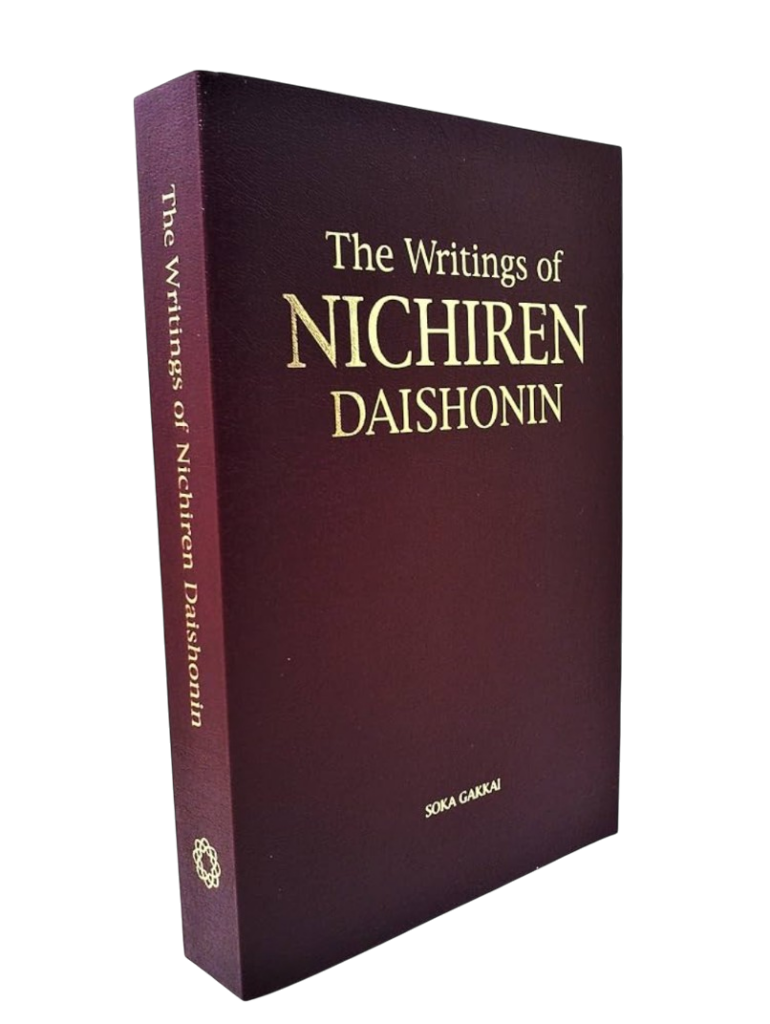
https://youtu.be/y3xOf-jXJSY?si=M0hf-tcRITCsxM3C
Our Shared Humanity Soka Gakkai Buddhist Movement
An introduction to the Soka Gakkai and Nichiren Buddhism.
Where do the teachings originate from?
What is the philosophy of Buddhism?
How do Soka Gakkai members apply it in their daily lives?
The Soka Gakkai is a global community-based Buddhist organisation that promotes peace, culture and education centred on respect for the dignity of life. Its members in 192 countries and territories study and put into practice the humanistic philosophy of Nichiren Buddhism.
Soka Gakkai members strive to actualise their inherent potential while contributing to their local communities and responding to the shared issues facing humankind.
The conviction that individual happiness and the realisation of peace are inextricably linked is central to the Soka Gakkai, as is a commitment to dialogue and nonviolence. Subscribe to our channel: / sgivideosonline Visit our website: https://www.sokaglobal.org/ Like us on Facebook: / sgi.info Follow us on Instagram: / sgi.info Follow us on Twitter: / sgi_info



https://www.instagram.com/babiesandtodds_?utm_source=ig_web_button_share_sheet&stkn=ZDNlZDc0MzIxNw==
The Vision of Assumpta Gahutu, Esq.
The ideas of the Principal of Babies Todds Daycare, Assumpta Gahutu, Esq., have had an enduring impact not only in Africa but across the globe. Her vision emerged at a time when the lingering effects of imperial and oppressive structures appeared to limit the possibilities for African-centred educational development.
Yet, through determination, compassion, and clarity of purpose, she forged a new path for early childhood education. Under her leadership, Babies Todds Daycare has grown into far more than a childcare facility; it has become a value-creating environment where the character of the future is gently formed.
Through this mission, she has nurtured the growth of young children whose lives will embody the values the world will need in the centuries to come. Her work reflects a profound belief: that the foundation of a just and humane society begins with how we educate and care for our youngest generation. In this way, the philosophy behind Babies Todds represents not simply an institution, but a lifelong commitment to shaping the character, dignity, and future of humanity.
Babies Todds
A Safe and Nurturing Daycare and Preschool in the Heart of Windhoek
Babies Todds is a warm and welcoming space where young children are encouraged to grow, learn, share, and create in a supportive environment. Our daycare and preschool are dedicated to providing quality early childhood education that fosters curiosity, creativity, and confidence in every child.
- 📍 Location: Windhoek, Namibia
- 📞 Phone: +264 81 673 7599
- 🌐 Website:www.babiestodds.com
A beautiful place where the journey of learning begins and where every child is given the opportunity to flourish.







🌿 EVERYDAY ESSENTIALS PRESENTS
THE JOURNALIST WITH A CONSCIENCE
Meet Serwaa Amihere, Esq.
A visionary connecting Ghana to the global stage through Everyday Essentials.
As a celebrated broadcast journalist, lawyer, and entrepreneur, Serwaa Amihere, Esq. brings her commitment to excellence from the newsroom directly into your daily routine.
Featured exclusively through Everyday Essentials, the Serwaa Amihere Collection represents a carefully curated blend of wellness, quality, beauty, professional elegance, and Ghanaian craftsmanship.
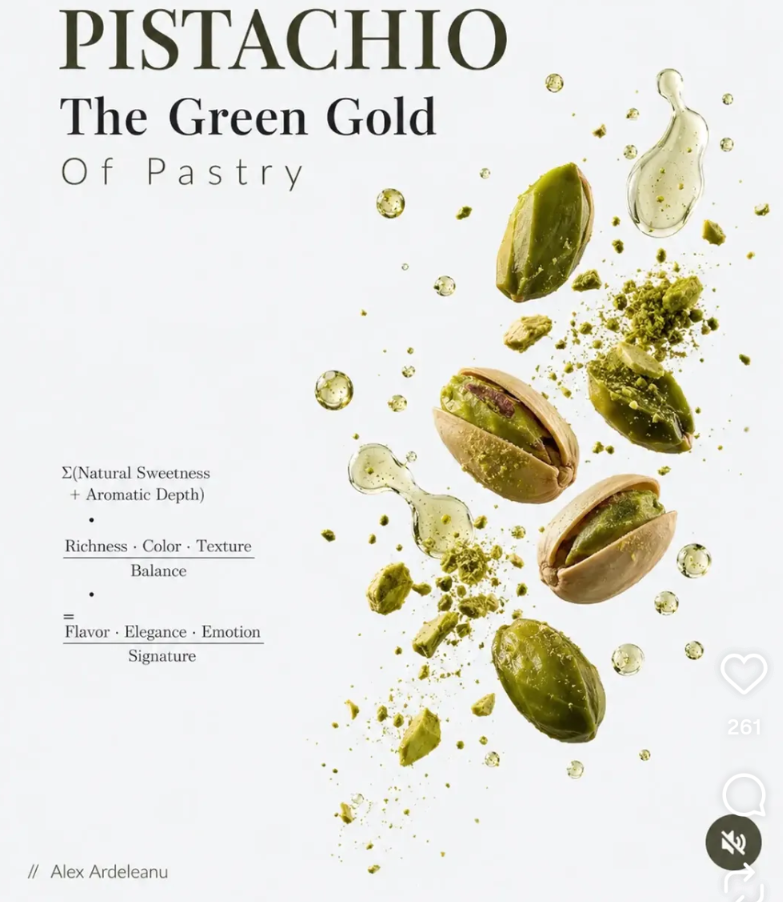
🥜 PISTACHIOS: SMALL NUT, POWERFUL NUTRITION
At Everyday Essentials, healthy living begins with understanding what nourishes our bodies.
Pistachios naturally offer:
- Plant-Based Protein: Supports muscle health and daily vitality.
- Dietary Fiber: Promotes healthy digestion and lasting satiety.
- Healthy Unsaturated Fats: Rich in heart-healthy monounsaturated and polyunsaturated fats.
- Vitamin B6: Supports normal energy metabolism and nervous system function.
- Essential Minerals: Copper, manganese, phosphorus, and magnesium contribute to bone health, muscle function, and energy production.
- Potassium: A vital electrolyte supporting muscle and nerve function.
- Antioxidants: Contains key compounds, including lutein and zeaxanthin.
The Everyday Essentials Philosophy
Pure ingredients. Mindful choices. An elevated everyday life.
Whether enjoyed raw as a quick snack or woven into culinary dishes and desserts, pistachios prove that small habits yield powerful nutritional value.
WHY CHOOSE THE SERWAA AMIHERE COLLECTION?
- A Trusted Vision: Hand-selected with the discerning standard expected of one of West Africa’s leading media figures.
- Uncompromising Quality: From premium natural foods and spices to the sophisticated silhouettes of Office & Co. by SA, every offering balances health, style, and luxury.
- Authentically Ghanaian: Bridging local heritage and global elegance to share Ghanaian excellence with the world.
- A Holistic Lifestyle: A seamless blend of wellness, beauty, and professional sophistication tailored for modern global living.
FROM GHANA TO THE WORLD
Everyday Essentials is more than a product collection—it is a conscious lifestyle choice:
- Nourish the body.
- Elevate the mind.
- Embrace timeless beauty.
- Celebrate authentic craftsmanship.
- Share Ghanaian excellence with the world.
Experience a lifestyle rooted in quality, integrity, and international appeal.
Discover the finest in health, beauty, gourmet food, and fashion—curated by Serwaa Amihere, Esq.
#EverydayEssentials #SerwaaAmihere #GlobalWellness #PistachioNutrition #GhanaToTheWorld #HealthyLiving #GhanaianExcellence