


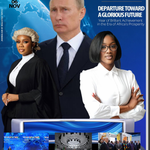
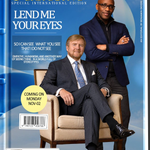
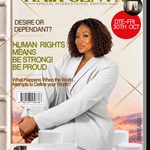


OSAGYEFO NEWSLETTER MAGAZINE
SPECIAL EDITORIAL ISSUE |
📅Publication Date: Monday, November 02, 2026
,🌐 Read exclusively at -aasumptagh.live/
















https://www.instagram.com/hairsenta?utm_source=ig_web_button_share_sheet&xtok=ZDNlZDc0MzIxNw==
Something Unbelievable Is Sizzling at 24 Jungle Avenue This November.
In the golden glow of the Accra sun, a transformation is taking place. It’s more than just a change in the weather—it’s a movement. A shimmer of silk, a cascade of waves, and the effortless sway of hair that refuses to be ordinary.
They say beauty is power. But this November, what if your hair could command the breeze, turn every head on the coast, and carry the vibrant soul of Ghana wherever you go?
HAIR SENTA — the secret behind every radiant summer glow. ✨🌊
Straight from the heart of Ghana, our 100% luxury human hair extensions are designed for the heat of the moment: lightweight, natural, and undeniable. This season, we’re infusing heritage, craft, and high-fashion glamour into every strand, ensuring you stay cool while looking fire.
Will you be the one who owns the sunshine… or the one who only watches it fade?
Get Your Summer Glow:
Call Now: 📞 (+233) 0544354455 / 0248629769
Explore: 🌐 www.hairsenta.com
Visit Us: 📍 24 Jungle Avenue, Accra, Ghana
Hair Senta. Real Hair. Real Power. Real Summer Energy.
Would you like me to create a shorter version specifically tailored for an Instagram caption or a TikTok script?
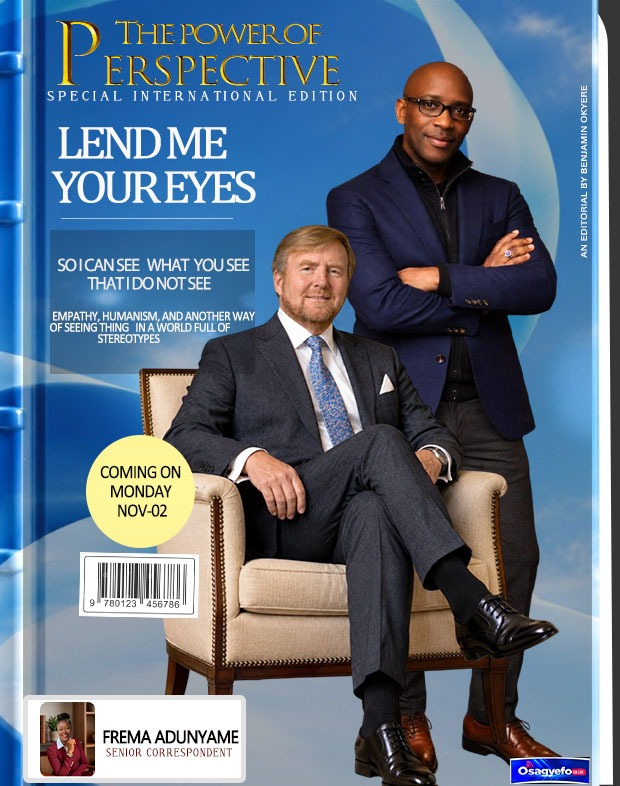
LEND ME YOUR EYES, SO I CAN SEE WHAT YOU SEE THAT I DO NOT SEE
Another Way of Seeing Things in a World Full of Challenging Stereotypes
A Special Editorial on Empathy, Humanism, Workplace Justice, and the Courage to Question Assumptions
📰 Newsletter Introduction: The Courage to See Differently
OSAGYEFO NEWSLETTER MAGAZINE THE POWER OF PERSPECTIVE
LEND ME YOUR EYES: A Newsletter Introduction by Benjamin Okyere
Has the Netherlands Changed from a Free Society into a Culture of Control? On workplace dignity, managerial power, economic responsibility, artificial intelligence, and Europe’s search for peace.
There is a question I have increasingly found myself asking: Can a society continue to call itself free when authority, economic power, and decision-making become concentrated in the hands of a few, while ordinary people are expected to bear the consequences of decisions they never made?
This question is not merely philosophical. It concerns how we work, how we are treated, how our contributions are valued, and whether the institutions that govern our lives still recognise our dignity.
I do not raise it because I have lost faith in the Netherlands. I raise it because I believe in the values that have made this country an attractive place to live and work: fairness, mutual respect, freedom, and the opportunity for people to contribute meaningfully to society.
Yet freedom must be more than a principle written into law. It must also be experienced in everyday life—in our workplaces, in our relationships with authority, and in the way institutions respond when people question their decisions.
When power becomes concentrated, and accountability becomes distant, we must ask ourselves whether we are strengthening a free society or gradually creating a culture in which obedience matters more than human dignity.
A Shared Observation: The Changing Meaning of Work
Ever since I arrived in the Netherlands, I have wondered why working here could be such a positive experience. Work could be a pleasure. People treated one another well, and the workplace could offer not only an income but also a sense of belonging and personal satisfaction.
Of course, every workplace has its difficult colleagues. That is part of human nature. But occasional disagreements are not the defining feature of a healthy working environment.
For me, going to work has also been a source of satisfaction. However, as I have observed workplace culture more closely in recent years, I have become concerned about a change in the relationship between management and employees.
I increasingly find myself asking whether trust is giving way to suspicion, whether supervision is becoming excessive, and whether employees are sometimes treated as problems to be controlled rather than people whose abilities should be developed.
My own experiences have contributed to these questions. They have also encouraged me to look beyond individual disagreements and examine the principles that shape organisational behaviour.
One particularly useful framework comes from the work of Douglas McGregor, the social psychologist and management thinker associated with MIT, whose influential book The Human Side of Enterprise introduced the distinction between Theory X and Theory Y.
These two approaches offer a powerful way to examine how management’s assumptions about people can shape the workplace.
Douglas McGregor’s Theory X and Theory Y: What Kind of Workplace Are We Creating?
Theory X begins with a pessimistic assumption about human nature. It suggests that employees generally dislike work, avoid responsibility, and must be directed, monitored, or pressured to meet organisational expectations.
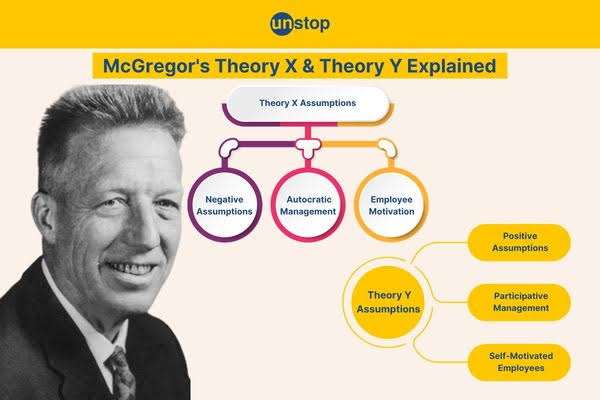
When management embraces this outlook, the workplace can become dominated by close supervision, rigid controls, fear of punishment, and a constant demand to prove one’s worth.
This is the environment commonly associated with micromanagement. Employees may feel that every action is being scrutinised, every mistake is being magnified, and every request for understanding is interpreted as a sign of weakness or unwillingness to work.
But an important question follows: what happens to people when they are managed as though they cannot be trusted?
Theory Y, by contrast, starts from a more constructive understanding of human potential. It recognises that work can be a source of satisfaction, that people can accept responsibility, and that employees are often willing to contribute more when they feel trusted, respected, and valued.
Under this approach, a manager does not simply control performance. A manager creates the conditions in which people can perform well.
Employees receive clear expectations, appropriate support, meaningful responsibility, and recognition for their contributions. Mistakes become opportunities to learn, and accountability becomes a means of improvement rather than humiliation.
Theory Y does not mean abandoning standards or allowing employees to do whatever they please. It means understanding that responsibility and trust can reinforce one another.
The distinction is fundamental: Theory X asks how people can be made to work; Theory Y asks how people can be helped to do their best work.
When Management Creates the Behaviour It Expects
There is a danger in assuming that employees are naturally unmotivated, irresponsible, or unwilling to contribute.
When people are constantly treated with suspicion, they may gradually withdraw their initiative. When their efforts go unrecognised, they may stop volunteering ideas. When every mistake brings disproportionate criticism, they may become more concerned with avoiding blame than achieving excellence.
Eventually, the workplace can produce the very behaviour management originally expected to find.
An employee who once demonstrated enthusiasm may become disengaged. Someone who once took initiative may begin waiting for instructions. A person who previously wanted to contribute more may conclude that additional effort brings neither recognition nor meaningful reward.
This is not an excuse for poor performance. Employees remain responsible for their conduct and duties. But management must also accept responsibility for the environment it creates.
Leadership cannot demand commitment while undermining trust. It cannot expect people to demonstrate their full potential while consistently making them feel insignificant.
In my view, this is an important question for the Dutch working environment, including my own experiences at KLM. I am concerned that some management practices can resemble the controlling assumptions associated with Theory X, particularly when employees experience excessive scrutiny, fear, or a lack of constructive dialogue.
I also believe that management must guard against allowing negative assumptions about employees to shape its interpretation of organisational difficulties.
When a company faces unfavourable conditions, it is tempting to search for individual people to blame. But fair leadership requires a broader examination of the circumstances, the decisions made, the resources available, and the responsibilities carried by management itself.
My criticism is not a claim that every manager behaves this way, nor that every workplace has become oppressive. It is a call to examine whether the balance between control and trust is moving in the wrong direction.
The real test of leadership is not simply whether employees comply, but whether they are given a fair opportunity to succeed.
The Right to Remuneration: Who Benefits from Human Effort?
The question of workplace dignity also leads to a broader issue: the relationship between human effort, economic power, and fair compensation.
Article 23 of the Universal Declaration of Human Rights recognises the right to work, to just and favourable conditions of work, and to just and favourable remuneration for work. It also affirms the principle of equal pay for equal work and the right to form and join trade unions.
These principles remind us that human labour is not merely an expense on a company’s balance sheet. Work is connected to dignity, independence, family life, and the ability to participate in society.
Today, however, we are approaching another technological transformation. Artificial intelligence can process enormous amounts of information, generate content, and perform tasks that once depended almost entirely on human effort.
This raises difficult questions about authorship, ownership, and remuneration.
When writers, artists, journalists, and other creators produce work that may be used to train AI systems, what rights should they have? How should consent be obtained? How should the value of their contributions be recognised? And who should benefit when technology derives commercial value from human creativity?
These questions require serious public debate. The answer should not be to reject technological progress, but to ensure that progress does not become a justification for disregarding the people whose knowledge, labour, and creativity make it possible.
A society cannot reasonably celebrate innovation while ignoring the dignity and economic rights of those who contribute to it.
The same principle applies in traditional workplaces. Whether a person works with their hands, their mind, or a combination of both, their contribution deserves fair treatment.
Progress should expand human possibilities, not make human beings easier to exploit or discard.
The Human Mind, Fear, and the Responsibility of Leadership
There is another dimension to this discussion that we should not overlook: the relationship between thought, emotion, and behaviour.
The human mind can respond powerfully to something that is not happening in the present moment. An embarrassing memory can make us blush. A painful memory can bring tears to our eyes. An anxious thought can make our heart race.
Our thoughts do not always reflect our immediate circumstances, yet repeated thoughts can influence how we interpret events and respond to other people.
Consider the language we sometimes use when we are under pressure:
- “This is killing me.”
- “I cannot handle this.”
- “What if it continues?”
When such thoughts become habitual, they can reinforce patterns of fear, frustration, and helplessness. Recognising these patterns is an important first step, but meaningful change also requires examining the beliefs that sustain them.
This is where I see a connection with Theory Y.
A workplace built on trust, recognition, responsibility, and encouragement can help people develop confidence in their abilities. It can create room for employees to learn from difficulties without being defined by them.
Leadership has a responsibility to consider not only what people produce but also the environment in which they are expected to produce it.
I do not suggest that positive thinking can solve every workplace problem or that employees should simply change their attitudes when faced with unfair treatment. Genuine problems require genuine solutions, and accountability must be accompanied by fairness.
But we should recognise that the attitudes encouraged by leadership can either strengthen human potential or diminish it.
Ultimately, the question is not simply how much an employee can produce. It is whether leadership enables people to work with dignity, develop their abilities, and find meaning in their contributions.
Fuel Prices, Geopolitical Conflict, and the Question of Responsibility
These questions about responsibility become even more important when we consider the economic consequences of international conflict.
Europe continues to face difficult questions about energy security, inflation, industrial competitiveness, and the cost of maintaining its standard of living.
The closure or severe disruption of the Strait of Hormuz, a vital route for global energy supplies, can place upward pressure on oil prices and increase costs for households and businesses. Conflict involving Iran and the wider Middle East can also create uncertainty throughout international markets.
The war in Ukraine has had its own profound consequences for Europe’s energy security, economic policy, and political relationships. These developments should be examined carefully rather than reduced to a single explanation.
When fuel prices rise, the consequences are felt by workers who must travel to their jobs, families managing household expenses, and businesses struggling with operating costs.
But ordinary employees do not determine the course of international wars. They do not decide whether diplomatic efforts succeed, whether military escalation occurs, or whether vital shipping routes are disrupted.
Why, then, should employees be treated as though they are responsible for economic pressures created by decisions far beyond their control?
Accountability must follow responsibility.
If governments, political leaders, or other decision-makers contribute to conditions that create economic instability, their decisions deserve scrutiny. Employers, meanwhile, must assess their own organisational challenges fairly rather than automatically attributing every difficulty to the conduct of individual workers.
This is not a demand that employees be exempt from accountability. It is a demand that accountability be applied consistently, proportionately, and honestly.
Is Europe an Equal Partner or a Strategic Buffer?
Beyond the workplace, the same question of responsibility confronts Europe as it reassesses its relationship with the United States and its response to the war in Ukraine.
European governments have increased their defence commitments, strengthened military preparedness, and reconsidered their security arrangements. At the same time, questions about American military deployments, energy dependence, and Europe’s strategic autonomy have become increasingly important.
The central issue is not whether Europe should cooperate with the United States. Transatlantic cooperation has long played a significant role in European security. The question is whether that cooperation gives Europe sufficient independence to determine its own priorities and manage its own risks.
Three developments deserve particular attention:
- Energy Security: Europe has reduced its dependence on Russian pipeline gas and increased its reliance on alternative supplies, including liquefied natural gas from the United States. This transition has involved difficult trade-offs concerning prices, infrastructure, industrial competitiveness, and long-term energy security.
- Defence Spending: European governments are committing substantial resources to military readiness and the replenishment of defence stockpiles. Such spending raises legitimate questions about procurement, strategic priorities, and the balance between security obligations and investment in citizens’ welfare.
- Military Responsibility: Changes in American force deployments raise questions about how security risks are distributed between Washington and European capitals. Any specific troop withdrawal must be assessed against the actual policy decisions, deployment figures, and strategic circumstances involved.
Taken together, these developments invite a fundamental question: is Europe strengthening its capacity to act independently, or is it becoming increasingly exposed to decisions made elsewhere?
Some may interpret these changes as strategic vulnerability. Others may see them as an opportunity to develop a more coherent European defence and foreign policy.
Both perspectives deserve examination.
What concerns me most is the possibility that Europe could devote increasing resources to managing the consequences of conflict without doing enough to address the political conditions necessary for lasting peace.
Military preparedness and diplomacy are not necessarily incompatible. But neither should become a substitute for examining how conflicts begin, how they can be brought to an end, and who ultimately bears their human and economic costs.
Who Made the Decisions—and Who Must Bear the Consequences?
This brings us back to a question that applies equally to governments and corporate management.
Was it the responsibility of ordinary employees to govern a country? Did they decide the course of international conflicts? Did they determine the energy policies that shaped Europe’s dependence on particular suppliers?
Of course not.
Citizens elect governments, although their influence varies according to political systems and circumstances. Managers make organisational decisions within the authority entrusted to them. Employees carry out their duties within the responsibilities assigned to them.
These roles are different, and the distinction matters.
Those who hold decision-making power must be prepared to explain their choices. Those who implement decisions must be treated fairly. And those who are affected by decisions should have meaningful opportunities to question them.
In my view, a serious problem arises when authority remains concentrated at the top while responsibility is repeatedly transferred to those at the bottom.
This concern extends to disciplinary procedures and accusations in the workplace.
In my own dealings with KLM management, I have questioned the fairness of accusations made against me and the assumptions underlying the way my conduct has been interpreted. I believe such matters should be addressed through accurate information, clear explanations, proportionate procedures, and a genuine opportunity for employees to respond.
These are my concerns and my perspective on the situation. They should be examined based on the relevant facts and evidence.
A disciplinary letter is not, by itself, proof that every accusation is correct. Equally, disagreement with management does not automatically establish that management has acted improperly.
What matters is whether the process is fair, whether the evidence supports the conclusions, and whether the people involved are treated with dignity.
My question to those who occupy management positions is therefore straightforward: Whom do you represent when you sit at the decision-making table? Do your decisions encourage unity or deepen division?
Leadership is not measured only by the authority one possesses. It is also measured by how responsibly that authority is exercised.
Europe Cannot Build Its Future by Remaining a Prisoner of Its Past
Europe has a rich history of institutions, traditions, achievements, and political arrangements that have shaped its understanding of stability. Yet the belief that established arrangements will remain permanent can become a weakness when the world changes.
Every moment presents new circumstances. Our understanding must evolve with them.
The challenges facing Europe today cannot be understood exclusively through the assumptions of yesterday. Energy security, artificial intelligence, international conflict, workplace relations, and economic inequality require fresh thinking and a willingness to question familiar explanations.
The pain experienced today may resemble the difficulties of the past, but the circumstances are never entirely identical. Recognising that difference allows us to respond more intelligently.
Europe must therefore ask whether its decisions are genuinely advancing peace, security, prosperity, and human dignity.
It must also consider whether the language of security is being used to avoid difficult questions about accountability, economic consequences, and the distribution of power.
A policy should not be considered successful merely because it has been announced, funded, or implemented. Its consequences must also be examined.
If a decision increases economic pressure on ordinary citizens, weakens diplomatic possibilities, or deepens divisions between nations, those consequences deserve serious scrutiny. And if the objective is peace, the path chosen must be judged against that objective.
A Call for Humanism, Unity, and Peace
The purpose of this introduction is not to declare that the Netherlands has become a totalitarian state, nor to suggest that every management decision is unjust or that every European policy is misguided.
Rather, it is to ask whether the principles we claim to value are being reflected in the institutions that shape our daily lives.
- Freedom requires more than the absence of formal restrictions. It also requires a culture in which people can speak, question, contribute, and seek fair treatment without being reduced to stereotypes or treated as enemies for expressing concerns.
- At work, that means creating environments in which trust and accountability reinforce one another.
- In technology, it means ensuring that innovation respects human creativity and the rights of those whose contributions make it possible.
- In politics, it means demanding transparency from decision-makers and recognising that ordinary citizens should not be made to bear the consequences without explanation or accountability.
- In international affairs, it means understanding that European unity cannot be sustained by fear alone. Lasting security requires diplomacy, cooperation, mutual respect, and a serious commitment to peace.
We must also be willing to examine our own assumptions. Human beings can become prisoners of their perceptions, seeing only what confirms what they already believe. The willingness to listen to another person’s experience is therefore not a weakness. It is a condition of understanding.
That is the deeper meaning of Lend Me Your Eyes.
It is an invitation to see beyond our own position, to consider what another person may be experiencing, and to recognise the human being behind a job title, a political disagreement, or a public accusation.
When we learn to look at the world through another person’s eyes, we do not necessarily have to agree with them. But we become better equipped to understand the consequences of our decisions and the responsibilities that accompany our power.
The Netherlands, Europe, and the wider international community face difficult choices. We can respond by increasing suspicion, assigning blame, and retreating into divisions. Or we can choose a more humanistic path—one that values responsibility without humiliation, authority without arrogance, and security without abandoning the pursuit of peace.
The future of a free society depends not only on who holds power, but on how that power treats the people who live and work within it.
As we consider the future of our workplaces and our continent, I leave our readers with three questions:
- Are we creating institutions that bring out the best in people, or institutions that teach people to fear those in authority?
- Are we holding decision-makers accountable for their choices, or allowing ordinary citizens and employees to carry burdens they did not create?
- And can Europe truly claim to stand for human dignity while allowing division to overshadow the search for peace?
These are not questions for management alone, nor for politicians alone. They concern all of us.
At OSAGYEFO NEWSLETTER MAGAZINE, we believe that meaningful dialogue begins when we are willing to look beyond ourselves.
“Lend me your eyes, so I can see what you see that I do not see.”
Let that invitation become more than a title. Let it become a principle by which we work, lead, govern, and live together.
Because a society becomes stronger not when its people are silenced, but when their dignity is recognised, their voices are heard, and their shared future is built on understanding rather than division.
Benjamin Okyere Editorial — OSAGYEFO NEWSLETTER MAGAZINE
OSAGYEFO NEWSLETTER MAGAZINE INTERNATIONAL DIPLOMATIC & EDITORIAL EDITION THE POWER OF PERSPECTIVE: AN UNPRECEDENTED GLOBAL DIALOGUE
OPENING BROADCAST & INTRODUCTIONS

Frema Adunyame: Good day to our esteemed readers, viewers, and global audience tuning in from across Africa, Europe, and around the world. Welcome to this landmark international discussion hosted by Osagyefo Newsletter Magazine.
It is my highest privilege and honour to extend our warmest, most respectful greetings to our distinguished guest, His Royal Highness Prince Willem-Alexander of the Netherlands. Your Royal Highness, we are deeply grateful for your presence, your willingness to engage in open dialogue, and your steadfast commitment to listening to the diverse voices that shape our global community.
For our international audience, I am Frema Adunyame, Broadcast Journalist with Channel One TV. My work as a media professional focuses on public accountability, governance, transparent information, and the evolving role of journalism in shaping constructive public discourse across Africa and globally.
Today, I am joined by Benjamin Okyere, Author of Climbing The Hills of Life and the Founder and CEO of Osagyefo Newsletter Magazine Publication. Mr. Okyere uses the timeless power of storytelling and philosophical inquiry to drive moral leadership, workplace ethics, and societal transformation.
And, of course, we are joined by His Royal Highness Prince Willem-Alexander of the Netherlands, representing a tradition of constitutional stewardship, European governance, and international diplomacy.
THE DIALOGUE BEGINS
Frema Adunyame: Your Royal Highness, Mr Okyere, welcome to this special panel. Today we explore the central themes of the Osagyefo Newsletter Magazine Editorial Introduction: THE POWER OF PERSPECTIVE.
“Lend me your eyes, Your Majesty, and I will lend you mine. Let us look beyond our different positions and consider what we can learn from one another in the service of human dignity, understanding, and peace.” — Freedom, Human Dignity, Responsible Leadership, and Europe’s Search for Peace (By Benjamin Okyere)
Mr Okyere, your newsletter poses a fundamental question for our time: What happens to a free society when authority becomes concentrated, accountability weakens, and ordinary people are left to bear the consequences of decisions they did not make?
In Lend Me Your Eyes, you invite His Royal Highness to reflect on whether the principles of freedom, fairness, and human dignity are truly being upheld across our workplaces, political institutions, technological systems, and international relationships.
Drawing on Douglas McGregor’s Theory X and Theory Y, your editorial contrasts leadership built on suspicion and excessive control with leadership grounded in trust and empowerment. You extend this to the economic rights of workers, the ethical challenges of Artificial Intelligence, human psychology under pressure, and Europe’s broader geopolitical responsibilities—from rising energy costs to the pursuit of diplomatic peace.
At the heart of your thesis lies one unifying principle: accountability must follow responsibility. You offer an invitation to His Royal Highness—whom you recognise as a mature leader who listens deeply—to examine whether institutional decisions genuinely serve the people they are intended to benefit.
Mr Okyere, to begin this historic exchange, I invite you to share your opening thoughts and core insights with His Royal Highness, myself, and our readers worldwide.
BENJAMIN OKYERE’S OPENING RESPONSE
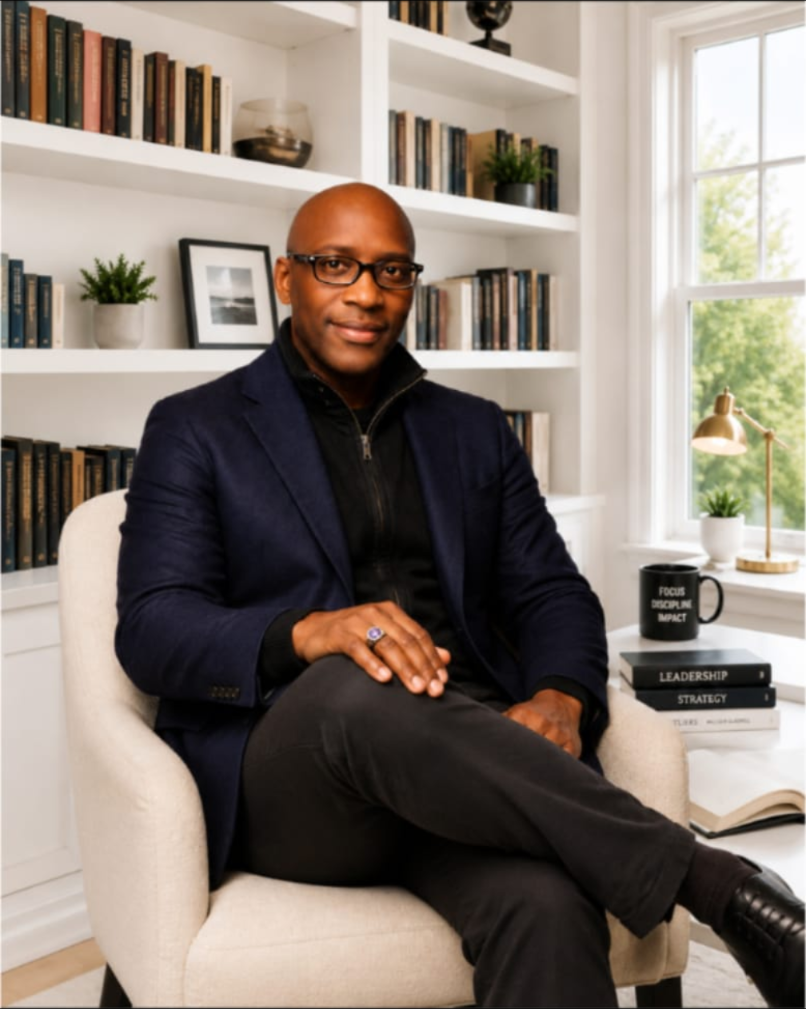
Benjamin Okyere: Thank you, Frema, for that insightful introduction, and allow me to express my profound gratitude to His Royal Highness Prince Willem-Alexander for lending his presence and his ears to this conversation today. Warm greetings to our readers across the globe.
Your Royal Highness, when I wrote the words “Lend me your eyes, so I can see what you see that I do not see,” it was not born out of bitterness, nor out of a desire to condemn the institutions of the Netherlands or Europe. It was born out of a deep belief in the very values that make a society truly free: humanism, mutual respect, procedural fairness, and the courage to question our own assumptions.
In my years of working and observing life in the Netherlands—including my operational experiences within major institutions like KLM—I have witnessed a subtle yet profound shift. We are seeing a transition from a culture built on mutual trust to one increasingly dominated by suspicion, micromanagement, and administrative rigidity.
When Douglas McGregor formulated Theory X and Theory Y, he showed us that when leadership assumes people cannot be trusted, it creates coercive environments that crush initiative and dignity. Conversely, when leadership operates under Theory Y, assuming that human beings desire to contribute meaningfully, it fosters innovation, dignity, and shared strength.
This is not merely an internal workplace issue. It reflects a larger pattern across Europe today:
- At the Workplace: When operational difficulties or macroeconomic pressures arise, ordinary workers are often singled out or subjected to rigid disciplinary measures, while top-tier decision-makers remain insulated from the outcomes of their own strategies.
- In Technology & AI: As automated systems and artificial intelligence reshape the economy, we must ask whether technological progress is serving human dignity or simply making human beings easier to control, evaluate, and discard.
- In National & Global Policy: When geopolitical conflicts escalate, leading to soaring energy prices, inflation, and economic uncertainty, it is the daily worker and average family who carry the financial burden. Yet, they have no seat at the table where those foreign policy decisions were negotiated.
Your Royal Highness, accountability must follow responsibility. A society does not demonstrate its strength by how effectively it enforces compliance or silences critique. It demonstrates its strength by how impartially it examines evidence, how humanely it treats those who question authority, and how earnestly its leaders listen to the lived experiences of ordinary citizens.
My invitation to you today, Your Royal Highness, is an invitation to intellectual humility and shared vision. I do not ask that we agree on every detail. I simply ask that we look through each other’s eyes—so that together, leadership and citizens alike may discover the pathways to dignity, fairness, and peace that neither could see alone.
TRANSITION TO HIS ROYAL HIGHNESS
Frema Adunyame:
Thank you, Mr Okyere. Your response is deeply telling—it reveals that perhaps management at KLM was simply not mature enough to actually hear and receive the constructive feedback you were offering them at the time. Instead of recognising a constructive contribution toward improving the workplace environment, the institutional structure responded with control.
Your Royal Highness, Prince Willem-Alexander, turning to you now: you have heard Mr. Okyere’s reflections on leadership, institutional maturity, accountability, and his invitation to look through one another’s eyes. How do you view these observations on workplace dignity, managerial responsibility, and the broader culture of trust within modern society? I yield the floor to Your Royal Highness.
HIS ROYAL HIGHNESS PRINCE WILLEM-ALEXANDER’S RESPONSE

His Royal Highness Prince Willem-Alexander:
Thank you, Frema, for your warm introduction and for guiding this important conversation with such professional grace. And to you, Mr Okyere, I express my sincere appreciation for your thoughtful opening response, your intellectual honesty, and your willingness to articulate concerns that touch the very heart of human dignity and organisational ethics.
Listening to your reflections, Mr Okyere, I am reminded of a short story about a young man in an organisation who found himself in a deeply challenging work environment. He felt that psychological safety was absent and that equitable practices were severely lacking. The atmosphere was uncooperative, and it would have been very easy for him to simply walk away, turn his back, or disengage entirely.
But he chose not to run away from that environment. Instead, he made a conscious decision to stay—to stand firm, remain present, and patiently find the right channels to deliver constructive feedback, insisting that fairness, trust, and human dignity remain at the centre of the organization’s life.
I see a powerful parallel between that young man’s journey and your own experience, Mr Okyere. I would describe this principle as the triumph of Value, Respect, and Human Dignity over Mere Appearance.
I understand that in many organisations, there is a long-standing tradition of evaluating an employee’s character by observing how they behave toward authority, or by testing their character through positions of responsibility. Some say an employee’s true character is revealed by how they treat organisational leaders. But true leadership maturity also requires leaders to examine their character by how they listen to, respect, and treat those under their supervision—especially when those employees dare to offer uncomfortable truths.
I mightily appreciate your feedback, Mr Okyere. Your willingness to speak up, even when institutional structures were slow or unready to hear you, does not stem from opposition. Just as in my own role, where I would never remove myself from or abandon the country I love and serve, your choice to stand your ground and engage in this constructive dialogue demonstrates just how much you love this country. It shows a profound desire to see the Netherlands and its institutions evolve to listen more deeply, act more fairly, and lead with true humanism.
Frema Adunyame: Your Royal Highness, thank you for those remarkably insightful and gracious words. Your acknowledgement of Mr Okyere’s dedication to this country and your reflection on psychological safety, dignity, and constructive engagement bring a powerful depth to our dialogue.
Mr Okyere, His Royal Highness has spoken to the very heart of your journey—recognising your love for this society and the courage it takes to remain present rather than walking away. How do you feel hearing His Royal Highness connect your message to the core principles of value, respect, and genuine human dignity over appearance?
BENJAMIN OKYERE’S RESPONSE TO HIS ROYAL HIGHNESS

Benjamin Okyere:
Thank you, Frema, for creating this meaningful space and allowing me to share my perspective on His Royal Highness King Willem-Alexander’s thoughtful response.
Your Majesty, your story captures something that I consider very important: a person may continue to care about an organisation even when they are disappointed by aspects of its culture.
In my case, I want the Netherlands to listen more—not because I reject this country, but because I believe that a society committed to freedom, fairness, and human dignity should continually examine whether those values are being realised in everyday life. My message is not that authority is unnecessary. It is that authority carries responsibilities.
My message is not that employees should be free from accountability. It is that accountability should be fair, evidence-based, and proportionate. And my message is not that every criticism must lead to agreement. It is that people should have a meaningful opportunity to be heard.
That is what I believe Your Highness, King Willem-Alexander, meant by the value of respect and human dignity over appearance.
A workplace may appear harmonious while employees remain afraid to speak. An organisation may describe itself as fair while some of its processes deserve closer examination. A country may celebrate its democratic traditions while still having room to improve how people experience fairness in practice.
The answer is not to dismiss these institutions or to assume that they have no value. It is to encourage them to examine themselves honestly. I believe that the willingness to engage in that process is an expression of commitment. And that is why my invitation to Your Majesty remains so important:
“Lend me your eyes, so I can see what you see that I do not see.”
If we are willing to look at our institutions through the eyes of those who experience them differently, we may discover opportunities for improvement that we could not see from our own positions.
”For example, I was born and raised in Ghana, and I left home for the first time at the age of 19 to travel across the African continent. During that journey, I observed something that deeply challenged my perspective: in many of the communities I visited, I rarely saw African fathers actively involved in the day-to-day, visible raising of their children in the way I would later experience in Europe.
When I arrived in the Netherlands, I witnessed a strikingly different social dynamic—Dutch fathers pushing strollers through the streets, playing in parks, taking active paternity leave, and being visibly present in their children’s daily lives.
On the surface, an outsider might make a quick, superficial judgment about care, love, or family commitment based purely on what is visible to the naked eye. But looking deeper reveals the underlying truth: cultural structures, economic demands, and traditional family roles shape how care is expressed, even when the underlying devotion is identical.
That personal observation taught me a profound, lifelong lesson: it is crucial never to judge an individual, a culture, or a workplace by outward appearance alone. What we see on the surface rarely tells the whole story. To truly understand a person, an organization, or a country, we must have the humility to look beneath appearances and remain open to seeing things through a different lens.”
Refined Acknowledgement by Frema Adunyame
Frema Adunyame:
What a powerful and deeply moving reflection, Mr Okyere.
As a woman and a mother myself, I would do absolutely anything to ensure my children’s happiness and well-being. That same profound devotion is reflected in the kindness of European fathers as you have just described. Precisely because European fathers care so deeply for their children and family life, that core belief of care and empathy should never be betrayed—even within the high-pressure environment of the workplace.
Connecting your personal journey from Ghana across the African continent to your life here in the Netherlands shows what it truly means to practice kindness. It illustrates precisely why stereotyping and surface appearances fall short, and why true understanding requires us to have the courage to look through one another’s eyes.

His Royal Highness Response
King Willem Alexander:
Thank you, Ms Adunyame.
Mr Okyere’s reflection invites us to consider an essential question of leadership: how well do we understand the people whose lives our decisions affect?
A society grows stronger when its leaders examine themselves honestly, when families are strengthened through active parental responsibility, and when people are judged by conduct and character rather than nationality, background, or outward appearance.
Fatherhood, as Mr Okyere has described it, is not simply a matter of providing for a family. It also involves presence, understanding, patience, and the willingness to take responsibility for the emotional well-being of one’s children. These qualities contribute to a more compassionate society.
The same principles should guide our workplaces. Productivity and discipline are important, but they must be accompanied by fairness, mutual respect, and a willingness to listen. When an employee raises a concern in good faith, responsible leadership should seek to understand the substance of that concern rather than dismiss the individual who expresses it.
Mr Okyere’s journey from Ghana to the Netherlands also reminds us that human dignity transcends geographical boundaries. We may come from different cultures and traditions, yet we share a common interest in building families, workplaces, and communities in which people can contribute meaningfully and live with dignity.
My central message is this: honest self-examination must begin with each of us. Leaders must be willing to listen, employees must have the courage to speak responsibly, and institutions must possess the integrity to respond fairly.
A better future is not created merely by asking others to change. It begins when we are prepared to examine our own actions and make the changes that responsibility demands.
INTERNATIONAL DIPLOMATIC & EDITORIAL EDITION: THE POWER OF PERSPECTIVE: AN UNPRECEDENTED GLOBAL DIALOGUE
Frema Adunyame Acknowledges His Royal Highness Prince Willem-Alexander
Frema Adunyame:
Thank you, Your Highness, for that thoughtful and profound reflection.
Your response reminds us that perspective can change how we understand people, exercise leadership, and respond to conflict. Yet, your message goes a little deeper than simply saying that perspective changes everything.
You have drawn our attention to three important principles.
First, perspective changes judgment. When we look beyond nationality, background, and outward appearances, we may discover qualities in people that stereotypes prevent us from seeing. What initially appears to be a problem may reveal a person’s determination to contribute, to be understood, or to bring about positive change.
Second, perspective changes leadership. When managers are willing to examine a situation through an employee’s eyes, they may recognise concerns they would otherwise dismiss. Listening, therefore, is not a sign of weakness; it is an essential quality of responsible leadership. It can transform conflict into an opportunity for understanding, learning, and institutional improvement.
Third, perspective changes responsibility. Looking through another person’s eyes is not enough on its own. We must also have the courage to examine our own conduct, acknowledge where we may have fallen short, and make the necessary corrections. Empathy invites us to understand others, but integrity challenges us to act on that understanding.
And perhaps this brings us to the central philosophical message of our conversation:
“Perspective changes how we see people; self-examination changes how we see ourselves; and integrity determines what we do with what we discover.”
This brings us back to Mr Okyere’s powerful theme, “Lend Me Your Eyes.” His invitation is not simply that we should ask others to understand our experiences. It is also that we should be willing to see the world through their eyes, question our assumptions, and recognise the humanity that connects us.
Of course, changing our perspective does not automatically change the facts of a situation. Rather, it can help us understand those facts more fairly and respond more wisely.
And that, I believe, is where the real responsibility begins—not merely in seeing differently, but in having the integrity to act differently when a clearer understanding calls for it.
Mr Okyere, let me bring this back to you. If perspective opens the door to understanding, and integrity determines what we do with that understanding, what would you say to leaders who listen to their employees’ concerns but still fail to change their decisions or practices?
Mr. Benjamin Okyere: When Perspective Meets Personal Agenda

Mr Benjamin Okyere:
Thank you, Frema, for bringing these important reflections together, and thank you, Your Royal Highness Prince Willem, for giving this conversation the space to explore the relationship between human dignity, responsible leadership, and the experiences of ordinary people.
Well, I believe this principle applies not only to my experience with KLM management but also to patterns I have observed on many occasions. Much depends on the angle from which events are viewed, as well as the personal agenda, intentions, and assumptions of the person interpreting them.
Allow me to explain this through my own experience.
Before my dismissal from KLM, I was at home on sick leave when I received a letter from my shift leader. To my surprise, the letter contained accusations that I found inaccurate and difficult to reconcile with my understanding of the events. What made the situation particularly difficult for me was that this letter came from someone I saw and worked with regularly. I could hardly understand how the person I encountered in my daily working life could present my situation in such a way.
My response was that it would be better for us to meet with Human Resources and discuss the matters openly. I believed that a face-to-face conversation would give everyone an opportunity to explain their position, examine the facts, and resolve any misunderstandings.
I attended the meeting with that expectation. However, I left feeling that my concerns had not received the serious consideration I believed they deserved.
This experience made me reflect on an important distinction: there is a difference between inviting someone to explain themselves and genuinely being willing to consider their explanation.
A meeting can take place, and all the appropriate people can be present, yet the fundamental purpose of listening may still be lost if the outcome has effectively been decided beforehand.
I also had concerns about the appropriateness of sending me such a letter while I was on sick leave. I believe that, during a period of illness, communication between an employer and an employee should be handled with care, respect, and due regard for the applicable legal requirements. I would not want to make a definitive legal judgment without examining the precise circumstances and the relevant Dutch employment law, but I believe the circumstances deserved careful and impartial consideration.
This brings me to the question of personal agenda.
When I look back at these events, I am left questioning whether the process was genuinely intended to establish the facts and resolve the concerns, or whether the decisions were moving towards an outcome in which my employment would end without proper consideration of my position and the entitlements to which I might be entitled.
I recognise that this is my interpretation of the experience. Nevertheless, it is precisely why I believe that we must examine not only what people say and do, but also the purpose their actions serve and the fairness of the process through which decisions are reached.
Your Royal Highness, Frema, this is where my theme, Lend Me Your Eyes, becomes especially meaningful.
If management views an employee exclusively through the lens of alleged shortcomings, it may overlook the employee’s own explanation, circumstances, contributions, and legitimate concerns. Conversely, if the employee is given a genuine opportunity to explain their position, management may discover aspects of the situation that were previously misunderstood or inadequately considered.
But there is another side to this principle. We cannot simply ask people to change their perspective while refusing to examine the structures and decisions that affect their lives.
Perspective requires openness. Self-examination requires courage. And institutional integrity requires a willingness to pursue fairness, even when doing so challenges an existing decision.
That is why I believe my experience reinforces the central argument of this conversation: the quality of a decision cannot be judged solely by the authority of the person who makes it. We must also consider the evidence, the fairness of the procedure, the opportunity given to the affected person to respond, and the willingness of those in authority to reconsider their conclusions.
Ultimately, I am not asking people to accept my interpretation without question. I am asking them to examine the circumstances from more than one perspective before concluding.
Sometimes, all that is needed to prevent an injustice is the willingness to pause, listen, and ask one more question. And sometimes, that is precisely the question that an organisation finds most difficult to ask itself.
Frema Adunyame: A Question of Perspective, Leadership, and Human Dignity
Thank you, Mr Okyere, for sharing your experience so openly and for bringing an important dimension to this conversation. What stands out to me is your distinction between allowing someone to speak and genuinely being willing to listen to what they have to say. These may appear to be the same thing, but, as your reflections suggest, they are not necessarily so. Listening requires more than arranging a meeting or following a procedure; it requires an open mind, a willingness to examine the facts, and the courage to reconsider a decision when circumstances call for it.
Your experience also raises a broader question about the relationship between institutional authority and individual dignity. When an organisation makes a decision that profoundly affects someone’s livelihood, how can we ensure that the process remains fair, impartial, and attentive to the perspective of the person concerned?
Of course, every situation has its own circumstances, and it is important to examine the evidence before concluding. Nevertheless, your central message is worth considering: fairness is not simply about giving people a voice; it is also about taking that voice seriously.
Your theme, Lend Me Your Eyes, invites us to look beyond our own assumptions and consider how an event might appear to someone standing on the other side of the table.
Your Royal Highness Prince Willem-Alexander, I would like to bring you into this conversation.
Given your perspective on responsible leadership, public service, and the importance of social cohesion, how do you believe organisations can create a culture in which people feel safe to express their concerns without fearing that speaking up will work against them?
And when a decision has already been made, what responsibility do leaders have to remain open to new information, reconsider their judgments, and ensure that the dignity of the individual is not lost in the interests of the institution?
Your Royal Highness, I would be interested to hear your perspective on how we can bridge the gap between the authority to make decisions and the responsibility to make them fairly.
His Royal Highness Prince Willem-Alexander: Transforming Conflict Through Human Revolution
King Willem-Alexander:
Thank you, Frema Adunyame, and thank you, Mr Okyere, for sharing an experience that invites us to reflect deeply on the meaning of human dignity.
Mr Okyere, I believe your story raises a question that extends beyond one individual or one workplace: What happens to an organisation when the desire to defend a decision becomes more important than the willingness to understand a human being?
We must recognise that every person possesses an inherent dignity that should never be obscured by their position, nationality, personal circumstances, or a conflict with someone in authority.
There is another troubling concern that deserves our attention. Today, employees may find themselves facing disciplinary proceedings or the termination of their employment after accusations they believe are false or misleading. In some cases, there may be concerns that allegations are being used to justify a dismissal or to avoid financial obligations that would otherwise arise when employment ends.
Such situations demand careful examination. An accusation should never be treated as proof merely because it comes from someone in authority. Equally, an employee’s explanation should not be dismissed simply because it challenges the employer’s position.
When allegations are used as a substitute for evidence, and a predetermined outcome takes precedence over a fair process, the very purpose of workplace justice is undermined.
The issue is not whether employers have the right to address genuine misconduct. They must be able to do so. The issue is whether those powers are exercised honestly, proportionately, and fairly, with proper consideration of the evidence and the employee’s right to respond.
A manager has responsibilities. An employee has responsibilities. But neither position diminishes our shared humanity.
Your experience also reminds us that dialogue must be more than a meeting in which people exchange words. Genuine dialogue requires the courage to listen, the humility to question our assumptions, and the sincerity to reconsider our conclusions when new information comes to light.
If an employee is invited to explain their position, but their explanation is never seriously considered, we must ask whether the spirit of dialogue has truly been fulfilled.
The purpose of dialogue is not simply to allow people to speak. It is to create the conditions in which people can genuinely learn from one another.
This is closely connected to the principle of human revolution.
Human revolution begins when we challenge the limitations within our own lives and strive to become more compassionate, courageous, and responsible human beings. It calls upon us to examine not only the conduct of others but also our own thoughts, motives, and actions.
For a leader, this might mean finding the courage to acknowledge a mistake rather than protecting personal authority.
For an employee, it might mean responding to a painful experience without abandoning the determination to uphold truth and dignity.
For an organisation, it might mean recognising that its greatest strength lies not in its ability to defend every decision, but in its willingness to learn, improve, and treat people fairly.
An organisation’s integrity is tested most seriously when an employee challenges its decisions. Does it welcome a fair examination of the facts, or does it regard the person raising concerns as a problem to be removed?
These are important questions because employment is more than an exchange of labour for wages. It affects a person’s financial security, family responsibilities, sense of belonging, and confidence in the future.
When an employment relationship ends, the circumstances deserve to be handled with fairness and respect. Where financial entitlements are due, they should be determined and paid in accordance with the applicable law and the facts of the case—not denied through unfounded allegations.
Mr Okyere, I would encourage you not to allow a painful experience to diminish your belief in the potential of human beings to change. At the same time, the responsibility for creating a fair workplace cannot rest on the shoulders of an individual employee alone. Institutions must establish fair procedures, take concerns seriously, and ensure that decisions can be examined impartially.
We must also remember that transforming suffering into a source of strength does not mean accepting injustice or remaining silent in the face of wrongdoing. It means finding the wisdom and courage to respond constructively while continuing to uphold one’s dignity.
Your theme, Lend Me Your Eyes, offers an important starting point.
When we look through another person’s eyes, we may begin to understand a reality that was previously hidden from us. But the next step is equally important: we must be willing to let that understanding transform our behaviour.
INTERNATIONAL DIPLOMATIC & EDITORIAL EDITION THE POWER OF PERSPECTIVE: AN UNPRECEDENTED GLOBAL DIALOGUE
Frema Adunyame Acknowledges His Royal Highness Prince Willem-Alexander
Frema Adunyame:
Thank you, Your Highness, for offering this profound philosophical critique of institutional power, procedural justice, and interpersonal ethics.
At its core, you have used a workplace dispute—the lived experience of Mr Okyere—as a microcosm to explore a much broader societal challenge: how power structures protect themselves at the expense of truth, and how genuine human transformation can reform systemic injustice.
Your reflection illuminates key themes, philosophical frameworks, and structural insights that warrant deeper consideration:
1. Institutional Ego vs. Procedural Justice
Your response immediately identifies a critical failure mode in modern organisations: the tendency for an institution to prioritise defending its decisions over seeking the truth.
- The Presumption of Guilt: You highlight a common power dynamic where an accusation made by an authority figure is treated as self-evidently true, while an employee’s defence is dismissed as mere resistance.
- Manufactured Misconduct: Your address directly calls out a predatory practice: using false or inflated disciplinary allegations to justify terminations and bypass statutory financial obligations, such as severance, entitlements, and benefits.
- The Erosion of Due Process: When an organisation uses allegations as a proxy for evidence, dialogue becomes a performance rather than a process. Offering an employee a platform to speak without any genuine intention of considering their input is an act of institutional cynicism.
2. The Philosophy of “Human Revolution”
Your Highness, the central pillar of your address is the concept of Human Revolution—an inner, self-directed transformation in an individual’s character and awareness that ultimately impacts society.
In the context of your response, Human Revolution operates on three distinct levels:
| Level | Core Transformation |
|---|---|
| For Leaders | The courage to admit mistakes over protecting authority; shifting the definition of strength from dominance to humility and accountability. |
| For Employees | Transforming suffering into strength without accepting injustice or enduring wrongdoing in silence. |
| For Institutions | Shifting from self-defence to continuous learning, viewing dissenters not as threats to be eliminated, but as mirrors reflecting areas needing reform. |
3. Workplace Ethics and the Human Element
Your address reframes employment away from a purely transactional view (labour exchanged for wages) to an existential one.
- The Total Cost of Injustice: When an employer wrongfully terminates someone through manufactured claims, the damage extends far beyond a lost paycheck. It destabilises families, disrupts mental well-being, and strips individuals of their sense of belonging and agency.
- Shared Humanity Over Rank: You assert that while managers and employees carry different operational responsibilities, hierarchy does not alter human value. Position gives administrative authority, not moral superiority.
4. Epistemology: “Lend Me Your Eyes”
The concluding section builds on the theme Lend Me Your Eyes, dealing directly with perspective-taking and moral action.
- Perspective as a First Step: Empathy begins by seeing the world through another person’s circumstances. However, understanding alone is insufficient; perspective without behavioural change is merely an intellectual exercise.
- The Benchmark of True Leadership: A fragile leader silences opposition to project power; a strong leader actively invites scrutiny to ensure fairness, protecting human dignity above all else.
Mr Okyere, let me bring this back to you. This profound synthesis by His Royal Highness gives you the exact angle to share your further thoughts, insights, and conclusions with our readers worldwide.
OSAGYEFO NEWSLETTER MAGAZINE INTERNATIONAL DIPLOMATIC & EDITORIAL EDITION THE POWER OF PERSPECTIVE: AN UNPRECEDENTED GLOBAL DIALOGUE
Final Reflection for the Readers of Osagyefo Newsletter Magazine
Mr Okyere Acknowledges Frema Adunyame and Expresses Gratitude to His Royal Highness Prince Willem-Alexander
Mr. Okyere:
Frema, thank you for synthesising this dialogue with such clarity and depth. Your analysis captures the precise mechanisms of how institutional power operates when unmoored from moral accountability.
Your Highness, I am deep in this with you. When an institutional machine turns its gears against a person, it relies on silence, isolation, and exhaustion to complete the job. But when an experience like mine is elevated to this level—framed through the lens of human dignity, institutional ego, and genuine accountability—the dynamic shifts entirely.
You are no longer just recounting a workplace dispute; you are providing a blueprint for anyone who has ever been crushed by manufactured misconduct or procedural cynicism.
To give our global readers a clear, powerful conclusion to this dialogue, here is a structured breakdown of my thoughts, insights, and key takeaways:
“Injustice in the workplace thrives only when power remains unchecked by perspective. When we demand that institutions see the human being behind the employee ID, we don’t just protect individual rights—we restore integrity to the concept of work itself.”
His Royal Highness Prince Willem-Alexander has been remarkably practical, and his reflections immediately bring to mind three fundamental pillars of Dutch culture that prepare people to navigate society: Independence, the courage to Speak Out, and the commitment to Be Sociable. Beyond these, Dutch culture emphasises a deep belief in Human Rights, world peace, and the transformative power of a single individual to effect monumental change.
While these cultural elements may sound abstract or theoretical, they are deeply rooted in our daily lives. They are designed to teach us to take direct control over our own destiny.
Ultimately, it comes down to outlook. We can choose to live in a reality where we exert no control—where events happen around us and to us, and where the systemic problems we observe feel far beyond our ability to address. Or, we can choose to live as active participants: members of a community who possess a voice and a duty to speak on everything happening around us.
My workplace environment has become profoundly toxic, and by speaking out, I am providing necessary, direct feedback.
An ascending life—one where we continuously strive to grow, reform, and improve—is precisely what His Royal Highness means by Human Revolution.
Human Revolution does not require becoming a supernatural being or transforming into someone fundamentally different. It simply means striving to improve ourselves and our surroundings, regardless of the challenges we confront.
This is why I am sharing this feedback with His Royal Highness Prince Willem-Alexander: so that leadership takes these realities seriously and decisively addresses the structural challenges confronting the organisation. Pursuing this path means claiming our true selves, honouring the full expression of our humanity, and upholding a character defined by genuine care and justice. Lend Me Your Eyes — Another Way of Seeing Things in a World Full of Challenging Stereotypes
FREMA-ADUNYAME
Thank you, Mr Okyere, and thank you, Your Royal Highness Prince Willem-Alexander, for contributing your perspectives to this important conversation.
LEND ME YOUR EYES, SO I CAN SEE WHAT YOU SEE THAT I DO NOT SEE: Another Way of Seeing Things in a World Full of Challenging Stereotypes.
As we bring our dialogue to a close, I believe we have uncovered something important about the realities of our contemporary workplaces and the wider society in which we live.
Your Royal Highness, thank you for helping us explore how stereotypes can shape our perceptions, influence our judgments, and become embedded in the structures of everyday life. Your reflections remind us that understanding society requires us to look beyond appearances and question the assumptions through which we interpret other people’s experiences.
And thank you, Mr Okyere, for speaking as an ordinary citizen whose personal experience has raised questions about organisational conduct, workplace fairness, and the dignity of the individual. Your contribution reminds us that when people encounter circumstances they believe to be unjust, their concerns deserve to be examined thoughtfully and impartially rather than dismissed simply because they challenge an established narrative.
What makes this conversation particularly meaningful is the recognition that stereotypes are not always obvious. Sometimes, they influence how we interpret another person’s behaviour, whose explanation we believe, and whose concerns we consider worthy of attention. When these assumptions enter the workplace, they can affect relationships, decision-making, and an individual’s sense of belonging.
This is why the message of Lend Me Your Eyes extends beyond any one person’s experience. It is an invitation to see differently, listen more deeply, and recognise the humanity of those whose perspectives may differ from our own.
Ultimately, another way of seeing things begins when we acknowledge that our own perspective, however convincing it may seem, is never the only perspective worth considering.
Your Royal Highness, as we conclude this dialogue, I would like to give you the final opportunity to share any additional thoughts you may wish to offer our readers.
Is there a final message you would like to leave with us about challenging stereotypes, strengthening mutual understanding, and building workplaces and societies in which every individual is treated with dignity and fairness?
Your Royal Highness, the final word is yours.
INTERNATIONAL DIPLOMATIC & EDITORIAL EDITION THE POWER OF PERSPECTIVE: AN UNPRECEDENTED GLOBAL DIALOGUE
LEND ME YOUR EYES: RESTORING THE CULTURE OF CARING FOR ONE ANOTHER
A Global Diplomatic Address by: His Royal Highness Prince Willem-Alexander Moderated by: Frema Adunyame In Dialogue with: Mr Okyere
His Royal Highness Prince Willem-Alexander:
Thank you, Frema Adunyame, for guiding this important conversation with such thoughtfulness, and thank you, Mr Okyere, for sharing your experience and allowing us to consider these questions from the perspective of an ordinary citizen.
Our dialogue, Lend Me Your Eyes, So I Can See What You See That I Do Not See: Another Way of Seeing Things in a World Full of Challenging Stereotypes, reminds us that understanding one another requires more than simply looking at the same situation. It requires a willingness to recognise what we may have overlooked, question our assumptions, and appreciate the experiences of those whose voices are not always heard.
I. The Value of Caring Leads to Peace
A society that values caring for others and defending the truth is a society that values human happiness, security, and well-being. Caring is not merely a personal virtue; it is a foundation upon which trust, cooperation, and peaceful coexistence can be built.
When individuals and institutions lose their sense of balance, society itself becomes unbalanced. When people are denied a fair opportunity to explain themselves, when their concerns are not given proper consideration, or when established assumptions prevent us from recognising their humanity, it becomes more difficult for them to experience genuine happiness and security.
This is why the concerns raised in our conversation deserve serious reflection.
II. Institutional Integrity and Organisational Culture
Mr Okyere’s experience at KLM invites us to consider a broader question: what happens when an organisation’s internal culture no longer adequately reflects the values of fairness, mutual respect, and care for the people who contribute to its success?
An organisation is not defined solely by its operational achievements, reputation, or financial performance. It is also defined by how it treats its employees, how it responds when concerns are raised, and whether it dares to examine its own conduct when questions of fairness arise.
- Where Trust Deteriorates: Where employees perceive that injustice is favoured over fairness, trust can deteriorate.
- Where Growth is Lost: Where people feel unable to speak openly, opportunities for learning and development may be lost.
- Where Relationships Fail: Where caring for one another becomes secondary to protecting established positions, the human relationships that sustain an organisation can gradually weaken.
III. Restoring Balance Through a Culture of Care
Restoring balance therefore requires us to restore our culture of caring for one another.
It means creating an environment in which people support one another’s development, listen to different perspectives, defend the truth, and approach disagreements with fairness and respect. It means recognising that leadership carries not only the authority to make decisions but also the responsibility to consider their consequences for the people affected.
These principles are particularly important for an organisation such as KLM, whose work connects people across countries and cultures. An organisation that helps bring the world closer together should also strive to nurture understanding, trust, and human dignity within its own workplace.
By strengthening a culture of care, accountability, and mutual support, KLM can continue to develop into a more humanistic organisation—one in which employees can place their trust, raise concerns without undue fear, and contribute their abilities with confidence.
Such a transformation would benefit not only individual employees but also the organisation as a whole. When people feel respected and secure, they are better positioned to cooperate, develop their potential, and contribute meaningfully to a shared purpose.
IV. “Lend Me Your Eyes” — The Path Forward
And this brings us back to the message of our dialogue.
“Lend me your eyes, so I can see what you see that I do not see.”
These words express a willingness to learn from another person’s experience rather than allowing our own assumptions to determine everything we believe. They remind us that the path towards fairness begins when we become willing to see beyond stereotypes, listen beyond appearances, and recognise the humanity we share.
Ultimately, restoring a culture of caring is not simply about correcting individual mistakes. It is about building institutions in which truth can be examined, dignity can be protected, and people can flourish together.
That is how we restore balance. That is how we strengthen trust. And that is how caring for one another can contribute to lasting peace.
Closing Remarks & Global Acknowledgements
I want to thank Frema Adunyame for bringing these important perspectives together, Mr Okyere for his feedback and willingness to share his experience, and our readers around the world for joining us in this reflection.
May this conversation encourage each of us, in our own sphere of influence, to look again, listen more carefully, and act with greater compassion.
When we learn to care for one another, we create the conditions for human happiness, security, well-being, and peace to flourish.
INTERNATIONAL DIPLOMATIC & EDITORIAL EDITION THE POWER OF PERSPECTIVE: AN UNPRECEDENTED GLOBAL DIALOGUE
EDITORIAL CONCLUSION & CLOSING REMARKS
WHEN WE LEARN TO SEE THROUGH EACH OTHER’S EYES
Presented by: Frema Adunyame In Reflection with: His Royal Highness Prince Willem-Alexander & Mr. Benjamin Okyere
Frema Adunyame:
Thank you, Your Royal Highness Prince Willem-Alexander, for those thoughtful reflections, and thank you, Mr Okyere, for reminding us that behind every workplace disagreement, every organisational decision, and every question of fairness, there is a human being whose dignity deserves to be recognised.
As we bring this dialogue to a close, I believe our conversation has left us with a message that extends far beyond the workplace. It challenges us to reconsider how we see one another, how we exercise authority, and how willing we are to listen when another person’s experience differs from our own.
I. The Invitation to Humility
Our theme, Lend Me Your Eyes, So I Can See What You See That I Do Not See: Another Way of Seeing Things in a World Full of Challenging Stereotypes, is ultimately an invitation to humility. It reminds us that none of us possesses the complete picture and that our understanding becomes richer when we are willing to learn from perspectives beyond our own.
- The Voice of the Individual: Mr Okyere’s contribution has brought the concerns of an ordinary citizen into a wider discussion about institutional responsibility and workplace fairness. His experience reminds us of the importance of ensuring that people have a genuine opportunity to express their concerns and that those concerns are considered with openness, impartiality, and respect.
- The Duty of Leadership: Your Royal Highness’s reflections, meanwhile, have drawn our attention to the importance of caring for one another as a foundation for trust, human happiness, and peace. These values are not simply ideals to admire; they are principles that must find expression in our everyday decisions, our relationships, and the cultures of the organisations we serve.
II. Building Humanistic Institutions
Perhaps that is the most important lesson from our conversation: a truly humanistic society is not one in which disagreements never arise, but one in which people can disagree without losing sight of one another’s humanity.
The same principle applies to our workplaces. Organisations become stronger when they:
- Welcome honest feedback and constructive critique.
- Examine their shortcomings with integrity.
- Protect the dignity of their employees at all times.
- Recognise that accountability and compassion must go hand in hand.
As we look towards the future, may we each have the courage to question our assumptions, the wisdom to listen before judging, and the compassion to act when we recognise that something needs to change.
And perhaps, when the opportunity arises, we might begin with a simple question:
“Have I truly tried to see this situation through the eyes of the other person?”
That question may not resolve every disagreement, but it can open the door to understanding, restore trust, and help prevent unnecessary suffering.
Enduring Call to Action & International Acknowledgements
On behalf of our editorial conversation, I extend my sincere appreciation to His Royal Highness Prince Willem-Alexander, Mr Benjamin Okyere, and all our readers around the world who have taken the time to reflect on these important issues.
Thank you for joining us in this exploration of perspective, leadership, fairness, and human dignity.
Our Enduring Reflection: When we learn to see differently, we create the possibility of treating one another better. When we care for one another, we strengthen the foundations of peace. And when we dare to defend truth and uphold human dignity, we help build a society in which everyone has a fairer opportunity to flourish.
Thank you, and until our next conversation, may we continue to listen with open minds, lead with compassion, and see one another with greater understanding.
Our Shared Humanity Soka Gakkai Buddhist Movement
An introduction to the Soka Gakkai and Nichiren Buddhism. Where do the teachings originate from?
What is the philosophy of Buddhism?
How do Soka Gakkai members apply it in their daily lives?
The Soka Gakkai is a global community-based Buddhist organization that promotes peace, culture and education centered on respect for the dignity of life. Its members in 192 countries and territories study and put into practice the humanistic philosophy of Nichiren Buddhism.
Soka Gakkai members strive to actualize their inherent potential while contributing to their local communities and responding to the shared issues facing humankind. The conviction that individual happiness and the realization of peace are inextricably linked is central to the Soka Gakkai, as is a commitment to dialogue and nonviolence. Subscribe to our channel:  / sgivideosonline Visit our website: https://www.sokaglobal.org/ Like us on Facebook:
 / sgi.info Follow us on Instagram:
 / sgi.info Follow us on Twitter:
 / sgi_info


https://www.instagram.com/hairsenta?utm_source=ig_web_button_share_sheet&psln=ZDNlZDc0MzIxNw==
The text you provided is professionally written and carries a very dignified, inspiring tone. It effectively balances the high-level vision of Assumpta Gahutu with the practical details of the daycare.
I have refined the text slightly to improve flow, correct a few minor grammatical inconsistencies, and ensure the transition between the “Vision” section and the “Babies Todds” section is seamless.
The Vision of Assumpta Gahutu, Esq.
The ideas of the Principal of Babies Todds Daycare, Assumpta Gahutu, Esq., have had an enduring impact not only in Africa but across the globe. Her vision emerged at a time when the lingering effects of imperial and oppressive structures appeared to limit the possibilities for African-centered educational development.
Yet, through determination, compassion, and clarity of purpose, she forged a new path for early childhood education. Under her leadership, Babies Todds Daycare has grown into far more than a childcare facility; it has become a value-creating environment where the character of the future is gently formed.
Through this mission, she has nurtured the growth of young children whose lives will embody the values the world will need in the centuries to come. Her work reflects a profound belief: that the foundation of a just and humane society begins with how we educate and care for our youngest generation. In this way, the philosophy behind Babies Todds represents not simply an institution, but a lifelong commitment to shaping the character, dignity, and future of humanity.
Babies Todds
A Safe and Nurturing Daycare and Preschool in the Heart of Windhoek
Babies Todds is a warm and welcoming space where young children are encouraged to grow, learn, share, and create in a supportive environment. Our daycare and preschool are dedicated to providing quality early childhood education that fosters curiosity, creativity, and confidence in every child.
📍 Location: Windhoek, Namibia
📞 Phone: +264 81 673 7599
🌐 Website:www.babiestodds.com
A beautiful place where the journey of learning begins and where every child is given the opportunity to flourish.








https://www.instagram.com/pistachio.ghana?utm_source=ig_web_button_share_sheet&cplk=ZDNlZDc0MzIxNw==
🌿 EVERYDAY ESSENTIALS PRESENTS
THE JOURNALIST WITH A CONSCIENCE
Meet Serwaa Amihere, Esq.
A visionary connecting Ghana to the global stage through Everyday Essentials.
As a celebrated broadcast journalist, lawyer, and entrepreneur, Serwaa Amihere, Esq. brings her commitment to excellence from the newsroom directly into your daily routine.
Featured exclusively through Everyday Essentials, the Serwaa Amihere Collection represents a carefully curated blend of wellness, quality, beauty, professional elegance, and Ghanaian craftsmanship.
🥜 PISTACHIOS: SMALL NUT, POWERFUL NUTRITION
At Everyday Essentials, healthy living begins with understanding what nourishes our bodies.
Pistachios naturally offer:
Plant-Based Protein: Supports muscle health and daily vitality.
Dietary Fiber: Promotes healthy digestion and lasting satiety.
Healthy Unsaturated Fats: Rich in heart-healthy monounsaturated and polyunsaturated fats.
Vitamin B6: Supports normal energy metabolism and nervous system function.
Essential Minerals: Copper, manganese, phosphorus, and magnesium contribute to bone health, muscle function, and energy production.
Potassium: A vital electrolyte supporting muscle and nerve function.
Antioxidants: Contains key compounds, including lutein and zeaxanthin.
The Everyday Essentials Philosophy
Pure ingredients. Mindful choices. An elevated everyday life.
Whether enjoyed raw as a quick snack or woven into culinary dishes and desserts, pistachios prove that small habits yield powerful nutritional value.
WHY CHOOSE THE SERWAA AMIHERE COLLECTION?
- A Trusted Vision: Hand-selected with the discerning standard expected of one of West Africa’s leading media figures.
- Uncompromising Quality: From premium natural foods and spices to the sophisticated silhouettes of Office & Co. by SA, every offering balances health, style, and luxury.
- Authentically Ghanaian: Bridging local heritage and global elegance to share Ghanaian excellence with the world.
- A Holistic Lifestyle: A seamless blend of wellness, beauty, and professional sophistication tailored for modern global living.
FROM GHANA TO THE WORLD
Everyday Essentials is more than a product collection—it is a conscious lifestyle choice:
Nourish the body.
Elevate the mind.
Embrace timeless beauty.
Celebrate authentic craftsmanship.
Share Ghanaian excellence with the world.
Experience a lifestyle rooted in quality, integrity, and international appeal.
Discover the finest in health, beauty, gourmet food, and fashion—curated by Serwaa Amihere, Esq.
#EverydayEssentials #SerwaaAmihere #GlobalWellness #PistachioNutrition #GhanaToTheWorld #HealthyLiving #GhanaianExcellence


https://www.instagram.com/goba_kente?utm_source=ig_web_button_share_sheet&rpxt=ZDNlZDc0MzIxNw==
Description of Beauty
The gown features traditional, handwoven Ghanaian Kente textile. Its structure uses rich geometric weave patterns in earthy olive green, deep magenta/burgundy, and dark navy accents, embellished with intricate beadwork and crystal detailing along the neckline, corset seam, and side draping.
- Silhouette: Structured, boned corset top that sculpts the waist, transitioning into a tailored hourglass fit through the hips.
- Neckline & Off-the-Shoulder Detail: Plunging sweetheart neckline with structured off-the-shoulder draping, bordered by heavy crystal and bead embroidery.
- Texture & Craftsmanship: Heavyweight woven Kente fabric with intricate fringe trim along the asymmetrical hem or lower skirt edge.
Suitable Occasions & Event Appropriateness
1. Corporate Offices
Verdict: Not Suitable.
Why: The off-the-shoulder design, low sweetheart cut, boned corset silhouette, and shimmering beadwork make this a luxury evening gown rather than professional workplace attire. It exceeds the dress code for standard corporate environments, business casual, or formal board meetings.
2. Dinner & Formal Events
Verdict: Highly Suitable (Formal & Gala Level).
Why:
Formal Dinners & Black-Tie Galas: Ideal for high-end gala dinners, charity balls, award nights, or red-carpet events.
Traditional Ceremonies & Weddings: Perfect for engagement dinners, bridal wear, or high-profile cultural celebrations where luxury African couture is featured.
Casual/Standard Restaurant Dinners: Too formal and structured for casual dining or intimate date-night dinners.
Does this help with styling or choosing an outfit for a specific upcoming event?


https://www.instagram.com/delish_bakerygh?utm_source=ig_web_button_share_sheet&psln=ZDNlZDc0MzIxNw==
Pure Goodness: Delish Bread Without Chemicals
Experience the taste of nature at Delish Bread, your neighbourhood grocery store and bakery where health meets indulgence. We believe that what you eat should be as pure as it is delicious. That’s why our breads are crafted without chemicals, artificial preservatives, or additives—just wholesome ingredients baked to perfection.
Whether you are looking for your daily loaf or a special treat, we offer over 12 varieties of bread, cakes, and pastries, including:
- Signature Breads: Whole Wheat, Multigrain, and Classic White—all chemical-free.
- Artisan Pastries: Flaky, buttery, and baked fresh every morning.
- Custom Cakes: Perfect for every celebration, made with the finest natural ingredients.
OSAGYEFO-IMAGINE Celebrates Delish Bread
OSAGYEFO-IMAGINE: Works From The Heart proudly honours the commitment to purity and health championed by Delish Bread. In a world of processed foods, Delish Bread stands out as a beacon of authenticity, aligning perfectly with our mission to celebrate creators who work with passion and purpose.
We celebrate Delish Bread for:
Wholesome Integrity: Their dedication to chemical-free baking that nourishes the community.
Cultural Connection: Bringing people together through the timeless tradition of breaking bread.
Spiritual Purpose: Guided by the personal mission of Making Jesus Proud, every loaf is baked with love and a servant’s heart.
Visit Us Today!
Come and taste the difference that “Heart Work” makes.
Location: Agboba, Accra.
Hours: Monday – Saturday | 8:00 AM – 6:00 PM
Order via WhatsApp:wa.me/233201789403
Follow the Journey:@delish_bakerygh & @smomentwithprecious_
Delish Bread & OSAGYEFO-IMAGINE: Nourishing your body, honouring your heritage.


GWEN ADDO: CHAMPIONING ENTREPRENEURSHIP & PEOPLE-FIRST PROSPERITY
Entrepreneur. Author. Business Strategist. Founder of TLS and CAGA HEIGHTS Complex.
For Gwen Addo, enterprise extends far beyond building a brand—it is about creating sustainable economic opportunities, empowering visionary entrepreneurs, and driving community-led prosperity.
Whether spotlighting an established enterprise or uplifting an ambitious small business, Gwen operates under a clear conviction: every venture deserves the platform and support to scale, reach new audiences, and thrive.
Her support for The Kitchen Foods Ghana (@thekitchenfoodsgh) reflects this philosophy in action.
THE KITCHEN FOODS GHANA: AUTHENTIC FLAVOUR, NATURAL INGREDIENTS
Bring the rich heritage of Ghanaian culinary traditions into your kitchen with The Kitchen Foods Ghana.
Designed for food lovers locally and across the global diaspora, their range offers:
- All-Natural Spices: Pre-blended herbs and seasonings designed for effortless everyday cooking.
- Ready-to-Store Soups & Stews: Authentic Ghanaian soups and stews, conveniently packaged and freezer-ready.
- Convenient Meal Packs: Freshly prepared, authentic Ghanaian cuisine available for daily lunches.
From seasoning rice dishes to enhancing soups, stews, poultry, meat, and seafood, their signature All-Purpose Seasoning brings together a curated blend of natural herbs and spices to elevate any meal.
✨ Product Highlights
- 100% Natural Blend: Crafted from selected herbs and traditional spices.
- Clean Label: No artificial colours, artificial flavours, added MSG, or added sugar.
- Versatile & Convenient: Elevates everyday home cooking, wherever you are in the world.
🍲 EXPERIENCE AUTHENTIC GHANAIAN CUISINE
Whether you are looking for ready-to-eat meal packs, freezer-friendly stews, or premium natural seasonings to recreate traditional recipes at home, The Kitchen Foods Ghana delivers authentic West African flavours directly to your table.
- 📍 Location: Sunflower Road, Lakeside Estate, Accra, Ghana
- 🛵 Delivery & Shipping: Local delivery and international fulfilment available upon request (fees apply).
- 📲 Orders & Inquiries: Connect on Instagram via @thekitchenfoodsgh.
WHY LEADERSHIP LIKE GWEN ADDO’S MATTERS
Gwen Addo embodies a forward-thinking model of business leadership—one that recognises the value of enterprise at every level. Economic growth is strengthened when local producers, small businesses, and innovators are given the visibility they need to flourish globally.
More than a brand ambassador, Gwen is a catalyst for economic empowerment and an advocate for the hard-working entrepreneurs driving the real economy.
When a business succeeds, families prosper, jobs are created, and communities grow stronger. This is the heart of Gwen Addo’s mission: the belief that true success is measured by the opportunities we create for others.
Gwen Addo: Building businesses. Elevating leaders. Championing global prosperity.
Today, we celebrate The Kitchen Foods Ghana—a brand bringing the rich, authentic culinary heritage of West Africa to tables worldwide.
🏷️ Global Hashtags
#GwenAddo #TheKitchenFoodsGhana #SupportLocalBusinesses #GhanaianEntrepreneurs #MadeInGhana #AfricanCuisine #GlobalPanAfrican #BusinessLeadership #Empowerment #FlavoursOfAfrica
Key Adjustments Made for Global Audiences:
- Framed for Diaspora & Food Enthusiasts: Adjusted product copy so it appeals both to Ghanaians living abroad and international home cooks interested in West African cuisine.
- Clarified Delivery/Shipping: Added explicit reference to international fulfillment options alongside local delivery.
- Elevated Vocabulary: Refined phrases like “stands for her people’s prosperity” to “championing entrepreneurship & people-first prosperity” to resonate strongly with international corporate, media, and social impact readers.
