









OSAGYEFO NEWSLETTER MAGAZINE
Presents — NEWSWEEK EDITION
Release Date: Monday, September 21st, 2026 |
Read Exclusively at: assumptagh.live/
BEING CONSIDERATE
THE RISE OF THE SENSITIVE HUMAN
“A sensitive heart does not rush to control the world. It learns to observe, to understand, and to care.” — From The Butterfly Who Taught the Garden to Listen


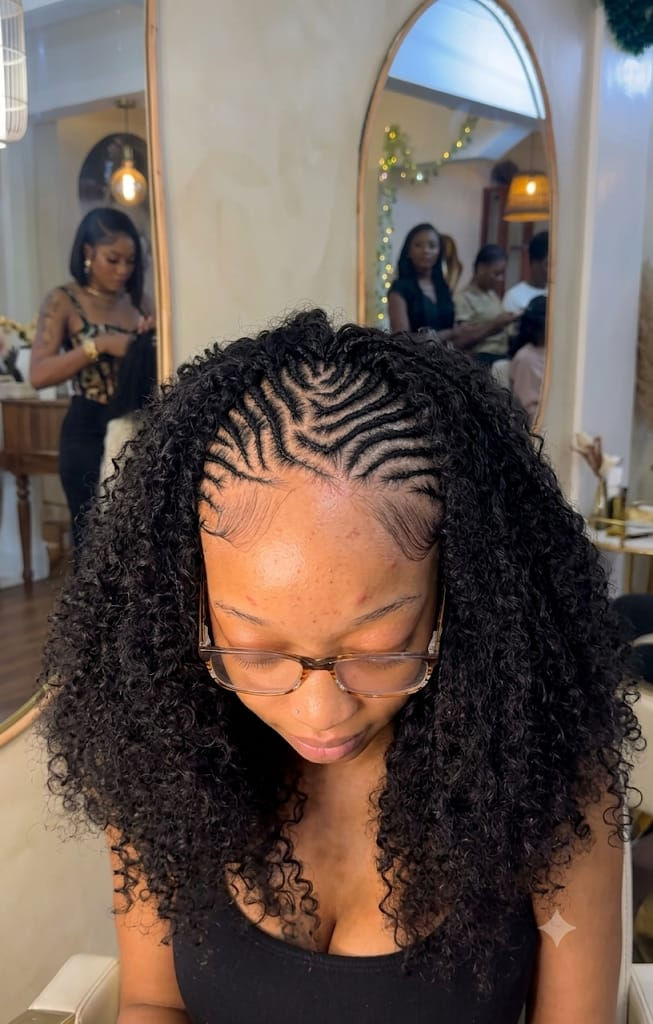





Elevate Your Crown with The Hair Senta
Why settle for “good enough” when you can wear the gold standard? At The Hair Senta, we don’t just sell hair; we deliver the confidence that comes with knowing your look is flawless, authentic, and built to last.
Based in the heart of Accra and shipping globally, we’ve turned the art of human hair extensions into a world-class experience.
Why the World Chooses Hair Senta
- Actual Proof of Quality: No filters needed. Our extensions are sourced for longevity, natural lustre, and a seamless blend. Whether it’s raw or virgin hair, the quality is visible in every strand.
- The Confidence Factor: We believe your hair is your power. Our pieces are designed to give you that “just stepped out of the salon” feeling every single day.
- Unbeatable Value: Luxury shouldn’t be out of reach. We offer premium, trademarked quality at prices that respect your investment.
- Global Reach, Local Roots: From our flagship in Ghana to doorsteps in London, New York, and beyond—we bring the best of West African hair retail to the world.
Ready to Transform Your Look?
| Feature | What You Get |
| Origin | Premium Sourcing |
| Shipping | Worldwide Delivery |
| Location | 24 Jungle Avenue, Accra, Ghana |
| Status | Trademarked Excellence |
Get in Touch Today
Don’t wait for your best hair day—create it.
Visit Us:www.hairsenta.com
Call/WhatsApp: (+233) 0544354455 / 0248629769
In-Store: 24 Jungle Avenue, Accra, Ghana
“Your hair is the crown you never take off. Make sure it shines.”

📖 EDITORIAL PREFACE
The Parable: The Butterfly Who Taught the Garden to Listen
In a quiet garden, a young girl named Amara watched a blue butterfly resting with a torn wing. When her friend Kofi reached out to catch it, Amara gently stopped his hand: “Sometimes, being considerate means understanding that help is not always about doing something. Sometimes, it is about knowing what not to do.”
When heavy rain fell the next morning, Kofi did not grab the trembling butterfly; instead, he placed a large leaf nearby to shield it from the storm.
This simple story carries a profound truth for our time: Sensitivity is not weakness. It is the capacity to observe, to respect another’s struggles, and to exercise restraint rather than force. As we look at today’s global landscape, a central question emerges: Can this same consideration for human life guide national power, foreign policy, and international leadership?
🌐 THE OPENING BRIEF
When Sensitivity Becomes Strength
For a long time, people have mistaken human sensitivity for weakness—describing it as too soft or unprepared for the harsh realities of power. Yet true sensitivity is the capacity to notice, understand, and account for the lives and needs of others. When translated into policy, sensitivity becomes consideration, directly shaping how institutions and nations govern.
Two contemporary developments offer an opportunity to examine this dynamic:
- The Politics of Restraint: Alice Weidel, co-leader of Germany’s AfD, has publicly argued against continued German military support for Ukraine, emphasising negotiations and peace. Her stance presents restraint and the avoidance of direct involvement in war as matters of national interest. It prompts us to ask: What does it mean when a political argument places the avoidance of conflict and the human cost of military decisions at its centre?
- Development with a Human Face: Reports in 2026 detail Chinese support to Cuba involving 60,000 tonnes of rice, $80 million in financial aid, and solar-energy infrastructure development. Beyond geopolitical interpretations, this raises another question: When international cooperation delivers food, energy, and practical resources, can development become an expression of consideration for human wellbeing?
💡 THE CENTRAL FEATURE
From War and Peace to Food and Energy
The sensitive human is not someone who avoids tough decisions, but someone who asks:
- What will this choice mean for ordinary families?
- How can national interests be pursued without ignoring human suffering?
- Is true progress measured only by wealth and military capacity—or by the lives those resources improve?
Consideration is not an ornament of leadership; it is a necessity that humanity must cultivate alongside technology, economic power, and political authority.
📌 INSIDE THIS EDITION
- 🕊️ Alice Weidel & The Politics of Peace: Examining public arguments for restraint, security, and diplomatic negotiation over military escalation.
- 🌾 China–Cuba: Development & Human Welfare: Exploring reported food assistance and solar-energy cooperation as models of practical partnership.
- 🌍 The Rise of the Sensitive Human: Why sensitivity has been misunderstood and how consideration becomes a form of global responsibility.
- 🤝 Personal Empathy to Public Leadership: How values of care influence workplaces, communities, and governments.
- 💡 Beyond Power: Rethinking societal progress through the lens of food security, energy access, dignity, and peace.
🎙️ THE GUEST FEATURE: EXCLUSIVE DIALOGUE
HOST: Frema Adunyame (Ghanaian Broadcaster & Journalist | Head of Events & Partnerships, Citi FM & Channel One TV)
| Guest Speaker | Core Focus | Key Dialogue Question |
| Akosua Owusuwaa (Founder & CEO, TLS; Co-founder, Hair Senta) | Wellness, Self-Worth & Food Education | Can Consideration Transform Communities? Creating spaces where people can thrive through holistic entrepreneurship. |
| Dzigbordi Kwaku-Dosoo (CEO, DCG Consulting Group) | Human Capital & Business Strategy | Can Excellence & Consideration Coexist? Developing human potential rather than treating people as instruments of output. |
| H.E. Giorgia Meloni (Prime Minister of Italy) | Sovereignty & Global Responsibility | Can National Interest & Consideration Coexist? Balancing national security, economic resilience, and global human consequences. |
✒️ THE EDITORIAL CONCLUSION
Perhaps the future of civilisation will not be defined by how much power we possess, but by how much consideration we bring to the exercise of that power. To be sensitive is to recognise; to be considerate is to respond with awareness.
THE EDITORIAL QUESTION
IS CONSIDERATION THE NEXT MEASURE OF HUMAN PROGRESS?
The examples of war, peace, food assistance, energy development, and leadership lead us toward a broader reflection:
“Perhaps the future of humanity will not be defined only by how much power we possess, but by how much consideration we bring to the exercise of that power.
To be sensitive is to recognise. To be considerate is to respond with awareness. To build a more considerate world may require us to rethink what we mean by strength, progress, leadership, and civilisation.
OSAGYEFO NEWSLETTER MAGAZINE | Newsweek Edition 📅 Monday, September 21st, 2026 | 📍 assumptagh.live
THE RISE OF THE SENSITIVE HUMAN
An International Dialogue on Consideration, Leadership & Human Responsibility

HOST — FREMA ADUNYAME
Good evening to our readers and viewers joining us across Africa, Europe, the Americas, Asia, the Middle East, and communities around the world.
It is a pleasure to welcome you to this special international dialogue presented by Osagyefo Newsletter Magazine, accompanying our latest Newsweek Edition, now available digitally at assumptagh.live/
Today’s edition places a simple but profound idea at the centre of our conversation:
What if sensitivity is not weakness, but a form of strength?
And what if consideration is not simply a personal virtue, but an essential quality of leadership?
From the quiet image of a blue butterfly seeking shelter from the rain to the much larger questions of international diplomacy, economic development, national sovereignty, food security and human dignity, this edition asks us to look differently at the way power is exercised.
Because power can build.
Power can protect.
Power can transform.
But power can also affect millions of lives.
So the question before us today is: Can power be exercised with consideration?
And perhaps even more importantly: Can excellence, national interest, economic ambition and human responsibility exist together?
I am Frema Adunyame, and it is my privilege to serve as your host and moderator for this special dialogue on the latest Osagyefo Newsletter Magazine release.
Today, we bring together three distinguished voices whose professional and public spheres allow us to examine this question from very different perspectives.

AKOSUA OWUSUWAA
First, I am delighted to welcome Akosua Owusuwaa, founder and CEO of TLS and co-founder of Hair Senta, whose work and public interests connect wellness, self-worth, food education and entrepreneurship.
Akosua represents a perspective that begins very close to the individual:
How do we create environments in which people are not merely surviving, but genuinely able to thrive?
Her presence brings the conversation toward community, wellbeing, self-worth and the human dimension of entrepreneurship.
Akosua, it is a pleasure to have you with us. Welcome to the dialogue.

DZIGBORDI KWAKU-DOSOO
Our second guest is Dzigbordi Kwaku-Dosoo, CEO of DCG Consulting Group, whose professional work focuses on human capital, organisational development, leadership and business strategy.
Her perspective allows us to examine consideration from inside the workplace and the modern organisation. In an age where productivity, performance and efficiency dominate so much of the corporate conversation, an important question emerges:
Can an organisation pursue excellence without losing sight of the human beings who make that excellence possible? Dzigbordi, we are very pleased to welcome you to this conversation. Thank you for joining us.

HER EXCELLENCY GIORGIA MELONI
And joining us from the world of national and international leadership is Her Excellency Giorgia Meloni, Prime Minister of Italy.
Prime Minister Meloni brings another dimension to our discussion: national sovereignty, security, economic resilience and the responsibilities that accompany governing a nation.
At the level of government, consideration raises questions of an entirely different scale.
- When a government makes a decision in the name of national interest, how should it also account for the human consequences beyond its borders?
- How can sovereignty and international responsibility be considered together?
- And can the pursuit of national interests coexist with an awareness of the wider human consequences of political decisions?
Prime Minister, we are honoured to have your perspective represented in this international dialogue. Welcome.
FREMA ADUNYAME — WELCOMING THE PANEL
Akosua, Dzigbordi, Prime Minister Meloni—welcome to you all.
Although each of you comes from a very different sphere, there is something that connects your perspectives.
- One speaks from the world of wellness and community entrepreneurship.
- One from human capital, organisational leadership and business strategy.
- And one from national government, sovereignty and international affairs.
Three different arenas. Three different levels of responsibility. But one common question:
When we have the power to influence other people’s lives, what responsibility do we have to consider those lives before we act?
That is where I would like to begin our conversation today.
Because The Rise of the Sensitive Human is not suggesting that the world should become weaker. It is asking whether the world can become more conscious. Whether leadership can be both decisive and considerate. Whether ambition can coexist with human dignity. Whether national interest can be pursued while recognising global consequences.
And whether, in a world increasingly shaped by technology, economic competition and geopolitical power, we might need one quality more than ever: the ability to listen before we act.
So, with that, let us begin.
THE DIALOGUE
THE RISE OF THE SENSITIVE HUMAN
An International Dialogue on Consideration, Leadership & Human Responsibility
FREMA ADUNYAME:
“Akosua, I would like to start with you.
When we speak about ‘the sensitive human,’ some people immediately associate sensitivity with vulnerability or weakness.
From your perspective, what does true sensitivity mean—and how can sensitivity become a source of strength in the way we lead our businesses, build our communities and relate to one another?”
THE RISE OF THE SENSITIVE HUMAN
An International Dialogue on Consideration, Leadership & Human Responsibility
AKOSUA OWUSUWAA
Thank you, Frema Adunyame, for that thoughtful introduction and for framing this important conversation in such a meaningful way.
I appreciate the opportunity to participate in a dialogue that places the human being at the centre of questions that are often discussed primarily in terms of politics, economics, power and national interests.
You have raised an important idea: that sensitivity should not necessarily be understood as weakness.
I believe that when we speak of sensitivity, we should distinguish it from fragility.
To be sensitive can mean to be attentive—to recognise the circumstances of others, to understand their concerns, to perceive changes in society, and to consider how decisions may affect people’s lives.
In this sense, sensitivity can indeed become a source of strength.
- A leader who listens carefully is better positioned to understand the realities facing people.
- A business leader who recognises the aspirations and difficulties of employees can build stronger organisations.
- A community that understands the needs of its members can create greater solidarity.
Ultimately, development and progress should have a human purpose.
So, when we ask what the Sensitive Human represents, I would say it represents a person who does not look at the world only through the lens of power or immediate results, but also through the experiences and aspirations of other people.
$$\text{Sensitivity Allows Us to Perceive} \implies \text{Consideration Allows Us to Understand} \implies \text{Responsibility Requires Us to Act. That, in my view, is where sensitivity can become strength. And perhaps this is also why consideration should not be regarded as something separate from leadership.
It can be part of leadership itself.
THE RISE OF THE SENSITIVE HUMAN
An International Dialogue on Consideration, Leadership & Human Responsibility
FREMA-ADUNYAME
Thank you, Akosua Owusuwaa, for that thoughtful and important contribution.
I particularly appreciate your distinction between sensitivity and fragility. It reminds us that being sensitive does not necessarily mean being weak. In fact, as you have suggested, the ability to perceive, understand, and respond to the realities of other people may be one of the foundations of responsible leadership.
Your formulation is especially compelling:
“Sensitivity allows us to perceive. Consideration allows us to understand. Responsibility requires us to act.”
Perhaps that is the progression we need to examine more closely.
Because it is one thing to recognize that another person is struggling. It is another to understand why they are struggling. But the real test of our humanity may come when that understanding requires us to do something about it.
And this raises a broader question about leadership.
What happens when sensitivity and consideration are absent from the exercise of power? What happens when leaders can see suffering, inequality, injustice or hardship, yet become so accustomed to them that they no longer feel compelled to respond?
This question is particularly relevant to our societies, where leadership is often measured by authority, political influence, economic achievement or the ability to command attention.
But perhaps we should also ask:
Can leadership truly be successful if it loses its sensitivity to the people it is meant to serve?
Dzigbordi, I would like to bring you into this part of the conversation.
You have spoken extensively about human development, personal transformation and the responsibility we have toward one another.
How do you understand the relationship between sensitivity, consideration and leadership—and what happens to a society when sensitivity is mistaken for weakness rather than recognized as a form of human awareness and responsibility?
THE RISE OF THE SENSITIVE HUMAN
An International Dialogue on Consideration, Leadership & Human Responsibility
DZIGBORDI KWAKU-DOSOO
Thank you, Frema Adunyame, for your thoughtful introduction and for posing a question that reaches far beyond the ordinary understanding of sensitivity.
Your question invites us to reconsider something that humanity has perhaps taken for granted for far too long. We often speak of sensitivity as though it were a weakness—a quality that belongs to the vulnerable, the timid, or those who are unable to withstand the harsh realities of the world.
But I would suggest that we look at it differently.
- To be sensitive is to be profoundly awake to life.
- It is the capacity to perceive the suffering of another person, to recognise their joy, to appreciate their dignity, and to understand that our own existence is inseparably connected to the lives of others.
And this brings us to the intriguing idea presented in this edition of Osagyefo Newsletter Magazine—The Rise of the Sensitive Human.
In the light of the newsletter article’s title, it would seem that a strange but legitimate question is raised:
“Who, ultimately, is at the reins of our nation’s policy?
Is it simply political calculation? Is it economic interest? Is it military power? Is it technology?
Or is there, beneath all these institutions and systems, a human being capable of perceiving the consequences of decisions upon other human beings?”
This is not a question of whether nations should possess power. Nations inevitably have responsibilities to protect their people, maintain stability and pursue their legitimate interests.
The deeper question is what kind of human consciousness guides that power. For when sensitivity disappears from leadership, people can gradually become reduced to numbers, statistics, economic units, voters, workers or strategic interests. But when we recognise the dignity of each individual, something changes:
- A person is no longer merely a statistic.
- A family is no longer merely an economic indicator.
- A community is no longer merely a political constituency.
They become human lives whose hopes and sufferings matter.
This is why I believe sensitivity can become a profound source of strength.
The sensitive human does not turn away from suffering because it is uncomfortable. The sensitive human has the courage to look directly at suffering and ask what can be done to transform it.
Likewise, sensitivity allows us to perceive beauty—not as an escape from reality, but as a source of hope within reality.
To perceive both pain and beauty is therefore not a contradiction. It is part of being fully human. And perhaps the greatest challenge of leadership is to transform what we perceive into value:
If we perceive poverty. Can we create opportunity?
If we perceive division. Can we create dialogue?
If we perceive despair. Can we create hope?
If we perceive suffering. Can we respond with compassion and concrete action?
This is where sensitivity becomes consideration, and consideration becomes responsibility. A truly humanistic society cannot be built merely through powerful institutions. It must also be built through people who possess the inner capacity to value the lives of others.
Therefore, when we ask how sensitivity can strengthen our businesses, our communities and our relationships, I would say:
Sensitivity teaches us to listen before judging, understand before condemning, and consider before acting.
It does not make us weaker. It enables us to recognise the interconnectedness of our lives. And perhaps that is t