









OSAGYEFO NEWSLETTER MAGAZINE Presents — African / 2026 Edition
PUBLIC BETRAYAL
THE LAWYERS
ARTICLE TITLE: THE ONE MILLION CODERS QUESTION THEME: Are we preparing Ghana’s youth—or betraying them?
SUBTITLE
Ghana stands at a critical technological crossroads. As the country seeks to build a competitive digital future, one question demands serious attention:
Should coding education begin at university, or must the foundation be built much earlier in high school?
Join three voices in a bold conversation examining Ghana’s education system, technology infrastructure, and the responsibility to empower the next generation.




https://www.instagram.com/hairsenta?stkn=MXAzOThhNGZ0Nm15dQ==
It’s time to trade the winter coats for a fresh spring glow! Here is a refined, spring-themed version of your copy that focuses on renewal, bloom, and that vibrant new-season confidence.
🌸✨ Hair Senta – Where Beautiful Hair Meets Beautiful Conversations ✨🌸
As the season experiences its minor rainy season, which generally runs from September to November, Hair Senta invites you to embrace a fresh start with more than just stunning hair. Step into a world of renewal with an experience wrapped in care, expertise, and a vibrant new energy. Every interaction is thoughtfully designed to deliver the finest human hair extensions from Ghana, while empowering you with expert guidance on how to care for, style, and love your hair as you bloom.
From your first greeting to your final choice, we listen, educate, and support you with warmth and professionalism. Whether you’re refreshing your look for the new season, attending weddings, or simply treating yourself to a “new year” glow-up, our team ensures you leave radiant, confident, and ready to shine.
💇🏾♀️ Why Choose Hair Senta This Spring?
✨ Trademarked, trusted, and internationally recognised
✨ Premium human hair extensions shipped from Ghana to the world
✨ Personalised, educational, and uplifting client experience—designed to help your confidence grow
This season, gift yourself the beauty of a fresh start. Because when your hair feels like a masterpiece, you’re ready to take on the world.
📍 Get in Touch
Visit us: 24 Jungle Avenue, Accra, Ghana 00233
Shop online: www.hairsenta.com
Call: (+233) 0544354455 / 0248629769
Follow us on Instagram: @hairsenta
Hair Senta — Because great hair is always in season.
FEATURING

- Berla Mundi — Host & Moderator

- Serwaa Amihere, Esq. — Ghanaian Lawyer

- Assumpta Gahutu, Esq. — African Lawyer
📅 Wednesday, September 16, 2026 🌐 Read at:
Real Issues. Bold Voices. Lasting Change. An unvarnished conversation about the choices shaping Ghana’s next generation.
THE ONE MILLION CODERS QUESTION
Are we preparing Ghana’s youth—or betraying them?
THE NEWS THAT RAISED THE QUESTION
A recent announcement attributed to Sam George, Ghana’s Minister for Communications, reports that the University of Ghana and Kwame Nkrumah University of Science and Technology (KNUST) have made the One Million Coders programme a compulsory course for all Level 100 students.
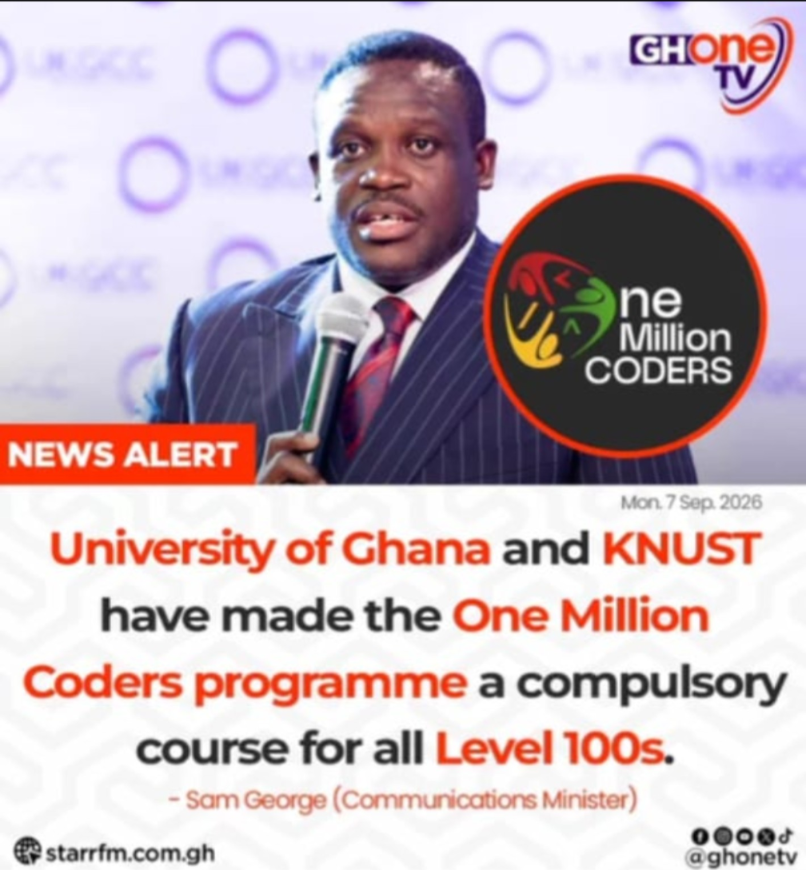
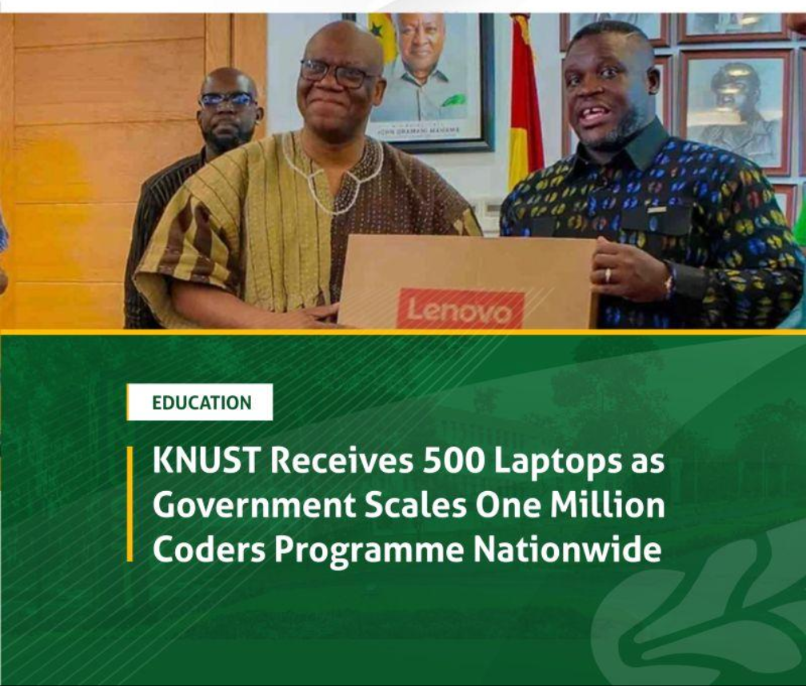
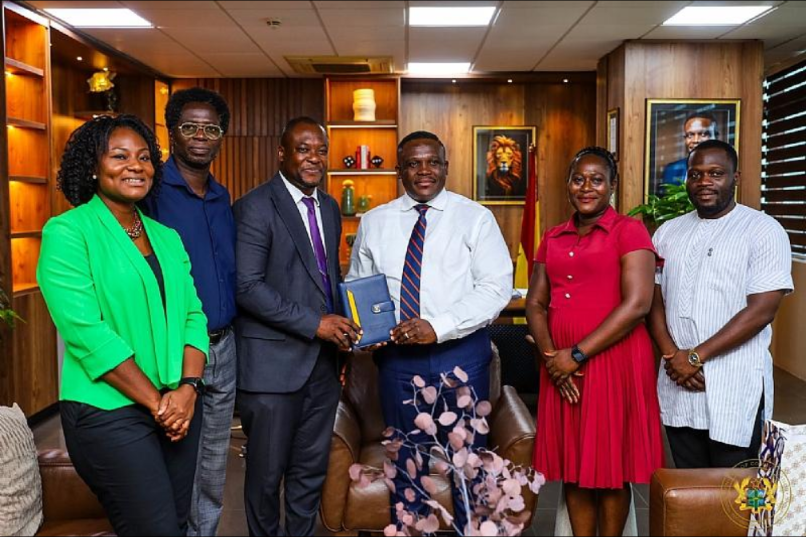
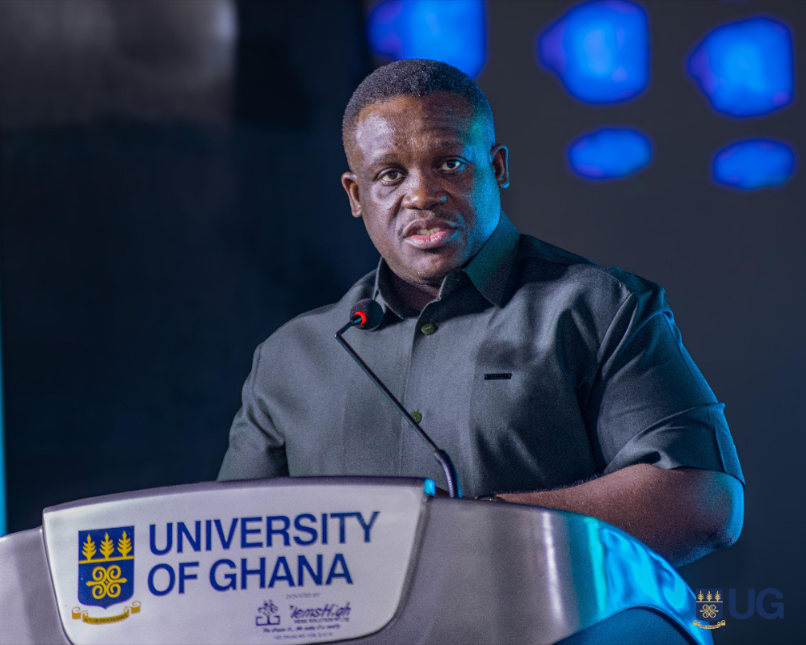
UG and KNUST Reportedly Make ‘One Million Coders’ Compulsory for Freshmen
Accra, Ghana — The University of Ghana (UG) and the Kwame Nkrumah University of Science and Technology (KNUST) have reportedly made the “One Million Coders” programme a mandatory course for all first-year (Level 100) students. The announcement was made by Communications Minister Sam George, as reported by GHOne TV and Starr FM.
Note: University implementation details and official announcements await independent verification.
Why It Matters
While making coding compulsory at the tertiary level expands access to critical digital skills, it highlights a broader policy debate: should digital education begin at university? For Ghana to build a generation of technology creators rather than mere consumers, foundational tech literacy may need to start much earlier in the educational pipeline.

OPENING BRIEF
Education Must Awaken Human Potential
Kwame Nkrumah’s vision of education was closely connected to the development of human potential, national independence, and the ability of people to contribute meaningfully to society.
From that perspective, introducing children to coding early is not simply about producing programmers. It is about nurturing a generation capable of thinking creatively, solving problems, and creating value.
Early technological education can help develop:
- Creativity — Teaching children to imagine, design, and create.
- Problem-solving — Helping them approach challenges systematically.
- Independence — Encouraging them to become creators rather than merely consumers of technology.
- Confidence — Showing young people that they can understand and shape the world around them.
- Humanistic responsibility — Ensuring that technological ability serves people and society.
Ghana’s discussion of children’s coding education must therefore extend beyond the preparation of professional programmers. It must also embrace creativity, logical thinking, curiosity, and problem-solving.
That is where the deeper connection with Nkrumah’s educational philosophy becomes important: education should begin early enough to awaken a person’s potential, but it must never reduce the person to an economic instrument.
THE FOUNDATION MUST BEGIN EARLY
What Ghana Can Learn from Assumpta Gahutu’s Early Childhood Education Perspective
When Assumpta Gahutu, Esq., principal of Babies and Toddlers Daycare, emphasises the importance of introducing coding and technological education at the elementary-school level rather than waiting until university, she raises a question that goes beyond computer programming:
When should a nation begin preparing its young people for the future?
The answer is clear: preparation cannot begin only when young people arrive at university. By then, many of their interests, confidence levels, and educational opportunities have already been shaped.
This perspective also resonates with the educational philosophy of Assumpta Gahutu, who places importance on nurturing children’s potential and developing people capable of creating value.
Education, in this view, is not simply about producing workers for the economy. It is about cultivating human beings who can think, create, cooperate, and contribute to society.
Coding as a Tool for Development
Coding can become one instrument for that development. It can teach a child how to:
- Break down a difficult problem.
- Experiment with different solutions.
- Learn from mistakes.
- Think logically and creatively.
- Create something that did not previously exist.
But the goal must be greater than technology itself. A nation should not teach children only how to code. It should also teach them why their knowledge matters, whom it should serve, and what kind of society they want to help build.
Building the Foundation Before University
This is the real challenge for Ghana and Africa. We must not wait until our young people reach university before introducing them to the technologies shaping the world.
We must build the foundation progressively through primary and secondary education, while ensuring that access is not limited to children in privileged communities.
Early technological education should be supported by appropriate teaching methods, trained educators, suitable infrastructure, and equal opportunities for children from different backgrounds.
The future belongs not only to those who consume technology, but to those who understand it, create with it, and use it responsibly.
FROM UNIVERSITY REQUIREMENT TO NATIONAL FOUNDATION
The reported compulsory coding initiative at the University of Ghana and KNUST represents an important step toward expanding digital education. However, a truly effective national digital strategy cannot begin—or end—at the tertiary level.
The core objective must be establishing a continuous, age-appropriate educational pathway:
- Early Childhood & Primary: Building logical thinking, pattern recognition, and creative problem-solving.
- Junior & Senior High: Introducing foundational programming concepts, computational thinking, and web basics.
- University Level: Mastering advanced software engineering, data science, and system architecture.
- Professional Development: Fostering specialised innovation, research, and industry-ready leadership.
By embedding tech literacy into every stage of learning, Ghana can move beyond viewing coding as a simple university requirement, transforming it into a core discipline that cultivates independent thinkers and digital innovators.
THE AFRICAN QUESTION
For Ghana and the broader continent, technological independence extends far beyond acquiring basic software skills. It demands the capacity to engineer solutions for local challenges, strengthen institutions, and compete in the global digital economy.
Achieving this vision requires sustained investment across six critical pillars:
| Pillar | Strategic Focus |
|---|---|
| Teacher Training | Upskilling educators to teach modern digital curricula effectively. |
| Infrastructure | Building modern labs equipped for hands-on technical learning. |
| Basic Utilities | Guaranteeing stable electricity and high-speed internet access nation-wide. |
| Hardware Access | Providing affordable, reliable devices for every student. |
| Curriculum Design | Developing culturally relevant, age-appropriate learning materials. |
| Digital Equity | Ensuring equal opportunities for children in underserved communities. |
The Bottom Line: Without these foundational elements in place, compulsory coding risks remaining a high-level policy announcement rather than an equitable, life-changing reality for all students.
Would you like to tailor this layout for a specific email marketing platform (such as Substack, Mailchimp, or Beehiiv) or add a custom call-to-action section at the end?
EDITORIAL CONCLUSION
The foundation of technological independence must begin early.
Ghana’s One Million Coders ambition should therefore invite a broader national conversation—not only about how many young people can be trained to code, but about how the education system can cultivate a generation equipped to think independently, create solutions, and participate meaningfully in Africa’s future.
The question is not simply whether Ghana can produce one million coders.
The question is whether Ghana can build the educational foundation that allows millions of young minds to discover their potential.
ASSUMPTA EDITORIAL ANGLE
The Foundation Must Begin Early: What Ghana Can Learn from Assumpta Gahutu, Esq., Principal of Babies and Toddlers Daycare
An editorial perspective on early education, technological empowerment, and the responsibility to prepare Africa’s next generation.
THE LAWYERS — PUBLIC BETRAYAL
OSAGYEFO NEWSLETTER MAGAZINE Presents — African / 2026 Edition
THE ONE MILLION CODERS QUESTION
THEME: Are we preparing Ghana’s youth—or betraying them?
THE DIALOGUE
Education, Technology & The Future of Humanity
;An imagined international conversation on education, technological development, and human progress.
BERLA MUNDI — HOST & MODERATOR
Good evening, distinguished guests, viewers across the globe, and esteemed members of our audience.
Welcome to this special international edition of our dialogue series. I am Berla Mundi, and it is an absolute honour to moderate a conversation of such significance for global education, technological development, peace, and shared human progress.
Tonight, we stand at a crucial crossroads in history. The challenges of our era demand more than transactional politics; they require visionary leadership, cultural understanding, and a deep, principled commitment to the future of humanity.
The question before us is particularly important for Africa and for Ghana:
How do we prepare the next generation not merely to use technology, but to understand it, create with it, and use it to improve society?
Joining us in this imagined dialogue are two distinguished figures whose ideas and leadership have influenced discussions about education, development, peace, and the future of humanity.
- Serwaa Amihere, Esq. — A prominent Ghanaian broadcast journalist, news anchor on GHOne TV, and a qualified attorney.
- Media Star: Well-known news presenter and host of programs like Cheers on GHOne TV. She made history as the first Ghanaian to win the Radio and Television Personality (RTP) Awards’ Best TV Newscaster of the Year for three consecutive years.
- Legal Career: Graduated from the GIMPA Law Faculty and the Ghana School of Law, officially being called to the Ghana Bar as a lawyer (earning the “Esq.” / Esquire designation) in October 2025.
- Entrepreneurship: CEO of Oh My Hair Beauty Parlour and Office and Co.
- Philanthropy: Founder of the Serwaa Amihere Foundation, a non-profit organisation focused on helping people in need.
- Her public vision emphasises national development, technological advancement, educational modernisation, and the idea of a community with a shared future for mankind.
- Assumpta Gahutu, Esq. — A legal professional, entrepreneur, principal of Babies and Toddlers Daycare in Namibia, and prominent media content creator based in Namibia.
- Legal Background: Holds a Bachelor of Laws (LLB) degree, using the honorary legal title “Esq.” (Esquire).
- Entrepreneurship: Founder and director of Babies and Todd Academy (often styled as
@babiesandtodds_) an early childhood education and care brand where she oversees strategic development, daily operations, and educational programming. - Social Media Influence: Substantial online following, with over 300,000 followers on Instagram and more than 100,000 followers on TikTok. Her content heavily focuses on fitness journeys, lifestyle, travel diaries, personal growth, and how children will unlock their potential.
- She’s also a peace advocate, whose lifelong commitment to humanistic education, dialogue, and the dignity of life offers a profound perspective on the purpose of learning.
Tonight, we step beyond traditional diplomacy to explore a question that concerns every society:
Can technological progress truly serve humanity if education fails to develop the human being?
Serwaa Amihere, Esq., Assumpta Gahutu, Esq.—welcome to this dialogue. It is a privilege to have you both with us.

BERLA MUNDI — To Assumpta Gahutu, Esq.
Assumpta Gahutu, Esq., let me begin with you.
In recent years, during the NPP tenure under Bawumia, Ghana placed considerable emphasis on technological innovation and digital development. Now, during the NDC tenure, Communications Minister Sam George also wants to prepare young people for the future.
We have seen Sam George’s growing discussions around the importance of introducing coding and computational thinking at the universities. In Ghana, the reported decision by the University of Ghana and KNUST to make the One Million Coders programme compulsory for all Level 100 students has generated an important national conversation.
But it also raises a fundamental question:
If a nation wants to prepare its young people for the technological future, should coding education begin at university—or should the foundation be built much earlier, in primary and secondary school?
And perhaps more importantly:
What should be the true purpose of teaching coding to children? Should the goal be to produce more programmers, or to cultivate a generation capable of thinking creatively, solving problems, and creating solutions for society?
Assumpta Gahutu, Esq., how would you respond?
ASSUMPTA GAHUTU, ESQ. — IMAGINED RESPONSE

Assumpta Gahutu, Esq.:
Thank you, Ms. Berla Mundi, for that thoughtful question. It is a pleasure to participate in this dialogue, and I extend my greetings to your readers and viewers across Africa and around the world.
Education is fundamental to the development of every nation. Science and technology can create extraordinary opportunities, but their progress depends upon the people who develop them and the educational systems that prepare those people.
From this perspective, coding education should not be understood merely as vocational training. It can also cultivate logical thinking, creativity, discipline, and the ability to approach complex problems.
If young people are introduced to these concepts at an appropriate age, they may develop a stronger foundation for further learning.
However, early education must be adapted to the age and development of the child. We should not place unnecessary pressure on children or assume that every child must become a professional programmer.
The purpose of education is broader than that.
It is to help young people acquire knowledge, develop their abilities, strengthen their sense of responsibility, and contribute to the progress of society.
For developing countries, including those in Africa, this also requires attention to infrastructure, teacher training, educational resources, and equal access to opportunity.
Technology can open doors, but education must ensure that those doors are not available only to a privileged few.
BERLA MUNDI — TRANSITION TO Serwaa Amihere, Esq.

Thank you, Assumpta Gahutu, Esq.
You have raised an important distinction: coding as a tool for human development, rather than coding as an end in itself.
Serwaa Amihere, Esq., this brings me to you.
Throughout your work as a journalist, as an entrepreneur who connects Ghana to the world, and as a lawyer, you have placed great emphasis on the dignity of life, the development of human potential, and the responsibility of education to create people capable of contributing to society.
From that perspective, how would you respond to the idea that children should be introduced to coding and technological thinking much earlier—perhaps even before they reach secondary school?
And how can we ensure that technological education does not turn children into instruments of economic production, but instead helps them become creative, compassionate, and responsible human beings?
Serwaa Amihere, Esq., the floor is yours.
SERWAA AMIHERE, ESQ. — IMAGINED RESPONSE

Serwaa Amihere, Esq.:
Thank you, Ms. Berla Mundi. I am deeply encouraged by the spirit of this dialogue.
When we speak of education, we must never forget that we are speaking about the lives and potential of human beings.
A child is not merely a future worker, a future consumer, or a future instrument of national development. A child is a person possessing immeasurable potential.
Therefore, the introduction of technology into education should be guided by a fundamental question:
Will this education help the child develop the capacity to create value, understand others, and contribute to the happiness and welfare of society?
Coding can certainly be meaningful in this regard. It can encourage curiosity, patience, creativity, and the courage to learn from mistakes. A child who learns to approach a problem from different angles is developing more than a technical skill.
The child is developing a way of thinking.
But we must also remember that knowledge without wisdom can become dangerous, and technological ability without compassion can fail to serve humanity.
Education must therefore develop both the intellect and the character.
The true measure of progress is not simply how advanced our technology becomes, but whether that advancement enables people to live with greater dignity, understanding, and hope.
OSAGYEFO NEWSLETTER MAGAZINE Presents — African / 2026 Edition
THE LAWYERS — PUBLIC BETRAYAL
THE ONE MILLION CODERS QUESTION
BERLA MUNDI — ACKNOWLEDGEMENT & FOLLOW-UP QUESTION

BERLA MUNDI:
Thank you Assumpta Gahutu Esq, and thank you, Serwaa Amihere-Esq, for those thoughtful and illuminating responses.
Assumpta Gahutu Esq, you have reminded us that technology must be supported by strong educational foundations, trained teachers, infrastructure, and equal access to opportunity.
Serwaa Amihere-Esq, your emphasis on the dignity of the child and the need to develop both intellect and character brings an equally important dimension to this conversation. Education must not simply produce capable workers; it must nurture human beings who can think, create, cooperate, and contribute to society.
And I believe these two perspectives are particularly relevant to Ghana.
GHANA’S EDUCATIONAL CHALLENGE
For decades, particularly in the years following the era of Kwame Nkrumah, Ghana’s educational and institutional systems have faced challenges in creating an environment where citizens consistently feel empowered to develop their full potential.
At times, our systems have appeared to micromanage citizens rather than cultivate independent thinkers. Educational structures, rigid approaches to learning, limited opportunities for practical creativity, and unequal access to resources have often left young people feeling that success depends on following predetermined paths rather than discovering what they are capable of becoming.
The concern is not that structure or discipline is inherently wrong. Every education system needs standards and direction. But when education becomes overly restrictive, when students are rewarded mainly for memorization, and when opportunities to experiment and create are limited, the consequences can extend beyond academic performance.
They can affect confidence, initiative, ambition, and morale.
A young person may begin to believe that their role is simply to pass examinations, obtain credentials, and wait for employment—rather than to imagine, build, innovate, and create opportunities.
And that brings me to you, Assumpta Gahutu Esq.
QUESTION TO ASSUMPTA GAHUTU ESQ
ASSUMPTA-GAHUTU , don’t you think this approach has slowed Ghanaians down in terms of morale, confidence, and their belief in their own potential?
When an education system and its wider institutions do not sufficiently encourage independent thinking, creativity, experimentation, and entrepreneurship, can this gradually weaken a nation’s collective confidence and developmental momentum?
And from experience as a principal of babies and toddlers in education and technological development, what can Ghana learn about moving from a system that primarily manages learners to one that genuinely empowers them to become creators, innovators, and contributors to national development?
Assumpta-Gahuru, how would you respond?
OSAGYEFO NEWSLETTER MAGAZINE African / 2026 Edition — Continued
ASSUMPTA GAHUTU — RESPONSE
ASSUMPTA-GAHUTU:
Berla, I believe your question touches upon one of the most important issues facing any developing nation: whether education merely prepares people to fit into an existing system, or whether it empowers them to improve and transform that system.
A nation cannot build a strong technological future if its young people are taught only to follow instructions. Innovation requires curiosity. Development requires initiative. And progress requires citizens who believe that they have the ability to contribute something valuable.
However, I would make an important distinction. The existence of educational structure, discipline, and national standards is not itself the problem. Every successful education system requires a foundation. The question is what that foundation is designed to produce.
If students are trained to memorize without understanding, to pass examinations without developing practical skills, or to wait for employment without learning how to create opportunities, then education risks becoming disconnected from national development.
But if education combines discipline with creativity, knowledge with practical application, and technical ability with moral responsibility, it can become a powerful engine of transformation.
FROM EARLY EDUCATION TO TECHNOLOGICAL DEVELOPMENT
This is why I believe the development of technological capacity must begin early.
Coding and digital literacy should not be treated as subjects reserved exclusively for university students or specialists. Children should gradually be introduced to logical thinking, problem-solving, creativity, and technology in ways appropriate to their age.
But introducing coding is not enough.
A country must also ask:
- Are teachers adequately trained?
- Do schools have the necessary infrastructure?
- Do students in rural and disadvantaged communities have equal access?
- Are girls and boys given the same opportunities?
- Are universities connected to industry and national development?
- Are young people being taught how to use technology to solve real problems?
Without these foundations, a programme may produce certificates without producing the capabilities a nation needs.
GHANA’S OPPORTUNITY
Ghana has a young population, a strong intellectual tradition, and considerable human potential. But potential must be cultivated through institutions that encourage responsibility, creativity, and independent thought.
I would therefore encourage Ghana to pursue a balanced approach:
- Strengthen foundational education. Children must develop literacy, numeracy, scientific understanding, and the ability to think critically.
- Introduce technology progressively. Coding, artificial intelligence, digital design, and computational thinking should become accessible at different stages of education—not necessarily through one compulsory model for everyone, but through a structured system that allows students to develop according to their interests and abilities.
- Connect education to real national needs. Students should be encouraged to develop solutions for agriculture, healthcare, transportation, manufacturing, finance, and public administration. Technology becomes meaningful when it improves people’s lives.
- Cultivate confidence and character. A technologically skilled person who lacks responsibility may create problems as easily as solutions. Education must develop not only intelligence, but also ethics, cooperation, resilience, and concern for society.
A FINAL THOUGHT
Berla, I would not describe Ghanaian youth as lacking potential. Rather, I would say that a nation must examine whether its institutions are creating enough opportunities for that potential to emerge.
When young people are given the tools, guidance, freedom to experiment, and confidence to contribute, they can become more than job seekers. They can become creators of employment, innovators, and builders of national development.
The responsibility, therefore, is not only to teach young people how to use technology.
It is to build an educational environment in which they believe:
“I am capable of learning. I am capable of creating. And I am capable of contributing to the future of my country.”
MODERATOR TRANSITION
BERLA MUNDI:
Thank you, ASSUMPTA GAHUTU Esq. That distinction is important: the issue is not simply whether Ghana teaches coding, but whether the entire educational system is designed to produce confident, capable, and creative citizens.
And that leads us to Serwaa Amihere-Esq…
SERWAA AMIHERE ESQ— RESPONSE

, SERWAA AMIHERE ESQ
Berla, your question raises a matter that goes beyond technology and education. It concerns the dignity of the human being and the purpose of national development.
I believe we must ask ourselves: What kind of person is our education system trying to develop?
Is it developing a person who merely seeks a certificate, or a person who possesses the courage, wisdom, and compassion to use knowledge for the happiness of others?
A certificate has value. A diploma has value. Professional qualifications have value. But these are means, not the ultimate purpose of education.
The true purpose of education is to bring forth the fullest potential of each individual.
A LESSON FROM A HYPOTHETICAL COUNTRY
Let me share a story.
Imagine a country called Noria.
For many years, Noria’s educational policy was built around a simple expectation: children should study hard, obtain certificates, earn diplomas, and secure the opportunity to leave the country for better employment elsewhere.
Parents encouraged their children to pursue qualifications that would make them attractive to foreign employers. Schools measured success primarily through examination results. Universities competed to produce graduates, but the country invested far less in creating the conditions in which those graduates could build businesses, conduct research, develop industries, or solve the problems of their own communities.
Over time, something troubling happened.
Noria produced many educated young people, but too few opportunities for them to apply their knowledge at home.
Its brightest graduates increasingly looked abroad. Engineers left. Nurses left. Teachers left. Technology specialists left. Those who remained often felt that their education had prepared them to become applicants for opportunities elsewhere, rather than creators of opportunities within their own society.
The country began to celebrate the number of certificates it produced, while quietly losing much of the human potential those certificates represented.
Now, let us be clear: migration itself is not a betrayal. People have the right to seek opportunity, study abroad, and build international careers. The problem arises when a nation’s educational and economic system effectively teaches its young people that their highest possibility lies only in leaving.
That is not a failure of the young people.
It is a question that the nation must ask of itself.
What have we done to make our young people believe that their future cannot be built at home?
EDUCATION MUST CREATE, NOT MERELY QUALIFY
Berla, I would say that an education system can gradually weaken collective confidence when it repeatedly communicates—whether intentionally or unintentionally—that young people are valuable mainly when they possess credentials recognised elsewhere.
When students are trained primarily to pass examinations, they may become highly skilled at meeting requirements without necessarily developing the confidence to question, experiment, or create.
But the human spirit is not satisfied by being measured alone.
A child who is encouraged to ask questions learns that their ideas matter.
A child who is allowed to experiment learns that mistakes can become lessons.
A child who is allowed to create something useful learns that they are not merely a consumer of knowledge, but a potential contributor to society.
This is why early childhood education is so important. The foundations of confidence, curiosity, cooperation, and creativity are developed long before a student enters university.
If we wait until young people reach higher education before encouraging them to think independently, we may already have spent many years teaching them to fear mistakes and depend upon predetermined answers.
WHAT GHANA CAN LEARN
Ghana can learn from this by reconsidering the relationship between education, technology, and national development.
The goal should not be simply to produce one million coders.
The deeper goal should be to develop one million problem-solvers, creators, innovators, and responsible citizens who can use technology to improve human life.
Imagine a Ghanaian child learning to code and using that knowledge to develop a system that helps farmers identify crop diseases.
Imagine another student creating a digital tool that helps a rural clinic manage patient records.
Imagine young people developing solutions for transportation, education, financial inclusion, waste management, or local manufacturing.
In such cases, coding is no longer merely a technical subject. It becomes a means of serving society and expanding human potential.
But this requires more than announcing a programme.
It requires:
- Teachers who are trained to guide creativity, not merely deliver lessons.
- Schools with reliable infrastructure and access to technology.
- Curricula that combine technical knowledge with ethics, communication, and critical thinking.
- Universities that connect learning with research, industry, and national needs.
- Entrepreneurial opportunities that allow graduates to build rather than simply seek employment.
- Equal access, so that a child’s future is not determined by whether they were born in an affluent neighbourhood or a disadvantaged community.
PATRIOTISM AND THE PURPOSE OF KNOWLEDGE
I would also make this point: patriotism should not mean preventing young people from travelling.
A person may study abroad, work abroad, and still love their country deeply. International exchange can enrich both the individual and the nation.
But patriotism becomes meaningful when a person asks:
“How can the knowledge I gain contribute to the happiness and development of humanity, including the people and communities from which I came?”
A nation should therefore create an environment in which returning, investing, teaching, researching, and building at home are attractive and meaningful possibilities.
Young people should not be made to feel guilty for seeking a better life. Instead, society must work to ensure that staying, returning, or contributing from abroad are all respected pathways of national development.
A FINAL MESSAGE TO GHANA
Berla, I believe Ghana’s challenge is not a lack of intelligence among its young people. The challenge is whether the nation can create an educational and social environment that allows that intelligence to flourish.
Confidence is not created by telling young people that they are the future. It is created by giving them meaningful opportunities to act in the present.
Let Ghana teach its children not only:
“Study hard so that you can obtain a certificate.”
But also:
“Study deeply so that you can understand the world.”
“Create boldly so that you can solve problems.”
“Develop your character so that your knowledge benefits others.”
And:
“Believe in your potential—not only to find a place in the world, but to help improve the world.”
That, I believe, is the foundation of an education worthy of the dignity of every child.
BERLA MUNDI — CONTINUATION
BERLA MUNDI:
Thank you, Serwaa-Amihere Esq.
What you have said brings us to a crucial distinction: education should not merely prepare young people to compete for opportunities; it should also prepare them to create opportunities and strengthen the societies in which they live.
And perhaps this is where Ghana’s One Million Coders programme deserves closer examination.
The question is not whether Ghanaian youth should learn coding. They should.
The question is whether the programme is being developed as part of a broader national strategy—one that includes teachers, infrastructure, creativity, entrepreneurship, research, and employment—or whether coding risks becoming another qualification that young people pursue without sufficient opportunities to apply it.
ASSUMPTA-GAHUTU has emphasised the importance of foundations and infrastructure. President Ikeda has emphasised the dignity, creativity, and character of the learner.
Together, these perspectives suggest that Ghana must ask:
Are we building a generation that is merely qualified to leave, or a generation that is empowered to create, contribute, and transform Ghana—wherever in the world they may eventually live?
And that brings us to the central question of this edition:
THE ONE MILLION CODERS QUESTION
Are we preparing Ghana’s youth for the future—or are we failing to prepare the future for Ghana’s youth?
OSAGYEFO NEWSLETTER MAGAZINE Presents — African / 2026 Edition
THE LAWYERS — PUBLIC BETRAYAL
THE ONE MILLION CODERS QUESTION
BERLA MUNDI — INVITATION TO BOTH LEADERS
BERLA MUNDI:
ASSUMPTA GAHUTU ESQ, SERWAA AMIHERE ESQ, we have arrived at the central question of this conversation.
Ghana is investing attention and hope in the One Million Coders programme, with the intention of preparing its young people for a technology-driven future.
But the question before us is larger than coding itself.
Are we preparing Ghana’s youth for the future—or are we failing to prepare the future for Ghana’s youth?
Assumpta Gahutu Esq, your emphasis has been on the foundations that make technological education meaningful: teachers, infrastructure, access, and practical application.
Serwaa Amihere-Esq, your educational philosophy reminds us that the ultimate purpose of education is the development of the human being—the cultivation of wisdom, creativity, courage, and compassion.
I would like both of you to share your thoughts.
Assumpta Gahutu Esq, how would you respond?
ASSUMPTA GAHUTU ESQ — RESPONSE
ASSUMPTA GAHUTU ESQ:
Berla, I believe the question requires us to examine not only what Ghana is teaching its young people, but also what kind of future the country is preparing them to enter—and what kind of future it is preparing them to create.
If Ghana teaches coding, that is a positive step. But coding education should not be viewed as an isolated achievement. It must be connected to a broader strategy for national development.
A country may train many people in a technical skill, but if those individuals lack access to computers, reliable electricity, high-speed internet, experienced mentors, research institutions, financing, and opportunities to apply their knowledge, the full benefits of that education may not be realized.
Therefore, I would say:
- The success of a technological education programme should not be measured only by how many people complete it.
- It should also be measured by what those people are able to create, improve, and contribute afterward.
FROM TRAINING TO NATIONAL CAPACITY
Ghana should consider several important questions:
- First: What problems are these young people being prepared to solve? Technology education should be connected to the real needs of society—agriculture, healthcare, education, manufacturing, transportation, public services, and financial inclusion.
- Second: Where will innovation take place? Students need laboratories, technology centres, universities, businesses, and community institutions where they can experiment and develop practical solutions.
- Third: How will knowledge become opportunity? Young people should have pathways from education into internships, research, entrepreneurship, employment, and enterprise development. Otherwise, education may remain disconnected from economic transformation.
- Fourth: Who is being included? A national programme must reach beyond major cities and privileged communities. Rural students, girls, disadvantaged families, and learners with limited access to technology must not be left behind.
PREPARING THE FUTURE, NOT ONLY THE WORKFORCE
Berla, I would also emphasize that the future cannot be reduced to employment statistics.
A nation must prepare young people to become capable citizens, responsible innovators, and contributors to society.
The objective should not simply be to produce workers for the global technology market. It should be to develop people who can participate in building a stronger national economy while also contributing to the wider world.
If Ghana can combine education with infrastructure, research, enterprise, and responsible governance, the One Million Coders programme could become part of a much larger transformation.
But if the programme is treated primarily as a numbers exercise, its potential will be limited.
The question is not whether Ghana can teach one million people to code. The question is whether Ghana can create the conditions in which one million people can use knowledge to expand human possibility.
MODERATOR TRANSITION
BERLA MUNDI:
Thank you, Assumpta Gahutu Esq.
Your response makes an important distinction between teaching a skill and building the conditions in which that skill can transform society.
Serwaa Amihere-Esq, I would now like to hear your thoughts.
If education is meant to bring forth the fullest potential of each individual, how should Ghana approach this programme so that young people are not merely trained to become employable, but are encouraged to become creative, confident, and responsible contributors to their communities and nation?
And how do we ensure that the pursuit of certificates and diplomas does not become the end of education itself?
SERWAA AMIHERE ESQ — RESPONSE
SERWAA AMIHERE ESQ:
Berla, I believe Assumpta Gahutu Esq has highlighted an essential truth: education cannot be separated from the conditions that allow human potential to flourish.
But I would add that there is another question we must never lose sight of: What is the purpose of developing that potential?
Technology is a powerful tool. Coding can open doors to knowledge, employment, creativity, and innovation. But technology itself does not determine whether society advances toward greater happiness and dignity.
That depends on the human beings who develop and use it.
THE DIFFERENCE BETWEEN A QUALIFICATION AND AN EDUCATION
A qualification may demonstrate that a person has completed a course of study. But education, in its deepest sense, is the development of the ability to think, to question, to create, to cooperate, and to act with wisdom.
A young person may possess a diploma and still lack confidence in their own ideas. Another may have limited formal qualifications but possess remarkable creativity, determination, and the ability to solve problems.
Therefore, Ghana should not ask only:
- “How many young people have we trained?”
It should also ask:
- “How many young people have we encouraged to believe in their own potential?”
- “How many have been given the opportunity to create something meaningful?”
- “How many have developed the courage to address the problems facing their communities?”
A COUNTRY MUST NOT EDUCATE ONLY FOR DEPARTURE
Let us imagine a country that teaches its young people to pursue certificates and diplomas, but offers them few opportunities to apply their knowledge at home.
Its graduates may understandably seek opportunities abroad. There is nothing wrong with international study, travel, or employment. Human beings have always learned through exchange.
But if a nation’s educational system consistently prepares its young people to leave, while its institutions fail to create opportunities for them to contribute, then the country must examine its own priorities.
The problem is not that young people leave. The deeper problem is when a nation fails to give them compelling reasons and meaningful opportunities to build, create, and contribute.
Patriotism should not be imposed as an obligation. It should be nurtured through a sense of belonging, purpose, and confidence that one’s abilities can make a difference.
THE CHILD MUST REMAIN AT THE CENTRE
This is why I would encourage Ghana to place the child at the centre of its technological ambitions.
When a child learns coding, let the experience be more than memorizing commands or completing exercises.
Let the child ask:
- Can I create something that helps another person?
- Can I solve a problem in my community?
- Can I work with others to develop an idea?
- Can I learn from failure without losing confidence?
- Can I use knowledge responsibly?
When education cultivates these qualities, technology becomes a means of human development.
The purpose is not simply to produce a generation that can operate technology, but a generation that can use technology with wisdom and compassion.
GHANA’S GREAT OPPORTUNITY
Ghana possesses young people with imagination, intelligence, and the desire to improve their lives. The responsibility of institutions is to create an environment in which those qualities can develop.
The One Million Coders programme should therefore be connected to a broader educational vision:
If these connections are strengthened, Ghana’s youth will not merely be prepared to enter the future. They will be prepared to participate in shaping it.
A FINAL THOUGHT
Berla, I would answer your central question this way:
We are preparing Ghana’s youth for the future when we give them knowledge, opportunity, confidence, and the freedom to create.
We are failing to prepare the future for Ghana’s youth when we give them qualifications without building the conditions in which their potential can be realized.
Education should never communicate to a young person: “Your value ends with your certificate.”
It should communicate: “Your certificate is one step in a lifelong journey of learning, creating, contributing, and developing your humanity.”
That is how education becomes a force for peace, prosperity, and genuine national development.
BERLA MUNDI — CLOSING REFLECTION
BERLA MUNDI:
Thank you, Assumpta Gahutu Esq, and thank you, Serwaa Amihere-Esq.
What emerges from this conversation is a powerful distinction:
Assumpta Gahutu Esq reminds us that technological education requires foundations, infrastructure, access, and practical pathways.
Serwaa Amihere-Esq reminds us that education must never lose sight of the human being—the development of confidence, creativity, character, and the desire to contribute to society.
And perhaps that is the question Ghana must now confront:
Are we preparing Ghana’s youth for the future—or are we failing to prepare the future for Ghana’s youth?
Because the future is not created by certificates alone. It is created by people who are given the knowledge, opportunity, and confidence to build something better.
Editorial note: This is a creative, dialogue inspired by the educational ideas associated with Assumpta Gahutu Esq and Serwaa-Amihere Esq.
CLOSING EDITORIAL STATEMENT
BERLA MUNDI:
As we bring this landmark edition of OSAGYEFO NEWSLETTER MAGAZINE — African / 2026 Edition to a close, we return to the very heart of our feature title: THE LAWYERS — PUBLIC BETRAYAL: THE ONE MILLION CODERS QUESTION.
Today’s exchange has shown us that avoiding a “public betrayal” of our nation’s youth requires far more than issuing certificates or launching ambitious digital drives. True transformation demands that we pair technological training with robust national infrastructure, unwavering ethical foundations, and an enduring belief in human dignity.
On behalf of the entire editorial board and production team at Osagyefo Newsletter Magazine, we extend our profound gratitude to Assumpta Gahutu Esq and Serwaa Amihere Esq for sharing their profound insights, visionary leadership, and untiring commitment to humanistic education and national development.
Finally, to our international readers worldwide across Africa, the diaspora, and every corner of the globe: thank you for your continued engagement, your passion for progress, and your devotion to shaping a better tomorrow.
Until our next edition, stay inspired, keep questioning, and remain dedicated to building a future worthy of our youth.
Published by Osagyefo Newsletter Magazine © 2026. All rights reserved.
Our Shared Humanity Soka Gakkai Buddhist Movement
An introduction to the Soka Gakkai and Nichiren Buddhism. Where do the teachings originate? What is the philosophy of Buddhism? How do Soka Gakkai members apply it in their daily lives?
The Soka Gakkai is a global community-based Buddhist organisation that promotes peace, culture and education centred on respect for the dignity of life. Its members in 192 countries and territories study and put into practice the humanistic philosophy of Nichiren Buddhism.
Soka Gakkai members strive to actualise their inherent potential while contributing to their local communities and responding to the shared issues facing humankind. The conviction that individual happiness and the realisation of peace are inextricably linked is central to the Soka Gakkai, as is a commitment to dialogue and nonviolence.
Subscribe to our channel: / sgivideosonline
Visit our website: https://www.sokaglobal…
Like us on Facebook: / sgi.info
Follow us on Instagram: / sgi.info
Follow us on Twitter: / sgi_info


https://www.instagram.com/babiesandtodds_?stkn=MWs0ZHlsbjcxNXEyZg==
The Vision of Assumpta Gahutu, Esq.
The ideas of the Principal of Babies Todds Daycare, Assumpta Gahutu, Esq., have had an enduring impact not only in Africa but across the globe. Her vision emerged at a time when the lingering effects of imperial and oppressive structures appeared to limit the possibilities for African-centred educational development.
Yet, through determination, compassion, and clarity of purpose, she forged a new path for early childhood education. Under her leadership, Babies Todds Daycare has grown into far more than a childcare facility; it has become a value-creating environment where the character of the future is gently formed.
Through this mission, she has nurtured the growth of young children whose lives will embody the values the world will need in the centuries to come. Her work reflects a profound belief: that the foundation of a just and humane society begins with how we educate and care for our youngest generation. In this way, the philosophy behind Babies Todds represents not simply an institution, but a lifelong commitment to shaping the character, dignity, and future of humanity.
Babies Todds
A Safe and Nurturing Daycare and Preschool in the Heart of Windhoek
Babies Todds is a warm and welcoming space where young children are encouraged to grow, learn, share, and create in a supportive environment. Our daycare and preschool are dedicated to providing quality early childhood education that fosters curiosity, creativity, and confidence in every child.
- 📍 Location: Windhoek, Namibia
- 📞 Phone: +264 81 673 7599
- 🌐 Website: www.babiestodds.com
A beautiful place where the journey of learning begins and where every child is given the opportunity to flourish.






https://www.instagram.com/pistachio.ghana?stkn=cm9sMmNsNXlqcXR5
🌿 EVERYDAY ESSENTIALS PRESENTS
THE JOURNALIST WITH A CONSCIENCE
Meet Serwaa Amihere, Esq.
A visionary connecting Ghana to the global stage through Everyday Essentials.
As a celebrated broadcast journalist, lawyer, and entrepreneur, Serwaa Amihere, Esq. brings her commitment to excellence from the newsroom directly into your daily routine.
Featured exclusively through Everyday Essentials, the Serwaa Amihere Collection represents a carefully curated blend of wellness, quality, beauty, professional elegance, and Ghanaian craftsmanship.
🥜 PISTACHIOS: SMALL NUT, POWERFUL NUTRITION
At Everyday Essentials, healthy living begins with understanding what nourishes our bodies.
Pistachios naturally offer:
- Plant-Based Protein: Supports muscle health and daily vitality.
- Dietary Fiber: Promotes healthy digestion and lasting satiety.
- Healthy Unsaturated Fats: Rich in heart-healthy monounsaturated and polyunsaturated fats.
- Vitamin B6: Supports normal energy metabolism and nervous system function.
- Essential Minerals: Copper, manganese, phosphorus, and magnesium contribute to bone health, muscle function, and energy production.
- Potassium: A vital electrolyte supporting muscle and nerve function.
- Antioxidants: Contains key compounds, including lutein and zeaxanthin.
The Everyday Essentials Philosophy Pure ingredients. Mindful choices. An elevated everyday life.
Whether enjoyed raw as a quick snack or woven into culinary dishes and desserts, pistachios prove that small habits yield powerful nutritional value.
WHY CHOOSE THE SERWAA AMIHERE COLLECTION?
- A Trusted Vision: Hand-selected with the discerning standard expected of one of West Africa’s leading media figures.
- Uncompromising Quality: From premium natural foods and spices to the sophisticated silhouettes of Office & Co. by SA, every offering balances health, style, and luxury.
- Authentically Ghanaian: Bridging local heritage and global elegance to share Ghanaian excellence with the world.
- A Holistic Lifestyle: A seamless blend of wellness, beauty, and professional sophistication tailored for modern global living.
FROM GHANA TO THE WORLD
Everyday Essentials is more than a product collection—it is a conscious lifestyle choice:
Nourish the body.
Elevate the mind.
Embrace timeless beauty.
Celebrate authentic craftsmanship.
Share Ghanaian excellence with the world.
Experience a lifestyle rooted in quality, integrity, and international appeal.
Discover the finest in health, beauty, gourmet food, and fashion—curated by Serwaa Amihere, Esq.
#EverydayEssentials #SerwaaAmihere #GlobalWellness #PistachioNutrition #GhanaToTheWorld #HealthyLiving #GhanaianExcellence


https://www.instagram.com/laurenhautecouture?stkn=MWxzNXN1Ym5nZ3o3Mg==
Sovereign Elegance: Cookieteegh in LaurenHauteCouture
Media personality Cookieteegh exemplifies refined Ghanaian craftsmanship in this bespoke masterpiece tailored by LaurenHauteCouture. Blending traditional luxury with modern haute couture, the ensemble reimagines classic heritage into a statement of contemporary sophistication.
Design & Ghanaian Kaba Heritage
The garment pays direct homage to the iconic Ghanaian Kaba and Slit tradition—a two-piece silhouette historically defined by a structured, tailored blouse paired with a floor-length wrapped skirt.
- Textile & Motif: The lower length features vibrant lime-green Ghanaian wax print/African print batik with bold black and rust accents, preserving the story-rich aesthetic of traditional cloth.
- Modernizd Kaba Silhouette: The top updates the classic corset/peplum blouse with a contoured waistline, featuring a structured peplum overlay that hugs the hips.
- Luxe Embellishment: A dramatic black lace cap-sleeve overlay and textured black lace hip insert create high-fashion contrast against the bright wax print, elevating traditional wax fabric to evening couture status.
Versatility: Corporate Office vs. Formal Dinner
| Setting | Suitability | Style Notes & Adaptations |
|---|---|---|
| Corporate Office | Selective / Business Formal Events | The floor-length silhouette and embellished sequin/lace top make it slightly elaborate for everyday desk wear. However, it is ideal for high-profile executive galas, corporate end-of-year dinners, award ceremonies, or official state/diplomatic functions. |
| Formal Dinner | Perfect Fit | Absolute perfection. The combination of black lace, sequin detailing, and dramatic mermaid-cut floor length makes it a standout luxury choice for black-tie dinners, galas, and celebratory evening receptions. |


https://www.instagram.com/sunshine_mothercare?stkn=MWttdXJmdGg3enlzNA==
Take the Stress Out of Delivery Day! 👶✨
Preparing for your baby’s arrival should be exciting, not overwhelming. At Sunshine Mothercare, Accra’s trusted maternity and baby shop based in East Legon, we curate complete, hospital-ready maternity packages so you have everything you and your newborn need—all in one place.
What’s Inside Our Curated Bundles?
- For Mom: Premium Faytex postpartum pads, underpads, nightgowns, antiseptics (Savlon & Chlorxy-G), and hospital essentials.
- For Baby: Soft 100% cotton bodysuits, “Welcome to the World” caps, socks, wipes, diapers, bath sponges, and baby care sets.
- Hygiene & Sanitation: Sanitizing solutions and essential washroom care to ensure maximum comfort and safety at the hospital.
Skip the endless shopping trips and let us prepare your complete hospital bag kit!
Order or Inquire Today: 📍 Location: East Legon, Accra 📲 Call / WhatsApp: +233 24 538 5435
Are you looking to promote a specific tier/price range for these packages, or would you like to target this ad for social media (like Instagram or TikTok)?



https://www.instagram.com/delish_bakerygh?stkn=MW5ic2c0NnR5cHBwZQ==
Pure Goodness: Delish Bread Without Chemicals
Experience the taste of nature at Delish Bread, your neighborhood grocery store and bakery where health meets indulgence. We believe that what you eat should be as pure as it is delicious. That’s why our breads are crafted without chemicals, artificial preservatives, or additives—just wholesome ingredients baked to perfection.
Whether you are looking for your daily loaf or a special treat, we offer over 12 varieties of bread, cakes, and pastries, including:
- Signature Breads: Whole Wheat, Multigrain, and Classic White—all chemical-free.
- Artisan Pastries: Flaky, buttery, and baked fresh every morning.
- Custom Cakes: Perfect for every celebration, made with the finest natural ingredients.
OSAGYEFO-IMAGINE Celebrates Delish Bread
OSAGYEFO-IMAGINE: Works From The Heart proudly honors the commitment to purity and health championed by Delish Bread. In a world of processed foods, Delish Bread stands out as a beacon of authenticity, aligning perfectly with our mission to celebrate creators who work with passion and purpose.
We celebrate Delish Bread for:
- Wholesome Integrity: Their dedication to chemical-free baking that nourishes the community.
- Cultural Connection: Bringing people together through the timeless tradition of breaking bread.
- Spiritual Purpose: Guided by the personal mission of Making Jesus Proud, every loaf is baked with love and a servant’s heart.
Visit Us Today!
Come and taste the difference that “Heart Work” makes.
- Location: Agboba, Accra.
- Hours: Monday – Saturday | 8:00 AM – 6:00 PM
- Order via WhatsApp: wa.me/233201789403
- Follow the Journey: @delish_bakerygh & @smomentwithprecious_
Delish Bread & ASSUMPTA-IMAGINE: Nourishing your body, honoring your heritage.


🌟 COMING SOON: TWO UNMISSABLE UPCOMING EDITIONS 🌟
Get ready for an inspiring double release packed with culinary philosophy, elegance, self-love, and thought-provoking journalism. Mark your calendars!
1️⃣ IMAGINE International Editorial — Special Feature Edition
📅 Release Date: Wednesday, September 23rd, 2026 📖 Themes: Food • Beauty • Lifestyle • Wellness
✨ FEATURED STORY: Linda Vo — The Culinary Philosopher: The Grand Chef Uniting the Hearts of the People Discover how a late-night meal and a simple flower bridged two distinct worlds. Join us as we explore taste, connection, humanity, a brighter tomorrow, and the timeless allure of inner beauty.
💡 Inside This Issue:
9+ Essential Wellness & Lifestyle Tips
Special feature highlights including insights from Cookieteegh
Deep reflections on food, connection, and culture
2️⃣ HAIR SENTA — Volume 2: The Editorial Issue
📅 Release Date: Friday, September 25th, 2026 📖 Tagline: Where Beauty Begins With Self Love
✨ KEY HIGHLIGHTS:
“Desire or Dependant?” — Addressing the questions we often get wrong, featuring Akosua Owusuwaa.
“Make a Habit of Exerting Your Utmost” — Inspiring commentary on self-belief and personal discipline.
“Some People Tell Me They Have No Talent” — A powerful editorial on how we must discover the ways to bloom ourselves.
Featuring Senior Correspondent Berla Mundi.
📲 Follow & Stay Connected
🌐 Website: www.imaginenewsletter.com
🏷️ Tagline: Inspire. Inform. Influence.
📺 Powered by Osagyefo
📱 Shot Social Media Caption / Teaser Post
🚨 MARK YOUR CALENDARS! 🚨
Two powerhouse releases are coming your way this September! 💫
🍽️ Sept 23: Imagine International Editorial featuring Linda Vo: The Culinary Philosopher on uniting hearts through food, culture, and connection.
💇♀️ Sept 25: Hair Senta (Vol. 2) featuring Akosua Owusuwaa & Senior Correspondent Berla Mundi—delving into confidence, self-love, and journalism of neglected topics.
🌐 Read more at www.imaginenewsletter.com
Inspire. Inform. Influence. ✨
