

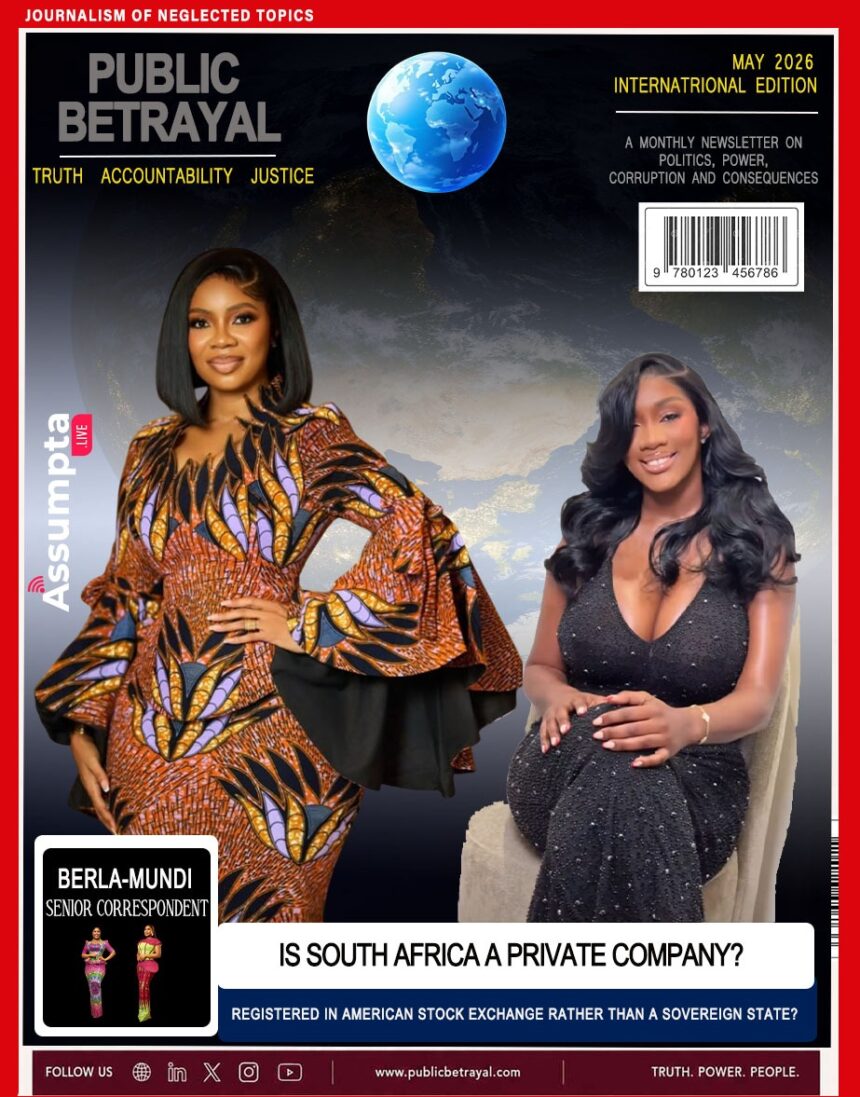

🌐THE PUBLIC BETRAYAL NEWSLETTER
📅 WORLDWIDE RELEASE: Friday, 22 May 2026
Digital Access: assumptagh.live/
🎙️ SPOTLIGHT EVENT: THE LAWYERS
Sovereignty vs. Global Finance: The Great Debate
Join three of the continent’s most formidable legal and media minds as they dissect the hidden mechanics of modern statehood.
| Guest | Profile |
|---|---|
| Berla Mundi | Acclaimed Ghanaian broadcaster & Global Media Personality |
| Serwaa Amihere, Esq. | Legal Practitioner & Public Intellectual (Ghana) |
| Assumpta Gahutu, Esq. | Legal Practitioner & Human Rights Advocate (Namibia) |
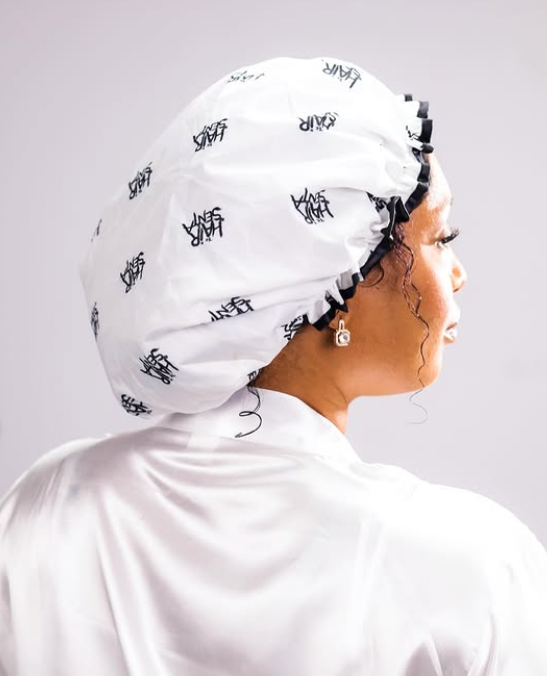
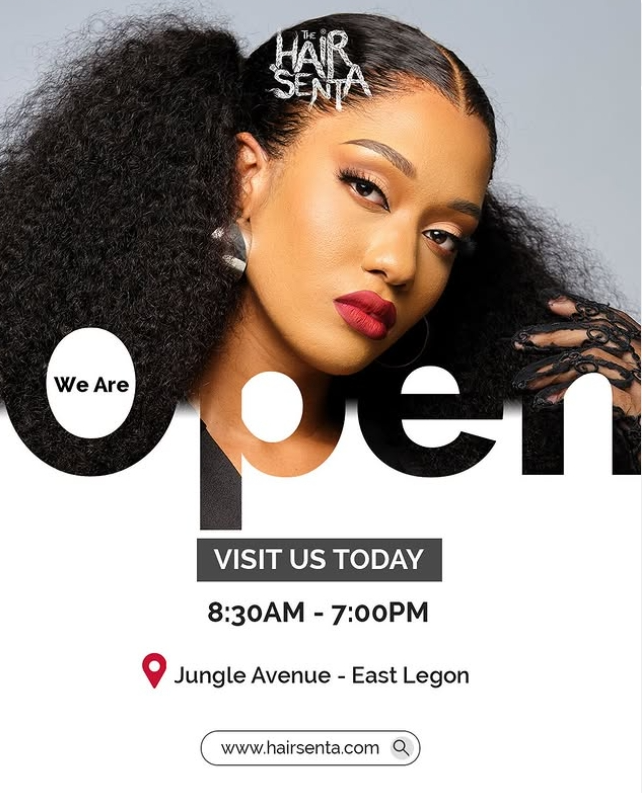
HAIR SENTA ADVERTISEMENT





https://www.instagram.com/hairsenta?utm_source=ig_web_button_share_sheet&igsh=ZDNlZDc0MzIxNw==
It is clear that Hair Senta isn’t just selling hair; we are building a global brand rooted in Ghanaian excellence. So “wellness and care” is our goal alongside quality.
🌟 The “Wellness & Care”
Theme: Beauty that starts with how you feel.
- The Hook: At Hair Senta, we believe true beauty is an anchor for your well-being. It’s not just about the hair you wear; it’s about the confidence and care you pour into yourself.
- The Message: Our premium extensions are meticulously sourced and treated with the philosophy that “Self-Care is Healthcare.” When you look your best, you vibrate higher.
- The Call to Action: Experience the luxury of wellness. From Accra to the world—discover the Hair Senta standard.
🌍 The “Ghana to the World” Pitch
Theme: Heritage, Quality, and Global Luxury.
| Feature | The Hair Senta Advantage |
| Origin | Proudly rooted at 24 Jungle Avenue, Accra, Ghana. |
| Quality | 100% Raw Human Hair Extensions, ethically sourced. |
| Reach | Seamless global shipping—bringing African excellence to your doorstep. |
| Community | Join over 405K followers who trust the Senta standard. |
✨ Social Media Tagline Ideas
- “Hair Senta: Where luxury meets your well-being.”
- “Ghana’s finest extensions, curated for the global woman.”
- “An anchor for your beauty. A sanctuary for your care.”
- “More than a look. A lifestyle of wellness and premium quality.”
📍 Visit the Gallery
If you are in Accra or shopping online, here is how to connect with the brand:
- Location: 24 Jungle Avenue, Accra, Ghana.
- Digital Gallery: Join the 400K+ community on Instagram @hairsenta.
- Shop Online: www.hairsenta.com
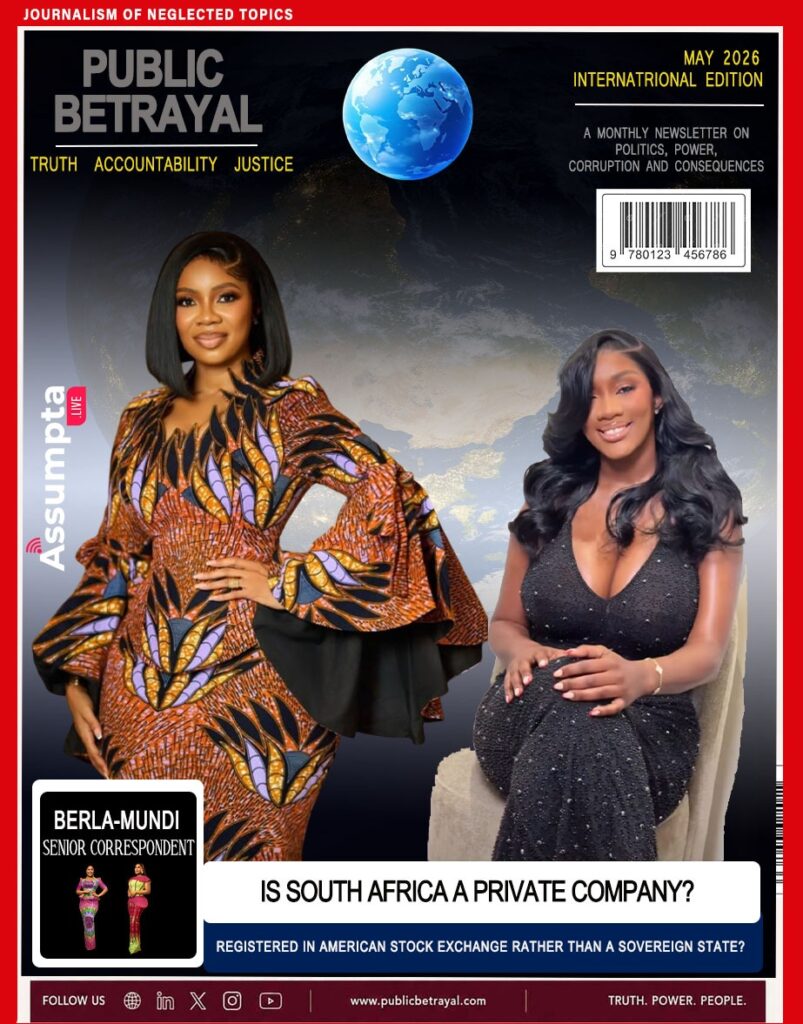
📰 THE EDITORIAL
Is South Africa a Private Company Registered on the American Stock Exchange?
The Prologue
In an era of growing inequality, a startling claim has taken root: South Africa is not a country, but a corporation registered with the U.S. Securities and Exchange Commission (SEC). While legally a myth, this sentiment exposes a raw nerve—the deep mistrust in how nations are funded and who really holds the leash of power.
I. Unpacking the “SEC” Myth
The confusion stems from Schedule B filings.
- The Fact: Most sovereign nations (including South Africa) register with the SEC to sell bonds to U.S. investors.
- The Fiction: This does not mean “shareholders” own the land or the people.
- The Reality: It means the country is a debtor. While South Africa isn’t a “company,” it is a “client” of global capital markets, which often feels like the same thing to the average citizen.
II. The Shift: Toward a Developmental State
If the current model feels like “corporate governance,” what is the alternative? The panel explores the State-Led Investment Model, where the government isn’t just a referee, but the primary engine of growth.
Strategic Priorities for Industrialisation:
- Energy (The Foundation): Stabilising the grid is the prerequisite for all progress.
- Manufacturing: Moving from raw material export to value-added production.
- Agro-processing: Turning raw harvests into global exports.
- Digital Infrastructure: Ensuring the “Silicon Savannah” has the bandwidth to compete.
III. The Balancing Act: Investor Confidence vs. Social Need
A nation’s policy is often caught in a “pincer movement”:
- Market Pressure: High interest rates and currency drops if investors get spooked.
- Social Pressure: The urgent need for housing, education, and jobs.
A country that does not produce cannot shape its own future—no matter how strong its financial system
🎙️ THE PUBLIC BETRAYAL: LIVE GLOBAL BROADCAST
Episode: The Corporate State Host: Berla Mundi
Location: Accra, Ghana — Streaming Worldwide
[Part 1: The Global Greeting]
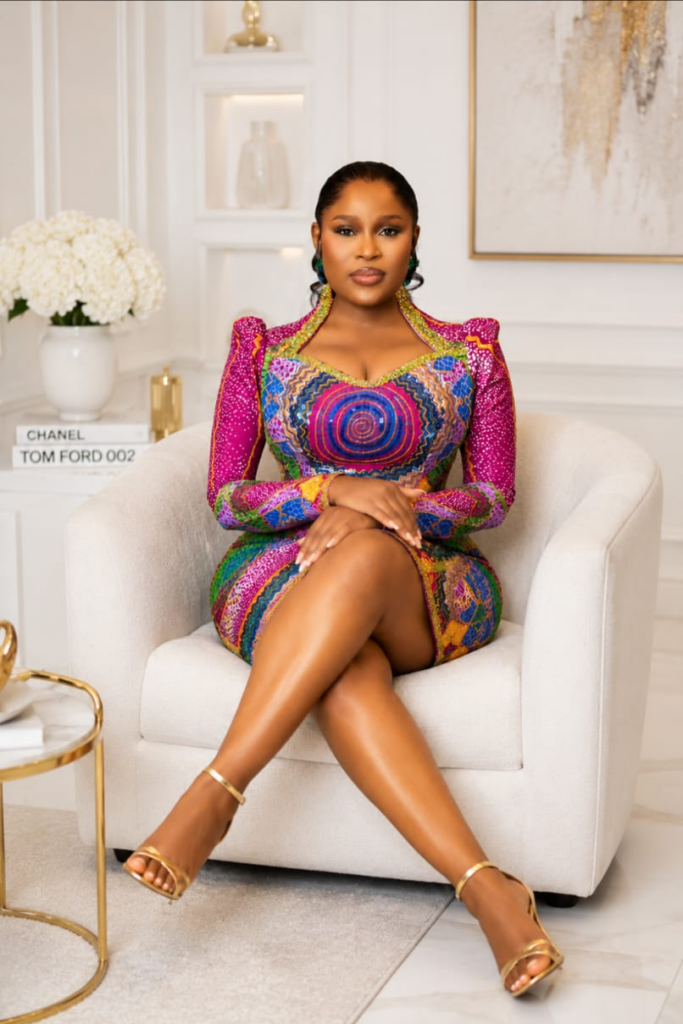
BERLA MUNDI: “Good evening to our viewers joining us from across the African continent—from the streets of Johannesburg to the shores of Accra and the vibrant hubs of Windhoek. And to our global audience tuning in from London, New York, and beyond: a very warm welcome to this special edition of The Public Betrayal.”
”We are united tonight by a conversation that knows no borders—a conversation about power, money, and the very meaning of home.”
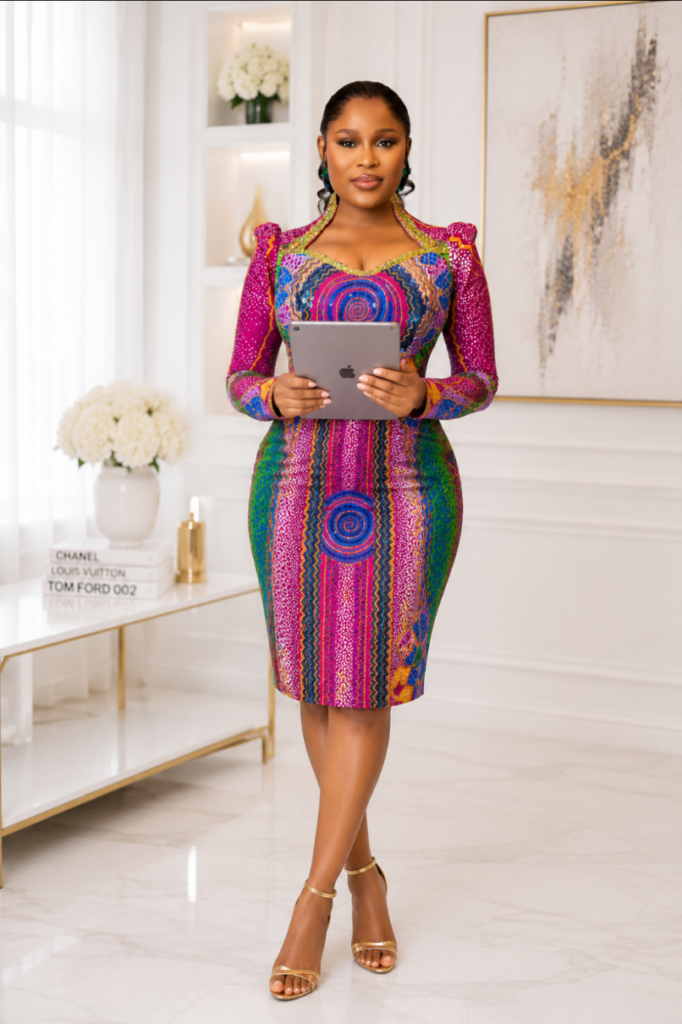
BERLA MUNDI: “It’s a claim that has set both South Africa and the wider African continent on fire—that South Africa is not truly a country, but a private company registered on the American stock exchange. A business with a CEO… rather than a nation led by a President.”
”Now, the technical truth is far removed from the conspiracy. But the feeling behind it? The feeling of a nation beholden to global lenders… to bond markets… to financial forces beyond its borders? That feeling is very real.“
”So tonight, we go beyond the myths… beyond the headlines… beyond the noise. We ask the question that truly matters: Who really owns a nation’s future? Is it the people? Is it the government? Or is it the markets that fund it?”
[Part 3: Introduction of the Panellists]
BERLA MUNDI: “To help us navigate these complex waters, I am honoured to be joined by two of Africa’s finest legal minds—women who have dedicated their careers to the intersection of law, justice, and the public interest.”

- Serwaa Amihere, Esq. (Ghana): “A distinguished legal practitioner and one of Ghana’s most resonant public intellectuals. Known for her sharp analytical mind and her unwavering commitment to dissecting the legal frameworks that govern our societies.”

- Assumpta Gahutu, Esq. (Namibia): “Joining us from Namibia, a formidable legal practitioner and human rights advocate. She brings an essential perspective on constitutional sovereignty and the protections required to safeguard a nation’s people from external economic pressure.”
[Part 4: The Welcome
BERLA MUNDI: “Serwaa, Assumpta—it is a privilege to have you both on the panel tonight. Thank you for joining us.” ”This is The Public Betrayal… and tonight—we put the global financial system on trial.“
📜 THE GENESIS OF THE FINANCIAL STATE
Segment: Historical Context & The Debt Architecture Host: Berla Mundi
Part 1: The Necessity of the System
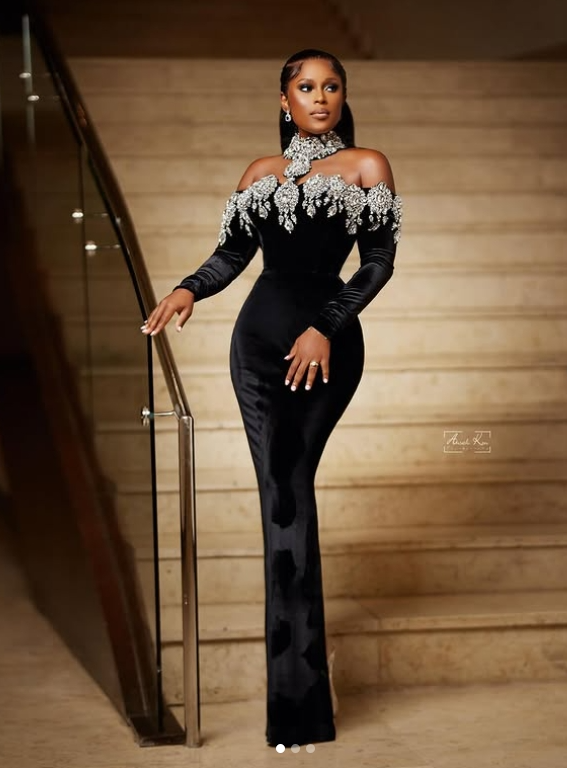
BERLA MUNDI: “Before we go any further tonight… before we debate power, markets, and sovereignty… we need to understand where this system really began.”
”The modern financial system—especially the bond market—did not appear overnight. It was born out of necessity. Hundreds of years ago, rulers faced a problem: They needed amounts of money far beyond what taxes could provide. They needed it to fight wars, build navies, expand trade routes, and govern growing states.”
”So, they turned to something revolutionary: Systematic Borrowing.“
Part 2: The 1694 Turning Point
“The real transformation happened in England in the late 17th century. While fighting costly wars against France, the British state needed reliable financing. This led to the birth of organised public debt and, in 1694, the founding of the Bank of England.”
”This allowed the government to do something unprecedented:
- Borrow from thousands of investors simultaneously.
- Manage debt systematically over decades.
- Create a sense of ‘stability’ in state finances that had never existed before.”
Part 3: The ‘Financial State’ vs. The People
”Before this, rulers relied on heavy taxation or confiscating wealth. But with bonds, financial markets became deeply connected to the state itself. Historians call this the rise of the Financial State.”
”As this system expanded globally, it grew alongside industrial capitalism and colonial expansion. By the 20th century, bond markets weren’t just a tool; they were the central nervous system of global economic power.”
Part 4: The Three Pillars of Modern Debt
”So, why do governments—including our own here in Africa—still use this system today? It comes down to three things:
- Velocity: Accessing massive capital quickly for infrastructure or crisis management.
- Flexibility: The ability to spend today and repay over thirty years.
- Political Ease: It is often far easier for a politician to borrow money than it is to raise taxes.”
Part 5: The Shadow Side & The African Perspective
“But there is a shadow side. Critics argue this creates a ‘Debt Trap’—where investor confidence and credit ratings begin to dictate national policy more than the will of the voters.”
”For many in Africa, this hits home. Our nations entered a global financial system that was already designed and dominated by industrial powers. For some, debt isn’t just a tool—it’s a structural chain.”
Part 6: Opening the Floor
”Which brings us back to the present. If this system connects governments, markets, and power so tightly… where does that leave a country like South Africa?”
”Does borrowing mean dependence? Does influence mean control? And most importantly… Who really holds the power in the modern state?“
LAYOUT SUMMARY FOR READERS
| Era | Mechanism | Result |
|---|---|---|
| 1600s | Private Lending | Rulers beholden to wealthy families. |
| 1694 | The Bank of England | Birth of the “Public Debt” and Bond Markets. |
| 1800s-1900s | Global Expansion | Debt becomes a tool for Colonial & Industrial growth. |
| 2026 | The SEC/Market Era | States manage “Investor Confidence” as a core policy. |
Section I: Deconstructing the Myth

BERLA MUNDI: “Serwaa, let’s start with the foundation. Legally speaking, is there any basis to the claim that South Africa is a private company registered in the United States—or is this a complete misunderstanding of how financial systems work?”
SERWAA AMIHERE, Esq.: “Berla, to put it plainly: It is a total legal misinterpretation. South Africa is a sovereign state, defined by its Constitution and recognised by the UN. What people are seeing is a ‘Schedule B’ filing with the U.S. SEC. This is essentially a ‘know-your-customer’ document for the global stage. It’s not an incorporation of a business; it’s an admission to a marketplace so the state can sell its debt. However, while the law says we are sovereign, the ledger often tells a different story.”
BERLA MUNDI: “And that leads to the heart of the frustration. Even if the claim is false in law, why do you think so many ordinary citizens feel like their country is being run like a business?”
Section II: The Sovereignty-Debt Paradox
“As a legal practitioner, how does sovereign borrowing affect independence? At what point does financial obligation begin to limit real political freedom?”

SERWAA AMIHERE, Esq.: “Borrowing is a contract. And in any contract, the one with the capital sets the terms. When a nation’s debt-to-GDP ratio crosses a certain threshold, the ‘conditions’ for future loans—what we call structural adjustments—begin to act as a shadow legislature. You might have the right to vote for a President, but if that President’s budget is dictated by an interest payment to a foreign bondholder, your vote has been effectively diluted.”
BERLA MUNDI: “So, when governments prioritise ‘investor confidence’ to maintain credit ratings, are policy decisions being indirectly hijacked? Is the market outvoting the citizen?”
Section III: The African Structural Disadvantage
BERLA MUNDI: “You’ve often argued that African nations are playing on a tilted field. From a structural standpoint, does entering a financial system we didn’t design put us at a permanent disadvantage?”
SERWAA AMIHERE, Esq.: “Absolutely. We are playing a game where the rules were written in 1694 London and 1944 Bretton Woods. African nations often face a ‘risk premium’—we pay higher interest rates just for being African, regardless of our economic health. This isn’t just economics; it’s a legal and systemic bias that drains wealth from the Global South to the Global North.”
Section IV: The Future of the State
BERLA MUNDI: “Does South Africa—and the continent—need to shift toward a stronger State-Led Development Model? And practically, what does that look like?”

SERWAA AMIHERE, Esq.: “It looks like reclaiming the ‘Developmental State.’ It means the government must be more than a debt collector for foreign banks. It means investing in industries like agro-processing and energy, where we own the value chain. We need to move from being a ‘Consumer State’ to a ‘Productive State.'”
Section V: The Verdict
BERLA MUNDI: “Finally, Serwaa—to rebuild public trust, what can governments do when citizens question who is really in control?”
SERWAA AMIHERE, Esq.: “Radical transparency. Governments must show the people exactly what is being signed in these international corridors. Secrecy breeds conspiracy.”
BERLA MUNDI: “I’ll hold you to one sentence for the final takeaway: Is South Africa owned? Or is it constrained?“
SERWAA AMIHERE, Esq.: “South Africa is legally free, but economically tethered—and you cannot walk very far when your legs are tied to a banker’s desk.”
✊ THE HUMAN COST: SOVEREIGNTY & SOCIAL JUSTICE
Segment: The People vs. The Ledger Host: Berla Mundi
Respondent: Assumpta Gahutu, Esq. (Namibia)
The Interrogation: Power & Origins

BERLA MUNDI: “Serwaa, thank you for that powerful and deeply grounded analysis. I believe you’ve helped us clearly distinguish between legal facts and the emotional realities citizens are grappling with across the continent.”
(1)“Assumpta, building from the history we’ve just explored—the bond system emerging out of wars, colonial expansion, and state survival—would you say that this system reflects what we might call the implications of civilisation itself? A system born out of power struggles and shaped by those with wealth?”
(2)“Given that early bond markets were driven by wealthy merchants and financiers, do you believe that the system was designed from the beginning to serve financial interests first, rather than the broader well-being of nations and their people?”
The Structural Bias & Africa’s Entry
(3) “From a human rights and legal perspective, is there a structural bias in the global financial system—where decisions are guided more by monetary returns than social impact?”
(4) “For African countries entering this system after colonialism, do you believe they joined on equal footing—or was the system already structured in a way that limited their economic independence?”
The Crisis of Social Justice
“When governments prioritise debt repayment and investor confidence, what happens to social justice obligations—education, healthcare, infrastructure, and employment? As a human rights advocate, how do you interpret the lived experience of citizens who feel that economic systems are serving financial markets more than people?”
Assumpta’s Response: The Perspective of the People

ASSUMPTA GAHUTU, Esq.: “Looking at the history of how bonds started, one could indeed describe it as part of the broader evolution—or implications—of civilisation itself. However, we must not ignore the context in which this system developed. It was largely driven by wars, imperial competition, and the rise of powerful financial actors—particularly in Europe.”
“At its core, the system was built by and for those who had capital. And naturally, those actors prioritised monetary returns and financial stability above all else.”

ASSUMPTA GAHUTU, Esq.“The concern today is that this legacy continues—where financial systems, although global and sophisticated, often still reflect their original orientation. And that orientation does not always align with national development, social equity, or the everyday well-being of citizens.”
“For African countries especially, this raises a critical question: Are we participating in a system as equal actors—or adapting within a structure that was never fully designed with our realities in mind?”
BERLA MUNDI: “Assumpta, thank you for that powerful historical and human perspective. Because what we are hearing tonight is not just about finance… It is about power, history, and whose interests are ultimately being served.”
🌍 KEY TAKEAWAYS FOR GLOBAL READERS
| Theme | The Core Tension |
|---|---|
| Origins of Capital | Designed for war and trade, not necessarily public welfare. |
| Social Justice | Debt servicing often competes with budgets for schools and hospitals. |
| Equality | The system was mature before many African nations were born, creating a ‘late-comer’ disadvantage. |
🌍 THE FINAL FRONTIER: MARKETS VS. PEOPLE
Segment: The Future Framework Host: Berla Mundi
Panel: Serwaa Amihere, Esq. & Assumpta Gahutu, Esq.
The Reflection
BERLA MUNDI: “Assumpta, thank you for that deeply reflective and historically grounded perspective. You’ve taken us beyond the legal and into the human and structural realities of this system.”
“Now, let me bring us to a question that many South Africans — and indeed many across the continent — are asking themselves tonight.”
The Economic Clarity – “Right. If we accept that the bond market often prioritises profit — sometimes even at the expense of the broader population — then South Africans need clarity.”
👉 “What exactly constitutes a desirable economy?”
“Is it an economy driven primarily by financial returns… or one that is centred on people, production, and long-term development?”
The Pan-African Vision

BERLA MUNDI: “And let me take it even further. Should South Africans begin to rethink the framework entirely… Should they demand a more Pan-African approach to economic systems — one that moves beyond narrow interests… Beyond the dominance of a wealthy few… Towards a system that prioritises collective progress across societies?”
The Ultimate Question
👉 “In essence:”
“Should the future economy of South Africa — and Africa at large — be built around markets… or around people?”
🎙️ THE VERDICT: MARKETS VS. PEOPLE
Segment: Panel Responses–Contributor: Assumpta Gahutu, Esq.

⚖️ Assumpta Gahutu, Esq. – Response
“Thank you, Berla. That is a profound question — and one that goes to the heart of modern governance.”
“When we talk about what constitutes a desirable economy, we must begin with first principles. An economy is not an abstract figure. It is not just GDP, credit ratings, or investor returns. It is, at its core, a system designed to serve people.”
“A sustainable and just economy should balance three things:
- Productivity
- Stability
- Human welfare”
“Financial markets — including bond markets — are tools. They are not the objective. The moment the tool begins to dictate the purpose, we lose direction as a society.”
🔍 On Investor-Driven Economies
“The concern many South Africans feel is that economic outcomes appear increasingly aligned with investor expectations rather than public needs. And while maintaining investor confidence is important — because it supports stability — it cannot come at the cost of employment, social development, and long-term national growth.”
🌍 On Pan-Africanism
“Now, to your question on Pan-Africanism — I believe it is not only relevant, but necessary. A Pan-African economic approach challenges us to think beyond isolated national interests and elite-driven economic models. It asks a deeper question: Can African nations collaborate to build systems that prioritise collective progress?”
📜 Historical Reflection
“We have seen this vision before:
- Kwame Nkrumah spoke of African unity as essential for economic independence.
- The Organisation of African Unity (1963) was formed to promote collective advancement.
- The Lagos Plan of Action (1980) proposed regional industrialisation and reduced dependency.”
“These were not abstract ideas — they were attempts to reshape economic sovereignty.”
✅ CONCLUSION: “So yes — South Africans should demand clarity. And more than that, they should demand an economy that is not only stable… but just, productive, and inclusive.”
🕊️ Assumpta Gahutu, Esq. – Cont

Even though the framing of the question is both timely and necessary.
🧠 On the Nature of the System
“When we consider the origins of the bond system — as you rightly outlined earlier — we must understand that this system evolved as part of what I would describe as the implications of civilisation itself. It emerged from wars, imperial competition, and state-building driven by power and wealth. And crucially, it was shaped by those who had capital.”
⚖️ On Priorities of the System
“So the system, historically, prioritised financial security, repayment certainty, and monetary returns. But it did not necessarily prioritise the well-being of ordinary citizens, social justice, or equitable development. And that legacy, in many ways, remains embedded today.”
🌍 On Africa and Structural Reality
“For African nations, the situation is even more complex. Post-independence, many countries entered a global financial system they did not design — one already structured around the priorities of industrial and financial powers. This creates what we might call a structural imbalance.”
🤝 On Pan-African Economic Thinking
“Pan-Africanism, therefore, must be more than a cultural or political idea — it must become an economic framework. And historically, we have seen attempts at this vision:
- The Abuja Treaty (1991) – aimed at creating an African Economic Community.
- Regional blocs like ECOWAS and SADC – seeking coordinated economic growth.
- Today’s African Continental Free Trade Area (AfCFTA) – an effort to build internal markets and reduce external dependency.”
🔥 THE CORE QUESTION: “The real question before us is this: Do we continue operating within systems designed primarily around capital… or do we begin reshaping systems to centre human dignity and collective development?”
✅ FINAL REFLECTION: “A desirable economy must not only generate wealth — it must distribute opportunity, empower citizens, and reflect the aspirations of its people.”
🎙️ CLOSING STATEMENT – BERLA MUNDI
“Thank you, Serwaa. Thank you, Assumpta.”
“Tonight, we have travelled across centuries — from the birth of the bond market in the wars of Europe… to the modern struggles of nations trying to balance growth, stability, and justice.”
“We have learned that South Africa is not a company. But we have also confronted a deeper truth — that modern economies can, at times, feel distant from the people they are meant to serve.”
“We have heard that financial systems are tools — powerful tools — but tools nonetheless.”
“And we have been reminded of a vision that has long existed across this continent…”
🌍 The Pan-African Vision
“A vision where Africa does not simply participate in global [systems]… but begins to define its own economic destiny.”EDITORIAL NOTE: This layout concludes the panel discussion. Would you like to finalise this into a downloadable PDF format, or create a social media “Key Takeaways” summary for the worldwide audience?
Our Shared Humanity Soka Gakkai Buddhist Movement
An introduction to the Soka Gakkai and Nichiren Buddhism.
Where do the teachings originate from?
What is the philosophy of Buddhism?
How do Soka Gakkai members apply it in their daily lives?
The Soka Gakkai is a global community-based Buddhist organisation that promotes peace, culture and education centred on respect for the dignity of life. Its members in 192 countries and territories study and put into practice the humanistic philosophy of Nichiren Buddhism. Soka Gakkai members strive to actualise their inherent potential while contributing to their local communities and responding to the shared issues facing humankind.
The conviction that individual happiness and the realisation of peace are inextricably linked is central to the Soka Gakkai, as is a commitment to dialogue and nonviolence. Subscribe to our channel: / sgivideosonline Visit our website: https://www.sokaglobal.org/ Like us on Facebook: / sgi.info Follow us on Instagram: / sgi.info Follow us on Twitter: / sgi_info

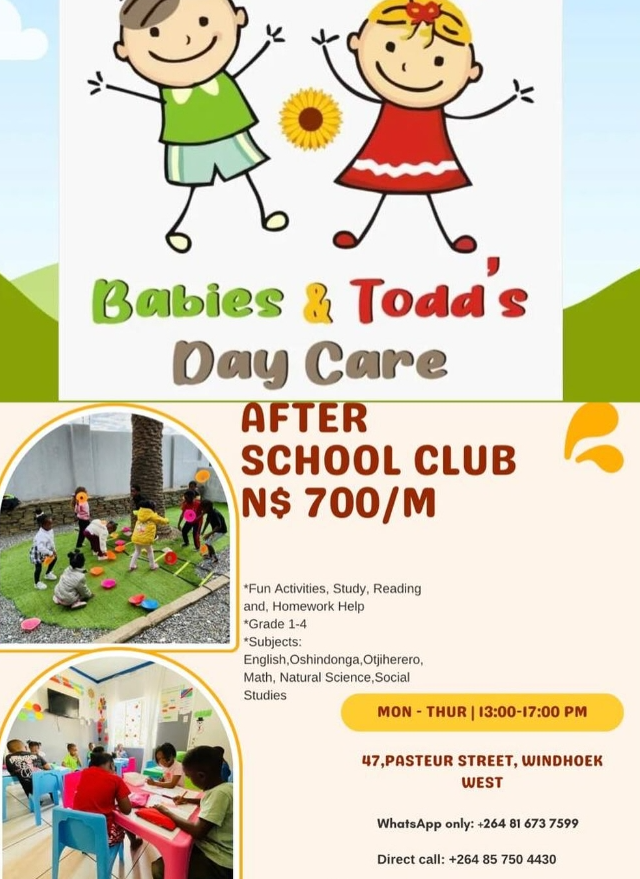
https://www.instagram.com/babiesandtodds_?igsh=MWs0ZHlsbjcxNXEyZg==
Where Little Hearts Find a Home to Grow. 🌿✨
Nestled in the heart of Windhoek, Babies & Toddlers Daycare (BTDC) is more than just a school—it’s a vibrant community. We believe every child is a unique masterpiece. Our mission? To provide a nurturing sanctuary where they can grow, learn, share, and create with confidence. 🎨🤝
At BTDC, we don’t just teach; we inspire. Guided by a humanistic philosophy, we prioritize:
- 🕊️ Peace & Culture – Celebrating our global diversity.
- 📚 Education with Heart – Focused on the dignity of every life.
- 🌱 Holistic Growth – Respecting the unique journey of every child.
Join our family and give your child a foundation built on respect and joy.
📞 Connect with us: +264 81 673 7599
🌐 Explore more: www.babiestodds.com
#WindhoekParents #NamibiaEducation #EarlyChildhood #HumanisticEducation



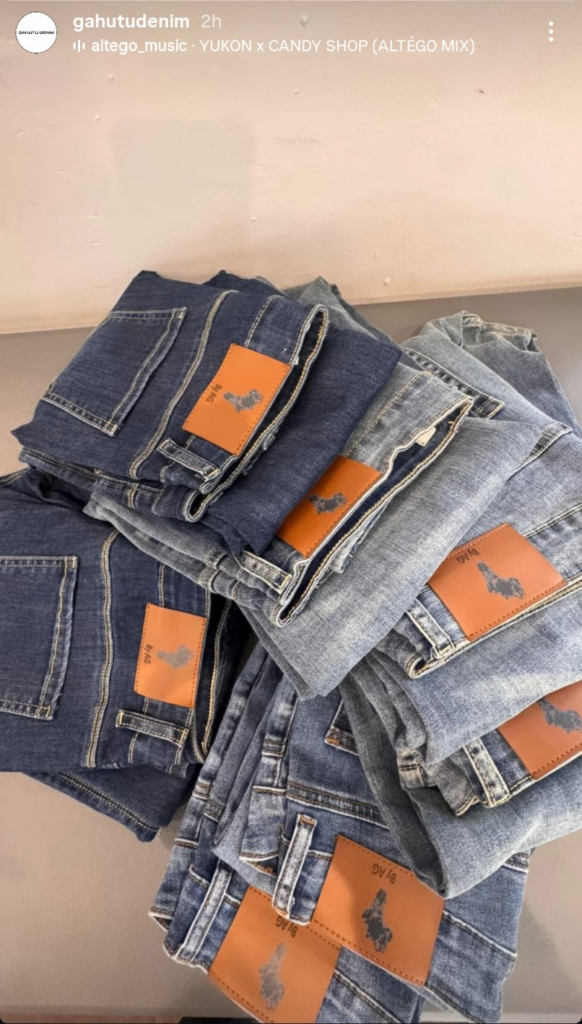
https://www.instagram.com/gahutudenim?igsh=MWpsNjZ1bTFvdHNsdw==
Meet Gahutu Denim—the bridge between high-fashion and the hustle. We’ve reinvented denim for the modern woman who needs to look sharp and stay cool.
✨ The Fit: Sleeker than slacks, more comfortable than leggings. Our Contoured Stretch Technology gives you that “custom-tailored” look all day long.
🌬️ The Feel: Specifically engineered for the tropical heat. Our denim is lightweight, breathable, and designed to let your skin breathe.
💼 The Vibe: Boardroom ready. Cocktail approved.
Stop settling for heavy, stiff fabrics. Experience luxury that moves with you.
Tap the link in bio to shop: gahutudenim.com
#GahutuDenim #ModernWoman #CorporateToCocktail #AfricanFashion
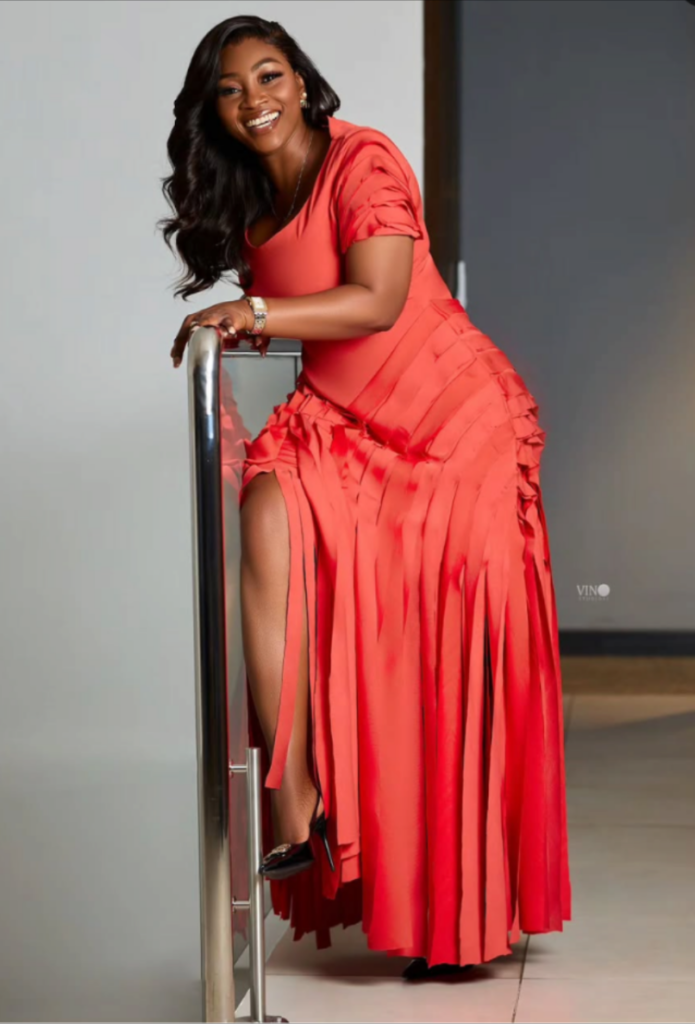

The Outfit Breakdown
The outfit worn by Cookietee is a vibrant, coral-red or monochromatic orange-red maxi dress designed by Amatchiwa.
- The Bodice & Silhouette: It features a fitted, tailored bodice with short, subtly gathered or ruched sleeves and a scoop neckline. The dress hugs the waist before flowing into a dramatic, highly textured lower half.
- The Skirt Design: The defining feature of this outfit is the tiered, fringed, or paneled skirt. It consists of multiple cascading fabric strips or wide ribbons that create a dynamic, fluid movement. It also incorporates a high thigh slit on the right side, adding a bold, modern edge to the look.
- Styling: It is paired with classic black stiletto pumps, minimal jewelry (a watch and a simple necklace), and voluminous, side-parted waves.
Material Quality & Weather Suitability for Ghana
While a photograph cannot definitively confirm the exact textile blend, the way the fabric drapes and holds its shape provides excellent clues:
- Material Quality: The fabric appears to be a mid-to-heavyweight crepe, satin-blend, or high-quality polyester blend. It has a smooth, matte-to-semi-gloss finish with structured pleating. The clean cuts on the fringe panels suggest a high-quality material that doesn’t fray easily, maintaining a polished, luxury aesthetic.
- Suitability for Ghana’s Warm Climate: * The Pros: The open, paneled design of the skirt allows for excellent airflow and ventilation, which is a massive plus for Ghana’s tropical warmth. The short sleeves also keep it relatively breezy.
- The Cons: If the fabric is a dense synthetic blend (like thick scuba or heavy polyester crepe), the upper bodice might trap heat and feel restrictive during peak daylight hours or in non-air-conditioned outdoor settings.
- Verdict: It is perfectly suited for evening events, indoor functions with AC, or cooler Harmattan nights, but might feel a bit too heavy for an outdoor afternoon in the blazing sun.
Does It Fit a Corporate Office?
Short Answer: Generally, no. This outfit is a statement fashion piece rather than standard corporate attire.
Here is why it leans away from traditional or business-casual corporate environments:
- The Thigh Slit: The high, dramatic slit is typically considered too revealing for a standard office setting.
- The Fringed/Paneled Skirt: The avant-garde, flowing strips of fabric lean heavily into glamour, high fashion, and red-carpet aesthetics rather than professional, utilitarian office wear.
- The Overall Vibe: It screams “celebration,” “cocktail party,” or “media event” rather than “boardroom meeting.”
Exception to the Rule
If you work in a highly creative or expressive industry—such as fashion design, public relations, entertainment media, or creative arts marketing in Accra—this dress could absolutely work for a major corporate launch, an awards ceremony, or hosting a high-profile industry event. For a standard 9-to-5 office day, however, it is best kept in the wardrobe until the weekend or after-hours events.

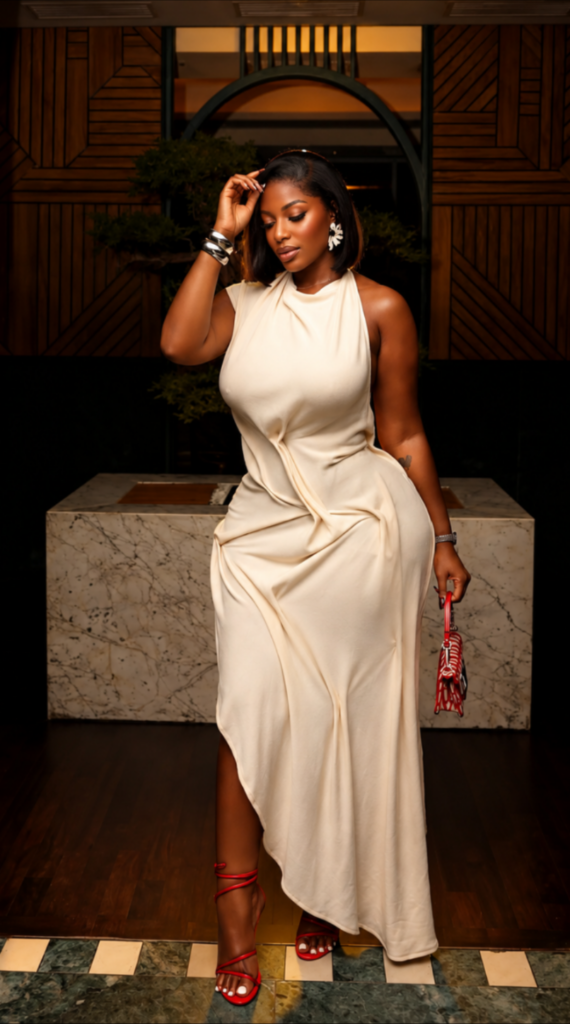
https://www.instagram.com/adedamee?igsh=MXN5azZlbGRjeTkxOA==
Hilda Baci: Blossoming Beauty & Culinary Brilliance
Celebrating the multi-talented chef, restaurateur, and global icon Hilda Baci, whose grace and vibrant energy extend far beyond the kitchen. Known for her record-breaking determination and undeniable charm, she effortlessly embodies a modern blend of sophistication and cultural pride.
The Outfit: Precision, Lightness, and Ultimate Versatility
This striking ivory ensemble is a masterclass in garment construction, engineered to seamlessly transition from a high-powered corporate environment to an elegant evening dinner.
- Tailored Precision: Every drape and fold is meticulously engineered to contour the silhouette with flawless precision. The high, asymmetrical neckline introduces a structural, avant-garde element that commands respect in the boardroom, while the flowing, draped skirt adds a soft, feminine allure perfect for a night out.
- Weightless Luxury: Crafted from premium, ultra-lightweight fabric, the dress offers effortless movement and breathability. It is designed for the modern woman on the move, providing day-long comfort without sacrificing structural integrity.
- From Desk to Dinner: * For the Corporate Office: Pair it with a tailored blazer and classic pumps for a polished, authoritative look that stands out in executive meetings.
- For an Elegant Dinner: Remove the layers to reveal the stunning halter design, allowing the bold red strappy heels and statement jewelry to transform the outfit into a head-turning evening look.
IMAGINE: Works from the Heart — Honoring African Design
At IMAGINE: Works from the Heart, we celebrate the visionary creativity of African designers who are redefining the global fashion landscape. This collaboration honors the timeless craftsmanship, bold innovation, and rich storytelling embedded in contemporary African fashion.
By spotlighting trailblazers like Hilda Baci in garments that balance heritage with global modernity, we salute the designers who don’t just follow trends—they create them. This is fashion born from passion, crafted with heart, and designed to leave a lasting legacy on the world stage.


https://www.instagram.com/delish_bakerygh?igsh=MW5ic2c0NnR5cHBwZQ==
Pure Goodness: Delish Bread Without Chemicals
Experience the taste of nature at Delish Bread, your neighborhood grocery store and bakery where health meets indulgence. We believe that what you eat should be as pure as it is delicious. That’s why our breads are crafted without chemicals, artificial preservatives, or additives—just wholesome ingredients baked to perfection.
Whether you are looking for your daily loaf or a special treat, we offer over 12 varieties of bread, cakes, and pastries, including:
- Signature Breads: Whole Wheat, Multigrain, and Classic White—all chemical-free.
- Artisan Pastries: Flaky, buttery, and baked fresh every morning.
- Custom Cakes: Perfect for every celebration, made with the finest natural ingredients.
ASSUMPTA-IMAGINE Celebrates Delish Bread
ASSUMPTA-IMAGINE: Works From The Heart proudly honors the commitment to purity and health championed by Delish Bread. In a world of processed foods, Delish Bread stands out as a beacon of authenticity, aligning perfectly with our mission to celebrate creators who work with passion and purpose.
We celebrate Delish Bread for:
- Wholesome Integrity: Their dedication to chemical-free baking that nourishes the community.
- Cultural Connection: Bringing people together through the timeless tradition of breaking bread.
- Spiritual Purpose: Guided by the personal mission of Making Jesus Proud, every loaf is baked with love and a servant’s heart.
Visit Us Today!
Come and taste the difference that “Heart Work” makes.
- Location: Agboba, Accra.
- Hours: Monday – Saturday | 8:00 AM – 6:00 PM
- Order via WhatsApp: wa.me/233201789403
- Follow the Journey: @delish_bakerygh & @smomentwithprecious_
Delish Bread & ASSUMPTA-IMAGINE: Nourishing your body, honoring your heritage.

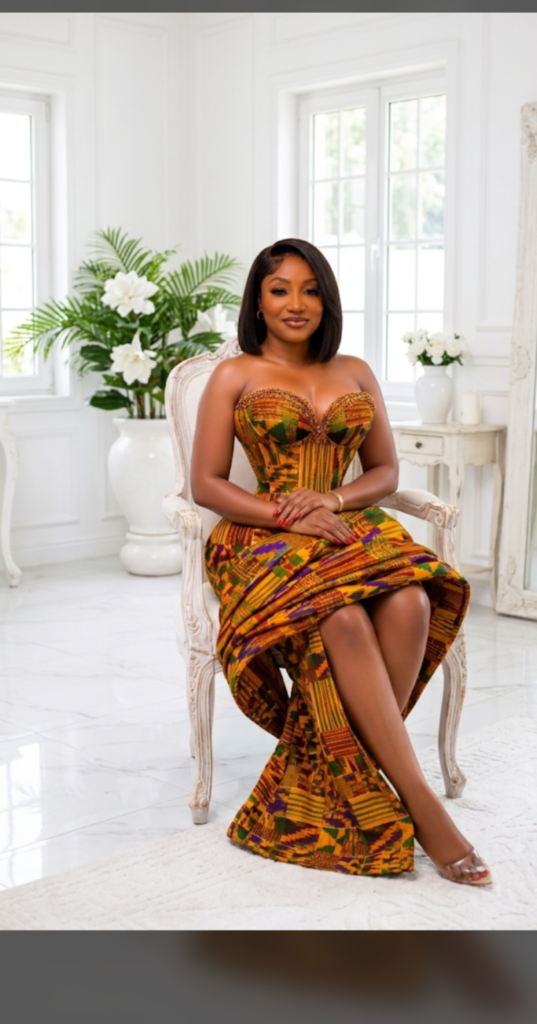
https://www.instagram.com/goba_kente?igsh=d2Vwd2E2M2VtcTZq
The Outfit: A Masterclass in Kente Artistry and Modern Structure
This breathtaking ensemble is a definitive masterclass in contemporary African garment construction, seamlessly blending the rich heritage of Ghanaian Kente with high-fashion, avant-garde architecture. Engineered to command attention, the dress transitions effortlessly from a statement of cultural pride to a display of modern sophistication.
- Sculpted Corsetry & Tailored Precision: The bodice features a meticulously structured corset, engineered to contour the silhouette with flawless precision. The dramatic, plunging sweetheart neckline is adorned with intricate, hand-beaded golden embellishments that introduce a structural, regal element.
- The Geometry of Tradition: Crafted from premium, authentically woven Kente cloth, the geometric patterns of rich gold, vibrant green, and deep maroon are aligned perfectly to accentuate the lines of the dress.
- Voluminous Versatility: The lower half of the gown boasts a dynamic, sweeping drape that cascades beautifully, showcasing the weightless luxury and fluid movement of the fabric. The structured volume adds a powerful, multi-dimensional allure perfect for an elite gala, while remaining anchored in timeless craftsmanship.
Akosua Owusuwaa: Blossoming Beauty & Cultural Brilliance
This look celebrates Akosua Owusuwaa, also known as Gwen-Addo, a visionary who effortlessly embodies a powerful blend of corporate leadership, entrepreneurial drive, and profound cultural pride. Known for her record-breaking determination and undeniable charm, Akosua brings a vibrant energy that extends far beyond the boardroom.
The striking contrast between the vibrant, storied threads of her Kente and the minimalist, pristine background highlights her modern elegance—proving that heritage is not just something to be preserved, but something to be dynamically lived, celebrated, and worn with grace.
Works from the Heart — Honoring Contemporary Heritage
This collaboration honors the timeless craftsmanship, bold innovation, and rich storytelling embedded in contemporary African fashion. By showcasing Akosua Owusuwaa in a garment that balances deep-rooted heritage with global modernity, we salute the master weavers and designers who don’t just follow trends—they create them. This is fashion born from passion, crafted with heart, and designed to leave a lasting legacy on the world stage.