




OSAGYEFO NEWSLETTER MAGAZINE
Breaking News & Global Editorial Edition
SPECIAL DIALOGUE & INTERNATIONAL EDITORIAL
Release Date: Friday, 6 November 2026
Read Exclusively at: assumptagh.live/
Lead Feature: A New Departure for Ghana and Africa
















https://www.instagram.com/hairsenta?utm_source=ig_web_button_share_sheet&dlrf=ZDNlZDc0MzIxNw==
Hair Senta – Where Beautiful Hair Meets Beautiful Conversations
As December arrives and the festive spirit fills the air, Hair Senta invites you to step into the holiday season with ultimate confidence and glamour. Celebrate the most vibrant month of the year with an experience wrapped in care, luxury, and unmatched warmth. Every interaction is thoughtfully crafted to bring you the finest human hair extensions in Ghana, paired with expert guidance on how to care for, style, and rock your look all through the celebrations.
From your first greeting to your final look, we listen, educate, and empower you with true professionalism. Whether you’re preparing for Christmas services, end-of-year galas, Detty December festivities, or reuniting with loved ones, our team ensures you leave radiant, flawless, and holiday-ready.
💇🏾♀️ Why Choose Hair Senta This Festive Season?
Trademarked, trusted, and internationally recognised
Premium human hair extensions crafted in Ghana and loved worldwide
Personalised, educational, and uplifting client experience tailored to your unique style
🎁 This December, gift yourself the beauty of effortless confidence. Because when your hair is a masterpiece, every celebration shines brighter.
📍 Get in Touch & Visit Us
Visit us: 24 Jungle Avenue, East Legon, Accra, Ghana 00233
Shop online:www.hairsenta.com
Call: (+233) 0544354455 / 0248629769
Follow us on Instagram:@hairsenta
Hair Senta — Because great hair is always in season. ✨🎄
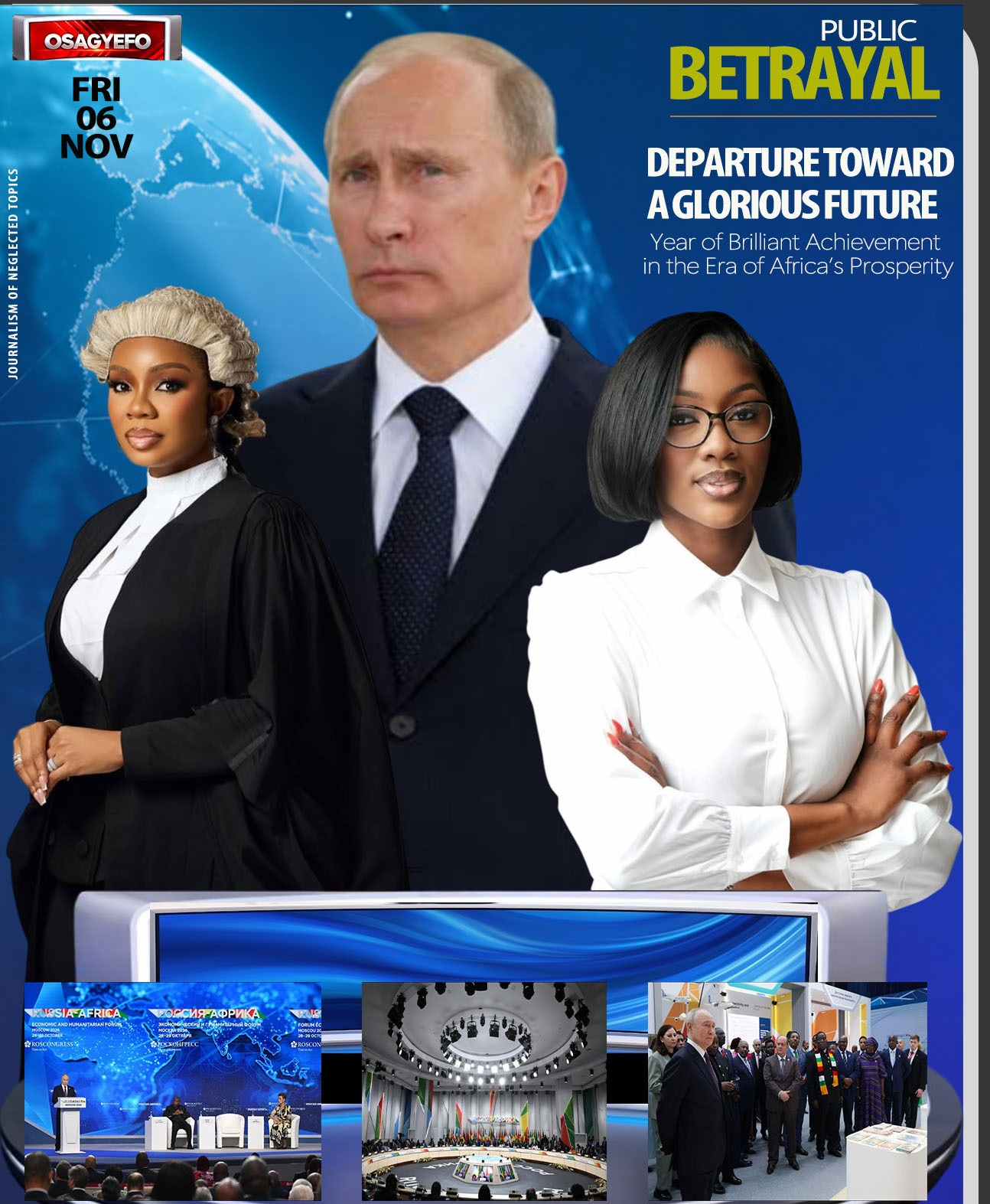
🌍 A NEW DEPARTURE FOR GHANA AND AFRICA
The Russia–Africa Summit in Moscow: From International Partnership to Economic Sovereignty
This Edition Is Not Just an Article — It Is a Global Reflection.
An extraordinary examination of Africa’s evolving international relationships, revisiting Osagyefo Dr. Kwame Nkrumah’s founding vision and exploring how strategic cooperation with Russia and other global partners can advance industrialisation, technological development, economic independence and human prosperity.
The central question is not simply where Africa’s international partnerships are heading, but whether these relationships will help Africa build the economic foundations of its own future.
THE HISTORIC MOMENT
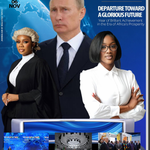
DEPARTURE TOWARD A GLORIOUS FUTURE
Publication Theme: Year of Brilliant Achievement in the Era of Africa’s Prosperity
Historical Context: Third Russia–Africa Summit
Location: Moscow, Russian Federation
Dates: 28–29 October 2026
A New Chapter. A Renewed Vision. An African Future.
SPECIAL PANEL DIALOGUE
This special dialogue brings together distinguished African women in law, entrepreneurship and public communication to examine the political, economic and historical significance of the Moscow summit.
Featuring:

- Serwaa Amihere, Esq.
Ghanaian Lawyer, Broadcaster and Entrepreneur.

- Assumpta Gahutu, Esq.
Legal Practitioner, Entrepreneur and Principal of Babies and Toddlers Daycare, Namibia.
❓ KEY QUESTIONS EXPLORED
1. The Industrial Mandate: From Raw Materials to African Manufacturing
How can modern Russia–Africa partnerships move beyond commodity exchange towards domestic industrialisation, technology transfer, mineral processing and value addition within Africa?
2. Sovereignty and Strategic Independence
In an increasingly multipolar international environment, how can African countries develop relationships with Russia, China, Europe and the United States while protecting their political independence and economic sovereignty?
3. Fulfilling Nkrumah’s Vision
Can continental integration, collective bargaining and strategic international partnerships finally advance the economic self-reliance and united Africa envisioned by Osagyefo Dr Kwame Nkrumah?
4. The Human Development Test
Will these international agreements translate into employment, scientific education, opportunities for young people, improved living conditions and sustainable prosperity for ordinary Africans?
SPECIAL GLOBAL EDITORIAL
A NEW DEPARTURE FOR GHANA AND AFRICA
Subtitle: From the Russia–Africa Summit in Moscow to the Unfinished Vision of African Economic Sovereignty.
Publication Theme: Year of Brilliant Achievement in the Era of Africa’s Prosperity.
A Vision Whose Time Has Come
The Third Russia–Africa Summit, held in Moscow on 28–29 October 2026, has opened another chapter in the evolving relationship between the Russian Federation and African countries.
Bringing together representatives from 48 African countries, including 22 represented by heads of state or government, the gathering demonstrated how important expanding international partnerships is to African governments. Discussions covered trade, investment, energy, agriculture, industrialisation, security, education, healthcare and technological cooperation. The summit also adopted a final declaration, the Russia–Africa Partnership Forum Action Plan for 2027–2029 and a declaration on cooperation in the civilian application of artificial intelligence.
Yet, beyond the diplomatic ceremonies, political statements and international agreements lies a much bigger question:
Can this engagement mark a new departure for Ghana and Africa toward economic sovereignty, industrial development, and shared prosperity?
For Ghana, this question carries particular historical significance.
Our founding president, Osagyefo Dr Kwame Nkrumah, understood that political independence was only the beginning. Economic transformation was necessary to make freedom meaningful in the everyday lives of ordinary citizens.
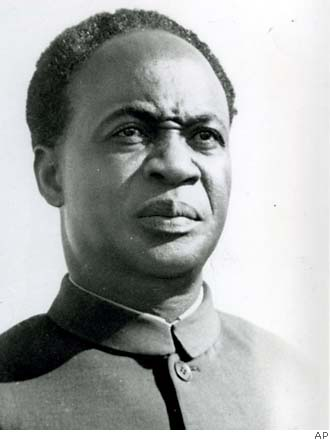
His international relationships, including cooperation with the Soviet Union, reflected his determination to develop Ghana’s industrial capacity, scientific education, infrastructure and technological knowledge.
Nkrumah’s vision was never simply to find powerful friends. It was to develop a nation capable of standing on its own feet.
That historical lesson remains relevant today.
1. NKRUMAH’S DREAM OF AN INDUSTRIALISED GHANA
Osagyefo Dr Kwame Nkrumah recognised that a country rich in natural resources could remain economically vulnerable if it lacked the industrial capacity to transform those resources into finished products. His development programme sought to establish the foundations of an industrial economy through infrastructure, electrification, manufacturing, mechanised agriculture and technical education. Cooperation with the Soviet Union formed part of this broader international development strategy.
Today, Ghana faces a familiar challenge.
We possess gold, bauxite, manganese, cocoa and other valuable resources. Yet the transformation of these resources into finished products, competitive industries and high-value employment remains an unfinished national objective.
The Moscow summit offers an opportunity to revisit this question through practical economic cooperation.
A particularly significant development was the announcement of an agreement involving Russia’s Rusal and Ghana’s Integrated Aluminium Development Corporation (GIADEC) concerning bauxite mining and alumina refining.
The proposed projects target Ghana’s Nyinahin bauxite deposit and include plans for an alumina refinery with an annual capacity of up to 1.2 million tonnes.
This development deserves attention because Ghana has long sought to establish an integrated aluminium industry.
However, the proposed joint ventures also raise an important question: how will Ghana balance foreign investment with national ownership, resource control and long-term economic benefits? Reuters reported that Rusal would hold majority stakes in the proposed ventures.
The opportunity must therefore be measured not only by investment figures but also by technology transfer, Ghanaian participation, employment, environmental responsibility and the development of domestic industrial expertise.
| Strategic Imperative | Nkrumah’s Historical Vision | Contemporary African Objective |
|---|---|---|
| Resource Processing | Transform natural resources into national productive wealth | Domestic refineries and manufacturing industries |
| Technical Education | Develop engineers, scientists and skilled workers | Advanced STEM education and technology transfer |
| Industrial Infrastructure | Build productive national infrastructure | Railways, ports, energy and industrial zones |
| Economic Independence | Reduce structural economic dependence | Greater local ownership and productive capacity |
| Human Prosperity | Make independence meaningful to ordinary people | Sustainable employment and improved living standards |
The real measure of a new departure will be whether Ghanaian resources increasingly create Ghanaian industrial opportunities.
2. A VISION BEYOND GHANA: CONTINENTAL UNITY AND SELF-RELIANCE
Nkrumah’s vision extended far beyond the geographical boundaries of Ghana.
He believed that the political and economic fragmentation of African countries weakened their collective bargaining power and limited their ability to determine their own development priorities.
His advocacy for a united Africa was rooted in the conviction that continental cooperation could provide the economic scale, political strength and institutional capacity necessary for genuine independence.
The Moscow summit should therefore be considered within the wider framework of African integration.
The African Continental Free Trade Area (AfCFTA), regional infrastructure development, coordinated industrial policies and stronger African financial institutions offer important opportunities to translate political cooperation into economic strength.
Africa must also recognise that international partnerships are instruments of development, not substitutes for African leadership.
Russia, China, Europe, the United States and other international partners have different economic capabilities and strategic interests.
African governments must approach these relationships with clearly defined national and continental priorities.
The objective should be to negotiate partnerships that strengthen Africa’s productive capacity rather than deepen its dependence.
A united Africa should not merely compete for foreign investment. It should develop the capacity to determine the conditions under which that investment contributes to its future.
3. FRIENDSHIP WITHOUT THE SURRENDER OF INDEPENDENCE
International friendship is important. Strategic partnerships are necessary. But sovereignty must remain fundamental.
Nkrumah understood the importance of maintaining Ghana’s independent judgment in international affairs. His foreign policy engagement with different global powers was connected to the broader ambition of protecting Ghana’s freedom of action.
Today, Africa operates within an increasingly multipolar international environment.
Russia’s renewed engagement with African countries creates opportunities in energy, agriculture, technology, infrastructure, education and industrial development. At the same time, African governments must independently assess the economic, political and security implications of every agreement.
No international relationship should be judged solely by diplomatic warmth or historical friendship.
Its value must be demonstrated through mutually beneficial outcomes.
As this editorial argues:
“The friendship between Russia and Africa becomes most meaningful when it advances peace, human dignity, equality and shared prosperity. Its lasting significance will depend on the extent to which diplomatic commitments translate into tangible benefits for ordinary citizens.”
Factories that create employment, agricultural projects that strengthen food security, universities that develop scientific talent and technological partnerships that build local expertise represent meaningful indicators of progress.
Transparency, accountability and respect for national sovereignty must remain central to these relationships.
4. FROM DIPLOMATIC COMMITMENTS TO ECONOMIC TRANSFORMATION
The Moscow summit produced important frameworks for future cooperation.
However, Africa must distinguish between political declarations, proposed investments, signed agreements and completed development projects.
A declaration is not a factory. An investment announcement is not yet employment. A technology agreement is not necessarily technology transfer.
The next stage must focus on implementation.
African governments should establish clear mechanisms for monitoring agreements, evaluating investment outcomes and ensuring that local communities benefit from development projects.
For Ghana, this means asking practical questions:
- How many sustainable jobs will these partnerships create?
- How much of the processing and manufacturing will take place within Ghana?
- Will Ghanaian engineers and technical professionals acquire advanced industrial skills?
- What proportion of the economic value will remain within the country?
- How will environmental protection and community interests be safeguarded?
These questions should guide not only cooperation with Russia but also Ghana’s relationships with every international development partner.
Africa must move from being a supplier of raw materials towards becoming a centre of manufacturing, scientific innovation and technological advancement.
5. THE NEXT GENERATION: THE HUMAN FACE OF AFRICAN PROSPERITY
Economic sovereignty must ultimately improve human lives.
The success of international partnerships cannot be measured exclusively through trade statistics, investment announcements or diplomatic agreements.
It must also be reflected in the opportunities available to ordinary citizens.
African young people need access to quality education, technical training, scientific research, modern manufacturing and meaningful employment.
Farmers need technology, processing facilities and reliable markets. Entrepreneurs need affordable financing and infrastructure. Women need equal opportunities to participate in economic development.
The future of Africa cannot be built through political declarations alone.
It requires institutions that work, industries that produce, educational systems that prepare people for the future and leadership that recognises the dignity and potential of every citizen.
This is where the vision of Nkrumah becomes more than a historical reference. It becomes a development responsibility.
6. THE DEPARTURE TOWARDS AFRICA’S PROSPERITY
The Third Russia–Africa Summit presents an opportunity to strengthen international cooperation and revisit the economic aspirations that have shaped Africa’s post-independence journey.
But Africa’s destiny cannot be determined in Moscow, Beijing, Washington, Brussels or anywhere outside the continent.
It must be shaped by African people and institutions through responsible leadership, continental solidarity, strategic economic planning and the determination to develop local productive capacity.
Ghana has a particular responsibility to draw lessons from its own history.
The unfinished industrial vision of Nkrumah reminds us that natural wealth must become productive wealth, political independence must become economic independence, and international friendship must produce measurable benefits for society.
The challenge is not to choose one global power over another.
It is to ensure that Africa has the capacity, confidence and institutional strength to engage all of them on terms that advance African interests.
🌈 A RAINBOW OF HOPE ACROSS RUSSIA AND AFRICA
May the Moscow gathering become a constructive milestone in the relationship between Russia and African nations. May its commitments open pathways towards industrial development, scientific advancement, educational cooperation, agricultural transformation and peaceful coexistence.
May African leaders draw inspiration from Osagyefo Dr Kwame Nkrumah, whose vision of an economically strong, politically confident and united Africa remains an unfinished responsibility for our generation.
And may the next chapter of Africa’s international relationships be written not merely through diplomatic ceremonies, but through factories, universities, research institutions,