

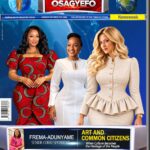


Assumpta Weekly Newsletter Magazine
Presents: “Their Majesties King Willem-Alexander and Queen Máxima” in this Special Edition of Her Majesty Magazine.
Assumpta Weekly Magazine proudly unveils an exclusive feature on Their Majesties King Willem-Alexander and Queen Máxima of the Netherlands. This captivating issue celebrates their enduring love, refined grace, and unwavering dedication to the cause of global peace.
Hair Senta Advertisement


https://www.instagram.com/hairsenta?utm_source=ig_web_button_share_sheet&igsh=ZDNlZDc0MzIxNw==

Royal Elegance in Motion: A Study of Style, Symbolism, and Presence
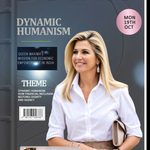
On the cover, Their Majesties King Willem-Alexander and Queen Máxima present a masterclass in contemporary royal elegance—where diplomacy, dignity, and design converge. Queen Máxima takes center stage in a breathtaking powder-blue strapless gown, exquisitely structured and delicately textured. The soft hue evokes serenity and openness—an intentional visual language aligned with peace and compassion. The gown’s refined silhouette is both modern and timeless, celebrating feminine strength without excess. Draped effortlessly over her arm, a flowing matching stole adds movement and grace, symbolizing continuity and gentle authority.
Her jewelry is a statement of quiet power. A striking diamond necklace, centered with a luminous rectangular pendant, anchors the look with regal restraint. Coordinated drop earrings echo the same brilliance, framing her face with light. These ornaments are not merely decorative; they speak of heritage, responsibility, and the enduring symbolism of monarchy in a modern world. The overall effect is one of confidence, warmth, and approachability, heightened by her radiant smile and open gesture of greeting.
In her hand, a sleek clutch complements the ensemble—subtle, polished, and purposeful—reinforcing the balance between formality and accessibility that defines her global role.
Standing just behind her, King Willem-Alexander embodies steadfast leadership in a dark, impeccably tailored suit. His understated attire provides a dignified counterpoint to the Queen’s luminosity. With a calm posture and composed expression, he represents stability, continuity, and quiet strength—an anchor to the Queen’s expressive presence. Together, their styling tells a deeper story.
This is not fashion as spectacle, but fashion as symbolism.
Not ornament for display, but attire as a language of unity, peace, and shared purpose.
The cover captures a moment where royalty meets humanity—a visual declaration that leadership in our time is not only about authority, but about openness, cultural wisdom, and the courage to guide the world toward peace.
Article Title : ” The World Seeks a Path For Peace”
Theme: Their Majesties and the Wisdom of Africa
Subtitle: Finding a New Compass for Global Peace.
📅 Coming Monday, January 12th, 2025
📍 Read it exclusively at assumptagh.live/
Featuring: ✨ Current Affairs | Jewelry | History | Background | Fashion | Portraits | Culture | Royalties
Stay tuned for an inspiring story that redefines modern queenship.
Summary :
In a world fractured by division, Their Majesties King Willem-Alexander and Queen Máxima turn to Africa-the cradle of civilization-to rediscover the pathways toward enduring stability.
This landmark feature explores how African philosophies of community (Ubuntu), dignity, and restorative justice offer a “living library” for a new global order. Guided by Assumpta Gahutu, Esq.

Co-Founder & Principal of Babies and Toddlers Daycare| Fashion icon. With intellectual rigor and deep human insight, Assumpta Gahutu, Esq. bridges the gap between royal reflection and lived global realities-elevating African perspectives to the center of the world stage.
The Moral Compass: A Reflection from the Gosho To anchor this dialogue, we look to the timeless wisdom of Nichiren Daishonin, whose writings remind us that peace begins with the absolute sanctity of the individual.
“A single life is worth more than the major world system… If you live even one day longer, you can accumulate that much more benefit. How truly precious your life is!” >-On Prolonging One’s Life Span (Vol.,1) This core principle-that the treasure of life outweighs all political ambition-serves as the foundation for the “Path to Peace” explored in this issue.
A conversation of conscience.
The bridge between leadership and legacy. A call to rediscover peace through shared human wisdom.
World Seeks a Path to Peace
While the world continues to search for a moral and practical compass to guide humanity toward peace, armed conflicts and economic oppression persist across regions and generations. Violence, inequality, and uncertainty remain defining features of our time, challenging the very foundations of global stability.
As we navigate these collisions of political ambition and historical division, we find a grounding truth in the writings of Nichiren Daishonin: “A single life is worth more than the major world system… If you live even one day longer, you can accumulate that much more benefit.”


Against this backdrop, Their Majesties King Willem-Alexander and Queen Máxima have drawn wide international attention through their focus on peace-building and inclusive development. Their engagement has inspired research and reflection across Africa—the birthplace of civilization—where historical wisdom and contemporary realities offer vital insights into humanity’s shared future.
“On Prolonging One’s Life”
Is a profound addition to the newsletter. It provides the “moral compass” to the text by elevating the value of a single human life above all political or economic structures. Here is how this Buddhist wisdom relate to the mission of Their Majesties and the African context:
1. The Ultimate Value: Life Over Systems
The Gosho states: “A single life is worth more than the major world system.”
- The Relation: Your article mentions that “political ambition” and “economic exploitation” often collide with peace. This quote provides the correction: peace is only possible when we stop prioritizing “systems” (borders, GDP, ideologies) and start prioritizing the individual.
- Application: In the context of Queen Máxima’s work, “Inclusive Finance” isn’t just about money; it’s about giving an individual the “benefit” of a secure life so they can flourish.
2. Africa and the Concept of “Precious Life”
The philosophy of Ubuntu (“I am because we are”) aligns perfectly with Nichiren’s view.
- The Relation: If one life is worth more than the world, then the suffering of one person in a conflict zone is a loss for all of humanity.
- Historical Wisdom: The “historical wisdom” of Africa often views the elders and the continuation of life as the highest blessing. Prolonging life allows for the “accumulation of benefit” (wisdom and service to the community).
3. The “Lotus Sutra” as a Path to Peace
Nichiren mentions encountering the Lotus Sutra as a reason for hope.
- The Relation: In a secular newsletter, you can interpret this as having “encountered a path of truth.” Whether that path is spiritual, like the Sutra, or practical, like the “path to peace” sought by Their Majesties, the message is the same: once you have the right tools, every extra day you live is an opportunity to build a better world.
📜 A Final Reflection
“A single life is worth more than the major world system… If you live even one day longer, you can accumulate that much more benefit.”
— Nichiren Daishonin. AsTheir Majesties and the leaders of the world continue to search for stability, this ancient wisdom reminds us that the “Path to Peace” begins with a simple, radical truth: the infinite value of every human life.
This dialogue sets the stage for a high-level exchange of conscience, balancing legal rigor with royal diplomacy.
🎙️ The Path to Peace: A Special Dialogue

Assumpta Gahutu, Esq.:
“Your Majesties, it is a profound honor to stand before you today. I am Assumpta Gahutu, a lawyer, Co-Founder of Assumpta Newsletter Publication, and Founder of Babies and Toddlers Daycare. My work is dedicated to the protection of the vulnerable and the pursuit of intellectual rigor in our global discourse.”

The King and Queen:
“It is a pleasure to meet you, Counselor Gahutu. We have followed your work with great interest, particularly your dedication to the next generation.”
Assumpta Gahutu, Esq.:
“Your Majesties, welcome to this program. We are here to discuss a path to peace, but before I go to the core of the dialogue, let me first say this: The year 2026 has come. As the world expected the curtains of peace to rise, we instead witnessed a wave of violent attack by the United States in Venezuela—capturing the Venezuelan leader and his wife in a manner many view as illegal under international law.”
”Looking at how international communities, including Africa and Ghana, are condemning this attack, it feels like a tragic turning point. A year that was meant for human dignity and peace has been pulled back into the bloodshed of the past. Your Majesties, what are your thoughts on this, considering our article title, ‘The World Seeks a Path to Peace’?”
His Majesty King Willem-Alexander:
”Counselor, you speak to the heart of the ‘Collision of Interests’—the tension between political ambition and the global stability we seek. When the foundations of international law are challenged, it creates a ripple effect of uncertainty. As a constitutional monarchy, we represent continuity. Our ‘soft power’ is not in military force, but in providing a neutral platform where even the most bitter ideological differences can be reconciled. We believe that for peace to be assured, we must move away from the traditional approach of ‘Military Superiority’ and toward ‘Root-Cause Resolution.’ The events you describe in Venezuela underscore exactly why the world is so desperately searching for that moral compass.”

Her Majesty Queen Máxima:
”And from a humanitarian perspective, Counselor, we must consider the ‘Economic Oppression’ that often follows such conflicts. Whether in Latin America or Africa, when leadership is destabilized, it is the common citizen—the mother, the small-scale farmer—who loses their financial autonomy. My work with the UN focuses on ensuring that even in times of transition, the most vulnerable have the tools to survive. As you mentioned regarding Africa, the philosophy of Ubuntu—‘I am because we are’—tells us that an attack on the dignity of one nation is a disturbance to the peace of all. We cannot have ‘individual happiness’ if the ‘social well-being’ of our global neighbors is being dismantled.”

Assumpta Gahutu, Esq.:
”Precisely, Your Majesties. This brings us back to the absolute value of life, as described in the writings of Nichiren Daishonin. If a single life is worth more than the major world system, then no political objective can justify the erosion of human dignity. In Africa, we have learned through the ‘Palaver Tree’ and ‘Truth and Reconciliation’ that peace is a constant recalibration—not a one-time treaty.”
The Three Pillars of the Dialogue
| Pillar | Perspective of Their Majesties | The African/Assumpta Insight |
| 1. Soft Power | Diplomacy over force. | Law must protect the vulnerable. |
| 2. Wisdom | Inclusive development as a shield. | Ubuntu: Collective survival. |
| 3. Resolution | Finding a neutral ground. | Restorative justice to heal wounds. |

Assumpta Gahutu, Esq.:
“Thank you, Your Majesties, for those profound reflections. It is clear that the world is navigating a complex ‘compass’ where moral ideals and practical politics frequently clash. This brings me to the core of our feature. The mention of Africa as a focal point is particularly significant; as the birthplace of civilization, its history offers the oldest lessons in human cooperation and the most innovative modern approaches to reconciliation.
To delve deeper into these themes, I have broken down the ‘path to peace’ into three critical pillars: the role of Diplomatic Soft Power, Africa’s Contribution of Ubuntu, and Navigating the Collision of Interests.
We see people from all walks of life—farmers, traders, and private entrepreneurs—whose daily reflections become a source of wisdom. While governments handle formal treaties, you, Your Majesty King Willem-Alexander, and you, Your Majesty Queen Máxima, exercise a vital soft power. Through inclusive development and your role as the UNSGSA, you directly address ‘economic oppression’ by helping the unbanked gain financial autonomy.
This leads me to ask: Is the pursuit of peace rarely a straight line? Or is it, in fact, a constant recalibration? Furthermore, can we truly bridge the ‘historical wisdom’ of Africa with modern ‘inclusive development’ to find a tangible path toward a more stable global foundation?”

His Majesty King Willem-Alexander:
“Counselor Gahutu, you have touched upon the very essence of modern statecraft. To answer your first point: no, the pursuit of peace is never a straight line. It is, as you suggested, a constant recalibration. In physics, a compass needle oscillates before it settles on North; diplomacy is the same. We must constantly adjust to the ‘waves’—such as the recent tragic events you mentioned in Venezuela—to ensure we do not lose our moral heading.
The ‘tangible path’ is built when we stop viewing peace as a finished product and start viewing it as a process. In the Netherlands, we have the ‘Polder Model’—a tradition of consensus-building. It mirrors the African ‘Palaver Tree’ in that it requires sitting together until a shared interest is found, rather than one side imposing its will through ‘Top-Down Authority.'”

Her Majesty Queen Máxima:
“And to your point on bridging wisdom with development, I believe ‘Inclusive Development’ is simply the modern, digital application of Ubuntu. When we say ‘I am because we are,’ we are acknowledging that a global economy cannot be stable if 1.7 billion people are left outside the system.
When a woman in a rural village in Africa gains access to a digital wallet, she is not just receiving a financial tool; she is gaining Dignity, which is the ‘Absolute’ value Nichiren Daishonin spoke of. By connecting her to the market, we are practicing restorative justice—restoring her right to participate in the ‘Shared Interests’ of humanity. That is the bridge: using modern technology to honor ancient human dignity.”
The Comparison of Paths
| The Question | The Royal Perspective | The Global Foundation |
| Straight Line? | No; it is a series of corrections. | Stability requires flexibility. |
| Recalibration? | Yes; responding to current crises. | Staying true to the “Moral Compass.” |
| The Bridge? | Merging Ubuntu with Finance. | Technology serving Human Wisdom. |
Assumpta Gahutu, Esq.:
“It is inspiring to hear that the bridge is not just possible, but already being built. Your Majesties, your words suggest that the ‘tangible path’ is not found in a map, but in the character of our dialogue.”
“Your Majesties, your words resonate deeply with my own journey. I speak not only as a lawyer but as a witness to the ‘recalibration’ we discussed. After I received my legal certification, I found myself at a crossroads. While the law provides the framework for justice, I realized that true, enduring peace must be nurtured long before a case reaches a courtroom.
This is why I founded my daycare—to nurture Namibian young leaders from the very beginning. I saw that, more than anything, Namibia needs a philosophy of coexistence; a living application of Ubuntu that can bring our people and our nation together. We cannot wait for adulthood to teach reconciliation; we must plant those seeds in the cradle.
When we say ‘I am because we are,’ we are acknowledging that an African economy—and indeed a global one—cannot be stable if over a billion Africans are left outside the gates of opportunity. I truly believe that tapping into the wisdom of Ubuntu gives us the ability and the strength to directly open our future. It transforms ‘Inclusive Development’ from a policy into a moral heartbeat.”

Her Majesty Queen Máxima:
“That is a remarkable transition, Counselor. To move from the high courts to the nursery is to move from the ‘letter of the law’ to the ‘spirit of humanity.’ You are essentially building the ‘Social Well-being’ our text describes. By nurturing these young leaders in Namibia through Ubuntu, you are ensuring that the next generation of ‘Private Enterprise’ and ‘Farmers’ does not just seek individual profit, but understands that their success is inextricably linked to their neighbor’s health. This is the very definition of financial health—resilience through community.”
His Majesty King Willem-Alexander:
“It reminds me of the ‘major world system’ mentioned in the Gosho. Systems are cold; they are structures of ‘Top-Down Authority.’ But a daycare, like the ‘Palaver Tree,’ is a warm space of growth. In Namibia, a country that has navigated its own complex ‘historical divisions,’ your focus on coexistence is the practical application of the ‘Path to Peace.’ You are proving that the ‘birthplace of civilization’ is also the birthplace of our future stability.”
Synthesis of the Dialogue: The Namibian Model
| Focus Area | The Legal Perspective | The Ubuntu Application |
| Youth Leadership | Formal education & rights. | Nurturing a “Philosophy of Coexistence.” |
| Economic Stability | GDP and Market access. | Ending “Economic Oppression” through community. |
| National Future | Political Ambition. | Shared Interests born in early childhood. |
Assumpta Gahutu, Esq.:
“Exactly, Your Majesty. It is about moving from ‘Military Superiority’ to ‘Moral Superiority’ through the way we raise our children. If we can teach a toddler that their happiness is dependent on the happiness of their peer, we have already won the battle against future conflict.
“Your Majesties, as we speak of nurturing the next generation and the stability of the African economy, I am reminded that the heart of any ‘Path to Peace’ must be the preservation and empowerment of the individual life. To encapsulate this, I wish to cite a profound text from the Writings of Nichiren Daishonin, titled ‘On Prolonging One’s Life Span.’
This letter, written in 1275 to a lay nun named Myojo who was battling illness, offers a spiritual ‘compass’ for our dialogue. In it, Nichiren discusses the absolute preciousness of life and the Buddhist concept of changing one’s destiny—or karma—through sincere effort. He teaches four key themes that I believe are vital to our global stability today:
- Changing the Immutable: He explains that even karma that seems ‘fixed’ or rooted can be transformed. This gives us hope that even ‘fixed’ historical divisions in regions like Africa or Venezuela can be healed.
- Historical Precedent: He cites figures like King Ajātashatru, whose lives were extended through devotion, proving that a ‘tangible path’ to restoration always exists.
- The Power of Prayer and Action: Nichiren shares how he prayed for his own mother, prolonging her life by four years. It shows that leadership, like yours, must be rooted in deep care for the people.
- The Ultimate Treasure: Most importantly, he emphasizes that even a single extra day of life is more valuable than ten million ryo of gold or any worldly treasure.
Your Majesties, when we encapsulate this wisdom into our article title, ‘