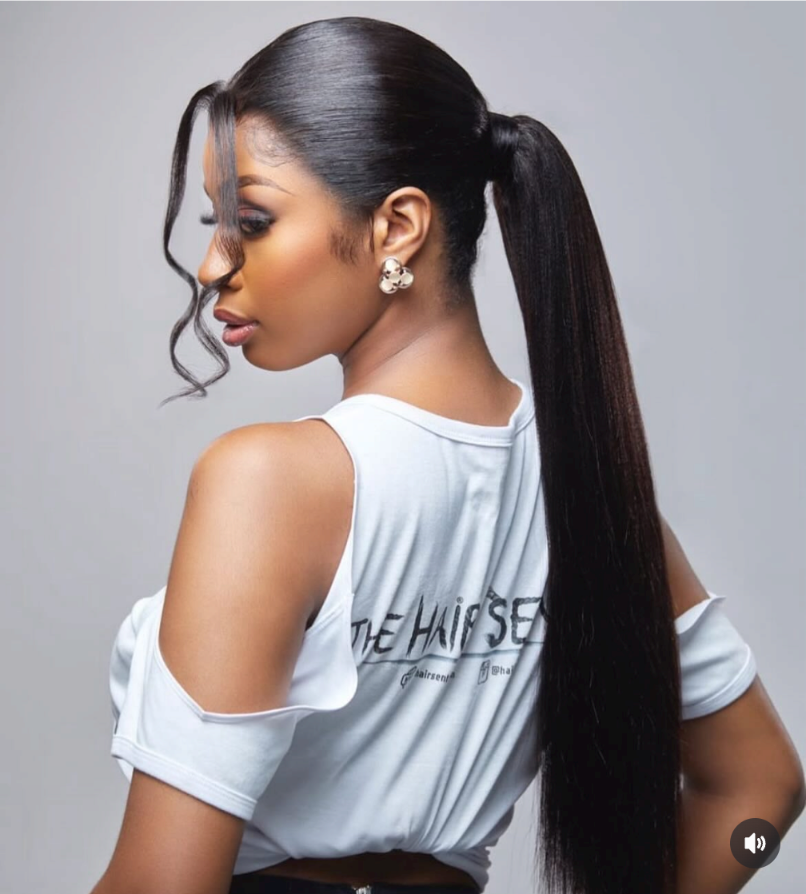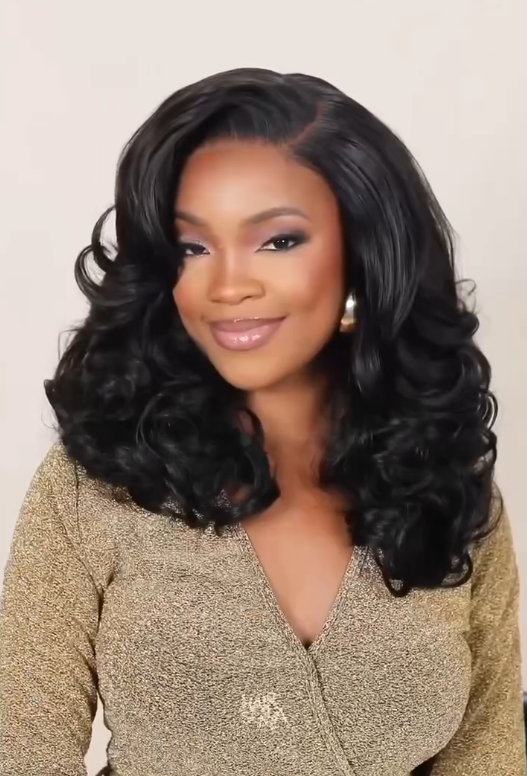

Something Unbelievable Is Sizzling at 24 Jungle Avenue This Summer… ☀️🌴
In the golden glow of the Accra sun, a transformation is taking place. It’s more than just a change in the weather—it’s a movement. A shimmer of silk, a cascade of waves, and the effortless sway of hair that refuses to be ordinary.
They say beauty is power. But this Summer, what if your hair could command the breeze, turn every head on the coast, and carry the vibrant soul of Ghana wherever you go?
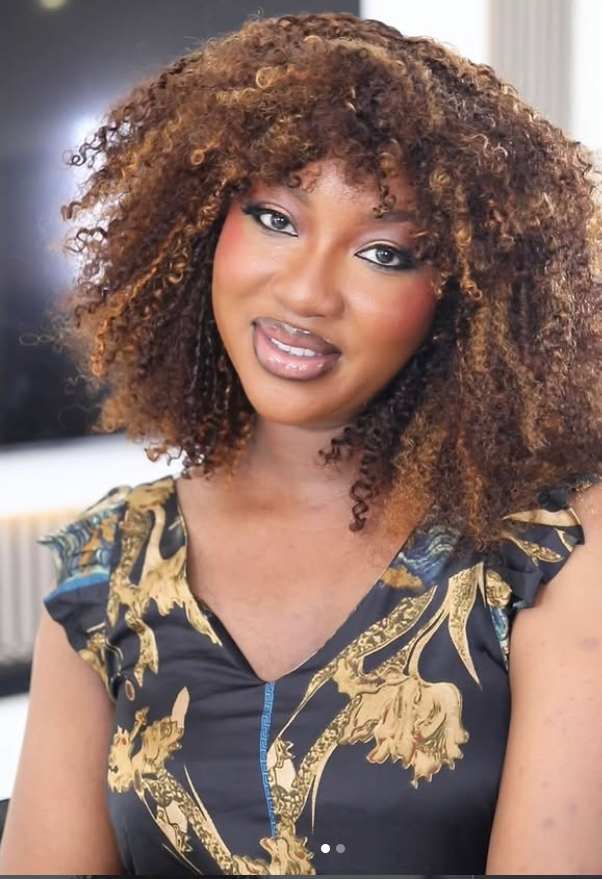
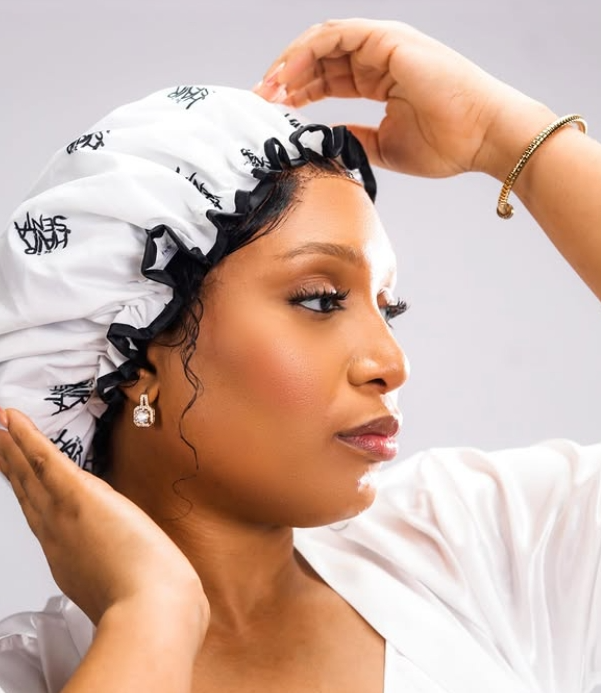
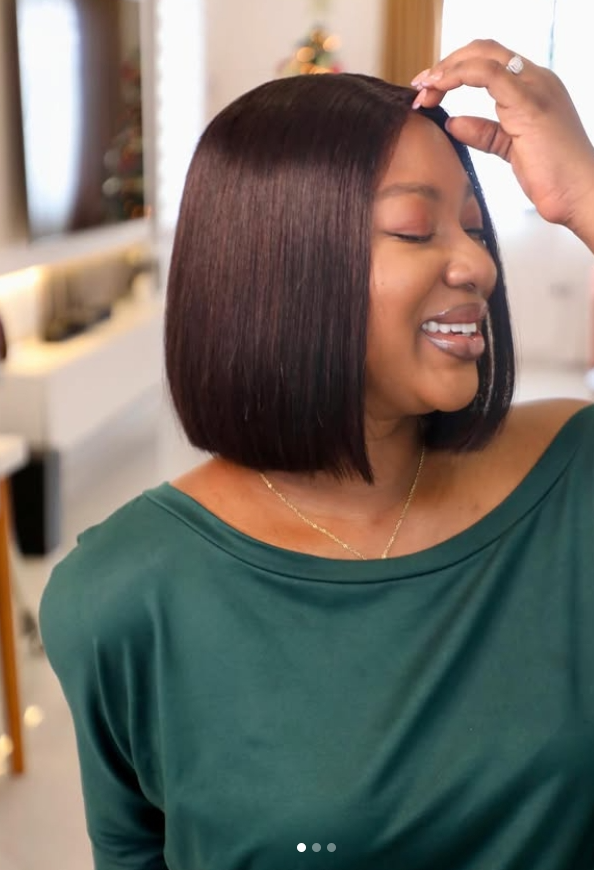
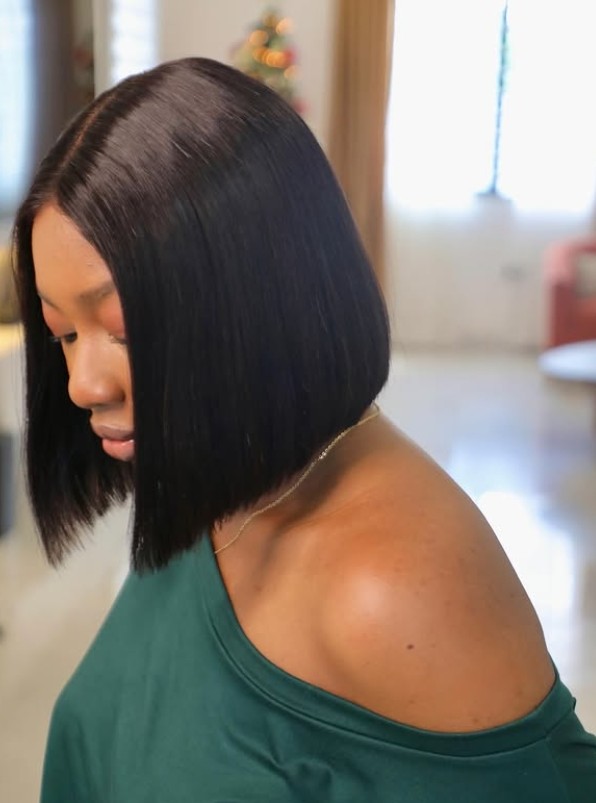
HAIR SENTA — the secret behind every radiant summer glow. ✨🌊
Straight from the heart of Ghana, our 100% luxury human hair extensions are designed for the heat of the moment: lightweight, natural, and undeniable. This season, we’re infusing heritage, craft, and high-fashion glamour into every strand, ensuring you stay cool while looking fire.
Will you be the one who owns the sunshine… or the one who only watches it fade? 🍹🔥
Hair Senta. Real Hair. Real Power. Real Summer Energy. 💁♀️✨
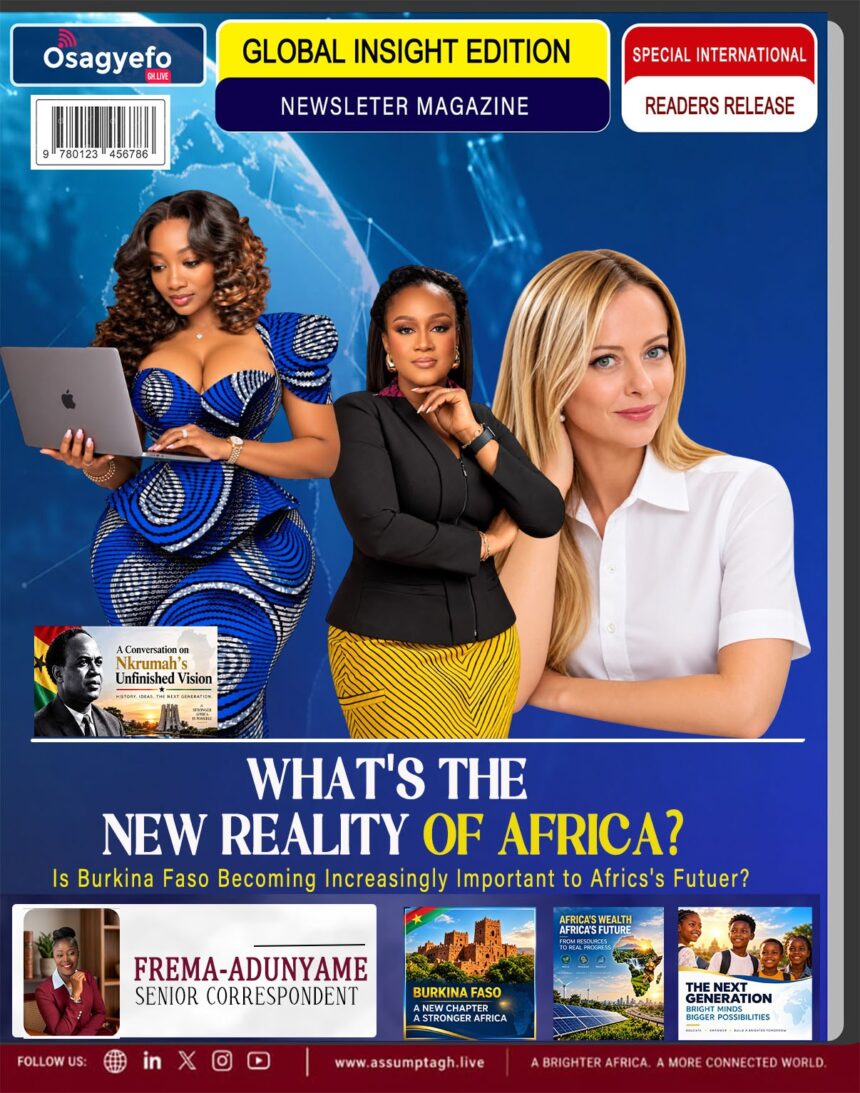
NEWSLETTER COVER
THE NEW AFRICAN QUESTIONResources. Sovereignty. Technology. Human Dignity.
Burkina Faso and the continental debate over power, production and Africa’s next development model.
Africa possesses vast natural resources, a rapidly growing population and extraordinary entrepreneurial energy.
The defining question of the coming decades may not be what Africa has. It may be what Africa chooses to build.
FROM THE EDITOR
A Continent Reconsidering Itself
For generations, Africa has often been viewed through a narrow set of international narratives: poverty, instability, aid and dependency. Those realities exist in places and cannot be ignored. Yet they do not tell the whole story.
Across the continent, governments, entrepreneurs, scholars and citizens are asking increasingly ambitious questions about sovereignty, industrialisation, technological capability and economic transformation.
This edition explores those questions through one case study attracting growing international attention: Burkina Faso.
The purpose is not to present Burkina Faso as a finished success story or a universal model.
Rather, it is to examine why developments there have become part of a wider debate about African self-determination, value creation and long-term development.
At its heart, this edition asks a simple but consequential question:
Can Africa translate resource wealth into institutional, technological and human capability?
EDITORIAL NOTE
A Note on Evidence and Interpretation
This edition explores themes of sovereignty, development and economic transformation.
Readers should note that claims regarding national wealth, economic performance, technology investments, political outcomes and individual achievements should be independently verified against current official, academic and internationally recognised sources before publication.
The purpose of this edition is to stimulate informed discussion rather than advance political advocacy.
GLOBAL VOICES
Perspectives Shaping the Conversation
A defining feature of contemporary Africa is that no single voice can explain its future. Development is being debated simultaneously by journalists, entrepreneurs, policymakers, educators and global leaders.
This section brings together perspectives from different worlds.
🇬🇭 FREMA ADUNYAMEBroadcast Journalist | Channel One TV
The Information Battlefield
In an era of digital influence, public relations campaigns and competing national narratives, journalism plays an increasingly significant role in shaping how Africa sees itself and how the world sees Africa.
Frema Adunyame’s perspective centres on a fundamental question:
Economic growth alone does not guarantee human progress..Akosua Owusuwaa argues that wellbeing, nutrition, education, entrepreneurship and cultural confidence remain indispensable foundations of sustainable development.
“Cultural exchange is at the heart of this vision. It creates ripples of connection that unite hearts. Health is culture, and culture is the boundless force behind true growth.”
🇮🇹 GIORGIA MELONIPrime Minister of Italy
Sovereignty Beyond Africa
Questions of sovereignty are not unique to Africa. Across Europe and elsewhere, debates continue regarding national autonomy, strategic industries, energy security and economic resilience.
This broader global context provides a useful comparison for Africa’s own discussions about control, capability and long-term interests.
🇬🇭 DZIGBORDI KWAKU-DOSOOEntrepreneur | Consultant | Global Speaker
The Human-Centred Challenge
The ultimate test of development is not economic statistics. It is whether individuals gain opportunity, dignity, mobility and agency. Her perspective asks:
If growth occurs without broad human empowerment, can it truly be called development?
EXECUTIVE BRIEF
The Issue in Sixty Seconds
Africa’s challenge may be less about resource scarcity and more about value creation. Many nations possess substantial natural assets.
The greater question is whether those assets can support:
Manufacturing
Industrial capability
Technological innovation
Human development
Competitive institutions
The debate surrounding Burkina Faso becomes significant because it touches on a broader continental issue:
How can African countries convert resource wealth into productive capability?
The Strategic Paradigm Shift
Old Model
Emerging Aspiration
Extraction → Export → Import
Resources → Processing → Industry → Innovation → Regional Trade → Global Competitiveness
FEATURE
THE NEW REALITY OF AFRICAIs Burkina Faso Becoming Increasingly Important to Africa’s Future?

CHAPTER I: THE SIGNAL FROM OUAGADOUGOU
Burkina Faso has become the subject of increasing international attention.
Not simply because of its mineral resources. Not simply because of its politics.
But because it has become a symbol within a larger debate:
What degree of strategic autonomy should African states seek in a changing world?
The country’s trajectory serves as a lens through which broader continental questions can be examined.
CHAPTER II: THE AFRICAN ADVANTAGE
Population. Creativity. Talent.
Africa’s most abundant resource may not be underground. It may be human. The continent contains one of the world’s youngest populations and a rapidly expanding entrepreneurial class.
The strategic challenge is no longer only educational access. It is creating systems that transform knowledge into innovation, enterprise and problem-solving capacity.
CHAPTER III: FROM MINERALS TO MANUFACTURING
Across Africa, natural resources have often generated revenue without generating sufficient domestic industrial capacity.
This has produced a persistent question: Who captures the greatest value?
Historically:
Raw materials are exported.
Processing occurs elsewhere.
Higher-value goods return at a premium.
Industrialisation seeks to reverse that pattern by moving more stages of production closer to the source.
CHAPTER IV: THE SOVEREIGNTY DEBATE
Sovereignty has emerged as one of the defining political concepts of the decade.
For some, it means greater control over economic priorities. For others, stronger decision-making authority in security and diplomacy.
For many African countries, sovereignty is increasingly being discussed not as isolation, but as leverage.
The question is not whether states should engage globally. It is how they engage from a position of greater confidence and capability.
CHAPTER V: THE BURKINA FASO TEST
Burkina Faso raises a practical question:
Can resource-rich states create stronger links between national wealth and national development?
This question deserves careful examination rather than simple conclusions. The real issue is not merely what resources exist.
The real issue is whether those resources can support:
Education
Infrastructure
Productive industry
Innovation ecosystems
Broader improvements in living standards
That is where long-term transformation is either validated or disproven.
CHAPTER VI: TECHNOLOGY AND THE CAPABILITY GAP
Economic transformation increasingly depends on technological capability.
The countries that shape the future are often not those with the most resources, but those with the greatest ability to convert resources into knowledge-intensive industries.
The strategic question for Africa therefore becomes:
Can African wealth finance African innovation?
CHAPTER VII: THE MIND AS STRATEGIC INFRASTRUCTURE
Every successful transformation begins with people.
The most important investment may therefore be in human capability itself.
Intelligence without opportunity becomes frustration.
Education without application becomes certification.
Natural wealth without capability becomes dependency.
CHAPTER VIII: AFTER EXTRACTION
The most important question facing Africa is not: How wealthy is the continent?
The more important question is: What can the continent create?
Can resources become technology?
Can technology become industry?
Can industry become prosperity?
Can prosperity become dignity?
The future may depend on how those questions are answered.
THE LAST PAGE
Africa’s Next Chapter
Burkina Faso is only one chapter in a much larger continental story.
Its significance lies not in providing all the answers. Its significance lies in the questions it raises.
Questions about sovereignty.
Questions about value creation.
Questions about technology.
Questions about human development.
And ultimately, questions about what kind of future Africans wish to build for themselves.
Africa has the people. Africa has the resources. Africa has the creativity.
The next chapter depends on how those advantages are transformed into capability, resilience and opportunity.
OSAGYEFO MAGAZINEGlobal Insight Edition
The conversation is no longer about whether Africa has enough.The conversation is about what Africa builds next.
🌍 OSAGYEFO MAGAZINEGLOBAL INSIGHT DIALOGUE
What’s the New Reality of Africa?
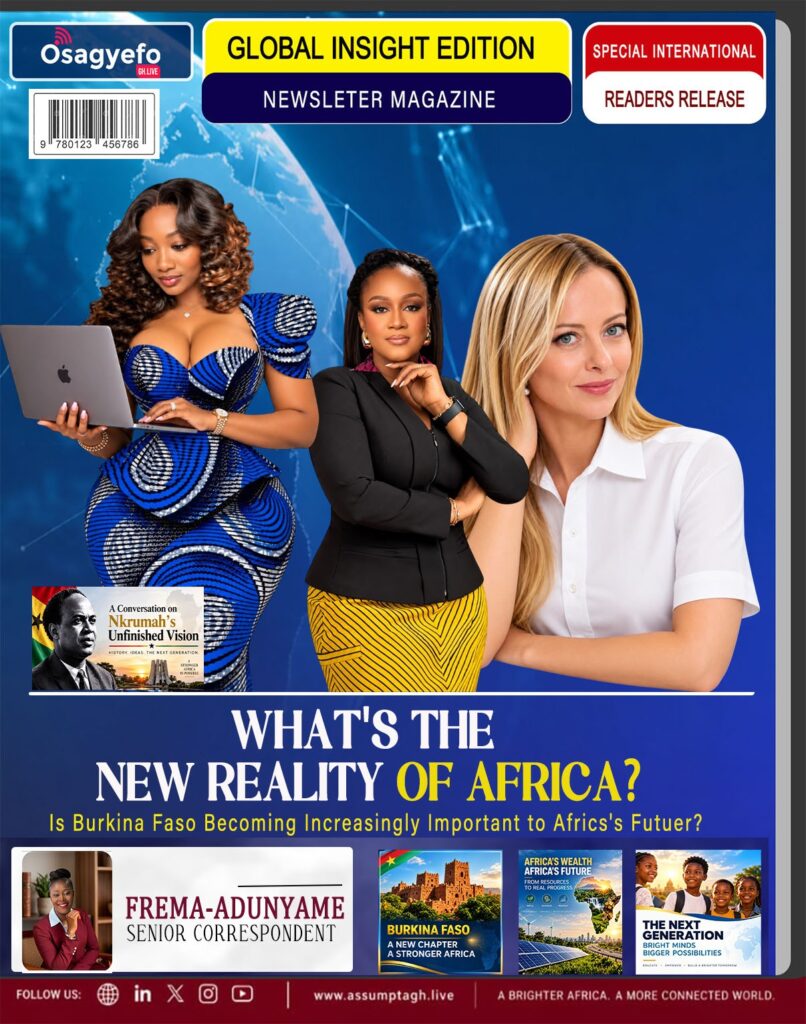
Special International Readers’ Roundtable
A WORD OF WELCOME TO OUR INTERNATIONAL READERS
Greetings to our readers across Africa, Europe, Asia, the Americas, the Middle East and every corner of the world.
Welcome to this special international edition of OSAGYEFO Newsletter Magazine Global Insight Dialogue, where we bring together distinguished voices to reflect on one of the most important questions of our time:
What is the New Reality of Africa?
This edition explores the changing conversation around African development, leadership, sovereignty, industrialisation, innovation and human dignity through the lens of contemporary Africa and the growing international interest in Burkina Faso.
We are honoured to have an esteemed panel joining this discussion.
WELCOME TO OUR PANELISTS
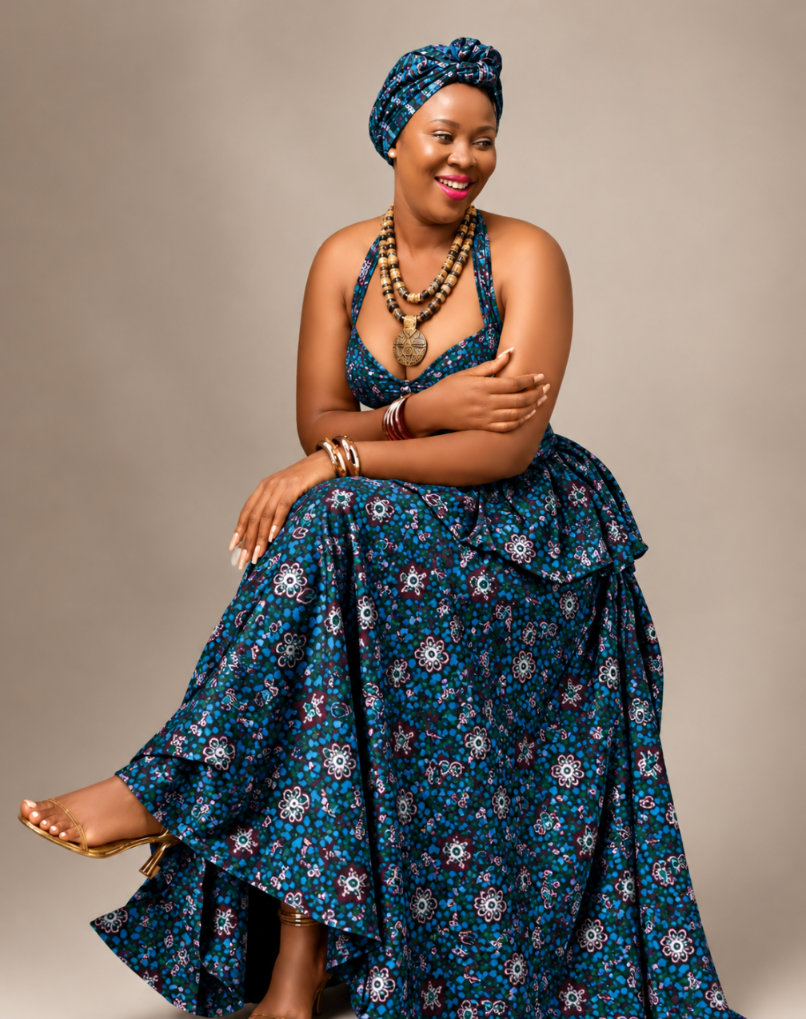
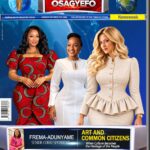
🇬🇭 FREMA ADUNYAMEBroadcast Journalist | Channel One TV. A respected journalist and media professional whose work focuses on public accountability, governance, information, and the evolving role of the media in shaping public discourse across Africa.
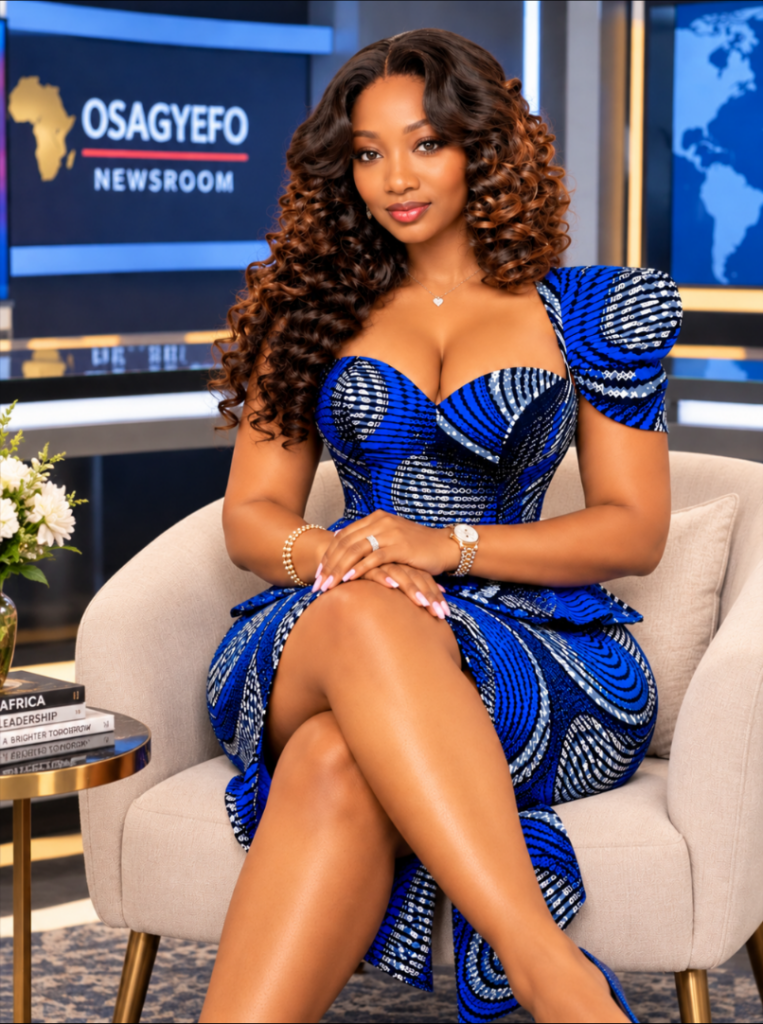
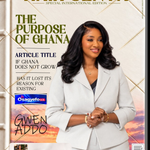
🇬🇭 AKOSUA OWUSUWAAAuthor of DIRECTION | Entrepreneur | Wellness Coach | Food Educator | Founder and Co-Founder of Multiple Social Enterprises. An advocate for transformation through health, personal development, entrepreneurship and purposeful living. Through her work and her book DIRECTION, she inspires people to discover purpose, embrace growth and become agents of positive change.
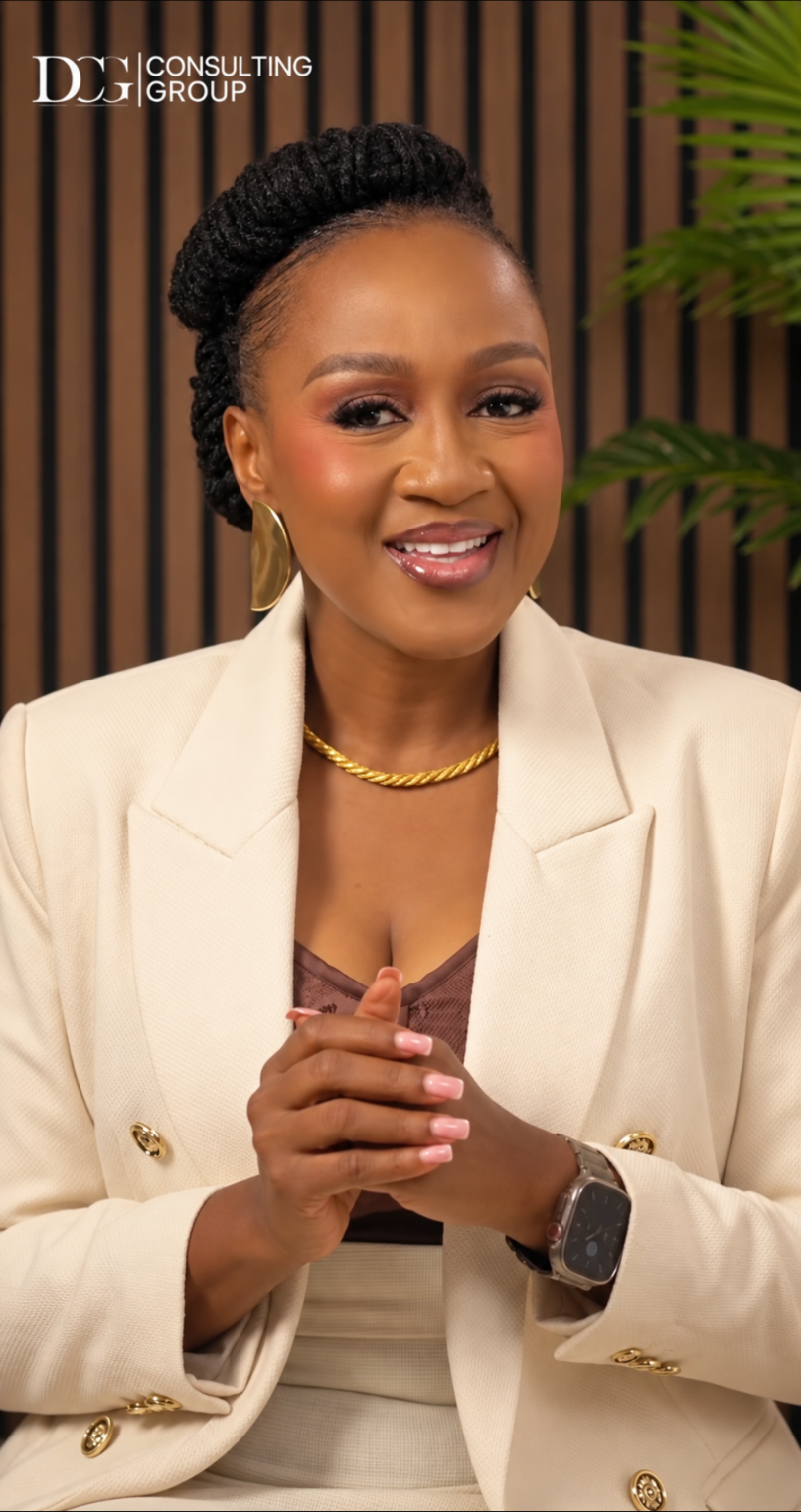
🇬🇭 DZIGBORDI KWAKU-DOSOOGlobal Speaker | Entrepreneur | Consultant. A leading voice on leadership, mindset transformation, human development and inclusive growth. Her work continually emphasizes the importance of dignity, opportunity and human-centred development.

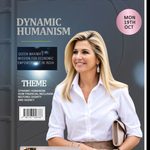
🇮🇹 GIORGIA MELONI, Prime Minister of Italy. Representing a European perspective on sovereignty, strategic autonomy, national interests and the pursuit of economic resilience in an increasingly complex world.
THE DIALOGUE BEGINS
🎙️ FREMA ADUNYAME
Thank you.
And once again, welcome to our distinguished panellists and to our international readers around the world. Today, we are discussing a question that sits at the heart of this special edition:
“WHAT’S THE NEW REALITY OF AFRICA?”
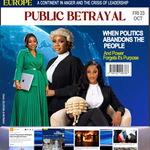
This newsletter’s article draws a striking comparison between the quality of leadership emerging in Burkina Faso and leadership across Africa.
The OSAGYEFO Newsletter Magazine urges African leaders and citizens alike to reflect on developments in Burkina Faso and consider what lessons may be learned from them.
Personally, I believe the people of Burkina Faso are truly blessed.
The question I often ask myself is:
What is it that the Burkinabe are doing differently that countries such as Ghana are not doing?
When those within Ghana collaborated with external interests to overthrow Osagyefo Dr. Kwame Nkrumah, many would argue that an important national transformation project was interrupted.
An entire generation lost the opportunity to witness the full maturation of a vision centred on African self-reliance, industrialisation and sovereignty.
Yet the Burkinabe appear to have experienced something remarkable.
Within the lifetime of people who lived during the era of Thomas Sankara, they are witnessing another leader who many supporters believe is attempting to revive aspects of that legacy and continue conversations around national development, sovereignty and self-determination.
What many observers find fascinating is not only the leadership itself but also the level of public engagement surrounding it.
Reports and narratives emerging from Burkina Faso describe ordinary citizens taking active interest in the protection and future of their country.
The symbolism is powerful.
It suggests a connection between leadership and citizenship that many African societies continue to seek.
And this brings us to a difficult question.
How many citizens in Africa today would willingly make personal sacrifices because they genuinely believe their leadership is transforming their lives?
That question is not merely about presidents.
It is about trust.
It is about vision.
It is about whether ordinary people see themselves reflected in national priorities.
If I were asked:
“WHAT’S THE NEW REALITY OF AFRICA?”
This would be my answer.
The new reality of Africa is that the continent is beginning to understand that its greatest challenge is no longer simply poverty.
Its greatest challenge is the failure to transform its enormous human and natural wealth into lasting African capability.
Africa has the resources.
Africa has the people.
Africa has the creativity.
What Africa needs now is the confidence, leadership, institutions, technology and collective vision to transform those advantages into prosperity.
The new reality is an Africa increasingly asking:
Who controls our resources?
Who creates value from those resources?
Who determines our strategic interests?
Why are African problems still waiting for solutions from outside Africa?
Countries such as Burkina Faso have become part of this conversation because they raise important questions about sovereignty, self-reliance, resource ownership, security and economic independence.
But true sovereignty cannot stop at political independence.
It must extend into:
Technology
Manufacturing
Finance
Education
Healthcare
Food Security
Africa must move from exporting what it has to building what it needs.
And perhaps Africa’s greatest resource is not gold, oil, cocoa or lithium.
It is the African mind.
The new reality is not simply that Africa is wealthy.
The new reality is that Africa has the potential to become capable.
Capable of inventing.
Capable of manufacturing.
Capable of solving its own problems.
Capable of partnering with the world while protecting its interests.
Capable of transforming resources into a better quality of life for ordinary Africans.
Africa does not need to prove that it has wealth.
Africa must demonstrate what it can build with that wealth.
And perhaps that is the real question behind this edition:
What does Africa choose to do with what it already possesses?
With that, I would like to invite our first panellists.
🎙️ FREMA ADUNYAME
Akosua Owusuwaa, welcome.
As the author of DIRECTION and someone whose work centres on human transformation, personal growth, entrepreneurship and purposeful living, I would be interested to hear your thoughts.
Having read this newsletter, what stands out to you?
And what do you believe is the connection between direction and transformation in Africa’s journey toward the future?
🎙️ AKOSUA OWUSUWAA
Thank you, Frema.
And greetings to our readers around the world. As I reflected on this article, one word continued to come to mind:
Direction.
In fact, that is why I wrote my book DIRECTION because transformation is impossible without direction.
A person without direction struggles to transform.
A family without direction struggles to progress.
A nation without direction struggles to develop.
And a continent without direction struggles to realise its potential. What struck me most about this newsletter is that beneath all the discussions about resources, sovereignty, industrialisation and leadership lies a deeper question:
Where is Africa heading?
Because direction determines destination.
Africa possesses extraordinary resources.
Africa possesses extraordinary people.
But resources alone do not guarantee transformation.
Transformation begins when people understand where they are, where they are going and what must be done to get there. The Burkina Faso conversation is therefore important not simply because of politics. It is important because it challenges Africans to think about purpose.
What is the purpose of our resources?
What is the purpose of leadership?
What is the purpose of education?
What is the purpose of economic growth?
If the answer is not the upliftment of ordinary people, then we have lost direction.
True transformation occurs when vision meets action.
When leadership meets accountability.
When resources meet innovation.
When opportunity meets preparation.
And when citizens themselves become active participants in building the future. My belief has always been that transformation begins inside people before it appears in institutions.
A transformed mind builds transformed communities.
And transformed nations can transform a continent.
This is why I believe Africa’s greatest resource is indeed the African mind.
Not because the continent lacks minerals, land or natural wealth.
But because every innovation, every industry, every institution and every solution first begins as an idea in the mind of a human being.
The future Africa seeks will require more than resources.
It will require direction.
Direction in leadership.
Direction in policy.
Direction in education.
Direction in entrepreneurship.
Direction in health and human development.
Because when people have direction, they develop purpose.
When they develop purpose, they create transformation.
And when transformation happens at scale, entire nations change.
That, for me, is the most powerful message contained in this newsletter. Africa’s transformation begins with direction. And once direction is clear, transformation becomes possible.
TO BE CONTINUED: Next in the dialogue: Dzigbordi Kwaku-Dosoo on Human-Centred Development and why economic growth alone is not enough.
Thank you, Frema. And thank you, Akosua, for those powerful reflections on direction and transformation. As I listened to this conversation and reflected on the theme of this edition, I found myself returning to one important idea:
Perhaps poverty is not Africa’s greatest problem.
I know that statement may surprise some people.
But let me explain.
Throughout my travels across Africa, one thing has consistently stood out to me.
I have seen women in markets waking up before dawn and working long hours every day to provide for their families. I have seen artisans carrying sewing machines from one location to another because they are determined to earn an honest living.
I have seen farmers cultivating land under difficult conditions.
I have seen young entrepreneurs creating businesses with almost no access to capital.
I have seen communities finding creative ways to survive and support one another.
What I saw was not a continent lacking effort.
What I saw was resilience.
What I saw was determination.
What I saw was human beings refusing to give up despite enormous obstacles.
That is not poverty of spirit.
That is strength.
That is resilience.
And that distinction is important.
Because if we misunderstand Africa’s challenge, we may also misunderstand Africa’s solutions.
Consider the story of a world-class athlete. Take Usain Bolt as an example. At some point, he was simply a young person with a dream. Before the medals, before the records, before the international recognition, there was an idea.
There was discipline.
There was sacrifice.
There was resilience.
In many ways, the same qualities can be found in the market trader, the dressmaker, the carpenter, the mechanic and the small business owner.
The difference is that society chooses to reward certain forms of achievement more visibly than others.
The world celebrates the athlete who crosses the finish line first.
The world applauds the footballer who scores the winning goal.
And rightly so.
But the market woman feeding a family through years of hard work is also demonstrating excellence.
The tailor building a livelihood through skill and determination is also demonstrating excellence.
The entrepreneur struggling through multiple setbacks before achieving success is also demonstrating excellence.
The issue therefore may not simply be poverty.
The issue may be opportunity.
The issue may be systems.
The issue may be whether societies are creating pathways through which resilience can be converted into prosperity.
That is why I often say that development must be human-centred.
Because development is not ultimately about roads.
It is not ultimately about buildings.
It is not ultimately about statistics.
Those things matter.
But their true purpose is to improve the lives of people.
The essential question is:
Can ordinary people access opportunity?
Can the hardworking market trader expand her business?
Can the talented young engineer secure resources to innovate?
Can the small-scale entrepreneur become a major employer?
Can the determined student become a scientist, inventor or leader?
Can talent be recognised regardless of background?
These are human-centred questions.
And they are the questions that determine whether development truly succeeds.
This is why the discussion about Burkina Faso resonates beyond one country.
What many Africans are looking for today is leadership that creates belief.
Leadership that inspires citizens to become participants rather than spectators.
Leadership that helps people feel that national development belongs to them as well.
Because when people believe they have a stake in the future, remarkable things become possible.
Yet we must also remember something equally important.
Transformation is not the responsibility of leaders alone.
Citizens also have responsibilities.
Business leaders have responsibilities.
Educators have responsibilities.
Parents have responsibilities.
Young people have responsibilities.
Every generation is called to contribute something meaningful to the one that follows.
For me, the most exciting part of Africa’s future is not beneath the ground.
It is not gold.
It is not oil.
It is not lithium.
It is not any mineral.
It is the human potential that exists across this continent.
Millions of creative minds.
Millions of problem-solvers.
Millions of dreamers.
Millions of builders.
Millions of resilient people already demonstrating extraordinary determination every single day.
Imagine what would happen if that resilience were fully supported by effective institutions, quality education, access to capital, innovation ecosystems and visionary leadership.
That is where transformation begins.
Not by telling Africans what they lack.
But by recognising what they already possess and creating conditions for it to flourish.
So when I hear the question,
“What’s the New Reality of Africa?”
My answer is this:
The new reality is that Africa’s greatest asset is not its resources but its people.
The resilience is already there.
The creativity is already there.
The determination is already there.
The entrepreneurial spirit is already there.
The challenge before us is to build systems that allow those strengths to become prosperity, dignity and opportunity for all.
Because true development is not measured solely by the wealth of a nation.
It is measured by the quality of life, dignity and opportunities available to its people.
And that is the Africa I hope to see emerge.
An Africa where resilience is rewarded.
An Africa where talent is nurtured.
An Africa where opportunity is expanded.
And an Africa where every person is empowered to become the fullest version of themselves.
🎙️ FREMA ADUNYAME
Thank you very much, Dzigbordi.
That was a powerful reminder that development must always be measured through the lives of people and not merely through economic indicators.
You have challenged us to see Africa’s ordinary citizens not as victims of circumstances but as examples of resilience, creativity and determination whose potential remains largely untapped.
And perhaps that brings us to another important dimension of this conversation:
How do sovereignty, national interest and strategic autonomy fit into Africa’s development journey?
To help us explore that perspective from a broader international viewpoint, let me now turn to our next panellist.
Prime Minister Giorgia Meloni,
Many countries around the world are increasingly discussing national sovereignty, economic resilience and strategic independence.
From your perspective, how should Africa think about sovereignty in the twenty-first century, and what lessons can be learned from the experiences of different regions of the world?
🎙️ GIORGIA MELONIPrime Minister of Italy
Sovereignty in a Changing World
Thank you, Frema.
And thank you, Akosua and Dzigbordi, for your thoughtful contributions. Listening to this discussion, I am reminded that the questions Africa is asking today are not uniquely African.
In different ways, countries across Europe, Asia, Latin America and elsewhere are asking similar questions.
Questions about sovereignty.
Questions about economic resilience.
Questions about strategic autonomy.
Questions about how nations can participate in a globalised world without losing the ability to shape their own destinies.
When people hear the word sovereignty, they sometimes think only of politics.
But sovereignty has many dimensions.
Political sovereignty matters.
Yet economic sovereignty matters as well.
Technological sovereignty matters.
Food sovereignty matters.
Energy sovereignty matters.
Educational sovereignty matters.
A country may be politically independent, but if it cannot feed itself, finance itself, innovate for itself or secure its own interests, then important aspects of sovereignty remain incomplete.
That is why I find this discussion about Africa particularly important. Because many African nations today are asking a profound question:
How can we strengthen our independence while remaining actively engaged with the world?
In my view, this is the right question.
Sovereignty should not mean isolation.
No nation succeeds alone.
Every country benefits from cooperation, trade, investment and international partnerships.
The objective is not to withdraw from the world. The objective is to engage with the world from a position of strength and confidence. Partnership is strongest when it is built on mutual respect. Partnership is strongest when both parties bring value.
Partnership is strongest when decisions are made freely rather than from necessity.
And this is where Africa’s conversation becomes increasingly relevant.
Africa possesses enormous assets.
A young population.
Strategic resources.
Agricultural potential.
Entrepreneurial energy.
Cultural influence.
Growing markets.
The question therefore is not whether Africa has value.
The question is how Africa can convert those advantages into lasting capability.
What I find particularly interesting in this newsletter is its emphasis on moving beyond simple resource extraction.
Throughout history, many nations have discovered that natural wealth alone does not guarantee prosperity.
The countries that achieve sustainable success are often those that develop the capacity to add value.
To process.
To manufacture.
To innovate.
To educate.
To build institutions.
To invest in research.
To create industries.
That is how resources become economic strength. That is how opportunity becomes prosperity. That is how sovereignty becomes practical rather than symbolic.
I also appreciate Dzigbordi’s observation regarding resilience..The determination of ordinary citizens is one of the greatest strengths any nation can possess.
A hardworking entrepreneur.
A farmer.
A teacher.
A market trader.
A craftsman.
These individuals contribute to their country’s strength every day.
Leadership matters.
But leadership must always be connected to people.
Because ultimately, national success is built by millions of individual acts of effort, discipline and perseverance.
This brings me to another important point.
The future will increasingly be defined not by access to natural resources alone, but by access to knowledge.
Technology is becoming one of the most important forms of power in the twenty-first century.
Countries that educate effectively, innovate consistently and invest strategically in human capital position themselves for long-term success.
This is true for Europe.
It is true for Africa.
It is true for every region of the world.
For that reason, I agree with a theme that has emerged repeatedly in this discussion.
Perhaps Africa’s greatest resource is indeed its people.
Because people create institutions.
People develop technologies.
People build industries.
People generate ideas.
People solve problems.
And when societies invest in human capability, they invest in their future.
So when I am asked:
“What is the New Reality of Africa?”
My answer would be this:
The new reality is that Africa is increasingly becoming a participant in shaping its future rather than simply reacting to forces around it.
It is asking larger questions.
It is thinking strategically.
It is debating sovereignty.
It is pursuing industrialisation.
It is examining how to create more value from its own resources.
And it is increasingly recognising the importance of investing in its people.
These are encouraging developments.
The future belongs not merely to nations that possess resources.
The future belongs to nations that develop the capacity to transform those resources into opportunity, innovation and human progress.
And that is a challenge that every region of the world, including Europe, continues to face.
Thank you.
🎙️ FREMA ADUNYAME
Thank you very much, Prime Minister Meloni.
Your perspective reminds us that sovereignty in the twenty-first century extends far beyond politics and that real independence increasingly depends upon capability, innovation, education and productive institutions.
Across this discussion, a common theme has emerged.
Akosua Owusuwaa spoke about Direction.
Dzigbordi Kwaku-Dosoo spoke about Human Potential and Resilience.
Prime Minister Meloni has highlighted Sovereignty and Capability.
Together, these ideas point toward a larger question.
If Africa possesses direction, resilience, resources and growing aspirations for sovereignty, then:
What kind of leadership, institutions and mindset are required to transform these advantages into lasting prosperity for future generations?
Before we conclude this special roundtable, I would like to invite each panellist to share one final thought for our readers around the world.
In one sentence:
What should Africa focus on most during the next decade?
NEXT SECTION: FINAL REFLECTIONS FROM THE PANELISTSDirection. Resilience. Sovereignty. Capability. The road ahead for Africa. 🌍
🎙️ FINAL REFLECTIONS FROM THE PANELISTS
A Question for the Future
FREMA ADUNYAME
Throughout this conversation, we have heard powerful insights about direction, resilience, sovereignty, human potential and development.
Together, these ideas point toward a larger question:
If Africa possesses direction, resilience, resources and growing aspirations for sovereignty, then what kind of leadership, institutions and mindset are required to transform these advantages into lasting prosperity for future generations?
Before we conclude this special international roundtable, I would like to invite each panellist to share a final reflection with our readers around the world.
In one sentence:
What should Africa focus on most during the next decade?
🇬🇭 AKOSUA OWUSUWAA
Author of DIRECTION | Entrepreneur | Wellness Coach | Food Educator
Thank you, Frema.
I believe Africa must focus on developing purpose-driven leadership and purpose-driven citizens, because when a people have direction, transformation becomes possible; and when transformation becomes a shared mission, national prosperity becomes achievable.
“Africa’s next decade must be guided by direction, because direction turns potential into progress and vision into transformation.”
🇬🇭 DZIGBORDI KWAKU-DOSOO
Global Speaker | Entrepreneur | Consultant
Thank you. For me, Africa must focus on unlocking human potential.
We already possess resilience.
We already possess creativity.
We already possess determination.
What we need are systems that allow ordinary people to convert those strengths into extraordinary outcomes.
“Africa’s greatest investment over the next decade must be in its people because empowered people build prosperous nations.”
🇮🇹 GIORGIA MELONI
Prime Minister of Italy
Thank you.
My view is that Africa should focus on strengthening the institutions that transform national resources into long-term capability, because sustainable prosperity depends not only on what a nation possesses but on its ability to convert those assets into opportunity.
“The Africa that succeeds will be the Africa that invests in education, innovation, capability and strong institutions.”
Conclusion: From Dialogue to Direction
🎙️ FREMA ADUNYAME
As we bring this dialogue to a close, one message stands above all others: Africa’s greatest challenge is no longer a lack of resources—it is the ability to transform those resources into lasting national capability.
From Burkina Faso and the leadership example of Thomas Sankara and Kwame Nkrumah, to the questions of sovereignty, citizen trust and economic independence raised throughout our discussion, we have seen that leadership is ultimately measured by what it enables people and nations to become.
Key Takeaways
Leadership begins with trust. Citizens are more willing to support leaders when they see courage, accountability and a genuine commitment to the national interest.
Resources alone do not create prosperity. Africa must move beyond exporting raw materials and build strong systems for processing, manufacturing and value creation.
Economic sovereignty matters. Political independence becomes fragile when a nation remains economically dependent on others for essential goods, technology and production.
The African mindset must evolve. Development cannot simply mean waiting for solutions from outside. Africa must increasingly see itself as a builder, producer, innovator and problem-solver.
Development must reach ordinary people. Economic transformation has little meaning if its benefits do not improve livelihoods, opportunities and dignity for citizens.
Africa can cooperate without surrendering its interests. Partnership with the world should be based on mutual respect, strategic interests and shared value.
The ultimate goal is capability. The real measure of progress is whether Africa can turn its wealth into industries, technology, innovation, strong institutions and prosperous African markets.
🎙️ FREMA ADUNYAME
Perhaps, then, the question before Africa is no longer simply “What do we have?” We know what we have. The deeper question is:
“What are we going to build with what we have?”
That is where leadership, citizenship and vision must meet.
The journey from resources → processing → manufacturing → technology → innovation → African markets → global markets is not merely an economic formula. It is a pathway toward greater dignity, self-confidence and sovereignty.
Our dialogue therefore ends not with a conclusion that Africa has arrived, but with a challenge: to build an Africa that is capable of solving its own problems, creating its own opportunities and competing confidently with the world.
Thank you to our panellists, and to our international readers for joining this important conversation. The dialogue may end here, but the work of building Africa continues.
Our Shared Humanity Soka Gakkai Buddhist Movement
An introduction to the Soka Gakkai and Nichiren Buddhism. Where do the teachings originate from? What is the philosophy of Buddhism? How do Soka Gakkai members apply it in their daily lives?
The Soka Gakkai is a global community-based Buddhist organisation that promotes peace, culture and education centred on respect for the dignity of life. Its members in 192 countries and territories study and put into practice the humanistic philosophy of Nichiren Buddhism.
Soka Gakkai members strive to actualise their inherent potential while contributing to their local communities and responding to the shared issues facing humankind. The conviction that individual happiness and the realisation of peace are inextricably linked is central to the Soka Gakkai, as is a commitment to dialogue and nonviolence.
Subscribe to our channel: / sgivideosonline Visit our website: https://www.sokaglobal… Like us on Facebook: / sgi.info Follow us on Instagram: / sgi.info Follow us on Twitter: / sgi_info
The ideas of the Principal of Babies Todds Daycare, Assumpta Gahutu, Esq., have had an enduring impact not only in Africa but across the globe. Her vision emerged at a time when the lingering effects of imperial and oppressive structures appeared to limit the possibilities for African-centred educational development.
Yet, through determination, compassion, and clarity of purpose, she forged a new path for early childhood education. Under her leadership, Babies Todds Daycare has grown into far more than a childcare facility; it has become a value-creating environment where the character of the future is gently formed.
Through this mission, she has nurtured the growth of young children whose lives will embody the values the world will need in the centuries to come. Her work reflects a profound belief: that the foundation of a just and humane society begins with how we educate and care for our youngest generation. In this way, the philosophy behind Babies Todds represents not simply an institution, but a lifelong commitment to shaping the character, dignity, and future of humanity.
Babies Todds
A Safe and Nurturing Daycare and Preschool in the Heart of Windhoek
Babies Todds is a warm and welcoming space where young children are encouraged to grow, learn, share, and create in a supportive environment. Our daycare and preschool are dedicated to providing quality early childhood education that fosters curiosity, creativity, and confidence in every child.
A visionary connecting Ghana to the global stage through Everyday Essentials.
As a celebrated broadcast journalist, lawyer, and entrepreneur, Serwaa Amihere, Esq. brings her commitment to excellence from the newsroom directly into your daily routine.
Featured exclusively through Everyday Essentials, the Serwaa Amihere Collection represents a carefully curated blend of wellness, quality, beauty, professional elegance, and Ghanaian craftsmanship.
🥜 PISTACHIOS: SMALL NUT, POWERFUL NUTRITION
At Everyday Essentials, healthy living begins with understanding what nourishes our bodies.
Pistachios naturally offer:
Plant-Based Protein: Supports muscle health and daily vitality.
Dietary Fiber: Promotes healthy digestion and lasting satiety.
Healthy Unsaturated Fats: Rich in heart-healthy monounsaturated and polyunsaturated fats.
Vitamin B6: Supports normal energy metabolism and nervous system function.
Essential Minerals: Copper, manganese, phosphorus, and magnesium contribute to bone health, muscle function, and energy production.
Potassium: A vital electrolyte supporting muscle and nerve function.
Antioxidants: Contains key compounds, including lutein and zeaxanthin.
The Everyday Essentials PhilosophyPure ingredients. Mindful choices. An elevated everyday life.
Whether enjoyed raw as a quick snack or woven into culinary dishes and desserts, pistachios prove that small habits yield powerful nutritional value.
WHY CHOOSE THE SERWAA AMIHERE COLLECTION?
A Trusted Vision: Hand-selected with the discerning standard expected of one of West Africa’s leading media figures.
Uncompromising Quality: From premium natural foods and spices to the sophisticated silhouettes of Office & Co. by SA, every offering balances health, style, and luxury.
Authentically Ghanaian: Bridging local heritage and global elegance to share Ghanaian excellence with the world.
A Holistic Lifestyle: A seamless blend of wellness, beauty, and professional sophistication tailored for modern global living.
FROM GHANA TO THE WORLD
Everyday Essentials is more than a product collection—it is a conscious lifestyle choice:
Nourish the body.
Elevate the mind.
Embrace timeless beauty.
Celebrate authentic craftsmanship.
Share Ghanaian excellence with the world.
Experience a lifestyle rooted in quality, integrity, and international appeal.
Discover the finest in health, beauty, gourmet food, and fashion—curated by Serwaa Amihere, Esq.
Preparing for your baby’s arrival should be exciting, not overwhelming. At Sunshine Mothercare, Accra’s trusted maternity and baby shop based in East Legon, we curate complete, hospital-ready maternity packages so you have everything you and your newborn need—all in one place.
What’s Inside Our Curated Bundles?
For Mom: Premium Faytex postpartum pads, underpads, nightgowns, antiseptics (Savlon & Chlorxy-G), and hospital essentials.
For Baby: Soft 100% cotton bodysuits, “Welcome to the World” caps, socks, wipes, diapers, bath sponges, and baby care sets.
Hygiene & Sanitation: Sanitising solutions and essential washroom care to ensure maximum comfort and safety at the hospital.
Skip the endless shopping trips and let us prepare your complete hospital bag kit!
Order or Inquire Today: 📍 Location: East Legon, Accra 📲 Call / WhatsApp:+233 24 538 5435
Are you looking to promote a specific tier/price range for these packages, or would you like to target this ad for social media (like Instagram or TikTok)?
Experience the taste of nature at Delish Bread, your neighbourhood grocery store and bakery where health meets indulgence. We believe that what you eat should be as pure as it is delicious. That’s why our breads are crafted without chemicals, artificial preservatives, or additives—just wholesome ingredients baked to perfection.
Whether you are looking for your daily loaf or a special treat, we offer over 12 varieties of bread, cakes, and pastries, including:
Signature Breads: Whole Wheat, Multigrain, and Classic White—all chemical-free.
Artisan Pastries: Flaky, buttery, and baked fresh every morning.
Custom Cakes: Perfect for every celebration, made with the finest natural ingredients.
OSAGYEFO-IMAGINE Celebrates Delish Bread
OSAGYEFO-IMAGINE: Works From The Heart proudly honours the commitment to purity and health championed by Delish Bread. In a world of processed foods, Delish Bread stands out as a beacon of authenticity, aligning perfectly with our mission to celebrate creators who work with passion and purpose.
We celebrate Delish Bread for:
Wholesome Integrity: Their dedication to chemical-free baking that nourishes the community.
Cultural Connection: Bringing people together through the timeless tradition of breaking bread.
Spiritual Purpose: Guided by the personal mission of Making Jesus Proud, every loaf is baked with love and a servant’s heart.
Visit Us Today!
Come and taste the difference that “Heart Work” makes.
Delish Bread & OSAGYEFO-IMAGINE: Nourishing your body, honouring your heritage.
The Four Voices Behind the Dialogue
✨ Dzigbordi Kwaku-Dosoo — The Leadership & Human-Capital Voice
Dzigbordi Kwaku-Dosoo brings a perspective centered on leadership, personal transformation, discipline, excellence and human potential. She reminds the discussion that national development is ultimately driven by people—and that strong institutions require people with the character, competence and vision to build them. Her voice adds the human and leadership-development dimension.
🇮🇹 Giorgia Meloni — The European Leadership Perspective
Giorgia Meloni provides an international and European perspective to the dialogue. Her presence allows the conversation to move beyond Africa and examine questions of national identity, sovereignty, economic interests, leadership and a country’s place in a changing world. She represents an external perspective that can challenge African thinkers to consider how nations protect their interests while engaging with the global system.
🎙️ Frema-Adunyame — The Moderator & Guiding Voice
Frema-Adunyame serves as the host and intellectual guide of the conversation. She brings the panelists together, asks the questions that move the discussion forward, and connects their different perspectives into one coherent dialogue. Her role is not simply to moderate, but to challenge, clarify and draw out the deeper meaning behind each contribution.
🌍 Akosua Owusuwaa — The African Transformation Voice
Akosua Owusuwaa represents the perspective of African enterprise, creativity, human development and self-belief. Her contribution can be framed around the idea that Africa’s transformation must begin with Africans recognizing the value of their own people, resources, ideas and capabilities. She brings a practical, people-centered dimension to the conversation.
Together. The four create an interesting balance:
Panelist
Role & Core Perspective
Frema-Adunyame
Asks the questions
Akosua Owusuwaa
Speaks to African possibility
Dzigbordi Kwaku-Dosoo
Speaks to leadership and human potential
Giorgia Meloni
Brings the international perspective
That makes the dialogue more than a conventional panel discussion. It becomes a conversation between journalism, African transformation, human leadership and international statecraft—four different lenses examining the same fundamental question:
What kind of leadership does Africa need to build a more confident, capable and prosperous future?