As the season is blooming, Hair Senta invites you to embrace it with more than just stunning hair. Step into a world of renewal with an experience wrapped in care, expertise, and a vibrant new energy. Every interaction is thoughtfully designed to deliver the finest human hair extensions from Ghana, while empowering you with expert guidance on how to care for, style, and love your hair as you bloom.
From your first greeting to your final choice, we listen, educate, and support you with warmth and professionalism. Whether you’re refreshing your look for the new season, attending spring weddings, or simply treating yourself to a “new year” glow-up, our team ensures you leave radiant, confident, and ready to shine.
💇🏾♀️ Why Choose Hair Senta This Spring?
✨ Trademarked, trusted, and internationally recognised
✨ Premium human hair extensions shipped from Ghana to the world
✨ Personalised, educational, and uplifting client experience—designed to help your confidence grow
🎁 This season, gift yourself the beauty of a fresh start. Because when your hair feels like a masterpiece, you’re ready to take on the world.
Hair Senta — Because great hair is always in season. 🌷✨
🌱 WHY THIS MATTERS
What if the talent you are searching for is already within you?
What if your greatest gift is not something the world has taught you to recognise?
What if your ability to listen, encourage, teach, connect people, create, serve, persevere, bring joy, build communities—or simply refuse to give up—is itself a unique talent?
This September, OSAGYEFO Weekly Newsletter Magazine invites our international readers into a powerful conversation about human potential, self-discovery, determination and the courage to become who we uniquely are.
🎙️ THE CONVERSATION
BERLA MUNDI,Senior Correspondent,
will sit down with
AKOSUA OWUSUWAAMovement-Builder • Certified Entrepreneur • Wellness Coach • Food Educator • Founder of Hair Senta, HIBS-Africa & TLS — The Leading Senta
to share her thoughts, experiences and perspectives on:
“MAKE A HABIT OF EXERTING YOUR UTMOST.”
Together, they will explore a question that many people around the world quietly carry:
“What if I don’t have any special talent?”
The answer may be closer than we think.
Every person possesses something uniquely their own—a jewel within their life waiting to be discovered, polished and brought forth.
Like the cherry, plum, peach and damson blossoms, we do not all have to bloom in the same way. Each of us blooms in our own way.
And perhaps the challenge is not to become someone else.
Perhaps the challenge is to discover what only you can contribute—and then make a habit of exerting your utmost to bring it forth.
🌱 FROM POTENTIAL TO PURPOSE
Akosua Owusuwaa brings this philosophy into her own movement-building work through health, beauty, entrepreneurship and community transformation.
Her guiding belief:
“Our culture is our health, and our health is our future.”
Now, Berla Mundi sits with her to explore what it truly means to recognise one’s potential, overcome self-limitation and transform personal ability into value for others.
🌍 An International Editorial Dialogue 🎙️ Berla Mundi × Akosua Owusuwaa
MAKE A HABIT OF EXERTING YOUR UTMOST. Some people tell me they have no talent.
Perhaps this conversation will help you discover the talent you have been overlooking in yourself. Because you were never meant to bloom as somebody else.
🌸 You were meant to bloom as YOU.
Coming Friday, 25th September 2026.
OSAGYEFO WEEKLY NEWSLETTER MAGAZINEFor the thinker. The dreamer. The builder. The human being becoming.
Here is the refined, polished version of Fatima’s Story, structured specifically to complement your newsletter’s design.
📖 SPECIAL FEATURE: A STORY OF SELF-DISCOVERY
🌸 FATIMA’S STORY
The Girl Who Thought She Had No Talent
For years, everyone at school knew Fatima as the nervous girl.
She was nervous standing in front of the class, nervous when a teacher called her name, and nervous meeting someone new. Over time, that anxiety defined how others saw her—and, eventually, how Fatima saw herself. She began to believe that she was simply missing whatever made other people special.
Other students could sing or dance.
Some excelled at mathematics.
Others could draw, write, play sports, or perform on stage.
Fatima looked at them and saw nothing special in herself.
“I don’t have any talent,” she quietly told herself.
💬 THE UNPOLISHED DIAMOND
There was, however, one distinct thing about Fatima: whenever she became nervous, she started talking.
She talked about what she had seen and heard. She asked endless questions, shared stories, and wanted to know what others thought. Before long, her classmates gave her a new label: talkative.
Fatima accepted it. What she didn’t realise was that beneath what others dismissed as a flaw lay a powerful skill waiting to be developed.
💡 THEN CAME MS. KORKOR
Everything changed when Fatima met her new teacher, Ms Korkor.
Where others saw an anxious, talkative student, Ms Korkor saw a girl with an extraordinary innate gift. She noticed Fatima’s natural ability to sustain a conversation, her deep curiosity, and her capacity to connect ideas.
Ms Korkor understood that Fatima didn’t need to talk less—she needed to learn how to communicate with purpose. She invited Fatima to join a school initiative called “WE ALL HAVE TALENT.” The mission was simple: every student has something unique to contribute.
Ms Korkor guided her to listen carefully, ask meaningful questions, organise her thoughts, and speak with intentional confidence. At first, Fatima’s hands still trembled, and her voice wavered. But Ms Korkor’s guidance remained constant:
“Fatima, don’t be afraid of your voice. Learn how to use it.”
🌱 FROM TALKATIVE TO CONVERSATIONALIST
Slowly, Fatima learned the difference between simply filling silence and truly communicating.
She learned to listen deeply.
She learned to ask insightful questions.
She learned to respect opposing views and express her thoughts with clarity.
The “nervous girl” was transforming into a skilled conversationalist.
When Fatima was chosen to represent her class in the school’s inter-conversational dialogue activities, her peers were sceptical. But through relentless practice, she proved her strength. Round after round, she listened thoughtfully, responded gracefully, and elevated the dialogue.
Her class didn’t just compete—they won, repeatedly.
💎 SEEING HER OWN LIGHT
The greatest victory was not the awards; it was Fatima discovering her true identity. She finally realised that what people had labelled a weakness was actually her greatest strength in its rawest form.
With discipline and mentorship:
Talkativeness became communication.
Communication became conversation.
Conversation became confidence.
Confidence became purpose.
Fatima began to dream bigger. She no longer wanted to just speak—she wanted to give people courage, bridge divides, and build understanding. She set her sights on becoming a leader and Vice President, using her voice in service to others.
🌸 THE LESSON OF FATIMA
Fatima’s story reminds us that the world often labels us before we have the chance to discover who we really are.
Nervous. Talkative. Shy. Unfocused.
A label is not a destiny. Often, what looks like a flaw is simply an untrained ability waiting for direction, practice, and courage.
Fatima did not become someone else—she became more fully herself.
You may not have recognized your talent yet, but that does not mean it isn’t there. Stop measuring your bloom against someone else’s garden.
The jewel within you is waiting to be polished.
OSAGYEFO WEEKLY NEWSLETTER MAGAZINEFor the thinker. The dreamer. The builder. The human being becoming.
📰 An International Editorial Dialogue
🎙️ IN CONVERSATION: BERLA MUNDI × AKOSUA OWUSUWAA
FEATURE: MAKE A HABIT OF EXERTING YOUR UTMOST
“Some people tell me they have no talent.”
BERLA MUNDI
Good day to all our readers joining us from different parts of the world.
It is a great pleasure to welcome you to this special international editorial dialogue, where we take a moment to look beyond the obvious and explore something deeply human: the potential that exists within each of us.
To our readers across Africa, Europe, the Americas, Asia, the Caribbean and beyond, thank you for being part of this conversation.
And today, it is my particular pleasure to welcome our guest, Akosua Owusuwaa, whose work has brought together entrepreneurship, wellness, beauty, education, community development and the empowerment of young people.
Akosua, welcome. It is wonderful to have you with us.
AKOSUA OWUSUWAA
Thank you, Berla.
It is a pleasure to be here, and I am equally delighted to be part of this conversation with readers from around the world.
I believe conversations such as this are important because sometimes one meaningful idea can change the way a person sees themselves—and consequently, change the direction of their life.
BERLA MUNDI
Absolutely. And before we begin, allow me to introduce myself properly to our international readers. I am Berla Mundi, your host and senior correspondent for this special editorial dialogue.
And today, I have the privilege of sitting across from a woman whose journey itself provides an interesting lens through which to examine our theme.
Akosua Owusuwaa is an entrepreneur, coach, author, business strategist and CEO, as well as co-founder of Hair Senta and HIBS-Africa, and founder of TLS — The Leading Senta and CAGA HEIGHTS Complex.
Through her entrepreneurial journey, she has not only built businesses, but has also created opportunities for young women through employment and practical experience within the Hair Senta enterprise.
And that is particularly relevant to our conversation today.
Because when we talk about talent, we are not simply talking about what someone can do for themselves. We are also talking about what happens when a person’s ability is developed sufficiently to create opportunities for other people.
🌟 A TRIUMPH OF A NEWSLETTER
Akosua, before I ask you my opening question, I want to acknowledge something. A triumph of a newsletter.
Your newsletter is both a tour of inner-revolution reportage and a literary masterpiece.
There are newsletters that simply give us information.
There are newsletters that make us think.
There are newsletters that change the way we feel and see.
And this is one of them.
Readers are led into Fatima’s story—a deeply moving and beautifully crafted allegory about the nature of potential, mentorship and self-definition.
And what makes the story particularly powerful is that it speaks directly to the central message of this feature:
“You were never meant to bloom as somebody else.”
Fatima believed she had no talent. Everyone knew her as the nervous girl. And because she was nervous, she talked.
People saw the nervousness. People saw the talkativeness.
But Ms Korkor saw something else. She saw a possibility. She saw that what appeared to be a weakness could become a strength if it was given direction, discipline and purpose.
And that is where I believe the story becomes universal. Because how many people around the world have been defined by a characteristic that they themselves have come to believe is a limitation?
🌱 THE REFRAMING OF “FLAWS” INTO STRENGTHS
What I find particularly compelling is the transformation of “nervous and talkative” into “skilled conversationalist.” That is a profound distinction. Fatima was not required to become somebody else. Ms Korkor did not tell her to become silent. She redirected her energy.
She taught Fatima:
How to listen.
How to think.
How to ask questions.
How to express an idea.
How to engage another person.
And eventually, how to communicate with confidence.
It reminds us that sometimes our perceived weaknesses are simply unpolished abilities waiting for direction.
🌱 THE POWER OF TRANSFORMATIVE MENTORSHIP
And then there is Ms Korkor.
To me, she represents something every society needs: the transformative mentor.
She did not look at Fatima and say, “There is something wrong with this child.”
She looked again. She asked a different question:
“What is already inside this child that has not yet found its proper expression?”
That is the difference between simply teaching someone and actually seeing them.
🌱 THE JOURNEY OF GROWTH
I also appreciate that Fatima does not suddenly become an extraordinary speaker overnight.
Her hands still tremble. Her voice still wavers. She has to practise. She has to learn. She has to overcome moments of uncertainty.
And that makes her transformation believable.
Because talent may give us a beginning.
But discipline develops it.
Practice strengthens it.
Experience refines it.
And purpose gives it direction.
🌱 FROM PERSONAL DISCOVERY TO PURPOSE
And then comes the climax.
Fatima discovers that she wants to become a great speaker—and eventually dreams of becoming a Vice President.
That takes the story beyond childhood development. It transforms the discovery of a personal ability into a question of leadership and public service.
She is no longer asking: “What am I good at?” She is beginning to ask: “What can I do with what I have discovered within myself?”
And perhaps that is where talent becomes purpose.
💎 THE JEWEL WITHIN
There is another idea that stays with me: the idea of not measuring your bloom against someone else’s flower.
Because perhaps one of the greatest obstacles to self-discovery is comparison.
We look at somebody else’s success and conclude that we have nothing. We look at somebody else’s talent and become blind to our own.
But a cherry blossom does not need to become a peach blossom.
A plum does not need to become a damson.
Each has its own way of blooming.
And perhaps human beings are the same.
🎙️ THE OPENING QUESTION
So, Akosua, let me bring this back to you.
You have spent years building businesses, coaching, strategising, and creating opportunities for people—particularly young women.
Through Hair Senta, HIBS-Africa, TLS — The Leading Senta, and your wider entrepreneurial work, you have had the opportunity to meet people with different abilities, different levels of confidence and very different ideas about themselves.
Some people discover their potential early. Others need somebody to believe in them before they can believe in themselves. And some may spend years believing that they have nothing special to offer.
So I want to begin with a question that I think reaches far beyond Fatima:
Akosua, around the world, so many people quietly look at successful builders, entrepreneurs and leaders and think to themselves:
“I just don’t have any special talent.”
When someone comes to you carrying that exact belief, where do you begin the conversation with them?
And perhaps even more importantly: How do you help that person move from simply discovering a talent within themselves to developing it into something that can create value—not only for themselves, but for other people?
📰 OSAGYEFO NEWSLETTER MAGAZINE
An International Editorial Dialogue
🎙️ IN CONVERSATION: BERLA MUNDI × AKOSUA OWUSUWAA
FEATURE: MAKE A HABIT OF EXERTING YOUR UTMOST
“Some people tell me they have no talent.”
AKOSUA OWUSUWAA
Berla, thank you.
First, let me say how beautifully you have introduced both the conversation and the spirit behind Fatima’s story. I appreciate the way you have not simply looked at Fatima as a nervous or talkative young girl, but as a human being whose potential was waiting to be recognised.
And I think that is where I would like to begin. Because sometimes the first person who has to discover your potential is you. But sometimes, you need someone else to help you see what you cannot yet see in yourself.
That is what Ms Korkor did for Fatima. She did not try to erase who Fatima was. She did not say, “Stop talking. Stop being nervous. Become like somebody else.” Instead, she looked at what was already there and asked:
“How can we develop this?”
And for me, that is the essence of mentorship. A good mentor does not manufacture another human being. A good mentor helps a person discover, discipline and develop what is already within them.
AND THIS IS WHERE MY OWN JOURNEY CONNECTS TO FATIMA’S STORY
Over the years, through entrepreneurship, coaching, business strategy, wellness, beauty and community-building, I have met many young people who underestimate themselves.
Some will tell you: “I am not good enough.”
Others will say: “I don’t have the money.”
Some say: “I don’t have the education.”
And others simply say: “I don’t have any talent.”
But when I spend time with them, I often discover something different.
There is an ability there. There is an idea. There is creativity. There is resilience. There is curiosity. There is the ability to connect with people. There is a willingness to learn.
But they have not yet learned how to recognise those qualities as potential.
And that is why I believe we must change the way we talk about talent.
TALENT IS NOT ALWAYS OBVIOUS
We often imagine talent as something spectacular. We expect it to announce itself.
But some of the most important talents are quiet.
Someone may have the ability to organise people.
Someone may know how to make people feel welcome.
Someone may be an excellent listener.
Someone may have a natural ability to sell an idea.
Someone may know how to solve problems.
Someone may be able to encourage somebody who has lost hope.
Someone may simply have the determination to keep going when circumstances become difficult.
These things matter. And with the right training, they can become powerful abilities.
THIS IS SOMETHING I HAVE EXPERIENCED THROUGH BUSINESS
When you build an organisation, you begin to understand very quickly that people are different.
At Hair Senta, for example, I have had the opportunity to work with and create opportunities for young women. And what I have learned is that you cannot expect everyone to contribute in the same way.
One person may be naturally good with customers.
Another may have an eye for beauty and presentation.
Another may be excellent at organisation.
Another may have leadership potential that has never been allowed to emerge.
Someone else may begin quietly, unsure of herself, and gradually become one of the people others depend upon.
That transformation is powerful.
Because employment is not only about giving somebody a job. It can also become an environment where a person discovers what she is capable of becoming.
📖 THAT IS WHY FATIMA’S STORY MATTERS
Fatima’s transformation did not happen because somebody magically gave her talent. The ability was already there.
Ms Korkor helped her recognise it. Then she trained it. Then Fatima practised. Then she gained confidence. Then she began creating results. And eventually, she began imagining a future for herself.
That sequence is very important:
Recognition ➔ Training ➔ Practice ➔ Confidence ➔ Achievement ➔ Purpose
And that is why I don’t tell someone who says, “I have no talent,” simply to believe in themselves.
I would say: “Let us find out.”
Let’s explore. Let’s try. Let’s learn. Let’s practise. Let’s put you in an environment where something inside you has a chance to emerge.
Because you cannot always discover your ability by sitting still and asking yourself what your talent is. Sometimes you discover your talent by doing.
🎙️ AND THAT BRINGS ME TO YOUR QUESTION, BERLA
You asked me where I begin when somebody comes to me believing they have no special talent.
I begin by telling them:
“Don’t define yourself by what you cannot yet do.”
You are still becoming. You may not have discovered your gift. You may not have developed it. You may not have found the environment in which it can flourish.
But none of those things means that there is nothing inside you.
Fatima thought she was simply nervous. Then she thought she was simply talkative. But with the right guidance, she discovered that she could become a communicator. And that communicator eventually began dreaming about becoming a great speaker and a leader.
So perhaps the question should not always be: “What talent do I have?”
Perhaps we should sometimes ask:
“What am I naturally drawn to?”
“What problems do I enjoy solving?”
“What do people often come to me for?”
“What can I keep practising even when it is difficult?”
“What can I develop that can become useful to somebody else?”
Those questions can begin opening doors. And when the door opens, that is when exerting your utmost becomes important.
Because discovering the jewel is only the beginning. You still have to polish it.
And once you polish it, you must decide what you are going to do with its light.
📰 OSAGYEFO NEWSLETTER MAGAZINE
An International Editorial Dialogue
🎙️ IN CONVERSATION: BERLA MUNDI × AKOSUA OWUSUWAA
FEATURE: MAKE A HABIT OF EXERTING YOUR UTMOST
“Some people tell me they have no talent.”
BERLA MUNDI
Thank you, Akosua Owusuwaa, for that beautiful insight.
And I think what you have said brings us to something very important:
That simply isn’t true.
When someone says, “I don’t have any talent,” the problem is often not the absence of talent. The problem lies in people limiting themselves.
There is a saying that everyone has some gift. Being talented does not mean that you must be a great musician, a brilliant writer or an exceptional athlete.
There are many different kinds of talent:
You may be a great conversationalist, like Fatima.
You may have the ability to make friends easily or make people feel comfortable in your presence.
You may have a gift for nursing, a knack for telling jokes, an ability to sell things or an instinct for economising.
You may be always punctual, patient, reliable, kind, or optimistic.
Or perhaps you are someone who welcomes new challenges, someone deeply committed to peace, or someone who simply has the ability to bring joy into the lives of others.
These qualities may not always receive the applause that conventional talent receives. But they are gifts.
And sometimes, they become the very qualities through which a person creates value in the world.
🌸 BLOOMING IN YOUR OWN WAY
There is also something beautiful in the way Nichiren Daishonin speaks about the distinct nature of cherry, plum, peach and damson blossoms.
Cherry blossoms have their own particular beauty.
Plum blossoms have theirs.
Peach blossoms have theirs.
And damson blossoms have theirs.
They do not need to become one another in order to possess their own distinct wonder. And perhaps human beings are much the same.
You must bloom in the way that only you can.
You don’t have to become somebody else in order to prove that you have value. You don’t have to copy another person’s journey. You don’t have to measure your beginning against someone else’s achievement.
Your responsibility is to discover what is uniquely yours—and then develop it with sincerity, courage and effort.
And Fatima’s story makes that principle wonderfully clear. She did not become somebody else. She became more fully herself.
🎙️ BERLA MUNDI — THE NEXT QUESTION
Akosua, this brings me to something I find particularly fascinating about your own journey.
You have not only discovered and developed your own abilities as an entrepreneur, coach, author, business strategist and CEO. You have also built enterprises in which other people have had opportunities to discover and develop their own abilities.
Through Hair Senta, HIBS-Africa, TLS — The Leading Senta, and your wider work, you have encountered young people at very different stages of confidence, experience and self-belief.
Some may arrive knowing exactly what they want.
Others may arrive unsure of themselves.
And some may not yet recognise the ability they possess.
So let me ask you this:
When you are building a business or a movement, how do you recognize potential in a person who may not yet recognize it in themselves?
And once you see that potential, what do you do to help transform it from an undeveloped gift into a real ability that can create value, opportunity and purpose?
📰 OSAGYEFO NEWSLETTER MAGAZINE
An International Editorial Dialogue
🎙️ IN CONVERSATION: BERLA MUNDI × AKOSUA OWUSUWAA
FEATURE: MAKE A HABIT OF EXERTING YOUR UTMOST
“Some people tell me they have no talent.”
AKOSUA OWUSUWAA
Berla, thank you for that beautiful question.
And I particularly appreciate the way you connected the image of the cherry, plum, peach and damson blossoms to this conversation. Because for me, that image carries a very important lesson about human potential.
When I look at people, I try not to look only at what they are doing today. I try to look at what they could become tomorrow.
That is not always easy.
Sometimes potential does not arrive looking like potential.
Sometimes it arrives looking like uncertainty.
Sometimes it arrives looking like nervousness.
Sometimes it arrives as someone who has made mistakes.
Sometimes it arrives as a young person who has very little confidence and does not yet know what direction to take.
And sometimes, it arrives as someone who simply needs somebody to say:
“I see something in you. Now let’s develop it.”
🌱 POTENTIAL NEEDS AN ENVIRONMENT
One thing I have learned through entrepreneurship is that you cannot simply tell people, “You have potential,” and expect transformation.
Potential needs an environment. It needs opportunity. It needs training. It needs responsibility. It needs encouragement. And sometimes, it needs correction.
If you give somebody responsibility without preparation, you can overwhelm them.
If you encourage somebody without discipline, you can create confidence without competence.
So I believe in combining belief with development. I want people to know that I believe in them—but I also want them to understand that belief must be followed by work.
That is where the theme of this newsletter becomes so important: Make a habit of exerting your utmost.
💎 WHAT I LOOK FOR IN PEOPLE
When I work with young people, I don’t only look at qualifications.
I look at attitude.
I look at curiosity.
I look at how someone responds when they don’t know something.
I look at whether they are willing to learn.
I look at how they treat other people.
I look at whether they can accept responsibility.
I look at whether they can recover from a mistake.
Because sometimes the person with the greatest potential is not the person who walks into the room with the greatest confidence. It may be the person who is quietly observing everything, asking questions, or coming back after making a mistake—the person who wants to improve.
That person may have something very valuable.
🌸 WE MUST LEARN TO SEE DIFFERENTLY
And this is where Fatima’s story becomes very meaningful to me.
Imagine if Ms Korkor had only seen the nervousness. Imagine if she had said: “Fatima talks too much. She needs to stop.”
The story could have ended there. But Ms Korkor looked beyond the behaviour. She asked what could be developed.
And that is something we must learn to do, especially with young people. Instead of asking only: “What is wrong with this person?”
Sometimes we should ask:
“What is this person capable of becoming?”
That change in perspective can be transformational.
🌍 FROM EMPLOYMENT TO EMPOWERMENT
My work through Hair Senta has also taught me something very important.
When you create employment for young women, you are not simply creating a source of income. You can also create a place where someone begins to understand her own abilities.
A young woman may enter an organisation thinking she is only coming to work.
But perhaps she discovers that she is good with customers.
Another discovers that she can lead a team.
Another discovers that she has entrepreneurial instincts.
Another discovers that she can manage money.
Another discovers that she can teach someone else.
And suddenly, the job becomes a classroom. The workplace becomes a place of development. And the employee begins to see possibilities that she had never considered before.
That is very important to me. Because empowerment is not simply giving someone something—sometimes empowerment is helping someone discover what they can give.
🌱 WE DON’T ALL HAVE TO BLOOM THE SAME WAY
And this takes me back to the blossoms you mentioned, Berla.
I don’t want every young woman who works with me to become a copy of me. That would defeat the whole purpose. I want her to discover her own strength.
If she becomes an entrepreneur, let her become her own kind of entrepreneur.
If she becomes a leader, let her develop her own leadership style.
If she becomes a communicator, let her discover her own voice.
If she becomes a mother, teacher, nurse, artist, businesswoman or community builder, let her bring something uniquely hers into that role.
Because the objective is not to reproduce ourselves. The objective is to help people become fully themselves.
🔥 DISCOVERY MUST LEAD TO ACTION
But there is another side to this. Once someone discovers their ability, they have a responsibility to develop it.
I can encourage you. I can mentor you. I can open a door. I can give you an opportunity. But I cannot walk through that door for you.
You have to walk through it yourself. And that is why I believe so strongly in effort.
Talent without development remains potential.
Potential without action remains an idea.
But when potential meets discipline, practice and perseverance, something begins to happen:
Ability ➔ Competence ➔ Confidence ➔ Opportunity ➔ Value for Others
That is the journey I would like every young person to understand.
You don’t have to know everything today. You don’t have to be perfect today. You don’t even have to know exactly who you are going to become.
But you must be willing to discover. To learn. To practise. To grow. And to keep exerting your utmost.
Because perhaps your greatest talent is not something you have already mastered.
Perhaps it is something you are still becoming.
📰 OSAGYEFO NEWSLETTER MAGAZINE
An International Editorial Dialogue
🎙️ IN CONVERSATION: BERLA MUNDI × AKOSUA OWUSUWAA
FEATURE: MAKE A HABIT OF EXERTING YOUR UTMOST
“Some people tell me they have no talent.”
BERLA MUNDI
Akosua, thank you.
Your response brings something very important into focus for me: sometimes potential is not discovered in a classroom, a certificate or even through formal education.
Sometimes life itself becomes the classroom.
And that reminds me of another young person whose story I would like to bring into this conversation.
His name is Muram.
🌿 MURAM — THE BOY WHO LEARNED FROM HIS COMMUNITY
Muram was born in Ghana and lived with his parents in Kojokrom. When he was only five years old, tragedy changed his life. Both of his parents died in a car accident.
Muram was taken to live with his grandparents in a village where access to formal education was limited. His circumstances could easily have convinced him that his future had already been determined for him.
But Muram’s education took another form:
He grew up among the farmers and members of his community.
He watched them work.
He listened to their stories.
He learned about the challenges they faced.
Through the elders and traditional knowledge within the community, he became familiar with the use of local herbs and traditional approaches that people relied upon when dealing with illness.
Something began to awaken inside him. Muram became deeply interested in understanding the plants around him and how the knowledge of his community could be used to help people who were struggling.
What began as curiosity gradually became a calling. He discovered that he had an unusual ability to observe, learn, remember and apply knowledge.
His circumstances had not given him the conventional educational opportunities many other children had. But his community had given him something else: a living classroom.
The farmers became his teachers.
The elders became his guides.
The land became his laboratory of observation.
And his curiosity became his education.
Over time, Muram developed a reputation in his community for his knowledge of traditional herbal practices and his desire to help people who were suffering. Eventually, he became regarded as a leading herbal practitioner within the community, earning the respect of people in Kojokrom.
🌱 WHAT MURAM’S STORY TELLS US
Akosua, when I place Muram’s story beside Fatima’s, I see something remarkable.
Their talents look completely different:
Fatima discovered the ability to communicate.
Muram discovered an ability through observation, traditional knowledge and service to his community.
Neither person’s journey followed the same path. And neither needed to.
Fatima needed Ms Korkor to help her see what was hidden inside her. Muram’s circumstances forced him to learn differently—and his community became the environment in which his abilities developed.
One discovered her voice. The other discovered his knowledge.
But both stories bring us back to the same principle:
Potential can exist long before we have the language to describe it. And sometimes, all that is required is an opportunity to discover it.
🎙️ BERLA MUNDI — THE NEXT QUESTION
Akosua, this is where I want to take our conversation next.
We have spoken about discovering potential. We have spoken about mentorship. We have spoken about creating environments where people can develop their abilities.
But there is another question that I think every parent, teacher, entrepreneur and leader should ask:
What happens when a person’s circumstances are so difficult that they begin to believe those circumstances have defined their future?
How do we help people understand that their starting point does not necessarily have to become their destination?
And how do we transform potential into purpose, so that the talent a person discovers within themselves eventually becomes something that can serve other people?
Akosua, I would like to hear your thoughts on that.
AKOSUA OWUSUWAA
Berla, thank you.
And I appreciate you bringing Muram’s story into this conversation because it expands our understanding of what we mean when we talk about talent.
Fatima and Muram come from very different circumstances:
Fatima had to overcome the way people perceived her.
Muram had to grow through circumstances that could easily have limited his opportunities.
Yet both stories reveal something very important: Our circumstances may influence our journey, but they do not necessarily define the full measure of who we can become.
That distinction is extremely important.
🌱 WHEN LIFE BECOMES A CLASSROOM
Muram’s story reminds us that education does not only happen inside a classroom.
A classroom can give you knowledge.
But life can teach you how to observe.
Community can teach you how to listen.
Experience can teach you how to solve problems.
And responsibility can teach you how to serve.
Muram was observing his environment. He was listening to the farmers and elders around him. He was becoming curious about the knowledge that existed within his community. And through that process, he began to discover something about himself.
That is why I believe we have to be careful when we look at a young person and say: “This person has no opportunity.”
Sometimes the opportunity has not yet been recognised.
It may be hidden inside the person’s environment.
It may be hidden inside a problem they are trying to solve.
It may even be hidden inside an experience they initially considered a disadvantage.
💎 BUT POTENTIAL IS NOT ENOUGH
At the same time, I want to make one distinction very clear: having potential is not the same as having mastery.
Discovering an ability is only the beginning.
Curiosity ➔ Knowledge ➔ Experience ➔ Disciplined Practice
If that knowledge is going to be used in matters concerning people’s health, it also needs appropriate evidence, safety and responsible boundaries. That is important because purpose should never be separated from responsibility.
The same principle applies to Fatima. She discovered that she could communicate. But simply being talkative did not make her a great speaker.
She needed training. She needed practice. She needed to learn how to listen. She needed to understand people. She needed to organise her thoughts. She needed to learn when to speak and when to remain silent.
That is how potential becomes ability.
🌍 OUR CIRCUMSTANCES ARE NOT OUR ENTIRE STORY
And this is something I would say particularly to young people: don’t allow your current circumstances to become the final definition of yourself.
You may come from a family with limited resources.
You may have experienced loss.
You may have struggled academically.
You may have been told that you are too quiet, too nervous, too talkative or not good enough.
You may have started with very little.
But your starting point is not necessarily your destination.
At the same time, I don’t want to romanticise hardship. Hardship is difficult. Loss is painful. Lack of opportunity is real. We should work as a society to create better schools, better opportunities, better workplaces and stronger communities.
But while we work to change circumstances, we must also help people discover the abilities they already possess. Because sometimes the greatest transformation begins when somebody stops saying: “Look at what I don’t have,” and starts asking:
“What do I have, and what can I develop from it?”
🌸 FATIMA, MURAM AND THE BLOSSOMS
That brings me back to the image of the cherry, plum, peach and damson blossoms.
Fatima’s flower did not look like Muram’s. Muram’s flower did not look like someone else’s. And neither of them needed to.
The purpose is not to make every person bloom identically. The purpose is to create conditions in which people can discover their own capacity to bloom.
That is what good teachers do.
That is what good mentors do.
That is what responsible entrepreneurs should do.
And that is what communities should do.
They should create spaces where people can discover themselves, develop themselves and eventually contribute themselves.
🔥 FROM DISCOVERY TO CONTRIBUTION
And this is where I believe the phrase “Make a Habit of Exerting Your Utmost” becomes much deeper.
It is not simply telling people: “Work harder.”
It is saying:
Discover what is within you.
Then develop it.
Discipline it.
Refine it.
Put it into practice.
And ultimately ask: “Who can benefit from what I have become?”
Because I believe the highest expression of talent is not simply personal achievement—it is contribution.
When your knowledge helps somebody.
When your voice encourages somebody.
When your business creates employment.
When your leadership creates opportunity.
When your experience becomes guidance for someone coming behind you.
That is when personal potential begins to acquire social meaning.
And perhaps that is the real connection between Fatima, Muram and every reader of this newsletter.
Their stories are different. Their gifts are different. Their circumstances are different. But the invitation is the same:
Don’t stop at discovering who you are. Develop who you are. And then use who you are to make a difference.
That, to me, is what it means to exert your utmost.
BERLA MUNDI
Akosua, thank you.
Thank you for bringing such depth to this conversation and, most importantly, for reminding us that potential is not always immediately visible—not even to the person who possesses it.
As I listen to you, I find myself thinking again about Fatima: a young girl who thought her nervousness was a weakness, until someone helped her discover that behind that nervousness was a voice.
And I think about Muram: a young boy whose circumstances could have become the definition of his future, yet through observation, community, curiosity and perseverance, he discovered abilities that allowed him to contribute to the people around him.
Two lives. Two very different journeys. Two very different gifts. And yet, one profound lesson:
We were never meant to bloom as somebody else.
Perhaps that is what makes the message of “Make a Habit of Exerting Your Utmost” so powerful. It does not ask us to become perfect. It does not ask us to possess the same talents as the person standing next to us. It asks us to discover what is within us—and then make the effort to develop it.
A gift that remains undiscovered cannot be developed.
A talent that is never practised cannot mature.
And potential that is never acted upon may remain only potential.
But when discovery meets effort, something changes:
To every reader joining us from wherever you are in the world, perhaps there is something in this conversation that belongs particularly to you.
Perhaps you have been comparing your life with somebody else’s.
Perhaps someone once told you that you were not talented.
Perhaps you have defined yourself by a weakness.
Or perhaps you simply have not yet discovered the ability that has been quietly developing within you.
If that is your story, don’t be too quick to write the final chapter.
Look again. Listen to yourself. Explore. Learn. Practise. Find people who can help you grow. And when you discover your gift, do not be afraid to develop it.
Your blossom does not have to look like someone else’s.
Your journey does not have to follow someone else’s map.
Your contribution may come from somewhere nobody else can see yet.
Bloom in your own way. And then, as Akosua has reminded us throughout this conversation: make a habit of exerting your utmost.
🎙️ A WORD OF THANKS
Akosua Owusuwaa, it has been a genuine privilege to have you with us.
Thank you for sharing not only your thoughts, but also the experiences and principles that have shaped your journey as an entrepreneur, coach, author, business strategist and leader.
Thank you for reminding us that building people can be just as important as building businesses.
And thank you for reminding us that when we help another person discover what is within them, we may be helping to shape not only one life, but the lives of many others who will eventually benefit from that person’s contribution.
AKOSUA OWUSUWAA
Thank you, Berla. And thank you to our readers around the world.
It has been a privilege to have this conversation. I hope that everyone reading this will leave with one simple thought:
There is more in you than you may currently see. Discover it. Develop it. And use it well.
BERLA MUNDI
And with those words, we bring this international editorial dialogue to a close.
To our readers across Africa, Europe, the Americas, Asia, the Caribbean and every corner of the world, thank you for spending this time with us. Thank you for reading. Thank you for thinking with us. And perhaps most importantly, thank you for being willing to look within.
Until our next conversation, remember:
🌸 YOU WERE NEVER MEANT TO BLOOM AS SOMEBODY ELSE.YOU WERE MEANT TO BLOOM AS YOU.
This is Berla Mundi, and on behalf of OSAGYEFO Weekly Newsletter Magazine, thank you for joining us.
Until we meet again—keep discovering, keep developing, keep contributing, and keep exerting your utmost.
🌍 Thank you, and greetings to our readers worldwide.
OSAGYEFO WEEKLY NEWSLETTER MAGAZINEFor the thinker. The dreamer. The builder. The human being becoming.
Our Shared Humanity Soka Gakkai Buddhist Movement
An introduction to the Soka Gakkai and Nichiren Buddhism. Where do the teachings originate from? What is the philosophy of Buddhism? How do Soka Gakkai members apply it in their daily lives?
The Soka Gakkai is a global community-based Buddhist organisation that promotes peace, culture and education centred on respect for the dignity of life. Its members in 192 countries and territories study and put into practice the humanistic philosophy of Nichiren Buddhism.
Soka Gakkai members strive to actualise their inherent potential while contributing to their local communities and responding to the shared issues facing humankind. The conviction that individual happiness and the realisation of peace are inextricably linked is central to the Soka Gakkai, as is a commitment to dialogue and nonviolence.
Subscribe to our channel: / sgivideosonline Visit our website: https://www.sokaglobal… Like us on Facebook: / sgi.info Follow us on Instagram: / sgi.info Follow us on Twitter: / sgi_info
The ideas of the Principal of Babies Todds Daycare, Assumpta Gahutu, Esq., have had an enduring impact not only in Africa but across the globe. Her vision emerged at a time when the lingering effects of imperial and oppressive structures appeared to limit the possibilities for African-centred educational development.
Yet, through determination, compassion, and clarity of purpose, she forged a new path for early childhood education. Under her leadership, Babies Todd’s Daycare has grown into far more than a childcare facility; it has become a value-creating environment where the character of the future is gently formed.
Through this mission, she has nurtured the growth of young children whose lives will embody the values the world will need in the centuries to come. Her work reflects a profound belief: that the foundation of a just and humane society begins with how we educate and care for our youngest generation. In this way, the philosophy behind Babies Todds represents not simply an institution, but a lifelong commitment to shaping the character, dignity, and future of humanity.
Babies Todds
A Safe and Nurturing Daycare and Preschool in the Heart of Windhoek
Babies Todds is a warm and welcoming space where young children are encouraged to grow, learn, share, and create in a supportive environment. Our daycare and preschool are dedicated to providing quality early childhood education that fosters curiosity, creativity, and confidence in every child.
A visionary connecting Ghana to the global stage through Everyday Essentials.
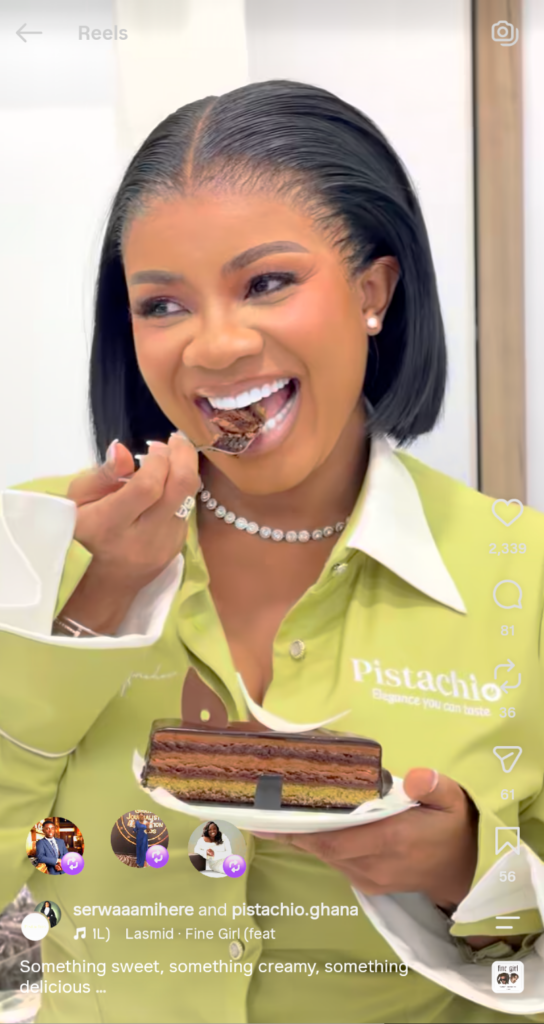
As a celebrated broadcast journalist, lawyer, and entrepreneur, Serwaa Amihere, Esq. brings her commitment to excellence from the newsroom directly into your daily routine.
Featured exclusively through Everyday Essentials, the Serwaa Amihere Collection represents a carefully curated blend of wellness, quality, beauty, professional elegance, and Ghanaian craftsmanship.
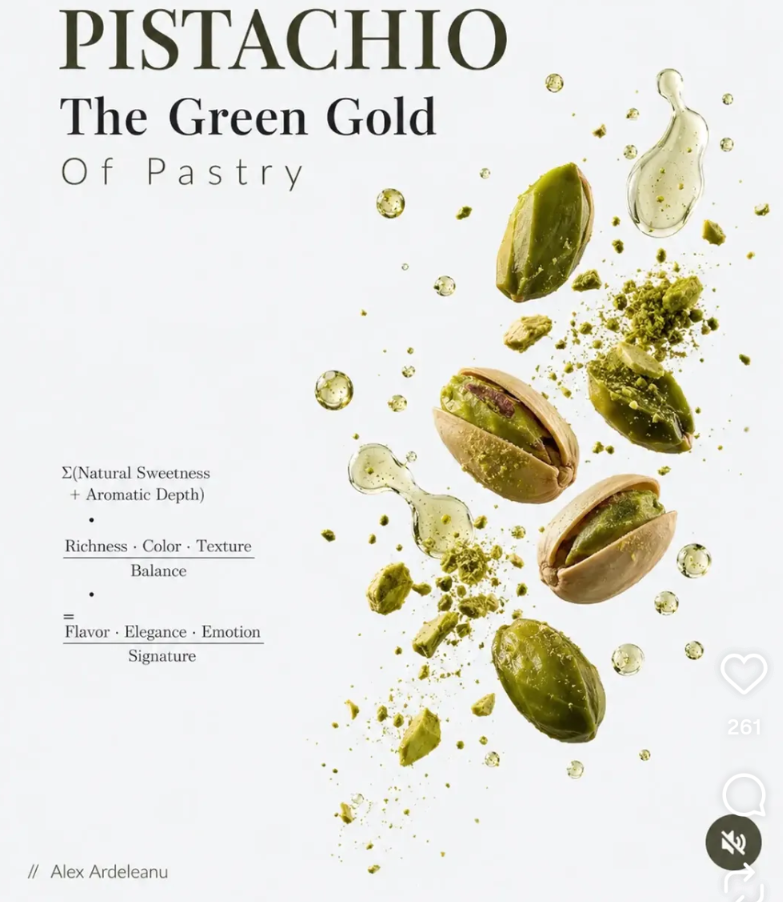
🥜 PISTACHIOS: SMALL NUT, POWERFUL NUTRITION
At Everyday Essentials, healthy living begins with understanding what nourishes our bodies.
Pistachios naturally offer:
Plant-Based Protein: Supports muscle health and daily vitality.
Dietary Fibre: Promotes healthy digestion and lasting satiety.
Healthy Unsaturated Fats: Rich in heart-healthy monounsaturated and polyunsaturated fats.
Vitamin B6: Supports normal energy metabolism and nervous system function.
Essential Minerals: Copper, manganese, phosphorus, and magnesium contribute to bone health, muscle function, and energy production.
Potassium: A vital electrolyte supporting muscle and nerve function.
Antioxidants: Contains key compounds, including lutein and zeaxanthin.
The Everyday Essentials Philosophy: Pure ingredients. Mindful choices. An elevated everyday life.
Whether enjoyed raw as a quick snack or woven into culinary dishes and desserts, pistachios prove that small habits yield powerful nutritional value.
WHY CHOOSE THE SERWAA AMIHERE COLLECTION?
A Trusted Vision: Hand-selected with the discerning standard expected of one of West Africa’s leading media figures.
Uncompromising Quality: From premium natural foods and spices to the sophisticated silhouettes of Office & Co. by SA, every offering balances health, style, and luxury.
Authentically Ghanaian: Bridging local heritage and global elegance to share Ghanaian excellence with the world.
A Holistic Lifestyle: A seamless blend of wellness, beauty, and professional sophistication tailored for modern global living.
FROM GHANA TO THE WORLD
Everyday Essentials is more than a product collection—it is a conscious lifestyle choice:
Nourish the body.
Elevate the mind.
Embrace timeless beauty.
Celebrate authentic craftsmanship.
Share Ghanaian excellence with the world.
Experience a lifestyle rooted in quality, integrity, and international appeal.
Discover the finest in health, beauty, gourmet food, and fashion—curated by Serwaa Amihere, Esq.
Every thread tells a story of royalty, prestige, and unmatched craftsmanship. At GOBA KENTE, our heritage lives beautifully on you—blending authentic African textile artistry with contemporary high-fashion tailoring.
1. The Royal Regal Purple & Gold Corset Ensemble
The Description & Beauty: A show-stopping off-the-shoulder masterpiece woven in rich royal purple and shimmering champagne gold. It features a precision-structured corset top, a structured peplum accent at the waist, and a floor-length fitted skirt. Paired with a matching woven fan, it exudes pure opulence and grace.
Craftsmanship & Stitches: Crafted with straight stitches, clean seams, and precise pattern alignment. The structured boning accentuates your silhouette while maintaining crisp, flawless lines throughout the weave.
Where to Wear:
Corporate Offices:Not recommended. The bare off-the-shoulder neckline, corset boning, and dramatic peplum make this design far too formal and elaborate for standard corporate office environments.
Dinner & Evening Events:Perfect. An extraordinary choice for formal dinners, black-tie galas, awards nights, and high-profile evening celebrations where making an unforgettable entrance is required.
2. The Midnight Blue & Gold One-Shoulder Statement Gown
The Description & Beauty: A striking, sophisticated silhouette featuring bold geometric checkerboard Kente weaving in deep navy blue and warm gold. Designed with an asymmetrical one-shoulder neckline, a structural bow shoulder detail, and a sweeping, dramatic side train.
Craftsmanship & Stitches: Built on masterful tailoring with immaculate, straight stitching that aligns complex geometric Kente blocks continuously from the bodice down to the floor-length skirt.
Where to Wear:
Corporate Offices:Not recommended for daily office wear. While regal and structured, the high-fashion drama of the one-shoulder drape and floor-sweeping train belongs outside the routine workplace. However, it can serve as a powerful choice for executive corporate galas, end-of-year company dinners, or award ceremonies.
Dinner & Gala Events:Absolute Perfection. Designed for red carpet dinners, formal evening receptions, cultural celebrations, and luxury milestone events.
Experience the Difference
Whether you are looking for bridal inspiration, gala elegance, or bespoke luxury, GOBA KENTE delivers flawless tailoring tailored to your style.
Experience the taste of nature at Delish Bread, your neighbourhood grocery store and bakery where health meets indulgence. We believe that what you eat should be as pure as it is delicious. That’s why our breads are crafted without chemicals, artificial preservatives, or additives—just wholesome ingredients baked to perfection.
Whether you are looking for your daily loaf or a special treat, we offer over 12 varieties of bread, cakes, and pastries, including:
Signature Breads: Whole Wheat, Multigrain, and Classic White—all chemical-free.
Artisan Pastries: Flaky, buttery, and baked fresh every morning.
Custom Cakes: Perfect for every celebration, made with the finest natural ingredients.
OSAGYEFO-IMAGINE Celebrates Delish Bread
OSAGYEFO-IMAGINE: Works From The Heart proudly honours the commitment to purity and health championed by Delish Bread. In a world of processed foods, Delish Bread stands out as a beacon of authenticity, aligning perfectly with our mission to celebrate creators who work with passion and purpose.
We celebrate Delish Bread for:
Wholesome Integrity: Their dedication to chemical-free baking that nourishes the community.
Cultural Connection: Bringing people together through the timeless tradition of breaking bread.
Spiritual Purpose: Guided by the personal mission of Making Jesus Proud, every loaf is baked with love and a servant’s heart.
Visit Us Today!
Come and taste the difference that “Heart Work” makes.