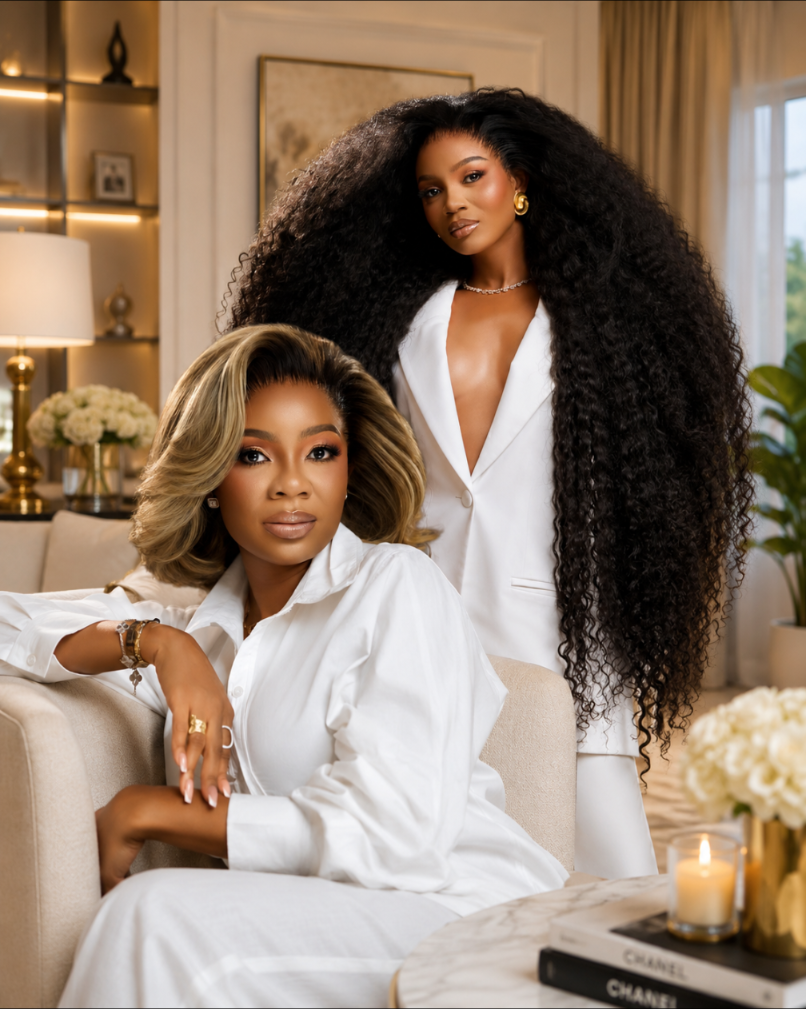
IAt Hair Senta, Your Crown Just Got Even More Valuable. 👑✨
At Hair Senta, we’ve always treated you like royalty. Now, we’re making it official.
Introducing the Senta Royalty Club—our way of rewarding the excellence, courage, and loyalty you bring to our community every day. Earn points for every cedi spent and climb the ranks from Duchess to Queen. Because a crown this beautiful deserves a celebration.
📍 Where: In-store at 24 Jungle Avenue & Online.
🎁 The Royal Bonus: The first 50 Queens to sign up today get 500 Bonus Points to kickstart their journey!
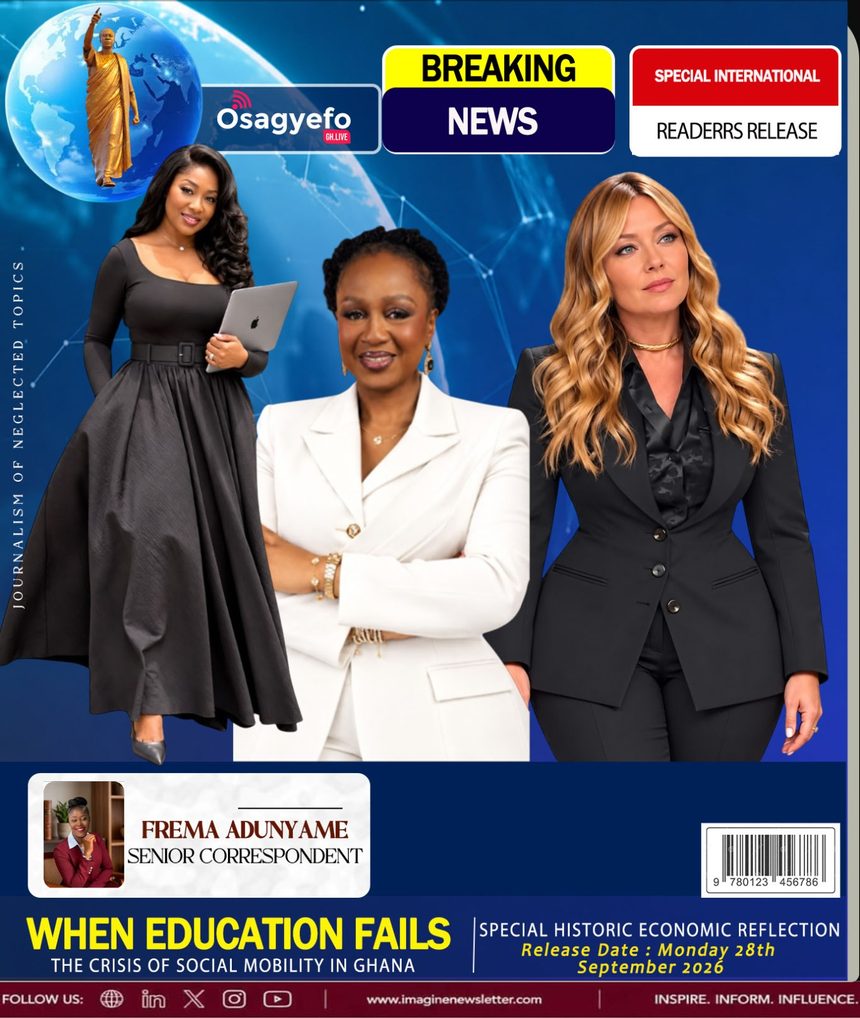
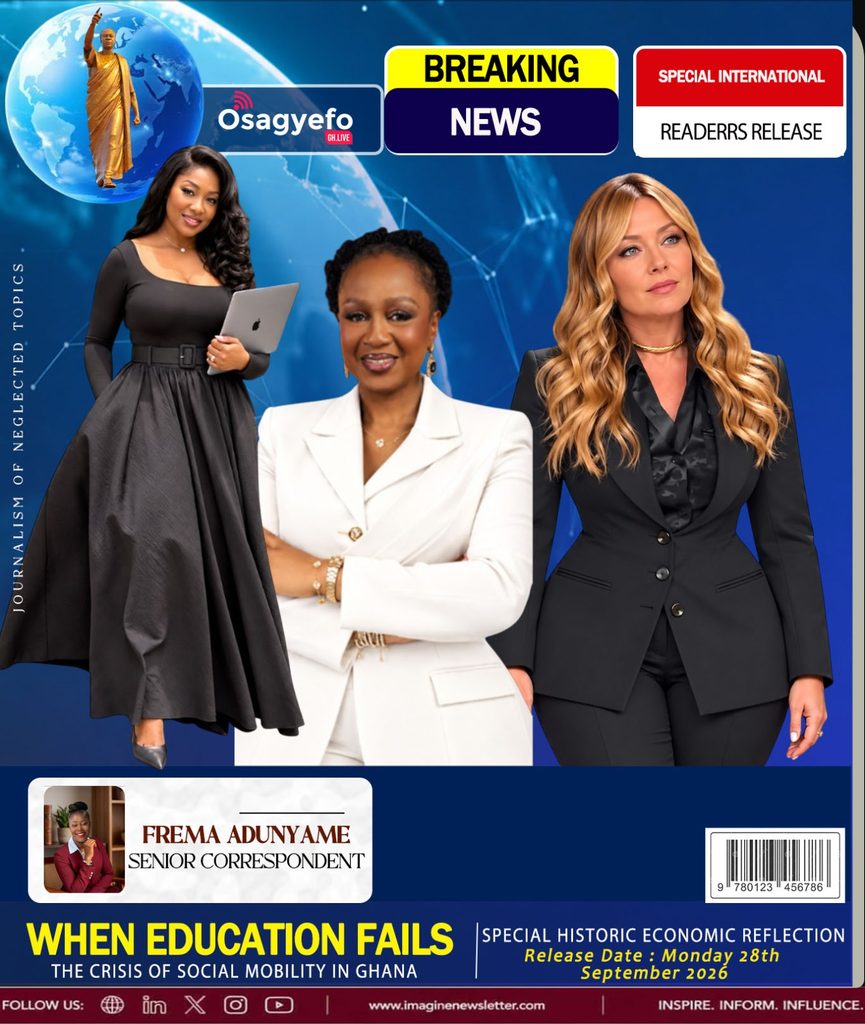
01 — FEATURE | When Education Fails: The Crisis of Social Mobility in Ghana. Why education must become more than examination preparation—and why knowledge of Ghana’s own environment should be part of preparing young people for life.
02 — THE EDUCATION QUESTION | From Examination Success to Real-World Capability: Can a school system create social mobility if students leave school without understanding the resources, opportunities and challenges surrounding them?
03 — THE KNOWLEDGE GAP | What Do Our Children Know About Their Own Environment? Trees. Fruits. Vegetables. Soil. Water. Agriculture. Nutrition. Local industries. A new conversation about connecting classroom learning with the realities of everyday life.
04 — GLOBAL WOMEN, AFRICAN PERSPECTIVES | An Exclusive Dialogue. Three accomplished women. Three different fields. Three perspectives on leadership, opportunity, enterprise and the future. Featuring Frema Adunyame, Akosua Owusuwaa, and Dzigbordi Kwaku-Dosoo.
05 — GLOBAL PERSPECTIVE | Giorgia Meloni: Sovereignty & Global Responsibility. An international reflection on national sovereignty, responsibility, technology, economic independence and the changing relationship between nations in a rapidly transforming world.
✍️ THE EDITOR’S NOTE
Education Must Become a Ladder
What does it mean to be educated if, after years in school, a child can pass examinations but cannot explain the value of the trees, fruits, vegetables and other natural resources found in their own environment?
This question goes beyond examination results. It goes to the heart of what education is supposed to accomplish.
Education should not only prepare children to pass examinations. It should prepare them to understand their environment, protect their health, solve problems, create opportunities and participate meaningfully in society.
Imagine a child growing up surrounded by mango trees, coconut trees, plantain, pineapple, tomatoes, peppers, moringa and countless other natural resources, yet reaching adulthood without understanding their nutritional, environmental, medicinal or economic significance.
That is not simply a knowledge gap. It is a missed opportunity.
Ghana possesses extraordinary biological, agricultural and cultural resources. Yet the value of those resources can remain invisible to the very children who grow up among them if education does not connect classroom knowledge with everyday life.
A child should be able to look at the environment around them and ask:
What is this?
What does it do?
How can it contribute to my health?
How can it benefit my community?
Can it create an economic opportunity?
How can I protect it for the next generation?
These questions transform education from memorisation into understanding. And understanding can become capability.
The Social Mobility Question
Social mobility is the ability of individuals and families to improve—or sometimes lose—their social and economic position over time. Education is one of the mechanisms through which social mobility can occur.
But education can only function as a genuine ladder when it gives young people knowledge and capabilities that can be converted into opportunities.
If a child receives years of schooling but leaves without practical knowledge, problem-solving ability, economic awareness or an understanding of the resources surrounding them, we must ask an uncomfortable question:
Are we educating children for examinations—or preparing them for life?
The answer matters not only to Ghanaian families. It matters to the future of Ghana’s economy.
From the Classroom to the Community
Imagine an education system in which students learn biology not only from textbooks but also from the trees growing outside their classrooms.
Imagine agriculture lessons that teach students to identify crops, understand soil, examine food systems and explore the economic possibilities of agriculture.
Imagine nutrition lessons in which children learn about the foods they eat every day.
Imagine entrepreneurship lessons that begin with the resources available in their own communities.
Imagine young people discovering that something growing beside their homes could become the foundation of a business, a health initiative, an agricultural enterprise or an environmental project.
That is education connected to reality. It is education that can create capability, confidence and opportunity.
The Greater Question
Ghana’s educational conversation should therefore extend beyond: How many students passed?
It should also ask:
What did they learn?
What can they do with what they learned?
Can they identify opportunities around them?
Can they understand the resources of their own communities?
Can their education help them create value rather than simply search for employment?
And perhaps most importantly: Can education help a child change the economic circumstances into which they were born?
That is where education meets social mobility.
🌍 GLOBAL WOMEN • AFRICAN PERSPECTIVES
IN AN EXCLUSIVE DIALOGUE
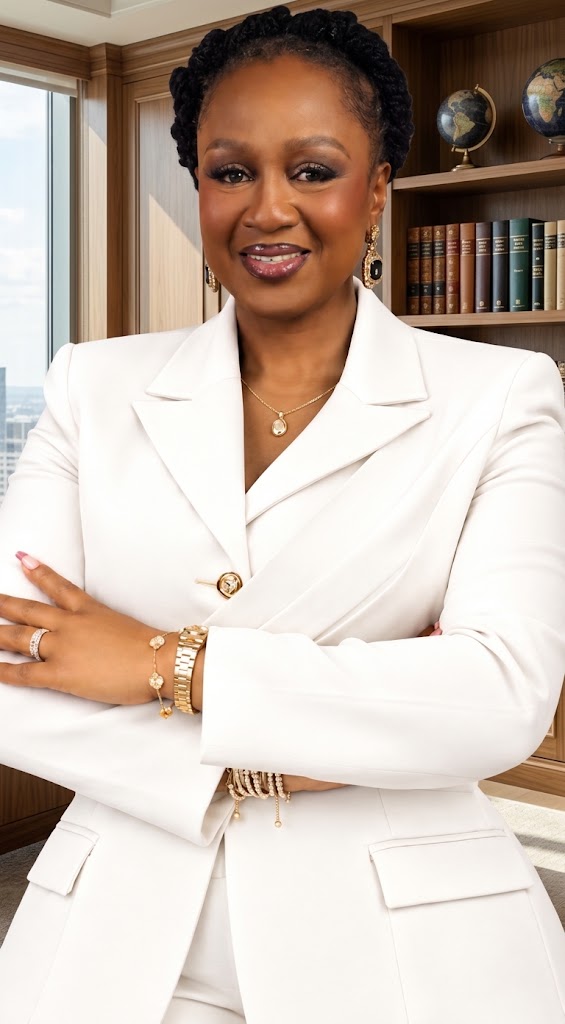
1. FREMA ADUNYAME
Media Executive • Journalist • Events & Partnerships
Frema Adunyame is a Ghanaian journalist and media practitioner with experience across radio, television, public relations and corporate engagement. She currently serves as Head of Events and Partnerships at Citi FM and Channel One TV, and has been associated with programmes including Upside Down and Breakfast Daily.
Her career offers an important perspective on the role of media, communication and partnerships in creating platforms for people, businesses and communities.
THE CONVERSATION: What happens when media becomes a bridge between knowledge, opportunity and society?
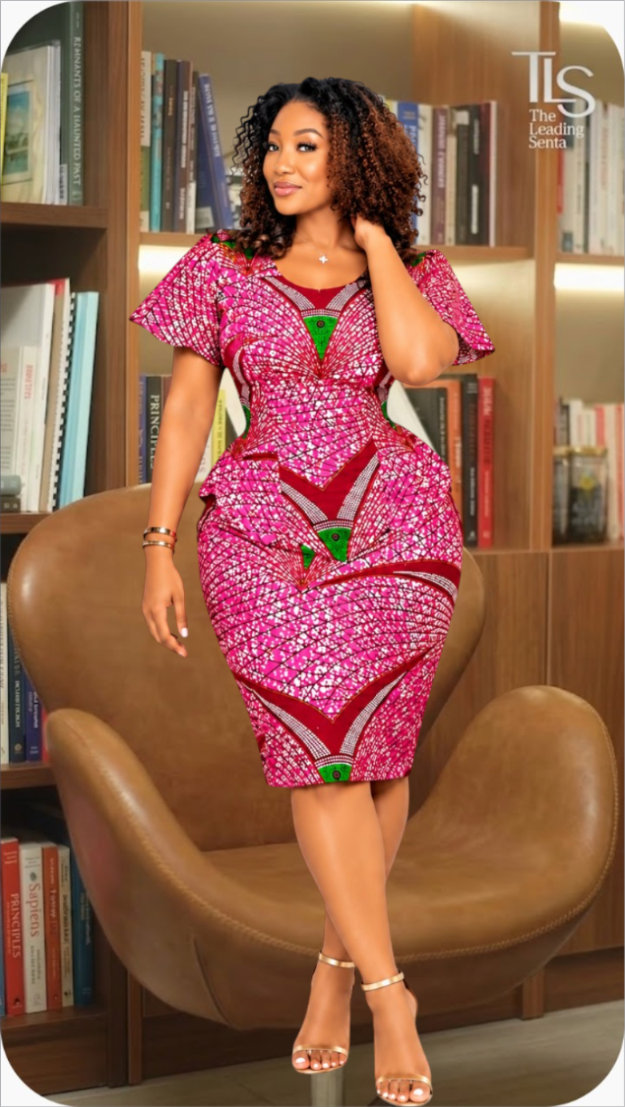
Akosua Owusuwaa brings together entrepreneurship, wellness, leadership and personal development.
As presented in this edition, she is associated with Hair Senta, HIBS-Africa and TLS — The Leading Senta, while her work as an entrepreneur, strategist, wellness coach and author reflects a broader interest in personal growth and collective empowerment.
THE CONVERSATION: Can personal transformation become a foundation for economic and social transformation?
3. DZIGBORDI KWAKU-DOSOO
Entrepreneur • Business Strategist • Speaker • Coach
Dzigbordi Kwaku-Dosoo is a Ghanaian entrepreneur, business strategist, consultant, speaker and high-performance coach. Current professional profiles describe her as CEO of DCG Consulting Group, with extensive work in leadership development, business strategy, executive coaching and human-capital development.
THE CONVERSATION: How can leadership, entrepreneurship and human capital development expand opportunities for the next generation?
🌐 GLOBAL PERSPECTIVE
GIORGIA MELONI
SOVEREIGNTY & GLOBAL RESPONSIBILITY
In an increasingly interconnected world, sovereignty is no longer discussed only in terms of borders. It also touches technology, energy, strategic resources, industrial capacity, economic resilience, security and the ability of nations to make decisions about their own futures.
Italian Prime Minister Giorgia Meloni has recently spoken about sovereignty in connection with technology and artificial intelligence, arguing for global rules while emphasising what she describes as the protection of “human sovereignty.”
Her international perspective provides another question for this edition: How can nations remain globally engaged while retaining the capacity to determine their own priorities and protect their strategic interests?
For Africa, the question has particular relevance. Education, natural resources, technology, agriculture, industry and human capital are all connected to the broader question of what a nation is capable of producing, controlling and developing for itself.
❓ THIS WEEK’S BIG QUESTION
WHAT IF EDUCATION BECAME THE BRIDGE BETWEEN WHAT GHANA HAS AND WHAT GHANA CAN BECOME?
Ghana does not lack resources. Ghana does not lack young people. Ghana does not lack creativity. Ghana does not lack natural wealth.
The deeper challenge is whether the country’s education system can consistently transform knowledge into capability, capability into enterprise, and enterprise into opportunity.
That is the conversation this edition invites us to begin.
💡 FINAL REFLECTION
EDUCATION SHOULD OPEN THE EYES
A child should not leave school knowing only what was written on the examination paper.
A child should leave school with the ability to look at the world and understand it.
To see a tree—and recognise value.
To see food—and understand nutrition.
To see land—and understand agriculture.
To see a problem—and imagine a solution.
To see a resource—and imagine an enterprise.
To see their circumstances—and believe that their future can be different.
Because education is not simply the transfer of information. Education is the development of human capability.
And when capability expands, social mobility becomes possible.
The following is an imagined editorial dialogue created for OSAGYEFO NEWSLETTER MAGAZINE. The historical and contemporary perspectives attributed to the panellists are interpretive representations of their documented public ideas and philosophies. They are not presented as verbatim quotations or as an actual conversation.
OPENING THE CONVERSATION
FREMA ADUNYAME — HOST
Good day, and a very warm welcome to our international readers joining us from Ghana, across Africa, and from communities around the world.
Welcome to this special international edition of OSAGYEFO NEWSLETTER MAGAZINE.
Today, we open a conversation about one of the most important questions facing societies everywhere:
What is education actually supposed to accomplish?
Is education simply about passing examinations?
Is it about acquiring certificates?
Or should education equip a young person with the knowledge, confidence and practical capability to understand their environment, solve problems, create value and participate meaningfully in the economic life of their society?
That is the conversation before us today. And I am delighted to welcome our distinguished panel.
MEETING THE PANEL
Panelist
Primary Focus & Background
Perspective
AKOSUA OWUSUWAA
Entrepreneur, Coach, Author, Business Strategist, CEO. Exec MBA, CEIBS, Co-Founder of HAIR SENTA, HIBS AFRICA, Founder of TLS, CAGA HEIGHTS COMPLEX.
Historical Perspective — Pan-Africanism, Sovereignty & Economic Transformation. She began with the historical perspective of Osagyefo Dr Kwame Nkrumah, Ghana’s first Prime Minister and first President, whose political thought placed strong emphasis on African independence, economic transformation, industrial development and the capacity of African peoples to determine their own future.
HER EXCELLENCY GIORGIA MELONI
Italian Prime Minister & Public Policy Leader
Contemporary Perspective — Development, Technology & National Responsibility. She then brings a contemporary development perspective through her public policy framework that has emphasised development, technological capability, industrial capacity, education and national development.
DZIGBORDI KWAKU-DOSOO
Ghanaian entrepreneur, speaker, media personality, and consultant. Founder and CEO of DCG Consulting Group and Allure Africa.
Humanistic Perspective — Education, Human Development & Global Responsibility. And finally, with her humanistic perspective associated with her philosophy placed education, human dignity, dialogue, peace and the development of human potential at the centre of social transformation.
FREMA ADUNYAME
PANELISTS, WELCOME TO THE PROGRAM.
It is a privilege to open this international conversation with you. Our subject is Ghana. But our question is larger than Ghana. It concerns Africa.
And ultimately, it concerns every society asking how education can transform human potential into human capability.
THE OPENING STATEMENT
FREMA ADUNYAME
Today’s publication presents a powerful critique of contemporary African education systems, framing the disconnection between classroom curricula and local environmental and economic reality as a primary barrier to social mobility. At the heart of this edition is a simple proposition:
Education must connect knowledge to capability.
Our core analysis can be expressed through two contrasting models.
Now compare that with the model this publication proposes:
THE CAPABILITY MODEL
Local Resource Literacy + Practical Capability Problem-Solving↓ Enterprise & Innovation Economic Participation Social Mobility & Greater Economic Sovereignty
THE PEDAGOGY GAP
FREMA ADUNYAME
Let me begin with what I call the Pedagogy Gap.
When basic science, biology, agriculture and economics are disconnected from the resources immediately surrounding a child—whether indigenous plants such as moringa and plantain, local food systems, soil, water, forests or agricultural ecosystems—education can become an abstract exercise in examination preparation.
The child learns about the world.
But does the child learn how to understand and transform the world around them?
That distinction is critical.
Because a child who understands the nutritional value of a plant has acquired knowledge.
A child who understands how to cultivate, process, preserve, market and develop products from that plant has moved toward capability.
And capability can create opportunity.
EDUCATION & ECONOMIC SOVEREIGNTY
FREMA ADUNYAME
Our second question concerns economic and national sovereignty.
This edition draws upon the historical perspective of Kwame Nkrumah to ask whether political independence can be sustained without the technical, agricultural, industrial and human capacity required to develop a nation’s own resources.
Nkrumah’s own writings repeatedly connected economic independence with industrialisation, technical knowledge and the development of local productive capacity. He argued that simply expanding industry without building indigenous technical skills would leave a country dependent on external expertise.
So the question becomes:
What happens when a nation possesses resources but does not develop enough capability to transform those resources into greater value?
THREE PERSPECTIVES — ONE QUESTION
FREMA ADUNYAME
Our third dimension is pluralistic leadership.
We are bringing together three very different intellectual and historical perspectives.
Akosua Owusuwaa — historical Pan-African sovereignty and economic transformation.
Her Excellency Giorgia Meloni — contemporary development, technological capability and national development.
Dzigbordi Kwaku-Dosoo — human development, education, dialogue and human responsibility.
These perspectives are not identical. Nor should they be treated as identical. But placing them in conversation allows us to examine one central question from different directions.
How do we translate raw national potential into actual capability, sovereignty and social mobility?
And with that, ladies, let us begin.
QUESTION ONE
TO AKOSUA OWUSUWAA
FREMA ADUNYAME
AKOSUA OWUSUWAA, in Osagyefo Kwame Nkrumah’s writings, he argued that political independence requires economic emancipation and technical self-reliance.
Today, many Ghanaian young people can spend years in education and still face serious difficulty translating their qualifications into productive economic opportunities. At the same time, Ghana possesses substantial agricultural, mineral, environmental and human resources.
So I want to take the question directly to the heart of our discussion.
Did our post-independence education system fail to sufficiently break from the colonial pattern of preparing people primarily for administrative and clerical roles rather than equipping them to become value-creators?
And if so:
How must a nation reorient its schools so that education becomes an instrument for economic sovereignty rather than simply a pathway to examination success and employment?
AKOSUA OWUSUWAA
(Editorial Response)Frema, I would begin by making an important distinction. The purpose of education cannot be reduced to producing people who can pass examinations. A nation must ask what its educated population is capable of producing, creating, discovering, managing and transforming.
Political independence gives a people the authority to govern themselves. But economic independence requires something more.
And above all, a generation capable of understanding the resources of its own country and applying knowledge to their development.
This was central to the development challenge Kwame Nkrumah confronted in Ghana.
The question was never simply whether Ghana possessed resources.
The question was whether Ghana could develop the knowledge, institutions, technology and productive capacity necessary to use those resources for the advancement of its people.
AKOSUA — CONTINUING
If a country exports its raw materials and imports the finished products, then much of the knowledge, technology, industrial employment and value creation associated with those resources may occur elsewhere.
That is why education must be connected to production.
A young Ghanaian studying chemistry should see the connection between chemistry and Ghanaian industry.
A student studying agriculture should understand the relationship between soil, crops, food security, processing and markets.
A student studying engineering should be able to see national problems as opportunities for engineering solutions.
A student studying economics should understand not only theories from textbooks but also the economic structure of the society in which he or she lives.
Education must therefore become connected to the productive life of the nation.
FREMA ADUNYAME
So, Akosua, if I understand your argument correctly, you are saying that the transformation must occur at two levels.
The first is what the child knows.
The second is what the child can do with what they know.
AKOSUA-OWUSUWAA
Precisely. Knowledge that never becomes capability remains incomplete as an instrument of national development.
But capability itself is not enough. The nation must also create institutions, industries, infrastructure and economic structures through which that capability can be used. Otherwise, we may educate talented young people only to send them searching elsewhere for opportunities.
The purpose of national education should therefore be connected to a broader national development strategy.
FREMA ADUNYAME
And that brings us directly to the question of social mobility. If education is supposed to be a ladder, then the ladder must lead somewhere.
It must connect the child to opportunity. It must connect knowledge to production. It must connect talent to institutions. And it must connect resources to value creation.
So perhaps the deeper question is not simply: “How many graduates does Ghana produce?”
but: “What can Ghana’s graduates build?”
AKOSUA-OWUSUWAA
That is the essential question. A nation must educate not merely for employment, but for participation in development. The educated person should not see himself only as a seeker of employment. He should also be able to see himself as a potential creator of knowledge, enterprise, technology and solutions.
And that requires a transformation in the relationship between education and the economic life of the country.
FREMA ADUNYAME
Thank you, Akosua. Your response takes us directly into our next question.
Because if the objective is to transform knowledge into productive capability, then we must ask what happens when education, technology, industry and national development are treated as interconnected rather than separate.
And that brings us to our contemporary perspective.
NEXT — HER EXCELLENCY GIORGIA MELONI
FROM EDUCATION TO INDUSTRIAL CAPABILITY
FREMA ADUNYAME
Prime Minister Giorgia Meloni, our next question concerns the relationship between education, technology, industrialisation and national development.
If a country wants to transform its natural resources into higher-value products, it needs more than raw materials.
It needs:
scientific knowledge,
technical skills,
research institutions,
industrial infrastructure,
entrepreneurship,
and a workforce capable of continually learning and adapting.
So my question is:
How can education systems be designed so that what students learn today becomes the technological and productive capability that nations need tomorrow?
GIORGIA MELONI
(Editorial response — based on themes associated with contemporary Italian development policy)
Education should be understood as part of a broader system of national development. A country’s development depends not only upon its natural resources but also upon its people.
Natural resources are finite.
Human knowledge can expand.
Technology can improve.
Skills can be developed.
Innovation can create new possibilities.
Therefore, education must contribute to the continuous development of human capability.
FREMA ADUNYAME
So you would see the school, the university, the research institution and the industrial sector as part of one larger development ecosystem?
GIORGIA MELONI
Yes. Education should not exist in isolation from the productive economy.
When universities, research institutions, industries and communities interact, knowledge can move more effectively from the classroom into practical application.
This creates a cycle:
EDUCATION – RESEARCH – TECHNOLOGY – INDUSTRY AND EMPLOYMENT.
And the cycle must continue.
FREMA ADUNYAME
Thank you prime minister. That brings us to our final perspective.
Because economic development is ultimately not only about factories, technology or national production.
It is also about human beings. What kind of person does education develop? What values accompany knowledge? And how does individual development contribute to society?
That brings us to DZIGBORDI KWAKU-DOSOO.
THE HUMAN BEING AT THE CENTRE OF EDUCATION
FREMA ADUNYAME
DZIGBORDI KWAKU-DOSOO, our final question is perhaps the most fundamental.
If education is to become a bridge between national potential and social mobility, how do we ensure that education develops not merely skilled workers, but capable, confident, responsible and compassionate human beings?
And how can the development of the individual become connected to the development of society?
DZIGBORDI KWAKU-DOSOO
(Editorial response — inspired by the humanistic and educational themes associated with Dzigbordi Kwaku-Dosoo)
Education begins with the human being. Before we ask what a person will produce, we should ask what kind of human being we are helping that person become.
Knowledge should expand the person’s ability to understand. Understanding should deepen responsibility. Responsibility should inspire action. And action should contribute to the happiness and development of others.
FREMA ADUNYAME
So education cannot be measured only by academic achievement?
DZIGBORDI KWAKU-DOSOO
Academic achievement has value. But education must go beyond achievement. The truly educated person should be able to confront difficulty without surrendering hope. To encounter a problem and search for a solution.
To recognise their own potential while respecting the potential of others. And to use knowledge not merely for personal advancement, but for the betterment of society.
FREMA ADUNYAME
Then perhaps we are arriving at a common point between very different perspectives.
Akosua Owusuwaa asks us to think about economic capacity and sovereignty.
Giorgia Meloni’s contemporary development perspective directs attention toward education, technology, industrial capability and national development.
And Dzigbordi Kwaku-Dosoo’s humanistic perspective reminds us that development must ultimately involve the development of people themselves.
Which leads us to our next question:
CAN THESE THREE DIMENSIONS BE CONNECTED?
THE STATE – THE ECONOMY – THE HUMAN BEING
Because perhaps social mobility becomes possible when all three begin moving in the same direction.
THE CONVERSATION CONTINUES
FREMA ADUNYAME
Panellists, let us take this one step further.
If a Ghanaian child grows up surrounded by agricultural resources, biodiversity, minerals, cultural knowledge and entrepreneurial possibilities—but leaves school without learning how to identify, understand or develop those resources—then we have to ask:
Is the problem simply unemployment?
Or is the deeper problem that we have not yet fully connected education to the productive possibilities of the environment itself?
And that is where I would like our next round of discussion to begin.
THE NEXT QUESTION:
WHAT SHOULD A GHANAIAN CHILD BE ABLE TO DO BY THE TIME THEY LEAVE SCHOOL?
Knowledge?
Problem-solving?
Agricultural literacy?
Scientific literacy?
Financial literacy?
Entrepreneurship?
Environmental responsibility?
Technological capability?
Or should education seek to bring all of these together?
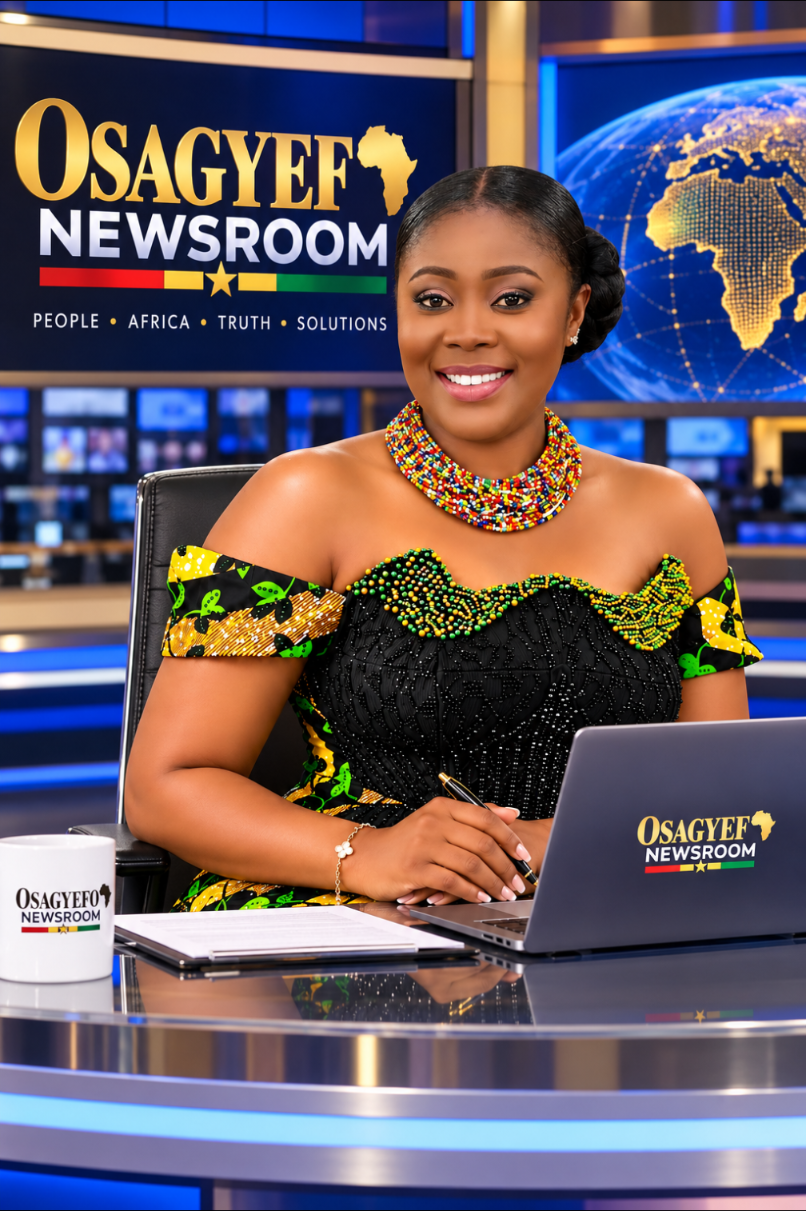
OSAGYEFO NEWSLETTER MAGAZINE
The International Dialogue Continues
WHEN EDUCATION FAILS
The Crisis of Social Mobility in Ghana
NEXT:
WHAT SHOULD EDUCATION PRODUCE — A CERTIFICATE, A JOB SEEKER, OR A CAPABLE HUMAN BEING?
Our publication has raised a fundamental concern: what happens when education produces examination success without producing sufficient practical capability?
We have described the challenge in very simple terms:
TEXTBOOK KNOWLEDGE
EXAMINATION SUCCESS
CERTIFICATE
JOB SEARCH
But our proposed alternative is:
LOCAL RESOURCE LITERACY
PRACTICAL CAPABILITY
PROBLEM-SOLVING
ENTERPRISE
SOCIAL MOBILITY
Akosua Owusuwaa, Ghana is a country rich in agricultural resources, minerals, biodiversity and human potential.
Yet a young person can grow up surrounded by these resources and complete many years of education without being adequately equipped to ask:
What is this resource?
What is its scientific value?
What is its economic value?
How can it be processed?
How can it create employment?
How can it contribute to national development?
How would you respond to this educational contradiction?
AKOSUA OWUSUWAA
RESPONSE — HISTORICAL PERSPECTIVE
AKOSUA OWUSUWAA
Frema, the contradiction you describe goes to the heart of the relationship between education and national development. A nation must not educate its children simply to reproduce what already exists.
Education should prepare them to create what does not yet exist. If Ghana possesses fertile land, minerals, forests, agricultural products and other resources, then education must give the young generation the scientific and technical capacity to understand these resources and develop them.
The question is therefore not merely:
“How many people have received an education?”
The deeper question is:
“What has that education enabled them to do?”
AKOSUA OWUSUWAA— CONTINUING
Consider the difference between knowing that Ghana produces cocoa and understanding the entire value chain surrounding cocoa.
A student may know that cocoa is an important Ghanaian crop. But education should encourage the student to ask:
How is cocoa cultivated? How can productivity be improved?
How can disease be controlled?
How can cocoa be processed locally?
What products can be manufactured from it?
What scientific research is required?
What industries can be created?
What employment can emerge from those industries?
That is where education begins to move from information to productive knowledge.
And productive knowledge can become national capacity.
FREMA ADUNYAME
So, Akosua, would you say that the problem is not simply that young people lack education?
Could it also be that the type of knowledge they receive is insufficiently connected to the productive structure of their own society?
AKOSUA OWUSUWAA
Yes. Education must have a relationship with the circumstances in which people live.
The child should understand the land.
The farmer should understand science.
The scientist should understand industry.
The engineer should understand national development.
The economist should understand production.
The entrepreneur should understand society.
And the citizen should understand the resources and responsibilities of the nation.
This is why technical education, scientific education and agricultural education are so important.
A nation cannot achieve meaningful economic independence if it continually depends upon others for the knowledge required to develop its own resources.
FREMA ADUNYAME
Then perhaps we can express your argument in one sentence:
A country cannot fully transform its resources if its people have not been equipped to understand and develop them.
AKOSUA OWUSUWAA
That is a reasonable way to express the principle. But I would add something else. Human capability requires institutions.
You cannot simply tell young people to become entrepreneurs and then leave them without infrastructure, finance, research institutions, markets or industrial systems.
Education must therefore be connected to a national development strategy.
The school cannot stand alone.
The university cannot stand alone.
The research institution cannot stand alone.
Industry cannot stand alone.
Government cannot stand alone.
They must contribute to a broader system of development.
FREMA ADUNYAME
Thank you, Akosua. That takes us naturally to our second perspective. Because today, the relationship between education, technology, industrial capacity and national development has become even more significant.
GIORGIA MELONI— OUR CONTEMPORARY DEVELOPMENT PERSPECTIVE
Her Excellency Giorgia Meloni, let me put the question to you directly.
If a country wants to move from being primarily a supplier of raw materials toward developing greater technological and industrial capability, what role should education play?
Because our publication is proposing that education should not simply teach young people about resources. It should help them develop the ability to work with resources, transform resources and create value from knowledge.
How can education become connected to technological innovation and national development?
RESPONSE — CONTEMPORARY DEVELOPMENT PERSPECTIVE
GIORGIA MELONI
Firstly, education is closely connected to the long-term development of a nation. A modern economy requires people with scientific knowledge, technological skills, creativity and the ability to solve complex problems.
Therefore, education should not be separated from innovation.
A country needs a continuous relationship between:
EDUCATION
RESEARCH
INNOVATION
TECHNOLOGY
INDUSTRY
ECONOMIC DEVELOPMENT
This relationship allows knowledge to move from the classroom into practical application.
FREMA ADUNYAME
But let us make this very practical.
Suppose a Ghanaian student studies agriculture.
Should the student simply learn the names of crops and agricultural theories?
Or should that education also introduce the student to:
soil science,
irrigation,
agricultural technology,
food processing,
packaging,
supply chains,
markets,
digital technology,
business management
and export opportunities?
GIORGIA MELONI
The second approach creates a broader relationship between education and development. Agriculture today is not simply about cultivation.
It can involve science, biotechnology, machinery, logistics, digital technology, processing, finance and international trade.
The same principle applies to minerals. A country may possess mineral resources, but the development question extends beyond extraction.
It includes processing.
It includes technology.
It includes skilled workers.
It includes research.
It includes industrial systems.
Therefore, education should prepare people for the entire development process.
FREMA ADUNYAME
So we return to a central theme of today’s publication:
RAW MATERIAL → KNOWLEDGE → TECHNOLOGY → VALUE CREATION
GIORGIA MELONI
Yes. And this is why human capital is important.
Natural resources alone do not determine development. The knowledge and capabilities of people determine what a society can do with its resources.
Technology changes continuously.
Industries change.
Markets change.
Therefore, education must also develop the ability to learn continuously.
A successful education system should not only prepare a person for the first job.
It should prepare that person to continue developing throughout life.
FREMA ADUNYAME
That is particularly important for Africa.
Because if young Africans are educated only to search for existing jobs, but not equipped to identify problems and create solutions, then education may remain disconnected from the enormous potential of the continent.
GIORGIA MELONI
Education, industry, scientific research and economic development should therefore be viewed as interconnected.
The objective is not simply to increase the number of graduates.
The objective is to strengthen the overall capability of society.
FREMA ADUNYAME
Thank you, Her Excellency Giorgia Meloni. Now we come to our third perspective. And this time, I want to move from the nation to the individual. Because ultimately, every education system begins with one human being.
One child / One student / One teacher / One family /One community.
FREMA ADUNYAME
DZIGBORDI KWAKU-DOSOO — THE HUMAN BEING AT THE CENTRE
Dzigbordi Kwaku-Dosoo, our publication has spoken extensively about capability.
But capability without values can raise another question:
Capability for what purpose?
A person can possess scientific knowledge.
A person can possess technological knowledge.
A person can possess business knowledge.
But what determines how that knowledge is used?
Your educational philosophy placed strong emphasis on developing the individual, drawing out human potential and connecting knowledge with human happiness, responsibility and peace.
So I would like to ask you:
What should be the ultimate purpose of education?
RESPONSE — HUMANISTIC PERSPECTIVE
(DZIGBORDI KWAKU-DOSOO
Frema, education should begin with faith in the potential of the human being.
Every child possesses possibilities that may not yet be visible.
The role of education is not simply to fill an empty vessel with information.
It is to awaken potential.
It is to encourage the individual to develop wisdom, courage, creativity and compassion.
Education therefore concerns not only what a person knows, but also what kind of person that knowledge enables them to become.
FREMA ADUNYAME
Then if we return to our Ghanaian example, what happens when a child studies biology but never learns to appreciate the living environment around them?
DZIGBORDI KWAKU-DOSOO
Knowledge should enable a person to see more deeply.
If a child studies nature, the child should not see nature merely as an object of examination.
The child should develop an appreciation for the relationship between human life and the natural world.
This is why education should cultivate both knowledge and wisdom.
The world around the child can become a source of learning.
The community can become a place of learning.
Nature can become a teacher.
Human relationships can become a source of learning.
My educational philosophy specifically emphasised learning through the community and understanding relationships between people, land, nature and society.
FREMA ADUNYAME
That is a powerful point.
Because it means that the environment surrounding a child is not merely background.
It can become part of the curriculum.
A mango tree can introduce biology.
A farm can introduce agriculture.
A river can introduce ecology.
Local food can introduce nutrition.
A marketplace can introduce economics.
A community problem can introduce engineering.
And a local enterprise can introduce entrepreneurship.
DZIGBORDI KWAKU-DOSOO
Yes. Education becomes more meaningful when the learner can connect knowledge with life. But we must also remember the human purpose.
The goal should not simply be to create more efficient producers. We should seek to develop human beings who can use their knowledge for the benefit of society.
Education should encourage people to recognise both their own potential and the potential of others.
This is why the relationship between teacher and student is so important.
A teacher should not merely transmit information.
A teacher should help a young person discover what they are capable of becoming.
FREMA ADUNYAME
So perhaps your contribution to this conversation can be expressed as:
KNOWLEDGE MUST DEVELOP THE HUMAN BEING, NOT SIMPLY THE WORKER.
DZIGBORDI KWAKU-DOSOO
Yes. Because if knowledge increases but humanity decreases, education has lost something essential.
The question is always: For what purpose are we cultivating wisdom?
If education develops capable people who can contribute to society, protect the environment, respect human dignity and create value for others, then education becomes a force for genuine human development.
FREMA ADUNYAME
Ladies, we have now heard three perspectives.
From Akosua Owusuwaa, we have heard the question of:
ECONOMIC CAPACITY & SOVEREIGNTY.
From Her Excellency Giorgia Meloni, we have heard about:
EDUCATION, TECHNOLOGY & DEVELOPMENT CAPABILITY.
And from Dzigbordi Kwaku-Dosoo, we have heard about:
HUMAN POTENTIAL, WISDOM & SOCIAL RESPONSIBILITY.
Different historical contexts. Different philosophies. Different approaches. Yet our conversation has brought us to a common intersection:
THE HUMAN BEING.
FREMA ADUNYAME — THE CHALLENGE
So let me put one final question to all three of you. Imagine a Ghanaian child standing outside their school.
They see a moringa tree.
They see plantain growing nearby.
They see cassava.
They see soil.
They see water.
They see farmers.
They see a community with problems and possibilities. But they have been taught mainly to memorise information for an examination.
What should happen next?
Should the child simply identify the correct answer on the examination paper?
Or should education teach that child to ask:
WHAT CAN I UNDERSTAND?
WHAT CAN I CREATE?
WHAT CAN I SOLVE?
WHAT VALUE CAN I ADD?
HOW CAN I CONTRIBUTE TO MY COMMUNITY?
And ultimately:
HOW CAN MY KNOWLEDGE HELP CHANGE MY FUTURE?
Akosua Owusuwaa, let us begin with you.
RESPONSE — AKOSUA OWUSUWAA
AKOSUA OWUSUWAA
Frema, I acknowledge the importance of the question you have put before this panel.
You have identified something fundamental. The child standing beside that tree is not standing beside something insignificant. The tree, the soil, the water, the crops and the surrounding environment are all part of the child’s education.
The question is whether the education system has taught the child how to see them.
The question is whether the education system has taught the child how to see them.
A child may look at a moringa tree and simply see a tree.
But education should encourage that child to ask:
What is this plant?
What does it contain?
What can it contribute to human health?
How is it cultivated?
Can it be processed?
Can it become an enterprise?
Can it create employment?
How can we protect it?
That is when education begins to move beyond memorisation.
It becomes understanding.
And understanding can become capability.
THE GOLD COAST AND THE AGRICULTURAL FOUNDATION
AKOSUA OWUSUWAA — CONTINUING
Let us also remember the historical foundation of the society we are discussing.
Before European colonial rule transformed the economic and political structure of the Gold Coast, communities across the territory were already engaged in agriculture, trade, craftsmanship and the utilisation of local natural resources.
Agriculture was not simply an occupation.
It was part of the foundation of community life.
People cultivated the land.
They traded agricultural products.
They used forests and natural resources.
They developed knowledge about seasons, soils, crops, food and the environment.
And trade connected communities to wider regional and international markets.
Products such as timber, rubber, cashews and agricultural commodities formed part of the wider resource base and trading environment of the region.
We must therefore understand something very important:
Ghana did not begin with the discovery of its resources by Europeans.
The people already lived within, understood and utilised their environment.
The challenge for modern Ghana is not to abandon that foundation.
It is to modernise it through education, science, technology and productive capacity.
AGRICULTURE MUST NOT BECOME INVISIBLE
AKOSUA OWUSUWAA
Friends, this is why I would insist that agriculture must remain an important part of national education.
If agriculture is something upon which a society continues to depend, then its people must understand it.
We cannot allow a generation to grow up surrounded by agricultural wealth while becoming increasingly disconnected from the land that sustains them.
The young person should know the crops growing around them.
They should understand the soil.
They should understand water.
They should understand food production.
They should understand preservation.
They should understand processing.
They should understand markets.
They should understand technology.
And they should understand how agriculture can move from raw production to value creation.
FROM FARM TO FACTORY
AKOSUA OWUSUWAA
Consider the difference between producing a raw agricultural commodity and developing an entire value chain around it.
A country may grow a crop.
But what happens after the harvest?
Who processes it?
Who packages it?
Who develops the technology?
Who manufactures the finished products?
Who owns the companies?
Who conducts the research?
Who creates the jobs?
Who captures the greater economic value?
A child studying agriculture should therefore be able to understand the journey:
FARM, HARVEST, PROCESSING, MANUFACTURING, MARKET, VALUE
These are educational questions as much as they are economic questions. That is how agriculture becomes connected to industrial development.
THE DANGER OF ENVIRONMENTAL ILLITERACY
AKOSUA OWUSUWAA
There is another danger that we must not overlook. If knowledge about the environment disappears from one generation to another, the consequences can become serious.
If children no longer understand the plants around them…
If they no longer understand the land…
If they no longer understand traditional agricultural knowledge…
If they no longer understand where their food comes from…
Then gradually, the society can become environmentally and economically illiterate. And when that literacy disappears, dependence can increase.
THE NEXT GENERATION
AKOSUA OWUSUWAA
Frema, your question therefore concerns more than education. It concerns generational continuity. The knowledge that one generation possesses must be developed and transferred to the next generation.
Otherwise, a society may eventually reach a point where its own people become strangers to the resources that sustain them. Imagine a generation that can identify imported products but cannot identify the plants growing in its own communities.
Imagine young people who understand the price of a finished foreign product but have never asked what local resource could be developed into an alternative. That would be a serious loss of knowledge. And if that pattern continues, the consequences could extend beyond knowledge.
They could affect:
FOOD SECURITY
HEALTH
AGRICULTURE
EMPLOYMENT
INDUSTRY
NATIONAL RESILIENCE
EDUCATION AND DEPENDENCE
AKOSUA OWUSUWAA
This is why education must help a nation understand what its own environment gives it and sustains it.
If we fail to educate our people about their own resources, then the next generation may become increasingly dependent on products and knowledge developed elsewhere.
We may possess the land but import the food.
We may possess the crops but import processed products.
We may possess the raw materials, but import finished goods.
We may possess young people but fail to develop their capabilities.
And we may possess enormous potential without developing the capacity to transform that potential.
That is the danger.
FREMA ADUNYAME
Akosua, what you are saying takes us to an important distinction. You are not suggesting that Ghana should reject foreign products, international trade or global cooperation.
You are saying that a nation should understand and develop its own productive foundations so that participation in the global economy does not mean permanent dependence.
AKOSUA OWUSUWAA
Exactly. International cooperation is important. Trade is important. Knowledge exchange is important.
But cooperation should not mean that a people abandon the responsibility to develop their own capabilities. A nation should be able to participate in the world with something of its own to contribute. And education is one of the foundations for developing that capacity.
FROM LITERACY TO RESOURCE LITERACY
AKOSUA OWUSUWAA
Perhaps we should therefore expand our definition of literacy.
We speak about reading literacy.
We speak about mathematical literacy.
We speak about scientific literacy.
But a country such as Ghana must also develop:
The ability to understand:
What grows here?
What exists here?
What sustains our communities?
What can be developed?
What needs to be protected?
What can be transformed?
What can create value?
That knowledge should begin in childhood.
THE CHILD AND THE FUTURE
AKOSUA OWUSUWAA
When a Ghanaian child looks at a plant, I want that child to see more than a plant.
I want the child to see possibilities.
When the child sees farmland, I want the child to see science and opportunity.
When the child sees a local problem, I want the child to see a challenge that can be solved.
When the child sees a raw material, I want the child to ask:
“What can we make from this?”
That question can lead to science.
It can lead to engineering.
It can lead to entrepreneurship.
It can lead to industry.
And it can lead to employment.
THE ULTIMATE EDUCATIONAL QUESTION
AKOSUA OWUSUWAA
Therefore, Frema, I would return to the question at the centre of your publication.
We must ask ourselves:
What kind of education does a nation require to transform what it possesses into what it can become?
The answer cannot be found in examinations alone.
It must be found in the development of human capability.
Because when a nation educates its people to understand their environment, develop their resources, solve problems and create value, education becomes more than preparation for employment.
EDUCATION BECOMES AN INSTRUMENT OF NATIONAL DEVELOPMENT.
FREMA ADUNYAME
Thank you, Akosua. Your response has taken us from the classroom to the farm, from the farm to industry, and from industry to national capability.
But you have also raised another question. If we accept that education must develop resource literacy, technical capability and productive capacity, then we must ask:
How does a modern nation build the institutions, technology and industrial systems required to turn that knowledge into large-scale development?
And that brings us to our next voice. HER EXCELLENCY GIORGIA MELONI
FREMA ADUNYAME
Prime Minister Giorgia Meloni, I now turn to you…
How can education, technology and industrial development work together so that a nation’s natural resources and human potential become productive capability?
HER EXCELLENCY GIORGIA MELONI
Response — Contemporary Development Perspective
Frema, education must be connected to the development needs of society. A nation may possess natural resources, but resources alone do not create sustainable development.
People need knowledge, scientific skills, technology and institutions capable of transforming those resources into productive value. This requires a continuous connection between:
EDUCATION → RESEARCH → TECHNOLOGY → INDUSTRY → DEVELOPMENT
Students should therefore not only learn theories. They should have opportunities to apply knowledge to real problems.
Agriculture can become a field for science and technology. Natural resources can become opportunities for research and processing. Local problems can become opportunities for innovation.The objective should be to develop people who can contribute to production, innovation and national development.
Human capability is what allows natural potential to become economic capability.
FREMA ADUNYAME
Thank you, Prime Minister Giorgia Meloni. You have brought us to the importance of technology, research and industrial capability. Dzigbordi Kwaku-Dosoo, I now turn to you.
If education develops scientific and economic capability, what should be the human purpose behind that development?
DZIGBORDI KWAKU-DOSOO
Response — Humanistic Perspective
Frema, education must ultimately develop the human being. Knowledge and technology are powerful, but their value depends upon how human beings use them. A child should therefore be encouraged not only to ask:
“What can I produce?”
but also:
“How can what I know contribute to the happiness and well-being of others?”
Education should develop wisdom, courage, creativity and responsibility. When young people understand their environment, recognise their own potential and learn to use their knowledge for the benefit of society, education becomes a force for human development.
The purpose is not simply to create workers. It is to develop capable human beings who can contribute to their communities and to the wider world.
FREMA ADUNYAME
Thank you, Dzigbordi. So, from three different perspectives, our conversation has brought us to an important connection:
AKOSUA OWUSUWAA:Develop the nation’s resources and economic capacity.
HER EXCELLENCY GIORGIA MELONI:Connect education with science, technology and industry.
DZIGBORDI KWAKU-DOSOO:Develop the human being who will use that knowledge responsibly.
And perhaps this gives us the central equation of today’s discussion:
RESOURCE + KNOWLEDGE + TECHNOLOGY + HUMAN VALUES
= HUMAN CAPABILITY & OPPORTUNcITY
The conversation now moves to our next question:
WHAT SHOULD GHANA’S EDUCATION SYSTEM ACTUALLY TEACH ITS CHILDREN ABOUT THE WORLD AROUND THEM?
NEWSWEEK EDITION — THE INTERNATIONAL DIALOGUE
CLOSING REFLECTION
FREMA ADUNYAME
Thank you, Ladies. As we bring this conversation to a close, I believe our discussion has taken us beyond the question of examinations. It has brought us back to something much more fundamental:
A child must learn to understand the world in which they live.
If a child grows up surrounded by trees, crops, rivers, soil, farms, minerals, businesses and communities, then those things should not remain invisible outside the classroom.
They should become part of the child’s education. A child should learn what grows in their community, what sustains their family, what can improve their health, what can protect their environment and what can create economic opportunity.
When a young person finishes their education possessing practical knowledge—understanding the local potential of a common stone, raw gravel, or the rich nutrient value of a local cashew crop—they do not complete their studies helpless. They are equipped to immediately establish an enterprise with those very resources around them, building a business that strengthens their immediate community and contributes directly to the larger country.
The classroom should therefore not be disconnected from the community.
The farm can become a classroom.
The environment can become a laboratory.
The local marketplace can become a lesson in economics.
A community problem can become a lesson in innovation.
And a natural resource can become a lesson in science, entrepreneurship and national development.
But there is an even deeper responsibility. We must ensure that each generation does not lose the knowledge that enables it to understand and sustain its own environment.
Because when environmental knowledge disappears, dependency can grow.
When practical capability disappears, opportunities can disappear with it.
And when young people are educated without being connected to the productive realities of their society, the distance between education and economic opportunity can become wider.
THE QUESTION OF SOCIAL MOBILITY
This brings us back to the title of today’s publication:
WHEN EDUCATION FAILS
THE CRISIS OF SOCIAL MOBILITY IN GHANA
Education fails not simply when a student receives a poor examination result. The deeper failure occurs when a young person completes an education but is still unable to understand their environment, identify opportunities, solve problems or transform knowledge into productive capability.
Education should be a ladder.
It should help a child move:
FROM KNOWLEDGE – TO UNDERSTANDING-FROM UNDERSTANDING – TO CAPABILITY-
FROM CAPABILITY – TO CREATION
FROM CREATION – OPPORTUNITY
And ultimately:
FROM OPPORTUNITY TO SOCIAL MOBILITY.
A FINAL MESSAGE TO OUR INTERNATIONAL READERS
The conversation we have shared today is about Ghana, but the question is much larger. Every society must ask whether its education system prepares young people merely to fit into the existing economy or to understand, improve and contribute to the world around them.
Ghana’s future will depend not only on what resources the country possesses.
It will also depend on whether its people have the knowledge, skills, imagination and values necessary to develop those resources responsibly.
That is why education must connect:
THE CHILD TO THE ENVIRONMENT.
THE CLASSROOM TO THE COMMUNITY.
SCIENCE TO AGRICULTURE.
TECHNOLOGY KNOWLEDGE.
RESOURCES TO VALUE.
CAPABILITY TO OPPORTUNITY.
And ultimately:
EDUCATION TO HUMAN DEVELOPMENT.
CLOSING THE MEETING
On behalf of OSAGYEFO NEWSLETTER MAGAZINE, I would like to thank our panel for this important exchange.
To Akosua Owusuwaa, whose historical perspective reminds us of the relationship between education, productive capacity and economic sovereignty.
Giorgia Meloni, whose contemporary perspective brings attention to education, technology, research and industrial development.
And to Dzigbodzi, whose humanistic perspective reminds us that development must ultimately serve the dignity and potential of the human being. And to our international readers:
Thank you for joining us. Let this conversation continue beyond these pages. Because perhaps the most important question is not:
“What did our children learn?”
But: “What can our children do with what they have learned?”
And perhaps that is where the real meaning of education begins.
WHEN EDUCATION FAILS
The Crisis of Social Mobility in Ghana
Education must do more than prepare a child for an examination. It must prepare a human being to understand the world, create value, solve problems and shape the future.
Thank you for joining us. OSAGYEFO NEWSLETTER MAGAZINENEWSWEEK EDITIONSpecial International Feature Monday, 28 September 2026
Our Shared Humanity Soka Gakkai Buddhist Movement
An introduction to the Soka Gakkai and Nichiren Buddhism.
Where do the teachings originate from?
What is the philosophy of Buddhism?
How do Soka Gakkai members apply it in their daily lives?
The Soka Gakkai is a global community-based Buddhist organisation that promotes peace, culture and education centred on respect for the dignity of life. Its members in 192 countries and territories study and put into practice the humanistic philosophy of Nichiren Buddhism.
Soka Gakkai members strive to actualise their inherent potential while contributing to their local communities and responding to the shared issues facing humankind.
The conviction that individual happiness and the realisation of peace are inextricably linked is central to the Soka Gakkai, as is a commitment to dialogue and nonviolence. Subscribe to our channel: / sgivideosonline Visit our website: https://www.sokaglobal.org/ Like us on Facebook: / sgi.info Follow us on Instagram: / sgi.info Follow us on Twitter: / sgi_info
The ideas of the Principal of Babies Todds Daycare, Assumpta Gahutu, Esq., have had an enduring impact not only in Africa but across the globe. Her vision emerged at a time when the lingering effects of imperial and oppressive structures appeared to limit the possibilities for African-centred educational development.
Yet, through determination, compassion, and clarity of purpose, she forged a new path for early childhood education. Under her leadership, Babies Todd’s Daycare has grown into far more than a childcare facility; it has become a value-creating environment where the character of the future is gently formed.
Through this mission, she has nurtured the growth of young children whose lives will embody the values the world will need in the centuries to come. Her work reflects a profound belief: that the foundation of a just and humane society begins with how we educate and care for our youngest generation. In this way, the philosophy behind Babies Todds represents not simply an institution, but a lifelong commitment to shaping the character, dignity, and future of humanity.
Babies Todds
A Safe and Nurturing Daycare and Preschool in the Heart of Windhoek
Babies Todds is a warm and welcoming space where young children are encouraged to grow, learn, share, and create in a supportive environment. Our daycare and preschool are dedicated to providing quality early childhood education that fosters curiosity, creativity, and confidence in every child.
A beautiful place where the journey of learning begins and where every child is given the opportunity to flourish.
Key Improvements Made:
Consistency: Used “Babies Todds” throughout to match the brand name at the bottom.
Punctuation: Added a few necessary commas for better rhythmic flow in the longer sentences.
Grammar: Changed “The daycare and preschool is…” to “Our daycare and preschool are…” (or “The center is…”) for better subject-verb agreement, though “is” works if you view the school as a single entity.
Clarity: Refined the “imperial structures” sentence to flow more naturally into her success story.
A visionary connecting Ghana to the global stage through Everyday Essentials.
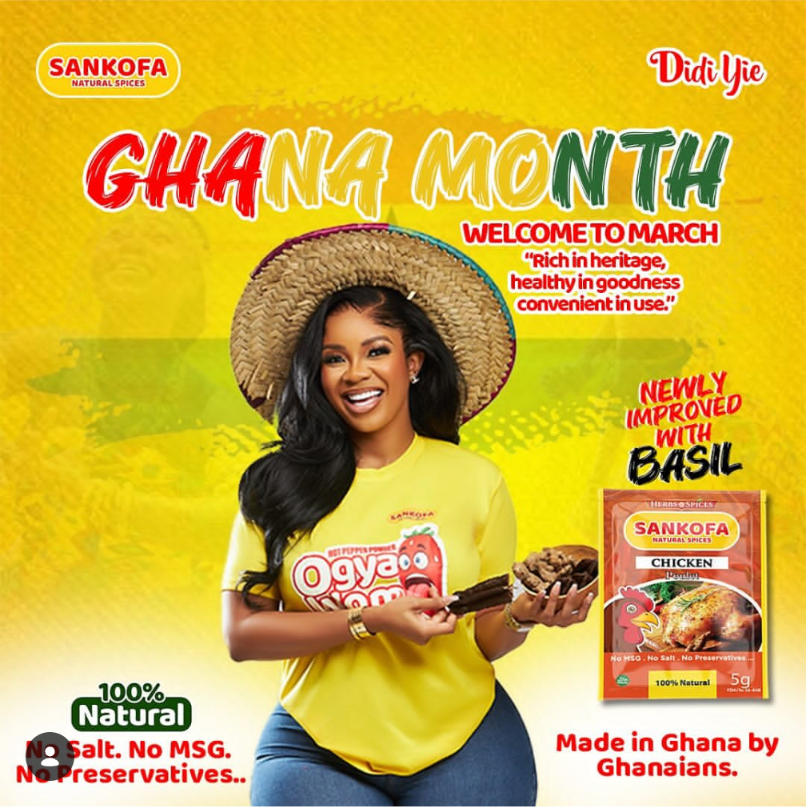
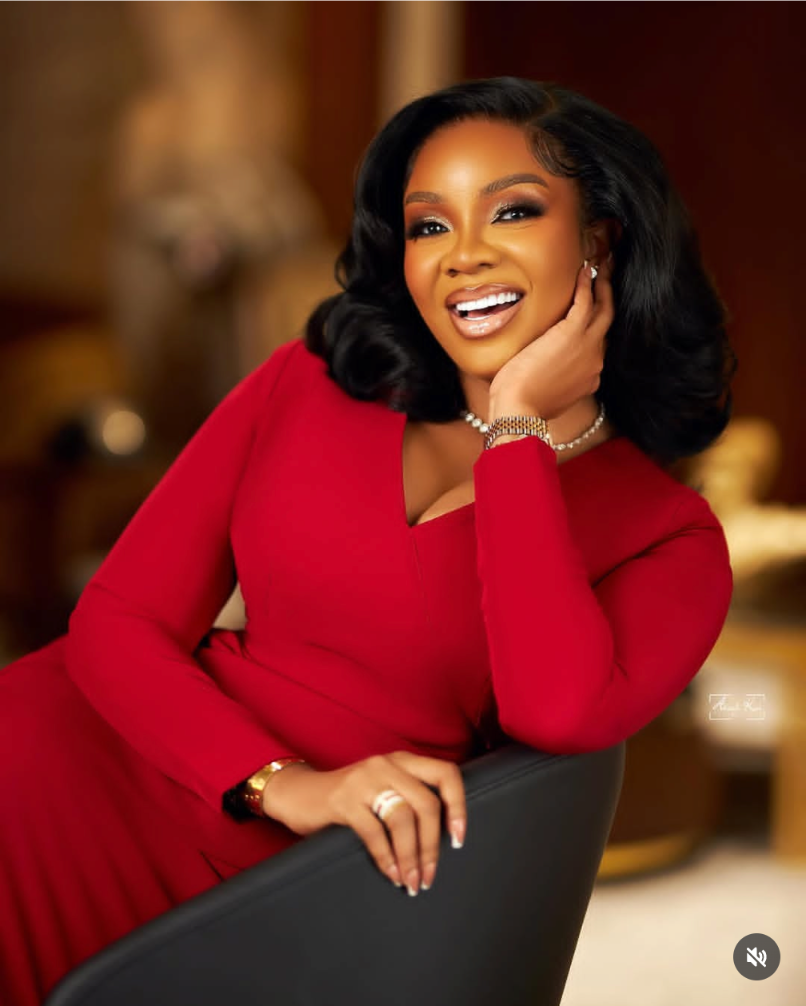
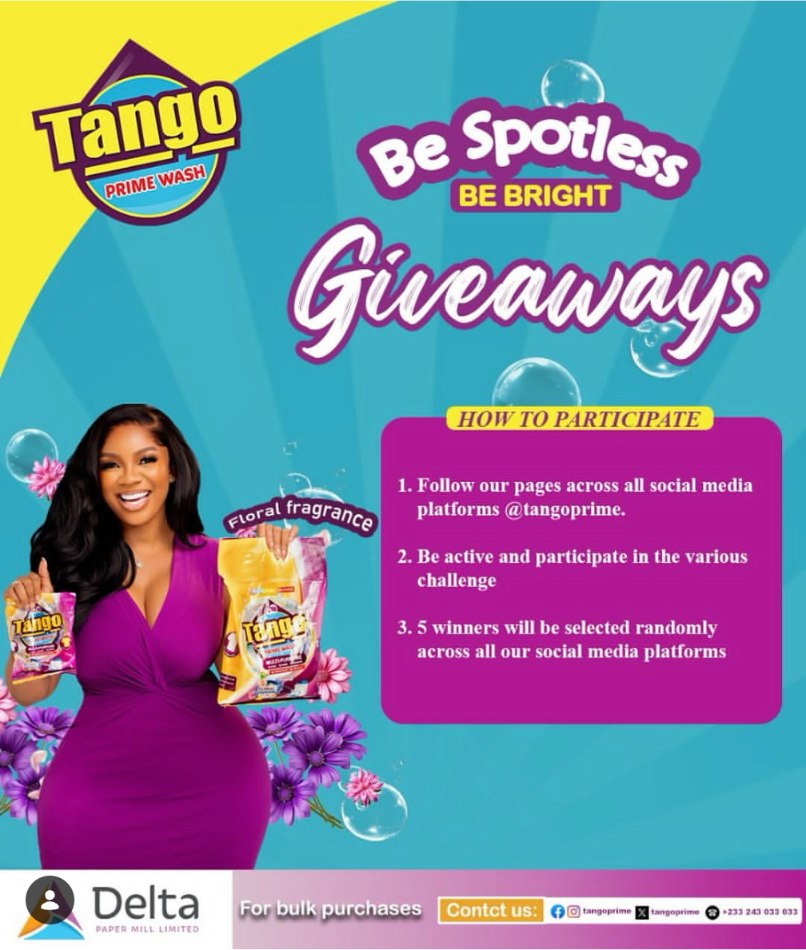
As a celebrated broadcast journalist, lawyer, and entrepreneur, Serwaa Amihere, Esq. brings her commitment to excellence from the newsroom directly into your daily routine.
Featured exclusively through Everyday Essentials, the Serwaa Amihere Collection represents a carefully curated blend of wellness, quality, beauty, professional elegance, and Ghanaian craftsmanship.
🥜 PISTACHIOS: SMALL NUT, POWERFUL NUTRITION
At Everyday Essentials, healthy living begins with understanding what nourishes our bodies.
Pistachios naturally offer:
Plant-Based Protein: Supports muscle health and daily vitality.
Dietary Fibre: Promotes healthy digestion and lasting satiety.
Healthy Unsaturated Fats: Rich in heart-healthy monounsaturated and polyunsaturated fats.
Vitamin B6: Supports normal energy metabolism and nervous system function.
Essential Minerals: Copper, manganese, phosphorus, and magnesium contribute to bone health, muscle function, and energy production.
Potassium: A vital electrolyte supporting muscle and nerve function.
Antioxidants: Contains key compounds, including lutein and zeaxanthin.
The Everyday Essentials Philosophy: Pure ingredients. Mindful choices. An elevated everyday life.
Whether enjoyed raw as a quick snack or woven into culinary dishes and desserts, pistachios prove that small habits yield powerful nutritional value.
WHY CHOOSE THE SERWAA AMIHERE COLLECTION?
A Trusted Vision: Hand-selected with the discerning standard expected of one of West Africa’s leading media figures.
Uncompromising Quality: From premium natural foods and spices to the sophisticated silhouettes of Office & Co. by SA, every offering balances health, style, and luxury.
Authentically Ghanaian: Bridging local heritage and global elegance to share Ghanaian excellence with the world.
A Holistic Lifestyle: A seamless blend of wellness, beauty, and professional sophistication tailored for modern global living.
FROM GHANA TO THE WORLD
Everyday Essentials is more than a product collection—it is a conscious lifestyle choice:
Nourish the body.
Elevate the mind.
Embrace timeless beauty.
Celebrate authentic craftsmanship.
Share Ghanaian excellence with the world.
Experience a lifestyle rooted in quality, integrity, and international appeal.
Discover the finest in health, beauty, gourmet food, and fashion—curated by Serwaa Amihere, Esq.




























 / sgivideosonline Visit our website: https://www.sokaglobal.org/ Like us on Facebook: / sgi.info Follow us on Instagram: / sgi.info Follow us on Twitter: / sgi_info