






China and Ghana Taking the Same Path — Kwame Nkrumah Is Smiling.
Assumpta online Weekly Newsletter Magazine
PRESENTS
HAIR-SENTA-MENTALITY
Health & Wellbeing | Culture | Fashion | Lifestyle

A Digital Lifestyle Newsletter for the Global Thinker and Dreamer
EXCLUSIVE FEATURE – COMING FRIDAY, OCTOBER 17TH, 2025 | 05:30 AM (GMT)
Article Title: The One Prosperous Sight
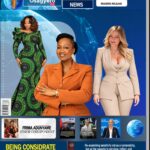
China and Ghana Taking the Same Path — Kwame Nkrumah Is Smiling
“If Kwame Nkrumah were alive today, he would be smiling — not out of nostalgia, but recognition. ”A new conversation begins. A bold invitation to rethink Ghana’s direction — and perhaps, the future of the Global South.
Inside the Feature
Section 1: Why Liberalism Fell Short — and What the Ghana–China Model Offers Instead
Section 2: Gender Equality and Healthcare as Pillars of State-Led Prosperity
Section 3: A Call to the Global South — The African–Asian Alliance Rekindles
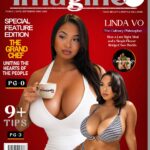
SPECIAL GUEST FEATURE
OWUSUAA GYIMAH-ADDO (Gwen Addo)
CEO & Founder, Hair-Senta & HIBS-AFRICA
Author of Direction Entrepreneur | Motivational Speaker | Wellness Advocate
SPECIAL DIALOGUE EVENT
“GENDER, HEALTH & THE NEW DREAM OF DEVELOPMENT”
Hosted by BERLA MUNDI
Award-Winning Broadcaster & Media Personality
In conversation with Nana Owusuwaa Gyimah (Gwen Addo)
Together, they will tackle a critical truth: “With only five years left before the 2030 Sustainable Development Goals deadline — not a single global target on gender equality is on track”.
Their mission?
- To unpack what has worked
- To share what must change
- To chart a new path for Ghana and beyond
A Philosophy of Connection
Owusuaa Gyimah-Addo believes that true prosperity is not built on profit — but on relationships, dialogue, and shared wisdom. “Businesses thrive when they create spaces of intimacy, trust, and meaning — whether in boardrooms, friendships, or communities.”
This human-centered vision echoes the teachings of Nichiren Daishonin, where peace and progress begin with the dignity of every individual.
INSIDE THIS ISSUE — FOR INTERNATIONAL READERS
From Ghana to the World, discover the heartbeat of a movement.
Stories that heal. Empower. Transform.
📩 Subscribe Now | www.hairsenta.com
📍 Follow Us: @hairsenta
🔖 Hashtags: #HairSentaMentality #KillerInTheLoaf #BeyondTheSugar
Global Leaders Meeting on Women in China: A Powerful Signal for Basic Healthcare, gender equality.

The Global Leaders Meeting on Women in China marked a historic moment — not only for gender equality, but for universal access to basic healthcare. The presence of Chinese President Xi Jinping, who delivered the opening keynote, underscored the national and diplomatic importance of the event.
Representing West Africa on the global stage was His Excellency John Dramani Mahama, President of Ghana, whose participation affirmed Ghana’s commitment to accelerating healthcare access and social equity.
Gwen Addo Reacts: “This Moment Extends Beyond Diplomacy — It’s a Call to Action”
Gwen Addo — certified entrepreneur, wellness coach, food educator, and co-founder of Owusuwaa Weekly. As founder of Hair Senta, HIBS-Africa, and TLS (The Leading Senta), Gwen is not just a business leader — she is a force of transformation.

Though not physically present at the gathering, Gwen Addo — wellness advocate, entrepreneur, and co-founder of Owusuwaa Weekly — will be sharing her perspective in the upcoming issue of Assumpta Newsletter. Her reflections focus on the deeper meaning of the meeting, beyond policy discussions:
“When leaders of nations — including Ghana’s own president — gather to speak on healthcare and equality, it signals a shift. This is no longer a women’s issue; it’s a community issue, a national issue, a global issue. Healthcare is not a privilege — it is a right, and leadership must make it accessible.”
Gwen believes that forums like this serve three essential functions:
- To acknowledge the gaps — especially as the world falls behind on the 2030 Sustainable Development Goals.
- To exchange what’s working — learning from policies, cultural approaches, and grassroots models.
- To build bridges between governments and real community voices — because change happens not only in conference rooms, but in homes, clinics, marketplaces, and schools.
“I am inspired to see President Mahama at the table. It sends a clear message: Ghana is ready to engage — now we must ensure those engagements translate into impact for everyday people.”
Her vision is clear and purpose-driven:
- Empower everyday people with accessible wellness tools.
- Inspire young minds to take active roles in building healthier communities.
- Redefine business as a community hub — a place where trust, connection, and transformation begin.
“Cultural exchange is at the heart of my vision. It creates ripples of connection that unite hearts. Health is culture — and culture is a boundless force for growth.” — Gwen Addo
HAIR SENTA ADVERTISEMENT


https://www.instagram.com/hairsenta?igsh=MXAzOThhNGZ0Nm15dQ==
Something Unbelievable is Happening at 24 Jungle Avenue…
They say beauty is power.
But what if your hair could turn heads, stop time, and tell stories from Ghana to the world?
HAIR SENTA — the secret behind every unforgettable look. ✨Straight from the heart of Ghana, our 100% luxury human hair extensions are shaking up the beauty game. Natural. Unmatched. Undeniable.
Are you ready to transform?
Or will you be the last to discover the magic?
Call now: 📞 (+233) 0544354455 / 0248629769
Visit: 🌐 www.hairsenta.com
Location: 📍 24 Jungle Avenue, Accra, Ghana 00233
Hair Senta. Real Hair. Real Power. 💁♀️🔥

Why This Meeting Matters
When asked about the significance of the event, Gwen was quick to highlight one powerful signal:
“The fact that the President of China was present at the opening ceremony shows the level of importance the Chinese government places on these issues. But this is bigger than women — it’s about how entire communities and nations can fast-track gender equality and expand access to basic healthcare.”
With only five years left before the 2030 Sustainable Development Goals deadline, none of the global targets related to gender equality are currently on track. This makes the timing of this forum critical.
China’s decision to convene global leaders to share success stories, exchange best practices, and collaborate on closing persistent gaps could not be more relevant.
And adding to the momentum?
“It’s incredibly exciting to see Ghana’s newly elected President, John Dramani Mahama, present at this moment. I believe this is an exceptional time.”
Xi Jinping: Keynote Address — “Carrying Forward the Spirit … Promoting the New and Accelerated Process for Women’s All-Round Development”
(Opening Ceremony, October 13, 2025)
Context & Framing
- This meeting commemorates the 30th anniversary of the Fourth World Conference on Women (1995), which produced the Beijing Declaration and Platform for Action.
- Xi positions the speech as both a reflection on progress over three decades and a call to accelerate global cooperation in women’s development.
Key Themes & Messages
- Role of Women & Shared Responsibility
- Women are “important in creating, promoting and carrying forward human civilization.”
- The international community shares responsibility to advance women’s development.
- Progress & Challenges
- Over 1,600 laws regarding women’s rights/interest have been enacted globally; national action plans in many countries.
- Persistent obstacles remain: violence and discrimination, gender digital divide, unequal access to resources, and the slow pace of institutional reforms.
- Four Proposals to Accelerate Women’s All-Round Development
- Foster an enabling environment: maintain peace and security, protect women in conflict and disaster zones, crack down on all forms of violence.
- Cultivate momentum for high-quality development: reduce imbalances in women’s development, help women share the gains of globalization, promote innovation, empower them in green development.
- Strengthen governance and legal protections: improve institutional frameworks, laws, policies; expand health, education and resources to women; broaden participation in political, social governance.
- Write a new chapter on global cooperation: support women’s role in global governance; more cooperation platforms, especially for developing countries; strengthen support via the UN and multilateral bodies.
- China’s Commitments & Initiatives
Xi announced a series of support measures from China:
- Donate US$10 million to UN Women over the coming years.
- Allocate US$100 million from China’s Global Development & South-South Cooperation Fund towards women/girls projects.
- Launch 1,000 “smallandbeautiful” livelihood programs to benefit women and girls.
- Invite 50,000 women for exchange and training in China.
- Establish a Global Center for Women’s Capacity Building to train female talent with international partners.
- Closing & Call to Action
- Xi called on all sides to uphold the spirit of the Beijing Declaration, build consensus, broaden paths forward, and take concrete steps in accelerating women’s all-round development.
- He framed this as part of China’s broader vision: women’s development as integral to Chinese modernization, and China’s efforts to support global women’s development.
You can read the full text of Xi’s speech via CGTN / China Military / other official sources.
John Dramani Mahama: Address at Global Leaders’ Meeting on Women, Beijing— Remarks at the Summit
From news reports and summaries:
- In his address, President Mahama reaffirmed Ghana’s commitment to gender equality and women’s empowerment.
- He said the summit is “an invaluable opportunity to reaffirm our shared commitment to advancing the rights of women and girls worldwide and to assess the progress we’ve made under the Beijing Declaration and Platform for Action.”
- Mahama referred to the Beijing Declaration (and its Platform for Action) as a “moral covenant,” arguing that no country can truly develop while leaving half its population behind.
- He acknowledged structural barriers that continue to limit women’s progress, and called for “greater resolve and innovation” to overcome them.
- He highlighted steps Ghana has taken under his leadership:
• Ghana’s first female Vice President, and appointment of women in senior roles across government, judiciary, security services, and national institutions
• That these are not symbolic gestures but deliberate affirmations of women’s rightful place in decision-making - In a different part of his remarks, Mahama also said:
> “Gender equality is more than a matter of justice; it is a catalyst for sustainable development.”
> “When women succeed, families thrive, communities become stronger, and nations progress.”
Key Themes & Highlights
- Acknowledging Progress & Persistent Gaps
Mahama emphasized Ghana’s efforts in empowering women, while admitting structural and institutional gaps remain. - Institutional Strengthening
He underscored the need for robust structures that can sustain and scale women’s empowerment — especially legal frameworks, implementation mechanisms, and oversight. - Aspiration of Female Presidency
In a confident projection, President Mahama noted his belief that Ghana will soon elect its first female President, describing this as both a symbolic milestone and a reflection of deeper commitment to equality. - Global & Domestic Call for Action
He called for collaborative action among governments and international partners to close gender gaps, not just in policy but in practice — especially in areas like access to health, education, economic opportunity, and decision-making. - Gratitude & Support for China’s Initiatives
Mahama thanked China for hosting the event and for the initiatives proposed by President Xi, expressing hope for cooperation and shared learning. - The press announcement from Assumpta Newsletter Publication:
“He stressed the need to focus on the gains made in empowering women while putting in place structures to address existing gaps.”
You can also watch his full speech on YouTube to extract verbatim passages.
Xi Jinping — Keynote Speech (Opening, Global Leaders’ Meeting on Women)
From media reports and official previews:
- Xi Jinping delivered a keynote at the the opening ceremony of the summit in Beijing.
- He laid out four proposals / suggestions (some sources call them “suggestions” or “steps”) for promoting women’s development and gender equality globally:
1. Jointly create a favorable environment for women’s growth
2. Cultivate strong momentum for high-quality development of women’s careers
3. Build a governance framework that protects women’s rights
4. Push global cooperation in women’s development - He also announced that China would donate US $10 million to UN Women over the next five years.
- Xi emphasized that gender equality should be “truly internalised” in society, and urged countries to broaden channels for women to participate in political and decision-making roles.
- He highlighted that peace and stability are prerequisites for women’s all-round development.
- Positioning the Event as a Global Healthcare Call
Even though the summit is officially about women’s empowerment and gender equality, its themes directly intersect with global health and basic healthcare access. Here’s how we can connect it clearly:
Core Narrative
A world that denies women equal access to resources, decision-making, and economic participation is also denying them access to healthcare.
Gender equality is not only a social justice issue — it is a public health strategy.
Both Xi Jinping and President Mahama emphasized structural support, protection, governance frameworks, and funding for women’s development. These are the exact pillars of universal health coverage, maternal care, nutrition, sanitation, and disease prevention.
Suggested Framing for Your Write-Up / Article
“Though presented as a gender summit, the Global Leaders’ Meeting on Women in Beijing was fundamentally a global healthcare call. When President Xi spoke of ‘creating a favorable environment for women’s growth,’ and President Mahama warned against ‘structural barriers limiting women’s progress,’ both were indirectly calling for stronger health systems.
For women — and by extension families and nations — progress begins with health. Without healthcare access, gender equality remains a theory. And without gender equality, global health remains incomplete.”.
Dialogue Feature — The One Prosperous Sight
China and Ghana Taking the Same Path — Kwame Nkrumah Is Smiling**
“If Kwame Nkrumah were alive today, he would be smiling — not out of nostalgia, but recognition.”

Berla Mundi (Host):
Good morning, good afternoon, and good evening to our readers and listeners around the world. Whether you’re tuning in from Accra, Beijing, London, New York, or Nairobi — welcome!
I’m Berla Mundi, broadcaster, social advocate, and global moderator of conversations that matter. Today, I have the honor of opening a dialogue that bridges continents, ideologies, and generations.
Joining me is an extraordinary woman — Gwen Addo. She is a certified entrepreneur, wellness coach, food educator, and co-founder of Owusuwaa Weekly. She is also the visionary behind Hair Senta, HIBS-Africa, and TLS — The Leading Senta. A woman of action and purpose, deeply rooted in both tradition and innovation.

Berla Mundi: Gwen, welcome to The One Prosperous Sight.
Gwen Addo:
Thank you, Berla. It’s a pleasure and an honor to be here — especially for a conversation of this historic importance.

Berla Mundi:
Before we dive into our headline topic — “China and Ghana Taking the Same Path — Kwame Nkrumah Is Smiling” — I want us to reflect briefly on political philosophy. Because to understand whether China’s model of socialism or Ghana’s new strategic alignment is the right path, we must ask:
Has liberalism — the ideology that built the Western world — ever truly been a finished project? Or has China’s socialism been more consistent in actually protecting its people?
So, Gwen, let’s begin with a simple but powerful question:
Where Did Liberal Ideas Come From — And Are They Now Under Threat?
Gwen Addo
Liberalism is a political philosophy that inspired revolutions, shaped free markets, and helped found modern democracies such as the United States. But to understand why it may be worth defending today, we must first understand where it came from.
At its core, liberalism is based on the belief that all people possess inherent rights — to life, liberty, and property. They should be equal before the law and have a say in how they are governed.
For most of history, this idea was unthinkable. Kings and emperors ruled by “divine right,” claiming authority came from God rather than the consent of the people.
Then came a radical question: What if rulers were not chosen by God at all?
Enter John Locke (1632–1704). He declared: “No one can be subjected to the political power of another without his own consent.” In 1689, he argued that governments exist only to protect natural rights — a revolutionary idea known as the social contract. He published it anonymously — because it was that dangerous.
These ideas spread across Europe and America, inspiring revolutions and reshaping political thought. They influenced the U.S. Constitution of 1787, the first document to formally guarantee citizens’ rights.
But let’s be honest: those rights were not granted to everyone. Women, the poor, enslaved Africans, and minorities remained excluded.
That sparked new waves of reformers:
- Mary Wollstonecraft declared: “I do not wish women to have power over men, but over themselves.”
- Frederick Douglass insisted: “The white man’s happiness cannot be purchased by the black man’s misery.”
In the 19th century, John Stuart Mill supported universal suffrage — but feared democracy could become “the tyranny of the majority.” His flawed solution — giving more votes to the educated — at least forced debate.
By the 20th century, social liberalism emerged, arguing that freedom required more than laws — it required education, healthcare, and fair work. After two world wars, bodies like the UN and EU were built on those principles. Civil rights movements pushed them further.
Berla Mundi
So, Gwen — let me ask plainly: Is Liberalism Now in Danger?
Gwen Addo:
Ironically, yes — one of the greatest threats to liberalism today comes from within Western democracies themselves.
The rise of nationalist populists like Donald Trump, Giorgia Meloni, Marine Le Pen, and Nigel Farage reflects a growing disillusionment with liberal institutions.
Meanwhile, universities, science, and media — once pillars of liberal societies — are now under fierce attack, sometimes deserved, often not.
Liberalism faces a monumental question:
Can it still solve modern problems — inequality, cultural fragmentation, technological disruption — without betraying its own promises of freedom and equality?
Because history shows this — liberalism was never perfect. It was always a work in progress.
Berla Mundi:
Gwen, that brings us naturally to our next question — if liberalism in the West is struggling to fulfill its promises, perhaps we should ask: Has China discovered an alternative path? One grounded not in individualism, but in collective protection?
Because while Western democracies debate culture wars, China is investing in industrialization, infrastructure, and now — global healthcare diplomacy.