







Osagyefo Newsletter Magazine Presents – GEORGIA NEWSLETTER.
Journalism of Neglected Topics.
📰 Feature Article: “Building The Eternal City – In The Ruins of Rome.
📰The GIORGIA Newsletter–Editorial
Special Historical & Reflection
Release: on June Wednesday 📅 2026 Read exclusively at: assumptagh.live/








https://www.instagram.com/hairsenta?igsh=MXAzOThhNGZ0Nm15dQ==
Something Unbelievable Is Sizzling at 24 Jungle Avenue… ☀️🌴
In the golden glow of the Accra sun, a transformation is taking place. It’s more than a change in the weather—it’s a movement. Picture a shimmer of silk, a cascade of rich waves, and the effortless sway of hair that refuses to be ordinary.
They say beauty is power. This summer, let your hair command the breeze, turn every head on the coast, and carry the vibrant soul of Ghana wherever you step.
HAIR SENTA — the ultimate secret behind that radiant summer glow. ✨🌊
Straight from the heart of Ghana, our 100% luxury human hair extensions are engineered for the heat: lightweight, natural, and undeniable. We’re weaving heritage, craftsmanship, and high-fashion glamour into every single strand—ensuring you stay cool while looking absolutely fire. 🔥
Will you be the one who owns the sunshine… or the one who watches it fade? 🍹✨
🛍️ Secure Your Summer Glow:
- Call Now: 📞 (+233) 0544354455 / 0248629769
- Explore: 🌐 www.hairsenta.com
- Visit Us: 📍 24 Jungle Avenue, Accra, Ghana
Hair Senta. Real Hair. Real Power. Real Summer Energy
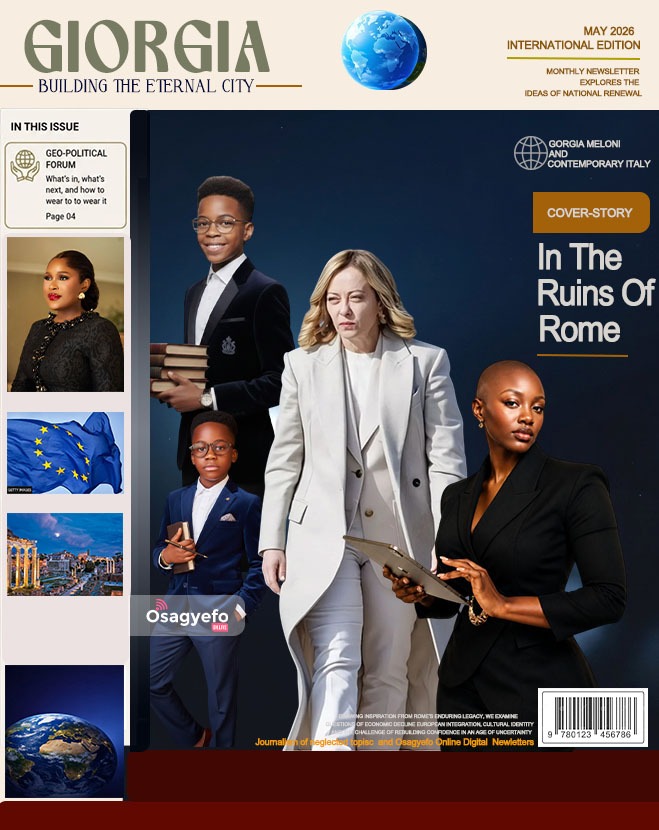
THE GLOBAL INSIGHT
Strategic Briefing | Issue No. 43
Build The Eternal City
In the ruins of Rome, one women Giorgia Meloni Stood as the Mystic Law not to Allow Italy to Perish hoping to build an eternal city of indestructible peace, happiness and prosperity.
Did Italy decline because of Europeen Union?
The European Union today looks a lot like Africa. For many years ago, a great civilization still proud of its past but already falling behind the speed of the world.
Some critics were very upset with this view that Europe is declining because of their unfair competition and because to support America and Israel and leave it member states including Italy’s industries to die and with offshore policies.
📅 2000
The currency was changed to Euro is when everything started. While the membership didn’t show any economic prosperity for Italy, rather it damaged Italy.
You will understand Giorgia Meloni’s feeling because she was then a young girl with other young girls as at that time believe that years ago Italy’s decline was caused by Germany, America, France and Western invasion and honestly this is not about who is wrong and who is right.
Giorgia Meloni want to ask a more useful question.
If you are Europeen and deep down you feel that Europe has loss its momentum, what should you do?
You can’t complain about Europe’s action to decline Rome’s civilization that does that change anything
Probably not! the real question is how do you act?
I will help more Italians to see the reality clearly or encourage them to open their minds, or bring in new innovation technology from other countries, and trian the next generation with more global view .
THE GLOBAL INSIGHT
Strategic Briefing | Issue No. 42
BUILD THE ETERNAL CITY
Italy’s Crossroads: Identity, Economy, and Direction
In the long shadow of Rome’s past, Giorgia Meloni represents a political moment shaped by urgency rather than nostalgia. Her message centers on preventing decline—not by preserving legacy alone, but by rebuilding national confidence, economic resilience, and strategic purpose.
The idea of an “eternal city” is reframed: not a return to empire, but the construction of a modern Italy grounded in stability, productivity, and long-term prosperity.
The Core Question: Has Italy Lost Momentum?
Italy’s trajectory over the past two decades has fueled an ongoing debate: Has European integration strengthened Italy—or constrained it?
Critics argue that structural shifts within the European Union, combined with global competition and domestic inefficiencies, have coincided with:
- Industrial stagnation and reduced economic flexibility.
- Slower GDP growth compared to regional peers.
- Increased exposure to global market pressures.
Supporters of integration point to financial stability, trade access, and political alignment as vital assets. However, the perception gap within Italy remains significant.
A Defining Inflection Point: The Euro Transition (2000–2002)
The adoption of the euro marked a permanent structural turning point.
- Expectation: Monetary stability, deeper integration, accelerated growth.
- Outcome (debated): Limited growth, constrained fiscal autonomy, uneven competitiveness.
Without the ability to devalue its currency—a traditional adjustment mechanism—Italy placed greater pressure on productivity, innovation, and domestic structural reform.
A Generational Lens
Meloni’s political perspective is shaped by a generation that matured during a period of economic stagnation, rising youth unemployment, industrial restructuring, and growing skepticism toward supranational institutions.
While attribution of responsibility varies—spanning European partners, globalization, and domestic policy—the strategic question has officially shifted beyond blame.
              [ STRATEGIC FRAMEWORK FOR RENEWAL ]
                              │
     ┌────────────────────────┼────────────────────────┐
     ▼                        ▼                        ▼
ADAPTABILITY              INNOVATION            GLOBAL ORIENTATION
Labor & governance Tech & advanced mfg. Active engagement
reforms infrastructure beyond EU borders
From Diagnosis to Action
The critical issue is no longer why momentum weakened. It is what to do next. A forward-looking framework requires:
- Clarity: A realistic assessment of Italy’s true competitive position.
- Adaptability: Openness to aggressive reform in labor, industry, and governance.
- Innovation: Targeted investment in technology, advanced manufacturing, and digital infrastructure.
- Global Orientation: Strategic engagement beyond Europe without creating new dependencies.
- Human Capital: Preparing the next generation for a multipolar, fast-evolving economy.
Strategic Implication
Sustained decline is not inevitable, but reversal requires deliberate, macro-level repositioning. Italy’s challenge is structural, not cyclical. Incremental adjustments are insufficient without strict alignment between economic policy, industrial strategy, workforce development, and national priorities.
Conclusion: Rebuilding, Not Remembering
Civilizations do not lose relevance because of external pressure alone; they decline when internal adaptation slows.
Italy’s opportunity lies in converting its historical strengths—culture, design, manufacturing, and regional diversity—into modern, aggressive competitive advantages. The objective is not to restore the past. It is to build forward with discipline, innovation, and strategic clarity. The “eternal city” is not inherited. It is constructed.
Global Dialogue Series: “Building the Eternal City”
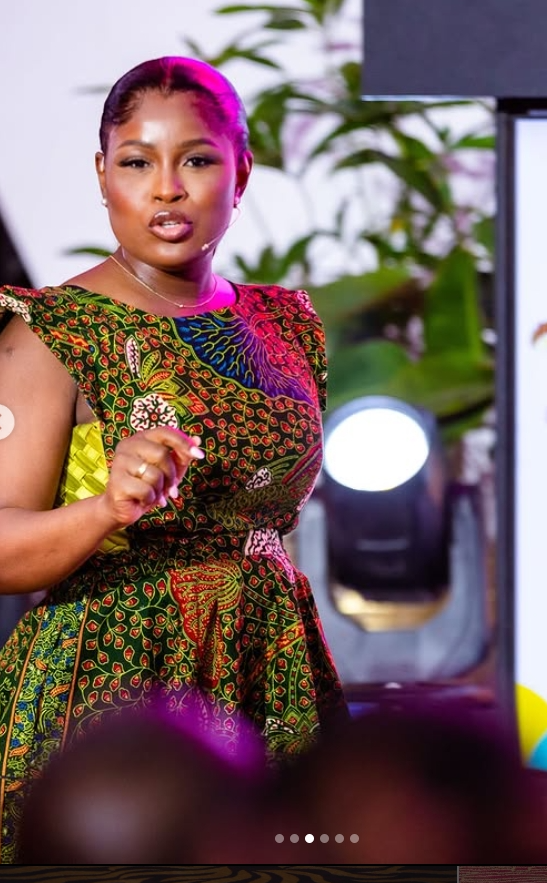
Berla-Mundi: A very warm and pleasant day to our cherished readers, viewers, and global citizens tuning in from every corner of the world. Welcome to this special broadcast edition of the Osagyefo Quarterly Newsletter Magazine Publication. It is an absolute honor to host you today for a conversation that is simple in form, yet profoundly deep in its global implications.
Before we dive into the heart of today’s discourse, let me extend my heartfelt, polite greetings to our esteemed panel assembled here in the studio. Thank you all for bringing your brilliant minds to this table.
For our international readers worldwide who are joining us, it is my distinct privilege to introduce the powerhouse panel steering today’s dialogue:

- Prime Minister Giorgia Meloni: The leader navigating Italy through a monumental era of renewal, driving a vision of cooperative assertiveness to rebuild national confidence and reshape Italy’s future on the global stage.

- Titan (The Global Perspective): A bold American voice speaking directly to global consciousness, human unity, and the intricate geopolitical challenges facing sovereign nations in our deeply interconnected world.

- Okomfo-Black (The Reformer): A profound voice dedicated to reviving the revolutionary spirit of African heritage, identity, self-determination, and systemic cultural renewal.

- Abena Oforiwaa (The Voice of Value): A visionary leader guiding conversations on national healing, human dignity, mental reawakening, and the critical rediscovery of a people’s core purpose.
Together, ladies and gentlemen, we are entering the pages of our latest feature article title: “BUILDING THE ETERNAL CITY.”
The Strategic Crossroads of Europe
Our newsletter today pulls back the curtain on a fascinating, high-stakes dilemma in contemporary EU policy—one where Italy’s massive economic potential is quietly viewed by some as a direct structural threat to Germany’s future economic dominance. We are looking at a defining dilemma for the entire European project, balancing Italy’s undeniable structural bottlenecks against its immense, underappreciated industrial power.
Italy is the second-largest manufacturing economy in the EU behind Germany, a powerhouse exporter with high private savings and world-class machinery. Yet, the narrative from Brussels has long been rigidly obsessed with fiscal discipline and debt-to-GDP ratios, forcing Italy into a tight financial straightjacket. When the Lira was traded for the Euro, Italy lost the ability to devalue its currency to stay competitive, leading to decades of “internal devaluation”—stagnant wages, suppressed public spending, and a devastating “brain drain” of young talent.
At the heart of this narrative stands a fundamental question of survival, leadership, and national purpose: When a nation feels it has been disrespected, disregarded, or structurally constrained, how does it rise again?
To help us confront these difficult realities, we turn to our panel—the voices of the revolution. And there is no better place to start than at the source.
Global Dialogue Series: “Building the Eternal City”
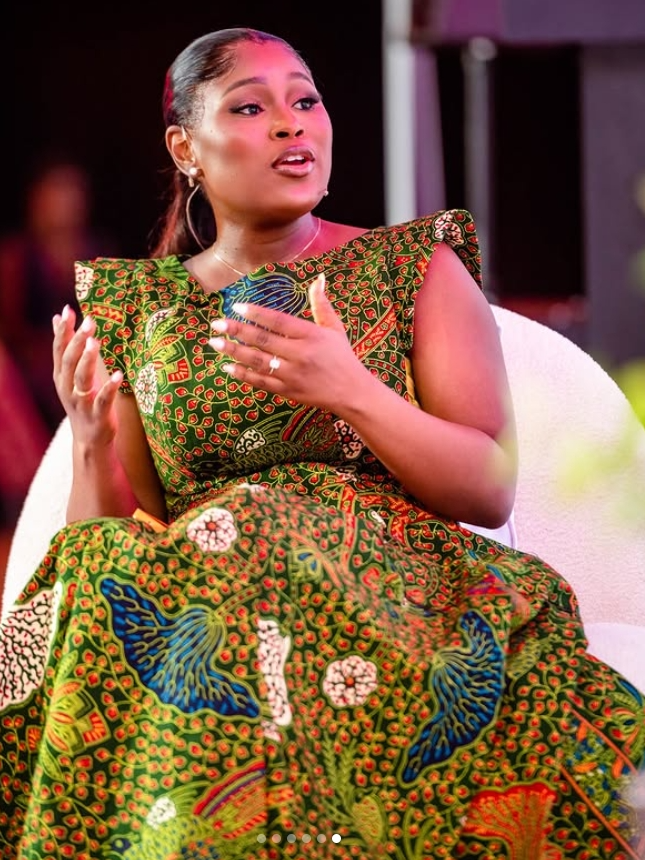
Berla-Mundi:
Prime Minister Giorgia Meloni, welcome to the dialogue. Let us go straight to the heart of the matter for our global audience.
From your vantage point leading the nation, what exactly was the dilemma in contemporary EU policy that historically stagnated Italy’s economic growth, and why do you believe European frameworks have so fundamentally underestimated the shift and power of Italy’s core industries? The floor is yours.

Prime Minister Giorgia Meloni:
Thank you, Berla-Mundi, and let me begin by acknowledging the depth and seriousness of this conversation. What we are discussing is not merely an economic question—it is a question of sovereignty, dignity, and Europe’s long-term coherence.
Let me speak plainly.
1. The Core Dilemma: A One-Size Framework for Unequal Economies
The fundamental problem within EU policy—particularly since the Maastricht Treaty and the introduction of the Euro—has been the attempt to govern structurally different economies with a single monetary logic.
Italy entered the Euro with:
- A strong industrial base, especially in high-value manufacturing
- A fragmented but highly productive SME ecosystem
- High private wealth and savings, but also significant public debt
However, the Eurozone framework imposed:
- Strict deficit and debt ceilings
- A single monetary policy driven largely by the needs of stronger surplus economies
- No currency flexibility for national adjustment
For Germany, this system amplified strength. For Italy, it constrained resilience.
2. The Loss of Strategic Flexibility
Before the Euro, Italy had a critical tool: currency devaluation. This was not a weakness—it was a mechanism of adaptation. When global pressures rose, Italy could adjust competitiveness quickly, protect employment, and stimulate exports.
With the Euro, that mechanism disappeared. Italy was forced into “internal devaluation” instead. And what does that mean in real terms?
- Lower wages
- Reduced public investment
- A shrinking middle class
- Talent leaving the country
- 👉 Italy is Europe’s second-largest manufacturing economy.
- 👉 It dominates in precision machinery, luxury goods, design, and specialized exports.
- 👉 Its supply chains are deeply embedded across the continent.
- Its economy is more domestically anchored.
- Its strength lies in diversified production, not purely scale exports.
- Its regions develop unevenly but dynamically.
- Recognition of its industrial depth.
- Recognition of its cultural and economic contribution.
- Recognition that resilience cannot be built on restriction alone.
- Smarter Fiscal Rules: Not abandonment, but flexibility tied to growth investment, not blind austerity.
- Strategic Industrial Policy: Europe must support its internal engines—not suppress them.
- Energy and Supply Sovereignty: Italy must become a Mediterranean hub, not a constrained participant.
- Talent Retention and Revival: We cannot build a future while exporting our brightest minds.