💖 Discover the Power of Confidence with Hair Senta! 💖
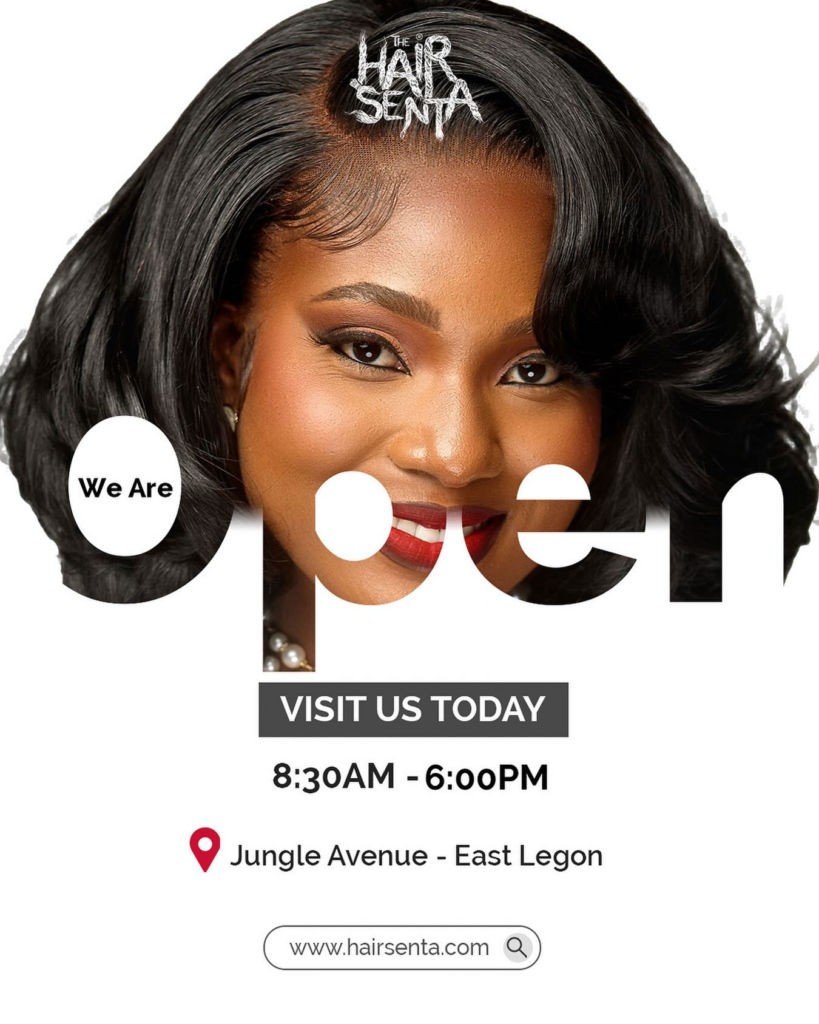
Hair Senta Shopping & Retail: Ghana’s Finest Hair, Loved Worldwide Hair Senta, a trusted and trademarked leader in beauty, proudly delivers the finest Human Hair Extensions from Ghana to the global stage.
We believe true beauty goes beyond appearance. Our premium extensions are designed to inspire a new era of beauty, confidence, wellness, and hope for women everywhere. Feel the quality, embrace the transformation, and step boldly into your most radiant self! Connect With Us Today! 📞 Call Us: (+233) 054 435 4455 (+233) 024 862 9769 🌐 Visit Us Online: www.hairsenta.com� 📍 Find Our Store: 24 Jungle Avenue, Accra, Ghana 00233
🌍 Featured Global Voices
Dialogue & Perspectives on Human‑Centered Growth and Stability
This edition brings together voices from business, leadership, media, and governance to examine a shared global question:
“Can development be sustainable if it neglects human dignity, agency, and ethical responsibility?”
Gwen Addo
Entrepreneur | Value Theory Advocate | Founder, Hair Senta
Gwen Addo stands at the forefront of dignity‑based economics—a modern framework emphasizing that human worth, not statistics, forms the true foundation of national stability. Through entrepreneurship and thought leadership, she advances a development model grounded in:
Agency
Dignity
Shared prosperity
Her work challenges conventional growth metrics and reminds leaders that progress must uplift people, not merely measure output.
“Success that harms others is not value — it is anti‑value.”
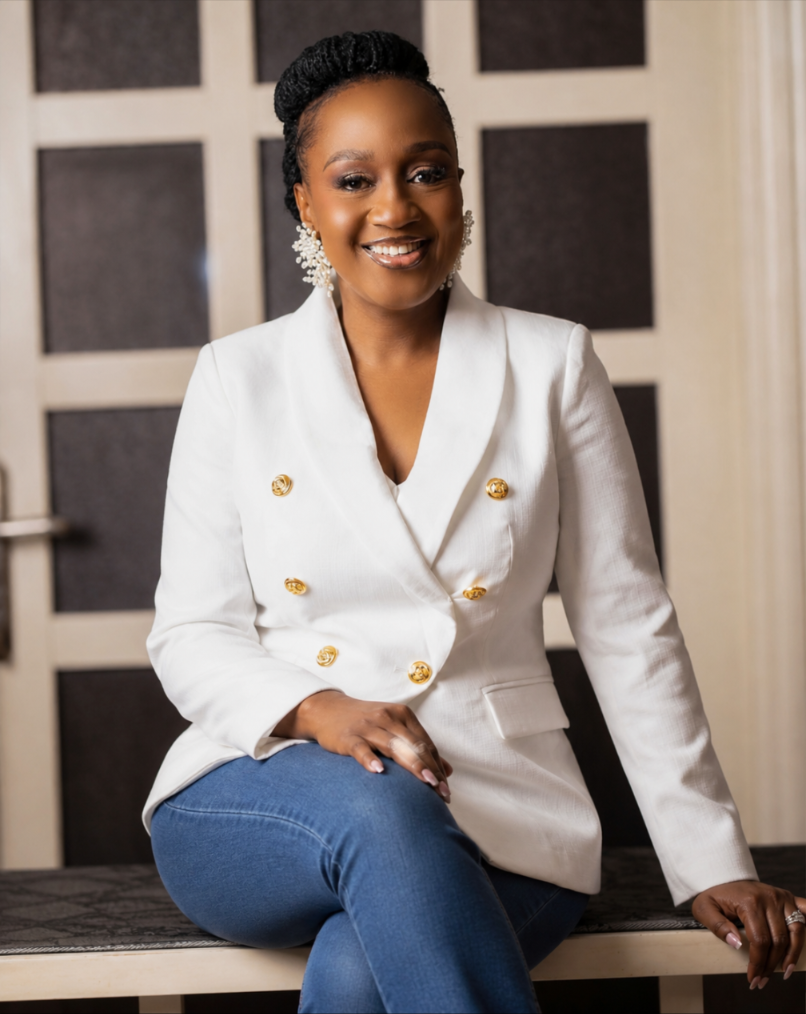
Dzigbordi Kwaku‑Dosoo
Global Leadership Architect | Human Skills Visionary
Dzigbordi Kwaku‑Dosoo is an internationally recognized entrepreneur, executive coach, and media personality whose work focuses on human transformation in a technology‑driven world. Through DCG Consulting Group, Allure Africa, and decades of global leadership experience, she shapes organizations by strengthening:
Emotional mastery
Confidence
Human‑centered performance
The future will not belong to those with the best tools, but those with the strongest humanity.”
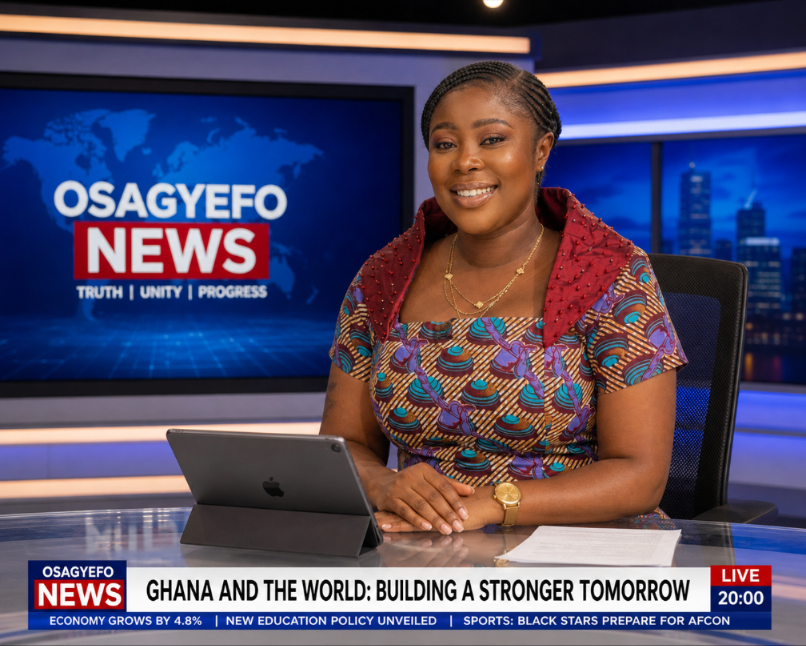
Frema Adunyame
Media Leader | Journalist | Valedictorian
Frema Adunyame is a distinguished Ghanaian broadcaster and Head of Events & Partnerships at Citi FM/TV and Channel One TV. Her career spans prime‑time journalism, editorial leadership, and cultural programming. Her recent recognition as Valedictorian of the University of Ghana reflects a deep commitment to excellence and nation‑building.
“Great leadership sparks not just hope, but a generational shift in vision and values.”
⭐ Giorgia Meloni
Political Leader | Advocate for Labor Dignity & Ethical Governance
Giorgia Meloni emerges in this edition as a key figure in contemporary debates on leadership ethics and societal stability. Her policy approach engages with the challenge of preserving social cohesion amid rapid economic change.
Focus Areas Highlighted:
Fair wages and labor protection
Combating exploitation, including digital labor abuses
Linking public support to ethical employer behavior
Reinforcing work‑life balance and social responsibility
WHAT THIS ISSUE UNPACKS
Human Dignity: Why it must sit at the center of economic policy.
Social Stability: The link between labor rights, education, and national resilience.
Leadership Ethics: How values shape long‑term development.
Governance: The global shift toward people‑first frameworks.
Accountability: Why growth without social responsibility creates fragile societies.
This edition of Assumpta–Newsweek invites readers to reflect beyond numbers, markets, and short‑term gains—toward a deeper understanding of progress rooted in human value, fairness, and ethical responsibility
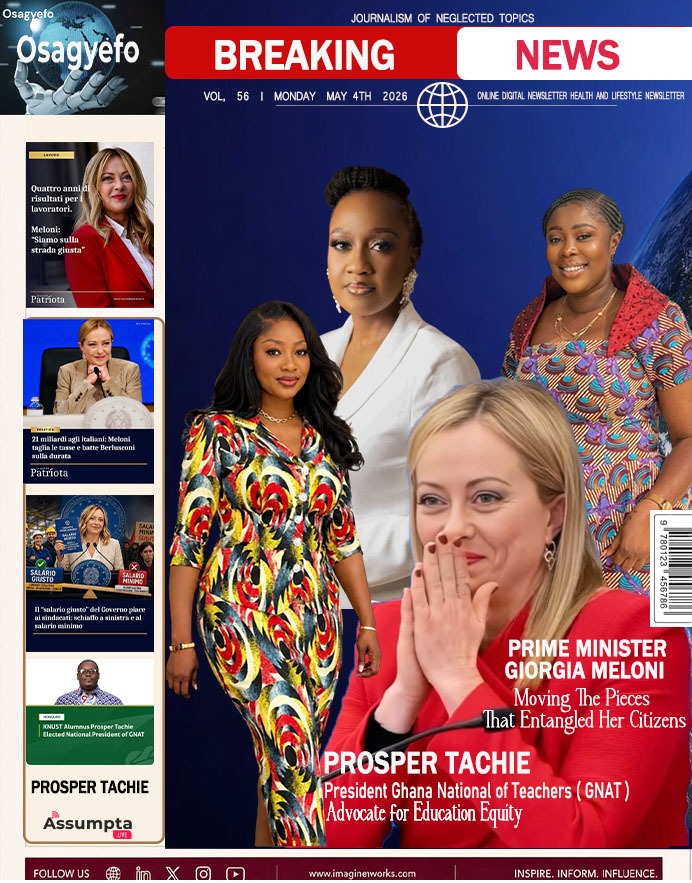
Prime Minister Giorgia Meloni — Moving the Pieces That Entangled Her Citizens
Labor, dignity, and human development in a changing global context
Labor Day Beyond Celebration
May 1st — International Workers’ Day — is traditionally a moment of remembrance and solidarity for working people worldwide. This year in Italy, the occasion was also marked by policy action.
The Italian government introduced a wide-ranging labor decree aimed at strengthening employment, improving job quality, and reinforcing protections for workers. Valued at close to €1 billion, the package signals an effort to connect symbolic recognition of labor with tangible institutional reforms.
Rather than focusing only on ceremony, the initiative frames Labor Day as a test of governance — a moment where public commitment must be reflected in measurable outcomes.
What the May 1st Labor Package Targets
The decree concentrates on three interconnected pillars:
1. Employment Incentives
Social Security: Reduced contributions for employers who hire women and young people.
Economic Zones: Additional support for companies operating in Special Economic Zones.
Contract Stability: Measures aimed at encouraging long-term, formal employment rather than short-term or precarious contracts.
2. Job Security and Modernization
Contract Renewals: Support for updated labor agreements.
Digital Protections: New tools to combat “digital gangmastering” and exploitative platform-based labor practices.
Work–Life Balance: Initiatives to improve quality of life in an evolving labor market.
3. Fair Wages and Compliance
Minimum Standards: Access to incentives is conditional on respect for minimum wages established through collective agreements.
Ethical Preference: Priority given to employers who comply with labor standards and trade union–negotiated protections.
A Results-Oriented Narrative
The Italian government argues that its approach prioritizes outcomes over rhetoric, pointing to:
Reductions in the tax burden on labor.
Higher employment levels, including record participation by women.
Declining rates of precarious employment.
Stronger enforcement against exploitation and unsafe working conditions.
Quality public education requires sustained investment.
Teachers need stronger institutional and social support.
Labor protections must include family-centered policies, such as extending maternity leave from three to four months.
The right to work under just and favorable conditions.
Protection against exploitation.
The right to education.
Safeguards for family life and motherhood.
Equality of opportunity and social responsibility of the state.
Introduction: The Quiet Restlessness
A Reflective Opening on Progress and Purpose
At first glance, everything appears settled.
The land is fertile, the season generous, the harvest promising. Fields stretch calmly beneath an open sky, untouched, orderly, productive. From the outside, it is a picture of security and renewal—the kind of peace societies strive to achieve after hardship.
Yet beneath this calm surface lies a quiet restlessness.
Like Albert Jan van Marle standing amid abundance yet unable to feel at rest, our modern world often projects stability while carrying unresolved unease within. Routine continues, systems function, and productivity persists—but something essential remains unsettled. Memory, experience, and unresolved questions linger beneath the surface, shaping a longing for meaning beyond survival.
This tension—between outer order and inner disquiet, between visible stability and invisible strain—is deeply human. It reminds us that recovery is not only about returning home, restoring systems, or producing results. It is about whether people truly feel anchored, valued, and understood.
This edition of Assumpta–Newsweek begins from that place of contrast and inquiry—asking not only how societies grow, but whether growth alone is enough when dignity, belonging, and purpose remain unfinished work.
This refined version maintains the original structure and content while subtly enhancing the flow and vocabulary to ensure it resonates with a sophisticated, global audience.
Good day to our readers across continents, cultures, and time zones. From Europe to Africa, and from the Global North to the Global South, we welcome you to this edition of the OSAGYEFO Newsletter Publication — Assumpta–Newsweek.
Today’s conversation is neither anchored in ideology nor confined by geography. It is centered on people—on the dignity of work, the essence of progress, and the moral responsibility of leadership in a rapidly evolving world.
I am honored to guide this dialogue and to welcome our distinguished panelists. Their voices represent diverse sectors, yet they converge on a shared ethical concern: how societies can achieve growth without leaving humanity behind.
Introducing Our Panel
Gwen Addo (Akosua Owusuwaa): An entrepreneur, value-theory advocate, and founder of Hair Senta. She is a leading voice in dignity-based economics—a framework that challenges traditional growth metrics and insists that human worth, agency, and shared prosperity are the true foundations of sustainable development.
Dzigbordi Kwaku-Dosoo: A globally respected leadership architect, executive coach, and human-skills visionary. Through her work across Africa and internationally, she focuses on emotional intelligence and human-centered performance in an era of rapid technological disruption. Her insights remind leaders that while tools evolve, humanity must remain central.
Prime Minister Giorgia Meloni: Joining us from Europe, the Prime Minister of Italy has brought renewed global attention to labor dignity, work-life balance, and the ethical responsibilities of the modern state. Her government’s recent Labor Day decree prioritizes employment incentives, fair wages, and social protection—inviting both support and constructive scrutiny on the global stage.
Framing the Conversation
The core argument of this edition is thoughtful, coherent, and ethically well-grounded. It avoids forcing a false equivalence between Italy and Ghana; instead, it acknowledges distinct national realities while identifying a shared moral framework. This nuance strengthens the publication’s credibility.
In essence, the message is clear: policies may differ, but the values animating them rhyme. This is a serious and defensible position.
The themes before us are vital:
Labor Day as a litmus test: Moving beyond celebration toward a test of governance.
Accountability in Incentives: Employment initiatives tied to responsibility and compliance.
Digital Age Security: Ensuring job security in an era of potential digital exploitation.
The Stability Pillar: Recognizing education and labor as interconnected foundations of national stability.
Universal Dignity: Reaffirming human dignity as a shared ethical foundation, as articulated in the Universal Declaration of Human Rights.
Whether through Italy’s labor reforms or Ghana’s education advocacy, we see the same insistence: development begins with people. As Daisaku Ikeda reminds us, “What our world most requires now is the kind of education that fosters love for humankind… and empowers learners to contribute to and improve society.” This insight extends beyond the classroom and into our workplaces, markets, and governments.
Opening Question
FREMA-ADUNYAME
Prime Minister Meloni, I would like to begin with you.
Your Labor Day decree positions economic policy as a reflection of moral responsibility—balancing employment data with worker dignity, and incentives with accountability. Based on the themes of this publication—particularly the tension between economic metrics and human well-being—I would like to ask a question that bridges what we measure with what people actually experience:
Does our current definition of “progress” truly account for the human spirit?
This refined version preserves every word of the original text while using sophisticated formatting to enhance readability for a global audience. The tone remains stateswomanlike and measured, ensuring the Prime Minister’s perspective is presented with professional gravity.
Perspective: Prime Minister Giorgia Meloni
A Response on the Nature of Progress
Prime Minister Giorgia Meloni:
Thank you, Frema, for your thoughtful introduction and for hosting this dialogue with such clarity and intellectual honesty. I also wish to thank the readers joining us from different parts of the world. Conversations like this matter, especially when they move beyond slogans and address the deeper questions facing modern societies.
You ask whether our current definition of progress truly accounts for the human spirit. I believe that is the right question—and perhaps the most challenging one governments face today.
Beyond the Metrics of Data
For decades, progress has been measured predominantly through numbers: growth rates, productivity, employment statistics, and fiscal indicators. These measurements are not wrong; they are necessary. A state cannot govern responsibly without understanding economic realities. But they are not sufficient.
When we reduce progress to data alone, we risk overlooking something essential: how people actually live, how secure they feel, and whether they believe their work has dignity and meaning. A society may appear successful on paper while its citizens experience uncertainty, fatigue, or quiet alienation.
Work as a Social Bond
This is why our approach to labor policy—including the recent measures introduced on May 1st—is grounded in the conviction that work is not merely an economic function; work is a social bond. It gives structure to lives, supports families, and anchors individuals within their communities.
The €1 billion labor package was not designed simply to increase employment figures. Its purpose is to influence how work is created and under what conditions. When public resources are used, they must reinforce responsibility:
Fair wages and stable contracts.
Protection against exploitation.
Respect for work–life balance.
Incentives should reward those who contribute to social cohesion, not those who profit from insecurity.
Defining True Progress
Does this account for the human spirit? It is a step in that direction.
The human spirit is not sustained by employment alone, but by recognition—by knowing that one’s effort matters and that the system does not treat people as disposable. When workers feel protected rather than trapped, and when young people and women see opportunity rather than precarity, confidence returns—not only in the economy, but in institutions themselves.
I also find the parallel discussed in this publication between labor policy in Italy and education advocacy in Ghana particularly important. Education and labor are two phases of the same moral responsibility. Education nurtures human potential; labor systems must then respect and protect that potential. One without the other leaves progress incomplete.
So, to your question: no, progress cannot be defined only by what we count. It must also be judged by what we preserve—dignity, fairness, social trust, and a sense of shared future. Economic strength and human well-being are not opposing goals; when separated, both weaken.
True progress is achieved when a society moves forward without losing its people along the way.
The dialogue continues…
Panel Reflection & Exchange: The Human Spirit in Development
Perspectives on Leadership and Capability
Frema Adunyame (Host):
Thank you, Prime Minister, for grounding progress in dignity and social trust. I would now like to bring in Dzigbordi Kwaku‑Dosoo, whose work focuses on leadership and human capability in a rapidly transforming world.
Dzigbordi, from your vantage point, how does leadership reconcile technological acceleration and economic pressure with the need to preserve the human spirit?