





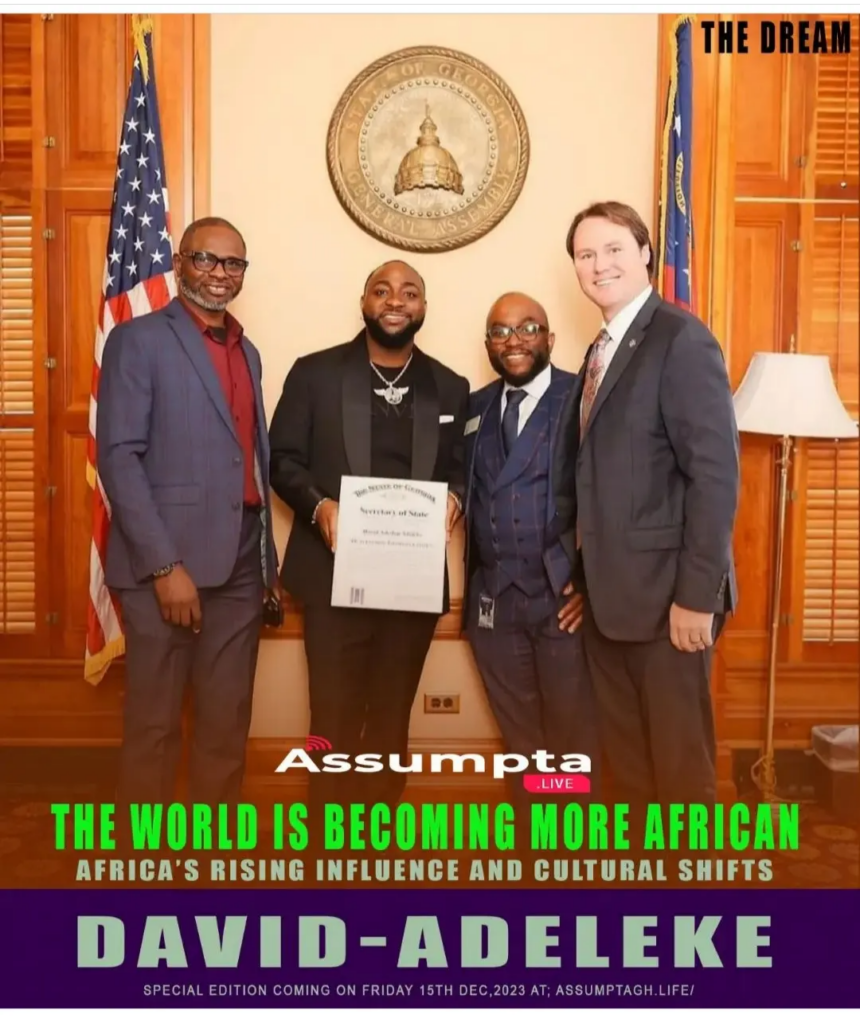
TSASI REPORT :

Presents “THE DREAM“ From the special edition of:
“THE WORLD IS BECOMING MORE AFRICAN”
“Africa’s Rising Influence And Cultural Shifts.”
Featured DAVID-ADELEKE, The King of Afrobeat.The special edition will be released on December 15th December, 2023, at:.assumptagh.live/
“The World Is Becoming More African“
The statement “The world is becoming more African” refers to the increasing influence and cultural shifts that Africa is experiencing on a global scale. This can be seen in various aspects, including demographics, economics, politics, and cultural exchange. The projected population growth of Africa, as mentioned earlier, indicates a significant presence of African people in the world’s population by 2050.

https://www.instagram.com/reels/audio/1418456282426126/
In addition to demographic changes, Africa’s rising influence is also evident in sectors such as music, with Nigerian artist Davido being mentioned as an example. Davido’s recognition as an honorary citizen of the United States highlights the growing global recognition and appreciation of African artists and their contributions to music and culture.
Overall, these developments signify the increasing visibility, influence, and cultural significance of Africa in the world’s stage, leading to a more diverse and interconnected global community.

TSASI
Absolutely! Africa’s growing population is indeed accompanied by an expanding reach and influence in various industries. The music industry has witnessed the rise of African artists who are achieving international recognition and selling out major venues around the world, such as in New York and London. This demonstrates the global appeal of African music and the increased demand for African artists.
Furthermore, the presence of African artists on red carpets, such as at international awards shows and fashion events, indicates the growing visibility and influence of African fashion and culture on the global stage. African fashion designers and styles are gaining recognition and appreciation worldwide, contributing to the diversification of the fashion industry.
Politically, many countries are recognizing the potential for growth and investment in Africa. With its expanding population and emerging markets, African nations are attracting attention from various countries seeking to establish economic and political ties. This interest reflects Africa’s increasing importance as a global player and highlights the opportunities that come with its growth and development.
Overall, Africa’s growing population, combined with its rising influence in music, fashion, and political spheres, underscores the continent’s expanding reach and impact on a global scale.

DAVIDO
Should Africa focus on flourishing in its culture, embrace the idea of being the youngest and fastest growing population on earth due to the baby boom, or prioritise addressing Africa’s cultural landscape in the 21st century?

TSASI
Africa’s cultural heritage and the demographic changes it is experiencing are both important aspects to consider. They are not mutually exclusive, and both can be addressed in an article to provide a comprehensive understanding of Africa’s development in the 21st century.
Highlighting Africa’s cultural stands in the 21st century allows for an exploration of the diverse artistic, intellectual, and societal expressions that shape the continent. It showcases Africa’s contributions to various fields and emphasizes the importance of preserving and promoting cultural identities.
( introducing the Ag-premium Jeans )



https://www.instagram.com/ag_premiumjeans?igshid=OGQ5ZDc2ODk2ZA==
Simultaneously, acknowledging Africa’s baby boom and its young and fast-growing population can shed light on the social, economic, and political implications of this demographic shift. It presents an opportunity to discuss the challenges and opportunities that arise from such a dynamic population.
Ultimately, an article that combines both aspects can offer a balanced perspective, showcasing Africa’s cultural richness and its evolving demographic landscape, allowing readers to appreciate the multifaceted nature of Africa’s development in the 21st century.

DAVIDO
Should Africa prioritise flourishing in its culture, embracing its status as the youngest and fastest growing population on earth due to the baby boom, or give precedence to addressing Africa’s cultural landscape in the 21st century?

TSASI
Indeed, as Africa’s population grows, it presents an opportunity for the continent’s culture to flourish alongside it. The music and fashion industry, in particular, has the potential to showcase African songs and fashion both domestically and internationally. Embracing our African identity and wearing African attire allows us to authentically represent our heritage in all aspects of our lives. By doing so, we celebrate our African roots and contribute to the vibrant tapestry of African culture around the world.

DAVIDO
We also observe the political effects of this phenomenon, as countries express a desire to tap into Africa’s growth and capitalise on its potential.

TSASI
Indeed, the political effects of Africa’s growth are evident as countries seek to tap into the continent’s potential. The rapid demographic expansion and economic opportunities in Africa have drawn the attention of various nations, leading to increased interest in partnerships, investments, and collaborations. This recognition of Africa’s growth can have significant political implications, shaping diplomatic relations and fostering cooperation for mutual benefit.

DAVIDO
“The creation of Pan Africanism as a philosophy dates back to the late 1700s, as evidenced by its emergence during the abolitionist movements in the United States and Britain, where British writers and former slaves such as Ottobah Cugoano and Olaudah Equiano laid its foundations.
Subsequently, Kwame Nkrumah and numerous African leaders introduced the concept, which emphasised both self-benefit and the benefit of others. Drawing upon this notion, I advocate for a transformation in our behavioural norms, shifting away from imitation and towards the creation of African cultural values. I firmly believe that such a shift is imperative in order to forge a new path towards an ‘African civilization’ that embraces and accepts our true identity, empowering us to assert our values and transcend the confines of a chaotic and oppressive order.”

TSASI
That’s a fascinating historical perspective on Pan Africanism and its roots in the late 1700s. It’s interesting to see how the philosophy has evolved over time, with figures like Ottobah Cugoano, Olaudah Equiano, and Kwame Nkrumah playing significant roles in shaping it. Your idea of shifting from imitation to African cultural value creation and embracing African identity as a means to establish a new path for African civilization sounds like a thought-clever approach. By embracing and dominating your own values, you aim to move away from a chaotic and oppressive order. It’s important to explore new avenues that empower and uplift African societies.

DAVIDO
“I wholeheartedly agree with you that Africa must undergo a fundamental transformation in cultural values to shift from cultural oppression to cultural altruism.

https://www.instagram.com/ag_premiumjeans?igshid=OGQ5ZDc2ODk2ZA==
When examining the history of intercultural contacts, it is evident that the responses have ranged from rejecting Africa’s culture of prosperity and well-being to imitating and adopting Western culture centred around commerce and profits. The encounters between Africans and the West serve as an illustration of this point. The case of Ghana, in particular, highlights how the initial response from the West was a complete rejection of Ghanaian well-being and prosperity.
Therefore, it is crucial that we do not repeat the same mistakes by embracing a culture that solely views Africa and its land as a marketplace for buying and selling without contributing to its development. This approach would only result in the exploitation of Africa’s resources, including the refining of those resources abroad. Instead, we should foster a culture that values Africa’s interests, promotes development, and encourages a balanced and mutually beneficial intercultural exchange.”

TSASI
I understand your concerns regarding the historical response to intercultural challenges in Africa. It is important to learn from past mistakes and not repeat them. Instead of blindly imitating the Western culture of commerce and profits, there is a need to prioritize Africa’s own cultural values of prosperity and well-being. By embracing a culture that considers the development and preservation of African resources and interests, Africa can avoid being exploited solely as a market for external gain. It is crucial to foster a balanced approach that promotes cultural altruism and empowers African nations to benefit from their resources and contribute to their own development.
TSASI
How can we consciously align our hearts and minds with the origins from which African culture and values emanate?

Davido
To direct our hearts and minds towards the source from which African culture and values are born, we can take several meaningful steps:
1. Education and Awareness: Engage in learning about African history, traditions, and cultural practices. Explore literature, documentaries, and academic resources to gain a deeper understanding of the diverse cultures and values across the African continent.
2. Cultural Exchange and Dialogue: Foster meaningful exchanges and dialogues with individuals from African backgrounds. This can be achieved through participating in cultural events, attending community gatherings, or joining organizations that promote cross-cultural understanding and appreciation.
3. Art, Music, and Literature: Immerse yourself in African art, music, and literature. These forms of expression often serve as powerful conduits for cultural values, stories, and perspectives. Attend African art exhibitions, listen to African music genres, and read works by African authors to gain insights into the richness of African culture.
4. Travel and Experiential Learning: Whenever feasible, visit African countries and immerse yourself in the local communities. Interact with people, experience their way of life, and engage in cultural activities. Traveling to different regions within Africa allows for a firsthand experience of the diverse cultures and traditions present across the continent.
5. Engage with African Diaspora: Recognize the influence of the African diaspora in various parts of the world. Connect with individuals from African diaspora communities, engage in conversations, and collaborate on projects that celebrate and promote African culture and heritage.
6. Honor and Respect: Approach African culture and values with a mindset of respect, appreciation, and humility. Recognize the depth and complexity of African cultures, avoiding stereotypes and generalisations. Show reverence for the wisdom, traditions, and contributions of African communities.
By actively seeking knowledge, embracing cultural exchange, and approaching African culture with respect, we can nurture a deeper connection to the sources from which African culture and values originate. This journey of understanding and appreciation allows us to bridge cultural gaps, promote inclusivity, and foster a greater appreciation for the richness and diversity of human heritage.

The special edition of “THE WORLD IS BECOMING MORE AFRICAN” presents “THE DREAM” and features David Adeleke, also known as the King of Afrobeat.
This highlights the growing recognition and impact of African culture, particularly through Afrobeat music, which has gained global popularity in recent years.
Africa’s cultural shifts and rising influence extend beyond music, encompassing various aspects of art, fashion, literature, and more. The continent’s rich heritage and diverse traditions are being embraced and celebrated worldwide, contributing to a more inclusive and interconnected global cultural landscape.
As Africa continues to assert its cultural identity and redefine its place on the global stage, it opens up new opportunities for collaboration, appreciation, and mutual understanding between different cultures. This cultural exchange can foster greater unity, creativity, and progress for societies across the world.
Thank you for the engaging conversation!