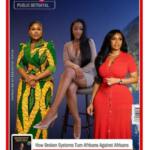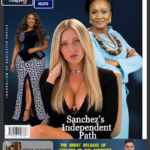
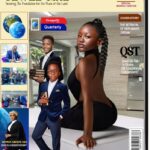
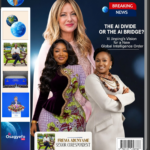



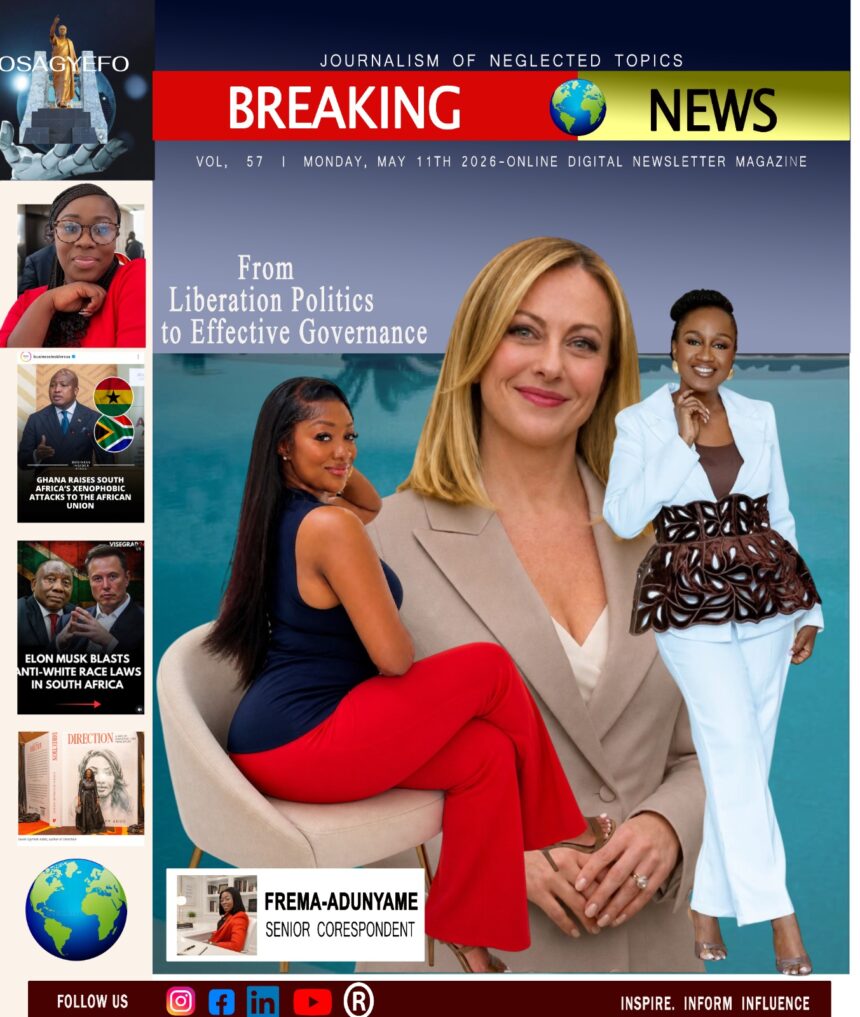
📰 Assumpta Newsweek Edition
FLASH ALERT: PRESENTS
The Osagyefo Newsletter – Editorial
📍 Special Historical & Economic Reflection on South Africa
📅 Release: Monday 11th May 2026
🌐 Read exclusively at: assumptagh.live/
HAIR SENTA ADVERTISEMENT







https://www.instagram.com/hairsenta?igsh=MXAzOThhNGZ0Nm15dQ==
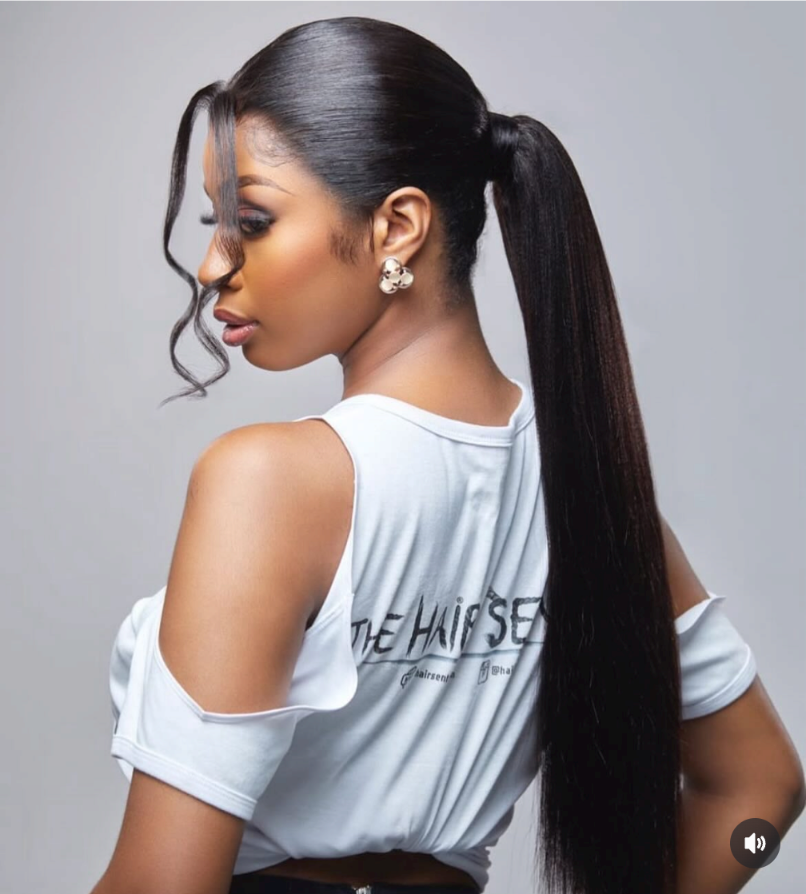
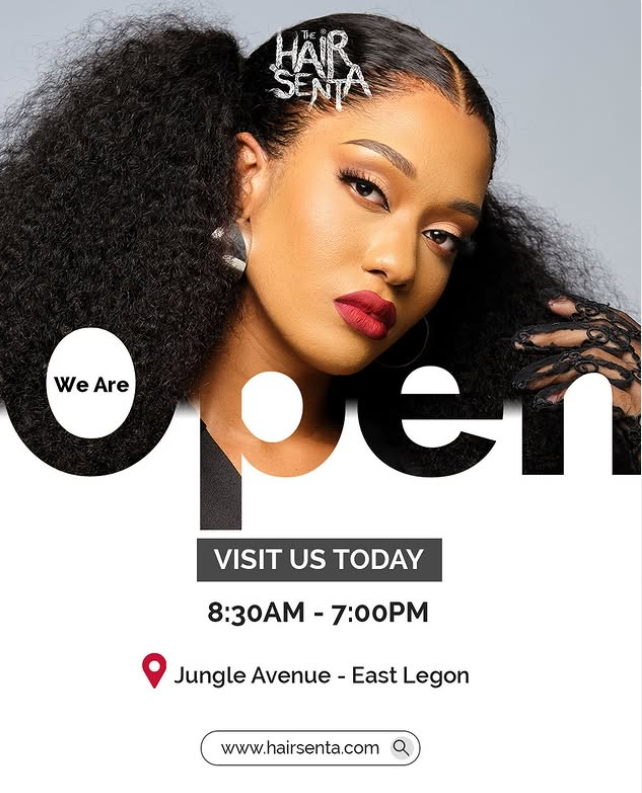
🌿 HAIR SENTA 🌿
A Virtuous Human Hair Enterprise
At Hair Senta, we don’t just sell hair—we craft masterpieces. Our commitment to excellence echoes like a symphony, where every strand speaks of quality, grace, and authenticity.
Just as every family plays its own harmony of growth, fulfilment, and happiness, so do we, with every weave, closure, or bundle we offer. Our hair tells a story—your story—with elegance and pride.
✨ 100% Virgin Human Hair
✨ Ethically Sourced & Expertly Processed
✨ For Women Who Choose Quality, Always
📍 Visit us: 24 Jungle Avenue, Accra, Ghana
🌐 Shop online: www.hairsenta.com
📞 Call: (+233) 0544 354 455 / 0248 629 769
📸 Follow: @directionbygwen | @gwen_addo
Hair Senta — Where Beauty Begins With Integrity.
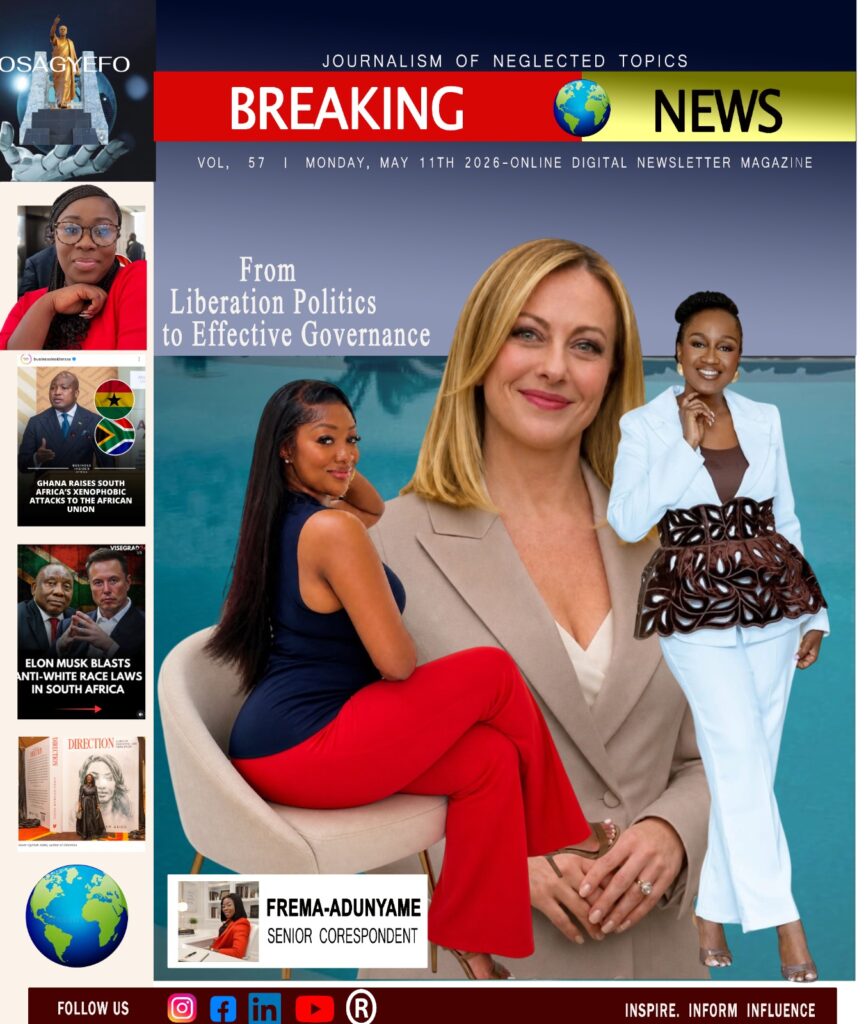
Article Title: From Liberation Politics to Effective Governance
Subtitle: South Africa’s Changing Political Conversation
Newsletter | Global Affairs & Governance:
South Africa is at an inflexion point — not only domestically, but in how it is seen across Africa and the wider world. A country once defined primarily by its historic liberation from apartheid is now increasingly judged by a different measure: its ability to govern effectively at home while maintaining moral credibility abroad.
For much of the democratic era, liberation history shaped political identity, voter loyalty, and international standing. That legacy still matters. But today, amid economic pressure, ageing infrastructure, service‑delivery failures, and rising public frustration, a new question dominates the national conversation: who can deliver results now?
This shift is reshaping both South Africa’s internal politics and the global debate about its role in the world.
A Foreign Policy Rooted in Principle:
Officially, South Africa’s foreign policy remains firmly anchored in a coherent set of principles developed after 1994. These include:
- Pan‑Africanism: Frames South Africa’s national interest as inseparable from Africa’s stability and development.
- Anti‑colonial and anti‑apartheid values: Rooted in resistance to racial oppression and unequal global power structures.
- Commitment to international law and multilateralism: Favouring diplomacy and international institutions over unilateral force.
- Active non‑alignment: Aimed at preserving strategic independence rather than aligning fully with Western or Eastern blocs.
- African economic integration: Through continental and regional institutions.
To its supporters, this posture reflects consistency: a continuation of liberation‑era values translated into foreign policy. To critics, it raises a sharper question — whether ideals abroad are being matched by practice at home.
Governance as the New Test of Legitimacy
Inside South Africa, the public mood is changing. Persistent unemployment, unreliable electricity supply, failing municipalities, and corruption scandals have made governance a lived, daily concern. Among younger generations, especially, political legitimacy now hinges less on struggle credentials and more on:
- Competence
- Accountability
- Service delivery
- Economic opportunity
The Credibility Gap
A growing debate across Africa and beyond centres on a fundamental contradiction: how South Africa presents itself on the world stage versus what many experience within its borders. Nowhere is this tension more visible than in migration and xenophobia. Despite its Pan‑African rhetoric, South Africa has faced recurring episodes of violence against African migrants.
For critics elsewhere on the continent, this raises uncomfortable questions:
- Can a state credibly champion African unity abroad while struggling to protect African lives at home?
- Does moral authority in global forums require stronger domestic governance?
- Is liberation‑era symbolism enough in a results‑driven political age?
Human-Centred Growth, Stability & the Future of South Africans
Four Global Voices — and a Lesson from African History
Newsletter | Global Voices Edition
A Historical Mirror: Kwame Nkrumah and the Gold Coast
History offers a powerful reminder that human-centred governance has African roots. When Kwame Nkrumah returned to the Gold Coast in the late 1940s, he articulated a prosperous, people-centred future grounded in mass upliftment.
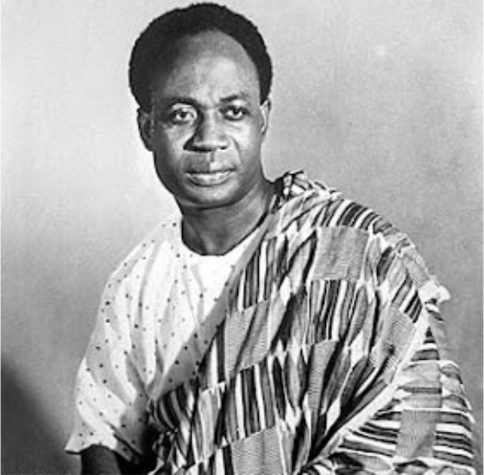
When Kwame Nkrumah returned to the Gold Coast in the late 1940s, he encountered respected Ghanaian noblemen and elite reformers whose ideas shaped early political discourse. These men advocated moderation, negotiation, and elite constitutional reform under colonial rule.
But while intellectually sound, their ideas did not fundamentally challenge the extractive colonial system. European imperial powers continued to extract resources, export profits, and invest minimally in African welfare. Political representation existed without material transformation.
Nkrumah proposed something radically different.
He articulated a prosperous, people-centred future, grounded not in elite accommodation but in mass upliftment. His vision resonated with ordinary people because it addressed daily human needs — work, education, health, dignity, and self‑determination.
This is what propelled him to electoral victory and national leadership.
Governance as Dignity in Action:
Nkrumah governed through visible human infrastructure:
- Dams for electricity and clean water.
- Roads and transportation networks to connect communities.
- Factories to employ and retain national value.
- Universities to build intellectual sovereignty.
- Healthcare centres to protect human well-being.
- Local authorities are empowered to identify and meet community priorities
The noblemen before him had ideas.
Nkrumah delivered systems.
What attracted most was not that these projects were perfect, but that they were guided by a principle that remains timeless:
“Political independence without human dignity is incomplete freedom.“
Human Rights as an Indigenous Principle
What we now call human rights — equality, dignity, social justice — did not arrive in Africa as abstract legal doctrines. In contexts like Ghana, they emerged organically from a fundamental examination of people’s lived conditions within their communities and societies.
This is the universality worth remembering.
Human dignity is not universal because it is declared in international charters.
It is universal because every society, when reflecting honestly on human suffering and aspiration, arrives at the same conclusions.
Nkrumah’s governance was an early expression of this truth.
Why This Matters for South Africa Today
South Africa now faces a moment similar in spirit, though different in context.
Liberation was achieved. Rights were codified. Institutions were built.
Yet many citizens still experience:
•economic exclusion
•failing services
•insecurity
•eroded trust
The question confronting South Africa is not whether it believes in dignity — it does.
The question is whether dignity is being materialised through governance.
Four Global Voices on Human-Centred Futures
This is where our featured voices intersect with history.

Gwen Addo — Dignity‑Based Economics
Reminds us that development that harms people is not progress. Growth must be centred on agency, dignity, and shared prosperity.
“Success that harms others is not value — it is anti‑value.”
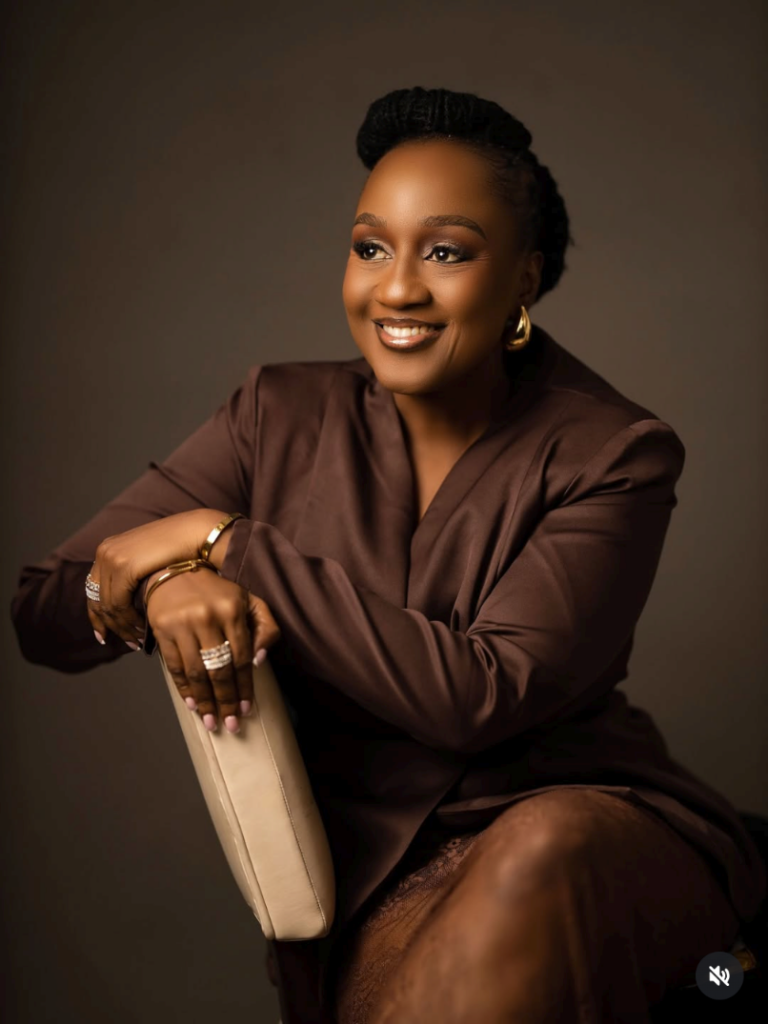
Dzigbordi Kwaku‑Dosoo — Human Skills & Leadership
Shows that no system can endure without emotionally literate, ethically grounded leaders capable of navigating complexity.
“The future will not belong to those with the best tools, but those with the strongest humanity.”

Frema Adunyame — Media & Generational Vision
Highlights how narrative, communication, and values transmit national purpose across generations.
“Great leadership sparks not just hope, but a generational shift in vision and values.”

Prime Minister Giorgia Meloni
Global Human Development Scholar — Ethics & Stability
Reminds us that societal stability depends on moral legitimacy and alignment between values and action — not policy alone.
The Enduring Lesson
Kwame Nkrumah’s story teaches us something essential for South Africa — and for the world:
Human rights and dignity become real only when governance makes them visible in everyday life.
Africa does not lack philosophies of dignity.
It does not lack moral frameworks.
What it requires — now, as before — is leadership that converts values into systems.
Global Voices: Human-Centred Growth, Unity & South Africa’s Future
Introduction

Frema Adunyame (Host):
Greetings to our readers around the world. Wherever you are joining us from—Africa, Europe, the Americas, Asia, or the Global South—we are honoured to welcome you to this special Global Voices dialogue on human-centred growth, dignity, and the future of South Africa.
South Africa has long held a unique place in the global imagination: as a symbol of liberation, reconciliation, and hope. Today, that symbolism is being tested by the realities of inequality, governance, and social cohesion. Our conversation seeks not to judge, but to understand, reflect, and imagine forward.
I am Frema Adunyame—media leader, journalist, and Head of Events and Partnerships at Citi FM/TV and Channel One TV in Ghana. My work has always centred on the belief that narratives matter, because how we speak about our societies shapes how we build them. It is my privilege to moderate today’s dialogue.
Introducing the Panellists
Frema:
Let me introduce our distinguished panellists to our international audience:
- Akosua Owusuwaa (Gwen Addo): An entrepreneur, value-theory advocate, and Founder of Hair Senta. She stands at the forefront of dignity-based economics—a philosophy arguing that human worth, not abstract metrics, forms the true foundation of stability and prosperity. Her work champions agency and development that uplifts rather than extracts.
- Dzigbordi Kwaku-Dosoo: A globally recognised leadership architect, executive coach, and human-skills visionary. With experience spanning Wall Street and global consulting, her work centres on emotional mastery and human-centred performance in a rapidly evolving technological world.
- Prime Minister Giorgia Meloni: Participating from the perspective of leadership ethics and societal stability. Internationally recognised for her engagement with questions of governance values and institutional continuity, her contribution focuses on how ethical frameworks support long-term social cohesion in modern states.
We are grateful to each of you for lending your voices to this conversation.
Setting the Context

Frema:
Before we turn to our central theme, I would like to ground us in a concept deeply embedded in South Africa’s national story: the “Rainbow Nation.”
Popularised by Archbishop Desmond Tutu and embraced by Nelson Mandela after the 1994 democratic elections, this term described a new South Africa where people of different races, languages, and cultures could live together in dignity. The symbolism was powerful:
- Coexistence: A rainbow representing many colours existing as one.
- Diversity: Honouring extraordinary cultural and linguistic variety.
- Vision: Reflecting unity and reconciliation through the Truth and Reconciliation process.
The mission was clear: to build a society grounded in mutual respect and a shared national outlook. Yet today, many are asking a difficult question: Has the Rainbow Nation vision translated into lived reality? Given persistent inequality and economic exclusion, we must ask whether unity has remained symbolic rather than structural.
The Opening Inquiry
Frema:
Akosua Owusuwaa, I would like to begin with you. From your work in dignity-based economics, how do you interpret the idea of the “Rainbow Nation” today?
What does it mean when unity is celebrated in principle, but inequality persists in practice—and what must change for dignity to become real rather than rhetorical?
(Dialogue continues with Gwen Addo’s response)
Dialogue Continues
Gwen Addo (Akosua Owusuwaa)
Thank you, Frema — and greetings to our readers around the world.
When I hear the phrase “Rainbow Nation”, I hear a promise that was morally profound, but structurally unfinished.
The idea was never just about coexistence. It was about shared belonging. A rainbow is not simply colours placed side by side; it is colours that only become beautiful because they stand in relation to one another. When dignity, access, and opportunity are unevenly distributed, what we have is not a rainbow — it is contrast without cohesion.
From a dignity‑based economics perspective, the challenge South Africa faces is not unique, but it is deeply instructive. Unity cannot survive where large portions of the population feel economically invisible. Inequality does more than deny material resources — it erodes agency, trust, and self‑worth.
When people are told they are equal but experience daily exclusion, the system quietly produces instability.
True reconciliation requires more than symbolic unity. It requires systems that allow people to participate meaningfully in economic life, to feel that their labour, ideas, and existence matter. Without that, unity remains aspirational rather than lived.
This is why I often say:
“Success that harms others is not value — it is anti‑value.”
A society that grows while leaving many behind is not progressing. It is a postponing crisis.
Frema Adunyame (Host)
Thank you, Gwen. Your point about dignity as something that must be experienced, not merely declared, is a powerful reminder.
Dzigbordi, this naturally brings us to you.
Your work has consistently emphasised human-centred leadership and what you describe as dignity‑based or people‑first performance. For our global readers, could you help us understand: what does dignity‑based economics truly mean in practical terms — especially in a society still navigating deep historical wounds like South Africa’s?
To ensure your international readers can easily follow the flow and absorb the key insights, I have structured the dialogue using a clear, professional layout that emphasises Dzigbordi Kwaku‑Dosoo’s powerful messaging.

Dzigbordi Kwaku‑Dosoo
”Thank you, Frema — and thank you, Gwen, for setting such an essential foundation.
Dignity‑based economics begins with a simple but radical shift in thinking: people are not costs to be managed; they are assets to be cultivated.
In many systems today, efficiency is prioritised over humanity. Success is measured by output, speed, or scale — while emotional well-being, confidence, and trust are treated as secondary. But what we are learning globally is that systems cannot outperform the emotional and ethical capacity of the people operating them.
The Core Questions of Dignity-Based Economics
Dignity‑based economics asks different questions:
- Safety: Do people feel safe enough to contribute honestly?
- Investment: Do they believe they have a future worth investing in?
- Leadership: Are leaders emotionally equipped to govern complexity without becoming reactive or extractive?
The South African Context & Human Skills
In South Africa’s context, historical trauma makes this even more important. You cannot build a high‑performing society on unresolved pain. Human skills — emotional mastery, empathy, accountability, confidence — are not “soft.” They are stabilising forces.
The future will not belong to those with the most advanced tools if the humans wielding them are disconnected, fearful, or divided.
“The future will not belong to those with the best tools, but those with the strongest humanity.”
When dignity is honoured at a human level, economic and social performance naturally follow.”
Frema Adunyame (Host)
”Thank you, Dzigbordi. You’ve both emphasised that dignity is not a moral add‑on — it is infrastructure.
I would now like to bring in a perspective from the field of leadership ethics and societal stability, which looks at how values, continuity, and moral legitimacy shape the endurance of nations.
From this standpoint, Giorgia Meloni, joining us in the capacity of a global voice on leadership ethics, offers a lens grounded in the long arc of social cohesion.”
Giorgia Meloni (Leadership Ethics Perspective)
”Thank you, Frema, and greetings to everyone following this dialogue.
When we speak about unity — whether through ideas like the Rainbow Nation or other national visions — we must distinguish between symbolic reconciliation and structural cohesion.
Symbols play an important role. They heal memory. They create a shared language for hope. But societies endure not on symbolism alone — they endure when values are institutionalised, when citizens believe that rules apply fairly, that dignity is protected, and that leadership acts with restraint and responsibility.
From an ethical leadership perspective, inequality is not only an economic problem. It is a moral signal. When disparities persist, trust in institutions weakens, and social fractures deepen — not because people reject unity, but because they feel excluded from it.
Requirements for Stable Societies:
- Moral Clarity: A transparent ethical foundation.
- Continuity: Alignment between words and action.
- Responsible Leadership: Leaders who understand limits, responsibility, and duty.
Unity becomes real when citizens believe the system sees them — not as categories, but as people. The challenge for South Africa, as for many nations, is ensuring that its founding moral vision continues to guide its daily governance decisions. Without that alignment, even the most beautiful ideals risk fading into memory rather than shaping the future.”
Frema Adunyame (Host – Transition)
”Thank you all.
What is emerging clearly from this dialogue is that the conversation about South Africa is no longer only about who it was, but about how it governs human dignity today.
This brings us directly to the central theme of our article: From Liberation Politics to Effective Governance — and what that shift truly demands in practice.”
(Dialogue continues into the article discussion.)
To provide a professional and impactful transition for your international audience, I have organised the text using clear thematic markers and a distinct layout for the article title.
Frema Adunyame (Host – Transition to the Article Title)
”Thank you all for those thoughtful reflections.
What is striking in everything we have heard so far is a shared understanding that unity is not sustained by memory alone, but by how societies organise dignity in everyday life. The idea of the Rainbow Nation offered South Africa — and the world — a moral vision rooted in reconciliation, shared humanity, and hope. It was a vision powerful enough to end an era, but perhaps not sufficient on its own to sustain the next one.
The Foundations of Our Discussion:
- On Experience: As Gwen has reminded us, dignity must be experienced, not merely promised.
- On Systems: As Dzigbordi has emphasised, without human-centred leadership, systems eventually fracture.
- On Ethics: Stability depends on alignment between values and action — symbolism and structure.
This brings us to an important realization: South Africa’s conversation is no longer primarily about how liberation was achieved, but about how freedom is governed.
And it is from this point that our article takes its name:
From Liberation Politics to Effective Governance:
South Africa’s Changing Political Conversation
The title does not suggest the abandonment of history. Rather, it reflects a natural progression — one faced by many societies that have emerged from struggle into statehood.
- Liberation politics answers the question of who we are and what we overcame.
- Effective governance answers the question of how we live together now.
As we continue this dialogue, I invite our panellists — and our readers worldwide — to reflect on what this shift truly demands:
- What does it mean to govern dignity?
- How do ideals become institutions?
- What kind of leadership bridges memory with material reality?
Let us explore that together.”
Panel Reflections: On the Evolution of Governance
The Ethical Threshold
Giorgia Meloni (Leadership Ethics Perspective):
Thank you, Frema. The title “From Liberation Politics to Effective Governance” captures a transition that is neither unique to South Africa nor to Africa, but it is particularly vivid there because of the country’s moral history.
Liberation politics answers a foundational question: who are we after injustice? Effective governance answers a different, equally demanding one: how do we sustain dignity once freedom is achieved?
What makes the historical example of Kwame Nkrumah especially relevant is that it demonstrates a universal ethical principle through an African experience. His leadership moved beyond symbolic independence into institutional responsibility. From an ethical standpoint, this is decisive. Societies become stable not when ideals are proclaimed, but when they are translated into systems people can rely on—water, electricity, education, and healthcare. These are not merely economic assets; they are moral commitments made visible.
Realising Humanity Through Structure
Frema Adunyame (Host):
Thank you for that thoughtful framing. Gwen, turning to you: What does this title signify from a dignity-based economics perspective, especially regarding the example of delivering systems rather than symbolism?
Gwen Addo (Akosua Owusuwaa):
Thank you, Frema. For me, the title speaks directly to the difference between recognition and realisation.
Liberation politics recognises humanity—it restores identity and voice. But effective governance must realise that humanity is through structures. This is exactly why the Nkrumah example is so instructive. The noblemen he encountered had ideas, but ideas without systems do not change lives. Nkrumah’s answer to dignity was electricity in homes, roads that connect opportunity, and healthcare that protects life.
In South Africa today, the contradiction is between promised equality and unequal lived outcomes. The title captures that tension honestly. It tells us that freedom must mature into functionality. When dignity becomes measurable through inclusion and access, stability follows.
The Shift to Capacity Leadership
Frema Adunyame (Host):
Dzigbordi, how do you interpret this shift, especially considering the human systems behind leadership and performance?
Dzigbordi Kwaku-Dosoo:
Thank you, Frema. What I hear in the title is a call to leadership evolution.
Liberation politics requires courage and resistance. Effective governance requires something different: emotional intelligence and ethical consistency. The Kwame Nkrumah example reveals this: he translated hope into systems people could experience.
For South Africa, this is a shift from identity leadership to capacity leadership. The question is no longer who liberated the nation, but who can build environments where people thrive psychologically and economically. Effective governance is ultimately about people who feel secure enough to contribute and belong.
Synthesis: The Responsibility of Freedom
Frema Adunyame (Host):
Thank you all. What emerges powerfully is that this title is not a critique of liberation history—it is a continuation of its responsibility.
From Liberation Politics to Effective Governance reflects a universal moment:
- When freedom asks to be structured,
- When dignity asks to be delivered,
- And when unity asks to become tangible.
This is where South Africa now stands—and where many societies will soon arrive.
Closing Dialogue: The Way Forward
The Question of Next Steps
Frema Adunyame (Host):
Thank you all for the depth and clarity you’ve brought to this conversation. As we bring this dialogue to a close, I would like to ask each of you to look ahead—beyond diagnosis and reflection—and speak to what comes next.
South Africa stands at a moment where liberation has been achieved, yet many citizens still struggle to experience dignity in daily life. My question to the panel is this: What are the next steps for South Africa?
Specifically, should the nation draw inspiration from leaders such as Kwame Nkrumah, whose governance placed the highest emphasis on the sanctity of life and building the capacity of people to create value? Is there something in that human-centred approach that can help South Africa unlock prosperity and restore trust?
The Path of Ethical Alignment
Giorgia Meloni (Leadership Ethics Perspective):
From an ethical leadership standpoint, the next step for South Africa is alignment.
South Africa possesses one of the most morally compelling founding visions of any modern state. What is required now is ensuring that governance choices—budgets, priorities, institutional reforms—consistently reflect the sanctity of life. The lesson from Kwame Nkrumah is about principle: leadership must convert moral vision into durable structures.
For South Africa, the next step is to govern with that same seriousness of purpose—where dignity is not aspirational, but operational. Ethical leadership today means choosing structure over symbolism and long-term cohesion over short-term survival.
Strategy Rooted in Dignity
Gwen Addo (Akosua Owusuwaa):
I believe South Africa should absolutely draw inspiration from that tradition—not as nostalgia, but as strategy.
What Nkrumah recognised was that prosperity begins when people believe their lives are valuable enough to invest in. Dignity-based economics starts there. If governance restores people’s belief that they matter, prosperity will follow—not only economically, but socially and spiritually as well. The next step is making dignity measurable through lived experience:
- Empowerment: Are communities empowered locally?
- Livelihoods: Can people build lives with pride?
- Agency: Does development reduce fear and increase agency?
The Human Reboot
Dzigbordi Kwaku-Dosoo:
What South Africa needs next is a human reboot.
Infrastructure is essential, but people must be emotionally, psychologically, and ethically equipped to use it. Nkrumah built systems, yes—but he also built belief. For South Africa, the next step is investing deliberately in:
- Leadership capacity and emotional intelligence.
- Trust-building and human confidence.
A nation where people feel dignified will innovate and collaborate. When citizens believe they can create value under any circumstances, resilience becomes cultural. That is how prosperity becomes sustainable.
Closing Reflection
Frema Adunyame (Host):
Thank you all. Listening to these reflections, it becomes clear that South Africa’s journey is not one of abandoning its past, but of fulfilling it.
Liberation politics gave the nation its moral standing; effective governance must now give that morality a daily expression. This is precisely what our article title captures:
From Liberation Politics to Effective Governance: South Africa’s Changing Political Conversation
It is a conversation about how dignity becomes lived reality, how unity becomes structure, and how freedom matures into prosperity. History reminds us—through figures like Kwame Nkrumah—that human-centred governance is not foreign to Africa. It is indigenous, principled, and achievable.
To our readers around the world: South Africa’s next chapter will matter not only to itself, but to all societies navigating the transition from vision to delivery.
South Africa’s future will not be determined by how eloquently it invokes its history, but by how effectively it honours its people.
The universal principles of equality and human dignity do not come from outside.
They are generated from within communities that demand to live fully human lives.
History has shown the way before.
The question is whether today’s leadership will follow it.
Thank you for joining us in this dialogue.
End of Global Voices Conversation
Our Shared Humanity Soka Gakkai Buddhist Movement
An introduction to the Soka Gakkai and Nichiren Buddhism. Where do the teachings originate from? What is the philosophy of Buddhism? How do Soka Gakkai members apply it in their daily lives?
The Soka Gakkai is a global community-based Buddhist organisation that promotes peace, culture and education centred on respect for the dignity of life. Its members in 192 countries and territories study and put into practice the humanistic philosophy of Nichiren Buddhism.
Soka Gakkai members strive to actualise their inherent potential while contributing to their local communities and responding to the shared issues facing humankind. The conviction that individual happiness and the realisation of peace are inextricably linked is central to the Soka Gakkai, as is a commitment to dialogue and nonviolence.
Subscribe to our channel: / sgivideosonline
Visit our website: https://www.sokaglobal…
Like us on Facebook: / sgi.info
Follow us on Instagram: / sgi.info
Follow us on Twitter: / sgi_info
https://www.instagram.com/babiesandtodds_?utm_source=ig_web_button_share_sheet&igsh=ZDNlZDc0MzIxNw==
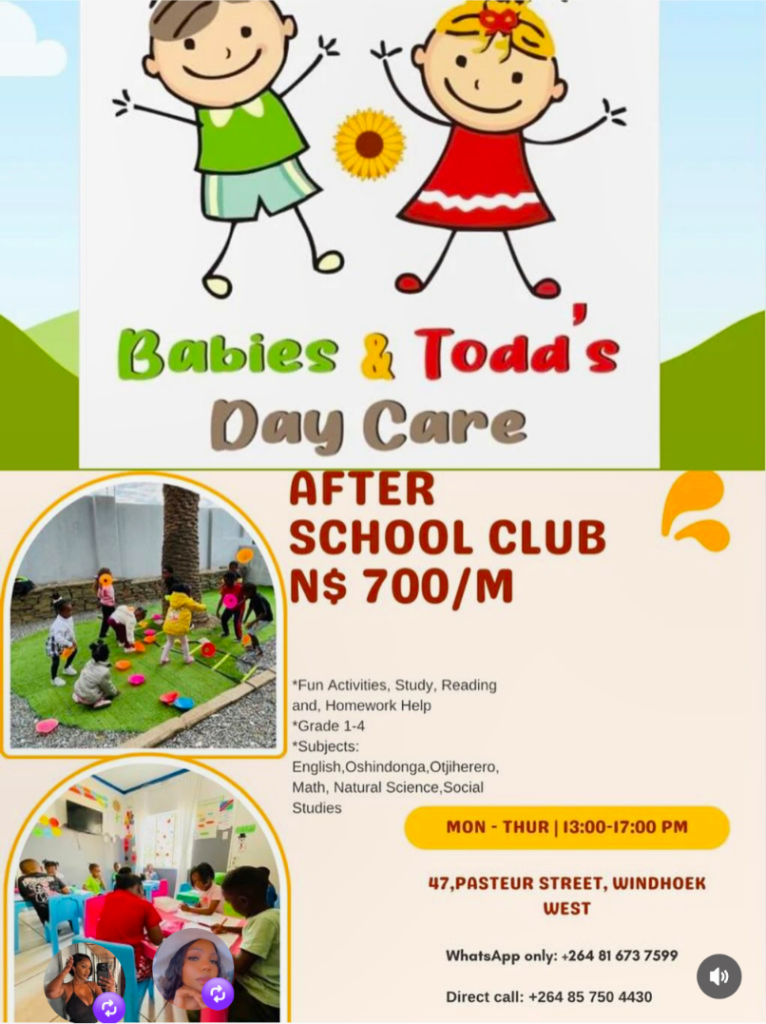
Windhoek, Babies & Toddlers Daycare (BTDC)
- Safe & Nurturing Environment: A “home away from home” in the city centre. 🏠
- Values-Based Learning: We prioritise peace, culture, and mutual respect. 🤝
- Creative Freedom: Dedicated spaces for children to play, share, and innovate. 🎨
Enrolling Now for a Brighter Future.Nurturing Excellence. Cultivating Peace. 🌍
Babies & Toddlers Daycare (BTDC) welcomes families from all walks of life to our premier Daycare and Preschool in Windhoek. 🇳🇦
We are a community-centred institution dedicated to the dignity of life. Our approach goes beyond traditional childcare, integrating a humanistic philosophy that prepares the next generation to be compassionate global citizens.
Why Families Choose BTDC:
📍 Located in the Heart of Windhoek
📞 Inquiries: +264 81 673 7599
💻 Visit: www.babiestodds.com




https://www.instagram.com/gahutudenim?utm_source=ig_web_button_share_sheet&igsh=ZDNlZDc0MzIxNw==
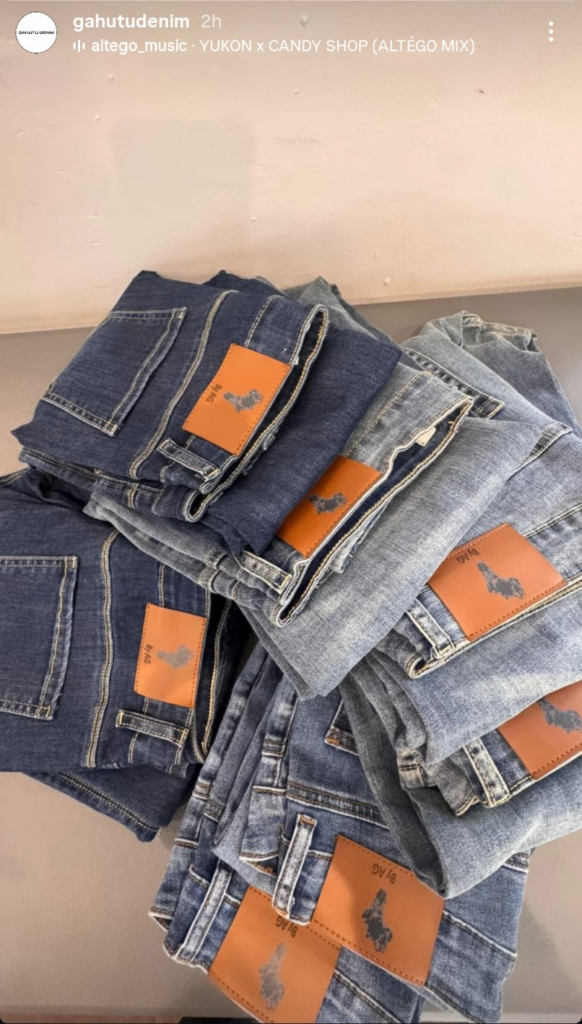
Elevate your everyday style with the visionary behind the brand, Assumpta Gahutu, and her signature collection: Gahutudenim. Designed with the “Modern Woman” in mind, these aren’t just jeans—they are a masterclass in tailoring and comfort.
The Ultimate Corporate-to-Cocktail Essential
Gahutudenim reimagines what denim can be. These jeans are meticulously crafted to bridge the gap between high-end fashion and functional workwear.
- The Perfect Office Fit: With a sleek, polished silhouette, these jeans provide a sophisticated alternative to traditional slacks. They offer a refined look that commands respect in the boardroom while maintaining an effortless edge.
- Contoured Stretch Technology: Engineered with a curve-tight stretch, the fabric moves with you, highlighting your natural silhouette without ever losing its shape. It provides that “custom-tailored” feel from morning meetings to evening social hours.
- Breathable Innovation: We understand the demands of a tropical climate. Our denim is exceptionally lightweight and breathable, specifically designed to keep you cool and comfortable in warm African weather. No more heavy, stifling fabrics—just pure, airy confidence.
Step Into Your New Favorite Pair
Join the movement of women who refuse to compromise on style or comfort. Experience the perfect blend of luxury and durability today.
Shop the collection now at:
Gahutudenim: Made for the Modern Woman.

The Goba Collection: Where Heritage Meets the Boardroom
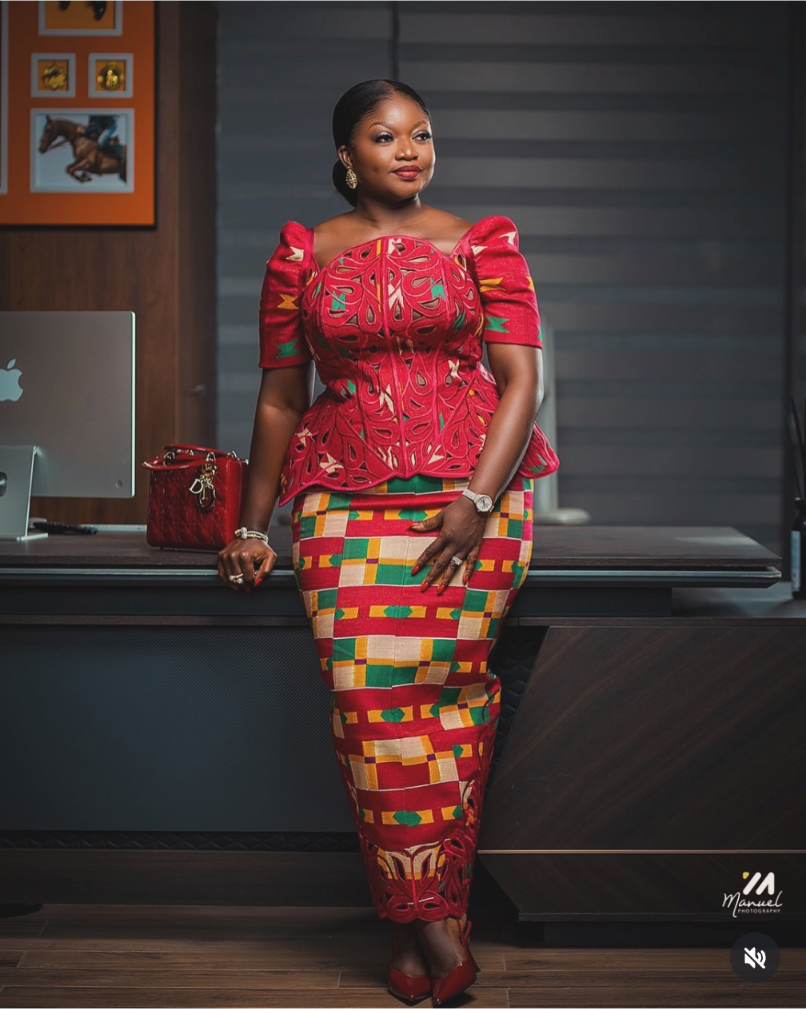
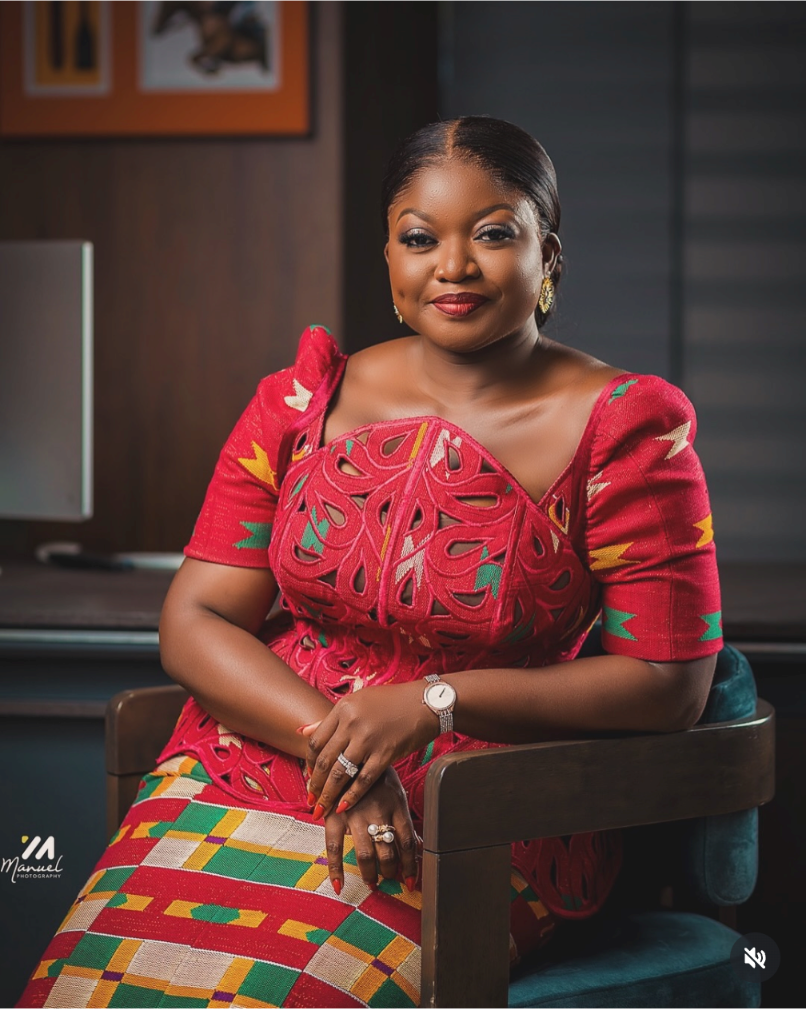
In the world of high fashion, some garments speak, but Goba Ghanaian Kente commands the room. This isn’t just fabric; it is a masterpiece of architectural precision and ancestral storytelling, designed for the leader who carries their culture with as much confidence as their credentials.
The Art of Precision
Every thread in our Kente is a testament to meticulous craftsmanship. From the mathematical symmetry of the hand-woven geometric patterns to the intricate laser-cut embroidery featured on the bodice, the Goba Kente is engineered for perfection. It’s a seamless blend of traditional loom-work and contemporary structural design that ensures a silhouette as sharp as your professional edge.
A Timeless Legacy
While trends fade, Goba Kente remains eternal. By weaving together vibrant reds, lush greens, and regal golds, we create a visual language of Heritage. Each pattern holds a meaning—be it strength, growth, or nobility—allowing you to wear your history not as a costume, but as a living legacy.
Redefining Corporate Elegance
Can heritage belong in the corporate office? Absolutely. The Goba style bridges the gap between traditional prestige and executive authority.
- The Silhouette: A tailored peplum finish and structured shoulders provide a professional “power suit” feel.
- The Impact: In a sea of grey and navy, the rich textures and bold colors of Kente signal a person of depth, taste, and unparalleled vision.
https://www.instagram.com/laurenhautecouture?igsh=MWxzNXN1Ym5nZ3o3Mg==
The Art of Precision: Lauren Haute Couture
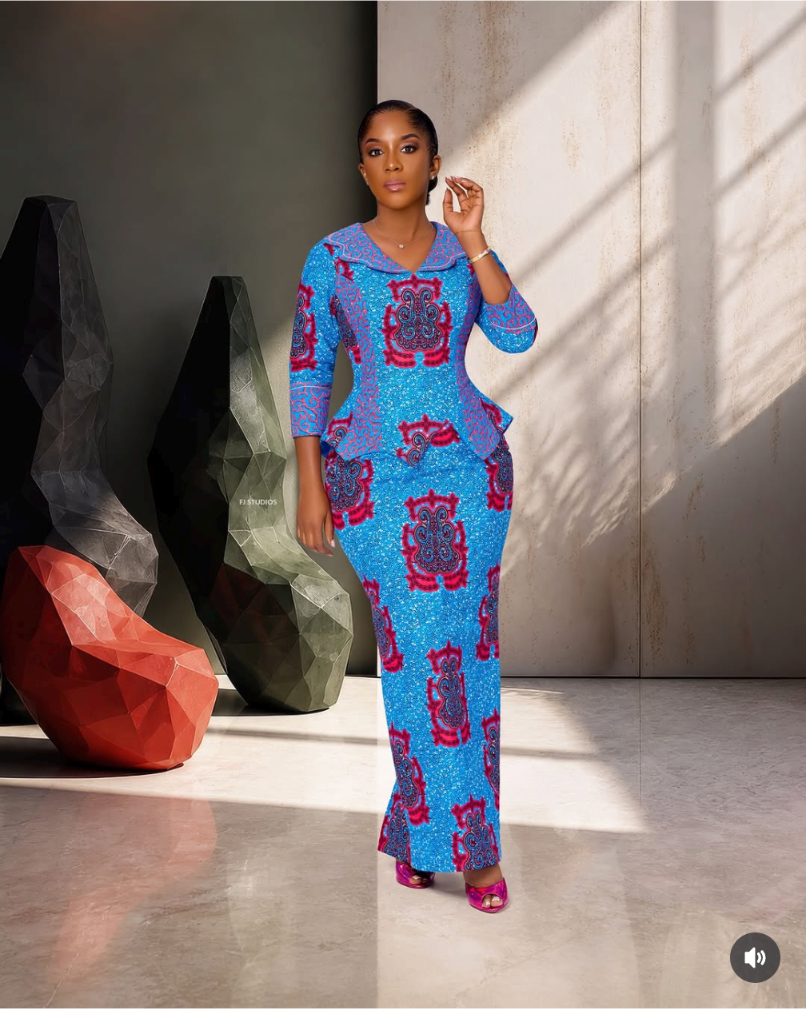
Step into a world where fashion isn’t just worn—it’s experienced. Lauren Haute Couture stands at the intersection of timeless heritage and modern precision, crafting garments that serve as a testament to the soulful creativity of African design.
Based in the heart of East Airport, Ghana, this multiple award-winning brand transforms fabric into architectural masterpieces. Every stitch is a deliberate act of excellence, ensuring that the woman who wears Lauren Haute Couture feels empowered by a legacy of craftsmanship that spans generations.
From the Heart of Africa
African designers are redefining the global fashion landscape by weaving their personal and cultural narratives into every silhouette. Lauren Haute Couture exemplifies this movement through:
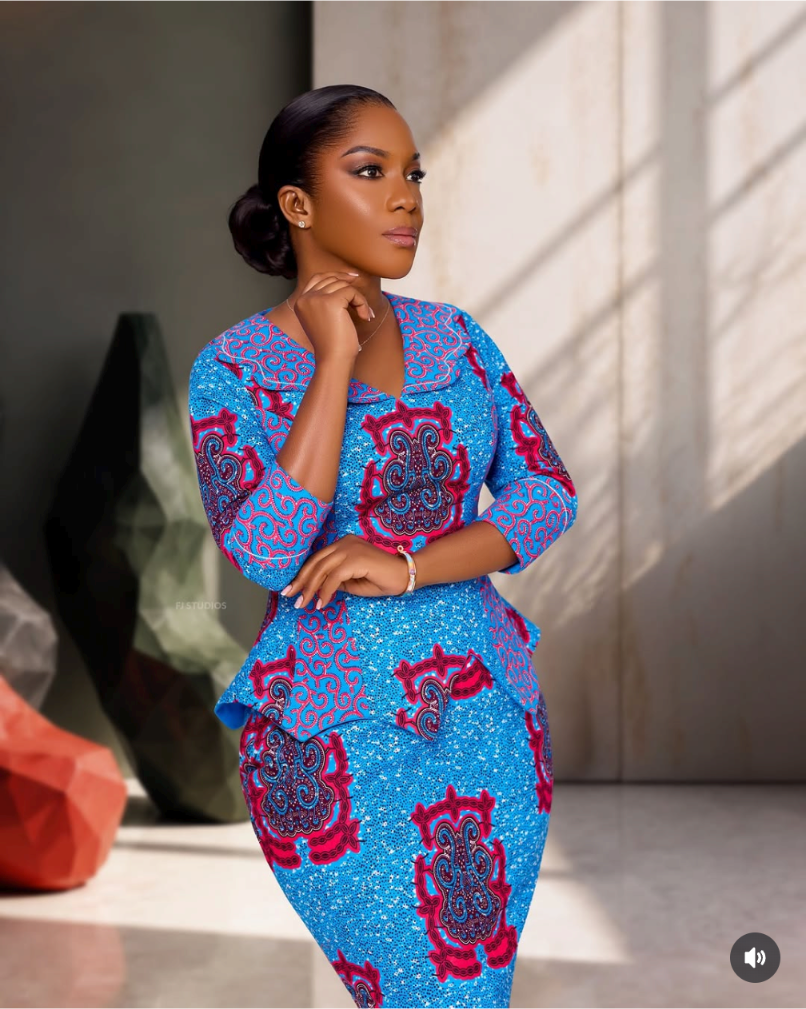
- Precision Engineering: Every curve and seam is meticulously tailored to celebrate the feminine form with grace and structural integrity.
- Timeless Heritage: Utilizing vibrant, traditional-inspired patterns (Ankara) that carry the weight of history while looking forward to the future.
- Authentic Creativity: These designs aren’t mass-produced; they are “works from the heart,” capturing a unique artistic vision that cannot be replicated.
The Corporate Verdict: Does it fit the office?
The featured outfit—a stunning peplum top paired with a streamlined maxi skirt—is a masterclass in Professional Elegance. | Element | Why it works for the Corporate Office |
| The Silhouette | The structured peplum and modest neckline project authority and sophistication. |
| The Tailoring | High-precision fit ensures a polished, “executive” look that commands respect in a boardroom. |
| The Pattern | While vibrant, the organized symmetry of the print adds a rhythmic, professional consistency to the aesthetic. |
| The Versatility | It transitions seamlessly from a high-stakes morning meeting to an evening networking gala. |
The Verdict: Absolutely. For the modern entrepreneur or executive, this ensemble is the ultimate “power suit.” It allows you to embrace your cultural identity without compromising on professional decorum.
Visit Us:
📍 5 Mama Adjeley Rd, East Airport, Ghana.
Experience the pinnacle of African luxury.
Are you looking to style this piece with specific accessories for a board meeting, or would you like to see more designs from the latest collection?



https://www.instagram.com/tdacoutureghana?igsh=MXkyOGhjdDRkMXA2cA==
Experience the Epitome of Ghanaian Luxury: Gwen Addo x TDA Couture GH
When a titan of industry meets the pinnacle of bespoke tailoring, the result is nothing short of a masterpiece. Akosua Owusuwaa, popularly known as Gwen Addo, isn’t just wearing an outfit; she is wearing a statement of African excellence.
As a visionary leader who has scaled empires from the ground up, Gwen understands that true luxury lies in the details. By choosing TDA Couture GH, she champions the “Made in Ghana” movement, proving that local craftsmanship can stand toe-to-toe with the world’s most elite fashion houses.
The Outfit: Refined Artistry in Motion
In this stunning look, Gwen Addo embodies the “Refined Craftsmanship” that defines TDA Couture GH.
- The Signature Outerwear: A majestic, full-length robe in a rich, deep burgundy. The piece features a striking wide-trim collar adorned with intricate, multi-colored vertical stripes that frame the silhouette with architectural precision.
- The Foundation: Underneath, she layers the look with a bold, black lace corset, adding a touch of modern edge to the traditional elegance of the robe.
- The Pant: Seamlessly coordinated high-waisted trousers that mirror the vibrant striped patterns of the robe’s trim, creating a cohesive, elongated, and authoritative look.
- The Vibe: This is the wardrobe of a woman who leads. It balances the softness of culture with the structured discipline of a CEO.
Why TDA Couture GH is the Executive Choice
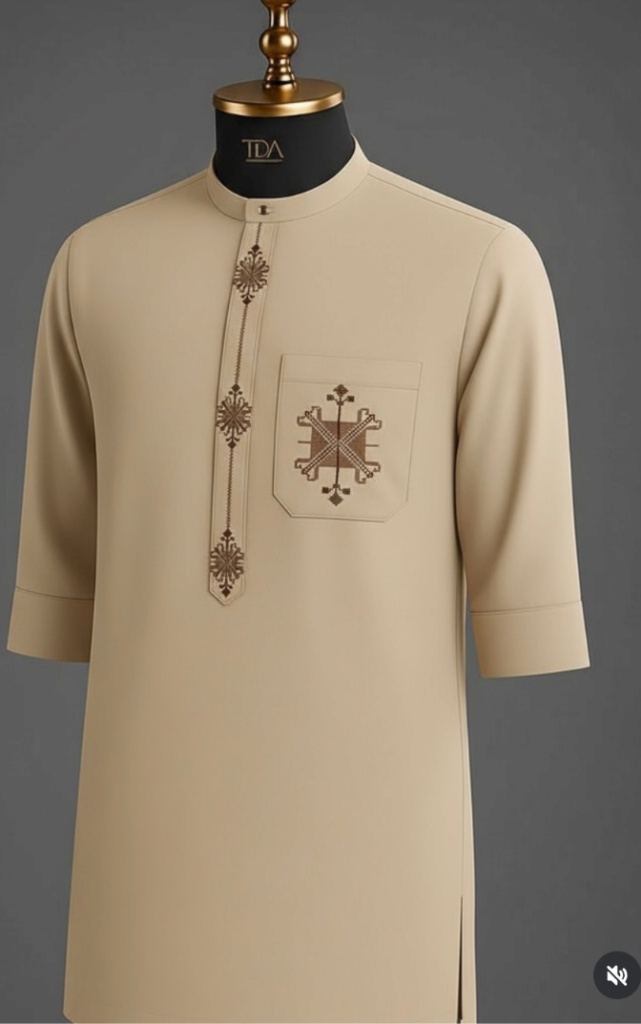
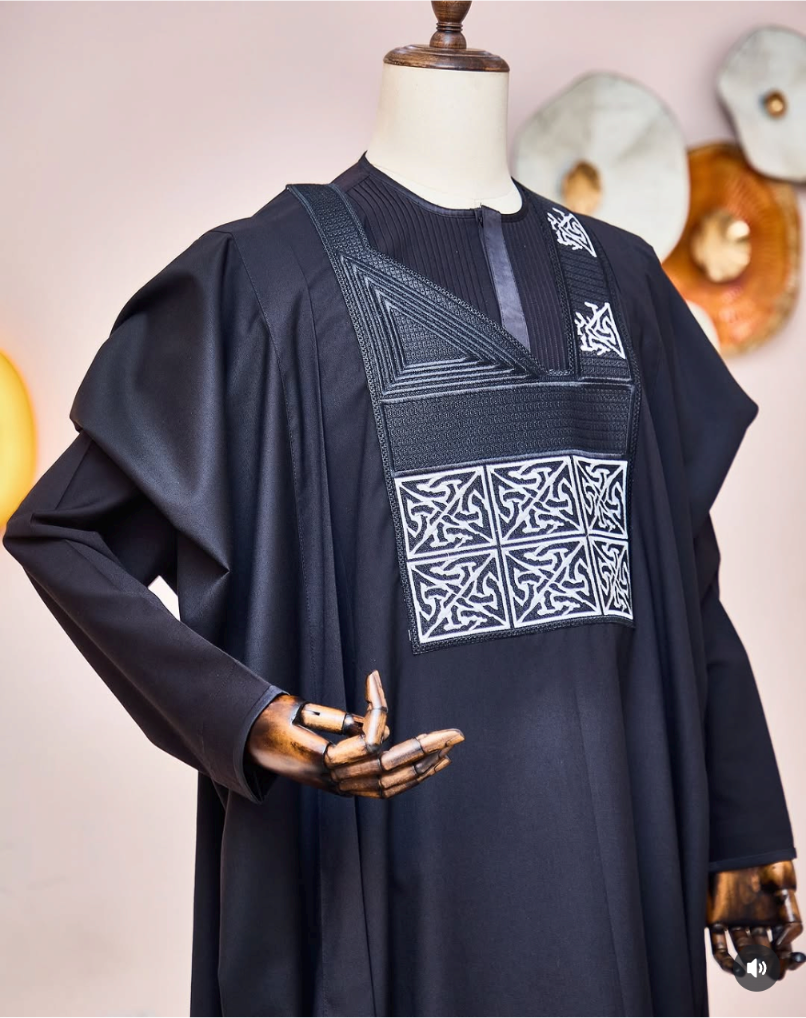
TDA Couture GH isn’t just a brand; it’s a destination for those who demand Timeless Elegance. Whether for men or women, their bespoke tailoring ensures a fit that is personal, powerful, and permanent.
- Bespoke Precision: Every stitch is a testament to quality, designed to highlight the wearer’s unique stature.
- Cultural Pride: By blending modern silhouettes with traditional aesthetics, they create pieces that are globally relevant yet locally rooted.
Join the Movement
Be like Gwen. Elevate your presence and support Ghanaian ingenuity.
📍 Visit Us: Find us on Google Maps at TDA Couture GH 📱 Watch the Craft: TikTok @tda.couture.ghana
✨ The Mission: Wear the culture. Live the longevity.
TDA COUTURE GH | Bespoke Tailoring for the Modern Leader.


https://www.instagram.com/delish_bakerygh?igsh=MW5ic2c0NnR5cHBwZQ==