






OSAGYEFO NEWSLETTER MAGAZINE
SPECIAL EDITORIAL ISSUE |
📅Publication Date: Monday, November 02, 2026
,🌐 Read exclusively at -aasumptagh.live/
















https://www.instagram.com/hairsenta?utm_source=ig_web_button_share_sheet&xtok=ZDNlZDc0MzIxNw==
Something Unbelievable Is Sizzling at 24 Jungle Avenue This November.
In the golden glow of the Accra sun, a transformation is taking place. It’s more than just a change in the weather—it’s a movement. A shimmer of silk, a cascade of waves, and the effortless sway of hair that refuses to be ordinary.
They say beauty is power. But this November, what if your hair could command the breeze, turn every head on the coast, and carry the vibrant soul of Ghana wherever you go?
HAIR SENTA — the secret behind every radiant summer glow. ✨🌊
Straight from the heart of Ghana, our 100% luxury human hair extensions are designed for the heat of the moment: lightweight, natural, and undeniable. This season, we’re infusing heritage, craft, and high-fashion glamour into every strand, ensuring you stay cool while looking fire.
Will you be the one who owns the sunshine… or the one who only watches it fade?
Get Your Summer Glow:
Call Now: 📞 (+233) 0544354455 / 0248629769
Explore: 🌐 www.hairsenta.com
Visit Us: 📍 24 Jungle Avenue, Accra, Ghana
Hair Senta. Real Hair. Real Power. Real Summer Energy.
Would you like me to create a shorter version specifically tailored for an Instagram caption or a TikTok script?
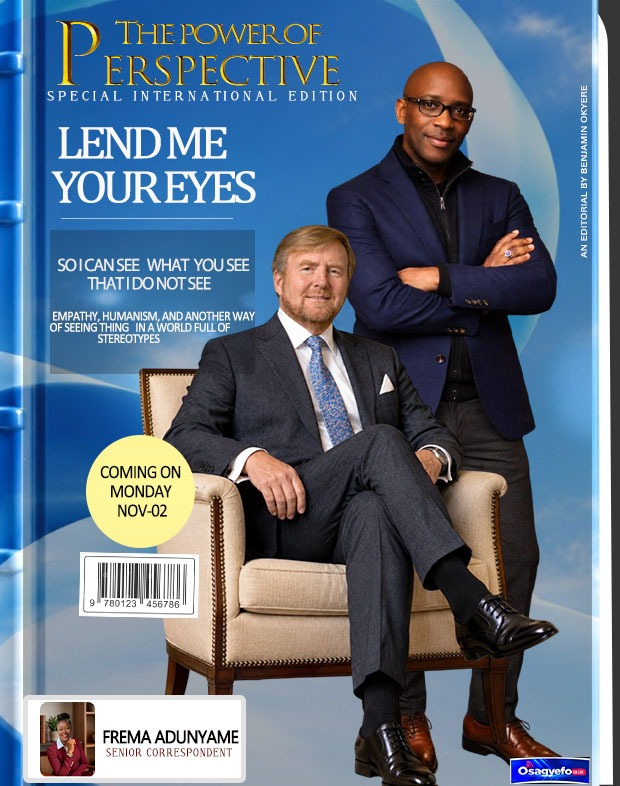
LEND ME YOUR EYES, SO I CAN SEE WHAT YOU SEE THAT I DO NOT SEE
Another Way of Seeing Things in a World Full of Challenging Stereotypes
A Special Editorial on Empathy, Humanism, Workplace Justice, and the Courage to Question Assumptions
📰 Newsletter Introduction: The Courage to See Differently
OSAGYEFO NEWSLETTER MAGAZINE THE POWER OF PERSPECTIVE
LEND ME YOUR EYES: A Newsletter Introduction by Benjamin Okyere
Has the Netherlands Changed from a Free Society into a Culture of Control? On workplace dignity, managerial power, economic responsibility, artificial intelligence, and Europe’s search for peace.
There is a question I have increasingly found myself asking: Can a society continue to call itself free when authority, economic power, and decision-making become concentrated in the hands of a few, while ordinary people are expected to bear the consequences of decisions they never made?
This question is not merely philosophical. It concerns how we work, how we are treated, how our contributions are valued, and whether the institutions that govern our lives still recognise our dignity.
I do not raise it because I have lost faith in the Netherlands. I raise it because I believe in the values that have made this country an attractive place to live and work: fairness, mutual respect, freedom, and the opportunity for people to contribute meaningfully to society.
Yet freedom must be more than a principle written into law. It must also be experienced in everyday life—in our workplaces, in our relationships with authority, and in the way institutions respond when people question their decisions.
When power becomes concentrated, and accountability becomes distant, we must ask ourselves whether we are strengthening a free society or gradually creating a culture in which obedience matters more than human dignity.
A Shared Observation: The Changing Meaning of Work
Ever since I arrived in the Netherlands, I have wondered why working here could be such a positive experience. Work could be a pleasure. People treated one another well, and the workplace could offer not only an income but also a sense of belonging and personal satisfaction.
Of course, every workplace has its difficult colleagues. That is part of human nature. But occasional disagreements are not the defining feature of a healthy working environment.
For me, going to work has also been a source of satisfaction. However, as I have observed workplace culture more closely in recent years, I have become concerned about a change in the relationship between management and employees.
I increasingly find myself asking whether trust is giving way to suspicion, whether supervision is becoming excessive, and whether employees are sometimes treated as problems to be controlled rather than people whose abilities should be developed.
My own experiences have contributed to these questions. They have also encouraged me to look beyond individual disagreements and examine the principles that shape organisational behaviour.
One particularly useful framework comes from the work of Douglas McGregor, the social psychologist and management thinker associated with MIT, whose influential book The Human Side of Enterprise introduced the distinction between Theory X and Theory Y.
These two approaches offer a powerful way to examine how management’s assumptions about people can shape the workplace.
Douglas McGregor’s Theory X and Theory Y: What Kind of Workplace Are We Creating?
Theory X begins with a pessimistic assumption about human nature. It suggests that employees generally dislike work, avoid responsibility, and must be directed, monitored, or pressured to meet organisational expectations.
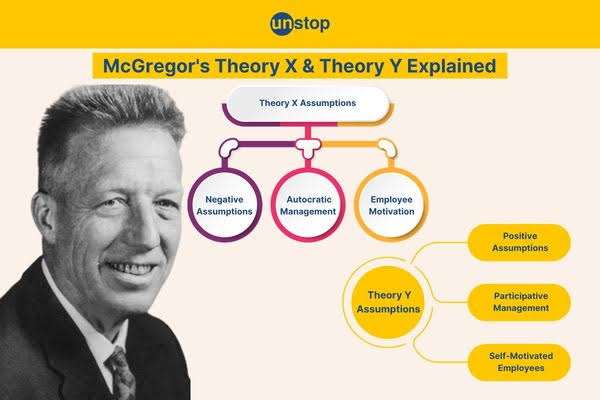
When management embraces this outlook, the workplace can become dominated by close supervision, rigid controls, fear of punishment, and a constant demand to prove one’s worth.
This is the environment commonly associated with micromanagement. Employees may feel that every action is being scrutinised, every mistake is being magnified, and every request for understanding is interpreted as a sign of weakness or unwillingness to work.
But an important question follows: what happens to people when they are managed as though they cannot be trusted?
Theory Y, by contrast, starts from a more constructive understanding of human potential. It recognises that work can be a source of satisfaction, that people can accept responsibility, and that employees are often willing to contribute more when they feel trusted, respected, and valued.
Under this approach, a manager does not simply control performance. A manager creates the conditions in which people can perform well.
Employees receive clear expectations, appropriate support, meaningful responsibility, and recognition for their contributions. Mistakes become opportunities to learn, and accountability becomes a means of improvement rather than humiliation.
Theory Y does not mean abandoning standards or allowing employees to do whatever they please. It means understanding that responsibility and trust can reinforce one another.
The distinction is fundamental: Theory X asks how people can be made to work; Theory Y asks how people can be helped to do their best work.
When Management Creates the Behaviour It Expects
There is a danger in assuming that employees are naturally unmotivated, irresponsible, or unwilling to contribute.
When people are constantly treated with suspicion, they may gradually withdraw their initiative. When their efforts go unrecognised, they may stop volunteering ideas. When every mistake brings disproportionate criticism, they may become more concerned with avoiding blame than achieving excellence.
Eventually, the workplace can produce the very behaviour management originally expected to find.
An employee who once demonstrated enthusiasm may become disengaged. Someone who once took initiative may begin waiting for instructions. A person who previously wanted to contribute more may conclude that additional effort brings neither recognition nor meaningful reward.
This is not an excuse for poor performance. Employees remain responsible for their conduct and duties. But management must also accept responsibility for the environment it creates.
Leadership cannot demand commitment while undermining trust. It cannot expect people to demonstrate their full potential while consistently making them feel insignificant.
In my view, this is an important question for the Dutch working environment, including my own experiences at KLM. I am concerned that some management practices can resemble the controlling assumptions associated with Theory X, particularly when employees experience excessive scrutiny, fear, or a lack of constructive dialogue.
I also believe that management must guard against allowing negative assumptions about employees to shape its interpretation of organisational difficulties.
When a company faces unfavourable conditions, it is tempting to search for individual people to blame. But fair leadership requires a broader examination of the circumstances, the decisions made, the resources available, and the responsibilities carried by management itself.
My criticism is not a claim that every manager behaves this way, nor that every workplace has become oppressive. It is a call to examine whether the balance between control and trust is moving in the wrong direction.
The real test of leadership is not simply whether employees comply, but whether they are given a fair opportunity to succeed.
The Right to Remuneration: Who Benefits from Human Effort?
The question of workplace dignity also leads to a broader issue: the relationship between human effort, economic power, and fair compensation.
Article 23 of the Universal Declaration of Human Rights recognises the right to work, to just and favourable conditions of work, and to just and favourable remuneration for work. It also affirms the principle of equal pay for equal work and the right to form and join trade unions.
These principles remind us that human labour is not merely an expense on a company’s balance sheet. Work is connected to dignity, independence, family life, and the ability to participate in society.
Today, however, we are approaching another technological transformation. Artificial intelligence can process enormous amounts of information, generate content, and perform tasks that once depended almost entirely on human effort.
This raises difficult questions about authorship, ownership, and remuneration.
When writers, artists, journalists, and other creators produce work that may be used to train AI systems, what rights should they have? How should consent be obtained? How should the value of their contributions be recognised? And who should benefit when technology derives commercial value from human creativity?
These questions require serious public debate. The answer should not be to reject technological progress, but to ensure that progress does not become a justification for disregarding the people whose knowledge, labour, and creativity make it possible.
A society cannot reasonably celebrate innovation while ignoring the dignity and economic rights of those who contribute to it.
The same principle applies in traditional workplaces. Whether a person works with their hands, their mind, or a combination of both, their contribution deserves fair treatment.
Progress should expand human possibilities, not make human beings easier to exploit or discard.
The Human Mind, Fear, and the Responsibility of Leadership
There is another dimension to this discussion that we should not overlook: the relationship between thought, emotion, and behaviour.
The human mind can respond powerfully to something that is not happening in the present moment. An embarrassing memory can make us blush. A painful memory can bring tears to our eyes. An anxious thought can make our heart race.
Our thoughts do not always reflect our immediate circumstances, yet repeated thoughts can influence how we interpret events and respond to other people.
Consider the language we sometimes use when we are under pressure:
- “This is killing me.”
- “I cannot handle this.”
- “What if it continues?”
When such thoughts become habitual, they can reinforce patterns of fear, frustration, and helplessness. Recognising these patterns is an important first step, but meaningful change also requires examining the beliefs that sustain them.
This is where I see a connection with Theory Y.
A workplace built on trust, recognition, responsibility, and encouragement can help people develop confidence in their abilities. It can create room for employees to learn from difficulties without being defined by them.
Leadership has a responsibility to consider not only what people produce but also the environment in which they are expected to produce it.
I do not suggest that positive thinking can solve every workplace problem or that employees should simply change their attitudes when faced with unfair treatment. Genuine problems require genuine solutions, and accountability must be accompanied by fairness.
But we should recognise that the attitudes encouraged by leadership can either strengthen human potential or diminish it.
Ultimately, the question is not simply how much an employee can produce. It is whether leadership enables people to work with dignity, develop their abilities, and find meaning in their contributions.
Fuel Prices, Geopolitical Conflict, and the Question of Responsibility
These questions about responsibility become even more important when we consider the economic consequences of international conflict.
Europe continues to face difficult questions about energy security, inflation, industrial competitiveness, and the cost of maintaining its standard of living.
The closure or severe disruption of the Strait of Hormuz, a vital route for global energy supplies, can place upward pressure on oil prices and increase costs for households and businesses. Conflict involving Iran and the wider Middle East can also create uncertainty throughout international markets.
The war in Ukraine has had its own profound consequences for Europe’s energy security, economic policy, and political relationships. These developments should be examined carefully rather than reduced to a single explanation.
When fuel prices rise, the consequences are felt by workers who must travel to their jobs, families managing household expenses, and businesses struggling with operating costs.
But ordinary employees do not determine the course of international wars. They do not decide whether diplomatic efforts succeed, whether military escalation occurs, or whether vital shipping routes are disrupted.
Why, then, should employees be treated as though they are responsible for economic pressures created by decisions far beyond their control?
Accountability must follow responsibility.
If governments, political leaders, or other decision-makers contribute to conditions that create economic instability, their decisions deserve scrutiny. Employers, meanwhile, must assess their own organisational challenges fairly rather than automatically attributing every difficulty to the conduct of individual workers.
This is not a demand that employees be exempt from accountability. It is a demand that accountability be applied consistently, proportionately, and honestly.
Is Europe an Equal Partner or a Strategic Buffer?
Beyond the workplace, the same question of responsibility confronts Europe as it reassesses its relationship with the United States and its response to the war in Ukraine.
European governments have increased their defence commitments, strengthened military preparedness, and reconsidered their security arrangements. At the same time, questions about American military deployments, energy dependence, and Europe’s strategic autonomy have become increasingly important.
The central issue is not whether Europe should cooperate with the United States. Transatlantic cooperation has long played a significant role in European security. The question is whether that cooperation gives Europe sufficient independence to determine its own priorities and manage its own risks.
Three developments deserve particular attention:
- Energy Security: Europe has reduced its dependence on Russian pipeline gas and increased its reliance on alternative supplies, including liquefied natural gas from the United States. This transition has involved difficult trade-offs concerning prices, infrastructure, industrial competitiveness, and long-term energy security.
- Defence Spending: European governments are committing substantial resources to military readiness and the replenishment of defence stockpiles. Such spending raises legitimate questions about procurement, strategic priorities, and the balance between security obligations and investment in citizens’ welfare.
- Military Responsibility: Changes in American force deployments raise questions about how security risks are distributed between Washington and European capitals. Any specific troop withdrawal must be assessed against the actual policy decisions, deployment figures, and strategic circumstances involved.
Taken together, these developments invite a fundamental question: is Europe strengthening its capacity to act independently, or is it becoming increasingly exposed to decisions made elsewhere?
Some may interpret these changes as strategic vulnerability. Others may see them as an opportunity to develop a more coherent European defence and foreign policy.
Both perspectives deserve examination.
What concerns me most is the possibility that Europe could devote increasing resources to managing the consequences of conflict without doing enough to address the political conditions necessary for lasting peace.
Military preparedness and diplomacy are not necessarily incompatible. But neither should become a substitute for examining how conflicts begin, how they can be brought to an end, and who ultimately bears their human and economic costs.
Who Made the Decisions—and Who Must Bear the Consequences?
This brings us back to a question that applies equally to governments and corporate management.
Was it the responsibility of ordinary employees to govern a country? Did they decide the course of international conflicts? Did they determine the energy policies that shaped Europe’s dependence on particular suppliers?
Of course not.
Citizens elect governments, although their influence varies according to political systems and circumstances. Managers make organisational decisions within the authority entrusted to them. Employees carry out their duties within the responsibilities assigned to them.
These roles are different, and the distinction matters.
Those who hold decision-making power must be prepared to explain their choices. Those who implement decisions must be treated fairly. And those who are affected by decisions should have meaningful opportunities to question them.
In my view, a serious problem arises when authority remains concentrated at the top while responsibility is repeatedly transferred to those at the bottom.
This concern extends to disciplinary procedures and accusations in the workplace.
In my own dealings with KLM management, I have questioned the fairness of accusations made against me and the assumptions underlying the way my conduct has been interpreted. I believe such matters should be addressed through accurate information, clear explanations, proportionate procedures, and a genuine opportunity for employees to respond.
These are my concerns and my perspective on the situation. They should be examined based on the relevant facts and evidence.
A disciplinary letter is not, by itself, proof that every accusation is correct. Equally, disagreement with management does not automatically establish that management has acted improperly.
What matters is whether the process is fair, whether the evidence supports the conclusions, and whether the people involved are treated with dignity.
My question to those who occupy management positions is therefore straightforward: Whom do you represent when you sit at the decision-making table? Do your decisions encourage unity or deepen division?
Leadership is not measured only by the authority one possesses. It is also measured by how responsibly that authority is exercised.
Europe Cannot Build Its Future by Remaining a Prisoner of Its Past
Europe has a rich history of institutions, traditions, achievements, and political arrangements that have shaped its understanding of stability. Yet the belief that established arrangements will remain permanent can become a weakness when the world changes.
Every moment presents new circumstances. Our understanding must evolve with them.
The challenges facing Europe today cannot be understood exclusively through the assumptions of yesterday. Energy security, artificial intelligence, international conflict, workplace relations, and economic inequality require fresh thinking and a willingness to question familiar explanations.
The pain experienced today may resemble the difficulties of the past, but the circumstances are never entirely identical. Recognising that difference allows us to respond more intelligently.
Europe must therefore ask whether its decisions are genuinely advancing peace, security, prosperity, and human dignity.
It must also consider whether the language of security is being used to avoid difficult questions about accountability, economic consequences, and the distribution of power.
A policy should not be considered successful merely because it has bee