









OSAGYEFO NEWSLETTER MAGAZINE Presents — African / 2026 Edition
PUBLIC BETRAYAL
THE LAWYERS
ARTICLE TITLE: THE ONE MILLION CODERS QUESTION THEME: Are we preparing Ghana’s youth—or betraying them?
SUBTITLE
Ghana stands at a critical technological crossroads. As the country seeks to build a competitive digital future, one question demands serious attention:
Should coding education begin at university, or must the foundation be built much earlier in high school?
Join three voices in a bold conversation examining Ghana’s education system, technology infrastructure, and the responsibility to empower the next generation.




https://www.instagram.com/hairsenta?stkn=MXAzOThhNGZ0Nm15dQ==
It’s time to trade the winter coats for a fresh spring glow! Here is a refined, spring-themed version of your copy that focuses on renewal, bloom, and that vibrant new-season confidence.
🌸✨ Hair Senta – Where Beautiful Hair Meets Beautiful Conversations ✨🌸
As the season experiences its minor rainy season, which generally runs from September to November, Hair Senta invites you to embrace a fresh start with more than just stunning hair. Step into a world of renewal with an experience wrapped in care, expertise, and a vibrant new energy. Every interaction is thoughtfully designed to deliver the finest human hair extensions from Ghana, while empowering you with expert guidance on how to care for, style, and love your hair as you bloom.
From your first greeting to your final choice, we listen, educate, and support you with warmth and professionalism. Whether you’re refreshing your look for the new season, attending weddings, or simply treating yourself to a “new year” glow-up, our team ensures you leave radiant, confident, and ready to shine.
💇🏾♀️ Why Choose Hair Senta This Spring?
✨ Trademarked, trusted, and internationally recognised
✨ Premium human hair extensions shipped from Ghana to the world
✨ Personalised, educational, and uplifting client experience—designed to help your confidence grow
This season, gift yourself the beauty of a fresh start. Because when your hair feels like a masterpiece, you’re ready to take on the world.
📍 Get in Touch
Visit us: 24 Jungle Avenue, Accra, Ghana 00233
Shop online: www.hairsenta.com
Call: (+233) 0544354455 / 0248629769
Follow us on Instagram: @hairsenta
Hair Senta — Because great hair is always in season.
FEATURING

- Berla Mundi — Host & Moderator

- Serwaa Amihere, Esq. — Ghanaian Lawyer

- Assumpta Gahutu, Esq. — African Lawyer
📅 Wednesday, September 16, 2026 🌐 Read at:
Real Issues. Bold Voices. Lasting Change. An unvarnished conversation about the choices shaping Ghana’s next generation.
THE ONE MILLION CODERS QUESTION
Are we preparing Ghana’s youth—or betraying them?
THE NEWS THAT RAISED THE QUESTION
A recent announcement attributed to Sam George, Ghana’s Minister for Communications, reports that the University of Ghana and Kwame Nkrumah University of Science and Technology (KNUST) have made the One Million Coders programme a compulsory course for all Level 100 students.
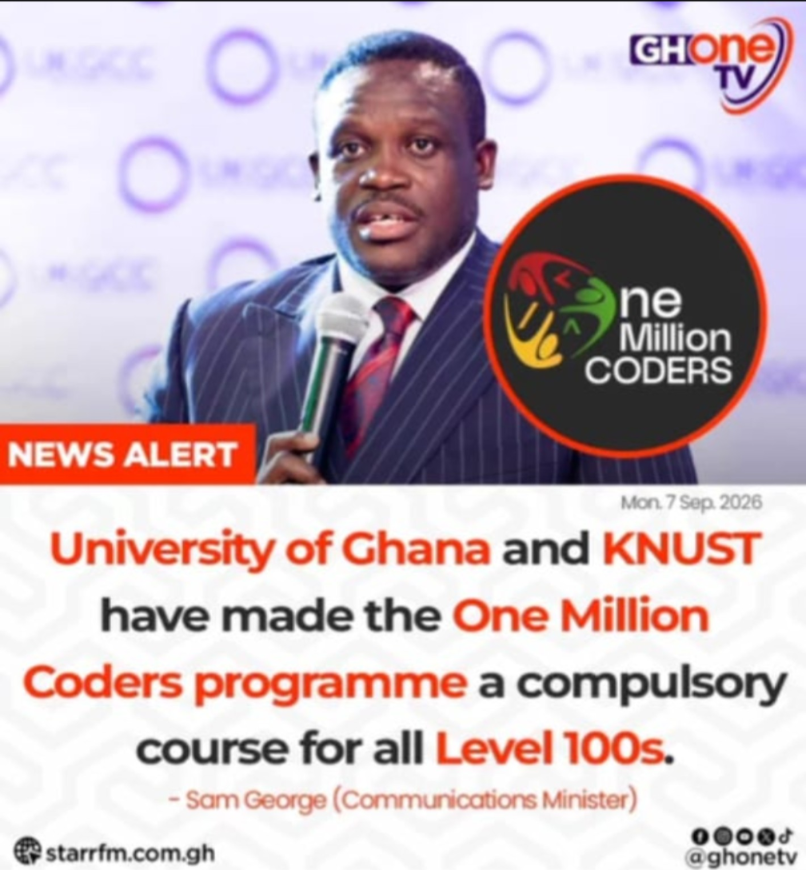
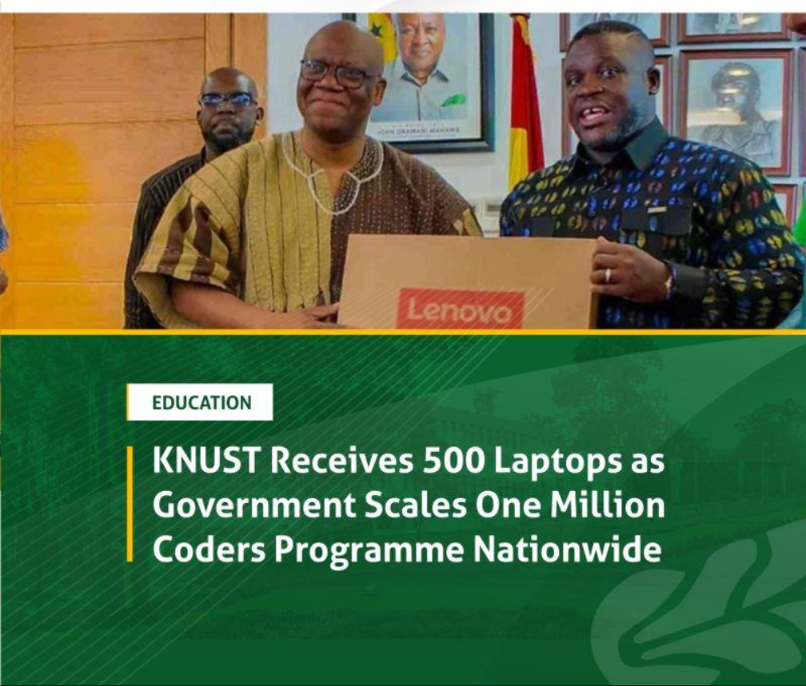


UG and KNUST Reportedly Make ‘One Million Coders’ Compulsory for Freshmen
Accra, Ghana — The University of Ghana (UG) and the Kwame Nkrumah University of Science and Technology (KNUST) have reportedly made the “One Million Coders” programme a mandatory course for all first-year (Level 100) students. The announcement was made by Communications Minister Sam George, as reported by GHOne TV and Starr FM.
Note: University implementation details and official announcements await independent verification.
Why It Matters
While making coding compulsory at the tertiary level expands access to critical digital skills, it highlights a broader policy debate: should digital education begin at university? For Ghana to build a generation of technology creators rather than mere consumers, foundational tech literacy may need to start much earlier in the educational pipeline.

OPENING BRIEF
Education Must Awaken Human Potential
Kwame Nkrumah’s vision of education was closely connected to the development of human potential, national independence, and the ability of people to contribute meaningfully to society.
From that perspective, introducing children to coding early is not simply about producing programmers. It is about nurturing a generation capable of thinking creatively, solving problems, and creating value.
Early technological education can help develop:
- Creativity — Teaching children to imagine, design, and create.
- Problem-solving — Helping them approach challenges systematically.
- Independence — Encouraging them to become creators rather than merely consumers of technology.
- Confidence — Showing young people that they can understand and shape the world around them.
- Humanistic responsibility — Ensuring that technological ability serves people and society.
Ghana’s discussion of children’s coding education must therefore extend beyond the preparation of professional programmers. It must also embrace creativity, logical thinking, curiosity, and problem-solving.
That is where the deeper connection with Nkrumah’s educational philosophy becomes important: education should begin early enough to awaken a person’s potential, but it must never reduce the person to an economic instrument.
THE FOUNDATION MUST BEGIN EARLY
What Ghana Can Learn from Assumpta Gahutu’s Early Childhood Education Perspective
When Assumpta Gahutu, Esq., principal of Babies and Toddlers Daycare, emphasises the importance of introducing coding and technological education at the elementary-school level rather than waiting until university, she raises a question that goes beyond computer programming:
When should a nation begin preparing its young people for the future?
The answer is clear: preparation cannot begin only when young people arrive at university. By then, many of their interests, confidence levels, and educational opportunities have already been shaped.
This perspective also resonates with the educational philosophy of Assumpta Gahutu, who places importance on nurturing children’s potential and developing people capable of creating value.
Education, in this view, is not simply about producing workers for the economy. It is about cultivating human beings who can think, create, cooperate, and contribute to society.
Coding as a Tool for Development
Coding can become one instrument for that development. It can teach a child how to:
- Break down a difficult problem.
- Experiment with different solutions.
- Learn from mistakes.
- Think logically and creatively.
- Create something that did not previously exist.
But the goal must be greater than technology itself. A nation should not teach children only how to code. It should also teach them why their knowledge matters, whom it should serve, and what kind of society they want to help build.
Building the Foundation Before University
This is the real challenge for Ghana and Africa. We must not wait until our young people reach university before introducing them to the technologies shaping the world.
We must build the foundation progressively through primary and secondary education, while ensuring that access is not limited to children in privileged communities.
Early technological education should be supported by appropriate teaching methods, trained educators, suitable infrastructure, and equal opportunities for children from different backgrounds.
The future belongs not only to those who consume technology, but to those who understand it, create with it, and use it responsibly.
FROM UNIVERSITY REQUIREMENT TO NATIONAL FOUNDATION
The reported compulsory coding initiative at the University of Ghana and KNUST represents an important step toward expanding digital education. However, a truly effective national digital strategy cannot begin—or end—at the tertiary level.
The core objective must be establishing a continuous, age-appropriate educational pathway:
- Early Childhood & Primary: Building logical thinking, pattern recognition, and creative problem-solving.
- Junior & Senior High: Introducing foundational programming concepts, computational thinking, and web basics.
- University Level: Mastering advanced software engineering, data science, and system architecture.
- Professional Development: Fostering specialised innovation, research, and industry-ready leadership.
By embedding tech literacy into every stage of learning, Ghana can move beyond viewing coding as a simple university requirement, transforming it into a core discipline that cultivates independent thinkers and digital innovators.
THE AFRICAN QUESTION
For Ghana and the broader continent, technological independence extends far beyond acquiring basic software skills. It demands the capacity to engineer solutions for local challenges, strengthen institutions, and compete in the global digital economy.
Achieving this vision requires sustained investment across six critical pillars:
| Pillar | Strategic Focus |
|---|---|
| Teacher Training | Upskilling educators to teach modern digital curricula effectively. |
| Infrastructure | Building modern labs equipped for hands-on technical learning. |
| Basic Utilities | Guaranteeing stable electricity and high-speed internet access nation-wide. |
| Hardware Access | Providing affordable, reliable devices for every student. |
| Curriculum Design | Developing culturally relevant, age-appropriate learning materials. |
| Digital Equity | Ensuring equal opportunities for children in underserved communities. |
The Bottom Line: Without these foundational elements in place, compulsory coding risks remaining a high-level policy announcement rather than an equitable, life-changing reality for all students.
Would you like to tailor this layout for a specific email marketing platform (such as Substack, Mailchimp, or Beehiiv) or add a custom call-to-action section at the end?
EDITORIAL CONCLUSION
The foundation of technological independence must begin early.
Ghana’s One Million Coders ambition should therefore invite a broader national conversation—not only about how many young people can be trained to code, but about how the education system can cultivate a generation equipped to think independently, create solutions, and participate meaningfully in Africa’s future.
The question is not simply whether Ghana can produce one million coders.
The question is whether Ghana can build the educational foundation that allows millions of young minds to discover their potential.
ASSUMPTA EDITORIAL ANGLE
The Foundation Must Begin Early: What Ghana Can Learn from Assumpta Gahutu, Esq., Principal of Babies and Toddlers Daycare
An editorial perspective on early education, technological empowerment, and the responsibility to prepare Africa’s next generation.
THE LAWYERS — PUBLIC BETRAYAL
OSAGYEFO NEWSLETTER MAGAZINE Presents — African / 2026 Edition
THE ONE MILLION CODERS QUESTION
THEME: Are we preparing Ghana’s youth—or betraying them?
THE DIALOGUE
Education, Technology & The Future of Humanity
;An imagined international conversation on education, technological development, and human progress.
BERLA MUNDI — HOST & MODERATOR
Good evening, distinguished guests, viewers across the globe, and esteemed members of our audience.
Welcome to this special international edition of our dialogue series. I am Berla Mundi, and it is an absolute honour to moderate a conversation of such significance for global education, technological development, peace, and shared human progress.
Tonight, we stand at a crucial crossroads in history. The challenges of our era demand more than transactional politics; they require visionary leadership, cultural understanding, and a deep, principled commitment to the future of humanity.
The question before us is particularly important for Africa and for Ghana:
How do we prepare the next generation not merely to use technology, but to understand it, create with it, and use it to improve society?
Joining us in this imagined dialogue are two distinguished figures whose ideas and leadership have influenced discussions about education, development, peace, and the future of humanity.
- Serwaa Amihere, Esq. — A prominent Ghanaian broadcast journalist, news anchor on GHOne TV, and a qualified attorney.
- Media Star: Well-known news presenter and host of programs like Cheers on GHOne TV. She made history as the first Ghanaian to win the Radio and Television Personality (RTP) Awards’ Best TV Newscaster of the Year for three consecutive years.
- Legal Career: Graduated from the GIMPA Law Faculty and the Ghana School of Law, officially being called to the Ghana Bar as a lawyer (earning the “Esq.” / Esquire designation) in October 2025.
- Entrepreneurship: CEO of Oh My Hair Beauty Parlour and Office and Co.
- Philanthropy: Founder of the Serwaa Amihere Foundation, a non-profit organisation focused on helping people in need.
- Her public vision emphasises national development, technological advancement, educational modernisation, and the idea of a community with a shared future for mankind.
- Assumpta Gahutu, Esq. — A legal professional, entrepreneur, principal of Babies and Toddlers Daycare in Namibia, and prominent media content creator based in Namibia.
- Legal Background: Holds a Bachelor of Laws (LLB) degree, using the honorary legal title “Esq.” (Esquire).
- Entrepreneurship: Founder and director of Babies and Todd Academy (often styled as
@babiesandtodds_) an early childhood education and care brand where she oversees strategic development, daily operations, and educational programming. - Social Media Influence: Substantial online following, with over 300,000 followers on Instagram and more than 100,000 followers on TikTok. Her content heavily focuses on fitness journeys, lifestyle, travel diaries, personal growth, and how children will unlock their potential.
- She’s also a peace advocate, whose lifelong commitment to humanistic education, dialogue, and the dignity of life offers a profound perspective on the purpose of learning.
Tonight, we step beyond traditional diplomacy to explore a question that concerns every society:
Can technological progress truly serve humanity if education fails to develop the human being?
Serwaa Amihere, Esq., Assumpta Gahutu, Esq.—welcome to this dialogue. It is a privilege to have you both with us.

BERLA MUNDI — To Assumpta Gahutu, Esq.
Assumpta Gahutu, Esq., let me begin with you.
In recent years, during the NPP tenure under Bawumia, Ghana placed considerable emphasis on technological innovation and digital development. Now, during the NDC tenure, Communications Minister Sam George also wants to prepare young people for the future.
We have seen Sam George’s growing discussions around the importance of introducing coding and computational thinking at the universities. In Ghana, the reported decision by the University of Ghana and KNUST to make the One Million Coders programme compulsory for all Level 100 students has generated an important national conversation.
But it also raises a fundamental question:
If a nation wants to prepare its young people for the technological future, should coding education begin at university—or should the foundation be built much earlier, in primary and secondary school?
And perhaps more importantly:
What should be the true purpose of teaching coding to children? Should the goal be to produce more programmers, or to cultivate a generation capable of thinking creatively, solving problems, and creating solutions for society?
Assumpta Gahutu, Esq., how would you respond?