

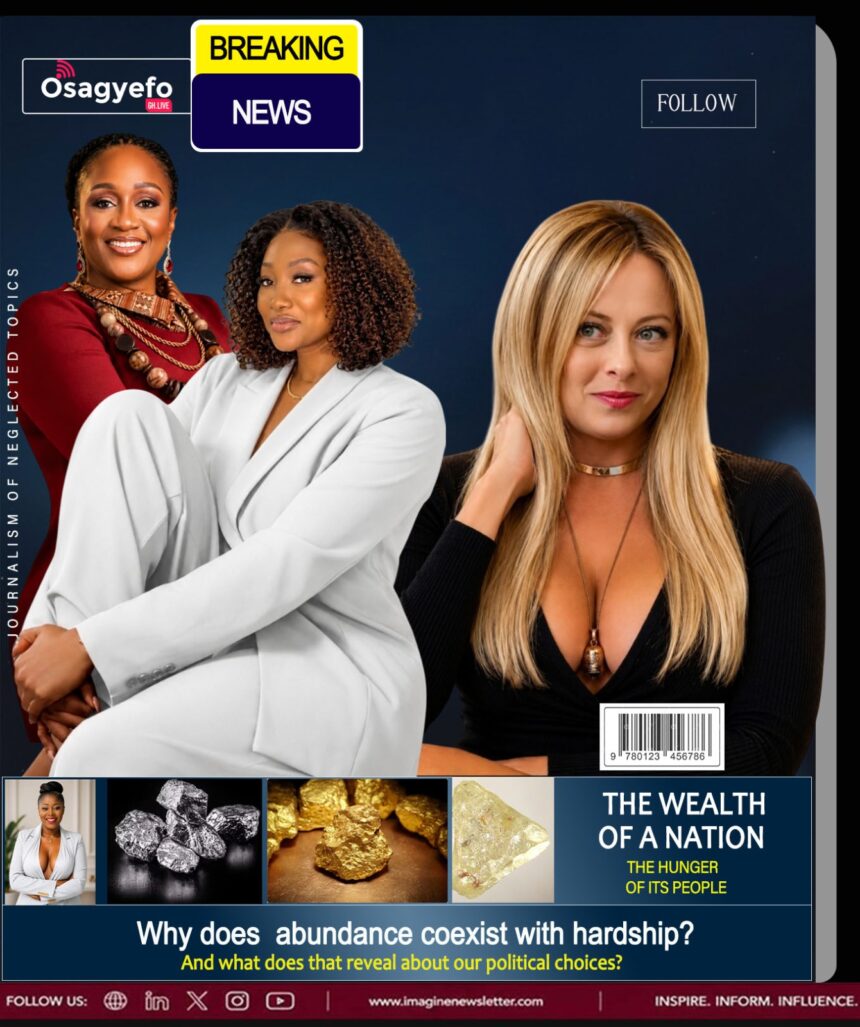
📰 OSAGYEFO NEWSLETTER MAGAZINE
Journalism of Neglected Topics
🔴 BREAKING NEWS
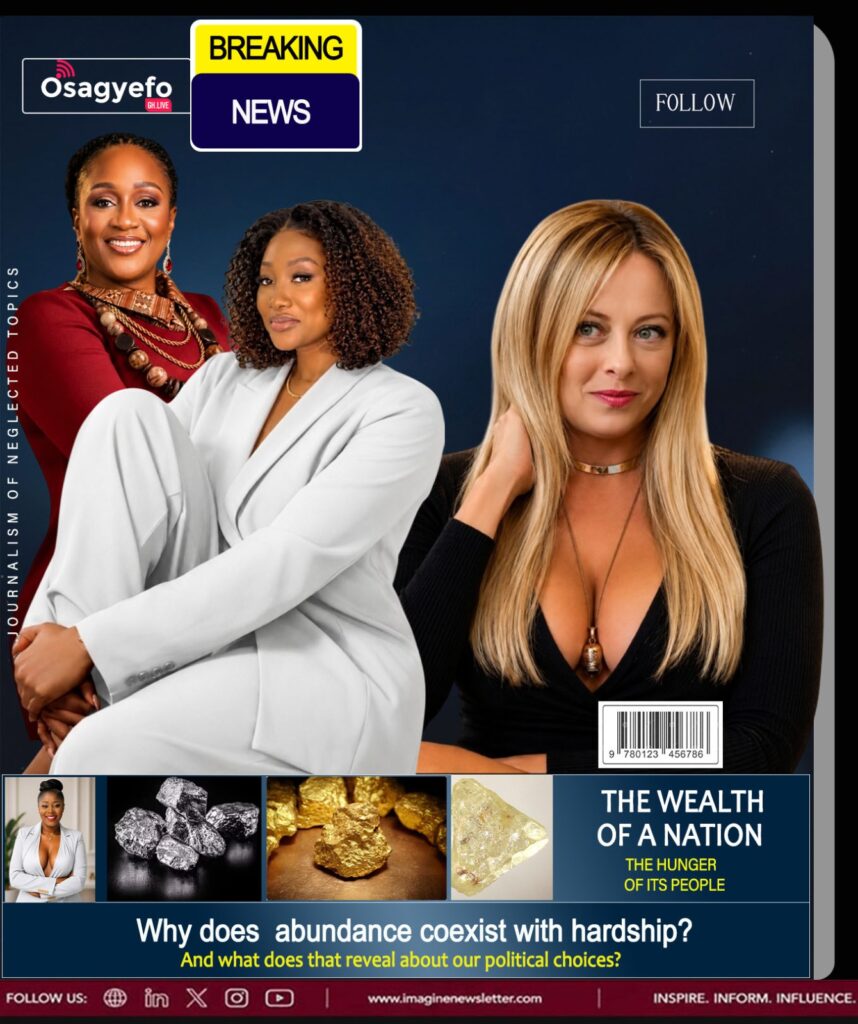
THE WEALTH OF A NATION, THE HUNGER OF ITS PEOPLE
Why does abundance coexist with hardship, and what does that reveal about our political choices?
It is breaking news because we have become comfortable with something that should never have become normal.
Ghana has wealth.
Ghana has resources.
Ghana has potential.
Yet millions of Ghanaians continue to struggle with the daily realities of unemployment, food insecurity, inadequate healthcare, and economic uncertainty.
The central question of this Special Edition is simple:
If Ghana possesses so much wealth, why are so many citizens still fighting merely to survive?
📍 SPECIAL EDITION
Ghana’s Political Choices, Economic Priorities & The Future of Shared Prosperity
📅 Release Date: Monday, August 24, 2026
🌐 Exclusive Digital Publication: assumptagh.live
🏛️ Category: Public Policy, Governance & Development
🌍 Audience: Global Readers, Policymakers, Academics, Entrepreneurs, Investors & Citizens



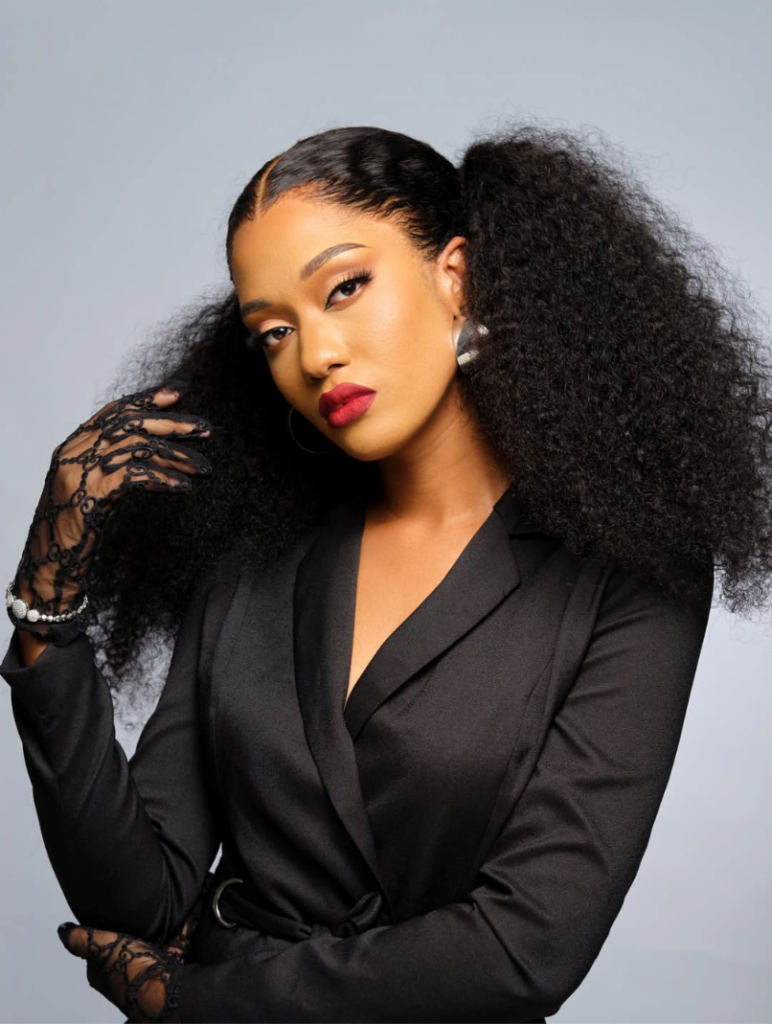

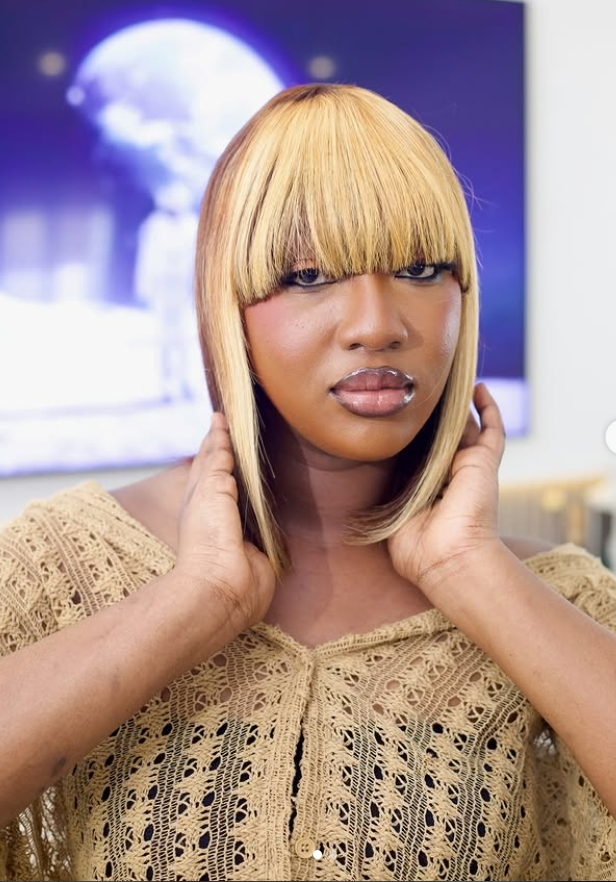
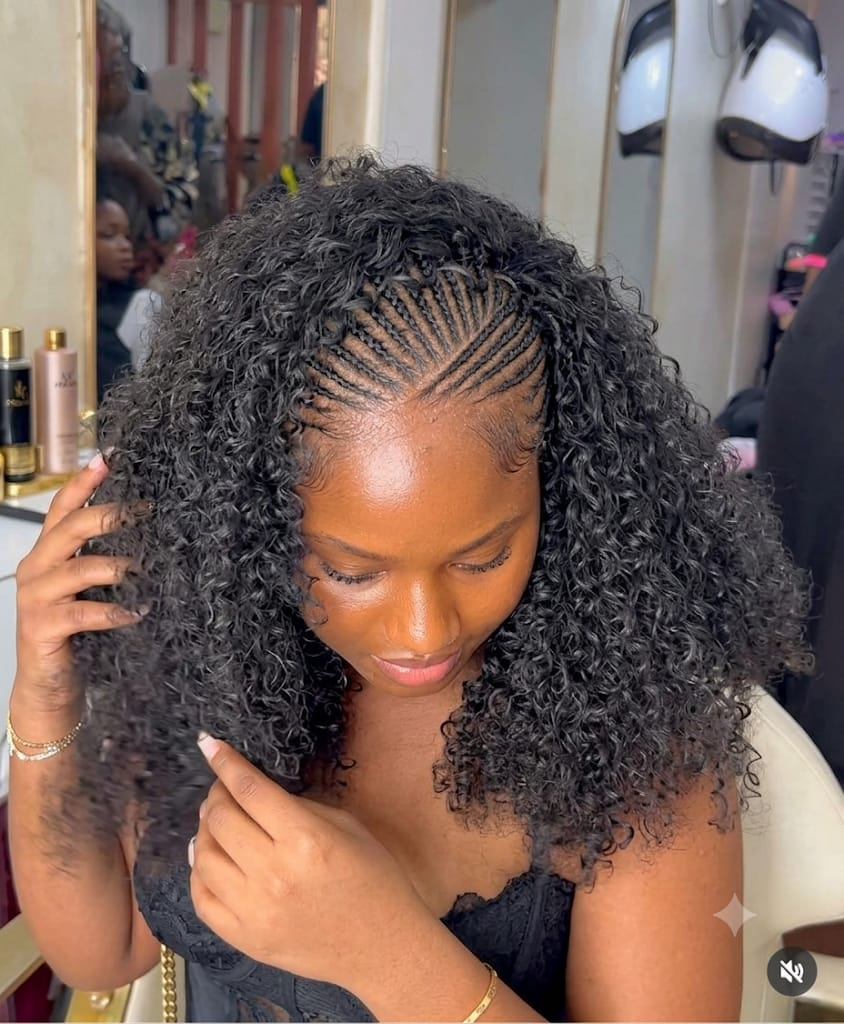
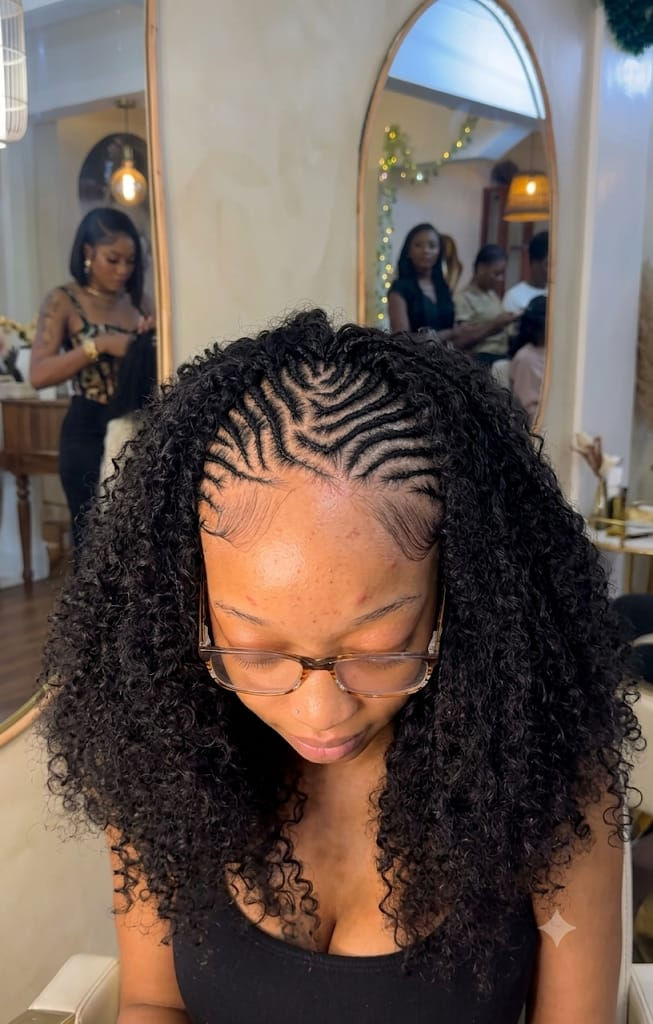






https://www.instagram.com/hairsenta?igsi=MXAzOThhNGZ0Nm15dQ==
✨ EDITOR’S NOTE
The true measure of a nation is not the wealth it extracts frodm the earth. It is what that wealth makes possible for its people.
This edition explores a question that many have stopped asking because the contradiction has become so familiar.
Why do natural riches coexist with poverty?
Why does economic growth fail to translate into broad prosperity?
And most importantly:
What kind of society are we choosing to build?
From the unfinished vision of Osagyefo Dr. Kwame Nkrumah to modern debates about taxation, entrepreneurship, investment, social protection, and political accountability, this edition examines the relationship between national wealth and human dignity.
📖 INSIDE THIS EDITION
1️⃣ The Wealth of a Nation, The Hunger of Its People
A powerful examination of economic inequality, political priorities, and the moral obligations of leadership.
2️⃣ The Cost of Influence
An investigation into how African governments spend millions of public dollars on lobbying firms in Washington while basic social challenges remain unresolved at home.
3️⃣ The Nkrumah Question
Has political independence delivered the social and economic transformation that Ghana envisioned at independence?
4️⃣ Wealth For What Purpose?
Can entrepreneurship, private enterprise, and social protection coexist to create shared prosperity?
5️⃣ The Global Conversation
International voices respond to one of the most important political and economic questions facing Africa today.
🎙️ THE GLOBAL
Three Continents.
This month, Osagyefo Newsletter Magazine proudly spotlights visionary individuals whose work demonstrates that development is not merely an economic concept, but a human mission.
Four Influential Voices.
One Critical Question:
How can nations create prosperity that benefits the many, rather than merely enriching the few?
Osagyefo Digital presents an unprecedented international dialogue inspired by this month’s cover story.
🌍 THE CATALYST VOICES

🎙️ THE PROTAGONIST
🇬🇭 AKOSUA OWUSUWAA
Global Entrepreneur & Economic Revolutionary
The Visionary on the Hot Seat
As the central voice of this edition, Akosua explores the intersection between entrepreneurship, economic empowerment, and inclusive development.
Can business become a vehicle for transforming society?
Can wealth creation and social responsibility work hand in hand?
🎙️ THE EUROPEAN PERSPECTIVE

🇮🇹 GIORGIA MELONI
Prime Minister of Italy
The Warning from Europe
Providing reflections on economic competitiveness, national identity, public accountability, and the growing debate over balancing social protection with economic growth.
🎙️ THE HUMAN-CENTERED STRATEGIST
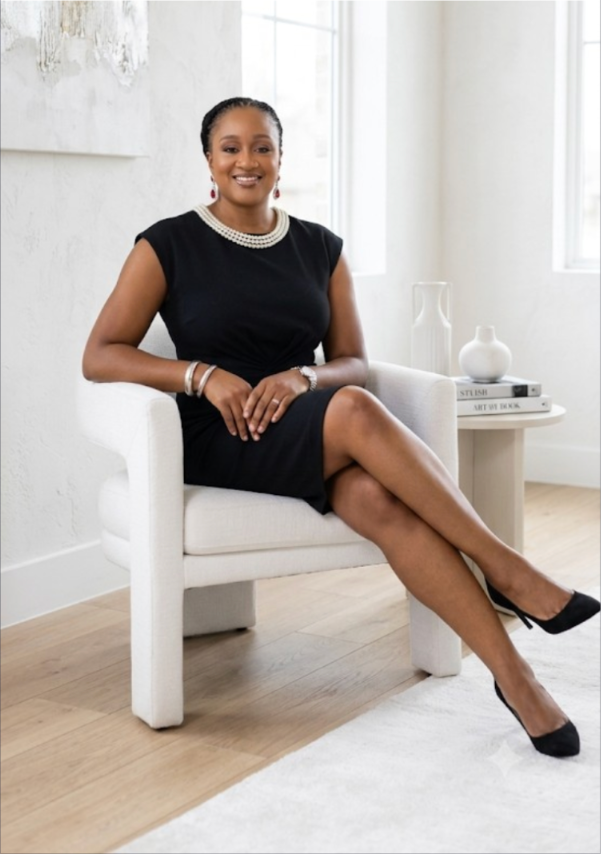
🇬🇭 DZIGBORDI KWAKU-DOSOO
Global Keynote Speaker & DCG Consulting Group
The Human Potential Advocate
Offering insight into leadership, human capital development, workforce transformation, and the necessity of placing people at the center of every economic strategy.
🎙️ THE MEDIA BATTLEFIELD

📺 FREMA ADUNYAME
Broadcast Journalist, Channel One TV
The Fearless Analyst
Examining how political communication, media narratives, and public perception shape national conversations on inequality, governance, and development.
FEATURE STORY
THE WEALTH OF A NATION, THE HUNGER OF ITS PEOPLE
The Cost of Influence
An Osagyefo Special Investigation
And there is another question that deserves honest reflection.
What happens when governments spend millions of dollars seeking influence abroad while millions of their own citizens struggle at home?
Across Africa, governments increasingly sign contracts with politically connected lobbying firms in Washington in pursuit of influence, access, and favourable policy outcomes.
The argument is familiar.
Governments say lobbying protects national interests.
It attracts investment.
It strengthens diplomatic relationships.
It improves international visibility.
Perhaps some of these objectives are legitimate.
Diplomacy matters.
Strategic alliances matter.
International partnerships matter.
But every democracy must ask a more uncomfortable question:
What is the Opportunity Cost?
When governments spend millions on lobbying contracts abroad, what opportunities are lost at home?
How many schools?
How many scholarships?
How many healthcare facilities?
How many agricultural programmes?
How many youth employment initiatives?
How many small businesses?
How many lives?
The question is not whether lobbying delivers access.
The question is whether that access ultimately improves the lives of ordinary citizens.
Because the true test of any national policy is remarkably simple:
Does it improve the life of the average citizen?
Can parents feed their children?
Can graduates find jobs?
Can entrepreneurs access opportunities?
Can workers build secure futures?
Can elderly citizens retire with dignity? These are the questions that matter.
🌍 AFRICA’S WASHINGTON CONNECTION
Reported Lobbying Agreements
🇰🇪 Kenya Reportedly signed a lobbying agreement worth approximately $175,000 per month ahead of President William Ruto’s White House engagement.
🇹🇿 Tanzania Reportedly entered lobbying agreements valued at approximately $4 million amid diplomatic pressure following election-related tensions.
🇳🇬 Nigeria Reportedly secured a contract valued at approximately $9 million annually with a Washington lobbying firm.
🇷🇼 Rwanda Reportedly paid approximately $80,000 per month amid international scrutiny regarding the conflict in eastern Democratic Republic of Congo.
🇲🇦 Morocco Reportedly spent approximately $3.49 million on U.S. lobbying efforts while seeking continued support regarding Western Sahara.
🇸🇴 Somalia Reportedly signed an agreement worth approximately $600,000 to advocate its position concerning Somaliland.
🇦🇴 Angola Reportedly paid approximately $312,500 per month to promote strategic infrastructure and mineral transport interests.
🏛️ THE BIGGER QUESTION
A nation should never confuse influence with development.
True national strength is not measured by the number of lobbyists representing a country abroad.
It is measured by the well-being of its people at home.
The most valuable national resource is not oil.
Not gold.
Not cocoa.
Not foreign contracts.
Not diplomatic access.
It is people.
Healthy people.
Educated people.
Creative people.
Confident people.
Productive people.
And when public resources are invested in people, the rewards can last for generations.
📣 THE NKRUMAH TEST
Political independence was never meant to be the destination.
It was meant to be the beginning.
The real measure of independence is not whether a flag flies above government buildings.
It is whether ordinary citizens can stand beneath that flag and say:
“This country works for me too.”
FINAL REFLECTION
The question before Ghana is not whether the nation has enough.
The question is whether we have the courage to decide what “enough” should mean.
Because poverty beside abundance is not inevitable.
It is a choice.
And choices can be changed.
Through vision.
Through accountability.
Through courage.
Through leadership.
And through the political will to build a Ghana where prosperity is not merely possessed by a few, but becomes the foundation upon which the many can rise.
📰 OSAGYEFO NEWSLETTER MAGAZINE
Journalism of Neglected Topics
“Shaping conversations that challenge power, inspire purpose, and advance the African century.”
🌐 assumptagh.live
📅 Special Global Edition | August 2026
🌍 For Readers Across Africa, Europe, the Americas, Asia & Beyond
OSAGYEFO NEWSLETTER MAGAZINE

BREAKING NEWS SPECIAL DIALOGUE
Why Does Abundance Coexist with Hardship?
And What Does That Reveal About Our Political Choices?
Theme: The Wealth of a Nation, The Hunger of Its People
Journalism of Neglected Topics
Opening Remarks

Frema Adunyame
Media Leader, Journalist & Moderator
Good day to our readers across Ghana, Africa, and every corner of the world.
On behalf of Osagyefo Newsletter Magazine, I warmly welcome you to this special global dialogue—a conversation born from one of the most important questions any nation can ask itself.
Thank you for joining us.
Whether you are reading from Accra, Amsterdam, Nairobi, Rome, London, New York, Johannesburg, or anywhere else across the globe, this conversation belongs to you. The future of nations is shaped not only by those who govern, but also by those who are willing to ask difficult questions with honesty, dignity, and hope.
Today, we gather not merely to discuss economics or politics. We gather to examine leadership, responsibility, justice, and the human consequences of national decisions.
Before we begin, it is my great privilege to introduce the remarkable women joining this international panel.
Meet Our Distinguished Panelists

Akosua Owusuwaa
Movement-Builder Shaping Communities through Health & Beauty
Akosua Owusuwaa is a certified entrepreneur, wellness coach, food educator, and co-founder of Owusuwaa Weekly.
As the visionary behind Hair Senta, HIBS-Africa, and TLS—The Leading Senta, she has redefined business as a community hub for transformation.
Her work rests on a simple but profound conviction:
“Our culture is our health, and our health is our future.”
She champions dignity-based economics—a philosophy that places human worth, agency, and shared prosperity at the center of national development.

Dzigbordi Kwaku-Dosoo
Global Leadership Architect & Human Skills Visionary
Dzigbordi Kwaku-Dosoo is an internationally recognized entrepreneur, executive coach, and media personality whose work focuses on preparing leaders for a rapidly changing world.
Through DCG Consulting Group, Allure Africa, and decades of global leadership experience—including earlier years on Wall Street—she has dedicated herself to developing emotional mastery, confidence, and human-centered performance. As she reminds us:
“The future will not belong to those with the best tools, but those with the strongest humanity.”

Giorgia Meloni
Global Human Development Scholar & Specialist in the Ethics of Leadership
Giorgia Meloni is internationally recognized for her work on leadership ethics and civilizational resilience.
Her scholarship explores how societies preserve their moral and institutional foundations while navigating technological, economic, and cultural upheaval.
Her work asks an enduring question: What allows nations to remain strong—not merely economically, but ethically?
A Word of Gratitude

To each of our distinguished panelists—Thank you for your willingness to share your time, your experience, and your wisdom with our readers around the world.
My deepest debt is to all of you.
I am profoundly grateful for your contributions and for the insight you bring to this newsletter’s investigation into one fundamental question: How can leadership do justice to its decisions and its imagination when prosperity has never been fully distributed to our communities and to the nation of Ghana?
Your voices enrich a conversation that is larger than any single government or generation.
Setting the Stage
The title of today’s dialogue is one of the strongest invitations to reflection that we could offer.
Why Does Abundance Coexist with Hardship?
It is memorable because it frames a paradox rather than an accusation.
It invites every one of us to ask:
How can a country blessed with gold, diamonds, fertile land, and extraordinary human talent still have communities where hardship persists?
Our subtitle pushes the conversation even further.
And What Does That Reveal About Our Political Choices?
It challenges us to consider difficult questions.
- What do our political choices cost us?
- Who benefits when a wealthy nation remains poor?
- What is the real price of power, policy, and neglected priorities?
- Which decisions shape prosperity—and which prolong hardship?
This is the heart of Osagyefo’s identity:
Journalism of Neglected Topics.
Our purpose is not merely to report events.
Our purpose is to investigate the questions that too often remain unanswered.
That is why this edition carries the theme:
The Wealth of a Nation, The Hunger of Its People.
The Opening Question
So let me begin by inviting our distinguished panelists into this conversation.
Do you believe that our political leaders have made the right decisions to confront the conditions that have undermined Ghana’s prosperity and weakened the moral responsibility that should guide leadership?
And if not—
What kind of leadership imagination is required to transform a nation whose wealth has yet to become the shared prosperity of its people?\

Moderator: Frema Adunyame
Global Dialogue
The Wealth of a Nation, The Hunger of Its People
Thank you for setting the stage with us.
Our first voice in this conversation comes from a woman whose life’s work reminds us that development is not something that happens only in parliament, boardrooms, or financial institutions. It also happens in kitchens, marketplaces, salons, farms, and neighborhoods—where ordinary people make extraordinary decisions every day to sustain life.
Akosua Owusuwaa has built her work around a simple but transformative belief: human dignity is not a reward for development—it is the foundation of development itself.
Through Hair Senta, HIBS-Africa, and her work as a wellness coach and entrepreneur, she has consistently argued that health, culture, entrepreneurship, and shared prosperity cannot be separated.
Akosua, let me bring you into this conversation.
When we ask why abundance continues to coexist with hardship, we are also asking whether our economic model has forgotten the human being at its center.
From your perspective, how does dignity-based economics connect everyday health, entrepreneurship, and community wellbeing to the prosperity of an entire nation?

Akosua Owusuwaa
Thank you, Frema.
And to our readers across the world, thank you for joining a conversation that deserves more than quick answers. It deserves honest reflection.
When I hear the question, “Why does abundance coexist with hardship?” my mind does not first go to gold mines or government budgets.
It goes to people.
Because a nation does not become wealthy simply because it possesses resources. A nation becomes wealthy when its people possess the ability, the health, the dignity, and the opportunity to transform those resources into shared prosperity.
That is why I believe dignity-based economics begins with an uncomfortable truth: a country can grow economically while its people remain emotionally, physically, and socially deprived.
If mothers cannot afford nutritious food, if young entrepreneurs cannot access opportunities, if preventable illness keeps families trapped in poverty, then statistics alone cannot tell us that development has succeeded.
I often say:
“Our culture is our health, and our health is our future.”
That is not a slogan.
It is an economic principle.
When people eat well, understand their traditional foods, care for their bodies, and build businesses that strengthen communities rather than exploit them, they become producers of value—not merely consumers trying to survive.
Through Hair Senta and HIBS-Africa, I have witnessed something remarkable.
A salon can become a classroom.
A business can become a place where confidence is restored.
An entrepreneur can become someone who creates employment instead of waiting for employment.
That is how communities begin to transform.
Prosperity spreads when people gain agency.
Agency creates confidence.
Confidence creates innovation.
Innovation creates opportunity.
And opportunity, when shared fairly, becomes national prosperity.
Too often we measure success by GDP while overlooking the condition of the people creating that GDP.
I believe we need another measure.
We should ask:
- Are families healthier?
- Are young people building businesses with dignity?
- Are women empowered to create wealth without sacrificing their wellbeing?
- Are communities becoming stronger than they were yesterday?
Because success that harms others is not value—it is anti-value.
Leadership must therefore invest not only in roads and buildings but also in human capacity.
A healthy child today becomes tomorrow’s inventor.
A supported entrepreneur becomes tomorrow’s employer.
A community treated with dignity becomes tomorrow’s foundation for national peace.
If we truly want Ghana’s abundance to reach its people, then dignity cannot remain a beautiful word in speeches.
It must become public policy.
It must become business practice.
And it must become the everyday culture of leadership itself.

Moderator: Frema Adunyame
OSAGYEFO NEWSLETTER MAGAZINE
Global Dialogue
The Wealth of a Nation, The Hunger of Its People
Akosua, thank you.
What strikes me most about your reflection is that you have challenged us to redefine wealth itself. You have reminded us that a nation’s greatest resource is not only what lies beneath its soil, but what lives within its people—their health, their confidence, their ability to create, and their dignity.
You have also raised an important question: If leadership measures success only by economic growth while communities continue to struggle, then perhaps we have been measuring the wrong things all along.
That brings us to another dimension of this conversation.
We are living in an age where artificial intelligence is reshaping industries, automation is transforming work, and technology is accelerating faster than many societies can adapt. Yet despite these advances, many citizens still ask a painful question: Why does the wealth of a nation not become the wellbeing of its people?
This is where leadership becomes more than management.
It becomes humanity in action. And there is no better person to help us explore that than our next distinguished panelist.

Dzigbordi Kwaku-Dosoo
Global Leadership Architect & Human Skills Visionary
Dzigbordi, welcome.
Your work has consistently argued that while technology may change how we work, it is our human skills that determine how we lead.
Through your experience—from Wall Street to executive coaching, from DCG Consulting Group to developing leaders across continents—you have emphasized that emotional mastery, confidence, and human-centered performance are not soft skills. They are nation-building skills.
You have often said:
“The future will not belong to those with the best tools, but those with the strongest humanity.”
When we place that philosophy alongside today’s theme—The Wealth of a Nation, The Hunger of Its People—a profound question emerges.
Can a nation become technologically advanced while remaining emotionally disconnected from the people it serves?
Can leaders celebrate innovation while citizens continue to experience exclusion, unemployment, inequality, and declining trust?
Dzigbordi, from your perspective:
How can emotional intelligence and human-centered leadership help transform a nation where prosperity exists, yet too many people still experience hardship?

Dzigbordi Kwaku-Dosoo
Thank you, Frema.
And thank you, Akosua, for reminding us that dignity is not an afterthought—it is the starting point.
When I hear today’s theme, The Wealth of a Nation, The Hunger of Its People, I hear two stories unfolding at the same time.
One story celebrates abundance.
The other asks why abundance has not become belonging. This is where emotional intelligence becomes a national issue, not merely a personal one.
We often imagine leadership as the ability to make decisions. I believe leadership is also the ability to understand the human consequences of those decisions.
Artificial intelligence can process data.
Algorithms can predict trends.
Machines can optimize production.
But none of these can replace wisdom.
None of them can feel the anxiety of a young graduate searching for work. None of them can understand the dignity of a mother trying to feed her children.
None of them can restore trust between a government and its citizens. That is why I believe the greatest risk of our technological age is not that machines become more intelligent.
It is that leaders become less human. A nation that invests only in technology while neglecting empathy creates efficiency without inclusion.
It creates growth without trust. It creates progress that people cannot feel in their everyday lives.
Human-centered leadership asks different questions.
Instead of asking, How much wealth did we create?
It asks, Who was included?
Instead of asking, How quickly did we innovate?
It asks, Who was left behind?
Because prosperity that excludes people eventually weakens the very foundation it depends upon.
Confidence is not built by speeches alone. It is built when citizens believe that institutions see them, hear them, and create opportunities where talent can flourish.
Every young entrepreneur who receives mentorship, every worker whose dignity is respected, every community whose voice influences policy becomes part of a stronger national future.
That is why I say the future belongs to those with the strongest humanity. Not because technology is unimportant.
But because humanity determines whether technology becomes a bridge—or another wall separating abundance from the people who need it most.
If Ghana is to transform its natural wealth into shared prosperity, then leadership must cultivate not only intelligent systems but also compassionate systems.
The strongest economy is ultimately built upon the strongest relationships—between leaders and citizens, between opportunity and dignity, and between national ambition and human wellbeing.
Only then can the wealth of a nation begin to answer the hunger of its people.
In the next chapter of the dialogue, Frema Adunyame can invite Giorgia Meloni to examine how ethical leadership and civilizational resilience determine whether resource-rich nations preserve justice, trust, and long-term prosperity across generations.

Moderator: Frema Adunyame
OSAGYEFO NEWSLETTER MAGAZINE
Global Dialogue
The Wealth of a Nation, The Hunger of Its People
Giorgia, welcome.
Listening to both Akosua Owusuwaa and Dzigbordi Kwaku-Dosoo, I find myself returning to one thought.
A nation may possess extraordinary wealth.
Its rivers may flow with opportunity.
Its land may hold gold beneath its soil.
Its people may carry remarkable talent within them.
And yet, if justice weakens, if trust disappears, and if leadership loses its moral compass, abundance can become a promise that never reaches ordinary families.
That is why today’s conversation cannot end with economics alone.
It must also examine ethics.
History teaches us that civilisations do not endure simply because they possess resources.
They endure because they build institutions that people trust, cultivate leaders who understand responsibility, and make decisions that future generations can inherit with dignity rather than repair with regret.
Your work has consistently explored how societies preserve their structural integrity during periods of technological, economic, and political upheaval.
You have examined what allows nations not merely to survive disruption—but to remain morally anchored while they do. So let me bring our central question directly to you.
When we speak about The Wealth of a Nation, The Hunger of Its People, what role does ethical leadership play in determining whether a resource-rich nation preserves justice, public trust, and long-term prosperity across generations?

Giorgia Meloni
Thank you, Frema. And thank you to Akosua and Dzigbordi for laying such an important foundation.
Today’s theme touches something deeper than economics.
It asks whether a nation’s wealth is truly serving its people—or whether its people have become spectators to their own inheritance.
I believe ethical leadership begins with one essential understanding.
A leader is not merely a manager of resources.
A leader is a guardian of trust.
Gold can be extracted.
Oil can be exported.
Forests can be harvested.
But trust cannot be mined.
It must be earned through decisions that convince citizens that tomorrow will be fairer than today.
This is where civilizational resilience becomes so important.
Resilient societies are not those that never face crises.
They are those that preserve their moral foundations while responding to them.
They resist the temptation to exchange long-term justice for short-term advantage.
When a nation repeatedly sacrifices its rivers for immediate profit, its institutions for political convenience, or its young people’s future for temporary gains, it gradually weakens the invisible foundations that hold society together.
That is why I believe ethical leadership asks a different question.
Not simply,
“What can we gain today?”
But,
“What will our grandchildren inherit because of what we choose today?”
Justice is not only a courtroom principle.
It is an economic principle.
When citizens believe that opportunities are distributed fairly, they invest more deeply in their communities.
They create businesses.
They educate their children.
They protect public institutions because they believe those institutions belong to them.
Trust becomes a national asset.
Without trust, prosperity becomes fragile.
With trust, even difficult reforms become possible because people believe they are participating in a shared future rather than carrying an unequal burden.
For a resource-rich nation like Ghana, this distinction is profound.
Natural wealth can finance development.
But ethical leadership determines whether that wealth becomes schools instead of promises, clean rivers instead of polluted memories, thriving communities instead of widening inequality.
A civilization is ultimately measured not only by what it extracts from the earth, but by what it leaves in the hearts of its people.
If leadership protects justice, strengthens trust, and governs with responsibility across generations, then abundance becomes more than a statistic.
It becomes a living inheritance shared by the entire nation.
Only then does the wealth of a nation begin to answer the hunger of its people.
Moderator’s Reflection

Frema Adunyame
Thank you, Giorgia.
What I hear emerging from this dialogue is a remarkable thread connecting all three perspectives.
Akosua reminds us that dignity must become the foundation of development.
Dzigbordi reminds us that humanity must guide innovation.
And Giorgia reminds us that trust is the inheritance that determines whether prosperity survives beyond one generation.
Together, you have transformed our central question from an economic debate into a moral one.
Perhaps the greatest wealth of a nation is not found only beneath its soil—but in the courage of its leaders to ensure that every decision leaves the next generation with more justice, more trust, and more hope than the one before.
Cross-Panel Exchange: Can Principles Become Public Policy?

Moderator: Frema Adunyame
Frema Adunyame
OSAGYEFO NEWSLETTER MAGAZINE
Global Dialogue
The Wealth of a Nation, The Hunger of Its People
Why does abundance coexist with hardship, and what does that reveal about our political choices?
Thank you, Giorgia.
As I listen to each of you, I notice that although your work comes from different worlds—journalism, entrepreneurship, executive leadership, and ethics—you all seem to agree on one fundamental truth: prosperity is not merely created by resources; it is created by the quality of leadership that governs those resources.
But I want us to move from philosophy to practice.
Ghana is a country blessed with extraordinary abundance—gold, cocoa, oil, fertile land, forests, and an energetic young population. Yet many communities continue to experience unemployment, inequality, struggling public services, and declining trust in institutions.
This brings us back to our subtitle:
Why does abundance coexist with hardship, and what does that reveal about our political choices?
My question to all three of you is this:
Can Ghana’s current leadership realistically translate these principles into public policy, or are we asking for a kind of leadership that our political system itself struggles to produce?
Akosua, I’d like you to respond first.

Akosua Owusuwaa
Thank you, Frema.
I believe transformation is possible—but only if leadership changes what it chooses to reward.
Too often, public policy begins with budgets instead of people.
We announce projects.
We celebrate investments.
We count economic outputs.
But we do not always ask whether those decisions strengthen the everyday lives of families.
That is where I respectfully want to build upon what Giorgia said about trust.
Trust is not created only by promises.
It grows when a mother sees affordable healthcare improving.
When a young entrepreneur finds real access to opportunity.
When a community watches its rivers protected instead of polluted.
Policy must become visible in ordinary life.
For me, dignity-based economics means every national decision should answer one simple question:
Will this increase the dignity of the people who live with its consequences?
If the answer is no, then perhaps it is time to rethink the policy before celebrating its success.

Frema Adunyame
Dzigbordi, Akosua argues that policy should be judged by the dignity it creates.
Do you believe that our political institutions are emotionally equipped to lead in that way?

Dzigbordi Kwaku-Dosoo
That question goes to the heart of leadership.
I believe institutions are ultimately reflections of the people who lead them.
The challenge is not simply intelligence.
Ghana has brilliant people.
The challenge is whether leadership is willing to develop the human capacities that allow difficult decisions to be made with courage and empathy.
Let me respectfully challenge Akosua’s point—not because I disagree with dignity, but because dignity alone cannot survive inside weak institutions.
A compassionate leader inside a broken system eventually struggles to produce compassionate outcomes.
That is why leadership development cannot stop with individuals.
We must develop cultures of accountability.
We must normalize constructive disagreement.
We must create institutions where people can tell uncomfortable truths without fear.
Otherwise, innovation becomes cosmetic.
We adopt modern language.
We launch ambitious initiatives.
But the experience of the citizen remains unchanged.
The wealth of the nation exists.
The hunger of the people remains.
That gap is ultimately a leadership gap.
Frema Adunyame
Giorgia, I want to bring you into this exchange.
Dzigbordi has suggested that compassionate leadership cannot flourish inside weak institutions.
Do you agree?
Or does political courage sometimes require leaders to transform institutions before institutions can transform society?

Giorgia Meloni
I believe both responsibilities exist simultaneously.
Strong institutions matter.
But institutions do not reform themselves.
People reform institutions.
Let me connect this directly to today’s question.
Why does abundance coexist with hardship?
Sometimes because wealth becomes concentrated.
Sometimes because accountability becomes selective.
Sometimes because long-term responsibility loses to short-term political incentives.
This is what our political choices reveal.
They reveal what a nation chooses to protect.
Every national budget is a moral document.
Every environmental decision is a moral document.
Every education policy is a moral document.
They communicate priorities more clearly than speeches ever can.
I would also gently challenge both Akosua and Dzigbordi.
We have spoken about dignity and humanity.
I would add responsibility across generations.
A leader should never ask only whether today’s voters approve.
A leader should ask whether tomorrow’s children will thank us.
When forests disappear, rivers become polluted, or institutions lose credibility, future generations inherit costs they never chose.
That is why ethical leadership is ultimately an act of stewardship.
We borrow the nation.
We do not own it.

Frema Adunyame’s Reflection
Listening to this exchange, I am struck by something remarkable.
Akosua reminds us that policy must protect human dignity.
Dzigbordi reminds us that leadership must strengthen institutions capable of sustaining that dignity.
Giorgia reminds us that every political decision becomes part of a nation’s inheritance.
Together, you have transformed our subtitle into something even more profound.
Why does abundance coexist with hardship?
Perhaps because abundance alone cannot build justice.
And what does that reveal about our political choices?
It reveals whether we have chosen extraction over stewardship, promises over accountability, and short-term victories over long-term prosperity.
If the wealth of a nation is measured only by what lies beneath its soil, we will miss the deeper question.
But if we measure wealth by the dignity of our people, the trust in our institutions, and the opportunities passed to the next generation, then perhaps Ghana’s greatest resource has always been its people.
And perhaps the next political choice is not simply about who leads—but about what kind of leadership the nation chooses to demand.
A powerful next chapter could turn the conversation toward Kwame Nkrumah’s vision of self-reliance, asking each panelist whether Ghana has drifted from that vision and what concrete reforms they would each prioritize in their first 100 days if they were advising national leadership.

Moderator: Frema Adunyame
OSAGYEFO NEWSLETTER MAGAZINE
Global Dialogue
The Wealth of a Nation, The Hunger of Its People
Why does abundance coexist with hardship, and what does that reveal about our political choices?
Chapter Five: The Nkrumah Question
Self-Reliance, Urgency, and the First 100 Days
As our conversation deepens, another name becomes impossible to ignore.
Whenever Ghana speaks about wealth, independence, and nation-building, the shadow of Osagyefo Dr. Kwame Nkrumah inevitably enters the room.
Nkrumah believed that political independence would remain incomplete unless it was matched by economic self-reliance. He argued that a nation must invest in its people, build its industries, educate its citizens, and develop the capacity to transform its own resources rather than exporting raw potential while importing dependency.
That raises a difficult question for all of us.
Has Ghana drifted from that vision?
And if you were advising national leadership during its first one hundred days in office, what would you make an urgent national priority? Giorgia, I’d like to invite you to begin.
Global Human Development Scholar & Specialist in the Ethics of Leadership

Giorgia Meloni
Thank you, Frema.
I believe the most important word in leadership is often not power.
It is urgency.
Urgency does not mean panic.
It means recognizing that every delayed decision has a human cost.
When people wait too long for opportunities, too long for infrastructure, too long for functioning institutions, time itself becomes another form of inequality.
One of the lessons I draw from Italy’s long national journey is that lasting prosperity is rarely built overnight.
Italy did not become stronger simply because it desired wealth.
It strengthened itself by investing, over time, in the capabilities of its people—through education, craftsmanship, enterprise, infrastructure, and institutions that could sustain generations of progress.
Patience built durability.
Urgency created momentum.
The two worked together.
As I listen to today’s discussion, I hear echoes of something Kwame Nkrumah understood remarkably well.
He recognized that the greatest wealth of a nation is ultimately its people.
A country may possess extraordinary natural resources.
But if its citizens are not equipped with knowledge, skills, confidence, and opportunity, those resources can enrich the land without fully transforming the lives of the people.
That lesson remains deeply relevant.
A nation that exports raw materials while importing much of its productive capacity risks allowing abundance to coexist with hardship.
The real question is not whether wealth exists.
The question is whether people are equipped to create more of it themselves.
That is why, if I were advising leadership during its first one hundred days, my priorities would begin with equipping citizens rather than merely announcing programs.
My First 100-Day Priorities
First, restore confidence through visible action.
People must see that institutions are capable of delivering measurable improvements in everyday life.
Trust grows when promises become observable reality.
Second, invest in practical education and skills.
Every young person should feel that talent has a pathway into productive work.
Education should prepare citizens not only to seek employment, but also to create opportunity for others.
Third, strengthen local production.
A resource-rich nation becomes more resilient when it adds greater value to what it already possesses instead of depending primarily on exporting raw materials.
Fourth, protect national assets with long-term responsibility.
Forests, rivers, farmland, and public institutions are not temporary political assets.
They are inheritances held in trust for future generations.
This is where I find Nkrumah’s vision especially compelling.
Self-reliance was never simply an economic strategy.
It was a philosophy of confidence.
It asked a people to believe that they possessed the capacity to build their own future.
That confidence is still available.
But confidence must be matched by discipline.
Hope must be matched by preparation.
And urgency must be matched by patience.
Because the strongest nations are not those that merely discover wealth.
They are those that equip their people to multiply it—generation after generation.

Frema Adunyame’s Reflection
Thank you, Giorgia.
Your distinction between urgency and patience introduces a fascinating tension into our conversation.
Perhaps leadership is not choosing between acting quickly and thinking long-term.
Perhaps it is learning how to do both.
You have also brought us back to Nkrumah’s central lesson—that a nation’s greatest investment is the education, confidence, and productive capacity of its people.
That leaves us with another important question.
If equipping people is the foundation of self-reliance, what happens when communities themselves begin leading that transformation before government catches up?
That is where I would like to invite Akosua Owusuwaa into the next chapter, to explore whether grassroots entrepreneurship can become the engine that revives Nkrumah’s vision from the ground up.

Moderator: Frema Adunyame
Thank you, Giorgia.
OSAGYEFO NEWSLETTER MAGAZINE
Global Dialogue
The Wealth of a Nation, The Hunger of Its People
Why does abundance coexist with hardship, and what does that reveal about our political choices?
Chapter Six: Can Communities Lead Before Government Catches Up?
You have reminded us that self-reliance begins by equipping people—not merely with hope, but with the tools to create value for themselves and for future generations.
That brings us back to Ghana.
Kwame Nkrumah believed that independence would become meaningful only when ordinary citizens possessed the confidence and capacity to build the nation with their own hands.
But what happens when communities refuse to wait?
What happens when entrepreneurs, farmers, artisans, wellness educators, and local businesses begin rebuilding confidence from the ground up before government catches up?
There is perhaps no better person to answer that than Akosua Owusuwaa.
Akosua, your work has consistently transformed businesses into community classrooms and entrepreneurship into a vehicle for dignity.
Can grassroots entrepreneurship become the engine that revives Nkrumah’s vision of self-reliance?
And if Ghana’s first one hundred days were to begin with its communities, what would you build first?

Akosua Owusuwaa
Movement-Builder Shaping Communities through Health & Beauty
Thank you, Frema.
And thank you, Giorgia, for bringing us back to the idea that nations become stronger by equipping people before expecting extraordinary outcomes from them.
When you mentioned urgency and patience, I thought immediately of Kwame Nkrumah.
Nkrumah understood something that still speaks to Ghana today. He did not ask people merely to dream about a prosperous nation.
He asked them to become builders of one.
That is why I believe communities cannot afford to wait for every solution to arrive from above.
The wealth of a nation does not begin in ministries.
It begins in households.
It begins in markets.
It begins in schools.
It begins in the hands of ordinary people who choose to create value even when circumstances are difficult.
That is exactly why today’s theme—The Wealth of a Nation, The Hunger of Its People—is so powerful.
It reminds us that hunger is not always the absence of food.
Sometimes it is the absence of opportunity.
Sometimes it is the absence of confidence.
Sometimes it is the absence of systems that allow people’s talents to flourish.
I have seen women walk into Hair Senta looking for beauty services and leave believing they could become business owners.
I have seen conversations about hair become conversations about health.
I have seen confidence become entrepreneurship.
That is community transformation.
People often think entrepreneurship begins with capital.
I disagree.
Entrepreneurship begins with belief.
Capital grows faster where confidence already exists.
That is why I believe Nkrumah’s vision must now be rebuilt from the grassroots.
Government matters.
Policy matters.
Institutions matter.
But communities are where national culture is practiced every day. If we strengthen communities, we strengthen the nation.
My First 100-Day Community Priorities
If I were helping shape Ghana’s first one hundred days, I would begin with the places where people already gather.
First, create Community Enterprise Hubs.
Transform local markets, salons, and community spaces into centers where young people can learn practical business skills, financial literacy, digital tools, and mentorship.
Every neighborhood should become a place where opportunity can be discovered close to home.
Second, launch a National Food Education Movement.
We often overlook the wisdom already present in our traditional foods.
Teaching families how to prepare nutritious local meals is not simply a health intervention.
It is an economic intervention.
Healthier people become more productive people.
Third, invest in women-led businesses.
Women already sustain many households and local economies. Removing barriers to their growth strengthens entire communities rather than isolated individuals.
Fourth, reconnect culture with economic development.
Our crafts, textiles, beauty traditions, agriculture, and local industries should not be treated as relics of the past.
They are living economic assets capable of creating employment and preserving identity at the same time.
A Gentle Challenge
Frema, I want to build upon something Giorgia said.
She spoke about urgency. I agree. But I would add another word..Ownership. People protect what they feel belongs to them.
Communities care for rivers when they believe those rivers belong to their children.
Young people build businesses when they believe their future belongs in Ghana.
Citizens defend institutions when they believe those institutions serve them equally. That is why our political choices matter so much.
Every policy either expands ownership or weakens it.
Every investment either invites participation or deepens exclusion.
If we truly want the wealth of our nation to answer the hunger of our people, then self-reliance cannot remain a historical slogan. It must become a daily habit practiced in every community across Ghana. Because the strongest nations are not built only from the top down.
They are built when millions of ordinary people become extraordinary builders together.

Frema Adunyame’s Reflection
Thank you, Akosua.
What I hear in your response is a powerful extension of Nkrumah’s vision.
Giorgia reminded us that urgency creates momentum.
You remind us that ownership creates permanence.
Together, those ideas raise an even deeper question for our next chapter.
If communities, institutions, and leadership must work together, what happens when the next generation begins demanding a different social contract altogether?
That is where I would like to bring Dzigbordi Kwaku-Dosoo back into the conversation—not simply as a leadership coach, but as someone who studies how young people redefine power, responsibility, and purpose in an age where technology is changing faster than trust can keep pace.

Moderator: Frema Adunyame
Thank you, Akosua.
OSAGYEFO NEWSLETTER MAGAZINE
Global Dialogue
The Wealth of a Nation, The Hunger of Its People
Why does abundance coexist with hardship, and what does that reveal about our political choices?
Chapter Seven: The New Social Contract
Can Ghana’s Youth Complete Nkrumah’s Unfinished Vision?
You have reminded us that communities are not waiting rooms. They are workshops where confidence becomes enterprise and where ordinary people quietly build the future long before history notices them.
As I listen to this conversation, I cannot help but think about Ghana’s youth.
They are the largest generation connected to technology.
They are creating businesses from mobile phones.
They are building brands on digital platforms.
They are questioning institutions with a confidence previous generations often did not possess.
And yet many still face unemployment, limited opportunities, and uncertainty about whether their talents will find room to flourish at home.
This brings us to another chapter of Nkrumah’s unfinished vision.
Perhaps the question is no longer only whether leaders will transform Ghana.
Perhaps the question is whether Ghana’s youth are now being called to reshape the relationship between citizens and leadership itself.
Dzigbordi, your work has always insisted that the future belongs not merely to those with the greatest technical skills, but to those with the strongest humanity.
So let me ask you:
Can Ghana’s youth complete Nkrumah’s unfinished vision? And what would a new social contract between government and citizens look like in an age of artificial intelligence, entrepreneurship, and rapid technological change?

Dzigbordi Kwaku-Dosoo
Global Leadership Architect & Human Skills Visionary
Thank you, Frema.
And thank you to Giorgia and Akosua for reminding us that nations are built through urgency, patience, dignity, and ownership.
When I hear today’s theme—The Wealth of a Nation, The Hunger of Its People—I hear another kind of hunger.
A hunger for trust.
A hunger for purpose.
A hunger for belonging.
Many young people are not asking for miracles.
They are asking for a fair chance to contribute.
That is where I believe a new social contract begins.
A social contract is an agreement that may never be written on paper, but it lives inside the expectations people hold about one another.
Citizens ask:
“If I work hard, will my effort matter?”
Young entrepreneurs ask:
“If I build something, will the system allow it to grow?”
Students ask:
“If I invest in my education, will my country invest in me?”
Government asks citizens to participate.
Citizens ask government to create conditions where participation has meaning.
That relationship has to be renewed.
Nkrumah’s Unfinished Vision
I do not believe Nkrumah’s vision was simply about state-led development.
It was about national confidence.
He wanted Africans to believe that they possessed the capacity to build institutions worthy of their own aspirations.
That confidence is still needed.
But today’s generation faces a different landscape.
Artificial intelligence is changing work.
Technology is changing education.
The global economy is changing faster than political systems often respond.
If leadership moves slowly while technology moves quickly, young people begin building their futures elsewhere.
That is not merely migration.
It is a warning signal.
My Challenge to Government
Government cannot ask young people to believe in the future while making opportunity difficult to reach.
Leadership must become an enabler.
Create digital infrastructure.
Simplify entrepreneurship.
Reward innovation.
Protect merit.
Make institutions responsive enough that talent feels recognized rather than resisted.
The greatest investment is not only roads and buildings.
It is reducing the distance between an idea and the opportunity to build it.
My Challenge to Citizens
But I must also challenge young people.
Leadership is not something that begins after you receive power.
Leadership begins before anyone is watching.
It begins with integrity.
With discipline.
With emotional resilience.
With learning how to disagree without destroying one another.
If we inherit broken systems and reproduce the same habits, then we become custodians of repetition rather than architects of change.
The next generation cannot simply replace leaders.
It must replace outdated ways of leading.
The Five Promises of a New Social Contract
If I were helping shape Ghana’s future, I would build a social contract around five promises.
- Promise One: Every young person deserves access to practical education that connects learning with opportunity.
- Promise Two: Every entrepreneur deserves a fair environment where initiative is rewarded.
- Promise Three: Every institution should earn public trust through accountability rather than expectation.
- Promise Four: Every community should have a voice in decisions that affect its future.
- Promise Five: Every leader should remember that authority exists to serve, not to distance itself from the people.
Because the wealth of a nation is not measured only by what it produces.
It is measured by how many people believe they have a place in producing it.
If Ghana’s youth embrace courage with discipline, innovation with responsibility, and ambition with humanity, then perhaps they will not simply inherit Nkrumah’s vision.
They will complete the unfinished chapters that history left waiting.

Frema Adunyame’s Reflection
Thank you, Dzigbordi.
What strikes me is that each of our panelists has answered the same question from a different doorway.
Giorgia spoke of urgency and stewardship. Akosua spoke of dignity and community ownership. Dzigbordi speaks of trust and a renewed social contract. Together, you have returned us to the subtitle that has guided this entire dialogue.
Why does abundance coexist with hardship?
Perhaps because wealth alone cannot complete a nation’s story.
And what does that reveal about our political choices?
It reveals whether we choose to equip people or merely count resources; whether we build trust or merely demand loyalty; whether we prepare the next generation to inherit responsibility—or leave them to repair what we failed to preserve.
Perhaps Nkrumah’s unfinished vision was never meant to belong to one leader alone. Perhaps it was always an invitation for every generation to decide what kind of nation it will build together.
OSAGYEFO NEWSLETTER MAGAZINE Global Dialogue Series
The Wealth of a Nation, The Hunger of Its People
Why does abundance coexist with hardship, and what does that reveal about our political choices?
FINAL ROUND: ONE QUESTION, ONE PROMISE

Moderator: Frema Adunyame As we reach the closing moments of this remarkable dialogue, I find myself reflecting on something that has echoed through every chapter of our conversation.
We began by asking why a nation blessed with abundance can still struggle with hardship. Along the way, we discovered that wealth is more than resources—it is dignity, trust, ethical leadership, community ownership, and the courage of young people to complete unfinished dreams.
But conversations only become meaningful when they leave us with responsibility. So I would like to ask each of our distinguished panellists one final question:
If you could make one promise that Ghana must keep over the next decade to ensure that the wealth of the nation finally answers the hunger of its people, what would that promise be?
Giorgia, let us begin with you.

Giorgia Meloni
One Promise: Equip Every Generation Before Expecting Greatness
My promise would be this: Never ask citizens to carry a future they have not been equipped to build.
A nation’s greatest investment is not merely its infrastructure—it is the capability of its people. Over the next decade, Ghana should commit itself to preparing every generation with:
- Education and practical skills
- Responsible institutions
- Confidence in its own productive capacity
Urgency must move us to act; patience must help us build what lasts.
If every child grows up believing that talent can flourish at home, then prosperity becomes an inheritance rather than an exception. That is the promise I hope Ghana keeps.

Frema Adunyame: Thank you. Akosua, your promise.

Akosua Owusuwaa
One Promise: Let Every Community Become a Builder
My promise is simple: No community should be treated as a spectator in national development.
Every village, market, salon, school, and family should become a place where opportunity grows. We must invest in:
- Women’s leadership
- Community entrepreneurship
- Food education
- Local enterprise
Dignity begins where people live. I want Ghana to become a nation where young people do not wait for opportunity—they learn how to create it. When communities become builders instead of bystanders, national prosperity becomes something people can touch with their own hands. That is the promise I hope we keep.

Frema Adunyame: Thank you, Akosua. Dzigbordi, your final promise.

Dzigbordi Kwaku-Dosoo
One Promise: Make Leadership a Public Practice
My promise is this: Let leadership become something every citizen practices—not something only politicians perform.
Over the next decade, Ghana should commit itself to building emotionally intelligent institutions, courageous citizens, accountable leaders, and young people who understand that influence begins long before authority arrives.
Technology, markets, and the world will continue changing, but humanity must remain our competitive advantage. If we build a culture where integrity is rewarded, trust is protected, and service becomes honorable again, then leadership will stop being a title. It will become a national habit. That is the promise I hope Ghana keeps.

Frema Adunyame’s Closing Reflection
Thank you. Listening to each of you has reminded me why journalism must do more than report events—it must create conversations that help societies examine themselves.
We began with one question: Why does abundance coexist with hardship? Today, I leave with another:
Perhaps abundance and hardship coexist whenever a nation’s resources grow faster than its commitment to justice. Perhaps they coexist whenever policy forgets people, whenever institutions lose trust, or whenever opportunity becomes unequal.
But I also leave with hope, because every promise spoken points today toward the same destination:
- Equip people
- Strengthen communities
- Build trustworthy institutions
- Practice ethical leadership
- Prepare the next generation
And perhaps that brings us back to Osagyefo Dr. Kwame Nkrumah. His vision of self-reliance was never simply about producing more wealth—it was about producing a people confident enough to shape their own destiny.
So let this not be the end of a discussion; let it become the beginning of a national habit. The wealth of a nation should never be admired from a distance while its people hunger for opportunity.
May our political choices become worthy of our abundance. May our leadership become worthy of our people. And may the next generation inherit not only Ghana’s resources—but Ghana’s courage to transform them into shared prosperity.
Thank you for joining us.

EDITOR’S CLOSING NOTE — OSAGYEFO NEWSLETTER MAGAZINE Journalism of Neglected Topics
The Wealth of a Nation, The Hunger of Its People is more than a headline. It is an invitation to citizens, leaders, entrepreneurs, and young people to continue asking the questions that shape a nation’s future. The dialogue does not end here—it begins wherever people choose courage over silence, stewardship over extraction, and shared prosperity over forgotten potential.
Until the next edition—continue the dialogue.
(A fitting companion to this issue would be an Editor’s Foreword signed by Benjamin Okyere, explaining why Osagyefo Newsletter Magazine was created to ask the questions others leave unasked.)
Our Shared Humanity Soka Gakkai Buddhist Movement
An introduction to the Soka Gakkai and Nichiren Buddhism.
Where do the teachings originate from?
What is the philosophy of Buddhism?
How do Soka Gakkai members apply it in their daily lives?
The Soka Gakkai is a global community-based Buddhist organization that promotes peace, culture and education centered on respect for the dignity of life. Its members in 192 countries and territories study and put into practice the humanistic philosophy of Nichiren Buddhism.
Soka Gakkai members strive to actualise their inherent potential while contributing to their local communities and responding to the shared issues facing humankind. The conviction that individual happiness and the realization of peace are inextricably linked is central to the Soka Gakkai, as is a commitment to dialogue and nonviolence.
Subscribe to our channel: / sgivideosonline Visit our website: https://www.sokaglobal.org/ Like us on Facebook: / sgi.info Follow us on Instagram: / sgi.info Follow us on Twitter: / sgi_info


https://www.instagram.com/babiesandtodds_?utm_source=ig_web_button_share_sheet&igsi=ZDNlZDc0MzIxNw==
The text you provided is professionally written and carries a very dignified, inspiring tone. It effectively balances the high-level vision of Assumpta Gahutu with the practical details of the daycare.
I have refined the text slightly to improve flow, correct a few minor grammatical inconsistencies, and ensure the transition between the “Vision” section and the “Babies Todds” section is seamless.
The Vision of Assumpta Gahutu, Esq.
The ideas of the Principal of Babies Todds Daycare, Assumpta Gahutu, Esq., have had an enduring impact not only in Africa but across the globe. Her vision emerged at a time when the lingering effects of imperial and oppressive structures appeared to limit the possibilities for African-centered educational development.
Yet, through determination, compassion, and clarity of purpose, she forged a new path for early childhood education. Under her leadership, Babies Todds Daycare has grown into far more than a childcare facility; it has become a value-creating environment where the character of the future is gently formed.
Through this mission, she has nurtured the growth of young children whose lives will embody the values the world will need in the centuries to come. Her work reflects a profound belief: that the foundation of a just and humane society begins with how we educate and care for our youngest generation. In this way, the philosophy behind Babies Todds represents not simply an institution, but a lifelong commitment to shaping the character, dignity, and future of humanity.
Babies Todds
A Safe and Nurturing Daycare and Preschool in the Heart of Windhoek
Babies Todds is a warm and welcoming space where young children are encouraged to grow, learn, share, and create in a supportive environment. Our daycare and preschool are dedicated to providing quality early childhood education that fosters curiosity, creativity, and confidence in every child.
- 📍 Location: Windhoek, Namibia
- 📞 Phone: +264 81 673 7599
- 🌐 Website:www.babiestodds.com
A beautiful place where the journey of learning begins and where every child is given the opportunity to flourish.


https://www.instagram.com/serwaaamihere?utm_source=ig_web_button_share_sheet&igsi=ZDNlZDc0MzIxNw==
Serwaa Amihere, Esq. models a green-and-white horizontally and vertically striped midi dress. The ensemble features a fitted corset-style bodice with a sweetheart, low-cut neckline and thin spaghetti straps. Below the drop-waist seam, the skirt flares out into a voluminous, structured A-line silhouette that hits below the knee. She pairs the dress with a small green top-handle bag, minimal gold jewelry, and minimalist white or cream ankle-strap stiletto sandals featuring a slim high heel.
Suitability Assessment
- Corporate Office: No. The low-cut corset neckline, exposed shoulders, thin straps, and casual sun-dress style stripes make this dress too revealing and relaxed for a traditional corporate or legal workspace. However, layer a structured blazer over top, and it easily transitions to business-casual or creative office environments.
- Dinner: Yes. This look is ideal for upscale dinners, cocktail parties, evening outdoor events, or stylish night outs. The dramatic silhouette paired with sleek heel sandals creates an elegant, head-turning evening ensemble.
- Shoe Heel Style: The footwear features a slim stiletto high heel with a delicate ankle strap and open toe, offering a refined, leg-lengthening profile.
Everyday Essentials Presents: The Journalist with a Conscience
Meet Serwaa Amihere, Esq. — A visionary connecting Ghana to the global stage through Everyday Essentials.
As a celebrated broadcast journalist, lawyer, and entrepreneur, Serwaa brings her commitment to excellence from the newsroom to your doorstep. Featured exclusively at Everyday Essentials, her curated collection represents the gold standard of Ghanaian craftsmanship and lifestyle.
Why Choose the Serwaa Amihere Collection?
- Trusted Pedigree: Hand-selected by one of Ghana’s most respected media personalities.
- Uncompromising Quality: From premium natural spices to the sophisticated silhouettes of Officeandcobysa, every item meets rigorous standards for health and style.
- Authentically Ghanaian: We bridge the gap between local heritage and global luxury, bringing Ghana’s finest exports to an international audience.
- Holistic Lifestyle: A seamless blend of wellness, beauty, and professional elegance designed for your daily needs.
Experience a lifestyle defined by quality and integrity. Discover the best in health, beauty, and fashion—handpicked with care by Serwaa Amihere.
#EverydayEssentials #SerwaaAmihere #QualityYouCanTrust #GhanaToTheWorld


https://www.instagram.com/delish_bakerygh?utm_source=ig_web_button_share_sheet&igsi=ZDNlZDc0MzIxNw==
Pure Goodness: Delish Bread Without Chemicals
Experience the taste of nature at Delish Bread, your neighborhood grocery store and bakery where health meets indulgence. We believe that what you eat should be as pure as it is delicious. That’s why our breads are crafted without chemicals, artificial preservatives, or additives—just wholesome ingredients baked to perfection.
Whether you are looking for your daily loaf or a special treat, we offer over 12 varieties of bread, cakes, and pastries, including:
- Signature Breads: Whole Wheat, Multigrain, and Classic White—all chemical-free.
- Artisan Pastries: Flaky, buttery, and baked fresh every morning.
- Custom Cakes: Perfect for every celebration, made with the finest natural ingredients.
OSAGYEFO-IMAGINE Celebrates Delish Bread
ASSUMPTA-IMAGINE: Works From The Heart proudly honors the commitment to purity and health championed by Delish Bread. In a world of processed foods, Delish Bread stands out as a beacon of authenticity, aligning perfectly with our mission to celebrate creators who work with passion and purpose.
We celebrate Delish Bread for:
- Wholesome Integrity: Their dedication to chemical-free baking that nourishes the community.
- Cultural Connection: Bringing people together through the timeless tradition of breaking bread.
- Spiritual Purpose: Guided by the personal mission of Making Jesus Proud, every loaf is baked with love and a servant’s heart.
Visit Us Today!
Come and taste the difference that “Heart Work” makes.
- Location: Agboba, Accra.
- Hours: Monday – Saturday | 8:00 AM – 6:00 PM
- Order via WhatsApp:wa.me/233201789403
- Follow the Journey:@delish_bakerygh & @smomentwithprecious_
Delish Bread & OSAGYEFO-IMAGINE: Nourishing your body, honouring your heritage.
