




📰 Assumpta Quarterly — Newsweek Edition
PRESENTS -FLASH ALERT
Article Title : Sudan on Trial: Law, Dignity, and the Crisis the World Is Ignoring.
Subtitle : Legal Silence and Global Accountability
📍 Special Historical & Economic Reflection
📅 Release: Friday, 17 April 2026
🌐 Read exclusively at: https://assumptagh.live
HAIR SENTA ADVERTISEMENT





https://www.instagram.com/hairsenta?igsh=MXAzOThhNGZ0Nm15dQ==
🌸✨ Hair Senta – Where Beautiful Hair Meets Beautiful Conversations ✨🌸
As the season turns to spring, Hair Senta invites you to embrace a fresh start with more than just stunning hair. Step into a world of renewal with an experience wrapped in care, expertise, and a vibrant new energy. Every interaction is thoughtfully designed to deliver the finest human hair extensions from Ghana, while empowering you with expert guidance on how to care for, style, and love your hair as you bloom.
From your first greeting to your final choice, we listen, educate, and support you with warmth and professionalism. Whether you’re refreshing your look for the new season, attending spring weddings, or simply treating yourself to a “new year” glow-up, our team ensures you leave radiant, confident, and ready to shine.
💇🏾♀️ Why Choose Hair Senta This Spring?
- ✨ Trademarked, trusted, and internationally recognized
- ✨ Premium human hair extensions shipped from Ghana to the world
- ✨ Personalized, educational, and uplifting client experience—designed to help your confidence grow
🎁 This season, gift yourself the beauty of a fresh start. Because when your hair feels like a masterpiece, you’re ready to take on the world.
📍 Get in Touch
- Visit us: 24 Jungle Avenue, Accra, Ghana 00233
- Shop online: www.hairsenta.com
- Call: (+233) 0544354455 / 0248629769
- Follow us on Instagram: @hairsenta
Hair Senta — Because great hair is always in season. ✨

INTRODUCTION
Sudan today stands at the intersection of humanitarian collapse and international neglect. What is unfolding is not a distant regional conflict, nor a mere power struggle between rival generals. It is a full‑scale crisis of law, dignity, and global responsibility.
With millions displaced, famine confirmed in parts of Darfur, and most health facilities non‑functional, Sudan has crossed a critical threshold—from instability into mass preventable death. This is not only a tragedy of governance inside Sudan; it is also a reflection of systemic failures in the global order that claims to protect human life.
This edition places Sudan under international scrutiny, asking a difficult but necessary question: Who bears responsibility when suffering is both foreseeable and avoidable?
WHAT THE ISSUE UNPACKS
Connecting the Dots : Ikeda’s Peace Proposal and the Sudan Crisis
This edition draws principled grounding from SGI President Daisaku Ikeda’s 2009 Annual Peace Proposal, Toward Humanitarian Competition.
At its core, the proposal challenges the world to move away from geopolitical rivalry toward collective responsibility for human survival. Ikeda argues that in moments of masssuffering, the legitimacy of states and international institutions is measured not by power, but by how decisively they protect civilians and uphold fundamental rights.

Core Principle Highlighted
“Humanitarian assistance must never be used as a politicwal bargaining chip.”
This principle speaks directly to Sudan’s reality:
•Aid convoys are systematically blocked
•Famine is intensified by deliberate obstruction
•Civilian survival is subordinated to military advantage
Ikeda’s message is unambiguous: such actions are not merely unethical—they undermine the foundations of international humanitarian law itself.
Humanitarian Competition as a Rights‑Based Framework
In Toward Humanitarian Competition, humanitarian action is reframed—not as charity, but as a legal and moral obligation grounded in human dignity.
Ikeda calls for:
•Governments and institutions to compete in saving lives
•International systems toprioritize people over power
•A global ethic wherespeed, access, and civilian protection define leadership
This directly aligns with the central legal questions examined in this edition:
•The right to food, health, and life
•The illegality of collective punishment and the denial of aid
•Accountability for crimes committed under the cover of war
“Starvation in a world of abundance is the gravest indictment of our time.”
In Sudan, famine is not accidental—it is politically produced, making this indictment especially urgent.
WHO IS FUELING THE WAR?
Arms, Accountability, and External Actors


A critical reality must be stated plainly: Africans are not manufacturing the weapons destroying Sudan.
Independent investigations by international human rights organizations and UN mechanisms show that the conflict is being sustained by foreign‑manufactured arms, supplied directly or indirectly despite existing embargoes.
Countries Identified as Sources of Weapons Used in Sudan
SPECIAL REPORT: The Machinery of Conflict
The Global Architecture Sustaining the War in Sudan
The current crisis is not a vacuum. While the primary actors are domestic, the fuel—in the form of kinetic weaponry and logistical support—is almost entirely foreign. To understand the longevity of the Sudan war is to understand a global supply chain that prioritizes profit over humanitarian protection.
1. The Legacy of Global Arms Production
The vast majority of munitions currently in use originated in the factories of the world’s leading military powers.
- Primary Sources: Weapons manufactured in Russia, China, the United States, and Iran dominate the landscape.
- The Path of Entry: These weapons rarely arrive via simple direct sales. They enter through:
- Historical Agreements: Defense contracts signed by previous administrations.
- Diversion: Weapons legally sold to a third country that are then “leaked” or resold to Sudanese factions.
- Secondary Markets: The high-volume resale of aging stockpiles from Eastern Europe and Asia.
2. Regional Proxies and Strategic Interests
Geopolitical interests in the Red Sea and the Sahel have turned Sudan into a proxy battlefield.
- Key Actors: Reports from the UN and independent monitors frequently cite the United Arab Emirates, Egypt, and Libya as influential players.
- Forms of Support: This is not limited to rifles; it includes high-level funding, satellite logistics, and armored vehicle transfers through porous land borders.
- The Denial Gap: While these involvements are officially denied, the physical presence of specific foreign-made drones and specialized ammunition provides undeniable forensic evidence.
3. The “Conflict Corridor”: Illicit Trafficking
Sudan’s geography makes it a magnet for the global black market.
- Porous Borders: Weapons flow freely from unstable neighboring zones, particularly Libya, which remains a major clearinghouse for illicit arms.
- The Recycling of War: Small arms are rarely destroyed; they are recycled. Rifles used in conflicts decades ago are resurfacing in the hands of new militias today.
4. Internal Arsenals and Seized Stockpiles
Decades of militarization under previous regimes left Sudan with immense domestic stockpiles.
- Capture and Redistribution: As military bases are overrun, massive arsenals are redistributed among non-state actors, ensuring that even if new imports were halted today, the capacity for violence would persist for years.
The Structural Reality: A Global System Failure
The conflict in Sudan exposes a fundamental flaw in the international order: The ease with which we move weapons compared to the difficulty with which we move aid.
- Manufacturing vs. Suffering: While the African continent is not a primary manufacturer of these weapons, it is the primary theater of their destruction.
- Economic Incentives: The global arms trade is a multi-billion dollar industry where “end-user certificates” are often treated as mere formalities.
- The Indifference Loop: As long as arms control enforcement remains weak and international interest remains low, the “Frontier Killing Culture” will continue to be fueled by global assembly lines
THE GUEST FEATURE: AN EXCLUSIVE CONVERSATION
This edition features a powerful, in‑depth dialogue moderated by Berla Mundi, renowned Ghanaian broadcast journalist.

Featuring

•Assumpta Gahutu, Esq. — Namibia

•Serwaa‑Amihere, Esq. — Ghana
Together, they move the conversation beyond historical narratives into a space of urgent legal and international accountability, interrogating silence, complicity, and the responsibility of global institutions anchored in the principles of the United Nations Charter.
WHY THIS EDITION MATTERS
Sudan is not just a humanitarian emergency—it is a legal and moral test for the international system.
This issue challenges readers to confront a difficult truth:
when arms flow freely but aid does not, the world is already taking sides.
📅 Available Friday, 17 April 2026
🌐 assumptagh.live
🎙️ TRANSCRIPT: ASSUMPTA QUARTERLY LIVE
Title: Sudan on Trial: Law, Dignity, and the Crisis the World Is Ignoring
Host: Berla Mundi
Panelists: Serwaa Amihere, Esq. (Ghana) & Assumpta Gahutu, Esq. (Namibia)

BERLA MUNDI: “Good evening to our readers and viewers across the globe. I am Berla Mundi, and you are joining us for a defining conversation here at Assumpta Quarterly.
Today, we confront a crisis that the world’s headlines have largely pushed to the margins, but one that puts the very soul of our international legal system on trial. We are talking about Sudan—a nation caught in a decades-long cycle of war that has manifested in a catastrophic refugee crisis, famine, and the total collapse of healthcare.
To help us unpack the legalities of this global dilemma, I am honored to welcome two of the continent’s most formidable legal minds. Joining me from Accra is Serwaa Amihere, Esq., a distinguished legal practitioner from Ghana known for her advocacy in human rights and institutional accountability. And from Windhoek, we have Assumpta Gahutu, Esq., a renowned Namibian legal expert specializing in international humanitarian law and sovereign responsibility.
Ladies, welcome to the program.”

SERWAA AMIHERE, Esq.: “Thank you, Berla. It is a somber but necessary time to have this discussion.”

ASSUMPTA GAHUTU, Esq.: “Indeed. It’s time we stop treating Sudan as a localized tragedy and start seeing it as a global legal failure. Thank you for having us.”
THE OPENING INDICTMENT: THE MACHINERY OF CONFLICT

BERLA MUNDI: “Before we dive into the legal arguments, we must establish the facts of what I call ‘The Machinery of Conflict.’ Our special report reveals a chilling architecture sustaining this war. The reality is that the fuel for this destruction is almost entirely foreign.
The vast majority of munitions used to destroy Sudanese lives originated in the factories of the world’s leading powers—specifically Russia, China, the United States, and Iran. Whether through historical defense contracts, third-party diversion, or the recycling of old stockpiles, the global assembly line is active in Sudan.
We see regional proxies in the UAE, Egypt, and Libya providing everything from satellite logistics to armored vehicles, often hiding behind a ‘Denial Gap’ that forensic evidence easily dismantles. We see a ‘Conflict Corridor’ where weapons flow more easily than insulin or bread.
My opening question to you both starts with this structural reality: In a world that prides itself on ‘Human Security’ and ‘Peace Institutions,’ why is it that we have perfected the ease of moving weapons across borders, but find it nearly impossible to move life-saving aid?“

SERWAA AMIHERE, Esq.: “Berla, you’ve hit the nail on the head. The international order is currently suffering from a ‘Compliance Deficit.’ We have the Arms Trade Treaty (ATT) and the UN Charter, which explicitly forbid the transfer of weapons if there is a foreseeable risk of war crimes. Yet, ‘Economic Incentives’ consistently trump these legal obligations. The global arms trade is a multi-billion dollar industry where ‘end-user certificates’ are treated as mere paperwork. In Sudan, the law isn’t absent—it is being ignored for profit.”

ASSUMPTA GAHUTU, Esq : “And to build on Serwaa’s point, this is exactly what we mean by ‘Institutional Failure.’ When Africa becomes the battlefield for global weapons, but is excluded from the high-level decision-making that could stop the flow, the system is not just broken—it’s biased. We are witnessing what scholars call a ‘Frontier Killing Culture,’ where violence in certain regions is normalized as ‘inevitable.’ We must shift the focus from ‘Military Competition’ to what Daisaku Ikeda calls ‘Humanitarian Competition’—where the legitimacy of a nation is judged by how many lives it saves, not how many weapons it exports.”
BERLA MUNDI :“A ‘Legal Debt’ instead of ‘Charity.’ Let’s move deeper into that. If these weapons are foreign, does that not make the manufacturing nations legally complicit in the famine and displacement we see today?”
🎙️ Broadcast Script: The Framing Question
Segment: Sudan on Trial: The Global Accountability Gap

BERLA MUNDI : “Let me bring both of you into this discussion with a broader—and perhaps uncomfortable—question. It is a question that goes far beyond the borders of Sudan, but one that is deeply illuminated by the tragedy we see unfolding there today.
After the devastation of World War Two, the world stood together under the United Nations Charter. We signed the Universal Declaration of Human Rights. We built frameworks specifically designed to ensure that collective action would prevent mass suffering. We promised ourselves a world where wars producing famine, ethnic violence, and mass displacement would be… unthinkable.
At those turning points in history, there was a shared awareness: that responding to human suffering together was not an option, but a necessity for our survival as a species.
(Pause for emphasis)
Yet today, in Sudan, we see those same institutions standing by as a nation collapses. We see starvation used as a weapon and healthcare systems dismantled. By the very ideals of the post-war order, this crisis should not even be possible.
Some scholars point to a ‘frontier killing culture’—a historical logic where violence is normalized as a necessary tool for progress, control, or expansion. It seems this dangerous illusion—that violence is inevitable—has found its way back into our global psyche.
(Berla turns to address Serwaa and Assumpta directly)
So, my question to you both is this:
Did the United Nations and our international peace institutions fail to translate their founding ideals into actions strong enough to shape a peaceful world? Or did they always retain that potential, but simply fail to exercise it when it mattered most?
Put simply: Have our global peace systems lost their power… or have we, as a global community, failed to demand that they use it?”
The Panel Responds: Two Perspectives
1. The Institutional Reformist Perspective

Serwaa Amihere, Esq. (Ghana)
”Berla, it is a chilling reality. I would argue that the institutions haven’t lost their power; rather, the power is being held hostage by a 1945 architecture that no longer fits a 2026 world. The UN Charter was a magnificent promise, but it lacked the enforcement mechanisms to override the ‘frontier killing culture’ you mentioned when it happens within sovereign borders. We are seeing a crisis of Political Will, not a lack of Legal Text. The law is there—the Geneva Conventions are clear—but as long as global powers treat Sudan as a peripheral geopolitical chessboard rather than a humanitarian priority, the system will continue to remain dormant. We don’t just need a renewed awareness; we need a structural revolution that moves from ‘state security’ to ‘human security’ as our primary legal benchmark.”
2. The Decolonial & Accountability Perspective
Assumpta Gahutu, Esq. (Namibia)
”I take a slightly more critical view, Berla. I believe these institutions have largely functioned exactly as they were designed—to maintain a status quo that often ignores the Global South. This ‘normalized violence’ isn’t an accident; it is a residue of a history where some lives were deemed ‘expendable’ for the sake of progress or stability. The failure in Sudan is a failure of Moral Equality. If we want to dismantle the illusion that violence is a necessity, we must stop treating humanitarian aid as a ‘gift’ and start treating it as a Legal Debt owed to those whose dignity is being stripped. The power exists, but it is selectively applied. We must demand that international law becomes a shield for the vulnerable, not a comfort for the silent.”
PART 1: THE TRANSCRIPT (CONTD.) | “The Legal Hot-Seat”
BERLA MUNDI: “Welcome back. We are on the ‘Legal Hot-Seat’ with our legal experts from Ghana and Namibia, debating the conflict in Sudan. Before the break, we established that the weaponry is foreign, making this an international crisis.
Serwaa, I want to take this to a specific UN mechanism. The UN Security Council Resolution 1556, passed back in 2004, established an arms embargo on Darfur. Yet, twenty years later, the weapons are still flowing into that very region, and famine has now been confirmed. Is this resolution just a paper tiger, and if so, what is the criminal consequence of ignoring it?“

SERWAA AMIHERE, Esq. (Ghana): “Berla, it’s heartbreaking to say, but ‘paper tiger’ is a generous term. Resolution 1556 is legally binding under Chapter VII of the UN Charter—meaning it has the force of international law. The ‘criminal consequence’ is outlined in the Rome Statute of the International Criminal Court (ICC), which includes ‘intentionally directing attacks against the civilian population’ and ‘using starvation as a method of warfare’ as war crimes. When states allow weapons to be diverted into Darfur, they are not just breaking a resolution—they are aiding and abetting war crimes. We cannot have a world where UN resolutions are ‘selective compliance’ documents.”

BERLA MUNDI: “Selective compliance. Assumpta, that leads to a fundamental debate. There is a tension between the principle of ‘State Sovereignty’—a nation’s right to its own internal affairs—and the ‘Responsibility to Protect’ (R2P) doctrine, which argues the international community must intervene when a state fails to protect its citizens. Given the ‘Frontier Killing Culture’ we discussed, which principle should take legal precedence in Sudan today?“

ASSUMPTA GAHUTU, Esq. (Namibia) :“I take a definitive stand here, Berla: R2P must supersede a twisted interpretation of sovereignty. Sovereignty is not a license to slaughter your own people or to invite proxy powers to do it for you. When a government deliberately blocks aid convoys while its population faces a confirmed famine, it has effectively forfeited its sovereign mandate to protect. As Daisaku Ikeda argued, true sovereignty resides not in a government’s power, but in the people’s right to life. If international law cannot stop a government from starving its citizens using foreign weapons, then the ‘Responsibility to Protect’ is a hollow promise, and we are legalizing indifference.”

BERLA MUNDI: “Legally indited indifference. This debate is far from over. Up next, we look at the specific costs of this failure.”
Topic: The Machinery of Conflict: Why the Sudan War Won’t Stop
| SLIDE 1 (COVER) | SLIDE 2: Primary Sources | SLIDE 3: Regional Proxies |
|---|---|---|
| 🚨 HARD TRUTHS: THE SUDAN ARMS SUPPLY CHAIN | THE UNBROKEN SUPPLY | THE PROXY BATTLEFIELD |
| The war in Sudan is NOT a fully local conflict. | The vast majority of weapons killing Sudanese civilians were made outside of Africa. | Geopolitical interests in the Red Sea and Sahel have made Sudan a proxy battlefield. |
| Why? Because the fuel is almost entirely foreign. | Primary Sources: Weapons from Russia, China, the US, and Iran dominate. | Key Actors: The UAE, Egypt, and Libya are frequently cited. |
| We are exposing the “Machinery of Conflict” sustaining the world’s worst humanitarian crisis. | They enter via historical contracts, third-party diversion, and black markets. | Their support includes funding, logistics, and armored vehicle transfers through porous borders. |
| [IMAGE: Graph showing rising arms imports vs. falling aid] | [IMAGE: Photos of foreign-made drones/ammunition found in Sudan] | [IMAGE: Map showing Sudan’s key border entry points for illicit arms] |
| SLIDE 4: The Denial Gap | SLIDE 5: A Global Failure | SLIDE 6: (Call to Action) |
|---|---|---|
| THE FAILED EMBARGOES | THE STRUCTURAL REALITY | WE NEED A REVOLUTION |
| While these involves are often officially denied, the forensic evidence is undeniable. | The conflict exposes a fundamental flaw in the global order: | This is not just a Sudan problem—it’s a global system problem. |
| Specialized ammunition, drones, and armored vehicles are all foreign-made. | We move weapons with ease, but aid with paralyzing difficulty. | If the law does not apply in Khartoum or Darfur, it does not exist at all. |
| The UN arms embargo on Darfur is being systematically violated. | If arms control is weak, and global interest is low, the suffering will continue. | Read the full Assumpta Quarterly Live report. Demand Global Accountability. |
| [IMAGE: Screenshot of a UN report detailing embargo violations] | [IMAGE: Quote: “We perfected the ease of moving weapons across borders.”] | [IMAGE: The Assumpta Quarterly Cover] |
| FUNDING PRIORITY | SOURCE COUNTRIES / ENTITIES | STATUS IN SUDAN (2024-2026) |
|---|---|---|
| Kinetic Munitions (Arms Flows) | 1. Russia | ACTIVE SUPPLY |
| 2. China | Weapons flow through historical contracts, third-party diversion, and regional clearinghouses (Libya). | |
| 3. Iran (Drones/Fuel) | Supply lines are largely UNINTERRUPTED despite embargoes. | |
| 4. United States (Indirect) | Estimated Annual Value: Multi-Billion Dollar Industry | |
| 5. Regional Proxies (UAE/Libya/Egypt) | ||
| Humanitarian Welfare (Aid Funding) | UN Humanitarian Response Fund | CRITICALLY UNDERFUNDED |
| Global NGO Donors | Supply lines are systematically blocked, delayed, or co-opted by armed factions. | |
| Global Citizen Donations | Funding Shortfall: Over 70% of Needed Funds (according to UN OCHA). |
🎙️ TRANSCRIPT: THE FINAL APPEAL
Host: Berla Mundi
Segment: The Mirror of Judgment
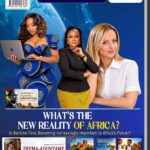
BERLA MUNDI: “As we prepare to close this session, I want us to look at the very cover of this edition. It is intentionally striking. We see a poised, confident figure representing the strength and modern visibility of African identity. These are symbols of what Africa is and what Africa can be—a powerhouse of culture, success, and influence.
But that elegance is intentionally juxtaposed with the harsh reality on the right panel. A crying woman layered over the map of Africa. This is our anchor: ‘Talk About Sudan.’ It is a plea for global attention to one of the most severe displacement crises in human history.
Our subtitle—‘Toward Humanitarian Competition: Legal Silence and Global Accountability’—is not just a caption; it is a critique. It asks if the global system responds equally to suffering, or if some lives are simply too ‘inconvenient’ to save.
** (Berla turns to the camera with a somber intensity) **
To the countries and interests currently engaged in, or profit-taking from, the destruction of Sudan: We must address the ‘potential of evil intent’ that has historically divided this continent. When you supply the tools of war, you are not just participating in a conflict; you are succumbing to an age-old influence that seeks to fragment humanity for short-term gain.
Sudan on Trial is more than a headline. It is a moment of judgment for international leadership and collective human responsibility. If we allow Sudan to be dismantled by foreign interests and local silence, we aren’t just failing a nation—we are proving that our global institutions have no soul.
Serwaa, Assumpta, in thirty seconds: How do we break this cycle of ‘evil intent’ and convince these powers that a stable, thriving Africa is worth more than a war-torn one?”

SERWAA AMIHERE, Esq :“We break it by making silence expensive. We must shift the cost of doing business in conflict zones. When international law carries real, economic, and diplomatic consequences for the ‘evil intent’ of fueling wars, the incentive for destruction will finally vanish. We must demand a legal system that values human life over the sale of a missile.”

ASSUMPTA GAHUTU, Esq.: “We must also reclaim our narrative. Africa is not a ‘frontier’ for testing weapons; it is a home for a billion dreams. We break the cycle by refusing to be divided by foreign interests. We must move toward that ‘Humanitarian Competition’ where the world competes to see who can build the most hospitals, not who can supply the most drones. The judgment is here, and history is watching.”
BERLA MUNDI: “A moment of judgment, indeed. To our readers and viewers: Don’t just watch. Talk about Sudan. Demand accountability. Because when one part of the human family is on trial, we are all in the courtroom. I’m Berla Mundi. Thank you for joining us on Assumpta Quarterly Live.”
Our Shared Humanity Soka Gakkai Buddhist
An introduction to the Soka Gakkai and Nichiren Buddhism.
Where do the teachings originate from? What is the philosophy of Buddhism?
How do Soka Gakkai members apply it in their daily lives?
The Soka Gakkai is a global community-based Buddhist organization that promotes peace, culture and education centered on respect for the dignity of life. Its members in 192 countries and territories study and put into practice the humanistic philosophy of Nichiren Buddhism.
Soka Gakkai members strive to actualize their inherent potential while contributing to their local communities and responding to the shared issues facing humankind. The conviction that individual happiness and the realization of peace are inextricably linked is central to the Soka Gakkai, as is a commitment to dialogue and nonviolence. Subscribe to our channel: / sgivideosonline Visit our website: https://www.sokaglobal.org/ Like us on Facebook: / sgi.info Follow us on Instagram: / sgi.info


https://www.instagram.com/babiesandtodds_?utm_source=ig_web_button_share_sheet&igsh=ZDNlZDc0MzIxNw==
Safe & Nurturing Environment: A “home away from home” in the city center. 🏠
Values-Based Learning: We prioritize peace, culture, and mutual respect. 🤝
Creative Freedom: Dedicated spaces for children to play, share, and innovate. 🎨
Enrolling Now for a Brighter Future.Nurturing Excellence. Cultivating Peace. 🌍
Babies & Toddlers Daycare (BTDC) welcomes families from all walks of life to our premier Daycare and Preschool in Windhoek. 🇳🇦
We are a community-centered institution dedicated to the dignity of life. Our approach goes beyond traditional childcare, integrating a humanistic philosophy that prepares the next generation to be compassionate global citizens.
Why Families Choose BTDC:
📍 Located in the Heart of Windhoek
📞 Inquiries: +264 81 673 7599
💻 Visit: www.babiestodds.com
#WindhoekParents #NamibiaEducation #EarlyChildhood #HumanisticEducation #BabiesAndToddlersic Growth – Respecting the unique journey of every child.
https://www.instagram.com/yartelgh?igsh=bndienE3M293ajdq
https://www.instagram.com/bveystyling?igsh=MWVmdjdtaWZzeWRodA==
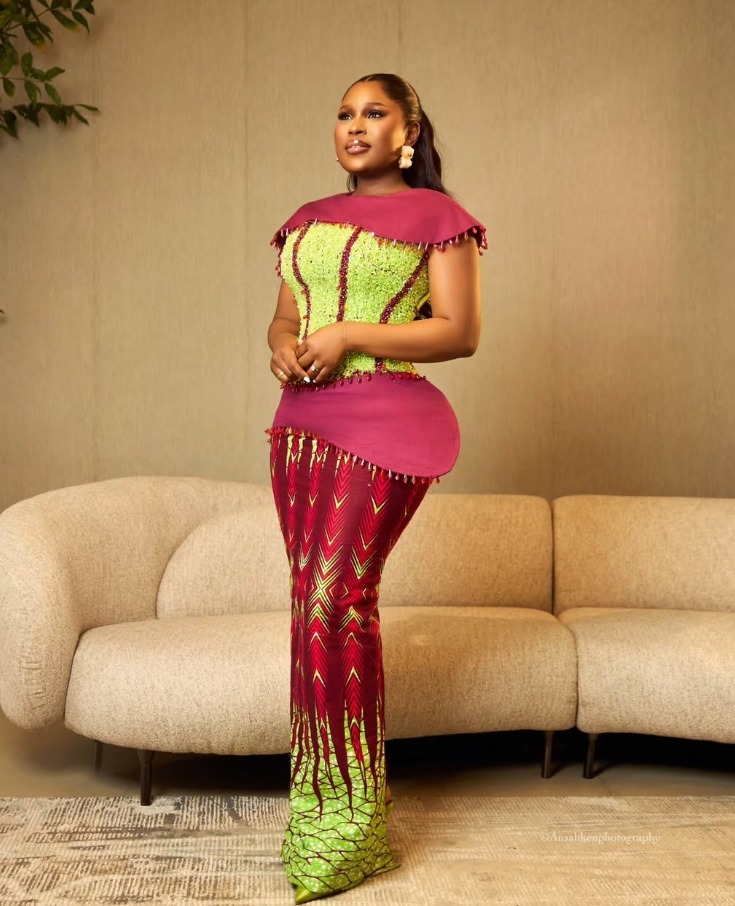
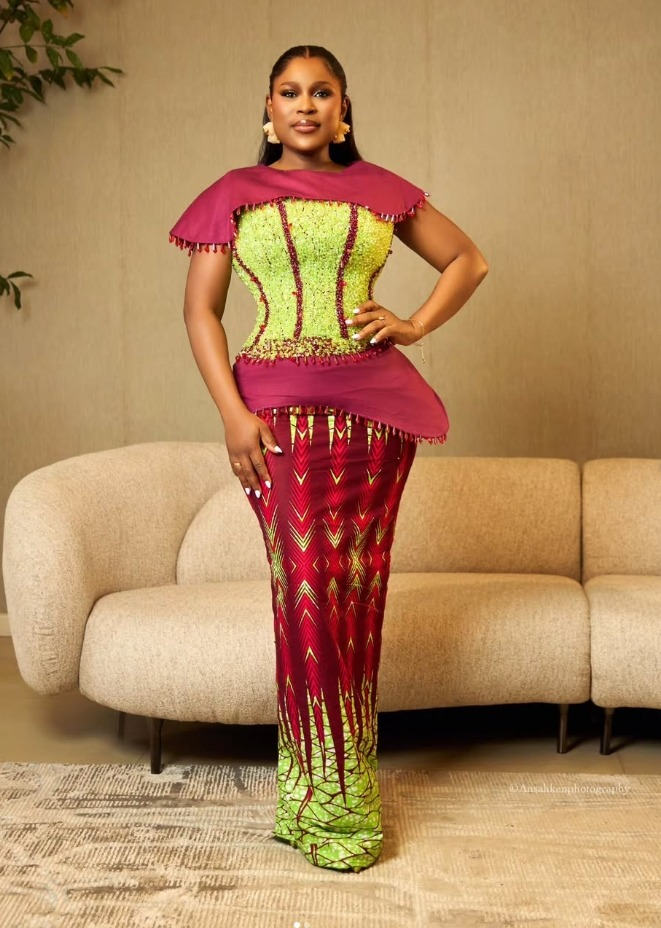
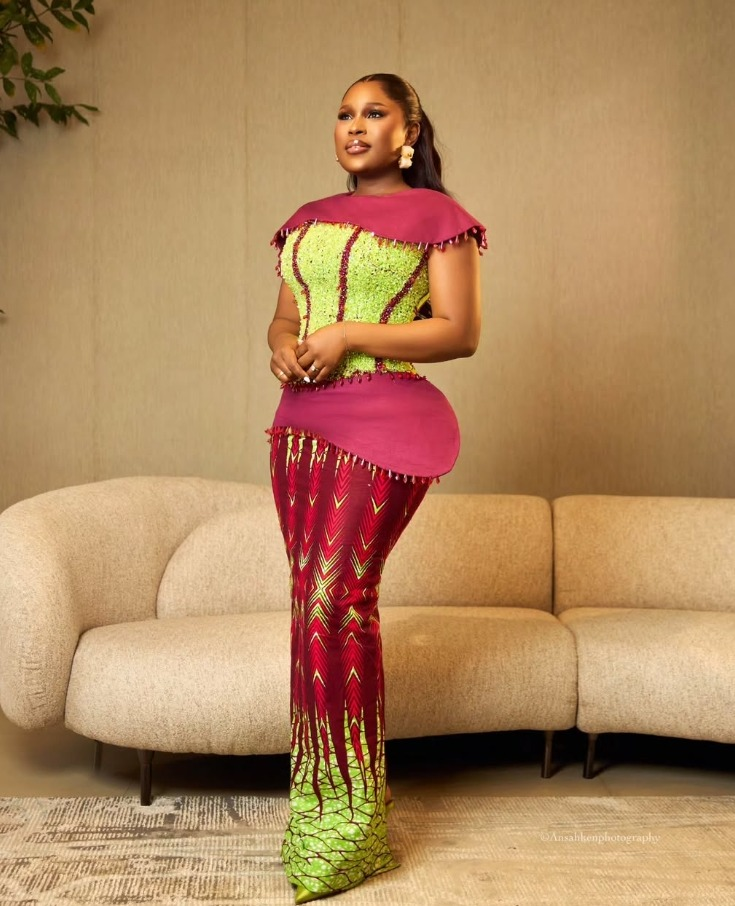
This ensemble is a masterclass in modern African couture, blending architectural structure with the vibrant heritage of GTP (Ghana Textiles Printing). Designed by Yartel, the outfit reimagines traditional wax print into a high-fashion silhouette that remains functional for the tropical Ghanaian climate.
1. Breathable Silhouette
The dress features a sophisticated peplum-style bodice paired with a sleek, floor-length column skirt. By utilizing a structured yet airy bodice, the design allows for airflow around the midsection. The skirt’s streamlined cut ensures elegance without excess fabric weight, making it ideal for high-profile events in warmer temperatures.
2. Intricate Detailing and Beading
The bodice is a work of art, featuring precision-engineered vertical beading that elongates the frame. The lime-green corset-style center is adorned with delicate shimmering stones, providing a “red-carpet ready” glow. Rather than heavy embroidery, the use of fine beadwork adds luxury and texture while keeping the garment lightweight and breathable.
3. Sophisticated Bodice Architecture
Instead of standard sleeves, this design incorporates a sculpted magenta overlay that creates a cap-sleeve effect. This architectural choice provides coverage for the shoulders—offering protection from the sun—while leaving the arms free to ensure natural cooling and maximum mobility.
4. Vibrant GTP Print & Texture
The fabric is a high-quality GTP wax print, celebrated for its durability and rich color saturation. The pattern features a dynamic chevron and geometric motif in shades of magenta, forest green, and lime. The cotton-based texture of the GTP fabric is naturally moisture-wicking, ensuring that even with a high-fashion structure, the wearer remains comfortable and poised.
Elevate Your Brand with Berla Mundi x Yartel
Step into the world of undisputed elegance. This breathtaking GTP creation, worn by the iconic Berla Mundi, showcases the pinnacle of Ghanaian craftsmanship. Designed by the internationally acclaimed brand Yartel, this look proves that tradition and avant-garde fashion are a match made in heaven.
Styled to Perfection:
This look was curated by the visionary Gbvey, founder of Gbveystyling and The Bvey Space. At @shopbvey, we don’t just style clothes; we build confidence through strategic personal branding.
Own Your Moment. Build Your Brand.
- Designer: Yartel (@yartelgh)
- Stylist: Gbvey (@gbveystyling | @thebveyspace)
- Connect with Yartel: www.facebook.com/yartelgh
- Inquiries/Orders: Contact via WhatsApp for bespoke designs that redefine African luxury.