







Presented by: Owusuwaa Weekly Health Newsletter
| 📰 Article Title | Agbogbloshie’s Toxic Secret: How E-Waste Poisons a Community |
| Subtitle/Quote | “When Weak Leadership Becomes a Public Health Crisis” |
| Content Focus | The Deadly Cost of Discarded Tech Becomes a Health Crisis in Ghana’s E-waste Dump. |
| Focus Highlight | Burning Cables, Burning Lungs: The Health Nightmare of Electronic Waste. |
| 📅 Special Edition Release: | Friday, November 14th, 2025 |
| 📍 Read exclusively at: | assumptagh.live |
HAIR SENTA ADVERTISEMENT



https://www.instagram.com/hairsenta?igsh=MXAzOThhNGZ0Nm15dQ==
✨ Transform Your Look at Hair Senta ✨
At Hair Senta, we believe that beauty begins with confidence — and confidence begins with hair that speaks volumes. We’ve helped countless women look and feel their absolute best with our premium 100% Human Hair Extensions, proudly sourced from Ghana to the world.
Whether you’re after volume, length, or a bold new look, Hair Senta is your ultimate destination for hair transformation.
📍 Visit us at: 24 Jungle Avenue, Accra, Ghana
📞 Call us: (+233) 0544354455 / 0248629769
🌐 Shop online: www.hairsenta.com
📸 Follow us: Join directionbygwen and 87 others on our journey to beauty and elegance. Hair Senta — A Place to Change Yourself.
AGBOGBLOSHIE




Her Vision Beyond Walls: Featuring Gwen Addo
This week, Gwen Addo—a certified entrepreneur, wellness coach, food educator, and co-founder of Owusuwaa Weekly Health Magazine—takes center stage.

As the founder of Hair Senta, HIBS-Africa, and TLS—The Leading Senta, Gwen is more than a business strategist; she is a movement-builder shaping communities where health, beauty, and wellness are not luxuries but rights.
Her mission is clear:
- Empower everyday people with practical wellness tools.
- Inspire young minds to contribute to a healthier, more responsible future.
- Redefine business as a community hub — a place of trust, connection, and transformation.
- “Cultural exchange is at the heart of this vision. It creates ripples of connection that unite hearts,” Gwen reflects.
For Gwen, health is culture — and culture is the boundless force behind true growth.
This Week’s Guest Feature: Gwen Addo and Berla Mundi . - In an exclusive dialogue, Gwen Addo is joined by Berla Mundi—renowned Ghanaian broadcast journalist and global media personality. Together, they unpack the transformative theme:
A Lifestyle Shift for Young Unemployed Ghanaians Putting Their Health and Life at Risk
Through their dialogue, they reveal how something as simple as caring for yourself—and others—can unlock deeper truths about personal well-being, social harmony, and national progress.
1. Lifestyle & Wellness Choices
Q: What inspired you to focus on this article title, ‘Agbogbloshie’s Toxic Secret: How E-Waste Poisons a Community’?
Gwen Addo: “My vision is about making health a fundamental right, not a luxury. Agbogbloshie, often labelled as simply an economic hub, is first and foremost a devastating public health crisis. We were inspired to focus on this because the suffering—the burning cables, the poisoned air—is a direct reflection of a global failure to protect the most vulnerable. We cannot talk about ‘wellness’ in Ghana without confronting the places where life is actively being shortened by environmental injustice. We aim to shift the conversation from ‘illegal dumping’ to ‘human catastrophe.'”
Q: How do burning cables and the resulting toxic fumes interact to impact our overall health, especially the youth working there?
Berla Mundi: “The smoke from burning e-waste cables, primarily to recover copper, releases a toxic cocktail of chemicals: dioxins, furans, lead, mercury, cadmium, and polycyclic aromatic hydrocarbons (PAHs). These don’t just ‘make you sick’; they systematically attack every major system in the human body.
Lungs and Brains :
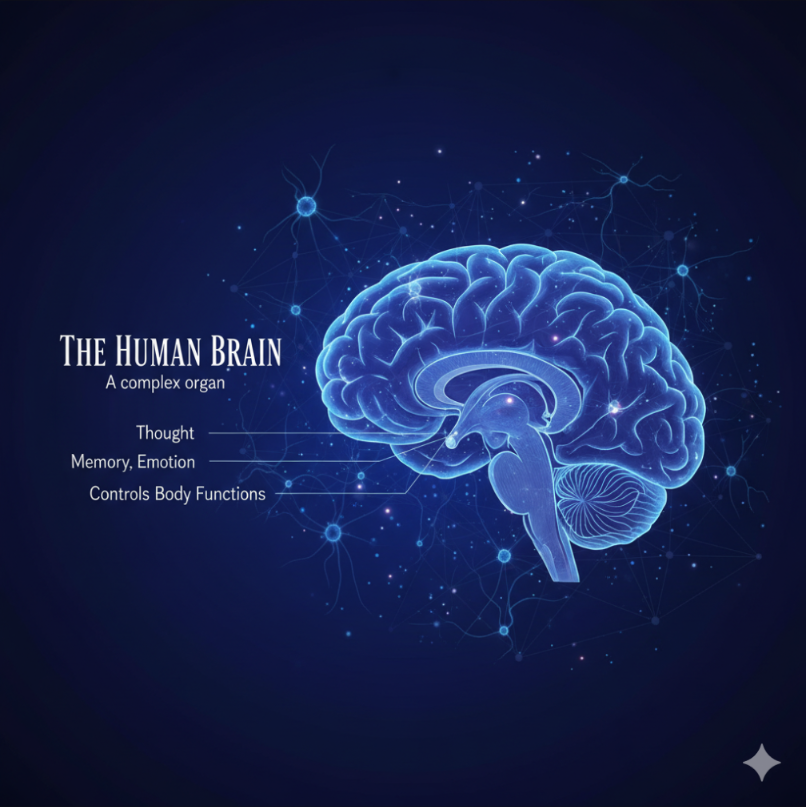
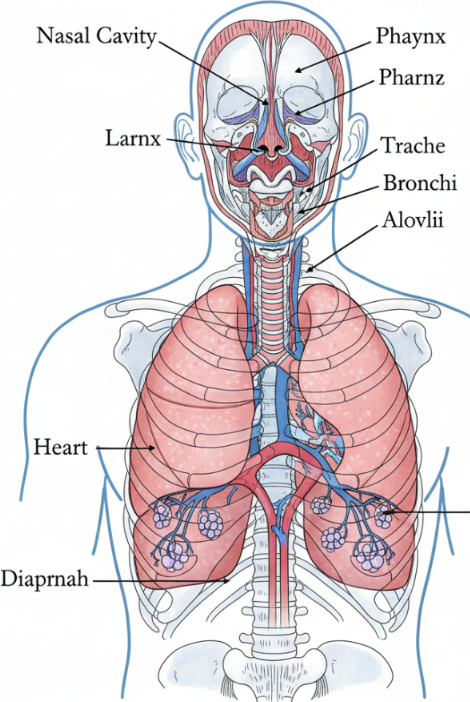
Lungs and Brains : Inhaling these fumes directly lead to severe respiratory illnesses, persistent coughs, asthma, and irreversible lung damage. Heavy metals like lead are neurotoxin, causing cognitive impairment and developmental delay in children.
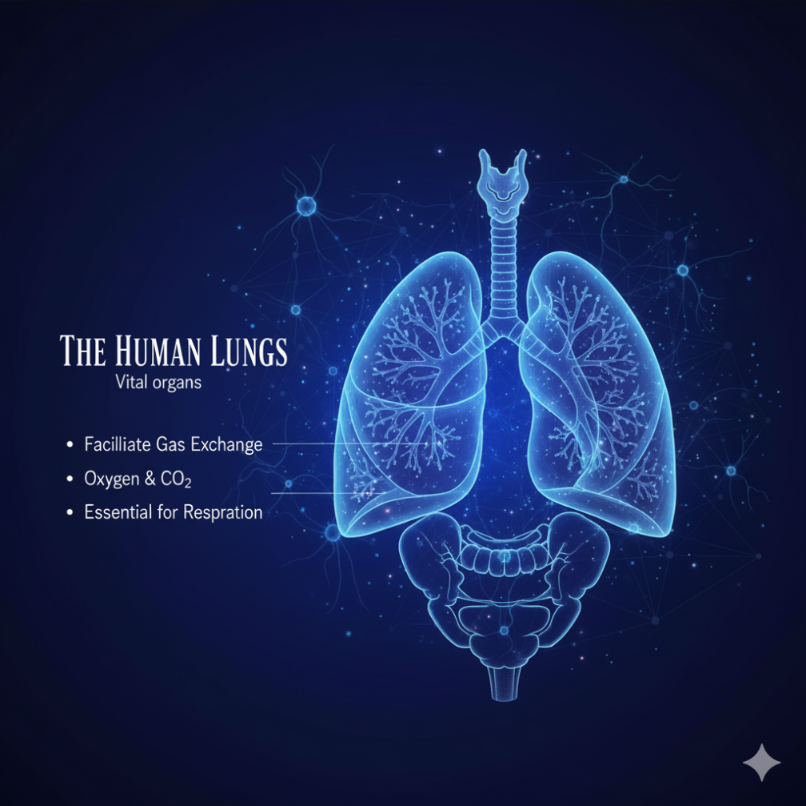
Cancer and Reproduction: Dioxins are furans and are known carcinogens and endocrine disruptors. For young people, this mean an increased risk of cancer later in life, and serious damage to the reproductive and immune systems.
General impact : The contamination is passed on. Toxins settles in the soil and water, affecting the food supply and leading to health issues in the children of those working there, continuing the cycle of illness
The Basel Convention and E-Waste
- Protecting Life from Hazardous Waste
The Basel Convention is an international treaty designed to control the movement of hazardous waste between nations, particularly preventing its transfer from developed to less developed countries. - MainMain Objective: The primary goal is to protect human health and the environment from the adverse effects of hazardous and other wastes by minimizing their generation and strictly controlling their transboundary movements.
- The Problem: Despite this convention, e-waste continues to arrive in Ghana, often falsely labelled as “used goods” for repair, highlighting the crucial need for stronger domestic regulation and global enforcement
Why Your Old Phone Might End Up in Ghana
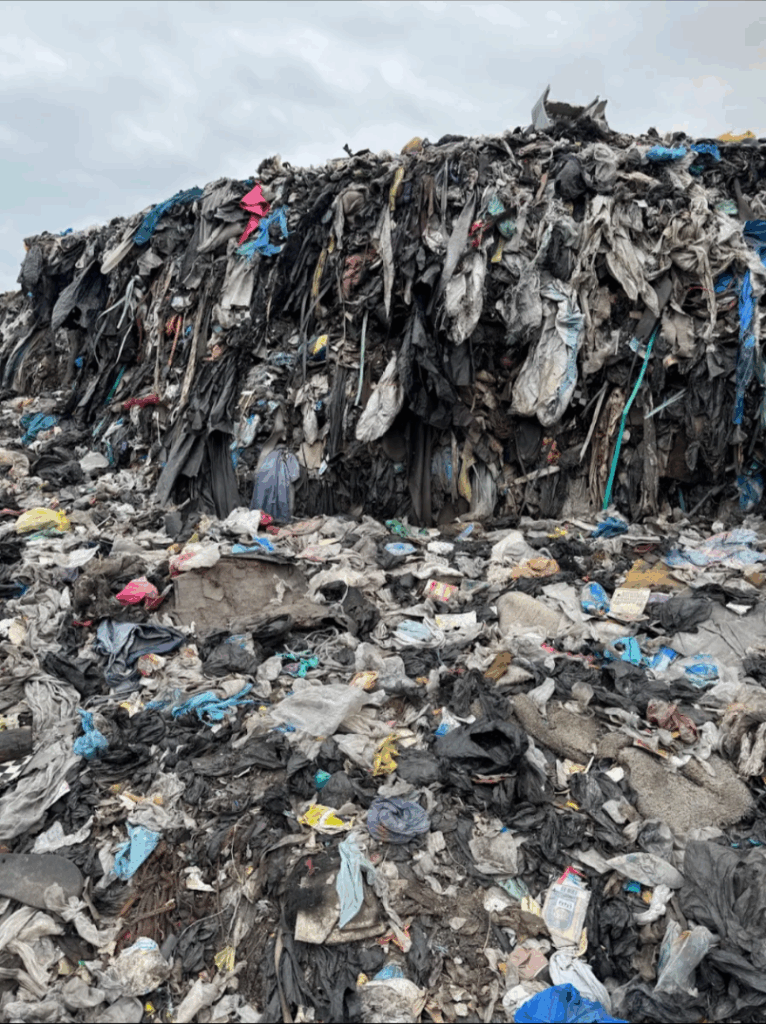
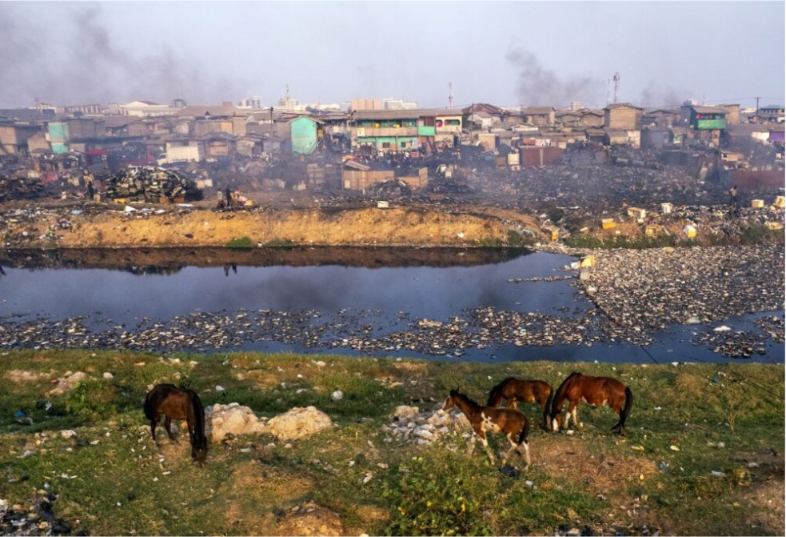
Look closely — this is Agbogbloshie, Ghana, the world’s largest illegal electronic waste dump.
Phones, computers, and appliances we discard in wealthier nations often end their journey here.

Agbogbloshie-Accra
In 2022, the world produced 62 million tonnes of e-waste, yet only 22% was properly recycled. The rest? Much of it found its way to places like Agbogbloshie — a 31-hectare landfill (the size of 44 football fields) in one of Accra’s poorest suburbs.
Here, waste becomes a livelihood. About 40,000 residents live among heaps of discarded technology, salvaging metals like copper and aluminum to survive. Some burn cables to extract wire, others sift through ashes and soil for fragments — often children working for a few dollars a day.
Toxic smoke clouds the air, poisoning water and soil. Still, the work continues, driven by necessity and the global demand for cheap recycling.
Yet under the Basel Convention, rich nations are not supposed to export hazardous waste to poorer countries. So how does it still happen?
Through complex trade routes — often via intermediaries like Tunisia, South Africa, or Nigeria — waste quietly slips through the cracks of regulation before arriving in Ghana.
What we throw away doesn’t disappear — it just travels farther than we think.
The Basel Convention — A Promise the World Keeps Breaking
Once upon a time, the world agreed to protect places like Agbogbloshie.
In 1989, nations signed the Basel Convention, vowing to stop the export of hazardous waste from rich countries to poor ones.
It was meant to be a shield — a promise that no community would become a dumping ground for the world’s waste.
But promises are only as strong as those who keep them.
More than three decades later, the shield is cracked.
E-waste still slips through, disguised as “second-hand electronics” or “charitable donations.”
Containers full of broken phones, dead computers, and shattered TVs cross oceans under false labels, passing through ports in Tunisia, Nigeria, and South Africa, until they quietly reach Ghana.
By the time they arrive at Agbogbloshie, it’s no longer about policy — it’s about survival.
A mother burns wire for copper to feed her children.
A boy drags a magnet across the soil, hunting for metal dust. They breathe in our waste and call it work.
The Basel Convention still exists — but in places like Agbogbloshie, it feels like a forgotten story.
A story we keep rewriting with every phone we throw away.
An Exclusive Dialogue: Gwen Addo and Berla Mundi


Welcome to a special edition of the Owusuwaa Weekly Health Newsletter, where we bring together leading voices to tackle the most pressing public health issues facing Ghana and the world.
Introducing Our Guests
Berla Mundi is a highly esteemed Ghanaian broadcast journalist, media personality, and advocate known for her incisive interviews and powerful commitment to social issues. Her work on platforms both national and global has established her as one of Africa’s most influential communicators.
Gwen Addo is a certified entrepreneur, wellness coach, food educator, and co-founder of the Owusuwaa Weekly Health Magazine. She is the visionary founder behind several successful enterprises, including Hair Senta and TLS—The Leading Senta. Gwen is recognized as a movement-builder dedicated to making health, beauty, and wellness accessible rights for all, with a strong focus on community empowerment.
The Dialogue Begins

Berla Mundi: “Welcome, Gwen. Thank you for joining us for this essential conversation. The title of our feature article, ‘Agbogbloshie’s Toxic Secret: How E-Waste Poisons a Community,’ is deliberately stark because the truth demands it. This isn’t just an environmental story; it’s a story of life and death for thousands of our young people.”
”But before we delve into the details of this crisis, I want to quote the powerful guidance of SGI President Daisaku Ikeda on this very topic. His philosophy beautifully encapsulates the scale of the challenge we face, weaving together the Buddhist principles of interconnectedness, the dignity of life, and the essential role of youth and global citizenship.”
Berla Mundi (Quoting President Ikeda’s Guidance):

”President Ikeda stresses the Buddhist principle of esho funi—the oneness of life (the self) and its environment. He emphasizes that the toxic conditions in Agbogbloshie are not just a problem ‘over there,’ but a direct reflection of a lack of compassion and wisdom in the so-called developed world. The destruction of the environment in Ghana mirrors a destructive tendency within the hearts of those who benefit from the cheap disposal of e-waste. He states clearly: ‘To destroy the natural world is to destroy human life… There is no crime worse than harming one’s mother [Earth].’“
”He calls our attention to the Absolute Dignity of Human Life, arguing that the root of this environmental injustice is a ‘collective failure to make the human being—human happiness—the consistent focus and goal in all fields of endeavor.’ He urges a profound shift from indifference to compassion, recognizing the ‘inalienable dignity’ of the people in Agbogbloshie, who are our ‘global neighbors.'”
”Crucially, on the Crucial Role of Youth and Global Citizenship, he emphasizes that the youth, despite being victims, hold the key to the solution and should act as protagonists. He challenges readers globally to cultivate the three core qualities of a global citizen: Wisdom (to perceive the interconnectedness of their e-waste with the poisoned soil in Accra), Courage (to challenge the unjust systems like the circumvention of the Basel Convention), and Compassion (to dedicate oneself to global solidarity).”
”Finally, he asserts that external policy changes must be driven by an Inner Transformation—a Human Revolution—where individuals awaken to their boundless inner power and take responsibility for the welfare of the planet.”
Berla Mundi: “Gwen, that’s a profound framework. As a wellness coach and community-focused entrepreneur, does this philosophical alignment resonate with your work on the ground, or what particular insight do you want to share with our readers worldwide?”
Gwen Addo: “Berla, that guidance is not only aligned with our philosophy at Owusuwaa Weekly Health Magazine, it perfectly frames the fundamental crisis we are addressing. When President Ikeda speaks of esho funi, it immediately connects to our vision: Health is culture—and culture is the boundless force behind true growth.“
”We cannot preach wellness or encourage a healthy lifestyle shift if the very air our people breathe is carcinogenic. The toxic smoke from those burning cables is the physical manifestation of the lack of wisdom and compassion he described. It’s the cost of consumer convenience being paid directly by the health and lives of Ghanaian youth.”
”My greatest insight is that this is not just an enforcement problem; it is a design problem and a moral problem. We, the global consumers, must develop the wisdom to see that the shiny new phone in our hand is directly connected to the lead poisoning in a child’s blood in Agbogbloshie.”
”We are empowering young Ghanaians not just to demand justice, but to become the protagonists President Ikeda speaks of. They must be equipped with the knowledge—the Courage—to challenge the narrative that their lives are expendable for corporate profit. Our magazine’s work is precisely that of the Human Revolution in action: providing practical tools and inspiration so individuals awaken to their worth, prioritize their health, and then transform their environment and society around them.”
”If we embrace that compassion, we move past simply criticizing the problem and start designing real solutions—solutions driven by the inalienable dignity of every human life.”

Berla Mundi: “Gwen, that is a powerful summation. You’ve connected the dots between personal health and global responsibility, moving this discussion far beyond just local clean-up efforts. It’s clear that for you, this is a deep moral imperative.”
”Now, let’s turn to the article itself. Given your diverse background—from business strategy to wellness coaching—what specifically inspired you to focus on this article title, ‘Agbogbloshie’s Toxic Secret: How E-Waste Poisons a Community,’ for this special health edition?”

Gwen Addo: “That’s an excellent question, Berla. At its core, my vision is about making health a fundamental right, not a luxury. Agbogbloshie, often labelled as simply an economic hub, is first and foremost a devastating public health crisis. We were inspired to focus on this because the suffering—the burning cables, the poisoned air—is a direct reflection of a global failure to protect the most vulnerable.”
”We cannot talk about ‘wellness’ in Ghana without confronting the places where life is actively being shortened by environmental injustice. We aim to shift the conversation from a dry, policy discussion about ‘illegal dumping’ to a necessary recognition of a ‘human catastrophe.’“

Berla Mundi: “That is a powerful and necessary shift in focus, Gwen—moving the narrative from ‘illegal dumping’ to a ‘human catastrophe.’ Thank you for clarifying that moral and philosophical anchor for our readers.”
”Let’s move into the devastating specifics of this catastrophe. You mentioned the burning cables; this is the visceral image that haunts many people who hear about Agbogbloshie. Can you break down for us: How do burning cables and the resulting toxic fumes interact to impact our overall health, especially the youth working there?“

Gwen Addo: “The smoke from burning e-waste cables, primarily to recover copper, releases a toxic cocktail of chemicals: dioxins, furans, lead, mercury, cadmium, and polycyclic aromatic hydrocarbons (PAHs). These don’t just ‘make you sick’; they systematically attack every major system in the human body.”
- Lungs and Brain: Inhaling these fumes directly leads to severe respiratory illnesses, persistent coughs, asthma, and irreversible lung damage. Crucially, heavy metals like lead are powerful neurotoxins, causing cognitive impairment, reduced IQ, and developmental delays in children.
- Cancer and Reproduction: Dioxins and furans are known carcinogens (cancer-causing agents) and endocrine disruptors. For young people, this means an increased risk of cancer later in life, and serious damage to the reproductive and immune systems, compromising their ability to have healthy families.
- Generational Impact: The contamination is passed on. Toxins don’t disappear; they settle in the soil and water, affecting the food supply and leading to health issues in the children of those working there, sadly continuing this tragic cycle of illness.

Berla Mundi: “Gwen, your explanation of the systemic health damage—from respiratory failure and neurotoxicity in children to increased cancer risk—is utterly chilling. It drives home the point that this is a generational threat fueled by global indifference.”
”Now, let’s broaden the scope and look at the international mechanics that allow this catastrophe to persist. We have a summary here for our readers that explains the journey of this toxic material, titled ‘Why Your Old Phone Might End Up in Ghana.’“
Berla Mundi (Reading Summary):
”Look closely — this is Agbogbloshie, Ghana, the world’s largest illegal electronic waste dump. Phones, computers, and appliances we discard in wealthier nations often end their journey here.”
”In 2022, the world produced 62 million tonnes of e-waste, yet only 22% was properly recycled. The rest? Much of it found its way to places like Agbogbloshie — a 31-hectare landfill (the size of 44 football fields) in one of Accra’s poorest suburbs.”
”Here, waste becomes a livelihood. About 40,000 residents live among heaps of discarded technology, salvaging metals like copper and aluminum to survive. Some burn cables to extract wire, others sift through ashes and soil for fragments — often children working for a few dollars a day.”
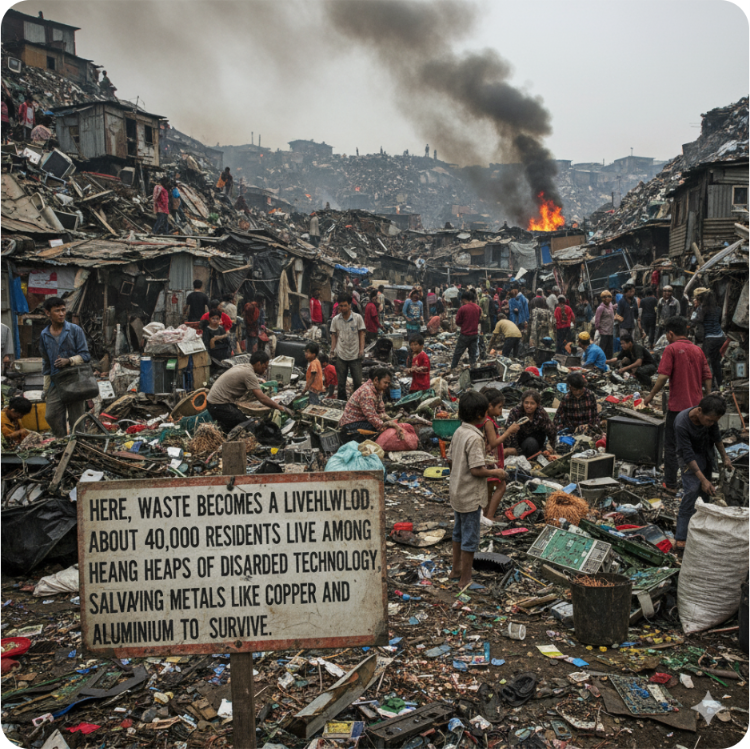
”Toxic smoke clouds the air, poisoning water and soil. Still, the work continues, driven by necessity and the global demand for cheap recycling.”
”Yet under the Basel Convention, rich nations are not supposed to export hazardous waste to poorer countries. So how does it still happen? Through complex trade routes — often via intermediaries like Tunisia, South Africa, or Nigeria — waste quietly slips through the cracks of regulation before arriving in Ghana.”
”What we throw away doesn’t disappear — it just travels farther than we Think.”