








📰 Assumpta Newsletter Magazine
Presents: Osagyefo Newsletter Publication
Journalism of Neglected Topics:
🚨 BREAKING FEATURE
Myths at the Heart of a System
Overall Impact of Modi’s Visit to Israel: Tehran’s Perspective and Strategic Concern
📅 PUBLICATION DETAILS
Release Date: Monday, 16th March 2026
Platform: Exclusively on Assumptagh.live
Edition: Global Affairs & Strategic Narratives
Join the conversation:
#OsagyefoNewsletter #TheEnabler #HistoricalPhysics #AssumptaDigital #HumanRevolution #GwenAddo








https://www.instagram.com/hairsenta?igsh=MXAzOThhNGZ0Nm15dQ==
The “Bloom & Breakthrough”
Something Unbelievable Is Coming to 24 Jungle Avenue This Spring… 🌱🌸
Accra is shedding its old skin. A new energy is beginning to stir—a whisper of silk, a shimmer of new life.
They say beauty is power. But this spring, what if your hair could radiate your true light, stop a room, and carry the warmth of Ghana like the sun?
HAIR SENTA — the secret behind every unforgettable bloom. ✨
Straight from the heart of Ghana, our 100% luxury human hair extensions arrive like a fresh start you didn’t know you needed: natural, unmatched, undeniable. This season, we’re cultivating heritage, craft, and total glamour in every strand.
Will you be the one to bloom this spring morning… or the one who only hears the story later? 🔔
Call now: 📞 (+233) 0544354455 / 0248629769
Visit: 🌐 www.hairsenta.com�
Location: 📍 24 Jungle Avenue, Accra, Ghana 00233
Hair Senta. Real Hair. Real Power. Real Radiance

🌍 A GLOBAL PERSPECTIVE
The stakes have undeniably risen.
📅On Monday, 16th March 2026, Assumpta Digital presents a rare, cross‑continental dialogue examining geopolitics, narrative power, and sovereignty in an era of shifting alliances. This edition brings together prominent female voices from politics, business, media, and strategy to explore the deeper implications of global realignment.
At the centre of this intellectual exchange stands Gwen Addo, whose insights anchor a broader debate that transcends borders, ideologies, and traditional power structures.
FEATURED VOICES

GWEN ADDO
Global Entrepreneur | Economic Visionary | Author of Direction
Gwen Addo is a Ghanaian global entrepreneur, leadership coach, and business strategist. She is the Founder and CEO of:
- The Hair Senta
- The Leading Senta
- HIBS Africa
- CAGA Heights
A food educator and beauty advocate, Gwen Addo is widely recognised for her work in empowering the next generation of African and global business leaders, blending economic strategy with human‑centred leadership.
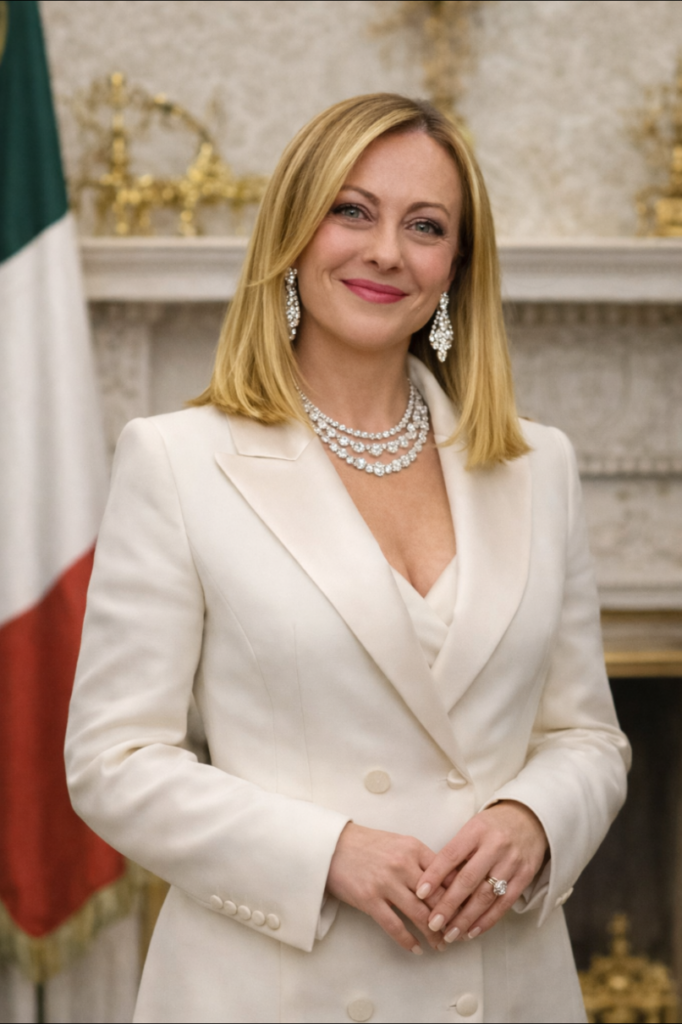
GIORGIA MELONI
Prime Minister of Italy
A central figure in contemporary European politics, offering insights into sovereignty, national interest, and shifting geopolitical alignments within a multipolar world.

DZIGBORDI KWAKU‑DOSOO
Global Keynote Speaker | The Human‑Centered Strategist
A leading voice in re‑imagining leadership, transformation, and values‑driven governance in complex global systems.

📺 FREMA ADUNYAME
Broadcast Journalist, Channel One TV
A respected media analyst known for cutting through political public relations to examine the realities behind policy decisions and power narratives.
THE CENTRAL QUESTION
How do global narratives, strategic partnerships, and perceptions of power influence national choices—and who ultimately bears the consequences?
🔑INSIDE THIS EDITION
Modi’s Israel Visit, Strategic Narratives, and the Impact on Tehran
Prime Minister Narendra Modi’s visible alignment with Israel has intensified long‑standing debates about the real drivers of India’s foreign partnerships. Many observers question whether India’s expanding cooperation with Israel—particularly in areas such as investment, technology, and security—fully serves India’s long‑term national interests, or whether it risks prioritising external alignments over domestic and regional stability.

This scepticism has grown in the aftermath of Modi’s Israel visit, which, while strengthening ties with Tel Aviv, also carried implications for Tehran. From Iran’s perspective, the visit reinforced perceptions that India is drifting closer to Israel and the Western security ecosystem, thereby narrowing India’s traditional space for strategic balancing. Although India has not severed ties with Iran, the visit signalled caution and distance at a moment of heightened regional tension.
Within India, critics argue that certain foreign investment initiatives associated with Israel often arrive wrapped in powerful narratives of innovation and opportunity, yet may deliver limited structural benefits. These initiatives, they suggest, can sometimes create inflated expectations, shift domestic priorities, and deepen political or ideological divisions without addressing core economic and social needs. Similar concerns have historically been raised about the symbolic influence of globally prominent financial and asset‑management institutions, whose narratives can loom larger than their practical role in domestic development.
From this perspective, the issue is not one of control or conspiracy, but of narrative power—the capacity of influential partnerships to shape perceptions of progress, legitimacy, and inevitability. When such narratives dominate public discourse, they risk diverting attention from India’s own social responsibilities, development priorities, and long‑term sovereignty.
For a society that places high value on harmony, coexistence, and internal stability, these concerns are particularly significant. India’s strategic choices abroad inevitably ripple inward, affecting domestic cohesion and regional relationships—especially with Pakistan. Many Indians therefore hope that foreign partnerships, including those with Israel, remain carefully calibrated to avoid entanglement in conflicts or dependencies that could undermine peace, balance, and national unity.
WHY THIS EDITION MATTERS
This publication does not seek to dictate conclusions. Instead, it invites readers worldwide to:
- Question dominant narratives
- Examine strategic choices critically
- Reflect on sovereignty, responsibility, and long‑term consequences
Myths at the Heart of the System — Overview
“Myths at the Heart of the System” refers to the foundational beliefs and narratives that societies construct around powerful financial institutions and global actors. Figures and organizations often cited in these discussions—such as major banking dynasties or global asset‑management firms—have become symbols through which people interpret global finance, influence, and political power. Whether accurate, exaggerated, or contested, these narratives play a significant role in shaping public perception.
In the Indian context, however, influences closer to home may be equally—if not more—impactful. India’s long and complex historical relationship with Pakistan has produced enduring assumptions and strategic perceptions that continue to shape national security thinking, foreign policy choices, and public debate. These deeply rooted experiences often provide the emotional and political backdrop against which newer global partnerships are assessed.
This does not suggest uniform agreement within India. On the contrary, India is a nation defined by intellectual diversity and democratic plurality. Scholars, policymakers, and citizens hold widely differing views, particularly regarding India’s evolving strategic relationship with Israel. Support, scepticism, and caution coexist within the national discourse.
Within this debate, some observers question whether certain foreign investment initiatives genuinely advance India’s long‑term interests. Critics argue that some partnerships may generate superficial expectations of progress while subtly influencing domestic priorities, public narratives, or political divisions, without addressing deeper structural needs.
At the same time, Indian society has long drawn strength from traditions that emphasise harmony, spirituality, and social responsibility. For many citizens, the highest values lie in preserving social cohesion, peaceful coexistence, and internal balance rather than engaging in geopolitical rivalry.
For this reason, when Prime Minister Narendra Modi pursues international partnerships—especially those with strategic and security implications, such as Israel—it becomes essential to consider their broader consequences. These include implications for sovereignty, regional stability, and long‑term peace. A nation that places a high value on harmony would not wish to see its people drawn into escalating conflicts, particularly in a region already shaped by sensitive relations with Pakistan.
Below is a scripted opening dialogue for the panel, written in a polished, respectful, international broadcast tone, with Frema Adunyame as host, followed by Gwen Addo’s first response.
The structure follows your instructions precisely.
🌍 Assumpta Newsletter Magazine
Osagyefo Newsletter Publication
Live Panel Dialogue

FREMA ADUNYAME (Host)
Good day to our readers, viewers, and listeners across the world.
On behalf of Assumpta Newsletter Magazine and the Osagyefo Newsletter Publication, I warmly welcome you to this special global dialogue. Wherever you are joining us from—Africa, Europe, Asia, the Middle East, or the diaspora—we are grateful for your time and your engagement.
I also wish to extend my deepest appreciation and warm welcome to our distinguished panelists, women whose leadership, intellect, and global perspectives enrich this conversation immensely. Thank you all for being here.
Let me briefly introduce our panel:

- Ms. Gwen Addo, a Ghanaian global entrepreneur, economic visionary, author, and leadership strategist, whose work intersects business transformation, human‑centered leadership, and global economic thought.

- Her Excellency Giorgia Meloni, Prime Minister of Italy, a central figure in contemporary European political discourse on sovereignty, national interest, and global alignment.

- Ms. Dzigbordi Kwaku‑Dosoo, a globally respected keynote speaker and human‑centered strategist, whose work challenges conventional leadership models in complex systems.

And I am Frema Adunyame, broadcast journalist with Channel One TV, honoured to serve as your host and moderator for today’s dialogue.
SETTING THE CONTEXT
Before I invite our panelists to speak, allow me to briefly analyse and frame the foundation of this edition of the newsletter.
Our article is titled:
“Myths at the Heart of a System”
Subtitle: Overall Impact of Modi’s Visit to Israel: Tehran’s Perspective and Strategic Concern
This framing invites us to look beyond headlines and examine the narratives—often powerful, sometimes exaggerated—that shape how societies understand global finance, geopolitical power, and international alliances.
FRAMING THE DEBATE: MYTHS, POWER, AND PERCEPTION
The phrase “Myths at the Heart of the System” captures the narratives that influence how policies and partnerships are perceived. In this context, these myths revolve around:
- Prominent global financial institutions,
- Historical banking legacies often cited in discussions of financial influence,
- And strategic partnerships between states, notably India and Israel.
Some of these narratives are grounded in reality, others less so—but together, they shape public understanding of how national priorities, alliances, and economic strategies are formed.
🇮🇳 INDIA’S STRATEGIC CALCULUS
India’s foreign policy cannot be understood without acknowledging its historical rivalry with Pakistan, which continues to influence its security thinking and diplomatic posture.
Within this framework:
- Some analysts argue that closer ties with Israel offer India advanced technology, defense cooperation, and investment opportunities.
- Others caution that these partnerships may entangle India in wider geopolitical tensions or external agendas that do not fully align with India’s long‑term interests.
🧩 DIVERSITY OF THOUGHT
India, of course, is not monolithic. There is wide diversity in opinions regarding:
- India–Israel cooperation,
- The role of global financial institutions,
- And strategic alignment in international conflicts.
This diversity underscores the need for careful, nuanced policymaking that balances global realities with domestic sentiment.
🕊️ CULTURAL AND ETHICAL CONSIDERATIONS
Indian society carries a legacy rooted in harmony, spirituality, and social responsibility. For many citizens, peace and social cohesion hold greater value than geopolitical confrontation.
From this perspective, any international partnership—particularly one involving security and strategic alignment—must be assessed for its impact on sovereignty, regional stability, and the safety of ordinary citizens, especially given India’s delicate relationship with Pakistan.
🔑 IN SUMMARY
The “myths at the heart of the system” challenge us to move past simplistic explanations. They remind us that India’s choices—particularly under Prime Minister Narendra Modi—must strike a balance between geopolitical ambition, domestic values, diverse perspectives, and the enduring desire for peace and stability.
INVITING THE FIRST VOICE
With that context respectfully laid out, I would now like to turn to our first panelist.
Ms. Gwen Addo, thank you once again for joining us and for your continued contribution to global strategic thinking.
Gwen, with your background in economic transformation and human‑centered leadership, may I kindly invite you to share your thoughts on “Myths at the Heart of a System” and the implications of India’s strategic choices following Prime Minister Modi’s visit to Israel?

GWEN ADDO (Panelist)
Thank you very much, Frema, for that thoughtful framing—and thank you for the warm introduction. It is truly an honour to be part of this dialogue alongside such distinguished leaders and voices.
When we speak of “myths at the heart of the system,” I believe we are really talking about perception versus substance. In global affairs, narratives often move faster than realities, yet they carry enormous power. They influence markets, public opinion, and even national confidence.
From my perspective, India’s situation is particularly complex. India is a civilisation‑state with deep spiritual, cultural, and social values, and at the same time, it is navigating a highly competitive global economic system. When strategic partnerships—such as those with Israel—are formed, the critical question should not only be what is gained, but at what cost, and to whom.
There is often an assumption that alignment with technologically advanced partners automatically translates into long‑term prosperity. However, if such partnerships are driven more by narrative prestige than by sustainable local development, they risk creating dependency rather than empowerment. Development should strengthen a nation’s internal capacity, not merely enhance its global image.
Equally important is the human dimension. Economic strategy must remain anchored in social harmony and responsibility. If external alignments intensify regional tensions or distract from internal cohesion—particularly in sensitive contexts involving Pakistan—then leaders must pause and reassess.
For me, true leadership is about discernment: knowing when to engage, when to resist pressure, and how to protect a nation’s soul while participating in a global system that often rewards speed over wisdom.
Thank you, Frema.
