







Presents-La Bussola–Journalism of Neglected Topics.
📰FEATURE ARTICLE: “Under The Full Moon : Can Venezuela Rustle The Sleeping White Wolf?
📰The Osagyefo Newsletter–Editorial Reflection:
✍️ History rarely announces the end of an era with spectacle. More often, it reveals decline through necessity-when power must ask for what it once commanded. Venezuela does not threaten the White Wolf with force; it unsettles it by existing at the precise fault line where arrogance meets dependence. Under the full moon of consequence, the question is no longer who rules the world, but who can still pretend they do..
📅 Special Edition Release: Monday, December 22nd, 2025
📍 Read exclusively at:assumptagh.live/
HAIR SENTA ADVERTISEMENT







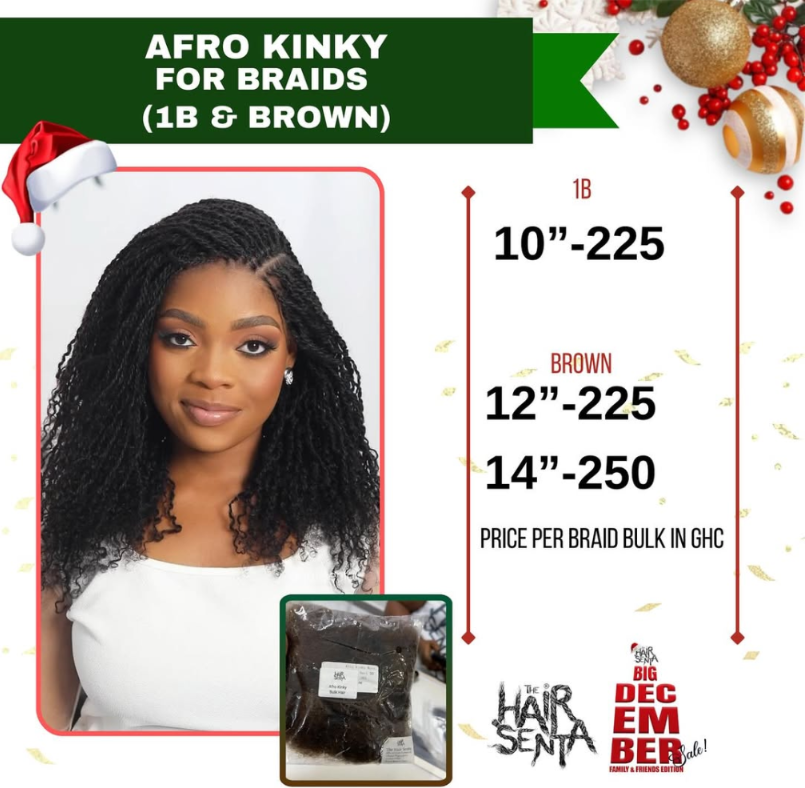


https://www.instagram.com/hairsenta?utm_source=ig_web_button_share_sheet&igsh=ZDNlZDc0MzIxNw==
✨🎄 OFFICIAL HAIR SENTA GALLERY 🎄✨
Shopping & Retail | Trademarked Company
This Christmas, gift yourself (or someone special) luxury confidence 💫
We ship the best 100% Human Hair Extensions straight from Ghana to the world 🌍🇬🇭
✔ Premium Quality
✔ Long-lasting & Natural Look
✔ Trusted & Trademarked Brand
🎁 Christmas Special:
Perfect hair for parties, photos, and festive slay all season long!
📞 Call / WhatsApp: (+233) …
📍 Visit Us: 24 Jungle Avenue, Accra, Ghana 00233
✨ Buy now and glow all Christmas! ✨
Featuring Global Perspective

DZIGBORDI KWAKU-DOSOO :
A renowned Ghanaian entrepreneur, keynote speaker, executive coach, medią personality, and consultant, known for her expertise in high-performance, leadership transformation, and human skills development, helping leaders and organizations globally build confidence, impact, and sustainable growth.
She founded DCG Consulting Group and Allure Africa, hosted “The Dzigbordi Show,” and transitioned from finance (Wall Street) to wellness and strategic consulting, empowering professionals to master “human skills” for success in a tech-driven world.

GIORGIA MELONI. ITALIAN PRIME MINISTERO.
Giorgia Meloni is an Italian politician who has served as Prime Minister of Italy since October 2022. She is the first woman to hold the office and the head of the third- longest Government in the history of the Italian Republic.
°“Leadership today means rejecting barbarism and reimagining prosperity for humanity.”

FREMA-ADUNYAME.
Under The Full Moon: Can Venezuela Rustle The Sleeping White Wolf?
A prominent Ghanaian broadcast journalist, media personality, and Head of Events Partnerships at Citi FM/TV & Channel One TV known for hosting shows like Upside Down and Breakfast Daily, and anchoring news, recognized for her versatile career in radio, TV, and corporate leadership, recently graduating as a valedictorian from the University of Ghana.
°Great leadership sparks not just hope, but a generational shift in vision and values.”
📌 This Edition is not just commentary—it’s a compass pointing toward America’s future role in the world.
African Stream : THE OSAGYEFO — EDITORIAL
Introduction: When Empires Break Their Own Rules
There is an old, unforgiving rule in geopolitics—one observed across centuries, civilizations, and collapses: you can be an empire, or you can be a debtor, but you cannot be both. Empires extract. Debtors negotiate. For nearly eighty years, the United States defied this rule, financing global dominance through debt while maintaining unquestioned control over money, markets, and raw materials.
But rules do not disappear; they only wait.
Under the full moon—those rare historical moments when power is exposed rather than projected—the American empire finds itself in unfamiliar territory. The “White Wolf” of global dominance, long feared for its predatory reach, now appears not slain, but asleep. And smaller actors, once disciplined by sanctions and threats, are beginning to test whether the wolf can still bite.
The question before us is no longer whether the world is changing—but whether Venezuela, of all nations, has found the nerve to rustle the sleeping beast.
The Birth of the White Wolf
To understand the significance of this moment, one must return to the origins of American power—not its mythology, but its mechanics.
In 1870, in Cleveland, Ohio, a 31-year-old accountant named John D. Rockefeller controlled just four percent of America’s oil refining capacity. Within three decades, his company—Standard Oil—would command 91 percent of U.S. oil production, establishing the first true modern monopoly. This was not innovation through fairness; it was dominance through consolidation, intimidation, and control of chokepoints.
Rockefeller did not merely build a company—he built a template.
That template became the foundation of American power: control the resource, dictate the terms, discipline competitors, and expand outward. Oil became the bloodstream of modern civilization, and the United States positioned itself as its gatekeeper. This was the original spirit of the White Wolf—singular, ruthless, and unchallenged.
For decades, that dominance was enforced through corporations, currencies, and eventually aircraft carriers.
From Predator to Petitioner
Fast-forward to the present.
The inheritors of Rockefeller’s empire—the political and financial custodians in Washington—are no longer dictating the rules of energy. They are requesting exemptions. Issuing waivers. Re-opening channels they once closed with sanctions and threats.
The United States, which attempted to overthrow Nicolás Maduro, is now quietly seeking Venezuelan heavy crude—the very resource it once claimed to control globally. This is not diplomacy. It is a necessity disguised as negotiation.
The humiliation is structural, not symbolic. American refineries were designed for heavy sour crude. Sanctions removed access. Domestic production could not compensate. The wolf, once master of the hunt, now circles familiar territory asking for permission to feed.
This reversal would have been unthinkable in any previous era of U.S. dominance.
The Wolf Hunters
The narrative becomes darker when we examine who pays the price.
Washington is increasingly portrayed not as the wolf itself, but as a group of wolf hunters—political managers attempting to keep a failing system alive at any cost. That cost is not paid in elite discomfort; it is extracted from the American public.
Inflation becomes policy. Currency debasement becomes strategy. Savings are eroded quietly, framed as economic inevitability rather than political choice. This is the final tax of a declining hegemon: the transfer of systemic failure onto ordinary citizens.
In this framing, the American people are no longer beneficiaries of the empire—but its collateral.
The Second Desperation: Debt and China
If the oil deal exposes the energy weakness, the debt crisis reveals the financial one.
The United States must refinance trillions in debt annually. To do so, it depends on buyers of its bonds—many of whom reside in countries Washington labels as adversaries. Chief among them: China.
Here lies the contradiction at the heart of the modern empire: the nation described as the greatest strategic threat is simultaneously a financial lifeline. The empire that once enforced compliance through monetary dominance now depends on the very rivals it seeks to contain.
This is not strategic competition; it is mutual entanglement under duress.
Imperial Liquidation Under Moonlight
What we are witnessing is not a collapse in flames, but a liquidation—a slow unwinding of privileges once taken for granted.
The “exorbitant privilege” of the dollar—the ability to print, borrow, and sanction without consequence—is being tested from multiple directions at once: energy, debt, multipolar alliances, and resource nationalism.
Venezuela does not need to defeat the White Wolf. It only needs to prove the wolf can be disturbed.
Under the full moon, myths fade. Predators age. Systems reveal their cracks. And the world learns—often too late—that power is most dangerous not when it is strong, but when it is desperate to appear so.
This is not the end of American power. But it may be the end of its illusion of inevitability. And once that illusion is gone, the hunt changes forever. — The Osagyefo Newsletter
Core Principle: Causality as Law, Not Moralism.
Causality, Power, and the End of Illusion
What Nichiren Daishonin articulated through the language of Buddhist causality, modern geopolitics now expresses through the vocabulary of power, risk, and consequence. Systems built on excess, arrogance, and extraction inevitably generate the conditions of their own exposure.
In Buddhism, this process is neither moral condemnation nor divine punishment. It is causal law: causes accumulate quietly, often invisibly, until effects emerge abruptly and unmistakably. Empires, like individuals, are rarely undone by external enemies alone. They collapse under the weight of the contradictions they normalize—debts that cannot be repaid, resources that cannot be indefinitely controlled, and narratives that no longer persuade those they depend upon.
When these effects surface, they do not arrive as punishment, but as revelation. History records such moments as crises. Yet beneath the turbulence lies a deeper recalibration, where power is no longer measured by force or dominance, but by resilience—the capacity to absorb shock, adapt, and endure. It is under this “full moon of consequence” that the illusion of permanence finally gives way to truth.
This conceptual bridge is deliberately constructed. By framing causality as a neutral systemic law rather than a moral judgment, it avoids the didactic tone that often weakens attempts to connect spiritual insight with political and economic analysis. What emerges is not sermon, but structure.




https://www.instagram.com/laurenhautecouture?igsh=MWxzNXN1Ym5nZ3o3Mg==
Assumpta Newsletter: Spotlight on LaurenHauteCouture
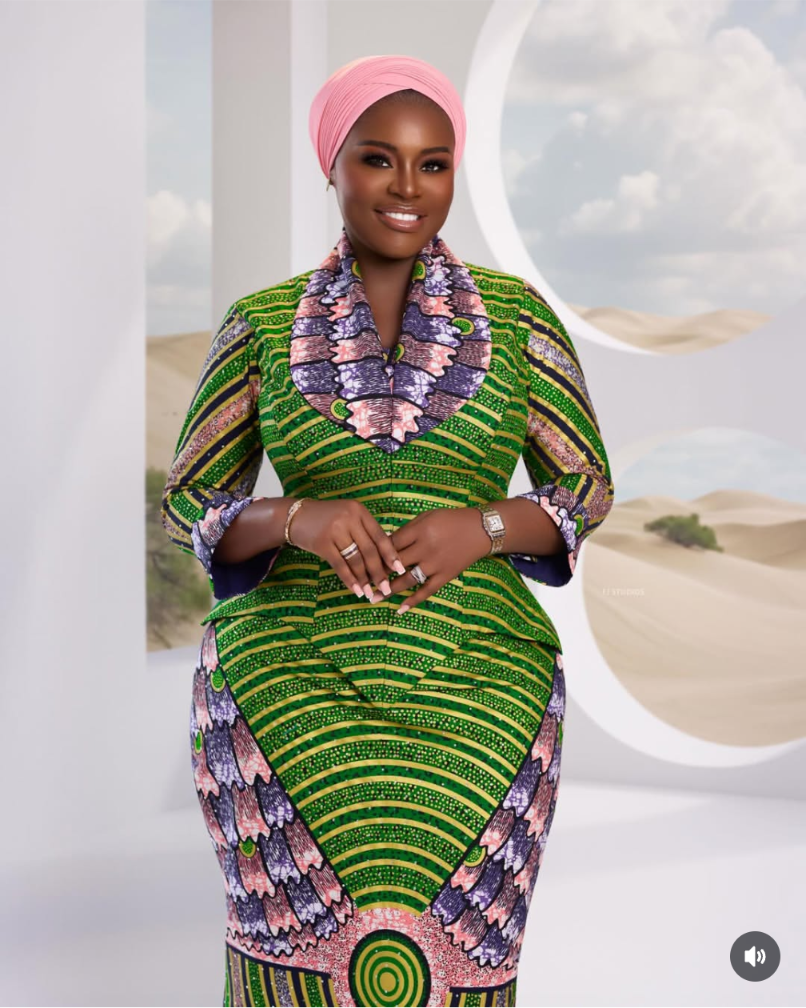
We are thrilled to announce that LaurenHauteCouture has once again secured the prestigious Assumpta IMAGINE African Designers Prize for this week! This multiple award-winning women’s wear brand continues to set the gold standard for excellence in the industry.
The Winning Design: A Masterclass in Silhouette and Print
In this latest showcase, LaurenHauteCouture presents a breathtaking ensemble that highlights the brand’s mastery of structure and textile art. The outfit features:
- Intricate Patterns: A vibrant green base adorned with concentric circular motifs and rhythmic line work.
- Contrasting Textures: The bodice and hips are accented with feathered or petal-like lilac and silver embellishments, adding a dimensional, luxury feel.
- The Silhouette: A perfectly tailored peplum-style jacket paired with a sleek, floor-length skirt that celebrates the natural form.
- The Finishing Touch: A soft pink headwrap that provides a beautiful color contrast, framing the face and completing the regal look.
Redefining African Elegance and Confidence
LaurenHauteCouture is doing more than just creating clothing; they are reshaping the global perception of African fashion. By blending traditional aesthetics with high-fashion tailoring, their designs empower the wearer.
The brand’s philosophy makes African design synonymous with boundless confidence. When a woman wears a LaurenHauteCouture piece, she isn’t just wearing a garment—she is wearing a statement of heritage, precision, and modern sophistication. Their work proves that elegance lies in the details and that true style is an outward expression of inner strength.
Visit the Studio: Experience the magic in person at 5 Mama Adjeley Rd, East Airport, Ghana. > Note: All images are subject to copyright laurenhautecouture.
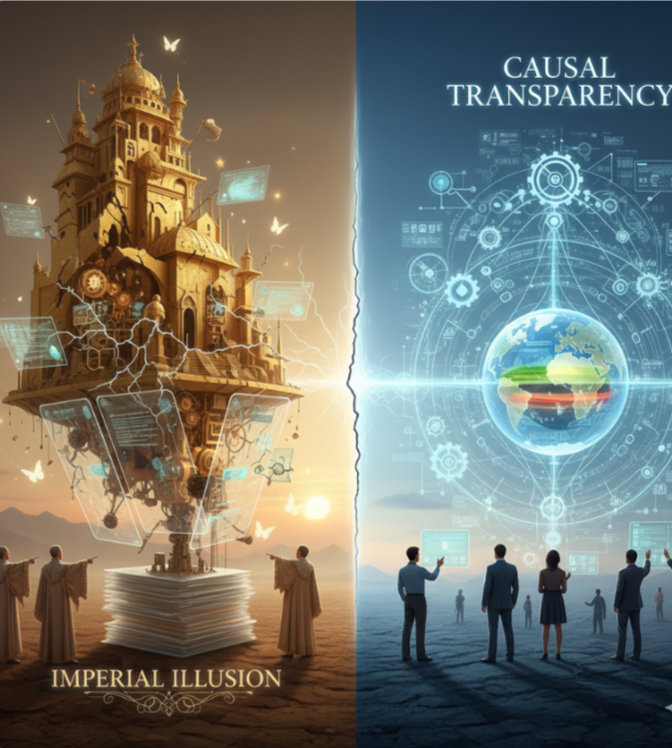
Executive Summary: From Myth to Mechanics
The global order is transitioning out of an era defined by Imperial Illusion—the belief that power is limitless and consequences can be indefinitely postponed—and into an era of Causal Transparency, where structural contradictions can no longer be concealed by narrative management alone.
The “Full Moon” referenced in contemporary discourse marks the moment when accumulated imbalances—debt saturation, energy constraints, and geopolitical overreach—become visible, unavoidable, and actionable.
1. Material Risk: Legacy Debt and Energy Reality
From a post-colonial perspective, the United States faces a moment of structural exposure tied to energy dependency and long-term debt refinancing. From a transatlantic standpoint, this is interpreted less as collapse and more as a controlled recalibration.
- Exposure: Reliance on specific grades of heavy crude demonstrates that even dominant powers remain bound by material realities. Infrastructure obeys chemistry, not ideology. Sanctions cannot override physical constraints.
- Strategic Implication: Requests for energy waivers should not be read as imminent failure, but as signals of necessity-driven adjustment—a recalibration rather than retreat.
2. Financial Risk: The Interdependence Trap
The “Full Moon” also reveals that major powers do not operate in isolation. The United States and China, often framed as adversaries, remain deeply interdependent within a shared debt ecosystem.
- Contradiction: One is publicly designated a strategic competitor while privately functioning as a critical financial counterparty.
- Causal Reality: Neither actor can trigger systemic collapse without absorbing catastrophic self-damage. In this environment, power is measured by the ability to withstand volatility, not initiate disruption.
3. Redefining Power: The Resilience Metric
Some analysts argue that the United States is undergoing a process of renewal—a shedding of obsolete structures. From a risk perspective, this transformation carries high variance and uncertain outcomes.
- Innovation vs. Extraction: Should investment successfully pivot toward data, technology, and sustainable energy, current energy frictions may recede into historical footnotes.
- Social Cohesion: More critical than any external threat is internal stability. Inflationary pressure, currency dilution, and declining public trust erode legitimacy from within. When confidence in the governing narrative collapses, the system loses its primary source of momentum.
Conclusion: The Illusion of Permanence
The “Full Moon” period of 2024–2025 has made one truth increasingly explicit: permanence is the ultimate illusion. The global system is entering a phase of accelerated repricing—of assets, alliances, currencies, and assumptions.
Risk Assessment:
Power is no longer defined by dominance, but by resilience. The actors most likely to endure are those who recognize causal law early, confront normalized contradictions directly, and adapt before revelation becomes rupture.
This briefing translates the provocative insights of the editorial into actionable strategic philosophy, offering not prophecy, but orientation—for decision-makers navigating an age where illusion has become unaffordable.
If you’d like, I can next:
- further neutralize regional metaphors for institutional audiences (IMF, World Bank, multinationals), or
- sharpen it for a Global South readership, or
- condense this into a two-page policy memo version.
The article’s claim:
“This is not moral judgment but causal law: causes accumulate quietly until effects manifest suddenly.”
Nichiren Daishonin’s position:
Nichiren is explicit that cause and effect (因果, inga) operates with absolute neutrality. He repeatedly rejects the idea that suffering or collapse is “punishment from heaven.”
Direct alignment (Gosho):
“Good and evil have no fixed nature. Good turns into evil, and evil turns into good.”
— On Attaining Buddhahood in This Lifetime
This mirrors exactly:
- No moral absolutism
- No divine wrath
- Only accumulated causes revealing themselves as effects
The phrase “manifest suddenly” is especially accurate. Nichiren often stresses that effects appear abrupt, though their causes were long invisible.
La Bussola Newsletter Magazine: The Leadership Dialogue
Setting: A sophisticated virtual roundtable, hosted by the Osagyefo Newsletter. The atmosphere is one of intellectual rigor, bridging the gap between African high-performance coaching, European statecraft, and broadcast excellence.
The Introduction

Frema Adunyame:
“Good evening to our global audience joining us from every corner of the world. I am Frema Adunyame, and it is a distinct honor to moderate this high-level dialogue for the La Bussola Newsletter Magazine.
Today, we are navigating a world of profound shifts—technological, political, and moral. To help us chart this course, I am joined by two women who embody leadership on the grandest scales.

First, from the vibrant heart of West Africa, we have Dzigbordi Kwaku-Dosoo. Dzigbordi is a powerhouse of human skills development. From the floors of Wall Street to founding the DCG Consulting Group and Allure Africa, she has spent decades teaching leaders that high performance isn’t just about the bottom line—it’s about the soul of the organization.

And from the historic corridors of Rome, we are graced by the presence of Prime Minister Giorgia Meloni. As the first woman to lead Italy, she has redefined political resilience, currently heading one of the longest-running governments in the history of the Italian Republic. She brings a perspective rooted in national identity and the urgent need to protect human dignity against modern ‘barbarism.’
Ladies, welcome to the La Bussola dialogue. It is a privilege to have your minds focused on our feature article today.”