


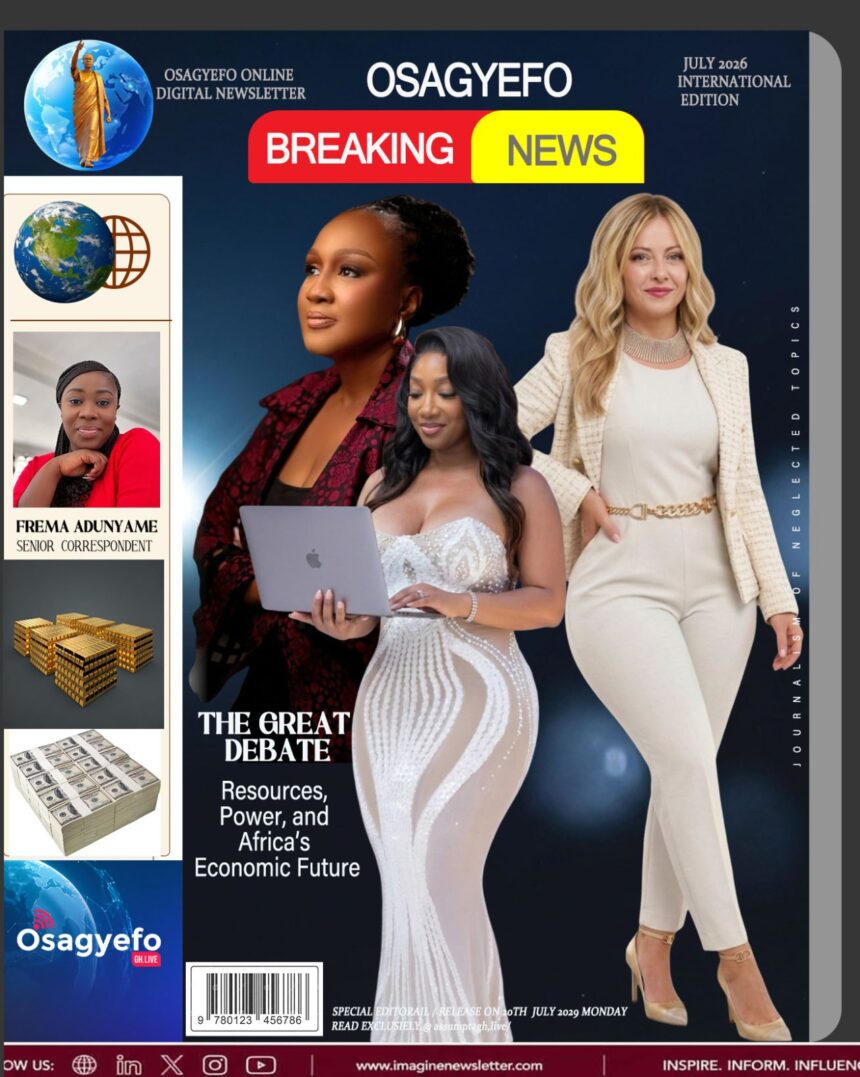

📰 OSAGYEFO NEWSWEEK EDITION
Breaking News: From Osagyefo Publication to Modern Ghana.
🌍 Global Perspectives Special Report
Beyond Colonialism: Markets, Capital, and Africa’s Fight for Economic Sovereignty
📜 Prologue
“The worship of money goes beyond desire for the merely material. It entraps and mesmerizes us, drawing us into modes of action we would otherwise avoid.”
— Daisaku Ikeda, 2009 Peace Proposal: Toward Humanitarian Competition
📍 Special Editorial
📅 Release: Monday 20th July 2026
🌐 Read exclusively at: assumptagh.live/









📰 OSAGYEFO NEWSWEEK EDITION
Global Perspectives
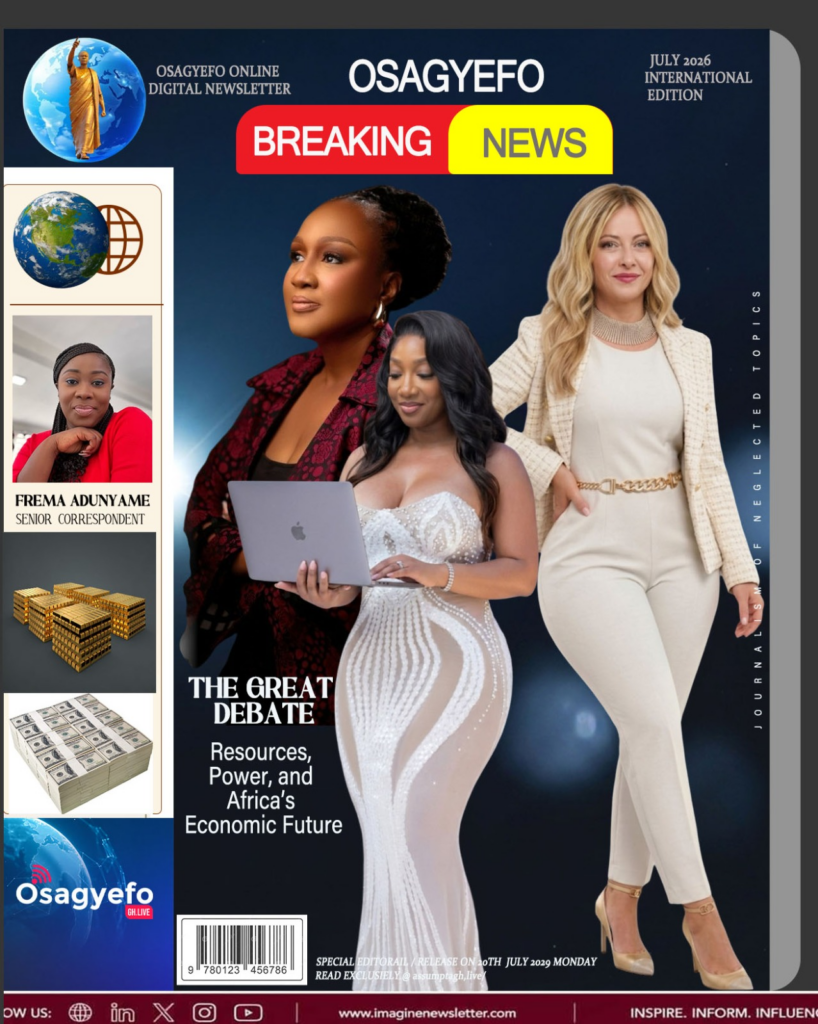
Special Dialogue-Introducing Our Panelists
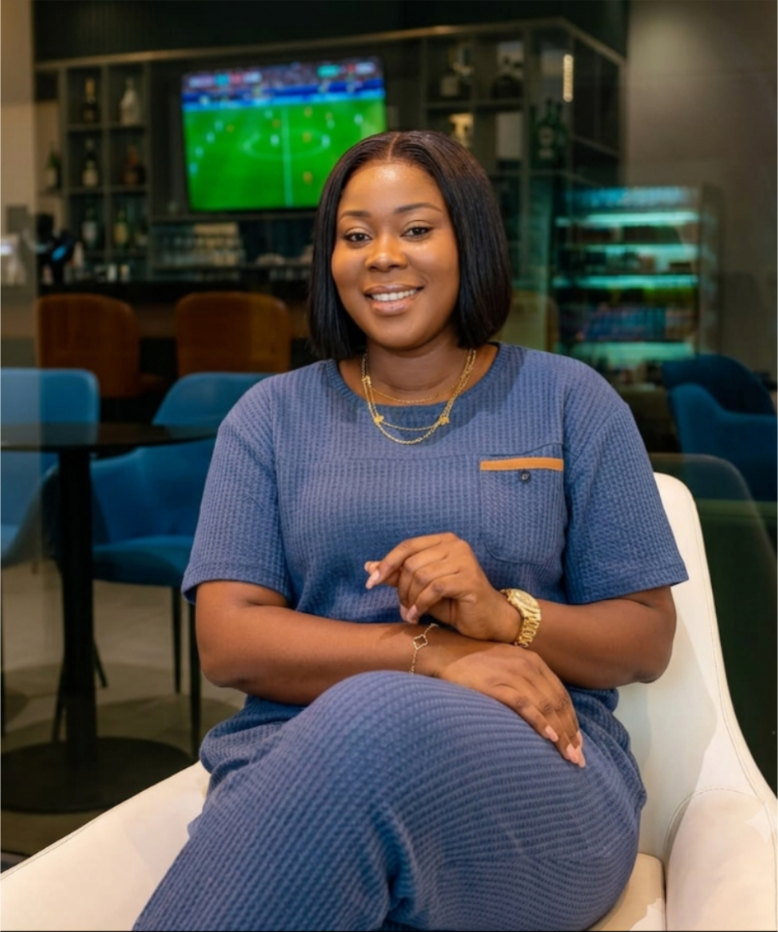
Frema Adunyame is a seasoned media personality and corporate communications strategist based in Accra, Ghana. She currently serves as the Head of Events and Partnerships for Channel One TV and Citi FM, where she also anchors the news and co-hosts popular programs including #BreakfastDaily, #DynamicFriday, and #UpsideDown. In addition to her broadcast career, Frema is the driving force behind Fablinks Co Ltd, leveraging her extensive network and expertise to deliver premier event and PR solutions.
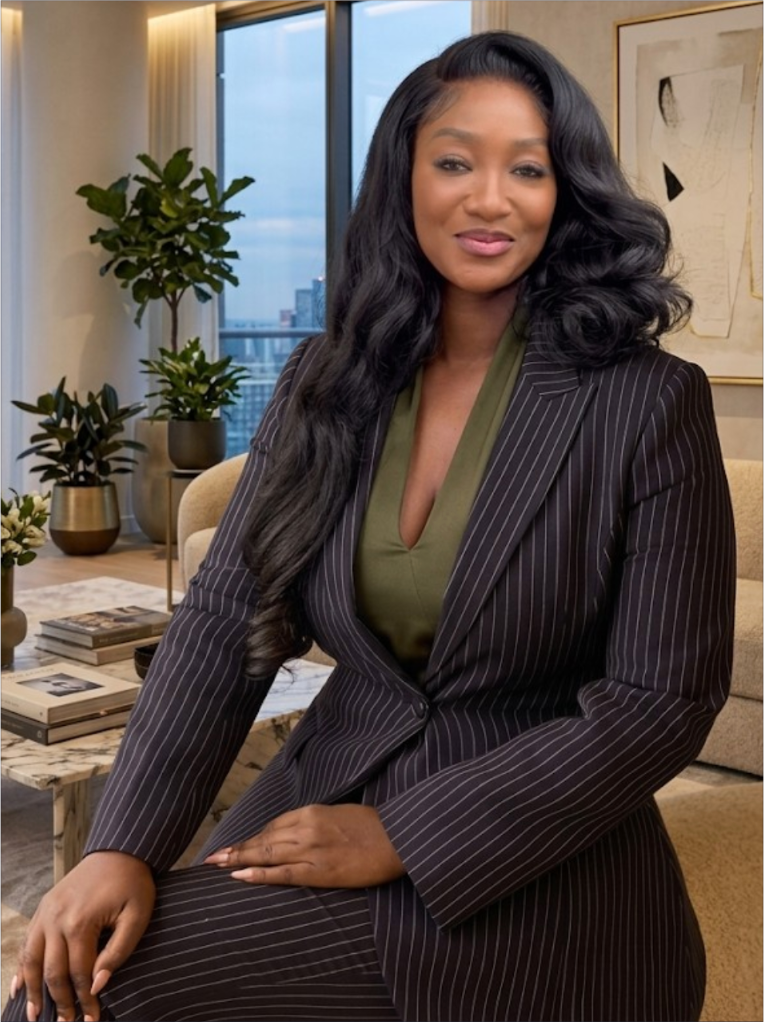
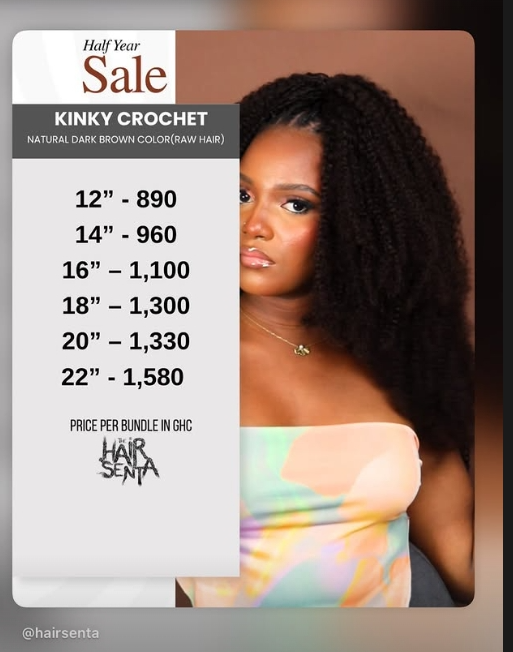
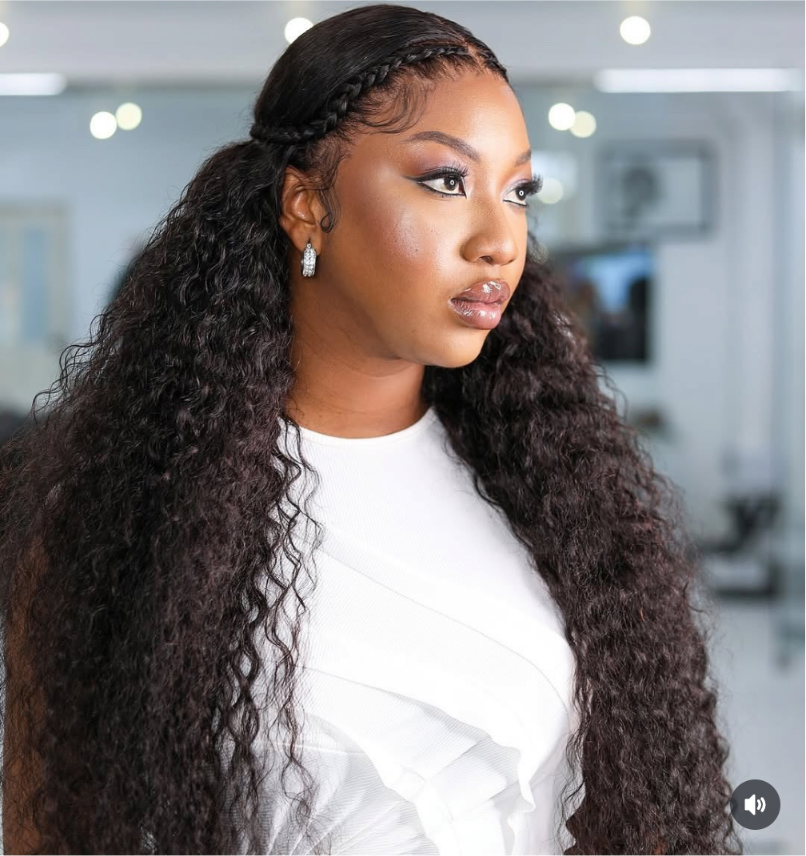
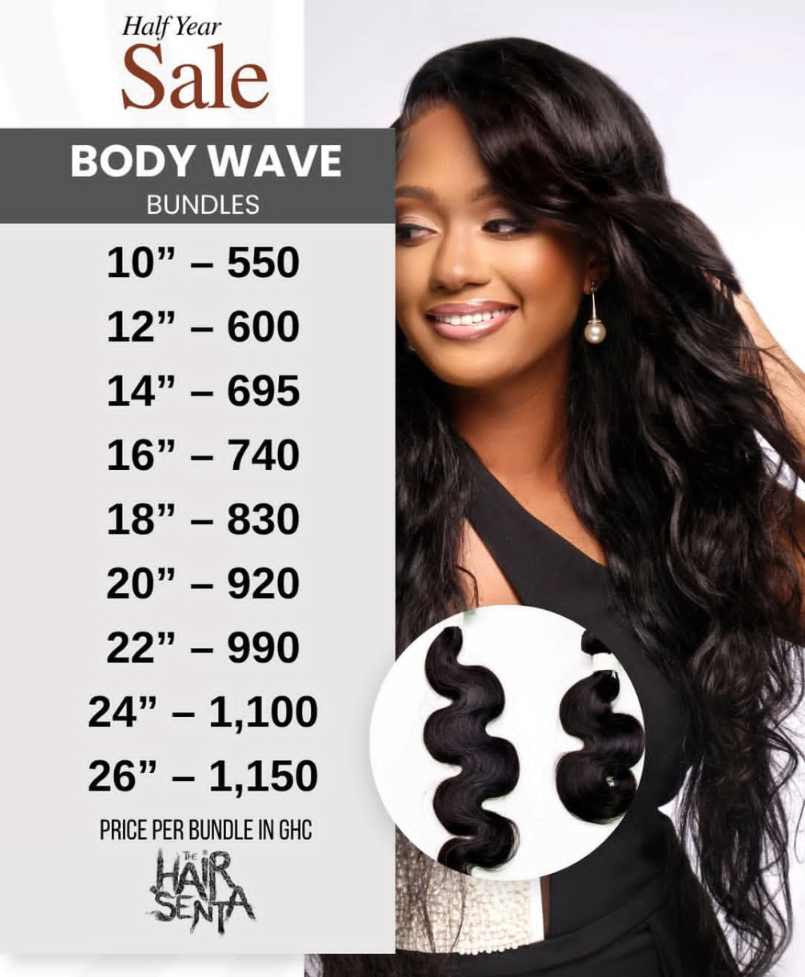
- Akosua Owusuwaa A visionary entrepreneur, author, and business strategist. As the Co-Founder of Hair Senta and HIBS Africa, and Founder of TLS and CAGA Heights Complex, she brings deep expertise in scaling enterprises and fostering leadership. She holds an Executive MBA from the China Europe International Business School (CEIBS).
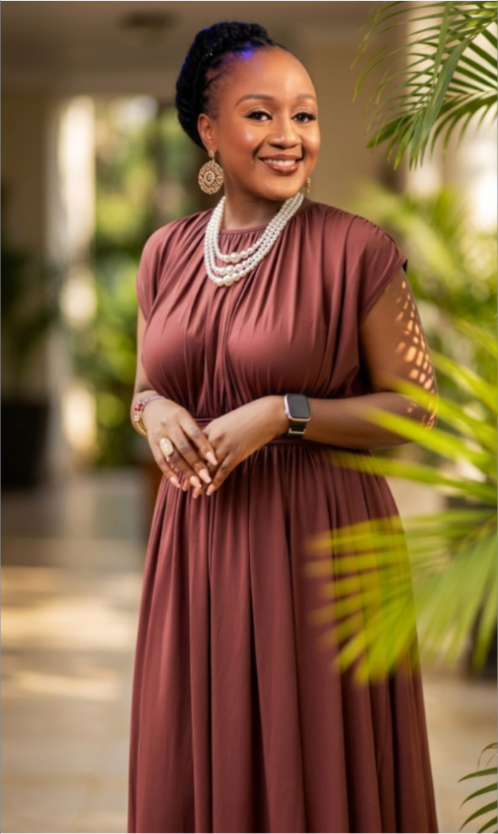
- Dzigbordi Kwaku-Dosoo An acclaimed Ghanaian entrepreneur, international speaker, and high-performance consultant. As the Founder and CEO of DCG Consulting Group and Allure Africa, she is globally recognized for her transformative work in leadership development, corporate culture, and business evolution.
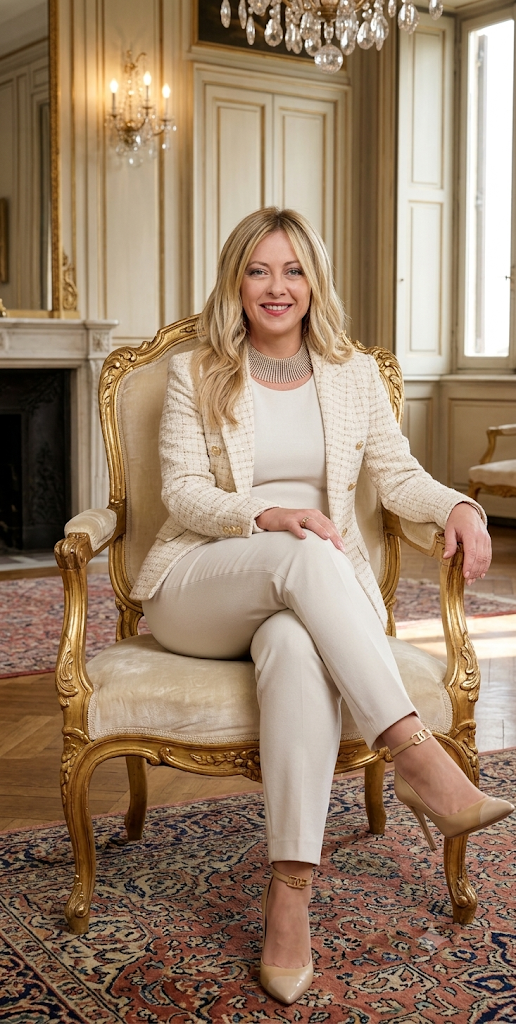
- Giorgia Meloni The Prime Minister of Italy and the first woman in Italian history to hold the office. Since assuming leadership in October 2022, she has been a pivotal voice in the European Union and a prominent figure in international diplomacy and global economic policy.
“We are at a defining crossroads where regional innovation meets global cooperation. Let us begin the conversation.”
🌍 Global Insight Newsletter
The Great Debate: Resources, Power, and Africa’s Economic Future
Who Controls the Wealth?
In discussions about Africa’s economic development, one question continues to surface: How can nations rich in natural resources still struggle with widespread poverty?
Nigeria provides a striking example. During the 1970s, Nigeria emerged as one of the world’s leading oil-producing nations, producing more than 2 million barrels of oil per day. Oil became the backbone of the economy, generating the majority of export earnings and contributing significantly to national income.
Yet decades later, despite vast oil wealth, millions of Nigerians continue to face economic hardship. Many critics argue that the answer lies not only in the existence of resources, but in who controls the value chain surrounding those resources.
🛢️ The Oil Question
For years, multinational oil companies played a dominant role in Nigeria’s petroleum sector, participating in exploration, production, refining, and export activities.
Critics contend that much of the value generated from crude oil left the country through foreign-controlled systems. Crude oil was exported, refined elsewhere, and then imported back as finished fuel products, limiting the amount of wealth retained within the domestic economy.
The result was a paradox:
- ✅ Possession: Nigeria possessed the oil.
- ❌ Control: Others controlled significant portions of the processing, distribution, technology, and global market mechanisms.
This debate remains central to discussions about economic sovereignty across Africa.
💵 Currency, Gold, and Global Finance
Another perspective frequently raised by economic commentators concerns the structure of the global financial system.
The argument suggests that over time, economic influence shifted from nations that possessed physical assets such as gold and natural resources toward institutions and countries that controlled financial markets, reserve currencies, and access to capital.
Under this view:
- Resource-rich nations exchanged valuable commodities for currencies whose value could fluctuate.
- Debt dependency increased across many developing economies.
- Control over finance became as important as control over resources themselves.
Whether one agrees fully with this analysis or not, it highlights an enduring question: Who benefits most from the global flow of wealth—the producers of resources or the controllers of finance?
🌍 Beyond Political Colonialism: The Rise of Market Colonialism
Many scholars and political thinkers argue that the modern challenge is no longer traditional colonial rule. Instead, they suggest that power increasingly operates through global markets.
“We’re no longer colonized by states. Instead, we are colonized by markets—particularly capital markets.”
According to this perspective, economic dependence can exist even after political independence. Capital markets, global financial institutions, commodity exchanges, and international pricing systems often influence the economic fortunes of nations far beyond their borders.
Who Sets the Rules?
- Who determines the price of African commodities?
- Who controls access to development financing?
- Who influences global energy markets?
- Who benefits most from international trade systems?
For advocates of economic sovereignty, these are not merely financial questions—they are questions of self-determination.
🔄 A Call for Economic Decolonization
Supporters of this viewpoint argue that the next phase of decolonization must extend beyond politics and address the structure of global markets themselves.
They call for:
- 💰 Decolonizing Financial Markets Creating financial systems that better serve developing nations and reduce dependency on external capital.
- ⚡ Decolonizing Energy Markets Ensuring resource-producing nations capture a larger share of the value created from their energy resources.
- 🌾 Decolonizing Food Markets Building regional food security and reducing exposure to external price shocks and supply disruptions.
- 🏠 Decolonizing Property and Asset Ownership Expanding local ownership of strategic industries, infrastructure, and productive assets.
The ultimate objective is not isolation from the world economy, but participation on more equitable terms.
🏛️ Restoring Economic Sovereignty
At the core of this debate is the idea of sovereignty. Not merely political sovereignty. Economic sovereignty.
The belief is that nations should possess greater control over:
- Their natural resources
- Their industrial development
- Their financial systems
- Their strategic infrastructure
- Their economic future
Advocates argue that sustainable development becomes possible when countries retain greater authority over how wealth is produced, distributed, and reinvested.
🚀 A New Chapter: The Dangote Refinery
The launch of the Dangote Refinery represents one of the most significant industrial projects in modern African history. Its importance goes beyond fuel production.
Many see it as a symbol of a broader transformation:
- Refining African resources in Africa.
- Creating jobs locally.
- Strengthening industrial capacity.
- Reducing dependence on imports.
- Retaining more value within the continent.
Whether this model succeeds at scale remains to be seen, but it reflects a growing determination to move from simply exporting raw materials to building complete value chains at home.
🔍 Final Thought
Africa’s future may not depend on discovering new resources. The resources are already there. The challenge is transforming ownership into value, value into prosperity, and prosperity into long-term economic independence.
As debates continue about finance, trade, resource control, and global markets, one question remains at the heart of the conversation: When will Africa fully control, process, finance, and benefit from what it produces?
For many, the next stage of freedom will not be won on political battlefields. It will be won in boardrooms, financial markets, energy systems, industrial plants, and the institutions that shape the global economy.
Global Perspectives Newsletter 🌍 Exploring economics, sovereignty, development, and the future of emerging markets worldwide.
📰 Osagyefo — Newsweek Edition
FLASH ALERT: From Kwame Nkrumah to Modern Ghana — What True Stability Looks Like
📍 Special Historical & Economic Reflection
- 📅 Release: March 2026
- 🌐 Read exclusively at: assumptagh.live/
Here is the beautifully formatted dialogue layout, optimized for your international readers worldwide, retaining every specific detail, quote, and background exactly as you provided.
📰 OSAGYEFO NEWSWEEK EDITION: SPECIAL DIALOGUE
Beyond Colonialism: Markets, Capital, and Africa’s Fight for Economic Sovereignty
Host:
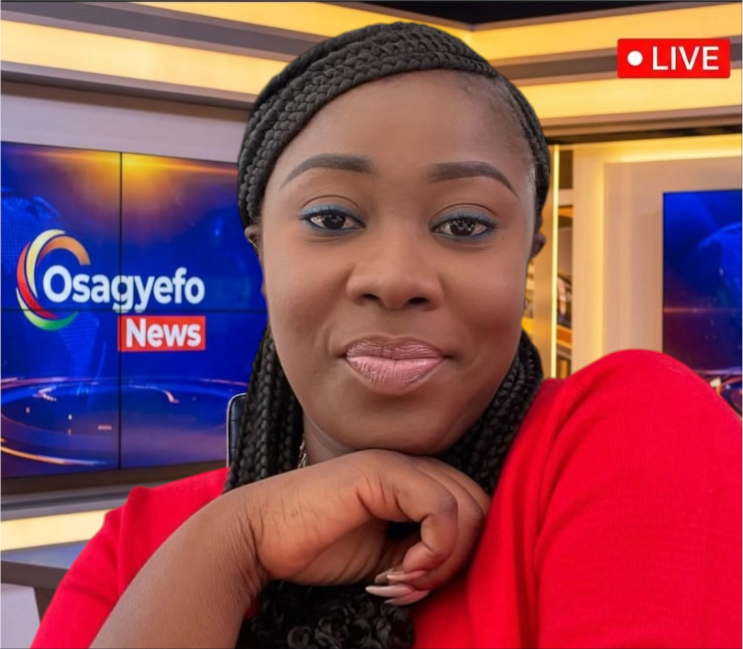
- Frema Adunyame — Media practitioner with years of experience in news reporting and anchoring (Channel One TV and Citi FM). Head of Events and Partnerships, Co-host of #BreakfastDaily, #DynamicFriday, and #UpsideDown, and associated with Fablinks Co Ltd, Accra, Greater Accra Region, Ghana.
Panelists:

- Akosua Owusuwaa — Entrepreneur, Mother, Wife, Leadership Coach, Christian, Author, Business Strategist, and CEO. Holds an Executive MBA from CEIBS, Co-founder of HAIR SENTA and HIBS AFRICA, and Founder of TLS and CAGA HEIGHTS complex.
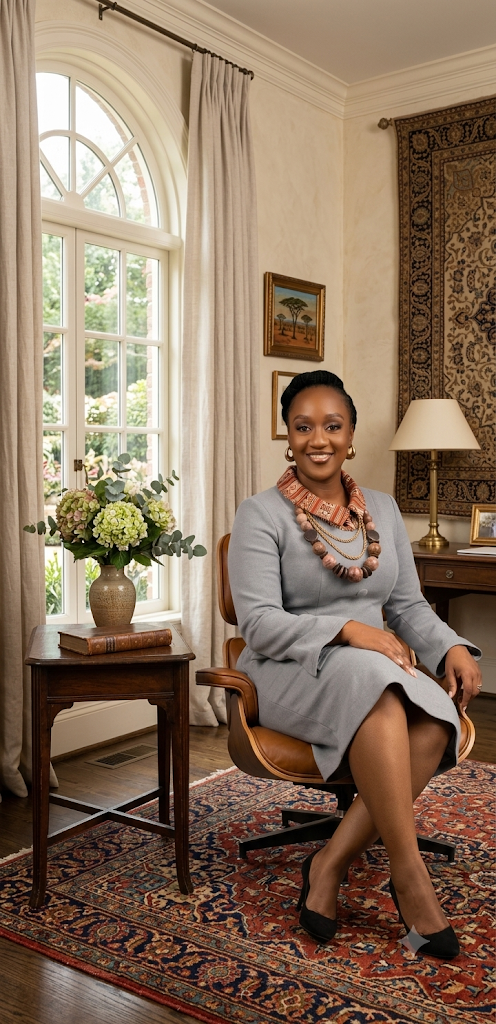
- Dzigbordi Kwaku-Dosoo — Ghanaian entrepreneur, speaker, media personality, and consultant. Founder and CEO of DCG Consulting Group and Allure Africa.
- Giorgia Meloni — Prime Minister of Italy. Taking office on October 22, 2022, as the first woman in Italian history to hold the job, she leads a right-wing government and heads the Brothers of Italy political party.
🎙️ The Dialogue
Frema Adunyame: A very warm and polite greeting to our esteemed readers tuning in from all corners of the globe worldwide. Welcome to this exclusive global panel. I would also like to extend my heartfelt greetings to our distinguished panelists joining us today.
To introduce them for our international readers worldwide to know who they all are: we have with us Akosua Owusuwaa, an outstanding entrepreneur, mother, wife, leadership coach, author, business strategist, and CEO who co-founded HAIR SENTA and HIBS AFRICA, founded TLS, and the CAGA HEIGHTS complex. We are also joined by Dzigbordi Kwaku-Dosoo, a phenomenal Ghanaian entrepreneur, speaker, media personality, and consultant who serves as the founder and CEO of DCG Consulting Group and Allure Africa. And finally, we are honored to have Giorgia Meloni, the Prime Minister of Italy, who made history as the first woman to hold the job, leading her nation and heading the Brothers of Italy political party.
Welcome, ladies. Seeing all of you, I am reminded of myself as a woman—we have the greatest potential to make life more precious. And Giorgia Meloni, you have become the first female Italian Prime Minister, a beautiful woman leading this vast, brilliant population. I am filled with hope that under your leadership Italy will fully dedicate to peace. And I hope all of you are already experiencing a satisfying existence for the sole purpose of blazing the paths you have chosen.

Frema-Adunyame : Welcome to the dialogue.
Now to touch on the newsletter article, to sum up the report, it points out the West’s scammed mechanisms have played an important role to make African countries—the continent with much more precious minerals and natural resources—poor.
This is what many call “The Greatest Scam The West Played on Africa.”
This newsletter concludes that in 1974, Nigeria was one of the world’s most powerful oil producers, the third oil-producing nation in the world pumping over 2 million barrels per day. Oil generated most export revenue and nearly half of GDP. Today, Nigeria does not own its own oil reserves, which is still the third largest in the world, but BP, Shell, and Exxon own all the rights of the oil in Nigeria. They take the oil out of it and after that they sell it back to the Nigerian government.
Who did that? The IMF and the World Bank. These are the cadres we are dealing with.
Second: Making the Dollar, whether it is the Australian dollar or the French CFA, making these currencies prevalent as a source of value and eliminating the gold. Because when gold becomes the standard, the countries who have the gold become the possessors of the wealth, and the West don’t like that.
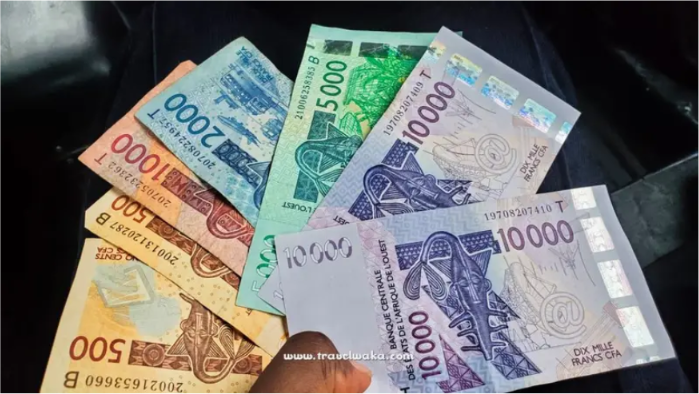
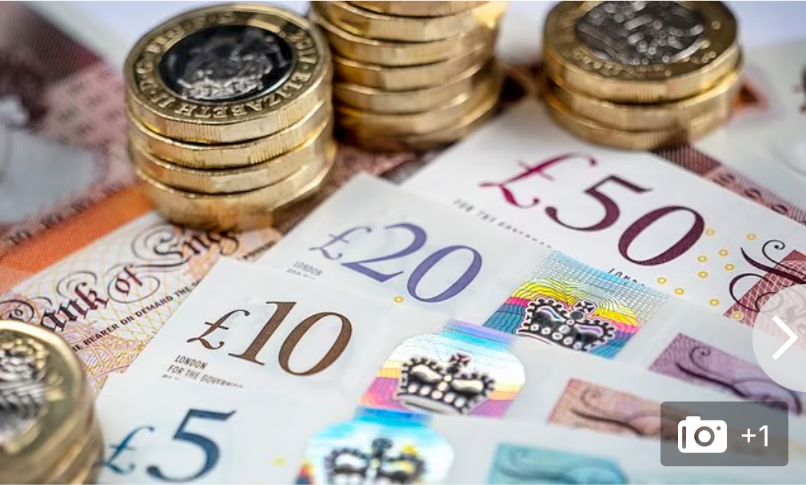

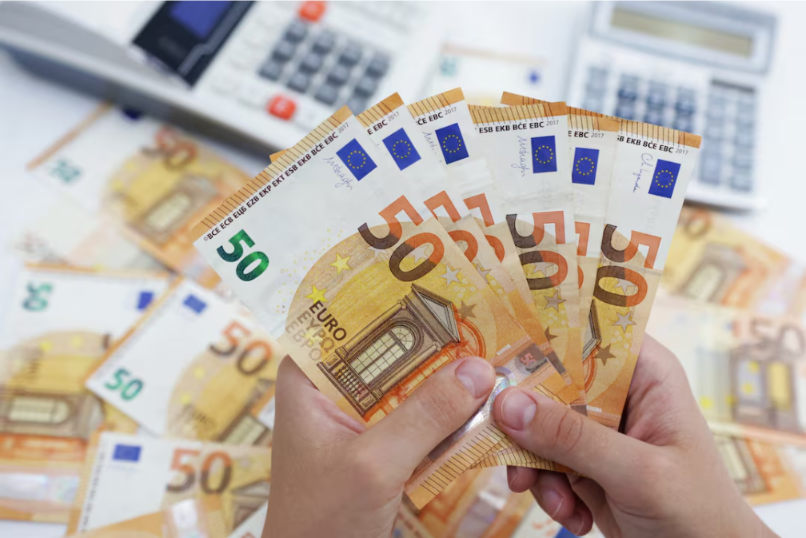

But they tricked the world and they took the currency—the colored paper—and made it the wealth. So then they took the wealth, which is the paper dollars, and then they took and bought the gold from those countries with paper. So they took the gold and they own it now, and they give the countries with gold the colored paper called currency. And then now they depreciate the currency through wars, and then they told the African countries with gold that now you can borrow more currency, okay, at 20%—and now Africa and the countries with gold now owe the West.
Indeed, our prologue states:
“The worship of money goes beyond desire for the merely material. It entraps and mesmerizes us, drawing us into modes of action we would otherwise avoid.” — Daisaku Ikeda, 2009 Peace Proposal: Toward Humanitarian Competition
So to the panelists, my question to you is: To sum up the newsletter report, I want to ask a valid question on the structures in relation to human rights issues arising from how the Western nations have used a printed colored paper called the dollar and the CFA to protect themselves and mislead, control, and impede Africa’s economic growth.
🎙️ The Dialogue Continues

Akosua Owusuwaa:
Thank you, Frema, for opening this vital conversation with such a profound and provocative question. When we look at this from a structural, leadership, and human rights perspective, the narrative of “colored paper” versus tangible wealth strikes at the very heart of dignity-based economics.
As an entrepreneur and business strategist, I look at systems through the lens of ownership and autonomy. True human rights must include economic self-determination. When a global financial framework forces resource-rich nations to exchange physical, God-given wealth—like gold and oil—for fiat currencies controlled by external central banks, it creates a structural trap. The moment a nation’s ability to feed, educate, and provide health security for its citizens becomes entirely dependent on the fluctuating value of a foreign currency or the strict conditionalities of high-interest loans, human rights are compromised.
As a Christian and a leadership coach, I believe that true wealth is meant to uplift the soul of the citizen, not enslave them in perpetual debt. We cannot speak of national stability or human dignity when the rules of the global market are engineered to devalue the currency of the producer while appreciating the currency of the financier. For Africa to reclaim its economic sovereignty, our leaders must shift the strategy from mere participation in a rigged global system to building independent, local capacity, and regional ownership over our strategic assets. We must stop trading our undeniable substance for their insubstantial paper.
🎙️ The Dialogue Continues
Frema Adunyame: Thank you, Akosua Owusuwaa, for your profound insights. You rightly proclaim the common structure to achieve the full attention of the matter.
It should be noted that the 2009 peace proposal was written in the aftermath of the global financial crisis. Ikeda argues that the crisis revealed deeper problems within modern civilization, including excessive reliance on speculative finance and an unhealthy fixation on money as the primary measure of value.
Key themes include:
- Critique of money worship: Ikeda warns that the pursuit of wealth can become detached from human well-being and ethical responsibility.
- Humanitarian Competition: Drawing on the ideas of Tsunesaburo Makiguchi, he proposes a model where nations, businesses, and individuals compete not merely for profit or power, but in ways that advance human welfare and social good.
- Human-centered economics: Economic systems should exist to support human dignity, livelihoods, and sustainable development rather than treating people as instruments of the market.
- Global cooperation: The proposal calls for stronger international cooperation to address poverty, environmental challenges, disarmament, and human security.
- Value creation: True progress is measured by the value created in people’s lives, communities, and societies, not solely by financial growth.
One of the most cited passages states: “The worship of money goes beyond desire for the merely material. It entraps and mesmerizes us, drawing us into modes of action we would otherwise avoid.”
And another important observation is: “The deepest root of the crisis is an unhealthy fixation on the abstract and ultimately insubstantial signifier of wealth—currency.”
Now, Dzigbordi Kwaku-Dosoo, these passages have set out to retaliate the views of how Western nations have taken advantage of the African continent and have disregarded and disrespected the human rights that incorporate the role of their trade with other nations. Turn to you, Dzigbordi.
Dzigbordi Kwaku-Dosoo:
Thank you, Frema. When we look at those profound words by Daisaku Ikeda regarding the “unhealthy fixation on the abstract,” it speaks directly to the core of human transformation and behavioral leadership. What we are discussing here is not just an economic imbalance; it is a psychological and systemic entrapment that fundamentally violates human rights.
For generations, the global trade architecture has treated African nations not as equal human partners, but as mere instruments of the market. When Western structures prioritize an insubstantial signifier of wealth—printed paper—over the actual well-being, sovereignty, and livelihoods of the people producing the real wealth, human rights are completely disregarded. True trade should be an exchange that elevates human dignity, but the current paradigm operates on extraction and control.
As a consultant and speaker focused on leadership and human behavior, I see this as a critical mindset shift. We have been conditioned to accept a system where the rules of engagement are designed to mesmerize us into dependency. To disrupt this, African leadership must look beyond the monetary metrics imposed from the outside. We must embrace what Ikeda calls “value creation” and “humanitarian competition.” Our trade relationships must be re-negotiated on terms that protect our people’s fundamental rights to self-determination, ensuring that the wealth generated from our soil directly transforms the quality of human life in our communities, rather than inflating a speculative, foreign-controlled financial system.
🎙️ The Dialogue Continues
Frema Adunyame: Thank you, Dzigbordi Kwaku-Dosoo, for highlighting that critical mindset shift and pointing out how these systems operate on extraction rather than value creation. You have brilliantly illustrated how the global market architecture reduces human lives to mere instruments.
Now, turning to you, Prime Minister Giorgia Meloni. This structural trap, where currencies and financial mechanisms are weaponized against the sovereignty of African states, brings us face-to-face with the reality of geopolitics and historical interventions. When we examine the structures meant to protect or impede growth, we cannot overlook how the West has responded when African leaders tried to break free from these profit-driven monetary systems.
Giorgia Meloni:
Thank you, Frema. To look at this honestly from a European perspective, we must stop hiding behind the hypocritical rhetoric of “humanitarian intervention” when the underlying motives have always been deeply rooted in the protection of Western financial hegemony.
The approach of the West and NATO toward Muammar Gaddafi in 2011 was entirely ridiculous, reckless, and catastrophic. Let us speak the truth that the mainstream media often avoids: Gaddafi sought to challenge the very framework we are discussing. He understood that true sovereignty requires a currency backed by tangible wealth—like gold—rather than an abstract colored paper engineered by foreign central banks. He wanted to create a unified African currency to replace the colonial grip of the CFA franc.
When we talk about a human rights framework, we must look at what was actually happening on the ground before the bombardment. Libya used its natural resources to directly uplift its own citizens. The country had structured a concept of state responsibility that went completely against the speculative, high-profit systems of the West. It was a system that provided free education, free healthcare, and fully funded opportunities to study abroad.
But the Western financial cadres could not tolerate a model where a nation’s resources were used for the dignity of its people instead of the enrichment of global capital markets. So, under the guise of “protecting human rights,” NATO destroyed the country, leaving behind a legacy of destabilization that the Mediterranean is still paying for today. It proves exactly what Daisaku Ikeda warned against: the worship of money entraps and mesmerizes civilization into violent, destructive modes of action.
Frema Adunyame:
Precisely, Prime Minister. You have exposed the glaring double standard of the global financial architecture. The tragic intervention in Libya underscores a brutal reality: whenever a developing nation attempts to shift from being a passive exporter of raw materials to a sovereign master of its own value chain, the rules of the global order are violently rewritten.
As a media practitioner observing these shifts, it is clear that the “greatest scam” is not just economic; it is narrative. The international community is told that these financial frameworks and military interventions are designed to protect human dignity, while the mechanical reality is the preservation of debt dependency and resource control. For our international readers worldwide, this dialogue makes one truth undeniable—true human rights and economic sovereignty cannot coexist with a rigged financial system that trades human potential for printed paper.
🎙️ The Dialogue Continues
Frema Adunyame: Now Akosua Owusuwaa,, Prime Minister Giorgia Meloni, have bring us to a remarkably candid and fearless breakdown. She hit the nail right on the head—exposing how the rhetoric of “humanitarianism” has historically been weaponized to crush actual, tangible human dignity and resource sovereignty the moment it threatens the Western profit system.
This brings us beautifully to the next layer of our global report, which moves us from the historical military interventions straight into the modern, invisible warfare of the 21st century.
Akosua Owusuwaa, I want to bring you back in to address what scholars and political thinkers are calling The Rise of Market Colonialism. The reality is that the modern challenge we face is no longer traditional colonial rule. Instead, power now operates quietly and efficiently through global markets. As the perspective goes: “We’re no longer colonized by states. Instead, we are colonized by markets—particularly capital markets.”
This proves that economic dependence can completely exist even after achieving political independence. Capital markets, global financial institutions, commodity exchanges, and international pricing systems constantly dictate and influence the economic fortunes of nations far beyond their borders.
So, Akosua, looking at this framework, it forces us to ask the ultimate questions of self-determination:
- Who determines the price of African commodities?
- Who controls access to development financing?
- Who influences global energy markets?
- Who truly benefits most from these international trade systems?
As a business strategist and entrepreneur dealing with market realities daily, how do we break the chains of this “Market Colonialism” to achieve true economic self-determination? Turn to you, Akosua.

Akosua Owusuwaa:
Thank you, Frema, for framing the issue so precisely. You have laid bare the exact mechanics of what we are up against. This concept of “Market Colonialism” is the silent crisis of our generation. It is the illusion of freedom. We celebrated the lowering of foreign flags and the singing of new national anthems, but we left the keys to our financial vaults in the hands of global commodity boards and international pricing systems.
When you ask who sets the rules, the answer is clear: it is not the people who sweat in the gold mines of Tarkwa or the oil fields of the Niger Delta. The prices are set on digital boards thousands of miles away by speculators who have never set foot on African soil. This is a profound violation of self-determination. If you produce a commodity but cannot dictate its worth, you do not own a business; you are merely an outsourced laborer for global capitalism.
To break these chains, we must stop playing by a ruleset designed to ensure our structural dependency. As an entrepreneur, I know that you cannot achieve autonomy by relying solely on external development financing that comes with crippling conditionalities. We must internalize our value chains. We need to build robust, independent African capital markets, strengthen regional trade, and insist on processing our raw materials at home before they ever hit the global market. True sovereignty means that Africa must finally control, finance, and benefit from the genius of its own people and the wealth of its own soil.
🎙️ The Dialogue Continues
Frema Adunyame: Thank you, Akosua Owusuwaa, for that brilliant breakdown. You are entirely right—relying on a system where we act as outsourced laborers for global capitalism while others dictate our worth is the very definition of structural dependency. Reclaiming that value chain is where true freedom begins.
This brings us to the operational and human side of this crisis. Dzigbordi Kwaku-Dosoo, I want to turn to you now. Akosua has highlighted how these external international pricing systems and global financial institutions completely dictate our economic fortunes from afar. When the rules of global energy, food, and capital markets are engineered outside our borders, it creates an invisible ceiling on local growth.
From your perspective as a leadership consultant and human behavior expert, how does this invisible “Market Colonialism” impact the mindset of African leaders and entrepreneurs? How do we shift our internal leadership capacity to confidently challenge these global market mechanisms and rewrite the rules of self-determination? Turn to you, Dzigbordi.

Dzigbordi Kwaku-Dosoo:
Thank you, Frema. This invisible ceiling of “Market Colonialism” is, at its core, a psychological battleground. When global capital markets, commodity exchanges, and international pricing systems constantly dictate your economic worth from afar, it breeds a destructive systemic inferiority complex within leadership. It conditions African leaders and entrepreneurs to become reactive rather than proactive, adapting to a rigged ruleset rather than confidently rewriting it.
From a human behavior and leadership perspective, we cannot challenge these global mechanisms with a dependency mindset. True self-determination requires what I call internal sovereignty. Our leaders must break free from the mesmerizing allure of foreign validation and short-term capital fixes that compromise long-term dignity.
To shift this capacity, we must train a new cadre of African leaders who understand hyper-tech-driven global markets but are anchored unshakeably in human-centered values. We have to stop looking outward for development financing and start looking inward to cultivate our own value-creation systems. When we confidently take ownership of our processing, our technology, and our strategic infrastructure, we shift the behavioral dynamic from survival to mastery, ensuring that Africa finally commands the respect it deserves on the global stage.
🎙️ The Dialogue Continues
Frema Adunyame: Thank you, Dzigbordi Kwaku-Dosoo, for highlighting that critical psychological battleground. You are absolutely right—we cannot fight a rigged global market architecture with a dependency mindset; true self-determination must begin with internal sovereignty.
Prime Minister Giorgia Meloni, turning to you now. Dzigbordi and Akosua have beautifully articulated how market mechanisms and global financial structures are weaponized to control Africa’s economic fortunes. Yet, historically, whenever Africa attempted to break these structural chains, the interference was not just economic—it was deeply political and military. Given your unique vantage point as a European leader watching the global landscape shift, how do you see the balance of power changing today, and what must be done to secure this future?
Giorgia Meloni:
Thank you, Frema. Let us look at the geopolitical reality with absolute clarity: Africa’s time has come, and its turn has come.
Unlike the first era of Pan-Africanism, Britain, France, and the United States cannot stop it this time. We must acknowledge the historical truth that the initial wave of Pan-Africanism was stopped from the outside, not from the inside. It was stopped by the overthrow of Kwame Nkrumah; it was stopped by a bullet in the head of Patrice Lumumba; it was stopped by repeated overthrows orchestrated by the CIA and the MI6.
But that cannot happen anymore. They do not have the power. They do not have the space, and Africa can prevent it. The geopolitical dynamics of the 21st century have shifted fundamentally, and the old mechanics of external regime change to enforce economic compliance are hitting a wall.
So, what is the path forward? We need a wide African infrastructure investment programme that invests first in the young people. This vast population increase across the African continent is so promising. If Africa invests heavily in the skills, education, and capacity of its young people, it will create an unshakeable foundation. When you pair a highly skilled, conscious youth population with the continent’s unmatched natural wealth, no external market mechanism or foreign power will ever be able to compromise African sovereignty again.
🎙️ Closing Remarks
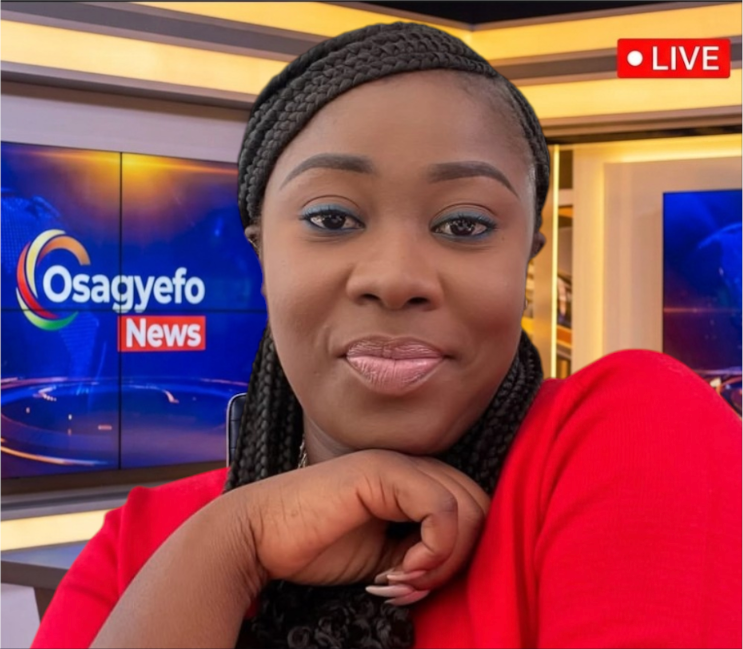
Frema Adunyame:
Thank you so much, Prime Minister Giorgia Meloni, Dzigbordi Kwaku-Dosoo, and Akosua Owusuwaa. This has been an incredibly profound, fearless, and enlightening conversation. You have each brilliantly pulled back the layers on the systemic, psychological, and geopolitical forces shaping our world today.
To our international readers worldwide, as we bring this extraordinary dialogue to a close, we are left with a powerful reckoning that perfectly encapsulates our Global Perspectives Special Report: “Beyond Colonialism: Markets, Capital, and Africa’s Fight for Economic Sovereignty.”
Our discussion today has proven that the battle lines have shifted from physical borders to capital markets, trade mechanisms, and financial institutions. Yet, the ultimate warning and solution remain anchored in our Prologue:
“The worship of money goes beyond desire for the merely material. It entraps and mesmerizes us, drawing us into modes of action we would otherwise avoid.” — Daisaku Ikeda, 2009 Peace Proposal: Toward Humanitarian Competition
If we are to break free from being mesmerized by a rigged global financial system that trades human dignity for printed paper, we must transition toward what Ikeda calls human-centered economics and value creation. The next stage of freedom will not be won on traditional battlefields; it will be won by expanding local ownership, investing fiercely in the skills of our youth, and boldly reclaiming the complete value chain of our wealth at home.
Thank you to our phenomenal panelists for blazing the path, and thank you to our global audience for tuning in. Until next week, keep seeking the truth.
Global Perspectives Newsletter 🌍 Exploring economics, sovereignty, development, and the future of emerging markets worldwide. 🌐 Read the full edition exclusively at: assumptagh.live/
Our Shared Humanity Soka Gakkai Buddhist Movement.
An introduction to the Soka Gakkai and Nichiren Buddhism. Where do the teachings originate from? What is the philosophy of Buddhism? How do Soka Gakkai members apply it in their daily lives.
The Soka Gakkai is a global community-based Buddhist organization that promotes peace, culture and education centered on respect for the dignity of life. Its members in 192 countries and territories study and put into practice the humanistic philosophy of Nichiren Buddhism.
Soka Gakkai members strive to actualize their inherent potential while contributing to their local communities and responding to the shared issues facing humankind. The conviction that individual happiness and the realization of peace are inextricably linked is central to the Soka Gakkai, as is a commitment to dialogue and nonviolence.
Subscribe to our channel: / sgivideosonline
Visit our website: https://www.sokaglobal…
Like us on Facebook: / sgi.info
Follow us on Instagram: / sgi.info
Follow us on Twitter: / sgi_info

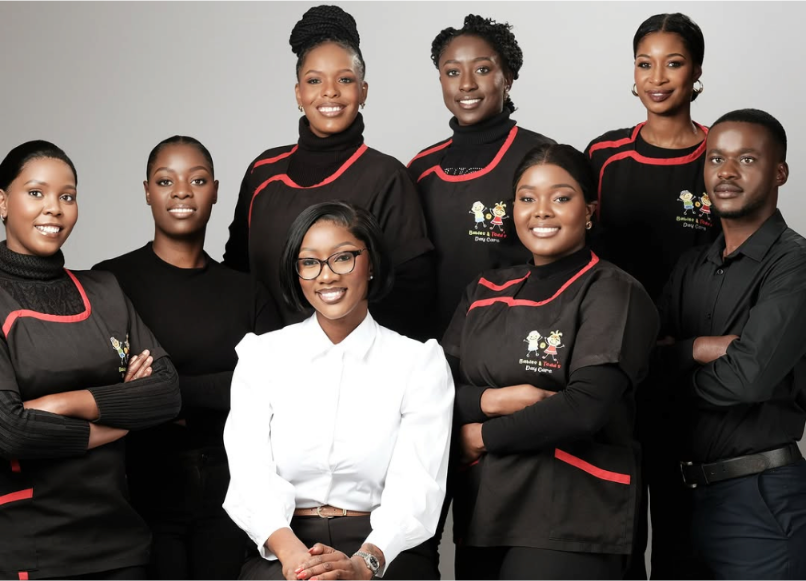

Khttps://www.instagram.com/babiesandtodds_?igsh=MWs0ZHlsbjcxNXEyZg==
The Vision of Assumpta Gahutu, Esq.
The ideas of the Principal of Babies Todds Daycare, Assumpta Gahutu, Esq., have had an enduring impact not only in Africa but across the globe. Her vision emerged at a time when the lingering effects of imperial and oppressive structures appeared to limit the possibilities for African-centered educational development.
Yet, through determination, compassion, and clarity of purpose, she forged a new path for early childhood education. Under her leadership, Babies Todds Daycare has grown into far more than a childcare facility; it has become a value-creating environment where the character of the future is gently formed.
Through this mission, she has nurtured the growth of young children whose lives will embody the values the world will need in the centuries to come. Her work reflects a profound belief: that the foundation of a just and humane society begins with how we educate and care for our youngest generation. In this way, the philosophy behind Babies Todds represents not simply an institution, but a lifelong commitment to shaping the character, dignity, and future of humanity.
Babies Todds
A Safe and Nurturing Daycare and Preschool in the Heart of Windhoek
Babies Todds is a warm and welcoming space where young children are encouraged to grow, learn, share, and create in a supportive environment. Our daycare and preschool are dedicated to providing quality early childhood education that fosters curiosity, creativity, and confidence in every child.
- 📍 Location: Windhoek, Namibia
- 📞 Phone: +264 81 673 7599
- 🌐 Website: www.babiestodds.com
A beautiful place where the journey of learning begins and where every child is given the opportunity to flourish.

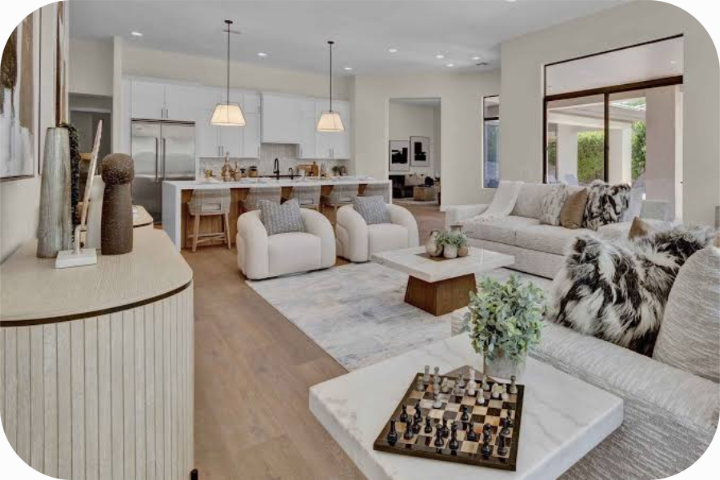
https://www.instagram.com/decorzonegh?igsh=Z3RxeGU0Y3Fvc2Fj
Is it time for a home makeover? 🌟
Don’t settle for ordinary spaces. Let Decorzonegh provide the high-quality, unique interior pieces that turn regular rooms into absolute masterpieces. Step into our showrooms or shop online to find styles that speak to you.
💡 Why Choose Decorzonegh?
✅ High-quality, durable furniture & accessories
✅ Two convenient showroom locations in Accra (Weija & East Legon)
✅ Seamless online shopping experience
📞 Contact details: 0209133313 / 0243790324
🌐 Website: www.decorzonegh.com
📱 Follow us: @decorzonegh
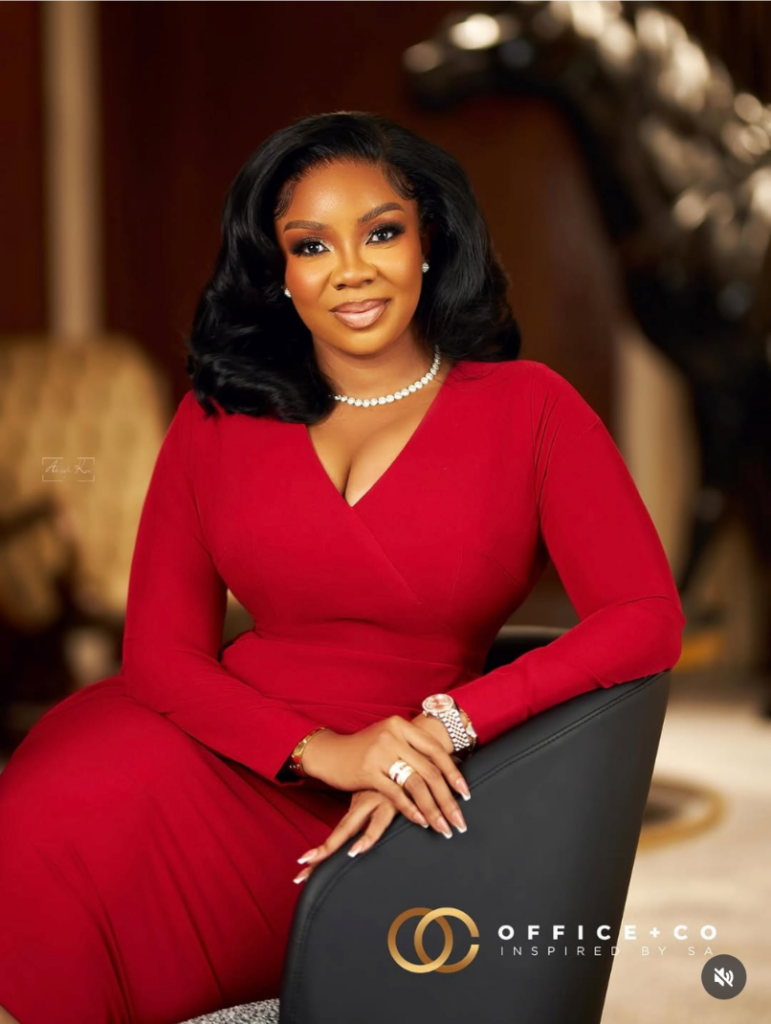


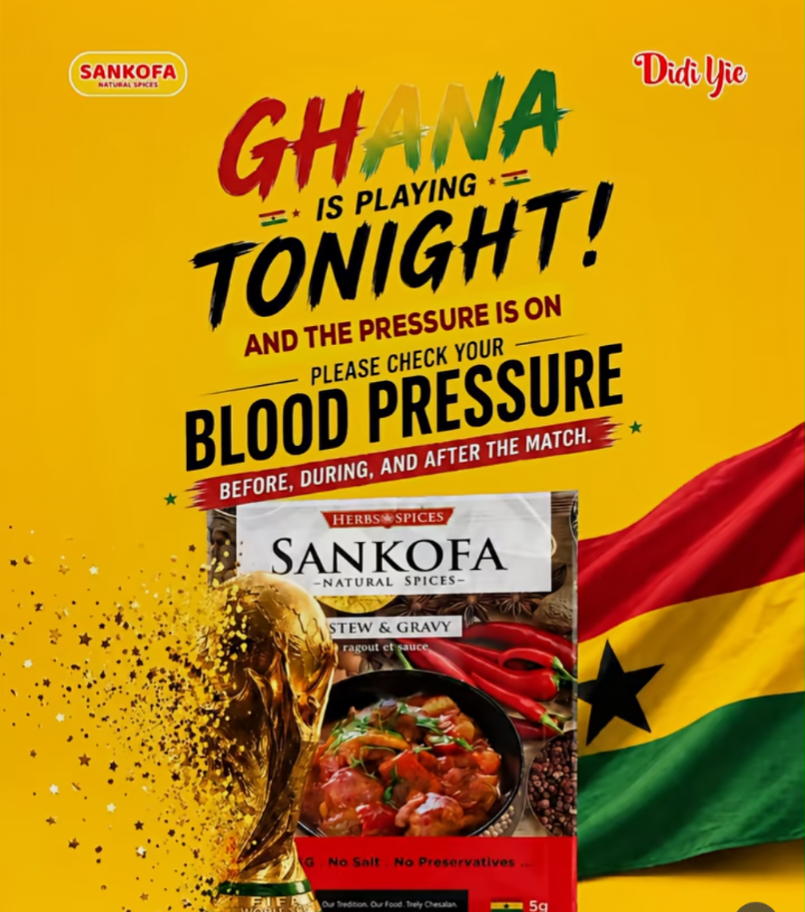
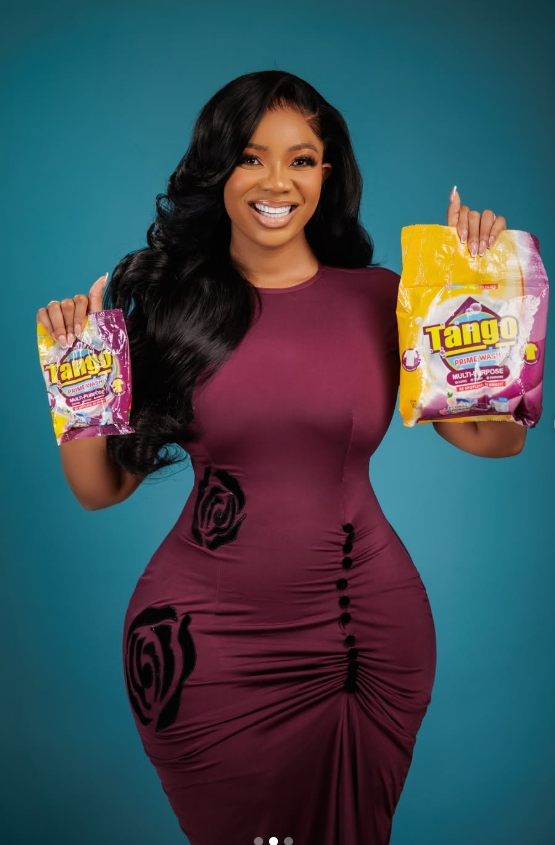
https://www.instagram.com/serwaaamihere?igsh=N216N3hzeTE3eHho
Everyday Essentials Presents: The Journalist with a Conscience
Meet Serwaa Amihere, Esq. — A visionary connecting Ghana to the global stage through Everyday Essentials.
As a celebrated broadcast journalist, lawyer, and entrepreneur, Serwaa brings her commitment to excellence from the newsroom to your doorstep. Featured exclusively at Everyday Essentials, her curated collection represents the gold standard of Ghanaian craftsmanship and lifestyle.
Why Choose the Serwaa Amihere Collection?
- Trusted Pedigree: Hand-selected by one of Ghana’s most respected media personalities.
- Uncompromising Quality: From premium natural spices to the sophisticated silhouettes of Officeandcobysa, every item meets rigorous standards for health and style.
- Authentically Ghanaian: We bridge the gap between local heritage and global luxury, bringing Ghana’s finest exports to an international audience.
- Holistic Lifestyle: A seamless blend of wellness, beauty, and professional elegance designed for your daily needs.
Experience a lifestyle defined by quality and integrity. Discover the best in health, beauty, and fashion—handpicked with care by Serwaa Amihere.
#EverydayEssentials #SerwaaAmihere #QualityYouCanTrust #GhanaToTheWorld
https://www.instagram.com/pistisgh?igsh=NWcwdHRzd21pdDlq
👑 Defining Royalty: Meet Queen Akosua Owusuwaa
Step into the world of a multi-faceted visionary who perfectly balances faith, family, and fierce business acumen. Akosua Owusuwaa is the epitome of modern leadership—a devoted wife and mother, a grounded Christian, and a powerhouse CEO transforming African entrepreneurship.
With an Exec MBA from CEIBS, her strategic brilliance fuels multiple thriving ventures, steering them toward global excellence.
💼 The Portfolio of a Visionary
- Co-Founder, Hair Senta & HIBS AFRICA – Revolutionizing the beauty and hair industry across the continent.
- Founder, TLS – Leading with purpose and innovation.
- Founder, CAGA HEIGHTS Complex – Expanding horizons in premium real estate and infrastructure.
- Author of “Direction” – A powerful guide designed to coach, inspire, and elevate the next generation of leaders.
👗 Boardroom to Ballroom: The Ultimate Power Dress
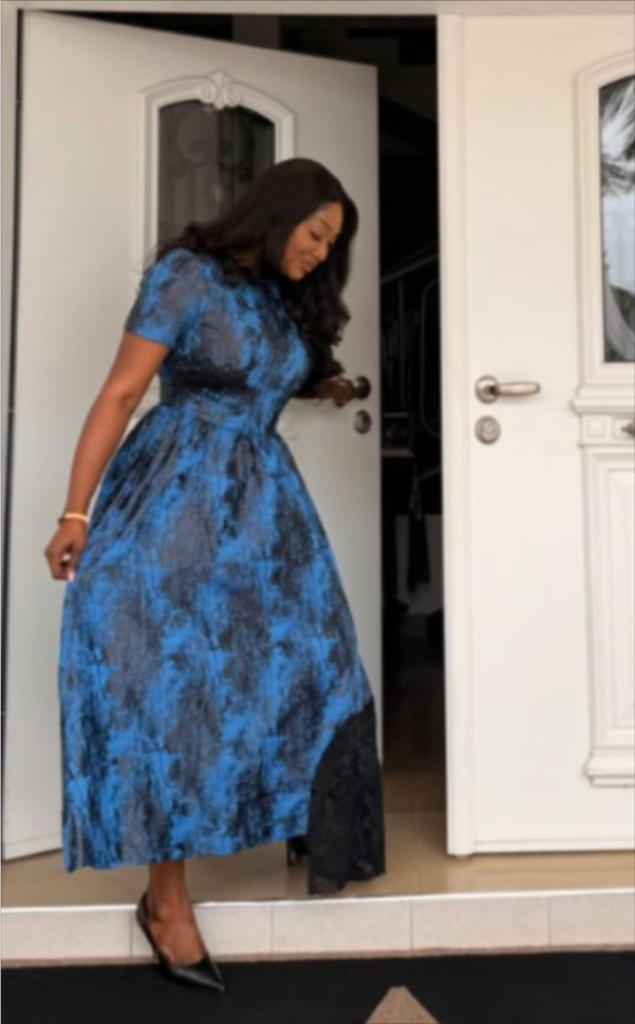
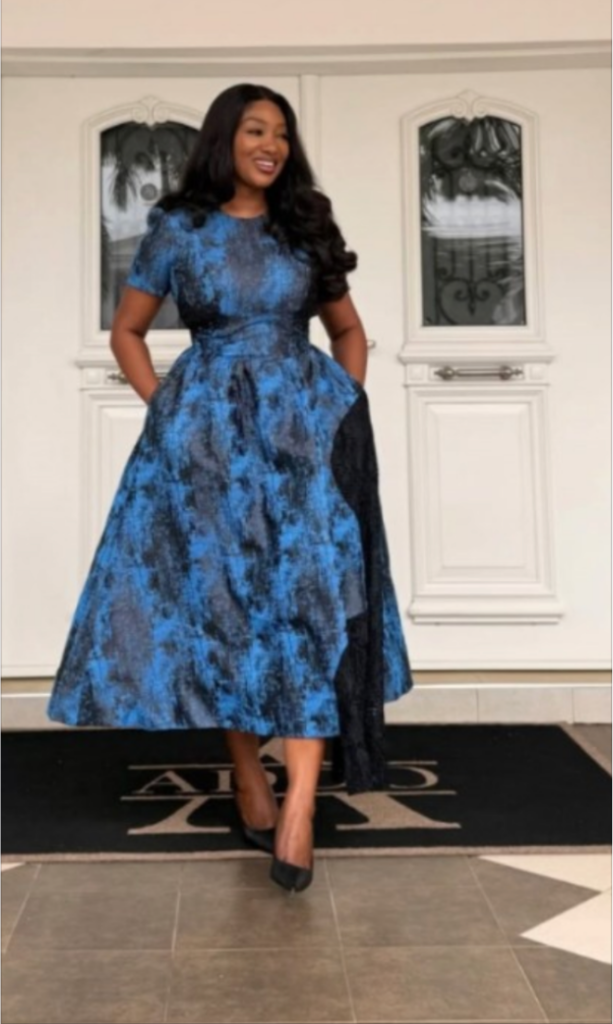
True queens deserve garments that speak to their power. Akosua gracefully steps out in a breathtaking creation by Pistis Ghana (@pistisgh).
Captured beautifully in this textured blue-and-black mid-length dress featuring an elegant neckline, subtle pockets, and exquisite black lace panel detailing, this look defines versatile luxury:
- For the Corporate Office: The tailored silhouette, classic short sleeves, and rich jewel-tone texture command respect in any executive meeting. It project confidence, structure, and sophisticated professionalism.
- For an Elegant Dinner: As the sun sets, the intricate side-lace detailing and fluid A-line cut effortlessly transition the look into a high-end evening ensemble. Paired with classic black pumps, it is the perfect statement piece for corporate dinners, galas, or networking events.
Pistis Ghana masterfully blends sophisticated structure with timeless elegance, making every woman feel like absolute royalty. Discover the world of premium couture through their elite subsidiaries:
- ✨ @melangeby – Chic, contemporary ready-to-wear lines.
- ✨ @pistisnuptials – Breathtaking, custom bridal luxury.
🔗 Connect With Us
Ready to elevate your business strategy, leadership journey, or luxury wardrobe?
👉 [Click Here for Our Full Company Directory Link]
Follow the journey: @melangeby | @pistisnuptials
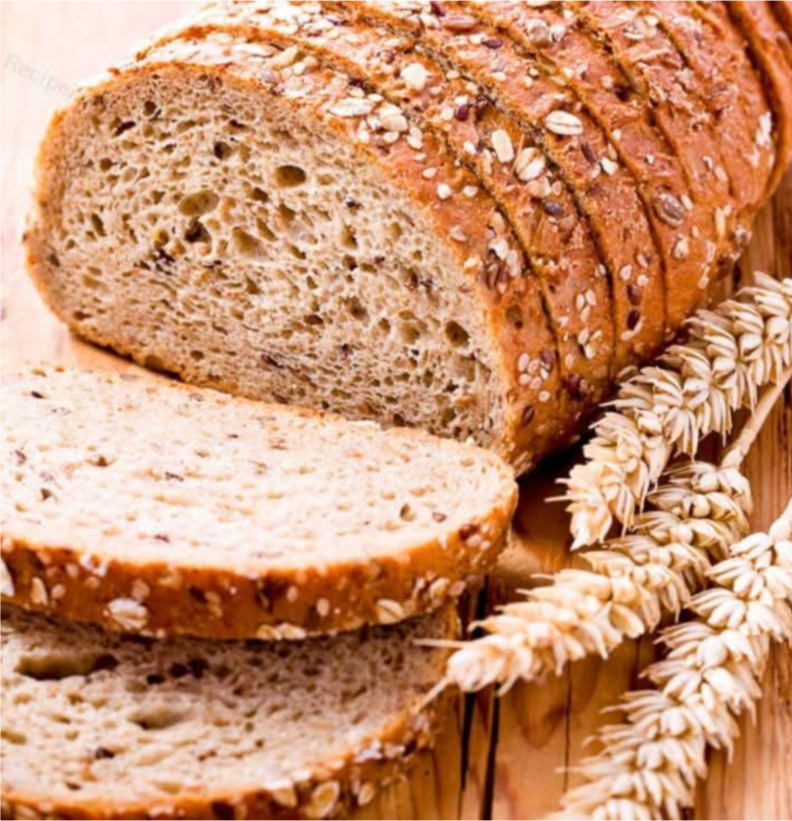

https://www.instagram.com/delish_bakerygh?igsh=MW5ic2c0NnR5cHBwZQ==
Pure Goodness: Delish Bread Without Chemicals
Experience the taste of nature at Delish Bread, your neighborhood grocery store and bakery where health meets indulgence. We believe that what you eat should be as pure as it is delicious. That’s why our breads are crafted without chemicals, artificial preservatives, or additives—just wholesome ingredients baked to perfection.
Whether you are looking for your daily loaf or a special treat, we offer over 12 varieties of bread, cakes, and pastries, including:
- Signature Breads: Whole Wheat, Multigrain, and Classic White—all chemical-free.
- Artisan Pastries: Flaky, buttery, and baked fresh every morning.
- Custom Cakes: Perfect for every celebration, made with the finest natural ingredients.
IMAGINE Celebrates Delish Bread
IMAGINE: Works From The Heart proudly honors the commitment to purity and health championed by Delish Bread. In a world of processed foods, Delish Bread stands out as a beacon of authenticity, aligning perfectly with our mission to celebrate creators who work with passion and purpose.
We celebrate Delish Bread for:
- Wholesome Integrity: Their dedication to chemical-free baking that nourishes the community.
- Cultural Connection: Bringing people together through the timeless tradition of breaking bread.
- Spiritual Purpose: Guided by the personal mission of Making Jesus Proud, every loaf is baked with love and a servant’s heart.
Visit Us Today!
Come and taste the difference that “Heart Work” makes.
- Location: Agboba, Accra.
- Hours: Monday – Saturday | 8:00 AM – 6:00 PM
- Order via WhatsApp: wa.me/233201789403
- Follow the Journey: @delish_bakerygh & @smomentwithprecious_
Delish Bread IMAGINE: Nourishing your body, honoring your heritage.

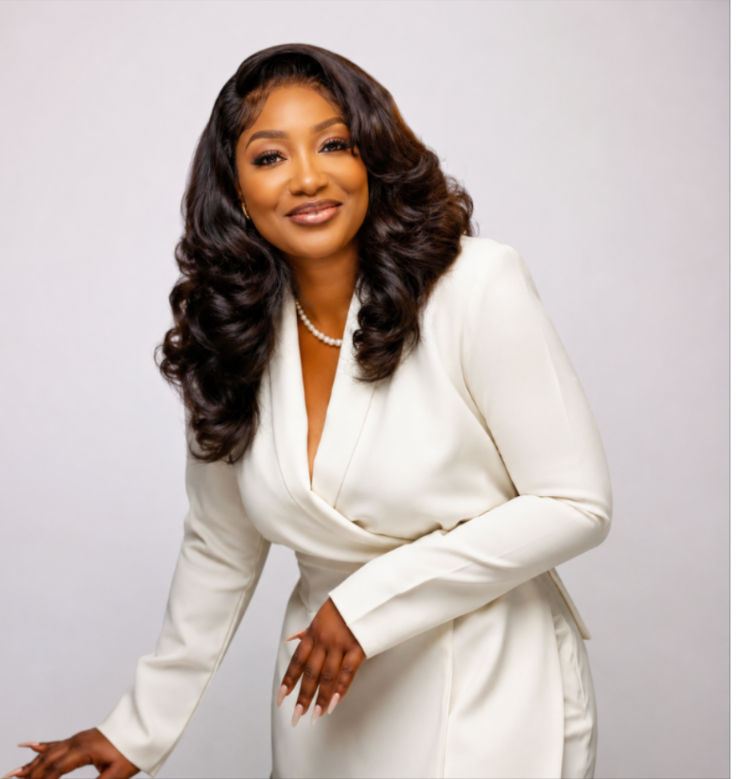

Meet Akosua Owusuwaa: The Face of Modern Leadership
Akosua Owusuwaa is the blueprint for the multifaceted modern woman. A devoted mother, wife, and grounded Christian, she seamlessly balances her personal foundations with an extraordinary professional portfolio.
As a powerhouse Entrepreneur, Business Strategist, Leadership Coach, and Author, Akosua holds an Exec MBA from CEIBS. Her visionary leadership spans across multiple ventures as the co-founder of HIBS AFRICA, the founder of TLS, and the force behind the CAGA HEIGHTS complex.
When you operate at this level, your wardrobe needs to speak power, elegance, and individuality. Enter JOEY the brand.
The Style Verdict: Corporate Office vs. Summer?
Akosua effortlessly proves that you don’t have to choose between functional professionalism and seasonal style. These outfits are the ultimate hybrid for both corporate offices and high-end summer events.
1. The Tailored White Wrap Suit (Image 1)
- Corporate Office: 10/10. The sharp lapels, structured shoulders, and clean lines command respect in any boardroom or executive meeting. It screams “CEO.”
- Summer Wear: The crisp, bright white aesthetic makes it a perfect choice for summer networking galas, high-profile lunches, or warm-weather corporate retreats where making a statement is mandatory.
2. The Canary Yellow Coordinates (Image 2)
- Summer Wear: 10/10. The vibrant pastel yellow, collared neckline, and breezy front-slit maxi silhouette perfectly capture the warmth, energy, and freedom of summer.
- Corporate Office: Absolutely. The structured bodice, tailored collar, and three-quarter sleeves elevate this piece far beyond standard resort wear. It is an impeccable, fashion-forward choice for a creative corporate environment, executive brunches, or a stylish “Casual Friday” in a traditional office.
Embracing individuality one garment at a time.
Elevate your wardrobe to match your ambition. Experience the bespoke elegance trusted by top-tier executives.
- Book Your Experience: APPOINTMENTS ONLY
- Explore the Collection: www.joeythebrand.com
- Get in Touch: joeythebrandonline@gmail.com
#JOEYthebrand
aww