







OSAGYEFO WEEKLY NEWSLETTER MAGAZINE
Inform. Inspire. Empower. 🌍✨
PRESENTS — HAIR-SENTA Health & Wellbeing | Culture | Fashion | Lifestyle A Digital Lifestyle Newsletter for the Global Thinker and Dreamer
🌍 EXCLUSIVE FEATURE
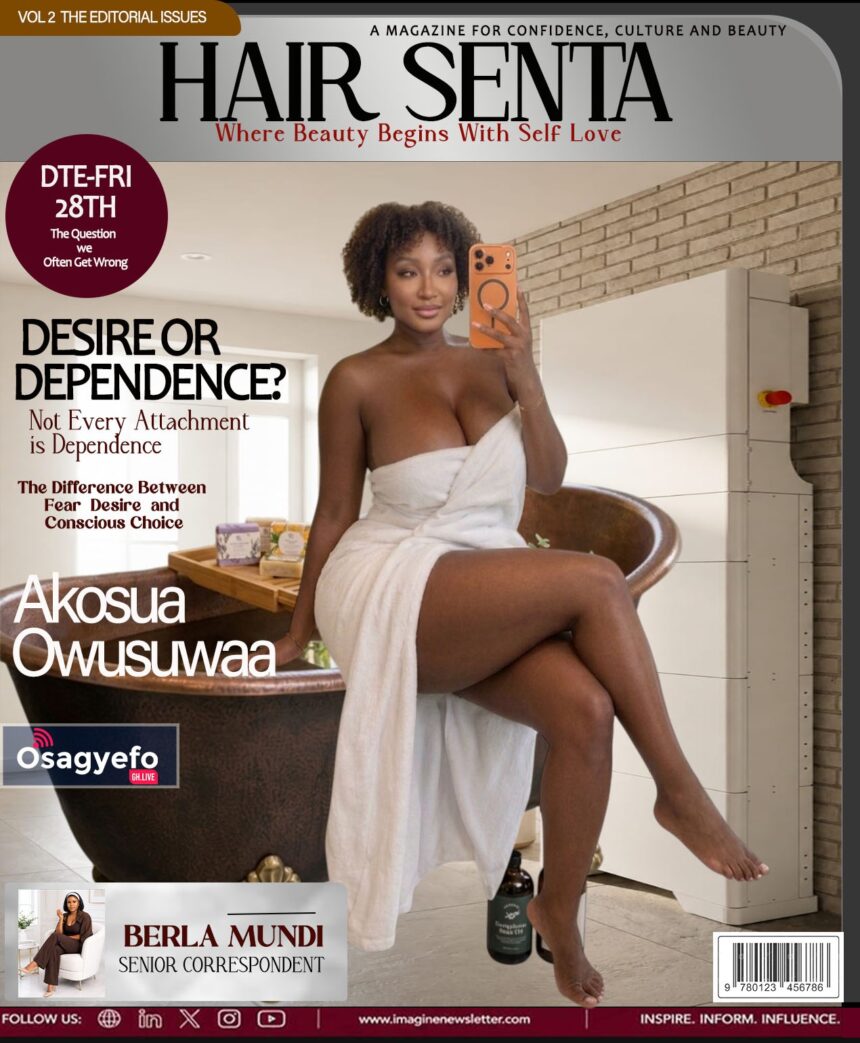
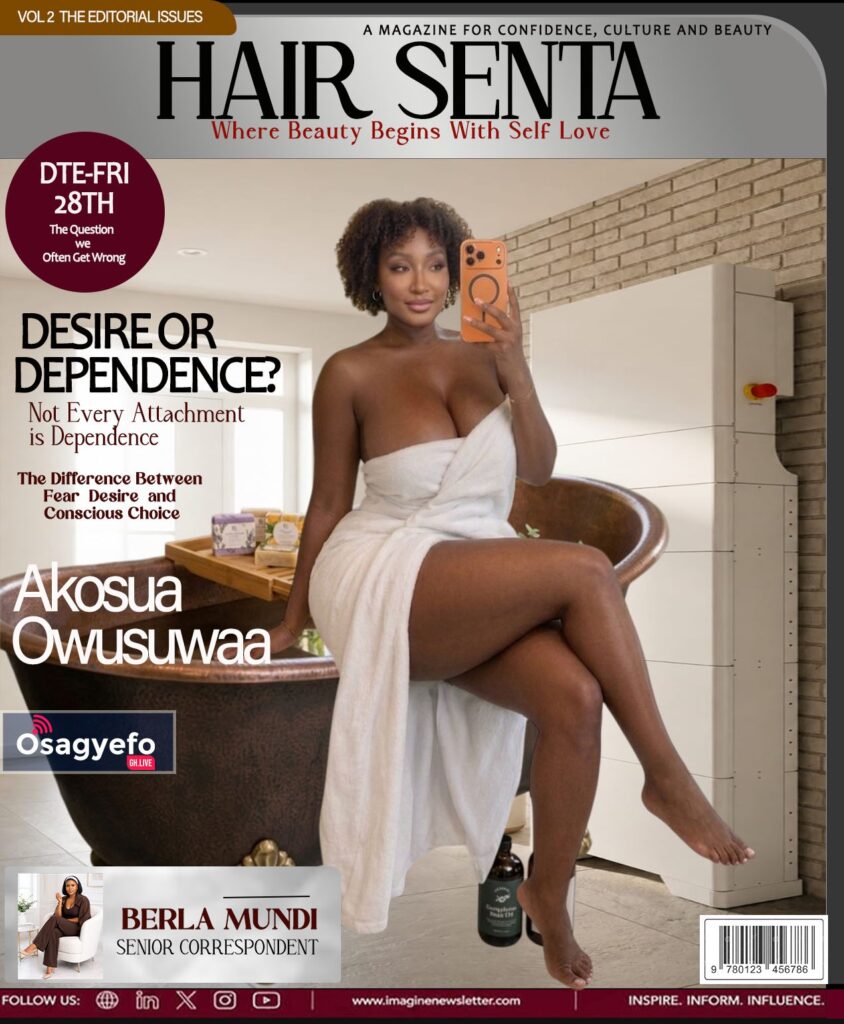
Desire or Dependence? The Question We Often Get Wrong
Not Every Attachment Is Dependence: The Difference Between Fear, Desire, and Conscious Choice
By: Hair-Senta Editorial Desk
Release Date: Friday, August 28, 2026
Time: 05:30 AM (GMT)
Access: Exclusively at assumptagh.live








https://www.instagram.com/hairsenta?utm_source=ig_web_button_share_sheet&igsi=ZDNlZDc0MzIxNw==
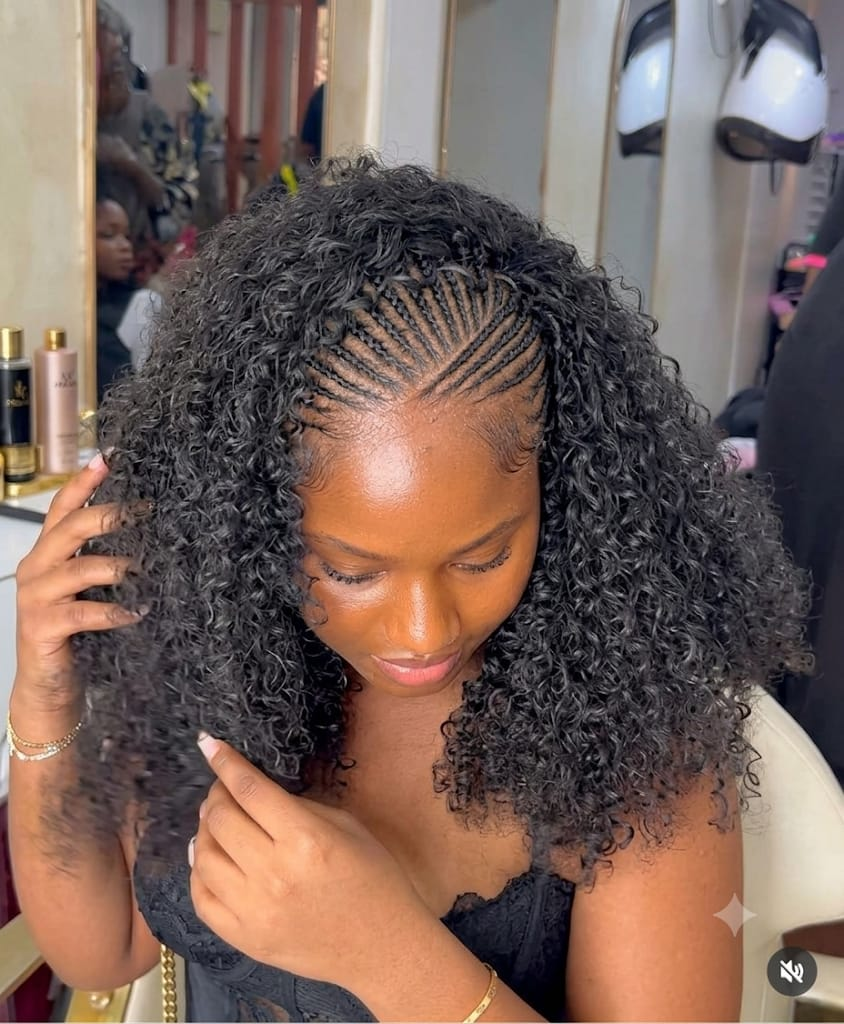
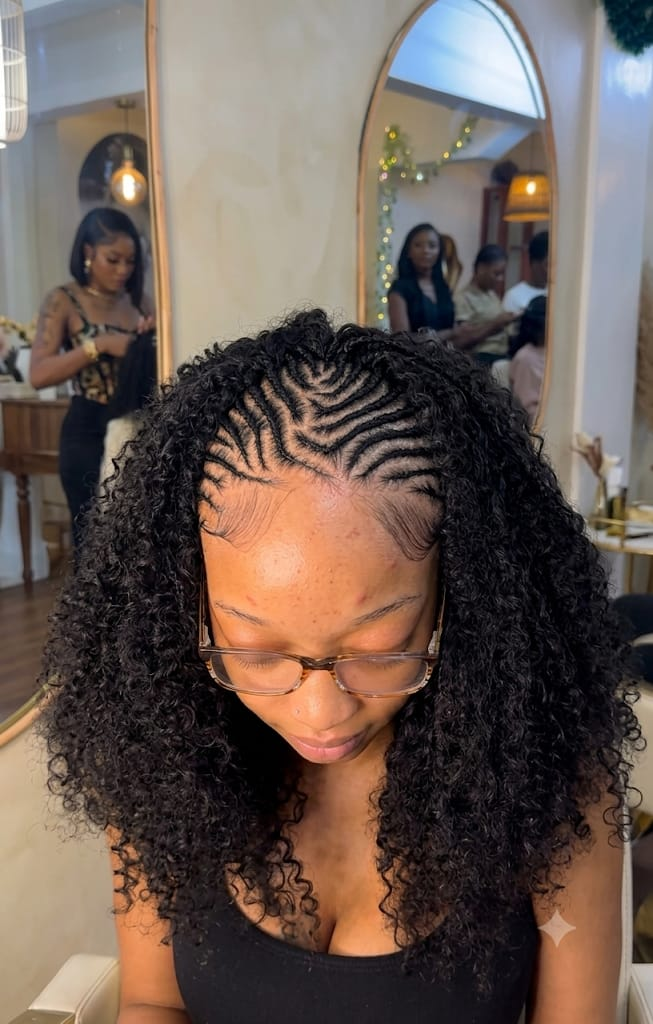
✨ Hair Senta – Where Beautiful Hair Meets Beautiful Conversations ✨🌸
As the season turns to summer, Hair Senta invites you to embrace the end-of-summer sales with more than just stunning hair. Step into a world of renewal with an experience wrapped in care, expertise, and a vibrant new energy. Every interaction is thoughtfully designed to deliver the finest human hair extensions from Ghana, while empowering you with expert guidance on how to care for, style, and love your hair as you bloom.
From your first greeting to your final choice, we listen, educate, and support you with warmth and professionalism. Whether you’re refreshing your look for the new season, attending spring weddings, or simply treating yourself to a “new year” glow-up, our team ensures you leave radiant, confident, and ready to shine.
💇🏾♀️ Why Choose Hair Senta This end summer?
Trademarked, trusted, and internationally recognized
Premium human hair extensions shipped from Ghana to the world
Personalized, educational, and uplifting client experience—designed to help your confidence grow
This season, gift yourself the beauty of a fresh start. Because when your hair feels like a masterpiece, you’re ready to take on the world.
📍 Get in Touch
Visit us: 24 Jungle Avenue, Accra, Ghana 00233
Shop online: www.hairsenta.com
Call: (+233) 0544354455 / 0248629769
Follow us on Instagram: @hairsenta
Hair Senta — Because great hair is always in season. 🌷✨
✨ Editor’s Note
In an age where relationship advice floods our screens, many of us have become quick to diagnose emotional attachment. We label, categorize, and explain human behavior through neat psychological frameworks. Yet relationships are rarely neat.
This week’s feature explores a question that deserves deeper reflection: Are people staying because they are trapped by emotional dependence, or because they have consciously chosen what others cannot understand?
📖 FEATURE STORY: Desire or Dependence?
There is a popular narrative about relationships that has become almost impossible to escape. When someone stays in an unequal dynamic, we assume they are emotionally dependent. When they keep responding to inconsistent attention, we assume they are afraid of being alone. When they struggle to let go, we reach for explanations such as insecurity, trauma, or low self-worth.
Sometimes those explanations are correct. But what if they aren’t?
💭 A Personal Reflection
A few years ago, I found myself in a conversation about a relationship that everyone around me considered unhealthy. The verdict was unanimous: “You need to let go.” “You’re accepting less than you deserve.” “You’re emotionally dependent.”
The evidence seemed obvious—inconsistent attention, unequal effort, and an uncertain future. Yet nobody asked: What if the person already knows all of that? What if they’re not confused, trapped, or unaware, but are simply making a conscious choice?
🔍 Looking Beyond Psychology
We are taught to see attachment strictly through a psychological lens—searching for wounds, fears, and unmet needs. Yet human beings are far more complex:
- Sometimes people stay because they hope or feel lonely.
- Sometimes they stay because they fear loss.
- Sometimes they stay simply because they genuinely want to.
⚖️ The Uncomfortable Truth About Choice Human desire has its own logic. People are not always guided by what is fair or emotionally balanced; they are guided by what feels meaningful, familiar, exciting, or irresistible. A person can fully recognize an imbalance and still choose to remain connected—not from a lack of self-awareness, but because they have decided what they receive is worth it.
🧠 Key Distinction: Fear vs. Agency
| Perspective | Driving Force | Core Experience |
|---|---|---|
| Fear | Avoiding Loss | Accepting less than you want because you are afraid of losing someone. |
| Agency | Conscious Choice | Accepting less than you want because you have chosen the relationship as it is. |
From the outside, these situations appear identical. On the inside, they are entirely different worlds.
🌎 Why We Should Be Careful Before Judging
Too often, we judge relationships by their appearance rather than the motivations behind them. We see someone staying and assume they are trapped; we see someone leaving and label it growth. Reality rarely fits such neat categories. Attraction, hope, affection, loneliness, validation, desire, and fear often coexist.
❓ The Question That Changes Everything Is this dependence, or is it desire? Perhaps it is sometimes both. But before labeling an attachment as unhealthy, ask: Are they staying because they are unable to leave, or because they have consciously decided that what they receive is enough?
💡 Perspective: In the Spirit of Akosua Owusuwaa

Certified Entrepreneur, Author, Wellness Coach, Food Educator, and Co-Founder of Owusuwaa Weekly | Visionary behind Hair Senta, HIBS-Africa, and TLS—The Leading Senta.
“Our culture is our health, and our health is our future.” — Akosua Owusuwaa
Her Mission:
- Empower everyday people with practical wellness tools.
- Inspire young minds to build a healthier, responsible future.
- Redefine health and beauty as fundamental human rights.
Reflections on Attachment & Dignity: “The question is not whether it is dependence or desire. The deeper question is whether this relationship helps you reveal your highest humanity.
Desire and attachment themselves are not the problem—the problem arises when fear prevents us from acting freely and with self-respect. Every person possesses dignity. If a connection allows you to grow in wisdom, courage, and compassion, it has value. If it causes you to diminish yourself, lose confidence, or abandon your own worth, it is time for inner transformation.
Real freedom begins when we stop asking, ‘Will this person stay?’ and begin asking, ‘Who am I becoming through this relationship?’“
🌍 About HAIR-SENTA
HAIR-SENTA is a signature feature of the OSAGYEFO Weekly Newsletter Magazine, bringing readers thoughtful reflections on wellbeing, culture, personal growth, lifestyle, and the evolving human experience. Designed for an international audience, it challenges assumptions and sparks meaningful conversations across borders.© OSAGYEFO WEEKLY NEWSLETTER MAGAZINE | All Rights Reserved.
:📰 OSAGYEFO WEEKLY NEWSLETTER MAGAZINE
Presents HAIR-SENTA: A Digital Lifestyle Newsletter for the Global Thinker and Dreamer
Dialogue Analysis & Editorial Reflection

Berla-Mundi: Welcome Akosua Owusuwaa to the dialogue.
I think this is a thoughtful, reflective, and emotionally intelligent piece. It reads less like a conventional interview and more like a philosophical dialogue, using the relationship theme to explore broader questions about agency, fear, dignity, and self-development.
Its impact:
1. Strong central question. The distinction between:
- “Do I need this person?”
- versus
- “Do I choose this person?”
is clear, memorable, and carries the entire article. Readers are likely to remember that long after finishing the piece.
2. Balanced perspective. Many discussions about relationships fall into extremes:
- Staying = weakness
- Leaving = strength
But your newsletter avoids that trap. It argues that either choice can be courageous or fear-driven depending on the underlying motivation. That nuance gives your newsletter credibility.
3. The AKU-SIKA story strengthens the message. The interview portion presents the ideas intellectually, while AKU-SIKA’s story makes them emotionally understandable. Her question:
“If I knew I would be completely fine on my own, would I still choose this person?”
is particularly powerful because it turns the abstract discussion into a practical self-reflection exercise.
4. Universal applicability. Although framed around romantic relationships, the ideas can apply to:
- Friendships
- Family relationships
- Careers
- Organizations
- Personal goals
That broadens the article’s impact.
🌍 GLOBAL DIALOGUE
To our readers worldwide and Akosua Owusuwaa, welcome to the dialogue.
Desire or Dependence? The Question We Often Get Wrong
A Special Global Dialogue Between Berla Mundi and Akosua Owusuwaa.
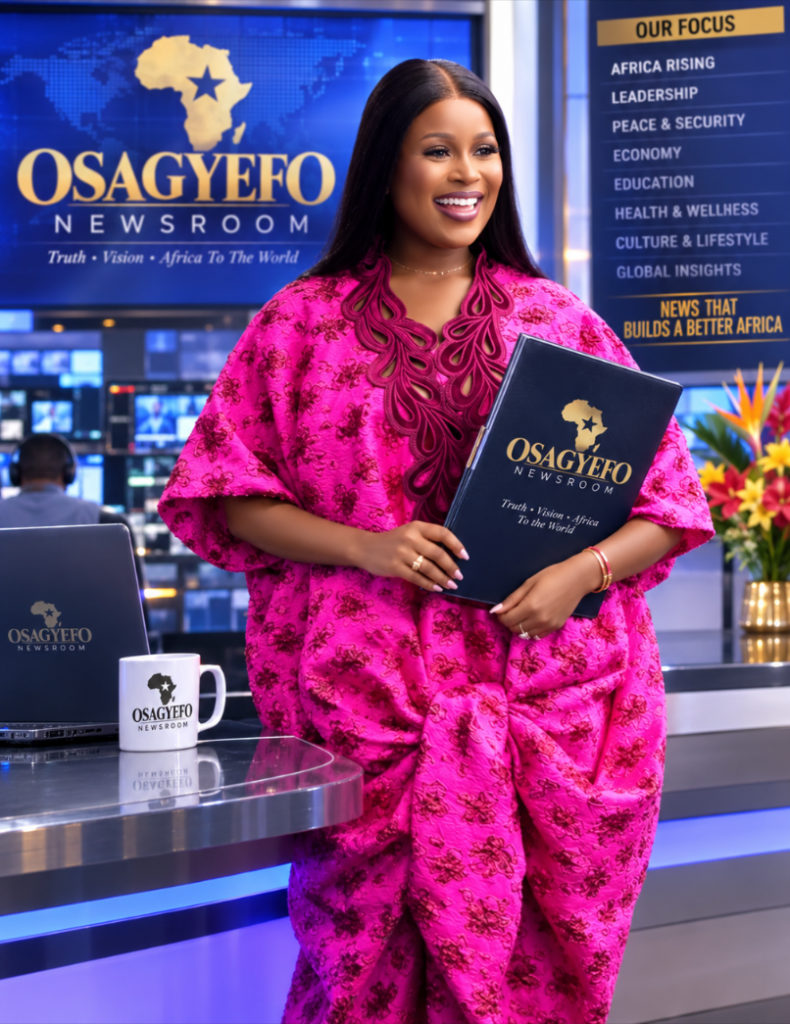
BERLA MUNDI:
Good morning, good afternoon, and good evening to our readers joining us from around the world.
Welcome to this special global dialogue presented by OSAGYEFO Weekly Newsletter Magazine, in collaboration with HAIR-SENTA, a digital lifestyle newsletter for the global thinker and dreamer.
Today, we explore a question that reaches far beyond romantic relationships. It is a conversation about the human heart, our desires, our fears, our attachments, and ultimately, our freedom to choose.
It is my great pleasure to welcome Akosua Owusuwaa.
Akosua Owusuwaa, thank you for joining us today.
AKOSUA OWUSUWAA:
Thank you, Berla. It is a pleasure to be here.
I have always believed that sincere dialogue allows us to see beyond appearances and discover deeper truths about ourselves and others. Often, what appears simple from the outside is far more complex within the human heart.
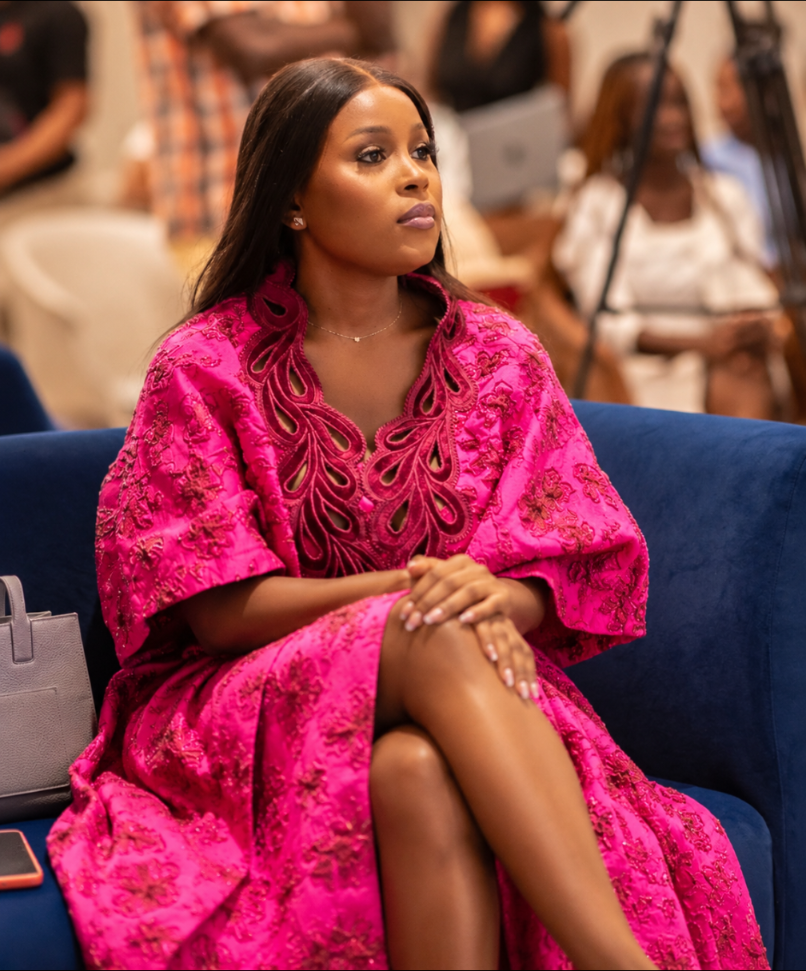
BERLA MUNDI:
That is a beautiful place to begin. Our theme today is “Desire or Dependence? The Question We Often Get Wrong.” When we see someone deeply attached to another person, we often assume emotional dependence. But is that always true?
Can attachment come from love rather than weakness? Can a person remain deeply connected to someone while still maintaining their own independence?
Akosua Owusuwaa, how can a person distinguish genuine love from emotional dependence?
AKOSUA OWUSUWAA:
A useful question to ask is not: “How much do I need this person?“
but rather: “What is this relationship doing to my life?”
Dependence gradually causes a person to surrender their center. Their emotional well-being becomes completely tied to another person’s approval, attention, or presence.
Love is different. A person can deeply love someone while still maintaining self-respect, purpose, responsibility, and the ability to stand on their own feet.
The issue is not attachment itself. Human beings naturally form attachments. The real question is whether that attachment strengthens our humanity or diminishes it.

BERLA MUNDI: So attachment is not necessarily the problem?

AKOSUA OWUSUWAA:
Not at all. To love someone is to care about what happens to them. To care about someone naturally means their happiness matters to us.
That is not weakness. The danger begins when fear becomes the foundation of the relationship.
When someone secretly believes: “Without this person, I have no value.” the relationship can become a prison.
But when someone says: “I choose to be with this person because together we can encourage one another and become better human beings,” that is something entirely different.
BERLA MUNDI: That brings us to an important distinction: fear versus choice.
From the outside, two people may appear to be in similar relationships. One remains because they are terrified of being alone. Another remains because they have consciously chosen commitment. Yet from the outside, they can look the same.

AKOSUA OWUSUWAA: Exactly.That is why we should be careful about judging another person’s life. We can see circumstances, but we cannot always see the struggles, responsibilities, memories, hopes, and dreams behind a person’s decision.
The important question is not: “Did you stay?” or “Did you leave?”
The deeper question is: “Who are you becoming through the choice you have made?”
Sometimes leaving requires courage.
Sometimes staying requires courage.
Neither choice is automatically noble or automatically weak.
The meaning of the choice lies in the intention behind it.
BERLA MUNDI: Many people listening today may recognize themselves in what you’re describing.
In fact, I’d like to share a story.
📖 The Woman Who Thought She Could Not Leave
There was once a woman named AKU-SIKA who had been in a relationship for many years. From the outside, people believed they understood her life. Some would ask: “Why doesn’t she leave?”
Others assumed she stayed because she was afraid of being alone. A few quietly concluded that she had become emotionally dependent. But the truth was more complicated.
AKU-SIKA loved her partner. She also had fears. She feared starting again. She feared disappointing family members. She feared loneliness. Most of all, she feared discovering who she might become if the relationship ended. Over the years, she had slowly neglected parts of herself. She saw friends less often. She postponed personal ambitions. Many of her decisions revolved around preserving the relationship.
Without realizing it, she had begun confusing needing someone with choosing someone. Then one evening, after another difficult conversation, AKU-SIKA sat alone and asked herself a question she had never truly confronted before: “If I knew I would be completely fine on my own, would I still choose this relationship?”
The question frightened her. But it also liberated her. For the first time, she stopped asking: “Will this relationship survive?“ and started asking: “Do I genuinely want to stay?”
That distinction changed everything.
She began rebuilding the parts of herself she had neglected. She invested in her work. She reconnected with friends. She revisited dreams she had abandoned. She learned how to enjoy her own company.
And something unexpected happened. The stronger she became as an individual, the clearer her relationship became. She discovered that she was not staying because she was afraid of being alone. She was staying because she genuinely believed they could still grow together.
So she remained.But this time she remained by choice. And because she was no longer staying from fear, she was no longer afraid to speak honestly.
One day she told her partner: “I don’t want to be with you because I cannot live without you. I want to be with you because I can live on my own, but I choose to build a life with you.”
That sentence transformed the relationship. The difficulties did not magically disappear. There were still disagreements. There were still imperfections. But AKU-SIKA no longer felt trapped.
She discovered something profound: Love does not become more valuable because we cannot live without someone. Sometimes love becomes more meaningful when we know we can stand alone and still consciously choose to stand beside another person.
The Question AKU-SIKA Leaves With Us
BERLA MUNDI:
Akosua, I wanted to share AKU-SIKA’s story because I suspect many people around the world may recognize part of themselves in it. Some may have been AKU-SIKA.
Some may have loved an AKU-SIKA. And some may still be carrying the question she asked herself:
“If I were not afraid of being alone, would I still choose this relationship?”
Is that the kind of question that can help a person distinguish genuine love from emotional dependence?
AKOSUA OWUSUWAA: Yes, I believe it can.
Not because it automatically provides an answer, but because it helps us examine the source of our choices. We should not condemn ourselves for experiencing fear.
Fear is part of being human. The important issue is whether fear determines the direction of our lives or whether we transform that fear into wisdom and courage. AKU-SIKA’s greatest victory was not that she decided to stay. Her greatest victory was discovering that she could choose. That is where freedom begins.