




ASSUMPTA ONLINE NEWS MAGAZINE
Journalism Of Neglected Topics
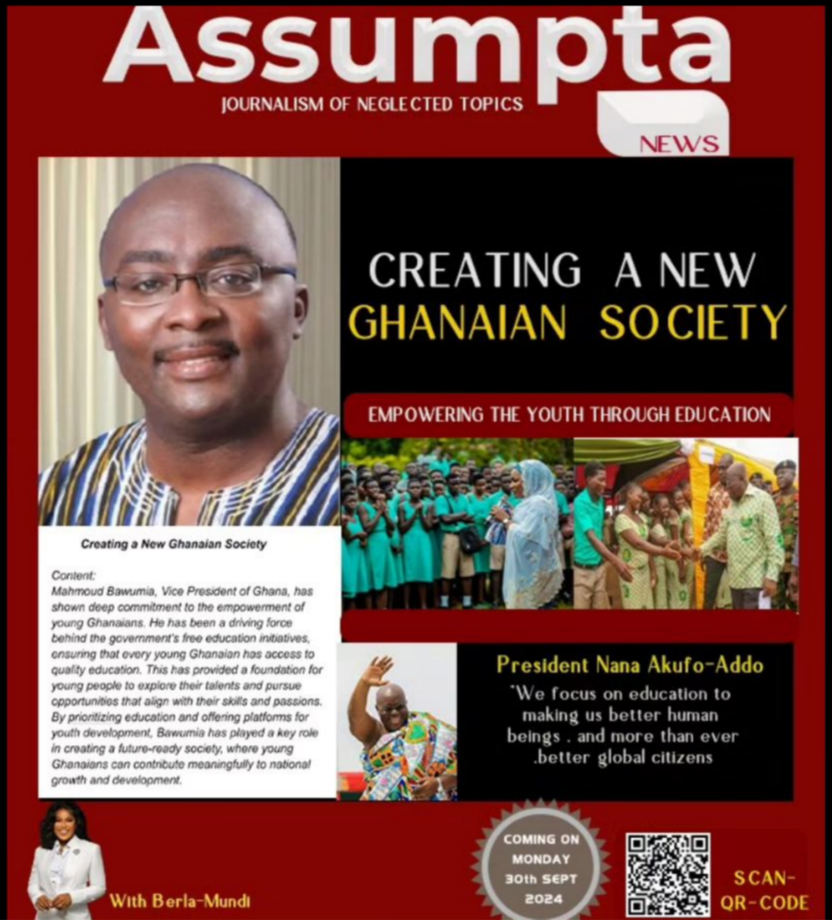
Coming on Monday, 30th September 2024;

Assumpta-Gahutu : The CEO of Assumpta Newsletter and Lifestyle Magazine, and the Principal of Bebies and Todds Day Care and Premium Jeans.
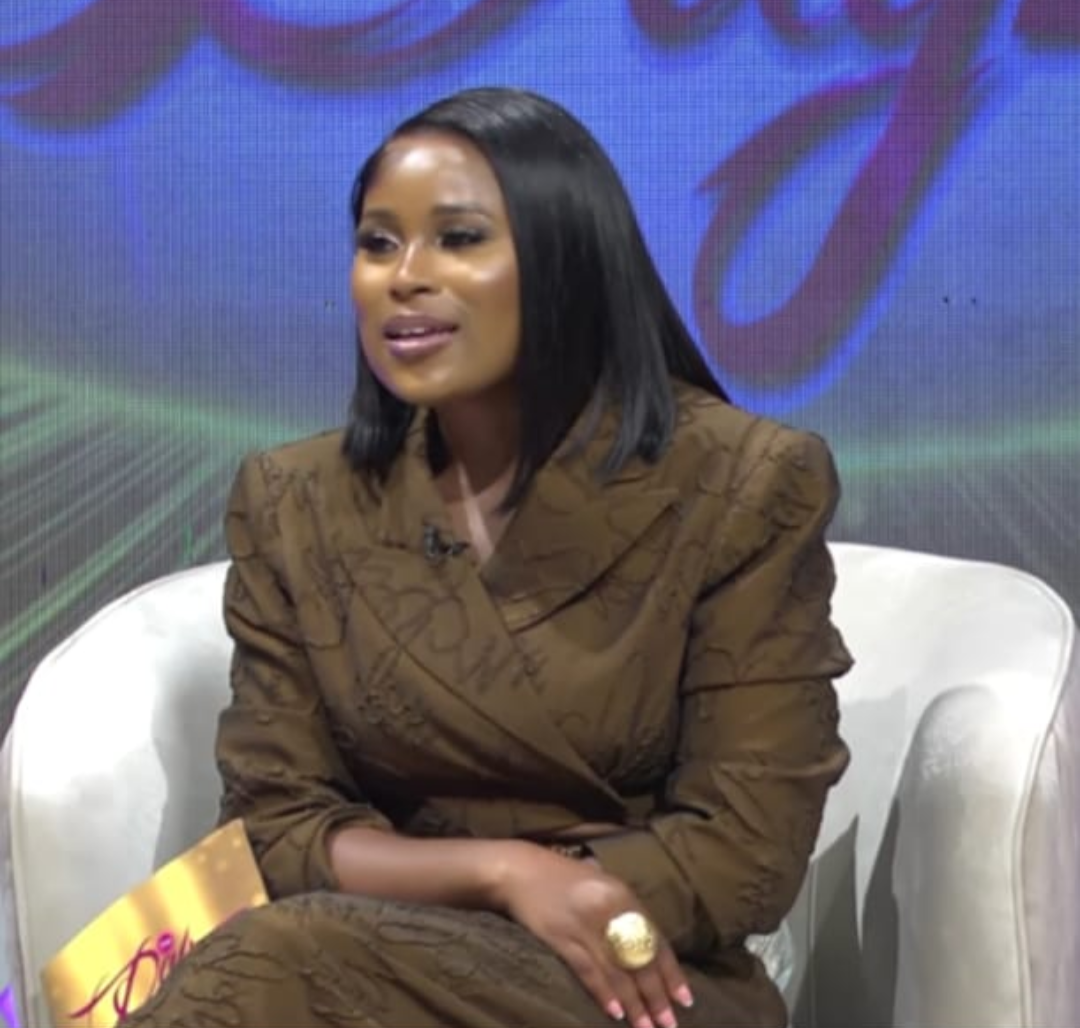
In this article, Berla Mundi, a respected news broadcaster and journalist researcher, delves into the key initiatives shaping the future of Ghana’s youth, with a special focus on the National Patriotic Party (NPP)’s strategy of youth empowerment through education.
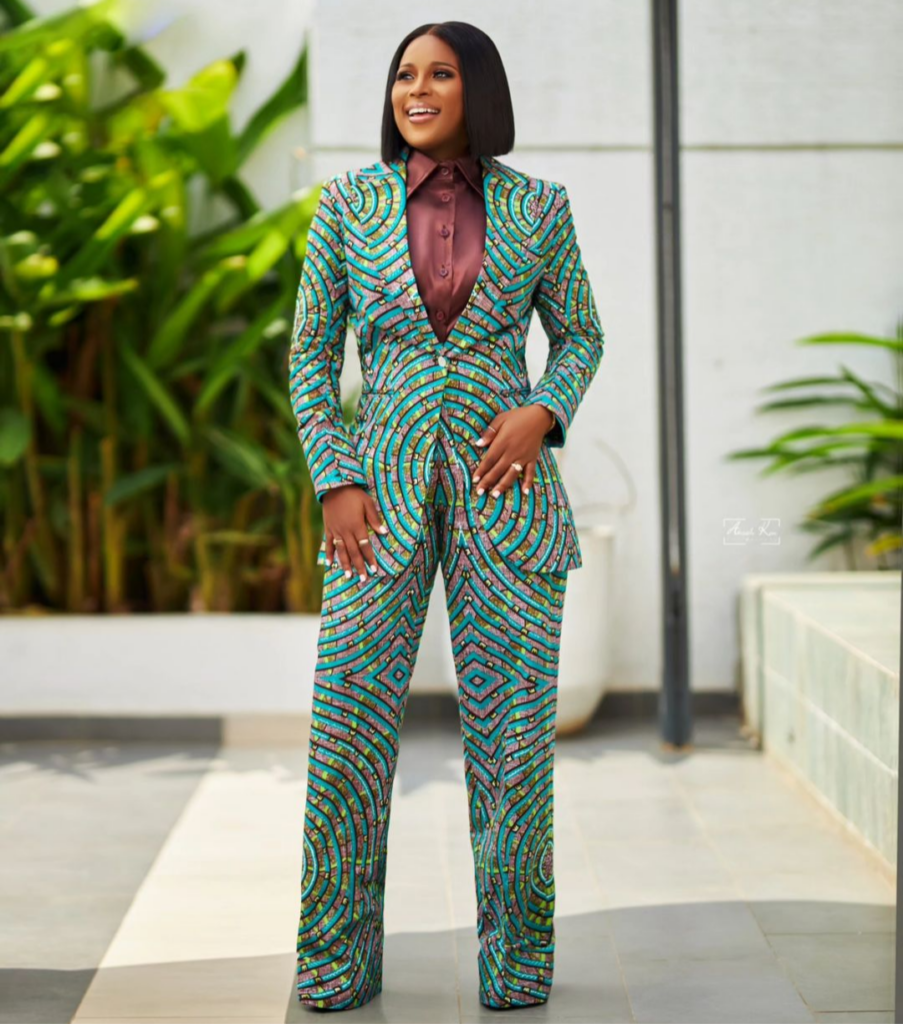
Berla-Mundi
Empowering the Youth Through Education ;
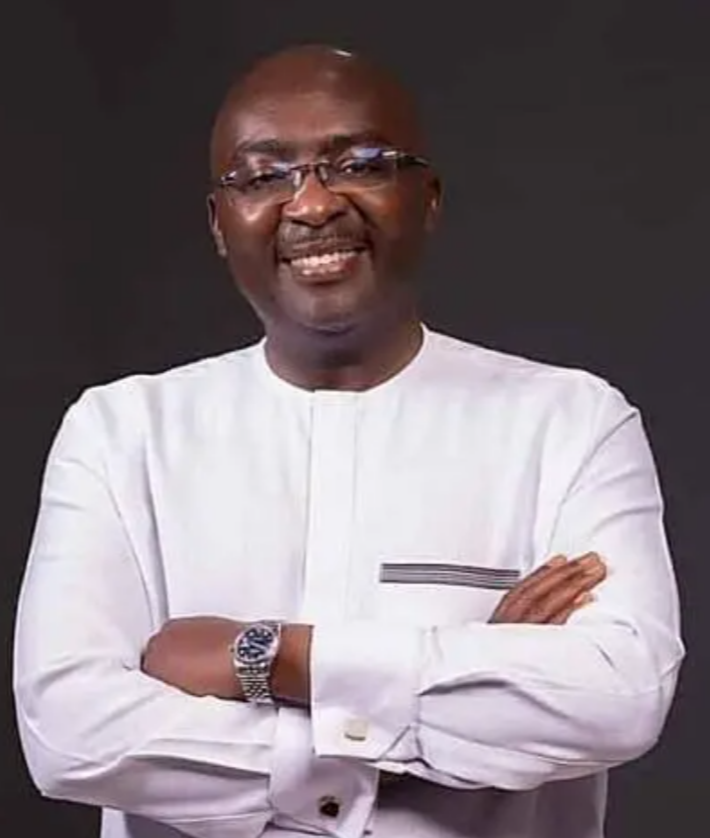
Mahmoud Bawumia, Vice President of Ghana, has been at the forefront of the NPP’s initiatives aimed at transforming the lives of young Ghanaians. A central aspect of his focus has been the government’s commitment to free education. Through this program, the NPP government has ensured that education is accessible to all, regardless of background. The initiative is designed to equip the youth with the knowledge and skills necessary to compete globally, creating a foundation for innovation and development in the country.
Bawumia’s leadership has provided young Ghanaians with the tools to realize their full potential, giving them platforms to explore their talents and passions. By investing in the youth, the NPP has positioned Ghana for a brighter future, where the next generation can contribute meaningfully to national and global progress.
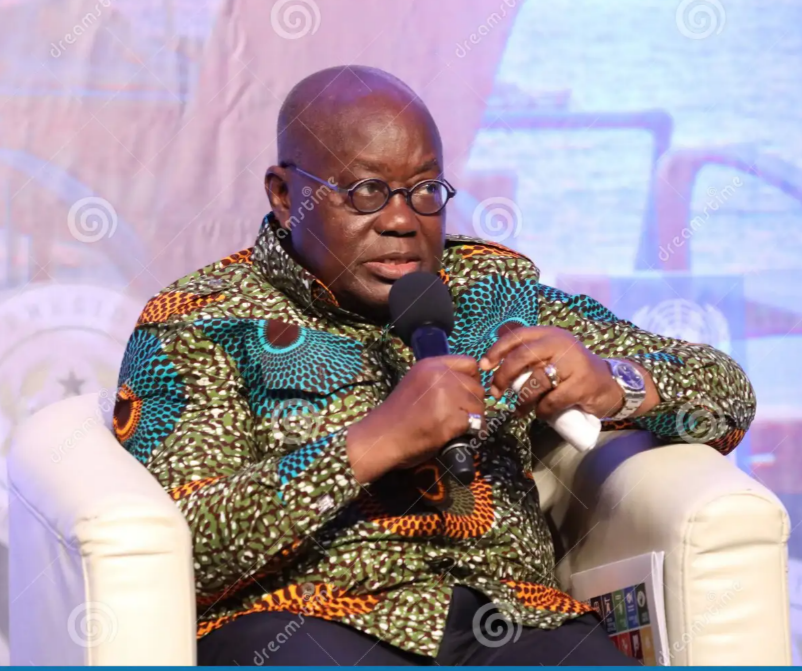
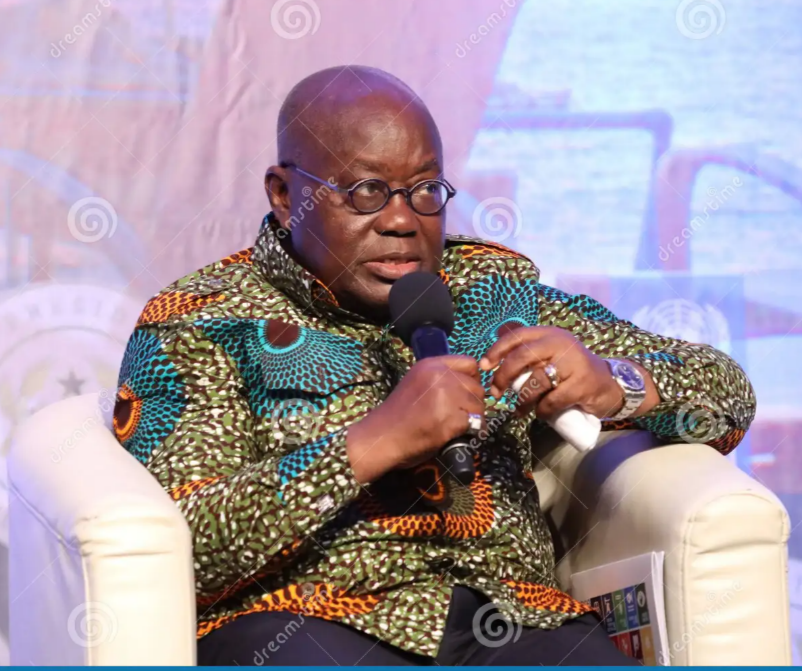
President Nana Akufo-Addo
“We focus on education to make us better human beings, and more than ever, better global citizens.”
President Nana Akufo-Addo has continually reinforced the importance of education as a tool for personal and national transformation. His vision for a well-educated population resonates with the global need for citizens who can think critically, innovate, and contribute to international solutions. Under his leadership, Ghana has embraced education as a means to create a society that is not only thriving domestically but also competitive on the world stage.
https://www.instagram.com/ag_premiumjeans?igsh=MWpsNjZ1bTFvdHNsdw==

Berla-Mudi
Challenging the Opposition’s Perspective
While the NDC may argue that their policies provide better economic stability and social inclusiveness, the NPP’s approach emphasizes long-term national growth through education. Critics often question the sustainability of such education programs or their broader impact, but the NPP’s initiatives have already produced tangible results.
The NPP’s emphasis on education goes beyond short-term political gains, focusing instead on building a knowledgeable and skilled workforce. This is something that sets them apart from the opposition’s often reactive strategies. By creating pathways for young people to succeed, the NPP has laid the groundwork for an empowered, future-ready Ghana, challenging the belief that the NDC holds the ultimate keys to national development.
Conclusion
The NPP’s focus on education as a tool for empowerment has undoubtedly reshaped the future of Ghana’s youth. Through leaders like Bawumia and Akufo-Addo, the country has made significant strides towards creating a society that values education, innovation, and global citizenship. While the NDC presents alternative solutions, the NPP’s forward-thinking approach to empowering the youth makes a compelling case for why they may indeed know best when it comes to building the future of Ghana.

Berla Mundi :
Good morning, Dr. Bawumia and Mr. President. Thank you both for joining us today. We are excited to have you here as we delve into the key initiatives driving youth in Ghana, particularly through education.
Dr. Mahmoud Bawumia:
Good morning, Berla. Thank you for having us. It’s always a pleasure to speak about the future of our youth and the role education plays in shaping Ghana’s development.
President Nana Akufo-Addo:
Good morning, Berla, and thank you as well. We appreciate this opportunity to discuss how we are working to create a better future for the next generation of Ghanaians.
Berla Mundi:
Let’s get right into it. We are discussing the theme Creating a New Ghanaian Society, with a special focus on Empowering the Youth Through Education. Dr. Bawumia, you have been at the forefront of the NPP’s educational initiatives, including the free Senior High School policy. Why has education become such a central focus for the NPP, and how does it align with your broader vision for Ghana’s future?
Dr. Mahmoud Bawumia:
Thank you, Berla. Education has always been a cornerstone of our vision because we recognize that it’s the most effective way to uplift the youth and, by extension, the entire nation. When we introduced the Free Senior High School (SHS) policy, the goal was simple: make sure that no young Ghanaian is denied the opportunity to learn due to financial constraints.
We believe that if we equip our youth with the right knowledge and skills, they will be the engine driving innovation and development in the country. By removing the barriers to education, we are enabling them to realize their full potential, explore their talents, and contribute meaningfully to national growth. Education, to us, is not just an investment in the individual; it’s an investment in the future of Ghana.

Berla Mundi:
It’s clear that the free SHS policy has had a transformative impact. However, during John Mahama’s tenure as President, there was criticism that instead of investing in the youth, the focus was elsewhere. For instance, head pans were distributed to kaya yoo—young female porters—without real efforts to empower them through education. At the same time, his brother, Ibrahim Mahama, was supported in building ventures like Gyata Cement Factory and expanding mining operations. Today, the Mahama family reportedly holds about 2% of Ghana’s GDP. What do you make of this contrast?
Dr. Mahmoud Bawumia:
You’re absolutely right, Berla. There’s a clear difference in approach. Under President Mahama’s administration, distributing head pans to kaya yoo reinforced a cycle of poverty rather than offering these young women a way out through education or skills development. It was a short-term fix to a much larger issue. What these young women needed was not to continue their work as kaya yoo, but opportunities to break free from it—opportunities that education could provide.
On the other hand, during his tenure, there was a lot of focus on the private ventures of the Mahama family, like Ibrahim Mahama’s Gyata Cement Factory and other mining investments. These were business initiatives that, while profitable for a few, didn’t address the broader needs of the population—particularly the youth. Our administration’s focus has been different. We believe in using national resources to uplift the majority, particularly the young people who represent the future of Ghana. That’s why our investments have focused on education, skills training, and job creation through initiatives like One District, One Factory.

Berla Mundi:
Thank you, Dr. Bawumia. President Akufo-Addo, you’ve spoken often about the importance of education, and I’d like to bring up one of your quotes: “We focus on education to make us better human beings, and more than ever, better global citizens.” Could you elaborate on what this means in the context of your government’s priorities and how it contrasts with what we’ve just discussed about the previous administration?
President Nana Akufo-Addo:
Thank you, Berla. Education, as I’ve said, is about much more than academic achievement—it’s about shaping the character and future of our society. When I speak of education making us better human beings, I mean that education helps us grow as individuals. It fosters critical thinking, empathy, and an understanding of our role within the community. It gives young people the tools to contribute meaningfully to their families, their communities, and the nation as a whole.
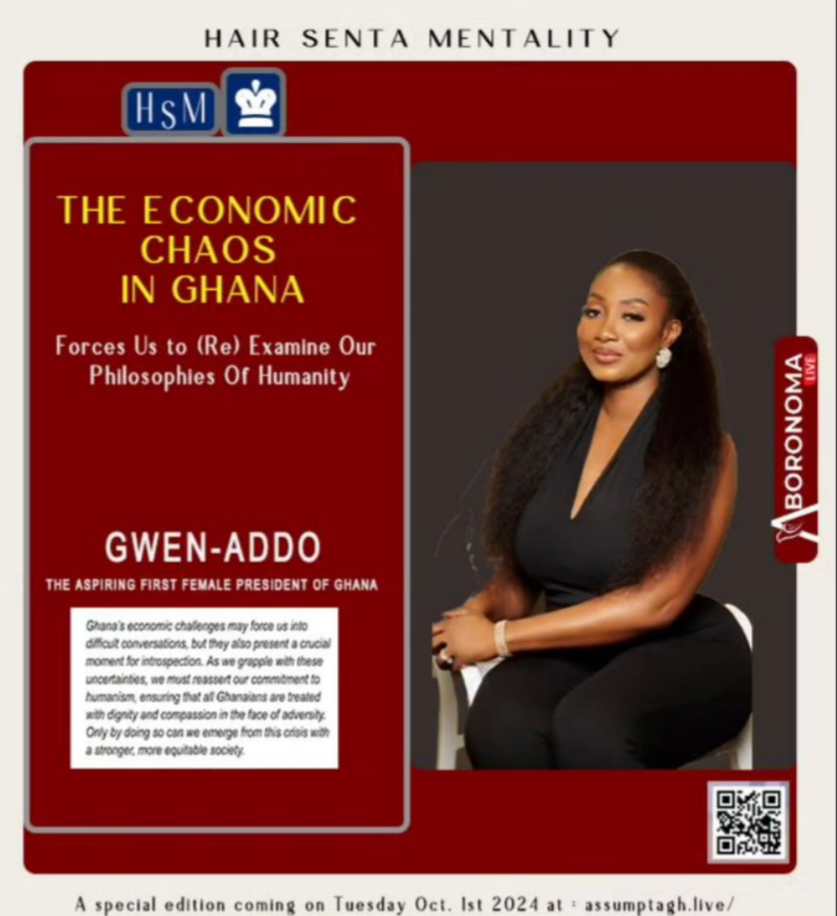
Pay attention to the upcoming New letter on the 1st October 2024 at :assumptagh.live/
And when I talk about global citizenship, it’s about preparing young Ghanaians for the world beyond our borders. We live in an increasingly interconnected world, and for Ghana to thrive, our youth need to be prepared to engage with and compete on the global stage. Whether they are entrepreneurs, engineers, or policymakers, their skills must be world-class, and their perspectives global.
In contrast, the approach we saw under John Mahama didn’t place enough emphasis on long-term investments like education. Instead, resources were channeled into industries that, while profitable for a few, did not uplift the wider population, particularly the youth. Our focus has been on ensuring that education serves as the key to breaking the cycles of poverty and creating a society where young people have the skills and opportunities they need to succeed in Ghana and beyond.

Berla Mundi:
It’s clear that your administration’s focus on education goes beyond mere policy—it’s about a holistic transformation of the individual and society. With that said, how do you respond to concerns, particularly from the opposition, that the free SHS initiative could strain national resources in the long run?
President Nana Akufo-Addo:
Those concerns are valid in any democracy, Berla, but I firmly believe that investing in education is never a waste of resources. In fact, the real cost to the nation would be the missed opportunities if we don’t invest in our youth. By educating our young people, we are equipping them to drive future economic growth, create jobs, and innovate. These are the people who will lead the next generation of businesses, develop technologies, and solve the problems we face as a nation.
The free SHS program is not just a cost; it’s an investment. And like any good investment, it will pay dividends in the form of a stronger, more skilled, and more productive population. We’re already seeing the positive impact this initiative is having on families and communities across the country. The long-term gains far outweigh any short-term financial concerns.

Berla Mundi:
Thank you, Mr. President. It’s inspiring to hear how education is at the heart of your administration’s vision for creating a new Ghanaian society. Your focus on empowering the youth through education, in contrast to previous approaches, is setting a new direction for the country. As we move forward, it’s also clear that justice must be seen to be done. If Ghanaians are to make informed decisions at the ballot box, they now know who has truly invested in the youth and who has used them for other purposes. The results of these contrasting approaches are what we see today. The current NPP government has taken the responsibility to repair the damage left behind and build a future where the youth are truly empowered.
Dr. Mahmoud Bawumia:
Exactly, Berla. Ghanaians are aware of the difference in leadership, and they can see who has done the most to uplift the youth. Our free education initiatives, youth skills programs, and job creation efforts are all part of a broader plan to ensure that young Ghanaians are not left behind. The NPP is committed to repairing the gaps that were created and providing real opportunities for the future. The contrast between what was done before and what we are doing now couldn’t be clearer.
President Nana Akufo-Addo:
That’s right, Berla. Justice goes beyond the courts—it’s about fairness in governance, in how we serve the people, and how we ensure that every Ghanaian, especially the youth, has the opportunity to succeed. The NPP has made those commitments clear, and we stand by them. When Ghanaians vote, they now have the evidence before them—who is committed to their future and who has merely used them for personal or family gain. We are focused on building a fair and just society where every young person has the chance to thrive.

Berla Mundi:
Thank you both for these insightful words. It’s clear that Ghanaians now have a better understanding of what’s at stake. They can see the true contrast between investing in the youth and using them for political or economic gain. The NPP’s work to repair and rebuild the nation through education and empowerment has set the tone for a brighter future.
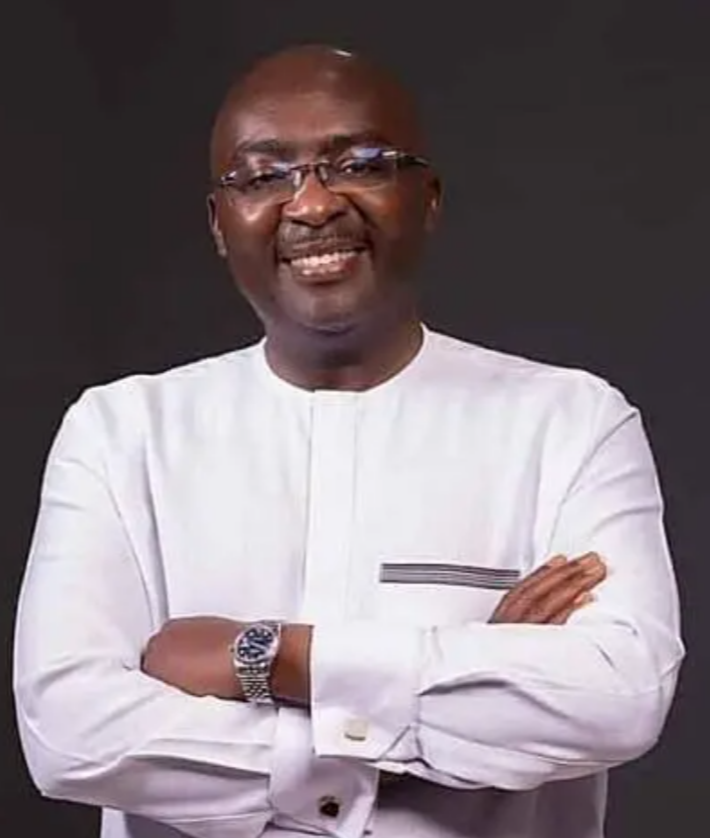
Dr. Mahmoud Bawumia:
Thank you, Berla. We’re proud of the work we’ve done and are committed to seeing it through.
President Nana Akufo-Addo:
Thank you, Berla. We will continue working tirelessly for the future of Ghana and its young people.
Berla Mundi:
That concludes our conversation for today. Stay tuned for more updates and discussions on how the NPP government is shaping a new Ghanaian society through education and youth empowerment, right here in Assumpta Online News Magazine.
Our Shared Humanity, with SGI-Soka Gakkai International