






Can We Change Africa? Here are the lessons that Ghana can learn today.

The people of the then Gold Coast were searching for a philosophy that can alleviate their sense of powerlessness that pervades their society. They were yearning for a way to transform the darkness of the times, and to live with dignity and hope.
The story of Queen Mother Nana Yaa Asantewaa is a story of the modern history of the nation of Ghana, Africa. In 1896, Asantehene (King) Prempeh I of the Asanteman federation was captured and exiled to the Seychelles islands by the British who had come to call the area the British “Gold Coast.”
Asantewaa’s brother was said to be among the men exiled with Prempeh I, deported because of his opposition to British rule in West Africa.
In 1900, British colonial governor Frederick Hodgson called a meeting in the city of Kumasi of the Asantehene local rulers. At the meeting, Hodgson stated that King Prempeh I would continue to suffer an exile from his native land and that the Ashanti people were to surrender to the British their historical, ancestral Golden Stool – a dynastic symbol of the Ashanti empire.
In fact, power was transferred to each Asantehene by a ceremonial crowning that involved the sacred Golden Stool. The colonial governor demanded that it be surrendered to allow Hodgson to sit on Sika ‘dwa as a symbol of British power.
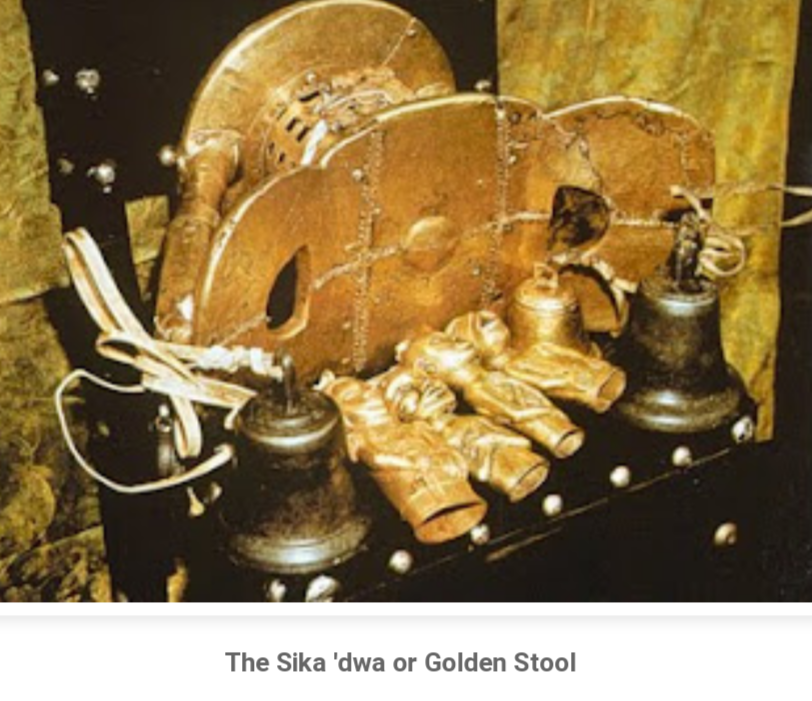
At this time, Yaa Asantewaa was the Gatekeeper of the Golden Stool. After these meetings, the Ashantehene’s of the federation gathered to discuss British development.
Upon hearing some of the Asantehene’s entertain surrender to the British demands, it is reported that the Queen Mother Yaa Asantewaa rose and said the following:
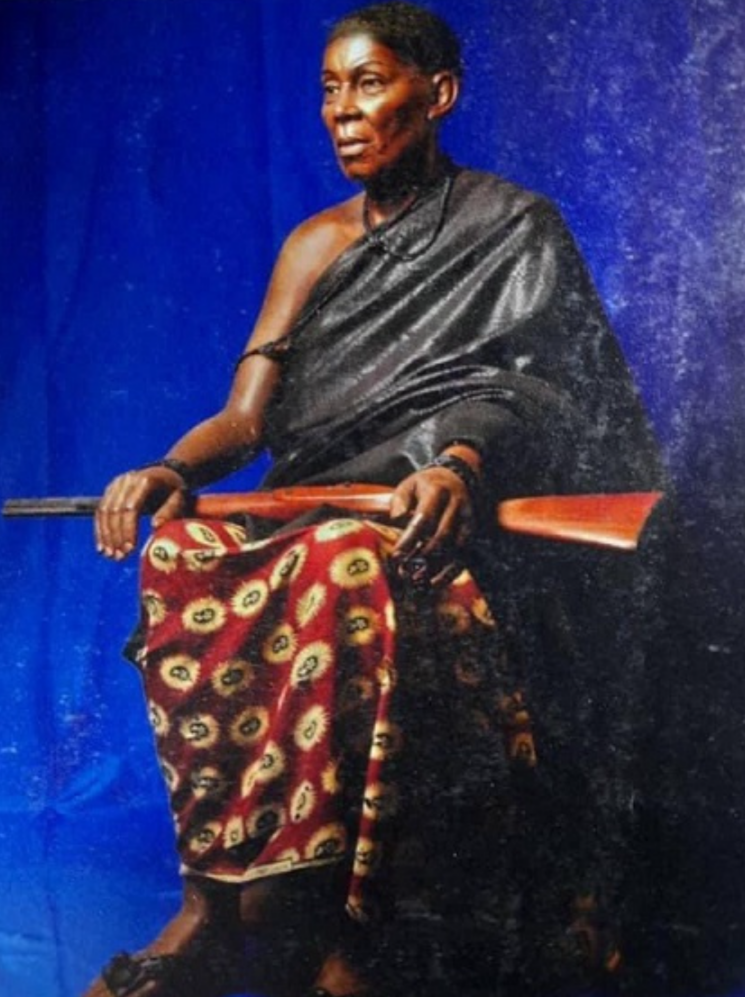
- “Now I have seen that some of you fear to go forward to fight for our King.
- If it were in the brave days of Osei Tutu, Okomfo Anokye, and Opoku Ware, leaders would not sit down to see their King taken away without firing a shot.
- No white man could have dared to speak to a leader of the Ashanti in the way the Governor spoke to you this morning.
- Is it true that the bravery of the Ashanti is no more? I cannot believe it. It cannot be!
(5) I must say this, if you the men of Ashanti will not go forward, then we will.
(6) We the women will. I shall call upon my fellow women. We will fight the white men. We will fight till the last of us falls in the battlefields.”

Kwame Nkrumah also wrestled with these same issues in 20th-century Gold Coast to Ghana, at a time when the severe political philosophy of the oppressive western government raged on Africans without end.
Nkrumah’s profound philosophical answer came in the form of the treatise “On Establishing the Correct Teaching for the Peace of the Land.
Kwame Nkrumah is said to begin with his political philosophy and end colonisation across Africa, as it offers fundamental solutions to African society’s complex problems solutions that are within the grasp of ordinary human beings.
The central contention of Nkrumaism was that African countries, united with one another, needed to adopt socialist political structures which were consistent with the traditional African values of egalitarianism, believing in the principle that all people are equal and deserve equal rights and opportunities and a fairer, more society.

Nkrumah rejected the idealised view of pre-colonial African societies that were classless or non-hierarchical, but accepted that Africa had a spirit of communalism and humanism.
While colonial structures had damaged these communal, egalitarian values, they had not fully supplanted them. Nkrumaism then argued that a return to these values through socialist political structures would both heal the disruption caused by colonial structures and allow further development of African societies.
The pan-African aspects of Nkrumah’s philosophy were justified by a claim that all African societies had a community of economic life and that in contradiction to the neocolonial structures that replaced formal colonies, only African unity would create real autonomy.
Can lasting change start with the resolve to secure peace for all?

If you care anything about your personal security, you should first of all pray for order and tranquillity throughout the four quarters of the land, should you not? (“Establishing the Correct Teaching,” The Writings of Nichiren Daishonin, vol. 1, p. 24)
Buddhism teaches that all life is interrelated. The concept of “dependent origination” holds that nothing exists in isolation, independent of other life. For that reason, our personal security cannot be established in isolation.
To admonish all African leaders!
For each of us to enjoy a safe and secure life, it is crucial that both the natural environment and the society in which we live are flourishing in peace and stability.
Therefore, if we truly seek personal security, we must first transcend our lesser selves ruled by egoism and work to establish the peace and security of the society in which we live in other words, “tranquillity throughout the four quarters of the land.” This is Daishonin’s message.
Daishonin’s use of the expression “tranquillity throughout the four quarters of the land” also demonstrates that he was concerned with more than just the security of a single country: he was seeking peace for the entire world. (The Teachings for Victory, vol. 7, p. 158)
African leaders should strive to put Kwame Nkrumah’s philosophy into practice, to “establish the correct teaching for the peace of the land.” This effort involves tenacious dialogue based on fundamental respect for the dignity of each African and foster young African successors who will dedicate their lives to carrying on this task far into the future.
Thank you Janellemonae