





Assumpta Digital weekly Newsletter & Lifestyle Publication
Presents: Metropolis in Motion: A City’s Evolution, A Woman’s Rise
ASSUMPTAGH / SCREAM
“And the Nice Girl’s Fantasy”


https://www.instagram.com/hairsenta?igsh=MXAzOThhNGZ0Nm15dQ==
Discover Beauty at Hair Senta
Where Confidence Begins With Every Strand
Join the many women who trust Hair Senta for their beauty and wellness. From Accra to the world, we bring you premium, 100% human hair extensions—luxuriously soft, ethically sourced, and made to empower.
📍 Visit us at: 24 Jungle Avenue, Accra, Ghana, 00233
📞 Call: (+233) 0544354455 / 0248629769
🌍 Shop online: www.hairsenta.com
📦 We ship worldwide!
💎 A trademarked brand redefining beauty with every bundle.
✨ Followed by @directionbygwen and 87 others who know where real beauty begins.

1. FEATURE HEADLINES
Main Feature Title:
Metropolis in Motion: A City’s Evolution, A Woman’s Rise
Subtitle:
HER CITY. HER STORY.
As the skyline rises, so does she. A journey through ambition, identity, and growth.
Feature Date:
JULY 30TH
The Nice Girl’s Fantasy: “The Dream She Built”
2. FEATURED STYLE ICON
🔹 @LoovaOfficiel (social handle)
🔹 Featuring style muse Loova
🔹 With Loova – redefining elegance
3. INSIDE THIS ISSUE
- “Building Dreams in High Heels”
- “Voices of the Future: African Creators to Watch”
- “Wellness, Worth, and Womanhood”
4. SPOTLIGHT THEME
The Inner World of Girlhood:
Emotions, imagination, and untamed desires bloom in silence. Between Gaze and Belonging: Walking the Bridge Between Two Worlds
3.1 Introduction: The Hybrid Gaze
In the evolving narrative of African urban literature and travel, Loovaofficiel emerges not merely as a visitor, but as a lens—a hybrid consciousness shaped by Europe, yet increasingly redefined by Africa. Her story is not one of cultural appropriation or detached observation, but of cultural immersion and transformation. As she walks the streets of Ghana and Namibia, her European gaze is refracted by African realities, reshaping her understanding of self, place, and movement.

Her walk is a bridge: between the colonial past and the postcolonial present, between observer and participant, between the imagined and the lived.
3.2 From Tourist to Witness: Deconstructing the Western Traveler
Historically, travel writing about Africa has often been dominated by a Eurocentric gaze—portraying the continent as exotic, dangerous, or primitive. These narratives tended to flatten African experiences while centering the outsider. Loovaofficiel stands in contrast to this tradition. Though French, her approach is not to consume Africa, but to listen to it.
Her walk is slow, deliberate, contemplative. She doesn’t merely take photos—she absorbs languages, maps social rhythms, reads city walls, and studies the choreography of markets, traffic, and rituals.
Her transformation begins in Ghana, a country that carries the weight of Pan-African thought, postcolonial ambition, and cultural renaissance. Accra becomes her first teacher: vivid, layered, contradictory. It challenges her assumptions, unsettles her aesthetic training, and draws her into its rhythm.
3.3 Namibia: Walking Through Ruins and Silence
While Ghana overwhelms with sound, texture, and density, Namibia offers a different spiritual terrain. It is a country of space and silence, of haunting colonial architecture and wide skies. As Loovaofficiel walks through Windhoek and the surrounding towns, she encounters the quieter, more introspective side of urban Africa.
In Namibia, history echoes differently—not through noise but through erasure, segregation, and spatial division. She walks through cities still marked by apartheid-era planning, where the boundaries between privilege and poverty are drawn into the concrete itself. Her presence as a white, French woman becomes more visible here, forcing her to confront the politics of her body in space.
Namibia teaches her to listen to absence, to acknowledge the stories not written on plaques or guided tours, but on the walls of townships and in the eyes of those who have endured.
3.4 Loova as Symbolic Figure: The Feminine Reversal of Colonial Travel
Loovaofficiel is more than a character—she is a symbolic reversal of the colonial-era European traveler. Where earlier travelers sought to define Africa, Loova seeks to be defined by it. Where they sought power, she seeks perspective. Her journey represents a feminine reorientation of travel, where the goal is not dominance but vulnerability, not mapping the terrain but being transformed by it.
In both Ghana and Namibia, Loova is not always welcomed, but she is constantly learning. She becomes a student of the African city—its gender codes, its sonic textures, its spiritual rituals, its architectural testimonies. Through this, she becomes a mirror: not reflecting Europe back to itself, but reflecting Africa’s capacity to shape those who come in humility.
3.5 The Role of Fashion and Embodiment
Part of Loovaofficiel’s journey is aesthetic—through her style, body, and movement. Fashion becomes a dialogue between continents. In Ghana, she trades minimalist French silhouettes for local fabrics, bold colors, and handmade jewelry. She doesn’t appropriate; she adapts—learning the symbolism of color, the history of textiles, the language of dress.

Her clothing becomes part of the narrative: a metaphor for integration, a wearable record of her journey. In this way, she embodies the hybrid—between French and African, past and future, form and expression.
3.6 Conclusion: Becoming the Bridge
Loovaofficiel, the traveler, does not remain on the outside. Through her walks in Accra’s chaos and Windhoek’s silence, she becomes part of the story. Her journey reflects a wider question: How do cities change us? And how do we change them in return?
In Loova, we see the possibility of connection without conquest, admiration without possession, transformation without appropriation. Her presence reminds us that travel—especially for women—can be both a form of personal liberation and a profound political act.
In the next chapter, we will widen the lens to consider African women walking their own cities—no longer as visitors, but as authors of space, agents of memory, and bearers of the continent’s most intimate stories..
Chapter Four: Becoming the Mirror
African Women as Urban Witnesses, Storytellers, and Spaces of Memory
4.1 Introduction: From Traveler to Native Witness
While the traveler—such as Loovaofficiel—offers a hybrid perspective, it is the African woman herself who holds the most intimate relationship with the city. She is not walking to discover, but to endure, to claim, to reimagine. Her journey is not temporary; it is ancestral, embodied, and continuous.

In this chapter, we turn our attention to the women who live within African cities—not as metaphors, but as living archives of survival, creativity, and transformation. Through walking, working, resisting, and remembering, they mirror the cities’ evolving identities.
4.2 The Street as Feminine Space: Risk, Resistance, and Reclamation
The African street has long been considered a male space—loud, contested, political, and dangerous. Yet, African women have continually claimed this space, not only by necessity but by right. Their presence in the public domain is a statement: “I exist. I belong here.”
Walking becomes an act of:
- Visibility – a challenge to patriarchal control and surveillance
- Resistance – against the structures that seek to silence or erase
- Reclamation – of narrative, body, language, and space
From Lagos to Nairobi, from Dakar to Harare, the woman in the street is not invisible. She is the mirror—reflecting the pressures of a society in flux and the possibilities it holds for those brave enough to walk within it.
4.3 Walking as Storytelling: The City Written Through Her Steps
Unlike the distant, detached flâneur of European literature, the African woman’s walk is inherently narrative. Each step she takes in the marketplace, at the roadside, on the school run, or in protest, becomes a sentence in the unfolding novel of her city.
Literary works by women like:
- Ama Ata Aidoo (Ghana) – where women traverse modern and traditional expectations
- Tsitsi Dangarembga (Zimbabwe) – whose heroines walk through postcolonial trauma
- Chimamanda Ngozi Adichie (Nigeria) – capturing diasporic returns to urban Africa
- Nawal El Saadawi (Egypt) – framing women’s movement as spiritual and political
These authors craft women who own their movement, even when it is surveilled, criticized, or constrained. Their protagonists walk not only through streets, but through history, memory, and structural injustice.
4.4 The Mirror Metaphor: Woman as Reflection of Time and Place
African cities change. And as they do, so do their women. But the woman is not just changed—she reflects change. Her life becomes a mirror of wider societal tensions:
- Urban expansion displacing rural memory
- Economic growth contrasting with gender inequality
- The rise of feminist consciousness alongside entrenched traditions
By walking, women become living reflections of what their cities suppress, celebrate, and strive for. Their very presence acts as historical testimony—visible proof of both the endurance and evolution of African life
4.5 Girlhood in the City: Silence, Desire, Becoming
Girlhood in the African city is a particularly tender, complex space. In public, girls are often taught to shrink, to stay silent, to obey. And yet, it is often in the secret moments—walking to school, dancing in corners, eavesdropping on women’s conversations—that a girl’s inner world begins to bloom.
Her desires, fears, and untamed dreams remain mostly unspoken. But these silences are not empty—they are rich with potential.
This silent world is where “The Nice Girl’s Fantasy” unfolds—not a fairytale, but a deeply personal, emotional, and often radical inner transformation. Her journey begins long before she finds her voice—it begins when she steps into the street and dares to imagine.
4.6 Conclusion: The City Walks in Her
In the end, it is not only the woman who walks through the city—it is the city that walks within her. She is the carrier of its songs, its trauma, its hope. Her body remembers what the city forgets. Her voice tells stories the monuments don’t.
As we conclude this thesis, we return to the central idea: that walking in African literature is not simply movement through space—it is movement through identity, power, and becoming.
And the woman—whether a traveler like Loovaofficiel, or a girl growing up in Accra, Windhoek, or Nairobi—is the mirror, the author, and the keeper of the city’s truth..
Dialogue: A Cross-Continental Conversation Between Cookieteegh and Loovaofficiel


Metropolis in Motion Special Feature
Theme: Unity, Identity, and the Power of Pan-African & Global Feminist Solidarity
Cookieteegh:
Good morning everyone.
My name is Cookieteegh-multimedia artist, cultural strategist, and unapologetic Pan-African feminist. Born in Ghana, raised in Accra, and rooted in the rhythm of the continent, I’ve made it my mission to reignite the bold vision of a unified Africa.
Hi, Loova, I’ve always said this—the West underestimated Kwame Nkrumah.
They dismissed his vision as idealistic. But what they failed to see, or perhaps feared to admit, was how radical and real his idea of a Gigantic Pan-African union truly was.
Imagine a network—not just of roads and rails—but of dreams, of innovation and self-determination—connecting venues across the continent, from Accra to Addis Ababa, from Dakar to Dar es Salaam. This was not just infrastructure. It was a reimagining of what Africa could be when united—economically sovereign, culturally powerful, and spiritually indivisible.
That’s the boldness the world wasn’t ready for. But here we are, Loova. In this generation. Picking up the thread. Stitching a new narrative—unapologetically.

Loovaofficiel:
Yes, Cookieteegh. And I feel you deeply.
Your words… they hum in my bones like ancestral echoes across the Mediterranean.
Kwame Nkrumah wasn’t just dreaming of a continent. He was invoking a world. A world where connection is liberation. And that vision? It resonates even in the cobblestone streets of Europe.
In fact, that’s what I shared in this month’s Assumpta Newsletter. “Metropolis in Motion: A City’s Evolution, A Woman’s Rise.”
Her city. Her story.
As the skyline rises, so does she.
It’s a love letter to every girl who’s ever stood between two worlds—Old Europe and New Africa, tradition and disruption, silence and self-expression.
We titled it “Building Dreams in High Heels” not as a vanity metaphor, but because femininity is a form of resistance. Every step I take is a protest. Every gaze I return is a declaration that I belong.

Cookieteegh:
That’s the energy, Loova. The unapologetic defiance of prescribed narratives.
You said it in your article—and I underlined it in my notes—“No one is left behind.” That’s not just a political slogan. That’s a philosophy. A pledge. It’s what Nkrumah dreamed when he looked at the Congo and saw Ghana’s fate intertwined.
Now here you are. The Nice Girl’s Fantasy, they call you. But you’re no one’s fantasy. You’re reality. You’re the voice of Europe’s disillusioned youth. The mirror reflects the inner world of girlhood—its emotions, its silence, its untamed desires.
That’s what “The Inner World of Girlhood” in your spotlight section captured so beautifully. It’s poetic. Necessary. A celebration of the raw, unshaped power within young women.
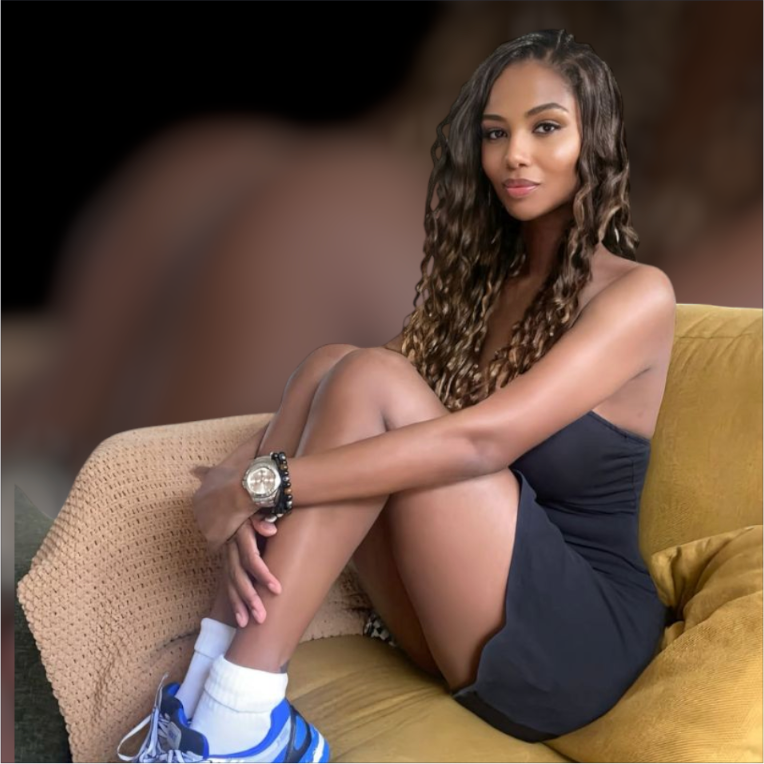
Loovaofficiel:
Thank you, sister. That means so much coming from you.
You see, when I walk through Paris or Berlin—heels clicking against centuries of empire—I carry my grandmother’s whispers with me. I carry the dreams of the girls in Kinshasa dance halls, Lagos poetry lounges, Tunisian classrooms.
That’s why “Voices of the Future: African Creators to Watch” wasn’t just a listicle—it was a calling.
We are not peripheral anymore. We are central to the future. Whether through afro-tech, fashion, literature, or urban architecture—our stories build skylines.
And yes—between gaze and belonging—we walk that bridge. Not with fear. But with rhythm. With purpose.
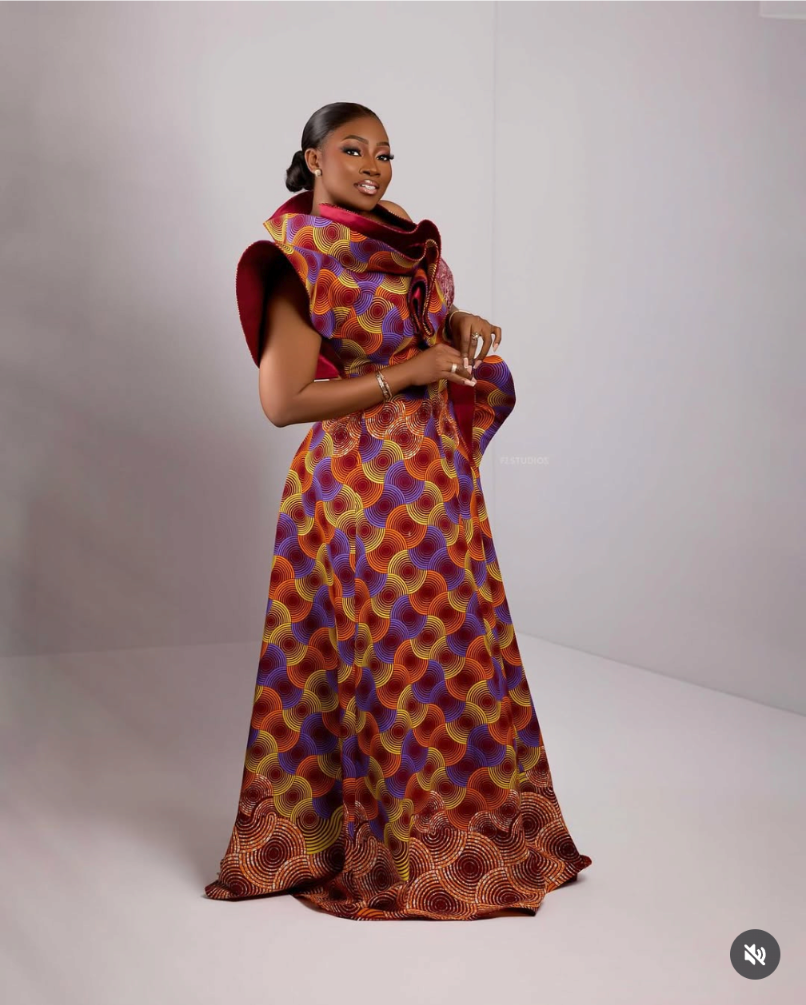
Cookieteegh:
And what a rhythm it is. One that disrupts, rebuilds, and reconnects.
Loova, let’s be clear. This isn’t just about cities or skylines. It’s about systems. About erasing borders—not just geographical, but intellectual, emotional, and spiritual.
We must do what Nkrumah envisioned and what the Assumpta editorial celebrated: crafting a continent and a consciousness where power is shared, where identity is fluid but rooted, and where no child—girl or boy—is born into silence.

Loovaofficiel:
Let them see us now.
Africa is not waiting to be discovered.
She is already becoming one.
And as we rise with her—high heels or barefoot, microphone or megaphone, poem or blueprint—we say:
We were always here.
Now, the world listens.
Dialogue (Part II)
“Bridges and Blueprints: Building the Future Between Girlhood and Global Consciousness”

Cookieteegh:
Cookieteegh, cultural architect and Pan-African provocateur, and Loovaofficiel, music artist and European youth advocate—turns sharply toward the shared threads of history, resistance, and feminine vision. This is not just a dialogue. It is a cultural document in the making. Let’s begin with the idea of Pan-African unity, earlier the newsletter invoked Kwame Nkrumah’s dream of a connected continent—not only by trade and infrastructure, but by spirit. In today’s fragmented world, where does that dream sit?

Loovaofficiel:
It sits in the marrow of the youth. That’s where it’s been reborn.
Look—Pan-Africanism isn’t some dusty ideology reserved for textbooks or political slogans. It’s a living, breathing principle. It’s in the way Lagos designers collaborate with creatives in Kigali. It’s in the rise of Swahili in digital spaces. It’s in the shared trauma—and triumph—of African youth negotiating power in systems that weren’t built for them.
Nkrumah spoke of “African solutions for African problems.” Today, I’d say we’re witnessing African imaginations creating global futures.
But to be clear, unity isn’t romantic. It’s strategic. It means real policy. Cross-border education, artistic grants, economic networks. Not just vibes. Vision and structure.
And unity also requires confronting who we are becoming.
As someone raised in Europe, I know firsthand how disjointed identity can feel. You’re Black, but not African enough. You’re European, but never fully accepted. So many girls like me are raised in translation—emotionally fluent in two cultures, yet seen as foreign in both.
That’s why I write, perform, and advocate. Because Pan-Africanism must be flexible enough to include the diaspora’s fragmented experience. We’re not outside—we’re the thread that keeps the story global.
And let’s be honest: unity is not possible without listening to the voices of women and girls. Historically, we’ve been the ones to bridge families, cultures, languages. Now we’re bridging nations.

Cookieteegh:
You have spoken to a kind of creative resistance that goes beyond protest. Can you define what that looks like for the generation you’re speaking to?

Loovaofficiel:
Creative resistance is designing a future the colonizer didn’t imagine.
It’s refusing to perform pain for platforms that tokenize us. It’s building local archives, digitizing oral histories, and investing in visual sovereignty.
My work now includes mentorship circles where we don’t just teach technical skills—we teach cultural responsibility. We ask: What does it mean to create without repeating the violence of the oppressor?
We create with memory. With intention. And with the knowledge that our aesthetic is political. So for me, creative resistance is making space for softness.
Because girlhood—especially Black and African girlhood—is so often dismissed, sexualized, or silenced. But inside girlhood are entire galaxies. Emotions. Desires. Rage. Joy. Loneliness.
That’s what we explored in “The Inner World of Girlhood” in the Assumpta feature. I wanted to say to girls: Your interior life matters. It is not weak. It is revolutionary.
The most radical thing a young Black girl can do in this world is to believe she is enough. That she deserves a voice. A stage. A city. A continent.

Cookieteegh:
There’s a striking line in your article, Loova: “As the skyline rises, so does she.” How do cities shape the girls growing up in them? And what responsibility do these cities have?

Loovaofficiel:
Cities are storytellers. They shape our sense of worth. When a girl walks past towering buildings named after colonizers but never sees a mural of women who look like her—it sends a message.

When she sees her neighborhood constantly under construction but her school never renovated—it sends a message.
But imagine cities where public spaces reflect our languages, our laughter, our legacies. Where architecture doesn’t just serve industry but remembers community.