




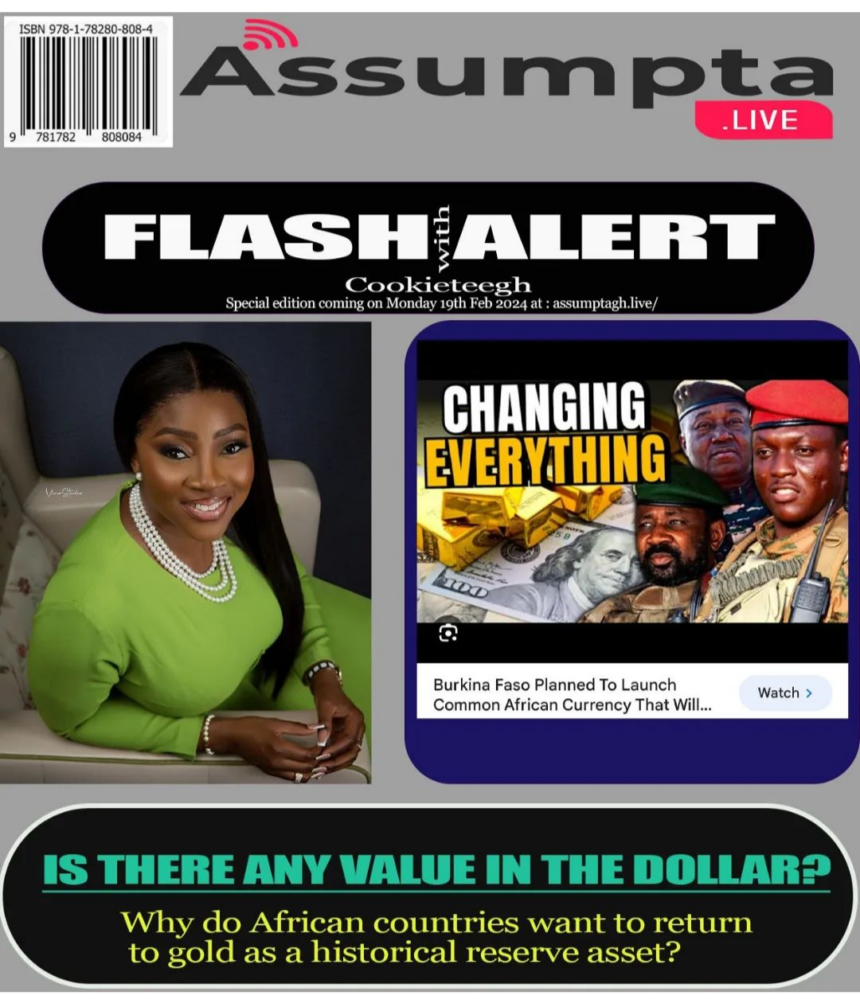
Presents ”The Lawyer “ With Cookieteegh
Featured in Assumpta Weekly News Magazine: “Is There Any Value In The Dollar?” “Why do African countries want to return to gold as a historical reserve asset?“
A special Edition Coming On Monday 19th Feb, 2024 at: assumptagh.live
“The story I am referring to describes the historical context of how currency value was tied to gold reserves and how African countries might consider returning to gold as a historical reserve asset due to its perceived stability and intrinsic value, which could potentially protect against currency devaluation or economic instability.”
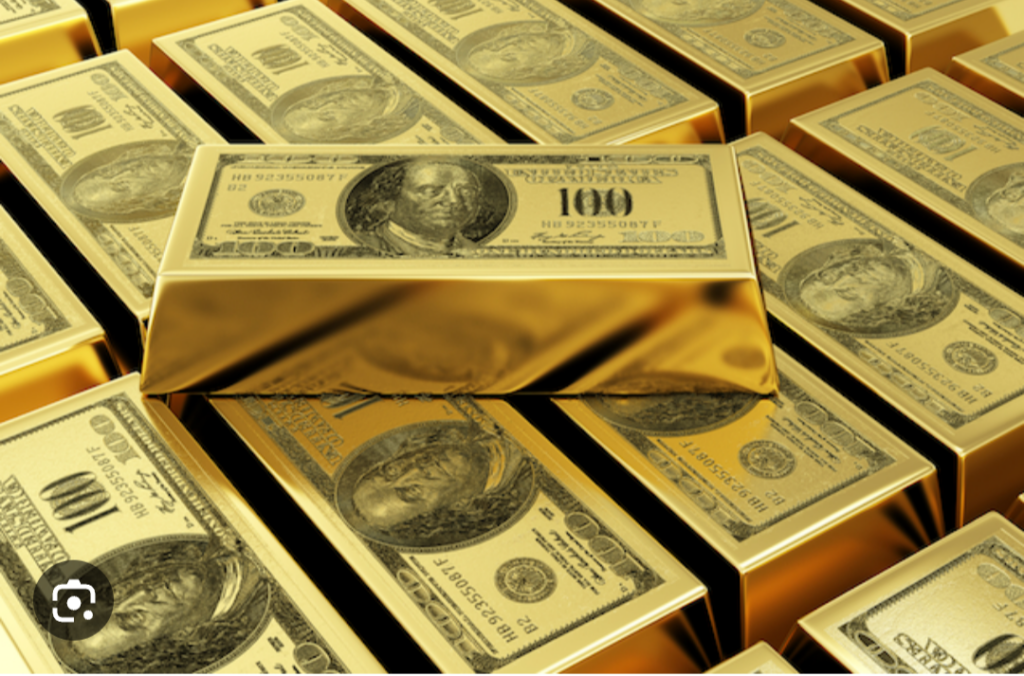
The narrative I mentioned sheds light on a pivotal era when currency value was directly linked to gold reserves, elucidating the significance of this historical connection. It also underscores the rationale behind African countries contemplating a return to gold as a historical reserve asset. This potential shift is driven by the perceived stability and inherent value of gold, offering a safeguard against currency devaluation or economic uncertainties that could arise in contemporary financial landscapes.
The moral of the story presented could be to emphasise the importance of backing currency with tangible assets like gold to ensure its stability and value. It also serves as a cautionary tale about the risks of creating money without the necessary reserves to support its value, highlighting the potential consequences of such actions on economic systems and the public’s trust in currency.
They decided to play it safe and traded their own tickets to gold. The goldsmith had not counted on this. A large number people came to collect their gold at the same time causing him to run out of gold reserves.
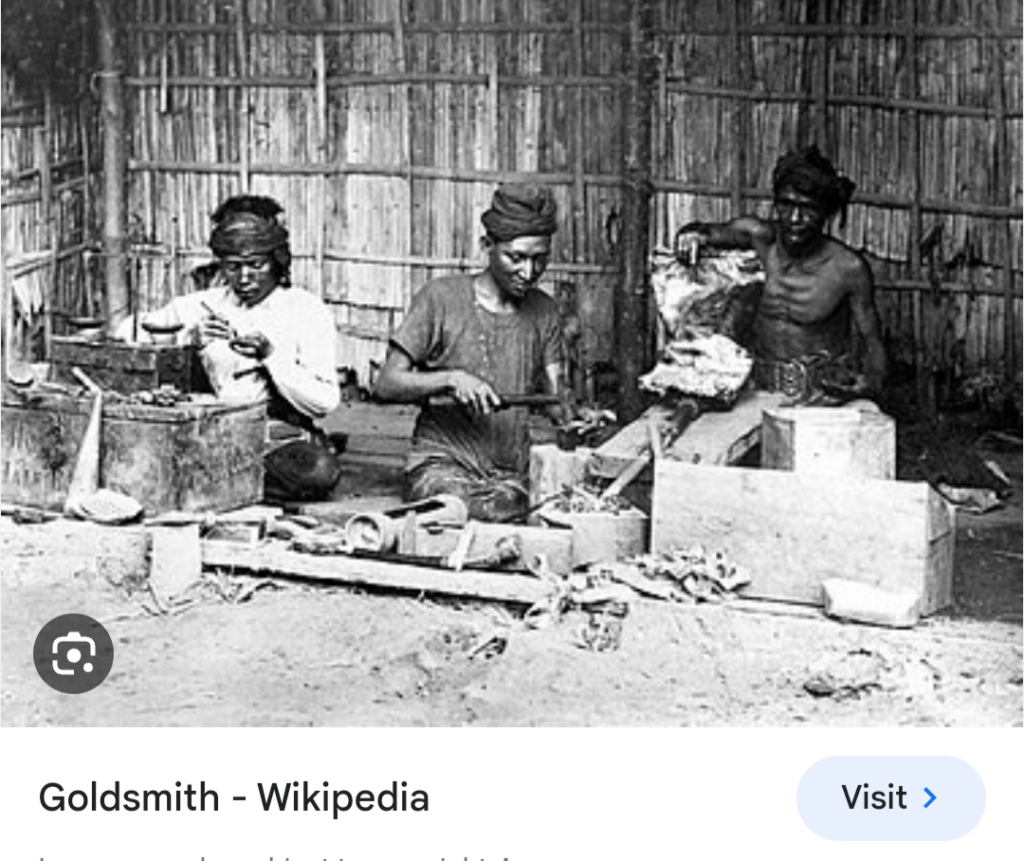
A bank run ensued. The first in history.
But unfortunately not the last.The goldsmith had to look with shame on his cheeks admitting that he had written out many more notes than there was gold in his possession in return. People sitting with bills in their hands suddenly realised that these notes were worthless. Their wealth was one illusion.
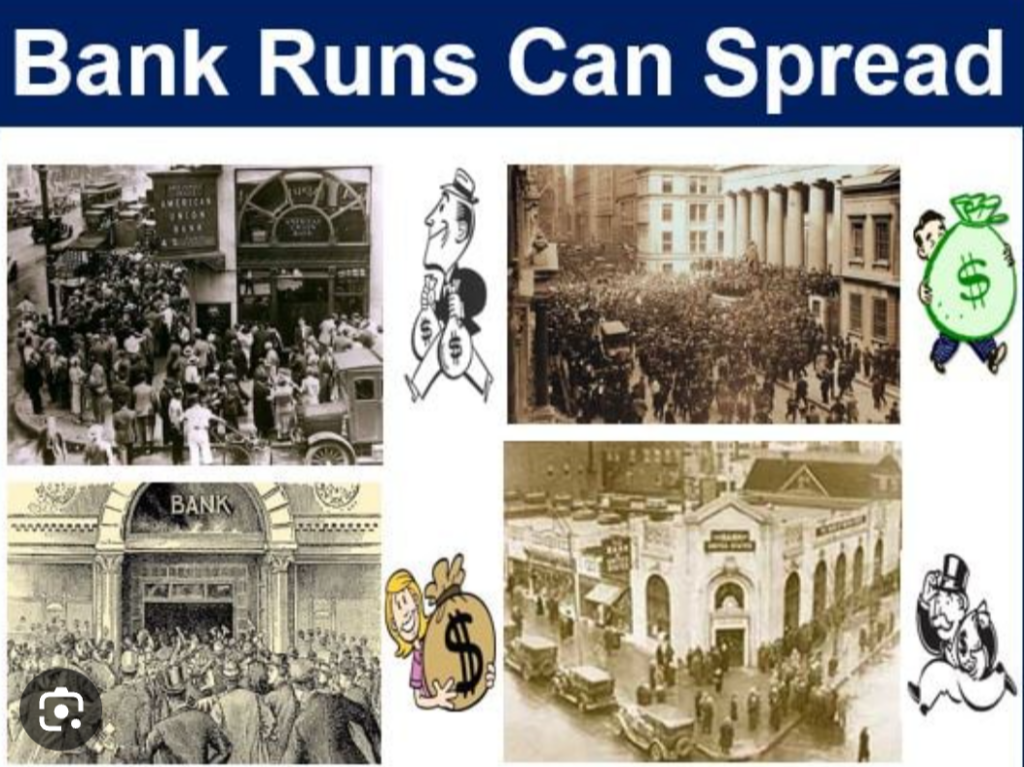
If you are shocked by the recklessness of the goldsmith, I have bad news for you. The current banking system is identically the same.It works like this.There is a limited amount of basic money, consisting of notes and coins out of circulation and the reserves held by banks placed at the central bank.

Cookieteegh :
This sounds like a suspense scene from a movie.

TSASI:
The narrative does indeed carry a dramatic and suspenseful tone, resembling a scene from a movie where a crisis unfolds due to the mismanagement of financial systems. It serves as a cautionary tale about the importance of financial prudence, the need for transparency in banking practices, and the potential consequences of creating money without sufficient tangible backing. The comparison drawn between historical events and the current banking system aims to highlight the enduring relevance of these lessons in modern economic contexts.
“In this narrative, the U.S. dollar’s control is pivotal to our prosperity, anchoring our financialized, debt-driven economy on the exclusive ability to issue the global reserve currency. Potential jeopardy arises if the U.S. currency loses its dominance, leading to dire consequences such as debt payment challenges, governmental bankruptcy, and widespread impoverishment. This looming risk surpasses previous concerns. Should global sentiment favour the Chinese Yuan over the U.S. dollar post-conflict, the nation stands to incur profound losses beyond comprehension. Journalist Tucker Carlson aptly underscores the intrinsic link between U.S. wealth and the dollar as the world’s reserve currency. The perpetual use of the U.S. dollar for essential transactions, like oil purchases, and its strategic reserve status in central banks worldwide underscore its significance. Nevertheless, the U.S. has increasingly undervalued and exploited this privileged position. With diminishing domestic production and a shift of manufacturing to China, a surplus of dollars accumulated, subsequently reinvested in U.S. government bonds, thus perpetuating the cycle.”

Cookieteegh:
The passage you provided emphasises the critical role of the U.S. dollar as the world’s reserve currency and the potential consequences if it were to lose its status. It underscores the interconnectedness of the U.S. economy with the dollar’s global dominance, highlighting the risks associated with a possible shift in perception towards another currency, like the Chinese Yuan. The narrative also touches upon the implications of the U.S. trade deficit with China and the cycle of dollar investments in U.S. government bonds, reflecting on the broader economic implications of these dynamics.
China increasingly became the factory of the United States.
Oil and gold producers also saw the pile of dollars increase considerably. And there too those dollars were reinvested in American government paper.
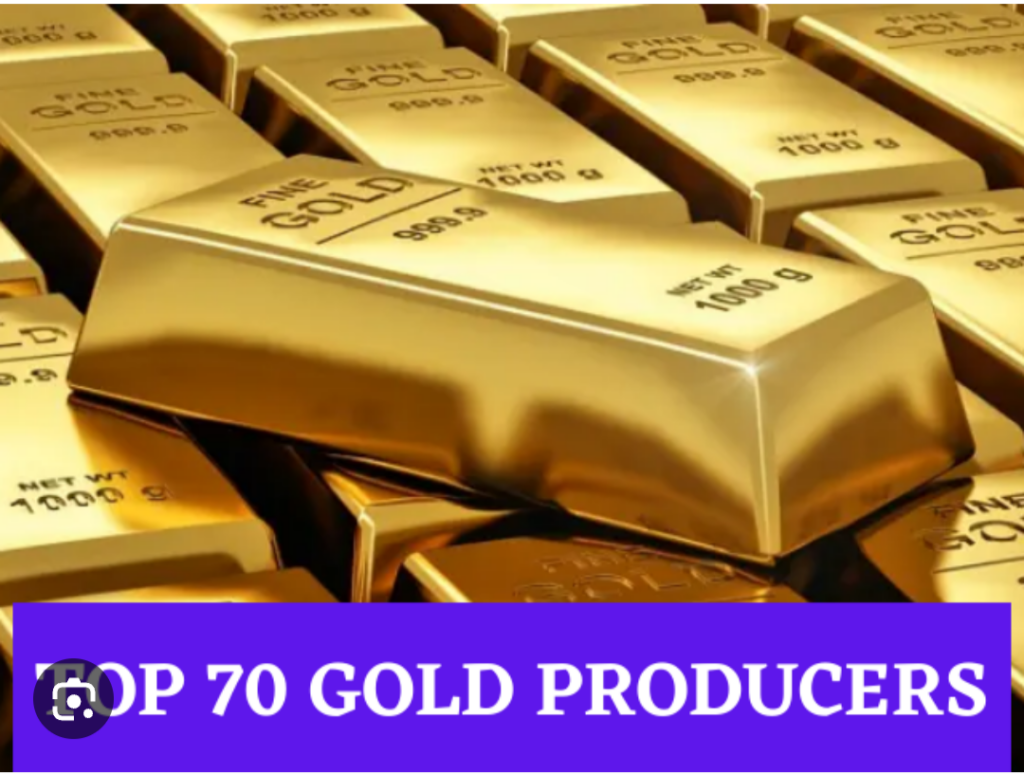
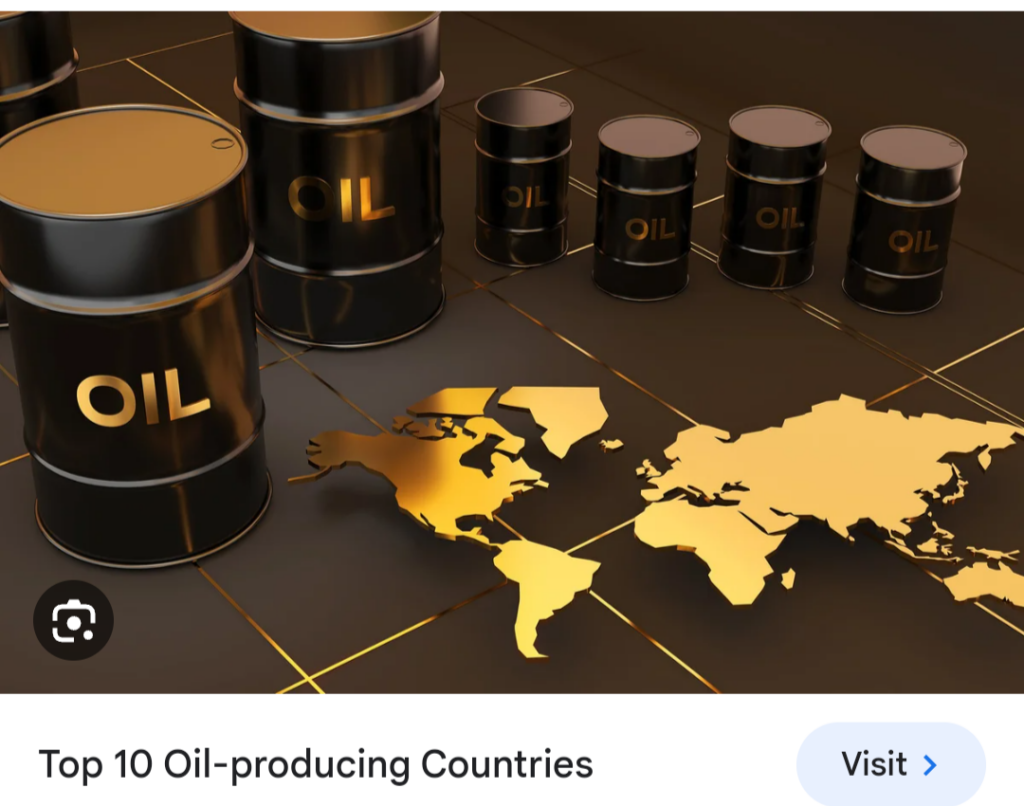
It was a deal that everyone was relatively happy with until the financial crisis struck in 2008. The US started printing dollars en masse to save the banks and the economy and as you then retain a large part of your reserves, like China, Saudi Arabia and Russia in this currency you start to wonder about the value of those assets.
Is it unacceptable for the Chinese to mine raw materials, import energy and labour to produce goods and then be compensated with a pile of banknotes that the Federal Reserve creates at the push of a button?
And the Saudis and Russians also wondered whether it was still such a good idea to pump up the finite oil reserves in exchange for freshly printed dollars.The first cracks in the dollar’s status as a reserve currency became visible. China, Africa, Saudi Arabia and Russia continued to export goods in exchange for dollars, but they were no longer willing to invest those dollars in American ones.
They no longer saw any value in the dollar and returned to gold as a historical asset reserve asset. Dollars received from trade with the US thus became instantaneously converted to gold.

Cookieteegh:
Russian President Vladimir Putin’s analysis from the end of 2019 highlights concerns about the US using the dollar as a political weapon and the impact it may have on countries dependent on the US currency for trade. The discussion points to the potential vulnerabilities associated with the dollar’s status as the world’s primary reserve currency.
TSASI :
Indeed.The dominance of the US dollar in global trade gives the US significant leverage, allowing it to potentially disrupt economies by cutting off countries from using the dollar for trade. This power dynamic underscores the potential for the US to wield the dollar as a tool for exerting influence and control over other nations.
That is truly moving. It wasn’t until my second year in secondary school learning about Economics that my hatred of economics led me to stop studying economics. It is my anti sentiments that has taken a nationalism turn. I also learned that Ghana’s first elected president Kwame Nkrumah fought against distrust of the American dollar. Not only was the currency printed at will, but the US determined who could trade in the dollar.
This realisation further fueled my belief in the importance of economic independence and sovereignty for Ghana and other developing countries. I became passionate about finding ways to promote self-sufficiency and financial stability within our own economy, rather than relying on external powers and currencies.
https://www.instagram.com/ag_premiumjeans?igsh=MWpsNjZ1bTFvdHNsdw==
I began researching alternative economic models and exploring ideas for promoting local production and trade. I became involved in community projects aimed at supporting small businesses and promoting sustainable development. I also started advocating for policies that prioritise the interests of our country and its people, rather than those of foreign corporations and financial institutions.
Through my journey, I have come to understand the powerful role that economics plays in shaping the destiny of nations and the importance of challenging traditional economic systems that perpetuate inequality and dependence. I am committed to continuing my work towards building a more equitable and prosperous future for Ghana and its people.
For Kwame Nkrumah, the US has developed a currency structure that “cannot be influenced by other countries and deal a serious blow to accepting African currency in trade.

Cookieteegh :
African countries may want to return to gold as a historical reserve asset because they see the value of the dollar diminishing and want to have a more stable and reliable form of currency reserve in times of economic uncertainty. Gold has been historically seen as a store of value and a safe haven asset, making it an attractive option for countries looking to protect their reserves from currency devaluation.

TSASI:
“The path of value creation in an age of economic crisis requires well-tempered self-discipline. I couldn’t agree more with the point you just made, as I believe in sustainability. To me, sustainability means each country must hone their wisdom and build economic prosperity for its people, while checking the reckless moves of the elites and the tragedies they have brought. Thank you for joining me in this conversation.”

It is crucial for individuals and governments to prioritise long-term value creation over short-term gains, and to resist the temptation of taking risky and unsustainable actions. By practising self-discipline and making wise decisions, we can work towards a more stable and prosperous future for all. Thank you for sharing your insights on this important topic.