







Assumpta Newsletter | Special Edition
PRESENTS: PUBLIC BETRAYAL
Article Title : The Black Man’s Protection
Balancing Historical Justice with Sustainable National Development
📅 FRIDAY, 15 APRIL 2026
NEWS: Journalism of Neglected Topics










https://www.instagram.com/hairsenta?igsh=MXAzOThhNGZ0Nm15dQ==
is clear that Hair Senta isn’t just selling hair; they are building a global brand rooted in Ghanaian excellence. To capture that “wellness and care” angle alongside the premium quality of the extensions, here are a few ways to frame the brand for different audiences.
🌟 The “Wellness & Care” Campaign
Theme: Beauty that starts with how you feel.
- At Hair Senta, we believe true beauty is an anchor for your well-being. It’s not just about the hair you wear; it’s about the confidence and care you pour into yourself.
- Our premium extensions are meticulously sourced and treated with the philosophy that “Self-Care is Healthcare.” When you look your best, you vibrate higher.
- Experience the luxury of wellness. From Accra to the world—discover the Hair Senta standard.
🌍 The “Ghana to the World” Pitch
Theme: Heritage, Quality, and Global Luxury.
| Feature | The Hair Senta Advantage |
|---|---|
| Origin | Proudly rooted at 24 Jungle Avenue, Accra, Ghana. |
| Quality | 100% Raw Human Hair Extensions, ethically sourced. |
| Reach | Seamless global shipping—bringing African excellence to your doorstep. |
| Community | Join over 405K followers who trust the Senta standard. |
✨ Social Media Tagline Ideas
- “Hair Senta: Where luxury meets your well-being.”
- “Ghana’s finest extensions, curated for the global woman.”
- “An anchor for your beauty. A sanctuary for your care.”
- “More than a look. A lifestyle of wellness and premium quality.”
📍 Visit the Gallery
If you are in Accra or shopping online, here is how to connect with the brand:
- Location: 24 Jungle Avenue, Accra, Ghana.
- Digital Gallery: Join the 400K+ community on Instagram @hairsenta.
- Shop Online: www.hairsenta.com

THE LAWYERS
Institutional Failure, Historical Injustice, and the Crisis of Global Moral Responsibility
FEATURING

- Berla Mundi – Acclaimed Ghanaian broadcast journalist, television presenter, and global media figure.

- Serwaa Amihere, Esq. – Legal practitioner and public intellectual (Ghana).

- Assumpta Gahutu, Esq. – Legal practitioner and human rights advocate (Namibia).
I. The Core Inquiry
In an era defined by unprecedented global connectivity, institutional sophistication, and normative commitments to human rights, a fundamental question emerges: why are global institutions increasingly failing to protect our shared humanity?
This special edition of Assumpta Newsletter interrogates what may be described as a growing crisis of institutional legitimacy—where the principles articulated by international bodies, particularly the United Nations system, appear increasingly disconnected from observable outcomes on the ground. The issue extends beyond administrative inefficiency; it reflects deeper structural, political, and moral contradictions within global governance.
II. Institutional Decay and the Anatomy of Silence
Contemporary global governance is marked by a widening disjuncture between normative commitments and material enforcement. While international institutions formally uphold principles of justice, equality, and human dignity, their operational capacity is frequently undermined by:
- Political indifference and selective engagement.
- Funding constraints and bureaucratic inertia.
- Weak accountability mechanisms.
This institutional silence creates an enabling environment for impunity. Gross inequalities and systemic dispossession are perpetuated not solely through overt policy, but through sustained inaction. The moral authority of international institutions is eroded not only by what they do, but by what they repeatedly fail to prevent.
III. Historical Injustice, Land, and Development: The Zimbabwean Case
Zimbabwe’s recent decision to return 67 farms and compensate former white commercial farmers with approximately US$146 million must be situated within a broader historical and political economy framework.
- The Context: The land reform programme of the early 2000s emerged from colonial legacies where arable land was concentrated in the hands of a small settler minority.
- The Motivation: For many, land redistribution was an attempt to rectify historical injustice and restore sovereignty and economic agency to indigenous populations.
- The Consequence: The absence of consistent legal frameworks and transparent compensation during the reform process contributed to economic dislocation and diplomatic isolation.
The current compensation initiative represents an effort to stabilize legal norms and re-engage with international systems. However, it raises a critical normative tension: Does compensation privilege historical beneficiaries of dispossession over contemporary marginalized populations? The balance between economic pragmatism and distributive justice remains unresolved.
IV. Land Dispossession Beyond Africa: The United States Experience
Histories of land dispossession and racial inequality are a global phenomenon. In the United States, both Black Americans and Indigenous Native American nations experienced systematic loss of land through state-sanctioned mechanisms:
- Black Land Loss: Following the abolition of slavery in 1865, efforts toward economic independence were undermined by racially discriminatory laws, unequal credit access, and organized violence (e.g., the destruction of the Greenwood District during the 1921 Tulsa Race Massacre).
- Indigenous Seizure: Native American nations endured extensive land seizure through forced removals, treaty violations, and expansionist policies.
These injustices underscore the global nature of racialized dispossession and the long-term consequences of unresolved historical harm.
V. A Moral Crossroads: Protection and Governance
At the center of Public Betrayal lies a fundamental question: How can societies pursue historical redress while maintaining institutional integrity and economic sustainability?
Sustainable justice requires institutional frameworks that combine historical acknowledgment with forward-looking governance. Land reform must be embedded within strategies of capacity-building and inclusive development. Without this integration, corrective policies risk reproducing instability rather than resolving inequality.
Conclusion
Public Betrayal highlights the necessity of balance: between moral reckoning and institutional responsibility, between equity and legality, and between national sovereignty and global accountability. In an age of interdependence, the failure to reconcile these tensions represents a collective moral failure that threatens the credibility of global institutions and the prospects of sustainable development worldwide.
Assumpta Newsletter | Special Edition
PRESENTS: PUBLIC BETRAYAL
“The Black Man’s Protection”
Theme: Balancing Historical Justice with Sustainable National Development
Format: Panel Dialogue
I. Opening
Berla Mundi (Host):
Good day to our distinguished readers across the world. We welcome you to this special edition of Assumpta Newsletter, a platform committed to rigorous intellectual discourse on issues shaping our shared humanity. It is an honour to engage with you—scholars, practitioners, policymakers, and global citizens—on a subject of profound historical and contemporary significance.
I also extend a warm welcome to our esteemed panelists joining us for this critical dialogue.
II. Introduction of Panelists
Today, I am privileged to be joined by two exceptional legal minds and thought leaders:

- Serwaa Amihere, Esq. (Ghana): An accomplished legal practitioner and a respected voice in media and
- public discourse, whose work consistently bridges law, governance, and societal accountability.

- Assumpta Gahutu, Esq. (Namibia): A distinguished legal scholar and human rights advocate, whose contributions to legal thought and justice systems in Africa continue to shape important conversations around equity and institutional reform.

- Host: Berla Mundi: A broadcast journalist and global media practitioner committed to amplifying African voices in global conversations.
III. Theme Introduction

Berla Mundi:
It is my pleasure to welcome you both to this dialogue as we unpack the central theme of this edition:
“The Black Man’s Protection”
Balancing Historical Justice with Sustainable National Development
Focus: Historical Injustice, Land, and Development: The Zimbabwean Case
IV. Opening Framing

Berla Mundi:
The question of “The Black Man’s Protection” finds one of its most complex modern expressions in the struggle for land.
Zimbabwe’s recent decision to return 67 farms and compensate former white commercial farmers with approximately US$146 million is not merely a financial transaction. Rather, it represents a pivotal moment within a broader historical and political economy framework—one that forces us to confront unresolved tensions between justice, sovereignty, and economic sustainability.
The Context: A Legacy of Concentration
To properly situate this development, we must acknowledge that the land reform programme of the early 2000s did not occur in isolation. It emerged from deeply entrenched colonial structures in which the most arable and productive land was systematically concentrated in the hands of a small settler minority.
This resulted in a profound paradox: the indigenous majority, despite political independence, often found themselves marginalized—effectively reduced to occupants rather than rightful stewards of their ancestral lands.
The Dilemma of Redress
At the heart of this issue lies a difficult but necessary truth: To protect the economic future of the Black man, one must address the dispossession of his past.
However, as Zimbabwe’s experience demonstrates, the pursuit of justice is rarely linear. It is shaped by competing imperatives, including:
- Sovereignty vs. Stability: Land redistribution seeks to correct historical injustice, yet the manner of its implementation has direct consequences for food security, economic output, and international relations.
- Legal Certainty: The current compensation initiative reflects a strategic recalibration—an effort to restore legal predictability, rebuild international trust, and attract investment essential for long-term development.
Ultimately, this brings us to a foundational proposition:
“The protection of the Black man lies not only in the reclaiming of what was lost, but in the building of institutions strong enough to ensure it is never lost again.”
V. Panel Questions
(1) Moving Beyond “Public Betrayal”

Berla Mundi:
To both of you—Serwaa and Assumpta—let me begin with this central question: How can African states, particularly Zimbabwe, move beyond what may be perceived as the “betrayal” of failed global promises and instead construct domestic frameworks where historical justice and national development are not opposing forces, but mutually reinforcing objectives?
(2) On Land, Power, and Global Relations
Berla Mundi:
Secondly, history reveals recurring patterns of territorial expansion and control that have shaped global inequalities. What institutional, legal, or diplomatic pathways can African nations pursue to safeguard their land and resources from external exploitation, while still engaging constructively within the global system?
(3) The Paradox of Law and Peace
Berla Mundi:
And finally, I would like us to reflect on a deeper philosophical and legal paradox: Laws and international frameworks are, in principle, designed to secure peace and justice—yet in many instances, they appear insufficient in preventing conflict, inequality, or exploitation.
Why do legal systems that promise peace so often fail to deliver it in practice?
And more broadly: What historical, economic, or ideological forces continue to shape global inequalities and sustained external interest in African resources?
VI. Closing Transition
Berla Mundi:
These are difficult but necessary questions—ones that speak not only to Zimbabwe, but to the broader trajectory of post-colonial societies navigating the intersection of justice, sovereignty, and development.
I now invite our panelists to begin this critical conversation.
PANEL RESPONSES: THE DIALOGUE CONTINUES
Question 1: Moving Beyond “Public Betrayal”

Response — Serwaa Amihere, Esq.
Thank you, Berla. The question strikes at the core of post-colonial governance. The concept of “public betrayal” reflects not only the perceived failure of international systems but also the tension within domestic institutions themselves.
To move forward, African states must prioritize legal institutionalism—that is, the development of strong, predictable, and transparent legal frameworks that integrate both redistributive justice and economic rationality.
Zimbabwe’s experience demonstrates that historical justice without institutional scaffolding risks economic fragility, while economic reform without justice risks social instability. The solution lies in harmonization.
Three pillars are essential:
- Constitutional Anchoring of Land Rights: Land reform must be embedded within constitutional frameworks that clearly articulate both redistributive objectives and compensation obligations. For instance, Zimbabwe’s 2013 Constitution (Section 72) recognizes land redistribution while also addressing compensation for improvements on acquired land.
- Rule of Law and Legal Certainty: Investors—both domestic and international—require predictability. Legal reversals and arbitrary enforcement undermine confidence. As established in Southern African Development Community (SADC) Tribunal rulings, particularly Mike Campbell (Pvt) Ltd v Zimbabwe (2008), the absence of legal remedies erodes institutional legitimacy.
- Integrated Development Policy: Land redistribution must be accompanied by access to credit, agricultural training, and infrastructure support. Without these, land ownership does not translate into productivity.
Ultimately, justice and development are not mutually exclusive; they are legally interdependent. A state that fails to deliver justice undermines its own development trajectory.

Response — Assumpta Gahutu, Esq.
I agree with Serwaa and would extend the argument by emphasizing legal pluralism and historical accountability.
The notion of “betrayal” is not abstract—it is rooted in the historical failure of both colonial and post-colonial systems to equitably distribute resources. Therefore, moving forward requires acknowledgment, restitution, and reform.
- First, African states must redefine sovereignty not merely as territorial control, but as the capacity to design and enforce equitable economic systems. This aligns with principles articulated in the African Charter on Human and Peoples’ Rights (1981), particularly Article 21, which affirms peoples’ rights to freely dispose of their wealth and natural resources.
- Second, there must be institutional accountability mechanisms at both domestic and regional levels. The weakening of bodies such as the SADC Tribunal reflects a broader institutional retreat from justice enforcement.
- Third, we must move beyond reactive policymaking. Zimbabwe’s compensation initiative, while necessary, is corrective rather than preventive. The real challenge lies in building institutions that prevent future dispossession—whether external or internal.
In summary: Sustainable protection of the Black man requires not only reclaiming land, but institutionalizing justice in ways that are enforceable, inclusive, and forward-looking.
Question 2: Safeguarding Land and Resources in a Global System

Berla Mundi:
What institutional, legal, or diplomatic pathways can African nations pursue to safeguard their land and resources from external exploitation, while still engaging constructively within the global system?

Response — Serwaa Amihere, Esq.
This question must be approached with precision. The issue is not isolation from the global system, but equitable participation within it. African states can pursue the following:
- Strengthening Bilateral Investment Treaties (BITs): These agreements must be renegotiated to ensure fair dispute resolution mechanisms and prevent exploitative clauses. Many earlier BITs disproportionately favored foreign investors.
- Regional Legal Integration: Frameworks such as the African Continental Free Trade Area (AfCFTA) provide an opportunity to harmonize legal standards and strengthen collective bargaining power.
- Strategic Litigation and Arbitration: African states must build capacity in international arbitration under institutions such as ICSID (International Centre for Settlement of Investment Disputes) to defend their sovereign rights effectively.

Response — Assumpta Gahutu, Esq.
To complement that, I emphasize resource sovereignty backed by enforceable law. Historically, resource extraction has been facilitated not only by external actors but also by weak domestic oversight.
Key reforms include:
- Transparent Land Registries and Anti-Corruption Mechanisms.
- Community Land Rights Recognition, consistent with international norms such as ILO Convention No. 169 on Indigenous and Tribal Peoples.
- Judicial Independence, ensuring courts can adjudicate disputes free from political interference.
Africa’s engagement with the global system must move from dependency to negotiated equality.
Question 3: The Paradox of Law and Peace

Berla Mundi:
Why do legal systems that promise peace so often fail in practice? And what underlying forces continue to sustain global inequality?

Response — Serwaa Amihere, Esq.
The failure of law to secure peace is not primarily a failure of legal design, but of political will and enforcement asymmetry.
International law operates within a system where power often supersedes principle. As noted in scholarship on Third World Approaches to International Law (TWAIL), global legal structures have historically reflected the interests of dominant powers. Thus:
- Laws exist, but enforcement is selective.
- Obligations are formal, but accountability is uneven. This imbalance perpetuates inequality.
Response — Assumpta Gahutu, Esq.

I would further argue that the persistence of inequality is linked to historical economic structures that were never dismantled, only reconfigured.
Colonial extraction systems evolved into modern trade and investment regimes that continue to disadvantage resource-rich but capital-poor regions. The “restlessness” you describe is better understood as a systemic economic incentive structure—one that rewards extraction and control rather than equitable development.
Addressing this requires:
- Reform of global financial institutions.
- Greater representation of African states in decision-making bodies.
- A shift toward justice-centered global governance.
KEY LEGAL REFERENCES
- Constitution of Zimbabwe (2013), Section 72 (Land Reform and Compensation)
- Mike Campbell (Pvt) Ltd v Republic of Zimbabwe (SADC Tribunal, 2008)
- African Charter on Human and Peoples’ Rights (1981), Article 21
- ICSID Convention (1965) – International investment dispute resolution
- ILO Convention No. 169 (1989) – Indigenous rights and land protection
- AfCFTA Agreement (2018) – Regional economic integration framework
EDITORIAL CONCLUSION
Zimbabwe’s land reform process and subsequent compensation framework highlight a central dilemma of post-colonial governance: how to reconcile justice with stability, and sovereignty with global integration.
As articulated throughout this discussion: The protection of the Black man is not secured solely through reclamation, but through the construction of durable, just, and accountable institutions. The future of African development depends not only on correcting the past, but on ensuring that its structural failures are not reproduced in new forms.
TRANSITION — MODERATOR REFLECTION
Berla Mundi (Host):
Thank you, Serwaa, and thank you, Assumpta, for those deeply considered and analytically grounded perspectives.
I must say, I can see your points very clearly. Your reflections illuminate not only the legal and institutional complexities of this issue, but also its deeper philosophical dimensions.
Dogma represents the state of being bound up in the narrow, petty fetters of the ego. By working for the benefit of humanity and by serving people, we can free ourselves from such constraints.
Perhaps that is where this conversation ultimately leads us—not merely to questions of law and policy, but to questions of moral responsibility and collective purpose. With that in mind, let us now broaden the lens of this discussion and examine the global structures within which these challenges persist.
FEATURE ANALYSIS
Global Institutions and Moral Responsibility

In the modern international order, institutions such as the United Nations, the World Bank, the International Monetary Fund, and regional bodies were established on the foundational premise of safeguarding peace, promoting development, and upholding human dignity. However, a critical tension persists between normative commitments and operational realities.
While these institutions articulate principles of equality, sovereignty, and justice—enshrined in instruments such as the United Nations Charter (1945)—their effectiveness is often constrained by geopolitical interests, unequal power distributions, and selective enforcement mechanisms.
This raises a fundamental question:
Do global institutions function as impartial guarantors of justice, or as instruments shaped by the political and economic priorities of dominant actors?
The Zimbabwean case illustrates this tension. International responses to land reform have often emphasized legal protections for property rights, yet less attention has historically been given to addressing the colonial origins of land inequality itself. Thus, moral responsibility within global governance must extend beyond procedural legality toward substantive justice—one that recognizes historical context, structural inequality, and the need for equitable redress.
The Political Economy of Silence

Silence within international systems is rarely neutral. It is often structured, strategic, and deeply political. The “political economy of silence” refers to the mechanisms through which inaction, delayed response, or selective attention shape global outcomes.
Silence can manifest in:
- Underfunding of critical interventions
- Diplomatic hesitation in addressing injustice
- Selective condemnation of violations
- Weak enforcement of international rulings
Such silence benefits from—and perpetuates—existing inequalities. For example, while certain property rights violations receive swift international attention, systemic economic injustices rooted in colonial extraction often remain under-addressed. This disparity reflects an asymmetry not only in power, but in what is considered urgent and worthy of intervention.
In effect, silence becomes a form of participation—a tacit endorsement of the status quo. From a legal perspective, this undermines the universality of international law and weakens the credibility of global institutions. From a moral perspective, it raises profound ethical concerns about complicity and responsibility.
Reimagining Justice in the 21st Century
The evolving global landscape requires a rethinking of justice—not as a static legal ideal, but as a dynamic and adaptive framework capable of addressing historical and contemporary challenges. Reimagining justice in the 21st century necessitates several key shifts:
- From Formal Equality to Substantive Equity: Legal equality, while essential, is insufficient in contexts shaped by deep historical asymmetries. Justice must account for context, history, and structural disadvantage.
- From Reactive to Preventive Systems: Rather than responding to crises after they occur, institutions must develop frameworks that prevent inequality, dispossession, and conflict before they escalate.
- From External Dependence to Institutional Sovereignty: African states, and similarly positioned regions, must invest in robust domestic institutions capable of enforcing rights, regulating resources, and protecting citizens without over-reliance on external actors.
- From Extraction to Partnership: Global economic relations must evolve from models of resource extraction toward mutually beneficial partnerships grounded in fairness, transparency, and shared growth.
SYNTHESIS: JUSTICE, POWER, AND THE FUTURE

What emerges from this discussion is a central insight:
Justice cannot exist in isolation from power, and power without accountability erodes justice.
The challenge, therefore, is not simply to reform policies, but to restructure systems of governance—both domestic and global—in ways that align legal principles with lived realities. Zimbabwe’s experience, and similar cases across the world, remind us that historical injustice does not fade with time; it evolves, reappears, and reshapes contemporary debates.
EDITORIAL REFLECTION
As this edition of Public Betrayal demonstrates, the protection of historically marginalized communities is not merely a national concern—it is a global responsibility. Yet, that responsibility cannot be fulfilled through rhetoric alone.
It requires:
- Institutional courage
- Legal consistency
- Economic fairness
- And above all, moral clarity
Only then can the promises of global governance move from aspiration to reality.
FINAL PANEL QUESTION
Moderator’s Closing Inquiry
Berla Mundi (Host):
Thank you once again for the depth and clarity of your insights.
Now, what I have pointed out in this discussion inevitably brings to mind certain historical legal systems—particularly those that institutionalized inequality under the guise of order and stability. In that context, it recalls for me the characteristics of Jim Crow laws in the United States—laws that formally structured racial separation and inequality for decades.
So far, we have examined Zimbabwe through the lens of land, justice, and historical redress. We have also discussed the tensions between sovereignty, law, and global power structures. At this point, let me say this: I have never believed in systems that institutionalize inequality, regardless of how they are justified.
However, this raises an important inquiry for our global readership:
- What was the philosophical and legal foundation of systems such as Jim Crow laws?
- And more importantly: Did such systems genuinely promote peace and human rights, or were they constructed in ways that secured stability and prosperity for one group while systematically disadvantaging another?
I am particularly interested in your perspectives on whether these legal frameworks can ever be separated from the broader historical structures of inequality they both reflected and reinforced. Serwaa, Assumpta—our readers around the world would greatly benefit from your analysis.
PANEL RESPONSES

Response — Serwaa Amihere, Esq.
Thank you, Berla. This is an important and necessary question, especially in a comparative legal context.
The philosophical foundation of Jim Crow laws cannot be understood as neutral or universally protective. Rather, these laws were grounded in a legal doctrine that sought to institutionalize racial hierarchy while maintaining the appearance of legal order.
The most well-known legal articulation of this framework is found in the United States Supreme Court decision Plessy v. Ferguson (1896), which upheld the principle of “separate but equal.” In theory, this doctrine suggested coexistence within the bounds of equality. In practice, however, it created structural inequality, where Black Americans were systematically denied equal access to education, economic opportunity, and political participation.
From a jurisprudential standpoint, Jim Crow laws demonstrate how law can be used not only as an instrument of justice, but also as a mechanism of control.
To your question—did these laws promote peace?
One might argue they maintained a form of order, but this was not peace in any meaningful sense. It was a coerced stability, enforced through legal restrictions, social norms, and, at times, violence. From a human rights perspective, Jim Crow laws fundamentally violated principles that are now codified in instruments such as the Universal Declaration of Human Rights (1948)—particularly equality before the law (Article 7) and freedom from discrimination.
Conclusion: Jim Crow laws did not establish peace; they institutionalized inequality while suppressing dissent. This demonstrates that legal systems that appear orderly may still be fundamentally unjust if they are rooted in unequal power relations.

Response — Assumpta Gahutu, Esq.
I appreciate this question, Berla, because it allows us to connect historical legal regimes across different regions and examine their structural similarities.
Jim Crow laws were not an isolated phenomenon; they were part of a broader pattern of legalized inequality embedded within colonial and post-colonial governance systems worldwide. Their philosophical underpinning rested on three interconnected ideas:
- Racial hierarchy as a social principle.
- Legal segregation as a means of preserving that hierarchy.
- Economic exclusion as a tool of long-term control.
What makes this particularly significant is that these ideas were not confined to the United States. Variations of similar legal and administrative systems appeared in colonial Africa, where laws regulated movement, land ownership, labor, and political participation along racial lines.
To your central question—did these systems promote peace?
We must distinguish between peace as absence of conflict and peace as presence of justice. Jim Crow laws may have reduced overt conflict by suppressing opposition, but they did so at the cost of systematic injustice, inequality, and human dignity. Such conditions cannot produce genuine peace; they merely delay conflict or displace it into other forms.
Furthermore, these systems created long-term economic disparities, the effects of which are still visible today—in land ownership patterns, wealth distribution, and access to opportunity.
Legal Principle: Laws derive legitimacy not merely from their existence, but from their alignment with justice, equality, and human dignity. The struggle for land in Zimbabwe—and indeed across Africa—cannot be separated from this global history of legalized inequality.
MODERATOR TRANSITION
Berla Mundi:
Thank you, Serwaa. Thank you, Assumpta.
Your analysis reminds us that law, in its purest form, must serve justice—not merely structure society. When it fails to do so, it risks becoming a tool of exclusion rather than protection.
And perhaps that is the deeper lesson for all of us: That the legitimacy of any legal or institutional system depends not on its ability to maintain order, but on its ability to uphold fairness, dignity, and equality.
Our Shared Humanity Soka Gakkai Buddhist Movement
An introduction to the Soka Gakkai and Nichiren Buddhism.
Where do the teachings originate from?
What is the philosophy of Buddhism?
How do Soka Gakkai members apply it in their daily lives?
The Soka Gakkai is a global community-based Buddhist organization that promotes peace, culture and education centered on respect for the dignity of life. Its members in 192 countries and territories study and put into practice the humanistic philosophy of Nichiren Buddhism.
Soka Gakkai members strive to actualize their inherent potential while contributing to their local communities and responding to the shared issues facing humankind.
The conviction that individual happiness and the realization of peace are inextricably linked is central to the Soka Gakkai, as is a commitment to dialogue and nonviolence. Subscribe to our channel: / sgivideosonline Visit our website: https://www.sokaglobal.org/ Like us on Facebook: / sgi.info Follow us on Instagram: / sgi.info Follow us on Twitter: / sgi_info


https://www.instagram.com/babiesandtodds_?utm_source=ig_web_button_share_sheet&igsh=ZDNlZDc0MzIxNw==
BABIES AND TODDLERS
Where Little Hearts Find a Home to Grow. 🌿✨
Nestled in the heart of Windhoek, Babies & Toddlers Daycare (BTDC) is more than just a school—it’s a vibrant community. We believe that every child is a masterpiece, and our mission is to provide a nurturing sanctuary where they can grow, learn, share, and create. 🎨🤝
At BTDC, we don’t just teach; we inspire. Our curriculum is built on a humanistic philosophy, promoting:
🕊️ Peace & Culture – Celebrating our global diversity.
📚 Education with Heart – Focused on the dignity of life.
🌱 Holistth us: +264 81 673 7599
🌐 Explore more: www.babiestodds.com
#WindhoekParents #NamibiaEducation #EarlyChildhood #HumanisticEducation #BabiesAndToddlersic Growth – Respecting the unique journey of every child.
Join our family and give your child a foundation built on respect and joy.📞 Connect






https://www.instagram.com/gahutudenim?utm_source=ig_web_button_share_sheet&igsh=ZDNlZDc0MzIxNw==
The Ultimate Corporate-to-Cocktail Essential
Gahutudenim reimagines what denim can be. These jeans are meticulously crafted to bridge the gap between high-end fashion and functional workwear.
- The Perfect Office Fit: With a sleek, polished silhouette, these jeans provide a sophisticated alternative to traditional slacks. They offer a refined look that commands respect in the boardroom while maintaining an effortless edge.
- Contoured Stretch Technology: Engineered with a curve-tight stretch, the fabric moves with you, highlighting your natural silhouette without ever losing its shape. It provides that “custom-tailored” feel from morning meetings to evening social hours.
- Breathable Innovation: We understand the demands of a tropical climate. Our denim is exceptionally lightweight and breathable, specifically designed to keep you cool and comfortable in warm African weather. No more heavy, stifling fabrics—just pure, airy confidence.
Step Into Your New Favorite Pair
Join the movement of women who refuse to compromise on style or comfort. Experience the perfect blend of luxury and durability today.
Shop the collection now at:
👉 gahutudenim.comGahutudenim: Made for the Modern Woman


https://www.instagram.com/officeandcobysa?utm_source=ig_web_button_share_sheet&igsh=ZDNlZDc0MzIxNw==


Grace Woven in Tradition, Elegance Stitched with Pride
Our former First Lady, Mrs. Lordina Mahama, radiates timeless beauty and regal poise in this masterpiece by Lauren Haute Couture. As seen in image.png, she wears a vibrant Kente design that perfectly captures the essence of Ghanaian heritage.
Celebrating Ghanaian Artistry
By choosing this ensemble, Mrs. Mahama does more than wear a dress; she celebrates the bold and elegant creations of Ghanaian designers. These “works from the heart” by local entrepreneurs are:
- Blending modern trends with the rich, diverse creativity of the African continent.
- Shaping contemporary global fashion through authentic storytelling and craftsmanship.
- A testament to excellence, as Lauren Haute Couture remains a multiple award-winning women’s wear brand.
Visit Lauren Haute Couture
Experience the timeless creativity that is putting Ghana on the global fashion map.
- Location: 5 Mama Adjeley Rd, East Airport, Ghana.
- Brand: Multiple Award-Winning Women’s Wear.
The Kente masterpiece worn by Mrs. Lordina Mahama in image.png is a testament to the versatility of contemporary Ghanaian fashion. This ensemble is meticulously crafted to transition seamlessly across various high-profile settings:
- Corporate Offices: The structured silhouette and regal Kente fabric convey a sense of authority and cultural pride, making it an excellent choice for executive meetings, formal presentations, or state functions.
- Dinner: The intricate beadwork and elegant draping seen in image.png provide a sophisticated shimmer that is perfectly suited for formal evening dinners and gala events.
- Party: With its vibrant colors and bold patterns, this design radiates the celebratory energy required for weddings, high-end social gatherings, and cultural festivities.
Experience the Excellence
This “work from the heart” by Lauren Haute Couture demonstrates how traditional textiles can be reimagined for the modern woman’s lifestyle.
- Brand: Multiple Award-Winning Women’s Wear.
- Location: 5 Mama Adjeley Rd, East Airport, Ghana.
“Imagine: Works from the Heart”
Note: All images, including image.png, are subject to copyright by laurenhautecouture.


Ghana’s Pride: Precision Meets Heritage
Experience the intersection of timeless tradition and modern sophistication. As seen in image.png, renowned journalist and TV presenter Berla Mundi stuns in a bespoke Goba Kente ensemble that redefines Ghanaian elegance.
The Design: A Masterpiece of Craftsmanship
This outfit is a celebration of precision and timeless heritage. The “straight outfit” design is meticulously tailored to provide a silhouette that is both regal and contemporary.
- The Textile: Authentic Kente, hand-woven in the heart of Ghana, featuring intricate geometric patterns that tell a story of cultural richness.
- The Detail: As showcased in image.png, the garment features delicate lavender tones accented with shimmering embellishments and a structured bodice, merging artisanal weaving with high-fashion aesthetics.
A Heartfelt Compliment
assumpta_IMAGINE_WORKS_FROM_HEART extends a warm commendation to Berla Mundi. Your choice to showcase Goba Kente on the global stage is a powerful testament to Ghana’s creative soul. Thank you for wearing our pride with such grace and excellence.
Is it Corporate Ready?
While the specific gown in image.png is designed for high-profile events and red carpets, the Goba Kente textile is incredibly versatile.
- The Verdict: Yes. When tailored into blazers, pencil skirts, or polished shift dresses, our Kente offers a sophisticated, “power-dressing” look perfectly suited for corporate offices. It brings a touch of cultural authority and unmatched creativity to any professional environment.
Connect with Goba Kente
Home of Colors, Creativity & Craftsmanship
- 📍 Find us: Search “GOBA KENTE” on Google Maps.
- 🌍 Shipping: Worldwide shipping available to bring Ghana to your doorstep.
- 🔗 Explore more: linktr.ee/gobakente
- 📱 Socials: @goba_kente
GOBA TOGETHER.



https://www.instagram.com/peaches_facebar?igsh=MWdnZHN3eXZzNnF0cw==
Unlock the secrets of luxury beauty with Peaches Facebar, Accra’s premier destination for high-end makeup artistry. Specializing in the coveted Soft Glam aesthetic, our classes are designed for those who aspire to master the art of effortless elegance.
As a luxury makeup artist studio based in the prestigious Kempinski Hotel Gold Coast City, Accra, we bring an international standard of beauty education to Ghana.
The Peaches Experience: “My Mum & I” 2026
As captured in overview_image_94667925_238060.png, our signature “My Mum & I” training sessions offer a unique, heart-centered approach to beauty.
- Professional Atmosphere: Learn in a sophisticated, well-lit environment equipped with professional-grade ring lights and luxury vanity setups.
- Expert Guidance: Receive hands-on instruction from lead artists dedicated to helping you achieve flawless, long-lasting results.
- Inclusive Community: Our classes foster a warm, collaborative environment where beauty transcends generations.
Our Specialty: Soft Glam & Bridal
We are world-renowned for our ability to cater to International Clients, ensuring every bride and beauty enthusiast achieves a radiant, timeless look. Our curriculum focuses on:
- The Signature Soft Glam: Mastering the balance of subtle definition and a luminous glow.
- Bridal Excellence: Techniques for creating high-definition, long-wear bridal looks that withstand the spotlight.
- Luxury Standards: Using premium international brands to achieve a professional finish.
Visit the Home of Luxury Beauty
Elevate your skills at the heart of Accra’s luxury scene.
- Location: Kempinski Gold Coast City, Accra, Ghana.
- Category: Health/Beauty & Luxury Artistry.
Ready to master the art of the glow?
Join the next generation of beauty experts at Peaches Facebar—where creativity meets craftsmanship.
PEACHES FACEBAR | Redefining Beauty in the Heart of Accra


https://www.instagram.com/delish_bakerygh?igsh=MW5ic2c0NnR5cHBwZQ==


https://www.instagram.com/flourishheights?igsh=cTExenQ3bnptZGgx



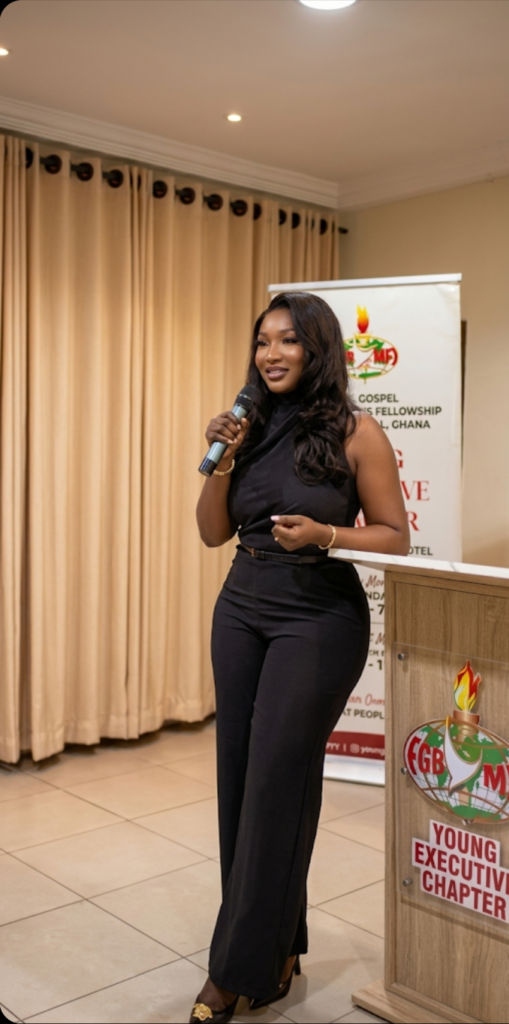
https://www.instagram.com/styledbyaretha?igsh=ZjFrOW44d2N2aXpy
Akosua Owusuwaa: A Sparkle of Timeless Elegance
Step into the spotlight with Akosua Owusuwaa, who brings a radiant energy to every room in a wardrobe designed to sparkle and inspire. Drawing inspiration from creators who “bring beauty to life,” Akosua embodies a fusion of modern sophistication and luminous charm.
The Stylebyaretha Signature Jumpsuit
In image.png and its subsequent enhancements, Akosua showcases a stunning all-black ensemble from Stylebyaretha that redefines precision tailoring.
- Precision & Shape: The outfit features a high-neck, sleeveless bodice with a sophisticated drape that accentuates the shoulders. A thin, minimalist belt cinches the waist, highlighting a sculpted silhouette and celebrating her natural hips with effortless grace.
- Timeless Creativity: The wide-leg trousers provide a continuous, fluid line that suggests height and movement, proving that true “sparkle” comes from the confidence of a perfectly fitted garment.
- The Details: Subtle gold accents in her jewelry and the iconic gold hardware on her pointed-toe heels add just the right amount of shimmer to catch the light.
Fit for the Corporate Office
This ensemble is the ultimate choice for the corporate executive. It strikes the perfect balance between professional authority and creative flair.
- Authority: The monochromatic black palette exudes power and reliability during presentations.
- Comfort: Whether standing at a podium or seated in a blue velvet executive chair with legs crossed, the fabric maintains its crisp, tailored appearance.
- Versatility: It transitions seamlessly from a high-stakes board meeting to an evening networking event, ensuring you bring beauty—and business—to life all the time.