








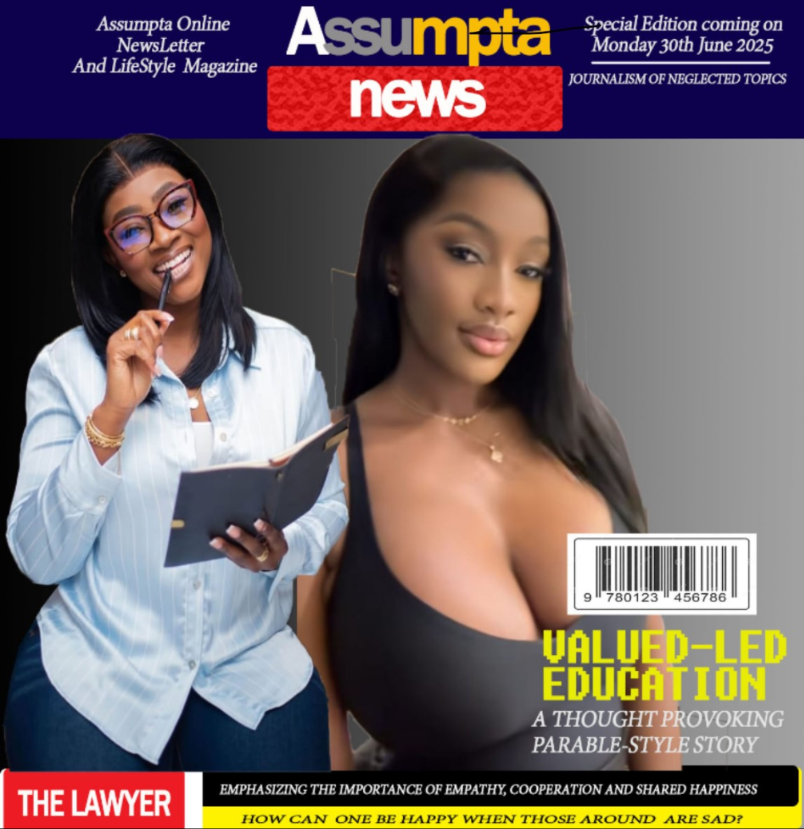
ASSUMPTA ONLINE NEWS MAGAZINE
Newsletter and Lifestyle Publication
🌟 SPECIAL EDITION
Coming Monday, 30th June 2025
📰 Newsletter Header
- Title: Assumpta Newsletter
Date: Monday, 30th - Top Right Corner:
Tagline: Value-Led Education
ADVERTISEMENT







https://www.instagram.com/hairsenta?igsh=MXAzOThhNGZ0Nm15dQ==
💇🏽♀️ HAIR SENTA – Beauty Begins Here!
Talk to us at Hair Senta and join our amazing community of beauty lovers!
We’re not just selling hair—we’re shaping confidence, one strand at a time.
🛍️ Shopping & Retail | Trademarked Company
🌍 Shipping the finest 100% Human Hair Extensions from Ghana to the world.
📞 Contact Us:
+233 054 435 4455 / 024 862 9769
📍 Visit Us: 24 Jungle Avenue, Accra, Ghana
🔗 www.hairsenta.com
✨ Whether you’re a stylist, salon owner, or beauty enthusiast—Hair Senta is your trusted destination for premium quality, reliable service, and global shipping.
Elevate your look. Define your style. Choose Hair Senta.
Main Article Title:
EXCLUSIVE
📖 Feature Story:
This edition shares a thought-provoking, parable-style story, emphasizing the importance of empathy, cooperation, and shared happiness.
“A man pointed to a large basket of fruit and told a group of children that the first to reach the basket could have it all.”
The children looked at each other, held hands, and ran to the basket together to share.
This moment highlights a powerful message of unity and selflessness over individual gain.
The man, puzzled, asked them: “Why didn’t the fastest, biggest, or strongest just go and take it all?”
The children, now puzzled themselves, responded: “How can one be happy when those around are sad?”
This story urges us to reflect on how much better our world could be if more people thought like these children.

Message from Ms. Assumpta Gahutu
“As a principal and educator at Babies and Toddlers Daycare, I believe that educators—especially across Africa and Ghana—hold an extraordinary responsibility. We are in a unique position to influence and shape the future of our society. This is not only a responsibility but also a profound privilege.”
“What other group of people has a greater opportunity to impact the future of our global community?”
Featured Personality
- Name: Assumpta Gahutu
The central figure of this issue, she is likely the author and inspiration behind the feature story and editorial message.

📱 Additional Details
Values-Led Education — Introduction
How can we ensure that the education we provide is so clearly values-driven that every learner who leaves our classrooms becomes a builder rather than a destroyer?
For too long the sole measure of schooling has been economic usefulness. Yes, citizens must be able to “earn their bread,” and yes, every society needs contributors rather than freeloaders — but it is a dangerous leap to assume that, simply because poverty is harmful, every form of wealth is desirable. If my wealth-building tramples your rights or diminishes your humanity, it is not acceptable.
Across much of Africa we have witnessed a troubling pattern: as individuals climb the educational ladder, they often escape deprivation only by passing that same deprivation on to someone else. If schooling merely propels us from the ranks of the oppressed into the ranks of the oppressor, we have not achieved true education; we have simply accumulated credentials.
Whether we teach science or the arts, in primary, secondary, or tertiary settings — in Ghana, Namibia, South Africa, or anywhere else — our calling is to help learners channel their knowledge and skills toward positive ends. Only then can we claim to be nurturing fully human beings.
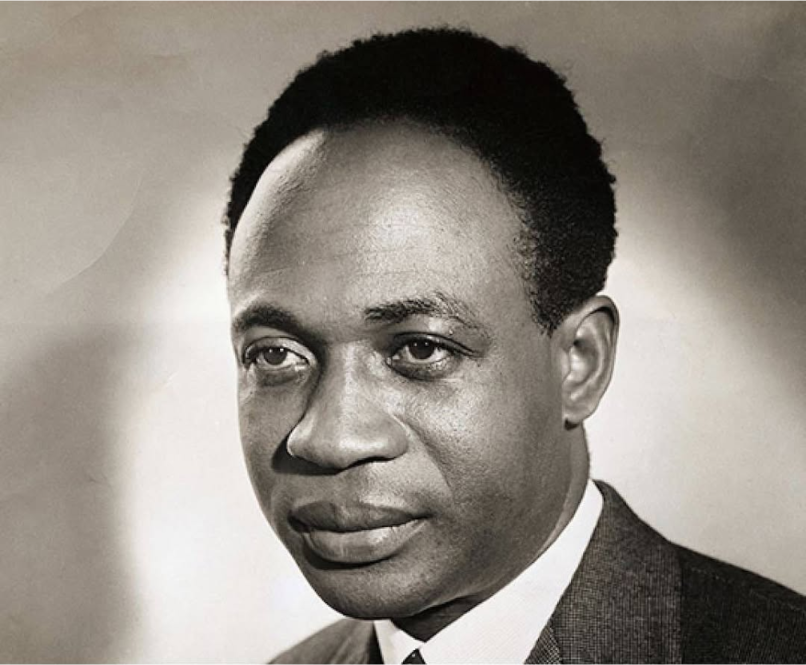
Kwame Nkrumah reminded us that oppressors are themselves dehumanised by the very act of oppressing. Our task, therefore, is to make education humanising for all. This is possible only when we deliberately foster:
- Critical thinking — the habit of questioning assumptions and power structures.
- Empathy — the ability to feel with and for others.
- Self-reflexivity — an honest appraisal of how one’s actions affect the wider community.
- Community spirit — practical opportunities to co-create solutions and share success.
If success is defined merely by dollar signs, cars, houses, and possessions, the method of achievement becomes irrelevant — and people inevitably get hurt. But if success is measured by the number of lives we uplift, we discover a far nobler reason to pursue excellence in our academic work.
This is the ethos that must guide a genuinely values-led education.
From Gold Coast to Ghana
Kwame Nkrumah’s Values-Led Vision – and Why It Still Matters Today
1. A Colonial Classroom
Before 1957 the Gold Coast was a British-run export economy whose schools were designed chiefly to supply clerks, miners, and soldiers for an imperial system. Mission and government curriculum emphazises obedience, literacy for administrative tasks, and loyalty to the Crown. Genuine civic or critical education was rare.
2. Nkrumah’s Educational Reset
When Kwame Nkrumah and the Convention People’s Party won the 1951 election, they declared that independence must be “political, economic, and mental.” Between 1951-1966 his government:
- Launched the Accelerated Development Plan for Education (free, compulsory primary schooling and rapid teacher-training).
- Opened the University of Cape Coast and the Kwame Nkrumah University of Science & Technology, plus hundreds of technical and civic-education centres.
- Required “ideological orientation” courses that blended Pan-Africanism, critical thinking, and community service.
Nkrumah argued that wealth unmoored from social responsibility would simply reproduce colonial patterns of domination.
3. The Counter-Coup and a Return to Neo-Colonial Logic
In 1966 a military-civil coalition—supported by foreign interests and locally trained elites—overthrew Nkrumah. The new leaders cut funding for civic programmes, revived import-dependent development, and re-entrenched an economic model in which personal advancement often meant perpetuating someone else’s deprivation.
4. A Modern Echo: The Pwalugu Multipurpose Dam – A Betrayal of Northern Hope
In 2019, the Pwalugu Multipurpose Dam was introduced as a transformative project to serve Ghana’s Upper East Region — one of the most underserved areas in the country. It promised hydropower, irrigation for 25,000 hectares, and a solar plant to spark regional development, create jobs, and ensure food and energy security. It was billed as a historic step toward equity and regional justice.
But what followed was a tragedy of mismanagement and missed priorities.
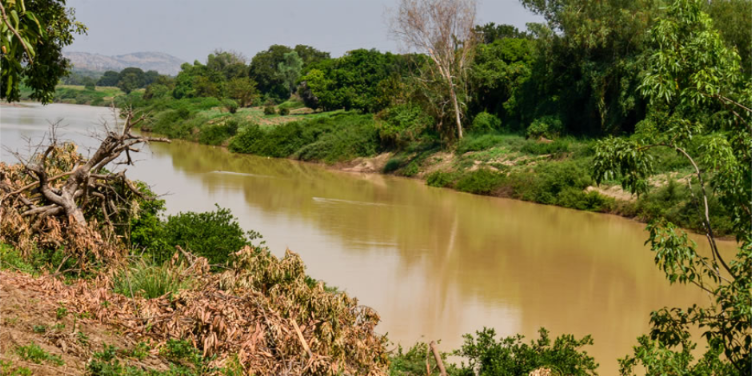
Though nearly $11.9 million was disbursed to PowerChina (the state-owned contractor), the site remains mostly untouched, with no significant progress made. No Environmental Impact Assessment (EIA) was conducted. No technical groundwork was completed. Just a few blocks and cleared land mark the site where hope once stood.
And who was at the economic helm of the government during this time?
Dr. Mahamudu Bawumia — a proud son of the North and then Vice President of Ghana, entrusted with leading the Economic Management Team.
Instead of ensuring the dam became a lifeline for his own people — people whose daily lives are marked by drought, food insecurity, and infrastructure neglect — Dr. Bawumia aligned himself with the same oppressive development model that has failed Ghana for generations. He publicly endorsed the project, yet oversaw a system that let millions vanish while leaving the region in despair.
This is the bitter irony: a northern leader, entrusted with economic power, failed to deliver the most critical infrastructure for the North. In doing so, he joined forces — whether intentionally or passively — with a legacy of Western-style exploitation, where large-scale funding benefits the elite and bypasses the people.
Rather than dismantling this oppressive system, he enabled it, and in doing so, deepened the wound of betrayal.
4. A Modern Echo: The Pwalugu Multipurpose Dam Saga
| Aspect | Detail |
| Planned output | 60 MW hydro, 50 MW solar + irrigation for 25 000 ha |
| Location / launch | Pwalugu, Upper East Region – sod-cutting 2019 |
| Original cost | ≈ US $993 million |
| Funds already disbursed | US $11.9 million mobilisation fee (May 2024) |
| Visible work on site | Camp, fence & limited land clearing; MPs reported “two trips of sand and 48 blocks.” |
| Contractor | PowerChina (state-owned) |
| Accountability spotlight | Vice-President Dr Mahamudu Bawumia headed the Economic Management Team that approved funding. |
| Current action | Operation Recover All Loot (ORAL)—Mahama government probe, Feb 2025 |
Sources: Auditor-General summary & media reports
Despite a US $12 million outlay, no Environmental Impact Assessment was filed and core civil works never began. Defenders cite “contractual mobilisation,” but farmers and MPs decry the payment as emblematic of elite gain without community benefit
5. ORAL and the Fight to Reclaim Public Wealth
The new ORAL task-force estimates that up to US $20 billion in misappropriated funds—including the Pwalugu tranche—could be recovered if investigations succeed. Critics fear the drive will stall in the courts, but its scope demonstrates how far Ghana’s resource base could stretch if stewarded by Nkrumah-style public-spirited ethics.
6. Reflections: Measuring Success the Nkrumah Way
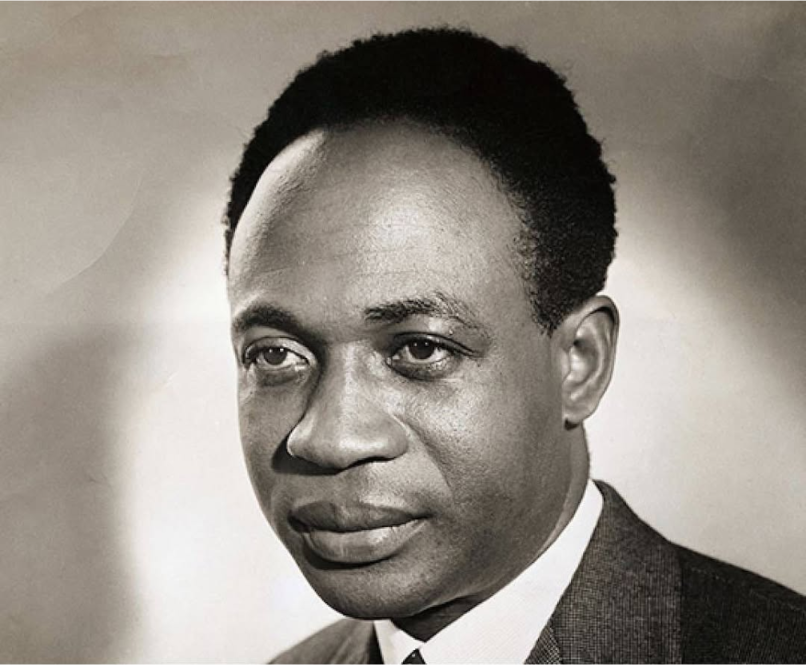
“If my wealth acquisition jeopardises your rights and humanity, it is not OK.”
Nkrumah saw oppression as dehumanising both the oppressed and the oppressor. Today’s scandals show how quickly highly educated citizens can reproduce colonial logics when success is defined only by salaries, cars, and gated estates.
A genuinely values-led education must therefore cultivate:
- Critical Thinking – interrogating contracts, power, and data.
- Empathy – valuing the farmer who needs the dam as much as the financier who funds it.
- Self-Reflexivity – asking how one’s decisions ripple through the community.
- Communal Spirit – designing projects that lift the many, not the few.
When young leaders pursue people-centred excellence, dams irrigate fields instead of newspaper headlines, and independence matures from a flag-raising event into a daily practice of shared prosperity.
7. A Call to Action
Educators, journalists, engineers, and public servants all inherit Nkrumah’s unfinished mandate: build, don’t destroy. Make every classroom, newsroom, lecture hall, and boardroom an arena for nurturing citizens who measure success by the number of lives they enrich.
If we fail, we merely “jump camp” from being oppressed to becoming oppressors.
If we succeed, we complete the liberation that began on the Gold Coast shores almost seven decades ago.
Cookieteegh (Host):


Good morning, good afternoon, and good evening to our global audience! I’m Cookieteegh—journalist, broadcaster, and lifelong book-lover—welcoming you to a very special conversation on values-led education, leadership, and nation-building.
With me is an educator whose name is fast becoming synonymous with purpose-driven learning: Ms. Assumpta Gahutu. She is the co-founder and editor-in-chief of Assumpta Online News Magazine—a newsletter and lifestyle publication that blends rigorous reporting with community-centred action. Beyond publishing, she serves as principal of Babies & Toddlers Daycare in Accra, where her day job is shaping learners at the most formative stage of life.

Cookieteegh:
Assumpta, a warm welcome, and hearty congratulations on co-founding this new platform. Your Special Edition, dated Monday 30 June 2025, carries the bold header “Value-Led Education.” It’s already sparking conversations across Ghanaian and Pan-African media. How does it feel?

Ms. Assumpta Gahutu:
Thank you, Cookieteegh, and greetings to everyone tuning in from around the world. It feels both humbling and exhilarating. We launched the magazine because we believe stories can be catalysts for personal and societal change. Seeing readers—from Accra to Amsterdam—quote our pieces online is a reminder that good ideas travel.

Cookieteegh:
Let’s dive straight into the Feature Story: a parable in which children choose to share a basket of fruit instead of racing one another. Why open a newsletter with such a simple tale?

Assumpta:
Precisely because it’s simple. In classrooms I see toddlers instinctively reach for fairness long before adults teach them otherwise. The parable lets us ask: At what point does society nudge people away from empathy toward ruthless competition? Starting with a children’s story disarms readers and invites self-reflection.

Cookieteegh:
Your editorial note says, “As educators—especially across Africa and Ghana—we hold an extraordinary responsibility… and privilege.” Could you elaborate? Many think of “leadership training” as an elective module taught in college, whereas you’re talking about day-to-day modelling.

Assumpta:
Exactly. Leadership is not a stand-alone course; it’s a lived curriculum. When a six-year-old watches me wait my turn, share resources, or apologise, that’s leadership education in action. If young Africans are to lead by example, the example must be visible from nursery onward.
Part 1 — Values-Led Education

Cookieteegh:
You open with a hard question: “How can we ensure that every learner becomes a builder rather than a destroyer?” Why start there?

Assumpta:
Because our continent holds both the raw talent to build and the structural pain that tempts some to destroy. Unless we make values explicit—kindness, justice, communal uplift—education can produce technocrats who accelerate inequality.

Cookieteegh:
You critique schooling that measures success purely in economic terms. Where do you draw the line between healthy ambition and harmful wealth accumulation?

Assumpta:
Ambition becomes harmful the moment it violates another person’s dignity. If my profit rests on exploitative wages or environmental ruin, that profit is illegitimate. Wealth must be socially audited just as companies are financially audited.

Cookieteegh:
You describe a pattern where graduates “escape deprivation only by passing it on.” How does that happen?

Assumpta:
Picture a civil-service post that offers bribes as a perk. A graduate from a poor village may rationalise accepting bribes because “I suffered; now it’s my turn.” That flips oppression onto the next person rather than dismantling the structure.

Cookieteegh:
So, your proposed antidote is a quartet of competencies—Critical Thinking, Empathy, Self-Reflexivity, and Community Spirit. Could we unpack them one by one?

- Critical Thinking
Assumpta: Teach learners to question why policies exist. If a textbook glorifies colonial “development,” students should ask, “Development for whom?” - Empathy
Assumpta: Embed service projects. A student who spends Saturdays tutoring in an under-resourced school starts to feel statistics as human stories. - Self-Reflexivity
Assumpta: Encourage journals and peer feedback. When learners track how their actions ripple outward, they modify behaviour preemptively. - Community Spirit
Assumpta: Group assessments where marks rise or fall together foster shared accountability—mirroring how societies actually function.
Part 2 — From Gold Coast to Ghana

Cookieteegh:
Your magazine then travels back to colonial classrooms of the Gold Coast. Why the history lesson?

Assumpta:
Because today’s inequities didn’t appear overnight. British curricula trained clerks to keep the colonial machine running. If we ignore that lineage, we misdiagnose present failures.
Cookieteegh:
Enter Kwame Nkrumah, who insisted independence be “political, economic, and mental.” How did his Accelerated Development Plan embody values-led schooling?

Assumpta:
It was free, compulsory, and community-oriented. Teacher-training colleges sprang up next to irrigation schemes so that learning served immediate local needs. Ideological education wasn’t brainwashing; it was a crash course in civic responsibility.

Cookieteegh:
Yet the 1966 coup reversed many gains. You call this a “return to neo-colonial logic.” Paint that picture.

Assumpta:
Funding for civic programs was slashed. Import-heavy policies returned, and an elite class prospered by acting as intermediaries for foreign interests. The result: personal advancement resumed its colonial pattern—benefiting the few at the expense of the many.
Part 3 — The Pwalugu Dam: A Case Study in Betrayal
Cookieteegh:
Fast-forward to 2019 and the Pwalugu Multipurpose Dam. On paper it promised hydropower, irrigation, and solar energy for Ghana’s north. What went wrong?

Assumpta:
Almost everything after the ribbon-cutting. US $11.9 million was paid out, yet no Environmental Impact Assessment, no substantive groundwork. The site sits barren—symbolic blocks instead of concrete progress.
Cookieteegh:
You don’t shy away from naming Dr. Mahamudu Bawumia, then Vice-President and head of the Economic Management Team. Some listeners may ask: isn’t that pointing fingers?

Assumpta:
Accountability isn’t finger-pointing; it’s stewardship. Dr. Bawumia, a son of the North, had both moral and constitutional duty to protect northern interests. By endorsing an opaque contract, he perpetuated the very domination Nkrumah warned against.
Cookieteegh:
The new administration has launched Operation Recover All Loot (ORAL) to trace missing funds. Are you hopeful?

Assumpta:
Cautiously. ORAL estimates up to US $20 billion could be reclaimed, but without judicial independence it risks becoming political theatre. Hope lies in sustained public scrutiny and a values-literate citizenry demanding results.
Part 4 — Measuring Success the Nkrumah Way
Cookieteegh:
Your favourite Nkrumah quote is, “If my wealth acquisition jeopardises your rights and humanity, it is not OK.” How do we mainstream that ethic?

Assumpta:
Rewrite success metrics. Universities could add Social Impact Credits to degree requirements. Corporations could publish Community Prosperity Reports alongside annual profits. When reputation hinges on humanitarian contribution, behaviour shifts.
Cookieteegh:
In closing, what single action can a listener take tomorrow to advance values-led education?

Assumpta:
Mentor one young person—not to help them beat the system, but to help them better it. If every professional did that, we’d crowd-source a revolution of kindness.
Cookieteegh:
Assumpta Gahutu, thank you. Your insights remind us that liberation is not a moment but a mindset—and that classrooms, boardrooms, and newsrooms can all be training grounds for builders, not destroyers.
To our audience: look out for the Special Edition of Assumpta Online News Magazine on Monday 30 June 2025. Scan the QR code, read the parable, and ask yourself: How can I be one of the children who chooses to share the fruit?
Until next time, this is Cookieteegh saying, stay curious, stay compassionate, and keep building.
SGI-Our Shared Humanity.


https://www.instagram.com/delish_bakerygh?igsh=MW5ic2c0NnR5cHBwZQ==


https://www.instagram.com/flourishheights?igsh=cTExenQ3bnptZGgx





https://www.instagram.com/serwaaamihere?igsh=N216N3hzeTE3eHho


https://www.instagram.com/laurenhautecouture?igsh=MWxzNXN1Ym5nZ3o3Mg==


