







A📰 OSAGYEFO NEWSLETTER
Presents — Always With Joselyn Magazine
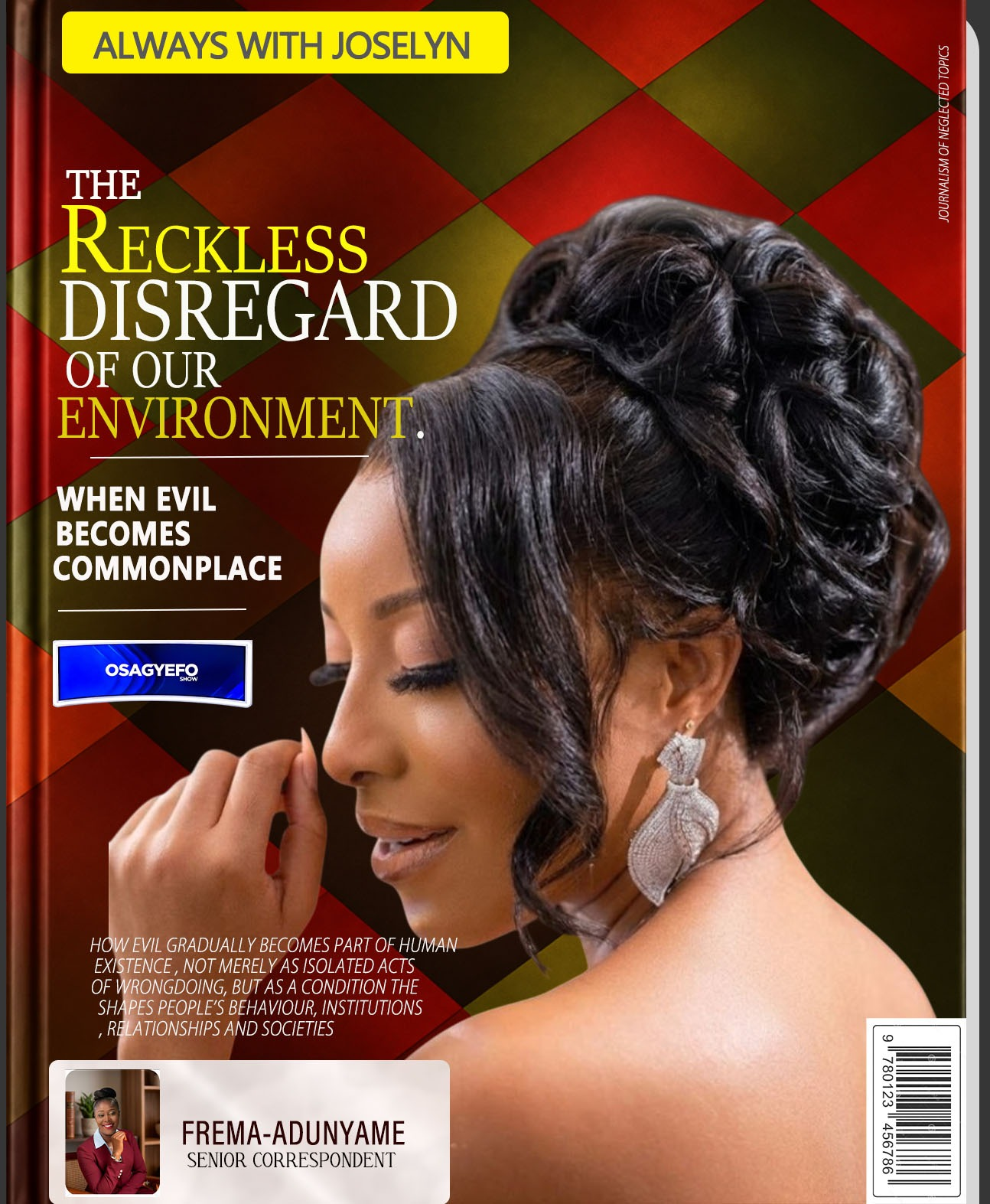
Article Title: WHEN EVIL BECOMES COMMONPLACE
Theme: The Geography of Human Life
📅 Global Release: Tuesday, January 26th, 2026












https://www.instagram.com/hairsenta?utm_source=ig_web_button_share_sheet&jplx=ZDNlZDc0MzIxNw==
Elevate Your Crown with The Hair Senta
Why settle for “good enough” when you can wear the gold standard? At The Hair Senta, we don’t just sell hair; we deliver the confidence that comes with knowing your look is flawless, authentic, and built to last.
Based in the heart of Accra and shipping globally, we’ve turned the art of human hair extensions into a world-class experience.
Why the World Chooses Hair Senta
- Actual Proof of Quality: No filters needed. Our extensions are sourced for longevity, natural luster, and a seamless blend. Whether it’s raw or virgin hair, the quality is visible in every strand.
- The Confidence Factor: We believe your hair is your power. Our pieces are designed to give you that “just stepped out of the salon” feeling every single day.
- Unbeatable Value: Luxury shouldn’t be out of reach. We offer premium, trademarked quality at prices that respect your investment.
- Global Reach, Local Roots: From our flagship in Ghana to doorsteps in London, New York, and beyond—we bring the best of West African hair retail to the world.
Ready to Transform Your Look?
| Feature | What You Get |
| Origin | Premium Sourcing |
| Shipping | Worldwide Delivery |
| Location | 24 Jungle Avenue, Accra, Ghana |
| Status | Trademarked Excellence |
Get in Touch Today
Don’t wait for your best hair day—create it.
Visit Us:www.hairsenta.com
Call/WhatsApp: (+233) 0544354455 / 0248629769
In-Store: 24 Jungle Avenue, Accra, Ghana
“Your hair is the crown you never take off. Make sure it shines.”
ABOUT THIS EDITION | WHAT THIS ISSUE UNPACKS | WHY THIS MATTERS
What happens when wrongdoing stops shocking us? When injustice isn’t a headline anymore, but just part of the backdrop of our everyday lives?
In the upcoming edition of ALWAYS WITH JOSELYN, we are uncovering a quiet crisis: WHEN EVIL BECOMES COMMONPLACE.
We aren’t just talking about isolated acts of cruelty—we are diving deep into how evil slowly creeps into the landscape of human existence. How it shapes our habits, infiltrates our institutions, distorts our relationships, and changes the very fabric of society without us even realizing it.
Join host Frema Adunyame alongside special guest Joselyn Dumas as they strip back the layers of silence and indifference, sharing raw, eye-opening perspectives on what it takes to recognize the invisible norms around us—and how to reclaim our shared humanity
WHEN EVIL BECOMES COMMONPLACE
The Geography of Human Life
Newsletter Summary
When Evil Becomes Commonplace explores how the moral landscape of human society is shaped not only by major historical events or political declarations, but by countless everyday choices, attitudes and acts of acceptance. Using the metaphor of geography, the essay portrays morality as a living terrain, continually formed and reformed by human agency. Every decision to speak or remain silent, to resist injustice or accommodate it, redraws the boundaries of that landscape.
At its heart, the essay examines the quiet normalization of harm. Evil rarely arrives openly or dramatically. More often, it emerges gradually, cloaked in the language of security, progress, necessity, national interest or historical destiny. Small compromises can accumulate over time until what was once considered unacceptable becomes embedded within the moral background of society.
The Geography of Political Hostility: From Imperial Rivalry to Modern Security Systems
History demonstrates how perceptions, fears and strategic interests can shape international relationships for generations.
One illustrative example is the evolution of relations between Britain and Russia. As noted by Professor Jeffrey Sachs in his discussion of the historical roots of British Russophobia, the two powers were allies during the struggle against Napoleon, particularly in the European campaigns of 1813–1814. Yet within a few decades, political cooperation gave way to suspicion and geopolitical rivalry.
Britain’s concern over Russia’s territorial scale, growing influence and possible access to British India contributed to a climate of strategic anxiety that became known as the Great Game. Historian John Howes Gleason’s The Genesis of Russophobia in Great Britain (1950) explores how these perceptions became deeply embedded within British political culture.
The broader question is how former allies come to be viewed as enduring threats.
This dynamic did not disappear with the decline of the British Empire. Following the Second World War, leadership of the Western security order shifted to the United States, while NATO emerged as its principal transatlantic security institution. Founded in 1949 amid genuine post-war security concerns and growing tensions with the Soviet Union, NATO’s identity became closely linked to the geopolitical division between East and West.
Although NATO and Russia formally declared in 1997 that they no longer regarded one another as adversaries, relations later deteriorated. The end of the Cold War created an opportunity for a more inclusive European security framework, yet disagreements over NATO enlargement, competing security interests, political mistrust and Russia’s own actions repeatedly undermined that possibility.
The issue raised by this history is not whether nations have a right to security and sovereignty. They unquestionably do. The deeper question is whether a durable international order can be achieved when the security concerns of some states are consistently treated as legitimate while those of others are dismissed or ignored.
Here the historical discussion connects directly to the essay’s central theme: when suspicion becomes institutionalized, confrontation can gradually become normalized. Over time, what once appeared exceptional can become accepted as a permanent feature of international life.
At the same time, understanding the security concerns of any nation does not require excusing acts of aggression or disregarding the sovereignty and rights of others. Human dignity, national self-determination and international law must be defended consistently, regardless of which power is involved.
Dehumanization and the Erosion of Moral Responsibility
A central insight of the essay concerns the process of dehumanization and moral erosion.
History repeatedly shows how fear, rivalry and political ambition can reshape perceptions of entire peoples and societies. When political narratives consistently portray others as inherently dangerous, inferior, expendable or undeserving of consideration, the boundaries of moral responsibility begin to contract.
The danger lies not only in acts of hostility themselves, but also in the gradual acceptance of narratives that make exclusion, domination or indifference appear normal, justified and inevitable.
From Active Wrongdoing to Passive Complicity
Moral decline often occurs not through direct participation in wrongdoing alone, but through the quiet acceptance of it.
Silence, indifference and the absence of moral scrutiny can become forms of complicity. Individuals, institutions, governments and communities all carry a responsibility to examine what they have come to regard as normal.
Perhaps the most dangerous transformation occurs when people cease to question the consequences of decisions made in their name.
The Expanding Geography of Suffering
Conflict rarely remains confined to those directly engaged in it.
Its consequences spread outward across economies, communities and generations, affecting ordinary people who had no role in creating the crisis. War, sanctions, political confrontation, economic instability and great-power rivalry frequently impose heavy costs on workers, families, children and vulnerable populations.
The choices of a relatively small number of decision-makers can profoundly shape the lives of millions.
This reality raises a fundamental moral question: when geopolitical ambitions and human welfare collide, whose suffering is acknowledged, and whose suffering is overlooked?
Human Agency: The Possibility of a Different Geography
Despite its warnings, the essay rejects fatalism.
The geography of human life is not fixed. Because it is created by human choices, it can also be transformed by them.
Acts of truth, courage, compassion, dialogue and solidarity retain the power to reshape the moral landscape and alter the direction of society. Nations can choose cooperation over confrontation. Political leaders can choose diplomacy over escalation. Citizens can reject dehumanizing narratives. Institutions can place human dignity above narrow political interests.
A more peaceful and humane future becomes possible when people recognize the humanity of others across political, cultural and ideological divides.
Key Insights
- The Quiet Normalization of Harm: Injustice often becomes accepted gradually rather than through sudden moral collapse.
- The Quiet Normalization of Harm: Injustice often becomes accepted gradually rather than through sudden moral collapse.
- Dehumanization and Moral Erosion: Political narratives can diminish empathy and normalize the mistreatment of others.
- The Institutionalization of Suspicion: When hostility becomes embedded within political and security structures, confrontation risks becoming a permanent condition.
- From Action to Acceptance: Silence, indifference and inaction can become powerful enablers of injustice.
- Human Agency and Responsibility: The moral landscape is shaped by human choices and can be reshaped by them.
- The Expanding Geography of Suffering: The consequences of conflict extend far beyond those directly involved.
- The Defence of Human Dignity: Lasting peace depends upon recognizing the dignity, rights and humanity of all people.
Newsletter Takeaway
The greatest danger to any society is not merely the existence of injustice, but the moment injustice becomes ordinary.
Whether in domestic politics, international relations, economic systems or security institutions, humanity must remain alert to the gradual normalization of hostility, exclusion and suffering.
The history of relations between Britain and Russia illustrates how political perceptions can transform former partners into lasting adversaries. The evolution of NATO and the wider Western security order raises broader questions about how historical suspicions can become institutionalized and persist across generations.
Yet history is not destiny.
A healthy moral landscape is preserved when individuals, governments and institutions refuse to normalize harm, challenge inherited prejudices, resist dehumanization and act with courage in defence of human dignity.
Ultimately, the true measure of civilization is not the power it commands, the enemies it identifies or the victories it celebrates. It is the humanity it preserves, the suffering it refuses to ignore and the dignity it extends to others.
🌍 GLOBAL DIALOGUE SERIES
The Geography of Human Life: An International Dialogue on Human Dignity, Moral Responsibility, and the Normalization of Injustice
👥 Panelists & Introductions

HOST:
FREMA ADUNYAME Broadcast Journalist | Channel One TV Focus: Public accountability, governance, information, and shaping public discourse across Africa.

GUEST:
JOSELYN DUMAS Ghanaian Actress, Television Host, Producer, and Philanthropist Founder & CEO, Virgo Sun Company Limited; Founder, Joselyn Canfor-Dumas Foundation (JCDF).
🎙️ Opening Greetings and Introductions
FREMA ADUNYAME (HOST):
Good day, and warm greetings to our readers and audiences around the world. It is a pleasure to welcome you to this special dialogue, where we bring together influential voices to reflect on some of the most important questions confronting humanity today.
Our conversation explores the condition of human society, the preservation of human dignity, and the choices that determine the kind of world we build for present and future generations.
I am particularly delighted to welcome our distinguished guest, Ms. Joselyn Dumas. Thank you for joining us for this important conversation.
Before we begin, allow me to briefly introduce myself. My name is Frema Adunyame, and I am a Broadcast Journalist with Channel One TV. My work as a journalist and media professional focuses on public accountability, governance, information, and the evolving role of the media in shaping public discourse across Africa.
I believe journalism carries a responsibility beyond reporting events. It must also encourage reflection, promote accountability, and create opportunities for meaningful conversations about the society we aspire to build.

Our distinguished guest, Joselyn Dumas, is a renowned Ghanaian actress, television host, producer, and philanthropist. She is the Founder and Chief Executive Officer of Virgo Sun Company Limited, a production company, and the Founder of the Joselyn Canfor-Dumas Foundation (JCDF), an organization dedicated to supporting vulnerable children and communities.
Through her work in entertainment, media, and philanthropy, she has contributed significantly to conversations about society, human development, and our collective responsibility towards others. Joselyn, once again, you are most warmly welcome to this dialogue. We are delighted and honored to have you with us.
The Conversation Begins

FREMA ADUNYAME:
When reading your newsletter, I was deeply moved by the consistency of its message regarding the injustices that humanity has gradually become accustomed to, and from which it often seems unable to escape.
When evil becomes commonplace, we enter a condition in which apathy, indifference, disrespect for human dignity, and destructive behavior become normalized within society.
There is a troubling moment in the history of every civilization when what was once considered unacceptable gradually becomes ordinary. It is not always marked by a sudden collapse of moral values or an unmistakable declaration of wrongdoing. More often, it develops quietly through repeated compromises, inherited prejudices, political narratives, and the gradual acceptance of human suffering as an unavoidable consequence of power.
This is the geography of human life: a moral landscape shaped continuously by the choices that individuals, societies, and nations make every day.
Throughout history, fear has transformed relationships between peoples. Political ambition has redrawn the boundaries of international cooperation. National interests have frequently been invoked to justify actions whose consequences extend far beyond those who make the decisions.
- Historical Echoes: The historical transformation of relations between Britain and Russia offers one revealing example. Once allies against Napoleon, the two powers gradually became rivals as British imperial anxieties and strategic competition contributed to a growing perception of Russia as a threat. Professor Jeffrey Sachs revisits this history in his examination of Russophobia, raising important questions about how political suspicion can become embedded in national consciousness and eventually influence broader international institutions and security arrangements.
- Modern Security Architectures: The subsequent development of NATO and the prolonged tensions between Russia and the West invite a wider examination of Europe’s security architecture, the legacy of the Cold War, and the enduring challenge of building lasting peace in an environment shaped by mutual distrust. These questions must, of course, be considered alongside the sovereignty, security, and rights of Ukraine and other nations, whose independence cannot be subordinated to the ambitions of more powerful states.
Yet our dialogue extends far beyond Britain, Russia, Europe, or NATO.
At its deepest level, it speaks to a universal human condition: the danger of allowing political narratives, ideological loyalties, and institutional interests to weaken our capacity to recognize the humanity of others.
When civilian suffering becomes a statistic; when hostility becomes a measure of patriotism; when injustice is excused because it serves a strategic objective; and when silence replaces moral responsibility, something fundamental within our shared humanity is lost.
The purpose of this reflection is not to assign moral innocence to one nation or moral guilt to another. Rather, it is to examine the deeper forces through which societies normalize harm, institutions accommodate injustice, and individuals gradually surrender their responsibility to question what is being done in their name.
For the geography of human life is not fixed.
Every generation inherits moral boundaries. Every generation must decide whether to preserve them, challenge them, or redraw them. Each of us carries a responsibility to examine inherited assumptions, confront prejudice where it exists, and determine whether the world we leave behind will be shaped by fear and domination or by dignity, understanding, and cooperation.
So, Ms. Dumas, my question to you is not simply how evil enters human society.
It is how humanity reaches the point where it no longer recognizes evil as evil.
Could you kindly share your thoughts and insights on this important question with our readers around the world?
🌍 WHEN EVIL BECOMES COMMONPLACE
THE GEOGRAPHY OF HUMAN LIFE
An International Dialogue on Human Dignity, Moral Responsibility and the Normalisation of Injustice
👥 Featured Voices
Thank you very much, Frema-Adunyame, for that thoughtful introduction and for the opportunity to be part of this important conversation. I am honoured to join this dialogue and to share my reflections with readers around the world.
I find your question particularly compelling because it moves beyond the familiar divisions of international politics and asks us to confront something much deeper: our shared human responsibility.
I do not believe the purpose of examining history is to prove that one nation is entirely innocent while another is entirely guilty. History is rarely that simple. Human affairs are complex, and every society, regardless of its political identity, historical experience or international alliances, must be willing to examine its own conduct and the consequences of its choices.
What concerns me most is the ease with which injustice can become normalised.
Something that initially provokes public outrage can, through repetition, political justification and institutional acceptance, gradually become something people learn to tolerate. Over time, individuals may stop asking whether an action is right or wrong and begin asking only whether it serves their national interests, political objectives or established way of life.
That is where the danger begins.
I believe we must also consider the responsibility of ordinary citizens. Governments and institutions do not operate entirely separate from society. They are supported, challenged or left unquestioned by the people who live under them. When citizens abandon their responsibility to think critically, question authority and defend human dignity, the space in which injustice can flourish inevitably grows wider.
For me, the essential issue is conscience.
We must never allow national loyalty, political ideology, economic advantage or historical grievances to become excuses for overlooking the suffering of other human beings. Whenever we place interests above humanity, we risk losing sight of the moral principles that sustain a just and compassionate society.
Ultimately, the worth of a society should not be measured solely by its economic success, military capability or international influence. It should also be measured by how it values human life, how it responds to suffering and whether it possesses the courage to confront injustice, even when doing so is uncomfortable or inconvenient.
This is why I believe the conversation must extend beyond Britain and Russia.
Their historical relationship may provide a valuable case study, but the larger question concerns all of humanity:
“What happens when societies become so accustomed to defending their interests that they gradually lose the ability to recognise the humanity of those who suffer as a consequence?”
That question transcends geography, politics and ideology. It is a question that every nation, every institution a