








Presents “MzGee” with Tsasi. A Special edition coming on Thursday, 25th April, 2024 at: assumptagh.live/
African Stream : Journalism Of Neglected Topics;
Title: “THE CONCEPT OF COURAGE“
Translation Available :
Published: April 30, 2024:
Online Digital News Magazine;
EXCLUSIVE; Does the phrase describe a confrontation between antagonistic individuals? Or rather our internal spiritual struggle which is the reality of our lives;
MzGee: Non as Gloria Akpene Nyarku-Acquah is a Ghanaian media personality, journalist and broadcaster. She is recognized for her engaging presentation style and insightful reporting. Her approach is thorough, combining research with personal insights to provide a comprehensive understanding of topics.



REVIEW: “The Concept of Courage” explores the multifaceted nature of bravery, delving into its psychological, philosophical, and cultural dimensions. Through poignant anecdotes, historical examples, and insightful analysis, the author skillfully navigates the complexities of courage, offering readers a deeper understanding of this fundamental human virtue. Whether examining acts of heroism on the battlefield or the everyday courage displayed in facing personal challenges, this book serves as a thought-provoking exploration of what it means to be truly courageous in a world filled with uncertainty and adversity. With its engaging prose and thought-provoking reflections, “The Concept of Courage” is a must-read for anyone seeking inspiration and insight into the human capacity for bravery.
:Becoming ‘a Person of Courage
The Concept of Courage: “ Becoming a courageous person. The Great Teacher Dengyo says: “Shakyamuni taught that the shallow is easy to embrace, but the profound is difficult. To discard the shallow and seek the profound is the way of a person of courage.” “On the Buddha’s Prophecy,” The Writings of Nichiren Daishonin, vol. 1, p. 402
“Courage Comes From Defeating Our Inner Weakness“
“To seek the profound” refers to our challenge in bravely standing as protagonists of peace and. We of the people of Ghana have steadfastly taken on this most difficult challenge in the present age. In these compassion-less and self-centred times, where people are only concerned about themselves and give little thought to others, Ghanaians have protested for government to fix the country and the happiness of their friends and families, prayed for the prosperity of their local communities and society, and wholeheartedly exerted themselves for peace.


Viewed in terms of human life, “shallow” means inertia, idleness and cowardice. Bravely defeating such inner weakness and seeking deep conviction and profound human greatness is “the way of a person of courage.” To seek the shallow or the profound this inner battle takes place in our hearts many times each day. Life, too, is a struggle. We need to defeat our weaknesses and courageously stand up, based on faith, with the resolve to continue growing in our lives, to keep moving forward and to be victorious in the challenges we encounter. When we live with such depth and meaning, we can become true winners in life. That is the purpose of our daily lives and faith of Ghanaians.
OVERVIEW :It’s fascinating to explore the concept of courage through the lens of inner strength and the pursuit of profound greatness. The idea of courage stemming from defeating our inner weaknesses resonates deeply, highlighting the ongoing battle within ourselves to rise above inertia, idleness, and cowardice. Ghanaians’ dedication to standing up for what they believe in and working towards the betterment of their communities exemplifies this courageous spirit. Through faith and resolve, they continue to navigate life’s struggles, striving for growth and victory in the face of challenges. This commitment to living with depth and meaning ultimately leads to true fulfilment and success.
The overview of “The Concept of Courage” provides a comprehensive look at the various facets of courage, from its historical roots to its contemporary manifestations. It delves into the psychology behind courageous behaviour, examining factors such as fear, motivation, and resilience. Additionally, the overview explores how courage is portrayed in literature, art, and popular culture, highlighting its enduring significance in human society. Through a combination of scholarly analysis and real-world examples, the overview sets the stage for a deeper exploration of courage and its role in shaping individual lives and collective experiences.
INTRODUCTION :
In this introduction to “Courage Means Win or Lose,” MzGee challenges the typical view of courage, suggesting it’s more about an inner spiritual battle than external clashes. By depicting courage as a peaceful stance towards life, she urges readers to rethink its importance beyond just conflict. MzGee emphasises the intricate essence of courage, stressing how it applies to our daily struggles and choices. Through her perspective, the introduction lays the groundwork for a profound examination of courage’s role as a catalyst for change in both our personal and external realms.

MzGee: In my perspective, the universe, our world, and our individual lives become arenas for an ongoing battle between hatred and compassion, destruction and creation. I see our task as a relentless pursuit of creating the utmost value, refusing to be vanquished or surrendering in the face of any challenges that come our way.

TSASI: MzGee, your perspective highlights the perpetual struggle between opposing forces in life and underscores the importance of perseverance and resilience in striving for positive change despite obstacles. It’s a powerful reminder of the ongoing journey toward creating a better world and living a meaningful life. The opposing forces you refer to are hatred versus compassion and destruction versus creation. These represent the dualities present in life, the negative and positive aspects that we encounter and must navigate in our journey towards personal growth and societal betterment.
Just as Ayorkor’s endeavours, a young girl filled with apprehension and doubt yet driven by a sense of justice and courage, battles her inner demons to draft a letter to her country’s president. Her poignant struggle epitomises the universal challenge we all face, to conquer our fears, doubts, and inertia, and take a stand for what is right, even amidst adversity and personal weakness. In her small act of bravery lies the potential to spark change and advocate for the happiness and well-being of those affected by the tragic consequences of their soldiers’ actions.

MzGee: “What were the actions of their soldiers?”

TSASI: The soldiers from Ayorkor’s country were engaging in campaigns to invade other territories, kill people, and seize their lands under the pretext of seeking warmer lands due to the cold conditions of their homeland. This aggressive expansionism was causing harm and suffering to the people of the invaded lands, prompting Ayorkor to muster her courage and write to the president to advocate for an end to these violent campaigns.

MzGee: “How did Ayorkor recognize and develop her courage to write the letter to the president?”

TSASI: “We can find courage in various aspects of Ayorkor’s endeavour. Ayorkor acknowledged the courage required for adventurous journeys and sporting excellence, but noted that this is only one facet of courage. The more pivotal form of courage is essential for daily living. It encompasses the determination to study diligently and build lasting, meaningful friendships. This kind of courage, referred to as perseverance, distinguishes Ayorkor’s life through her decision to take constructive action by writing a letter to the president to help save lives.”

MzGee: What is “True Courage”?

TSASI: True courage is the ability to confront fear, adversity, or danger despite feeling afraid or uncertain. It involves acting with bravery, determination, and resilience in the face of challenges, often for a greater good or principle. True Courage is none other than having compassion for others.
‘Faith Is the Ultimate Form of Courage’
On February 24, 1966, while Nkrumah was visiting Beijing, the army and police in Ghana seized power. Returning to West Africa, Nkrumah found asylum in Guinea, where he spent the remaining of his life working and advising other African countries. He died of cancer in Bucharest in 1972.
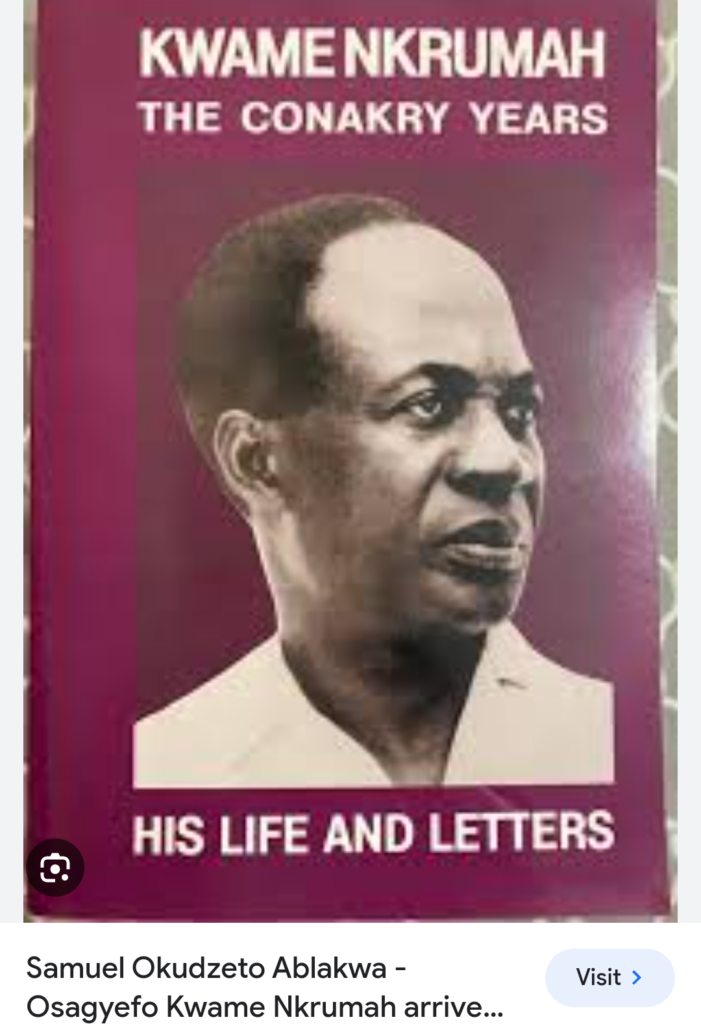
During his exile in Guinea, which was a Persecution, Nkrumah wrote “many letters proclaiming his vision of worldwide peace. In many of his letters, he proved the above quoted passage from the Great Teacher Dengyo of Japan: “To discard the shallow and seek the profound is the way [or heart] of a person of courage” (WND-1, 402). This is the essence of Kwame Nkrumah’s spirit.
What is the common trait of this great man who have lived truly noble and meaningful lives, whether celebrated or unheralded? It is the quality of courage, of the spirit that dares to take on difficulties, that seeks, chooses and is committed to leading a more profound life.

MzGee : What does courage look like in a real, daily life sort of way?

TSASI: “I will answer this last question, citing an example from Ayorkor’s courageous actions. In Ayorkor’s daily life, she manifested courage in various ways: writing a letter to the president to help save lives, speaking up for what is right, facing personal fears or insecurities. Ayorkor took the risk to pursue her goals and dreams, standing up against injustice and oppression, and showed kindness and empathy in challenging what the soldiers were doing. So courage is often found in small acts of bravery that may go unnoticed but make a significant difference in people’s lives.
Courage is also the strength to live our lives the right way. Similarly, if the leaders of Ayorkor’s country are blaming themselves for where they are born and raised, experiencing cold and much rain on their land making their lives unbearable, they don’t have to do horrible things by going and killing other people and taking their lands from them. Finding the guilty party for their problem did not help them become happy, strong soldiers who take responsibility for their own destiny.
Ayokor knows that killing others and taking their belongings from them limits their inherent potential to grow and change the misfortune they bring to themselves and the citizens of their country.
So this is what made it possible for Ayorkor to find the strength of courage or compassion, thinking what is the best for our country and for our soldiers to have peace. Or what can I do to contribute to my people’s happiness and make society better, and then working constructively towards that goal. That is the courage of Ayorkor for her love for humanity. Thinking as a mother what she can do for her children, or as a school teacher for her students, or how she can help and support her friends, this is the unpretentious courage of daily life.“

MzGee : On courage, your input has been invaluable, and I’m grateful for your thoughtful reflections. Thank you for adding depth and meaning to our discussion on this important topic.


