



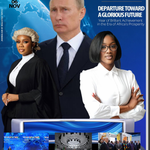




📰 Osagyefo — Newsweek Edition
Presents: Breaking News
Trump Peace Deal: Toward the Earliest Possible Realization of an Iran–America Peace Agreement
Promoting Dialogue from the Perspective of Our Common Humanity
📅 Special Edition Release: Friday, June 19, 2026
📍 Read exclusively at: assumptagh.live







https://www.instagram.com/hairsenta?igsh=MXAzOThhNGZ0Nm15dQ==
Confidence is the best outfit, but Great Hair is the ultimate accessory.
As a trademarked leader in global beauty, Hair Senta exports the world’s finest human hair extensions—straight from the heart of Accra to your doorstep.
At Hair Senta, we believe true beauty starts with how you are treated. Our commitment to excellence begins with a warm welcome and ends with a product designed to empower your every move.
The Hair Senta Standard: Quality. Courage. Confidence.
Experience the glow of authentic luxury. It’s more than a purchase; it’s an investment in your self-belief.
As Ghana’s premier trademarked hair brand, we provide the highest quality extensions with a service standard that makes you feel like royalty.
Premium Quality
Global Shipping
Empowering Results
The Standard is Excellence. The Feeling is Confidence.
📍 Contact & Connection
Visit Us: 24 Jungle Avenue, Accra
Call/WhatsApp: 0544354455 | 0248629769
Shop Online: www.hairsenta.com
#HairSenta #GhanaianBeauty #HumanHair #ConfidenceReleased #GlobalShipping #AccraToTheWorld
Special Edition: The Architecture of Peace
This special edition explores the profound significance of dialogue, reconciliation, and the universal values that can guide nations toward lasting peace. Through reflections on leadership, humanity, and the pursuit of mutual understanding, we examine why the future of peace depends not only on political agreements but on shared human values.
Exclusive Insights From Global Voices

Featured Speakers
| Frema Adunyame | On nation-building, narrative control, and media excellence. |

| Gwen Addo | Redefining national stability through the lens of dignity-based economics. |

| Dzigbordi Kwaku-Dosoo | Mastering human transformation and leadership in a hyper-tech-driven era. |

| Giorgia Meloni | Bridging the gap between traditional values and civilizational resilience. |

🌍 International Update: U.S.–Iran Interim Agreement
Recent reports indicate that the United States and Iran have reached a preliminary agreement—a Memorandum of Understanding (MoU)—aimed at ending months of conflict and restarting diplomacy. The agreement is expected to be formally signed in Geneva in June 2026, marking a major diplomatic breakthrough.
🕊️ Key Elements of the Framework
While the full text has not been officially released, multiple reports suggest the initial framework includes:
- Immediate Halt to Hostilities: An immediate pause in major military actions and an extension of the existing ceasefire.
- Strait of Hormuz Reopening: The reopening of this critical global oil shipping route, which was previously disrupted.
- 60-Day Negotiation Window: A dedicated two-month period to work toward a comprehensive agreement, focusing heavily on nuclear issues.
- Blockade & Sanctions Relief: Removal of the U.S. naval blockade and initial sanctions relief, strictly tied to compliance steps by Iran.
💰 The Financial Components (Highly Debated)
The financial dimension of the deal is currently drawing the most intense global debate. Here is how the reported numbers actually break down:
| Financial Element | Estimated Amount | Nature of Funds |
|---|---|---|
| Frozen Assets | ~$24–25 Billion | Iranian money already held abroad; to be released gradually. Not new U.S. payments. |
| Sanctions Relief | Phased | Allows Iran to increase oil exports and slowly rejoin global financial systems. |
| Development Fund | Up to $300 Billion | A proposed long-scale regional reconstruction framework. Funded by regional partners, not direct U.S. taxpayers, and tied strictly to future compliance. |
🔎 Key Clarification: The $25 billion is money Iran already owned that was locked in foreign banks. The larger $300 billion figure represents a long-term future investment framework, not an immediate cash transfer.
🌐 Global Reaction
The international response has been largely positive but heavily cautious:
- 🇺🇳 United Nations: Welcomed the MoU as a “critical step toward peaceful settlement,” praising the ceasefire.
- 🇪🇺 European Leaders (FR, DE, UK, IT): Called for full implementation but firmly stressed that Iran must never develop nuclear weapons.
- 🌏 China, Qatar, & Australia: Expressed strong support, urging continued dialogue and de-escalation.
- 🇮🇱 Israel: Expressed deep security concerns and is not a party to the agreement, highlighting deep-rooted regional tensions.
⚠️ What Remains Unresolved
Analysts warn that this interim deal is only the first step in a long, fragile diplomatic process. Major hurdles include:
- Long-term verification mechanisms and limits on Iran’s nuclear program.
- The exact step-by-step structure of permanent sanctions removal.
- Iran’s missile program and broader regional security issues.
- Active geopolitical conflicts involving Israel and regional armed groups.
🏛️ The U.S. Political Debate
A domestic debate is already brewing in Washington over how the deal should be finalized:
- Congressional Approval: Some policymakers argue a deal of this magnitude needs Congress’s stamp of approval to be legally durable.
- Executive Agreement: Others maintain it can move forward cleanly as an executive agreement, bypassing a polarized Senate ratification process.
🎯 The Bottom Line
The U.S.–Iran MoU is the most significant diplomatic breakthrough in years, with immediate positive impacts on global energy markets and regional stability.
In short: It is a promising, vital step toward de-escalation—but it remains a temporary framework vulnerable to political and implementation risks. It is far from a finished peace.
Here is a refined version of your tribute, optimized for an international audience. The tone has been elevated to feel more diplomatic, objective, and universally resonant, eliminating repetitive phrasing while sharpening the flow for a global readership.
🕊️ A Tribute to Peace and Dialogue
Diffusing the gentle fragrance of peace, white lilies bloom in quiet grace—timeless symbols of hope for a shared future between nations, including the United States and Iran.
In a world frequently fractured by division, moments that pivot toward dialogue demand thoughtful reflection. Recent diplomatic efforts to reduce tensions between Washington and Tehran offer a sense of cautious optimism. The ripples of such de-escalation extend far beyond these two nations, promising vital relief to the peoples of Iran, Lebanon, Palestine, and the broader Gulf region, who have long endured the heavy costs of geopolitical instability.
Peace, even in its most fragile, introductory stages, is profoundly significant. It signals a deliberate choice by leadership to prioritize negotiation over confrontation, and pragmatism over conflict.
President Donald Trump’s background in global commerce has uniquely exposed him to diverse cultures and cross-border perspectives. In international relations, such exposure often fosters a distinct brand of pragmatic negotiation—one that recognizes common interests where ideological impasses previously existed. This approach opens a window for agreements rooted in mutual benefit and direct communication.
Yet, enduring stability is never built solely on the text of an agreement; it requires a foundational alignment with universal human values. Across disparate cultures, certain core principles consistently emerge as the bedrock of trust:
- Integrity: Sincere effort, honest work, and accountability.
- Empathy: Kindness, compassion, and respect for differing perspectives.
- Stewardship: Protection of the family unit and responsibility toward future generations.
- Reciprocity: A shared commitment to mutual understanding.
These are not the values of any single nation—they are the collective aspirations of humanity.
A timeless Japanese proverb reminds us: “One good turn deserves another.” This simple truth underscores the mechanics of diplomacy: goodwill generates goodwill. Initial steps toward reconciliation can trigger a powerful ripple effect, transforming tentative dialogue into enduring peace.
As these diplomatic efforts unfold on the world stage, an opportunity emerges for leaders and citizens alike to champion cooperation over division. May understanding prevail over hostility, collaboration overcome conflict, and peace transition from a fragile aspiration into a durable, global reality.
🌍 International Dialogue Panel
Theme: Peace, Dialogue, and Emerging Global Values
🎙️ Moderator: Frema Adunyame

🎙️ Frema Adunyame (Opening Remarks)
Warm greetings to our readers across the world. It is my great honor and privilege to welcome you all to this international newsletter dialogue, where we reflect on themes of peace, cooperation, and shared humanity.
I also extend my sincere greetings to our distinguished panelists joining us today:
- Prime Minister Giorgia Meloni, Prime Minister of Italy
- Akosua Owusuwaa, a respected voice in social development and community engagement
- Dzigbordi Kwaku-Dosoo, an inspiring leader and advocate for business innovation and empowerment
Dear panelists, I am delighted to have you with us. Allow me to briefly introduce each of you to our global audience:
Prime Minister Giorgia Meloni is a prominent European leader, known for her role in Italy’s governance and her strong voice in international diplomacy and policy.

Akosua Owusuwaa is widely recognized for her contributions to social impact initiatives, focusing on people-centered development and community well-being.

Dzigbordi Kwaku-Dosoo is a dynamic entrepreneur and business leader, known for her commitment to innovation, leadership development, and empowering individuals—especially women—to achieve their full potential.
Once again, I warmly welcome you all to this dialogue. I welcome you, and extend my sincere respect to each one of you. In preparation for today’s discussion, I dedicated several hours reflecting deeply and approaching our newsletter article with an open mind.
📰 Context of the Discussion
The article guiding our dialogue today carries a powerful message:
“Trump Peace Deal: Toward the Earliest Possible Realization of an Iran–America Peace Agreement”
Subtitle: Promoting Dialogue from the Perspective of Our Common Humanity, a US–Iran relationship is restored with a peace agreement.
This perspective resonates with me personally. It is something I have long cherished—the idea that peace, even between long-standing adversaries, is not only possible but necessary. I believe many would agree that this development reflects a direction the world has long hoped for.
❓ Moderator’s Question

Frema Adunyame: My question to the panelists is this:
The article suggests that President Trump’s efforts toward restoring a peace agreement with Iran reflect a more creative and humanistic approach compared to what is often described as the traditional American Frontier Spirit—a mindset rooted in self-reliance, expansion, risk-taking, and pushing boundaries.
Do you see this move as an expression of new American values—perhaps emphasizing restoration, innovation, determination, and entrepreneurship in diplomacy?
Response: Prime Minister Giorgia Meloni

Giorgia Meloni: Thank you, Frema, for your thoughtful introduction and for framing the discussion so meaningfully.
From a European perspective, any movement toward dialogue and de-escalation must first be recognized as a positive and necessary step. Peace initiatives—especially between nations with a complex and often difficult history—require both courage and political will.
Regarding your question, I would approach it with careful balance.
On one hand, it is possible to interpret such diplomatic efforts as reflecting an evolution in how leadership is exercised—one that values negotiation, pragmatism, and results-oriented engagement. In that sense, there is indeed an element of innovation, not in abandoning traditional values, but in adapting them to today’s interconnected and interdependent world.
However, I would not say that this represents a complete departure from what you describe as the American Frontier Spirit. Rather, it may be a reconfiguration of it.
The qualities traditionally associated with that spirit—determination, resilience, and the willingness to take risks—can also be applied to diplomacy. Engaging in dialogue where tensions exist requires a different kind of courage, but courage nonetheless.
What may be emerging is a broader understanding of strength:
- Strength not only in asserting power,
- but also in choosing restraint,
- in seeking cooperation,
- and in building frameworks for stability.
From this perspective, diplomacy itself can become a form of entrepreneurship—where leaders explore new pathways, take calculated risks, and work toward outcomes that benefit not just their own nation, but the wider international community.
At the same time, we must remain realistic. A single agreement does not resolve all underlying tensions. Long-term peace depends on trust, consistency, and the willingness of all parties to follow through on commitments.
So yes, there are elements of renewal and adaptation in this approach—but whether it becomes a lasting expression of “new values” will depend on what follows next.
🌍 Transition to Next Speaker
Frema Adunyame: Thank you very much, Prime Minister Meloni, for your thoughtful and balanced perspective. I truly appreciate the depth with which you highlighted both the opportunities and the responsibilities that come with such diplomatic efforts. Your reflection on diplomacy as a form of modern strength—and even entrepreneurship—is especially insightful for our global audience.
With that perspective in mind, I would now like to invite Akosua Owusuwaa to share her thoughts.
Akosua, you bring a people-centered and community-based perspective to this dialogue—one that often emphasizes the human impact of global decisions. In an international discussion such as this, your voice is especially valuable in helping us connect high-level diplomacy with everyday human experience.
I respectfully welcome you to contribute your reflections.
🌿 Response: Akosua Owusuwaa
Akosua Owusuwaa: Thank you very much, Frema, for your kind introduction, and I would also like to extend my respect to Prime Minister Meloni for her thoughtful and balanced contribution to this discussion.
From my perspective, I find it important to look at this question not only through the lens of political philosophy or national identity, but also through its human impact.
When we speak about peace—especially in regions that have experienced prolonged conflict—we are talking about real lives: families, children, communities, and generations who have lived with uncertainty, fear, and disruption. So any step toward dialogue, no matter how preliminary, should be acknowledged as meaningful.
Regarding your question about whether this reflects new American values, I would say that it may represent a shift in emphasis rather than a complete transformation.
Traditionally, as you mentioned, the American Frontier Spirit has been associated with expansion, resilience, and pushing boundaries. However, what we may be seeing now—if sustained—is an extension of those same qualities applied in a different direction:
- Instead of conquering territory, there is an attempt to build understanding.
- Instead of competing for dominance, there is an effort to create space for coexistence.
- Instead of moving outward, there is a moment of reflection and recalibration.
From a social and human perspective, this is extremely significant.
I also find the idea of humanistic diplomacy very important. When leaders approach negotiations with an awareness of shared humanity—recognizing that people everywhere desire safety, dignity, and opportunity—it changes the tone of engagement.
However, I would also echo a note of caution.
For communities that have experienced conflict, trust is not built through statements alone—it is built through consistency, transparency, and tangible change over time. People want to see not only agreements, but real improvements in their daily lives: stability, access to resources, and the possibility of a peaceful future for their children.
So while I see this development as hopeful, I would frame it as an invitation rather than a conclusion:
- An invitation to deepen dialogue
- An invitation to prioritize shared human values
- And an invitation for leaders to demonstrate that peace can