








Content : How president William Ruto Achieve Victory Through an Undefeated Practice of the Kenyan Constitution.
ASSUMPTA : GH : A Special edition coming on Monday, 15th July 2024 at: assumptagh.live/
African Stream: Assumpta Magazines Published:
“The Wise Will Rejoice”
Kenya’s Ruto dismisses almost entire cabinet after nationwide protests:

https://www.instagram.com/laurenhautecouture?igsh=MWxzNXN1Ym5nZ3o3Mg==
Content : How president William Ruto Achieve Victory Through an Undefeated Practice of the Kenyan Constitution.
Last updated: 2024/07/12 at 12:37: AM
Kenyan President William Ruto has announced the dismissal of almost his entire cabinet and consultations to form a “broad-based government” following widespread anti-government protests.
Ruto said his decision would apply to all ministers, including the attorney general, but it excluded Foreign Minister Musalia Mudavadi.
“I will immediately engage in extensive consultations across different sectors and political formations and other Kenyans, both in public and private, with the aim of setting up a broad-based government,” Ruto said in a televised address to the nation on Thursday, adding that he would announce additional measures later.
Prologue:
There is definitely something extraordinary in the ebb and flow of the tide, the rising and setting of the moon, and the way in which summer, autumn, winter, and spring give way to each other.
Something uncommon also occurred when ordinary Kenyans stood up for true governance. At such a time, the courageous president William Ruto appeared and set the people free.
You should not have the slightest fear in your heart. It is lack of courage that allows one to adhere to corruption, although one may have professed faith in the prosperity of the country many times since being elected. True adherence to the principles of good governance requires unwavering bravery and a commitment to integrity.
When we practise the constitution laid down for us, the harmonious community of Kenyans will carry out the pioneers’ intent and decree, and we will never be defeated.

In the midst of our great campaign for a prosperous Kenya, let’s engrave in our hearts Nichiren’s words: “The wise will rejoice while the foolish will retreat.” In the face of tremendous challenges, let’s be determined to behave as wise people.
The Wise Will Rejoice
How to Achieve Victory Through an Undefeated Practice of the Kenyan Constitution.
Victory in governance and public trust is deeply rooted in the unwavering adherence to the principles set forth in the Kenyan Constitution. As President Ruto takes decisive action to streamline the Cabinet, reducing the number of ministers to comply with the constitutional limit of 22, we witness a pivotal moment of constitutional fidelity.

This action is not merely a bureaucratic adjustment but a profound commitment to the rule of law and democratic values. By aligning the structure of the Cabinet with constitutional mandates, President Ruto is setting a precedent for governance that prioritises legality and integrity over expedience and excess.
Moreover, this move resonates with the ongoing fight against corruption, a battle that demands more than just rhetoric but tangible steps towards accountability and transparency. A leaner, constitutionally compliant Cabinet is not just about numbers; it’s about ensuring that each minister can be effectively managed and held to the highest standards of conduct.
For the people of Kenya, this adherence to the Constitution is a cause for rejoicing. It signals a leadership that respects the supreme law of the land and is committed to its undefeated practice. In doing so, the administration not only honours the letter of the law but also its spirit, paving the way for a more just, transparent, and prosperous nation.
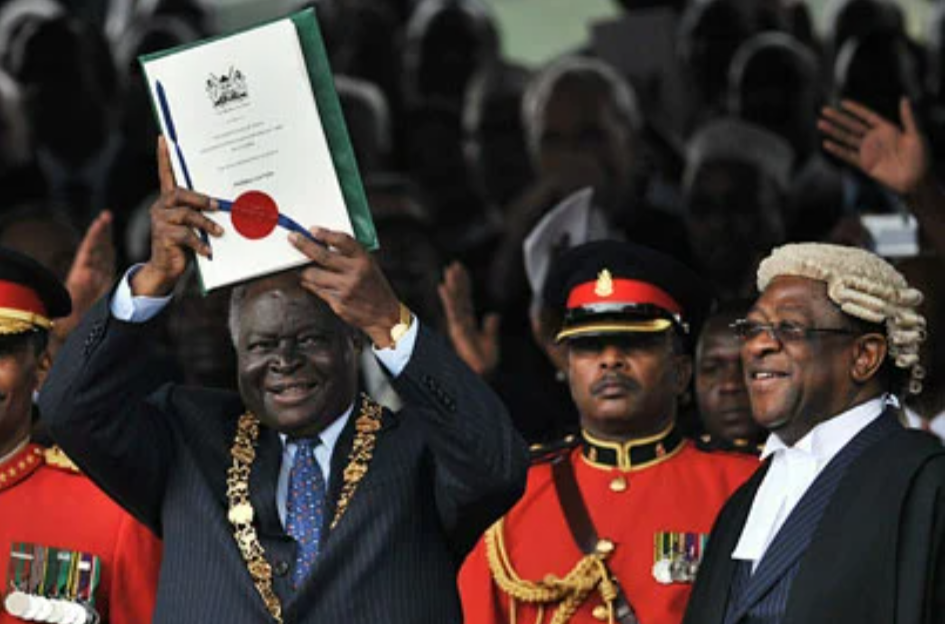
In these actions, wisdom indeed finds its victory, and the wise—the citizens who yearn for good governance—will surely rejoice.


Tsasi: Good afternoon, President Ruto. Thank you for taking the time to speak with me today.
President Ruto: Good afternoon, Tsasi. It’s my pleasure. I’m always happy to engage in meaningful discussions about our nation’s governance.
Tsasi: The most hateful of all names in an African ear is “Corruption and Accountability.” The government knows everything about the citizens, but what do the citizens know about the government?

President Ruto: The disparity in knowledge and transparency is a critical issue. While the state has mechanisms to scrutinise and control the populace, the citizens often remain in the dark about the inner workings of their own government. This imbalance has fostered a climate where corruption has thrived unchecked, and accountability becomes a distant ideal rather than a practised reality.
Tsasi: In a truly democratic society, transparency must flow both ways. Citizens must be informed and empowered to hold their leaders accountable. Only then can the cycle of corruption be broken, paving the way for genuine progress and prosperity.
President Ruto: Exactly, Tsasi. The Constitution of Kenya, 2010 specifies the number of Cabinet Secretaries in Article 152. According to Article 152(1)(d), the Cabinet shall consist of not fewer than fourteen and not more than twenty-two Cabinet Secretaries. This means the maximum number of ministers allowed is 22, not 30.
Tsasi: So, by reducing the number of Cabinet Secretaries, you are complying with the constitutional limit?

President Ruto: Yes, if I am reducing the number of Cabinet Secretaries to comply with the constitutional limit of a maximum of 22, then I am acting in accordance with the Constitution of Kenya, 2010. Reducing the number of ministers could also be seen as a measure to address efficiency and possibly to curb corruption, as a more streamlined Cabinet might be easier to manage and oversee.
Tsasi:The public protests we saw recently were against corruption in Kenya and often reflect the citizens’ desire for greater accountability and transparency in government.

President Ruto: Precisely. If I have to reduce ministers to be part of a broader effort to address corruption, I will do it to align with the public’s demand for cleaner governance. The Constitution not only sets limits on the number of Cabinet Secretaries but also implies the need for integrity and accountability in public service, which are critical in the fight against corruption. Rreducing the number of Cabinet Secretaries within the constitutional limit, while also addressing corruption, is fulfilling both constitutional requirements and the demands of the Kenyan people.
Here is the relevant excerpt from the Constitution of Kenya, 2010: Article 152. Cabinet.
1. The Cabinet consists of— (a) the President;
(b) the Deputy President;
(c) the Attorney-General; and
(d) not fewer than fourteen and not more than twenty-two Cabinet Secretaries.
Therefore, there is no provision in the Kenyan Constitution that states the number of ministers must not be more than 30; the maximum is set at 22. By adhering to this, we aim to foster a more transparent, accountable, and efficient government.
Tsasi:.What do the IMF and foreign debt have to do with Kenya’s current crisis?
President William Ruto: In my defence, I will say that my focus is on the private lives of my fellow Kenyans. I am not a leader who goes with the grey-haired Kenyan bureaucratic politicians. They come to power and build a career. When you look at it this way, you find many things unjust or unfair.
Have you ever thought someone ought to do something for the Kenyans? Or maybe you are curious to know why the protest happened the way it did.
What I have learned as a Kenyan is that there is no magic person who will make us better or safer. Rather, it is you and me, each of us as individual citizens. Society is only as good as those willing to stand up and ask questions of the people in power and hold them individually accountable for the decisions they make in our name and with our money.
Now to come to your question: What do the IMF and foreign debt have to do with Kenya’s current crisis?
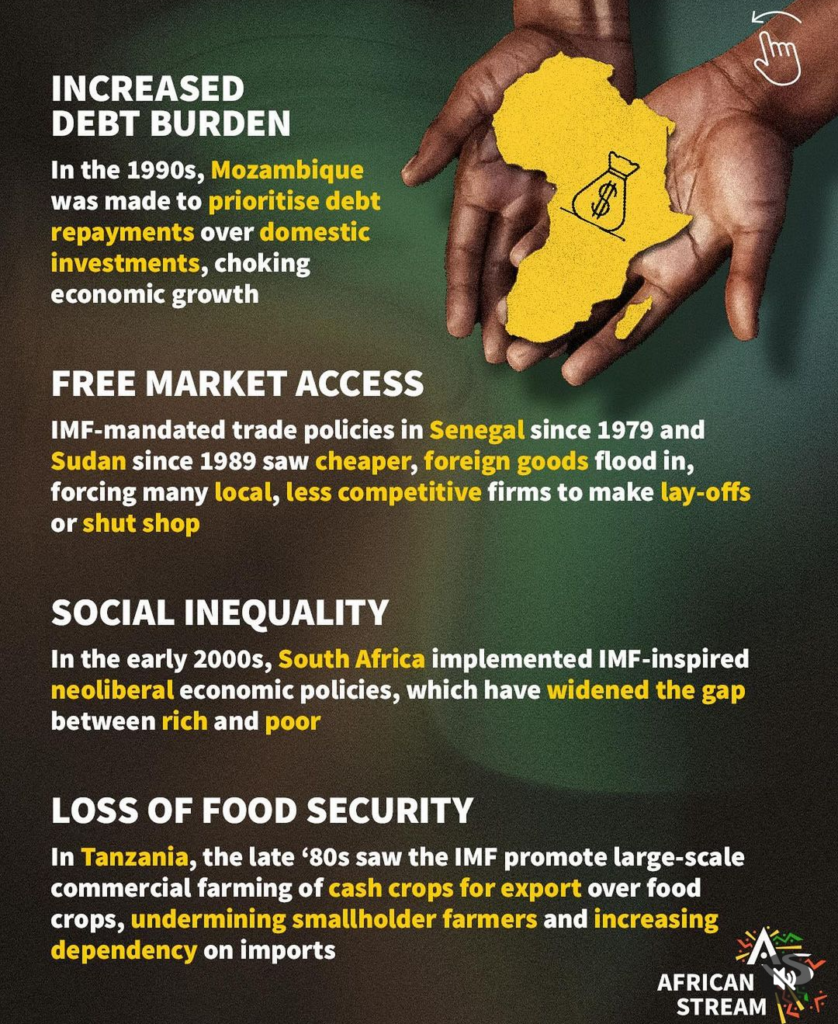
The majority of Kenyans know about the IMF and the World Bank. The interest alone on borrowed money significantly impacts Kenya’s economic stability and development prospects. High-interest payments increase the debt servicing burden, leading to fiscal pressure, reduced public spending, and potential social unrest. Effective debt management, transparent governance, and sustainable economic policies are crucial to navigating these challenges and ensuring long-term economic growth and stability for Kenyans.
Tsasi : The people of Kenya are protesting against what they perceive as an exploitative economic system driven by external influences. They claim that this system, dominated by powerful international financial interests, is syphoning off billions of dollars from the Kenyan economy, leaving the country in a state of economic hardship.
President William Ruto: In recent years, Kenya has been a focal point of economic growth and development in East Africa. However, beneath the surface of this apparent prosperity, there has been growing discontent among the populace. The people of Kenya have begun to voice their frustrations through a series of protests aimed at what they perceive as an exploitative economic system. This system, they argue, is heavily influenced by powerful international financial interests that drain the country’s resources and wealth, leaving ordinary Kenyans in a state of economic hardship. The protests reflect a deep-seated desire for change and economic justice, as citizens demand that their government take action to reclaim economic control and ensure a fair distribution of the nation’s wealth.
1. The people of Kenya are protesting against what they perceive as an exploitative economic system driven by external influences.
2. They claim that this system, dominated by powerful international financial interests, is syphoning off billions of dollars from the Kenyan economy, leaving the country in a state of economic hardship.
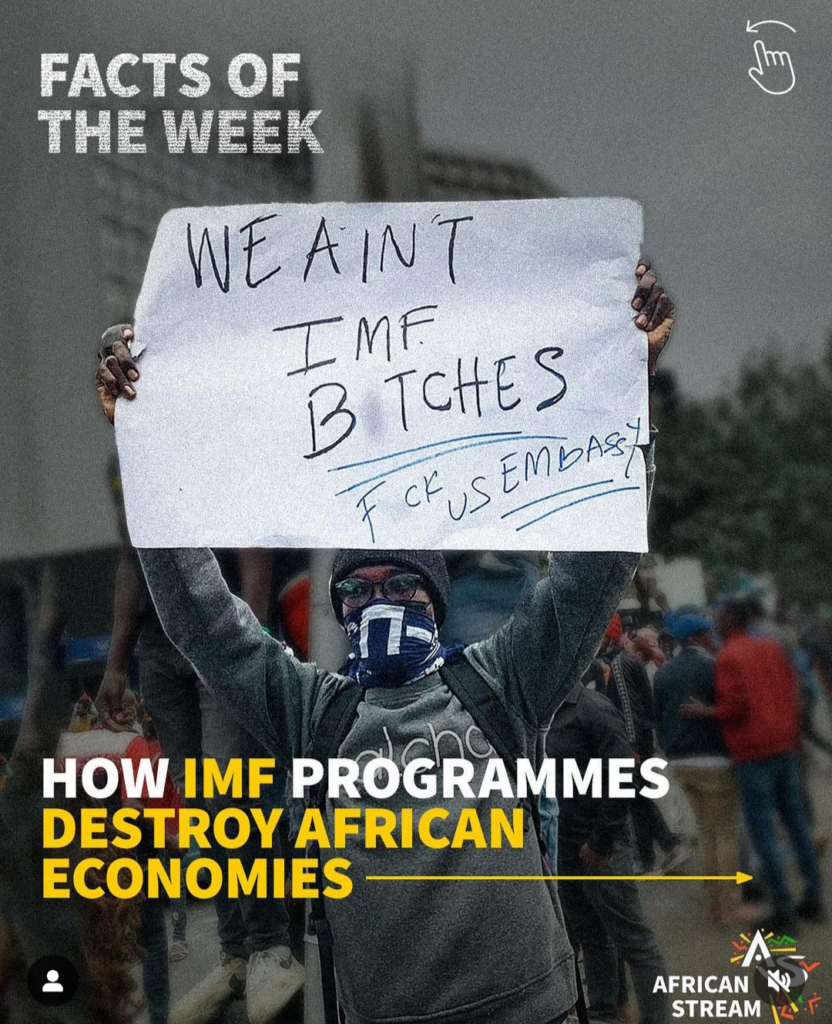
3. Protesters argue that these financial interests prioritise profits over the welfare of the Kenyan people, leading to widespread poverty and unemployment.
4. They are calling for the government to take decisive action to regain economic sovereignty and ensure that the wealth generated within the country benefits its citizens.
5. The protests have garnered significant attention both locally and internationally, highlighting the urgent need for economic reforms to address these grievances.
Recent Developments : In a move that underscores the complexity of Kenya’s economic situation, the World Bank recently approved a $1.2 billion credit to Kenya amid mounting financial pressures. This new funding is the first in a series of three, signalling ongoing international financial involvement in the country’s economic affairs. However, Kenya is classified by the International Monetary Fund (IMF) as being at high risk of debt distress, which complicates the narrative of foreign aid and investment.
Internationally, the Kenyan government faced significant backlash following violent protests triggered by recent tax hikes. In response to the public outcry and the ensuing unrest, the government withdrew the controversial financial bill in Nairobi. The proposed tax increases were seen as adding to the economic burden of ordinary Kenyans, further intensifying the protests and demands for economic reform.
These events highlight the delicate balance the Kenyan government must maintain between securing necessary financial aid and addressing the domestic outcry against perceived economic exploitation and hardship.
Tsasi: In my perspective, it means the IMF-World Bank institutions are very dangerous, judging by the signs of poverty in the many African countries they operate.
President Ruto: “Exactly, that is why the people of Kenya are protesting against what they perceive as an exploitative economic system driven by external influences. They claim that this system, dominated by powerful international financial interests, is syphoning off billions of dollars from the Kenyan economy, leaving the country in a state of economic hardship. The protesters argue that these financial interests prioritise profits over the welfare of the Kenyan people, leading to widespread poverty and unemployment. They are calling for the government to take decisive action to regain economic sovereignty and ensure that the wealth generated within the country benefits its citizens. The protests have garnered significant attention both locally and internationally, highlighting the urgent need for economic reforms to address these grievances.”
Tsasi: “I think this is absolutely ludicrous, the idea of the IMF-World Bank. That is why Kwame Nkrumah’s economic system needs to be returned to Africa. What are your thoughts on this, Mr. President Ruto?”
President Ruto:“The debate around economic systems is indeed critical. Kwame Nkrumah’s vision for Africa was one of economic independence and unity, which resonates with many today who feel the pressures of global financial systems. While the same financial institutions that criticised Nkrumah’s ideas as radical, the underlying principle of self-reliance and control over our resources is highly relevant. We need to explore economic models that prioritise the welfare of our citizens and ensure sustainable development. The current protests highlight the urgency of this issue and the need for a careful reassessment of our economic strategies.”
Tsasi: ” As long as secrecy and anonymity reign in our governments, politics will be the hiding place for the incompetent, lazy, and corrupt, because they reward failure and stifle success.”.“It’s easier for our chosen leaders to lie when we, the populace who trusted and voted for them, know nothing about what they are doing. It’s easier to do all sorts of unethical, if not criminal, things when you are promised anonymity. Only by acting as a leader and relating to your people can there be justice and integrity. Thank you, Mr. President Ruto, for showing us great leadership and how you have achieved victory through an undefeated practice of the Kenyan Constitution.”
1. Secrecy and Anonymity in Government :
When government operations are shrouded in secrecy and officials remain anonymous, it creates an environment where unqualified, unmotivated, and dishonest individuals can thrive. This lack of transparency allows them to avoid accountability for their actions, leading to a system that often rewards failure and discourages genuine success. In such a climate, corruption can flourish because there is no scrutiny or oversight to expose wrongdoing.
2. Easier for Leaders to Lie
“It’s easier for our chosen leaders to lie when we, the populace who trusted and voted for them, know nothing about what they are doing.”
Elaboration: When citizens lack visibility into the actions and decisions of their elected officials, it becomes simpler for those leaders to deceive the public. Without access to information, the people who placed their trust and votes in these leaders cannot hold them accountable. This gap in knowledge enables leaders to misrepresent facts, make false promises, and act in their own interests rather than those of their constituents.
3. Unethical and Criminal Actions Promised Anonymity
“It’s easier to do all sorts of unethical, if not criminal, things when you are promised anonymity.”
“When officials operate under a veil of anonymity, it becomes much more feasible for them to engage in unethical or even illegal activities. The promise of anonymity shields them from the consequences of their actions, allowing them to act without fear of being caught or punished. This lack of transparency and accountability provides a safe haven for misconduct and corruption.
4. Leadership, Justice, and Integrity
“Only by acting as a leader and relating to your people can there be justice and integrity.”
True leadership involves connecting with the people and being transparent about actions and decisions. When leaders engage with their constituents and operate openly, it fosters a sense of trust and accountability. This connection ensures that leaders are working in the best interests of the public, promoting justice and integrity within the political system. Transparency and engagement are essential for maintaining ethical governance.
“Thank you, Mr. President Ruto, for showing us great leadership and how you have achieved victory through an undefeated practice of the Kenyan Constitution.”
We acknowledge and praise you for exemplifying strong leadership and adhering to the principles outlined in the Kenyan Constitution. This success and achievements are a result of your commitment to transparency, accountability, and constitutional governance. By following the Constitution, you have demonstrated how effective and ethical leadership can lead to positive outcomes for the country.
.