


A Transition from Sharia-Law And Removing The Mutual Fear. Our Lives depend on education, and today’s education depends on us. To protect, restore and preserve, we must share science, knowledge, best practices and bring out the best of who we are as human beings. This is Mohammed Bin-Salman’s call.
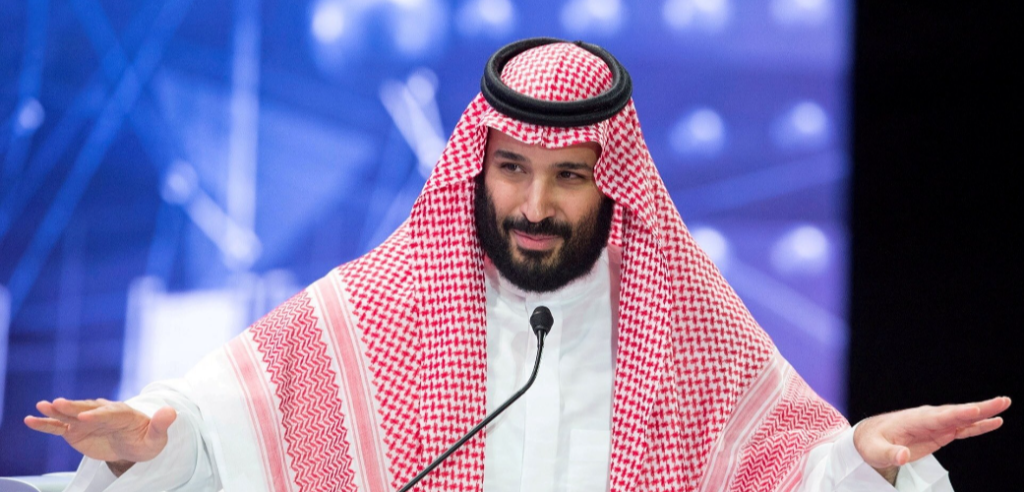
Making Saudi Arabia a Model of Civilizational Coexistence .

Assumpta: Turning to Saudi Arabia, the fact is that it has been unable to break out from its traditional Sharia-Law which is derived from the religious precepts of Islam and is based on the sacred scriptures of Islam, particularly the Quran and the Hadith?
Gwyneth : I would like to ask how the Sharia-Law under the past leadership before Mohammed Bin-Salman was allowed to spread?
Assumpta: That is exactly the point. How did it happen to be able to go beyond the confines of the tribes?
The society and legal systems of Southern Arabia, both ancient and modern, form the subject of beyond the confines of the tribe’s question.
To make a detailed study of the question, let first touch on modern social structures and legal customs and relate these to what we know of ancient society and law.
The traditional tribal society of the region, has preserved in its customary law and practise a very great deal that derives directly from the pre-Islamic period, whereas the shari’ah, the law of Islam, though stemming from the same sources, has often diverged significantly from it.
An understanding of the modern situation, therefore, is of immediate relevance to the interpretation of pre- and early-Islamic society.
Among the particular topics covered are the interplay between tribal affinities and religious authority, marriage legislation and customary law.
From an ethnographic viewpoint, furthermore, these studies record peoples and lifestyles that have been increasingly overwhelmed by contemporary events.
Gwyneth : I agree. The reason why Sharia law easily takes its route in the Southern Arabian peninsula.
The current ruler of Saudi Arabia is King Mohammed Bin-Salman who is also a Muslim who exert immense influence on Democratic values believe that Islamic law (sharia) is historically conditioned and needs to be reinterpreted in light of the changing needs of modern society.
Assumpta: Democracy building remains an uphill struggle in most Muslim countries.The explanation of why so many Muslim countries are not democratic has more to do with historical, political, cultural, and economic factors than with religious ones.
Nevertheless, many Muslim activists, using broad and sometimes crude notions of secularism and sovereignty, consider democracy to be the rule of humans as opposed to Islam, which is rule of God.
Scholars of Islam agree that the principle of shura, or consultative decision-making, is the source of democratic ethics in Islam. But a great deal more reflection is required to clarify the relationship of shura to democracy.
In establishing the compact of Medina, Prophet Muhammad demonstrated a democratic spirit quite unlike the authoritarian tendencies of many of those who claim to imitate him today.
He chose to draw up a historically specific constitution based on the eternal and transcendent principles revealed to him but also sought the consent of all who would be affected by its implementation.
Gwyneth : Mahammed Bin-Salma as a Musllim, a reformist Muslims tend to be more receptive to new ideas, practices, and institutions.
Mohammed Bin-Salma, as reformists stressed the need for continuity of basic Islamic traditions but believe that Islamic law (sharia) is historically conditioned and needs to be reinterpreted in light of the changing needs of modern society.
Assumpta: Despite the degree to which human rights are suppressed in Muslim countries, two grassroots movements are struggling to change this situation.
Women are beginning to effectively assert their rights, and in some countries young people are agitating against government oppression.
Gwyneth : It is true, nonetheless, that Islam has also committed the sins of narrow-minded exclusiveness and intolerance. Even in some EU countries today, non-Christians are treated harshly.
Assumpta: Humans can be foolish and cruel at times, but they can also be wise and tolerant at others. People are often so weak that they commit crimes, but it is also people who perform magnificently noble acts. That is the wonder of being human.
We have to thank Mohammed Bin-Salman for showing the world that human being can create value to defeat the permanent condition that has lebell the Saudi Arabian peninsula.
Gwyneth :I will also praise Mohammed Bin-Salman efforts for not forgetting the elementary fact of life that we are sometimes driven by group psychology of antagonism and hostility against each other.
With my fine friendly smile, I will say thank you Assumpta for today’s dialogue.