





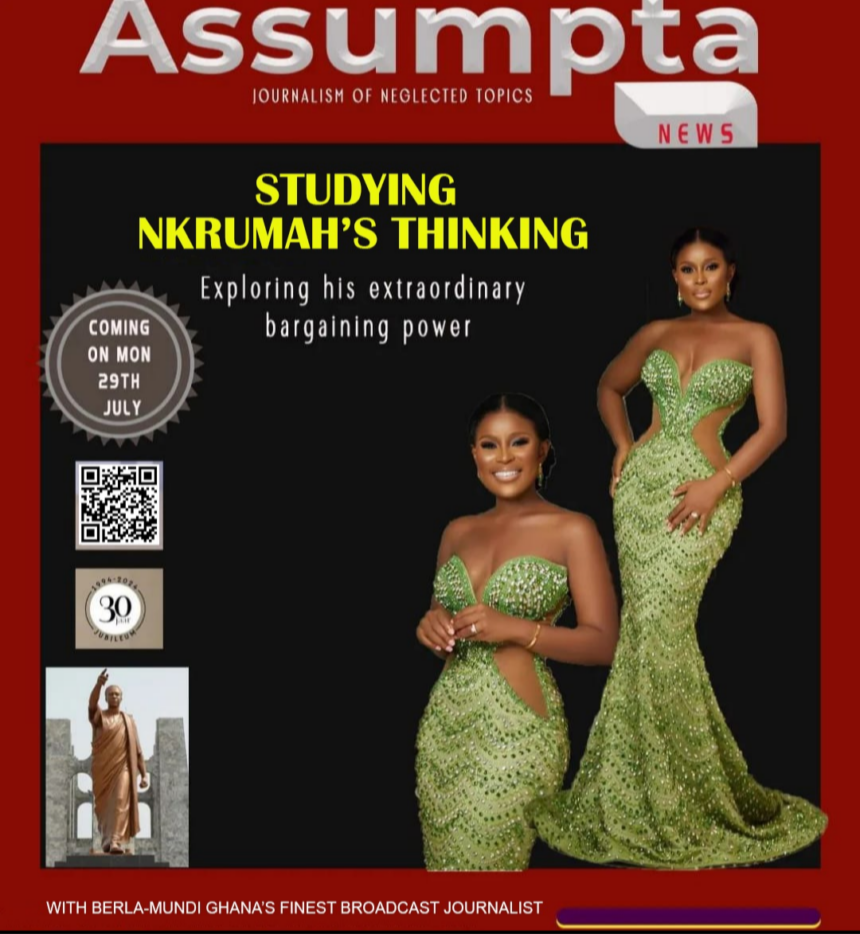
Content : Exploring his extraordinary bargaining power;
JOURNALISM OF NEGLECTED TOPICS
NEWS : With BERLA-MUNDI, Ghana’s best, finest broadcast journalist. A special edition coming on Monday 29th July 2024 ;

Asssumpta-Gahutu
Prologue
Kwame Nkrumah’s impact on the economic landscape of Ghana and beyond is a testament to his visionary thinking and strategic prowess. His approach to economic success and development was not merely about growth but about crafting a consciously organised social system that mirrored the sophistication of Western and European economies. This study delves into the depths of Nkrumah’s thinking, exploring the extraordinary bargaining power he wielded. By examining his methods, we gain insight into how he established an economic framework rooted in human values and geared towards sustainable development. The way Nkrumah organised his economic ventures was an expression of a holistic vision of human life, meticulously integrating legal, industrial, and economic elements to foster a thriving and equitable society.
Introduction ;
Kwame Nkrumah, Ghana’s first President and a leading figure in the Pan-African movement, left an indelible mark on economic development and governance. His strategic thinking and innovative approaches to economic planning set a benchmark for emerging nations seeking to navigate the complexities of modernization and development. This study focuses on Nkrumah’s extraordinary bargaining power and how he leveraged it to shape Ghana’s economic policies and structures.

Nkrumah’s economic strategies were not merely about achieving growth but about crafting a socially and legally organised system that mirrored the advanced economies of the West and Europe. His approach was a blend of visionary leadership and pragmatic planning, designed to foster sustainable development while embedding human values at the core of his policies. This introduction sets the stage for a deeper exploration of how Nkrumah’s economic framework reflected a sophisticated understanding of both human and societal needs, aiming to create a balanced and progressive economic environment in Ghana.
Delving into Nkrumah’s Innovative Thinking and Strategic Response
Kwame Nkrumah’s innovative thinking and strategic responses to the economic challenges of his era were pivotal in reshaping Ghana’s economic landscape. His approach combined visionary planning with pragmatic execution, aimed at overcoming colonial legacies and fostering sustainable development.
1. Visionary Economic Policies
Nkrumah understood that economic independence was essential for Ghana’s progress. He pursued policies designed to reduce dependency on colonial economies and establish a self-sufficient nation. His commitment to industrialization led to the creation of significant projects like the Volta River Project, which sought to harness hydroelectric power for national development. By investing in infrastructure and manufacturing, Nkrumah aimed to build a diversified economy that could support long-term growth and reduce reliance on foreign powers.

Alinajosef at:
https://www.instagram.com/ag_premiumjeans?igsh=MWpsNjZ1bTFvdHNsdw==
2. Strategic Bargaining and Diplomacy
Ghana was fortunate to possess substantial natural resources, including gold, diamonds, lithium, bauxite, and petroleum—resources more abundant than in many Western and European countries. Nkrumah’s strategic use of these reserves was evident in his diplomatic efforts to secure international support and partnerships while preserving Ghana’s sovereignty. He adeptly navigated relationships with global powers, leveraging Ghana’s resource wealth to negotiate favourable terms for economic assistance. His diplomatic skills not only brought financial support but also enhanced Ghana’s international standing.
3. Social and Economic Reforms
Nkrumah’s leadership was marked by a commitment to social justice and economic equity. He implemented reforms aimed at addressing income inequality and improving living standards. His government focused on expanding education, healthcare, and social welfare programs to uplift the underprivileged and ensure broad-based economic benefits. These reforms were intended to meet both immediate needs and long-term socio-economic objectives, laying a foundation for a more equitable society.
4. Opposition to Colonial Exploitation
Central to Nkrumah’s strategy was his opposition to colonial economic exploitation. He actively challenged the oppressive economic practices imposed by colonial powers and sought to dismantle their control over the Gold Coast’s resources. By championing economic nationalism, he aimed to reclaim Ghana’s natural wealth and ensure that it benefited the local population, rather than being syphoned off by foreign interests.
5. Legacy and Impact
Nkrumah’s innovative strategies and responses significantly influenced Ghana’s economic development. His efforts helped modernize the nation’s economy and elevate its global position. Despite facing both achievements and controversies during his tenure, Nkrumah’s impact on Ghana’s economic policies and development trajectory remains substantial.
In summary, Nkrumah’s forward-thinking and strategic responses to economic challenges were crucial in transforming Ghana’s economic landscape. His leadership addressed immediate economic issues while also laying the groundwork for future development and growth.

Berla-Mundi
Hello, dear readers. Welcome to another enlightening dialogue. Today, we’ll delve into some pressing issues concerning our nation and the legacies of our leaders.
Greeting s, and welcome. It’s a pleasure to have you join us today. Let’s delve into the article.
Dialogue with Tsasi :

Berla-Mundi: It’s totally correct to say that the state is silent, whilst it has plenty to say; it’s just that most of what it says is nothing we want, or need, to hear.

Tsasi: It is public relations, PR, spin in all polite terms to mislead the public. It was at this point I discovered that in Ghana, the citizens involved in all the elections are ignored when it comes to information they have the right to know. For example, about election funds, which I will prefer talking about in the next article.

Berla-Mundi: Let’s delve into today’s article.
Berla-Mundi: Nevertheless, it was for the sake of the preservation of our freedom and justice for each Ghanaian and the entire Africa that ignited Kwame Nkrumah’s mental ability to assess the effects of the political acts of his time and made sure that they geared towards our well-being. In your opinion, do our current politicians safeguard these ideals?
Tsasi: Hello Berla-Mundi. You’ve raised a significant point. The tendency to prioritise personal gain over collective welfare indeed seems to be a recurring issue. It’s troubling to see how these patterns of self-interest and lack of empathy continue to affect our political dynamics. In my opinion, while some politicians do strive to uphold Nkrumah’s ideals of freedom and justice, many fall short. The persistent issues of corruption and self-serving policies suggest that there is still a long way to go in truly safeguarding these principles. What are your thoughts on how we can hold our leaders more accountable?

Berla-Mundi: Absolutely, Tsasi. It feels as though the lessons from Nkrumah’s era haven’t fully resonated. Despite our progress, the same tendencies—self-interest, and a lack of consideration for broader suffering—persist. How do you think we can address this issue?

Tsasi: I believe the key lies in fostering a culture of empathy and accountability among our leaders. By promoting transparency and encouraging leaders to prioritise public welfare over personal gain, we can start to shift these entrenched behaviours. Public awareness and civic engagement are crucial in holding leaders accountable and ensuring that the needs of all Ghanaians are addressed.

Berla-Mundi: That’s a thoughtful approach. Increasing civic education and encouraging active participation in governance could help bridge the gap between leadership and the people. It’s essential for creating a more empathetic and responsive political system.
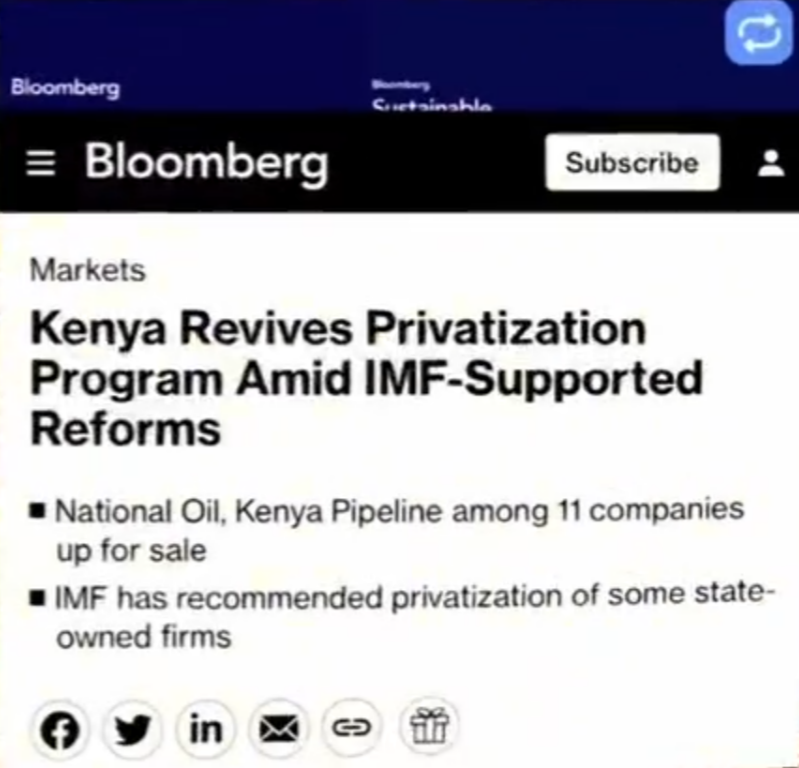
Tsasi: Our political and economic systems today in Ghana prove that the true nature of the West and the American CIA, as well as the World Bank and the IMF, still have their footings in Ghanaian politics. They have the philosophy of having the countries they operate in privatise all government-owned firms, just as they did in Kenya. The World Bank and the IMF asked Kenya to revive its privatisation program amid IMF-supported reforms. National Oil and Kenya Pipeline are among 11 companies up for sale. This World Bank and IMF philosophy is born out of jealousy and envy, deliberately destroying everything we have to sustain our economy. As a broadcast journalist, what are your thoughts on this?
Berla-Mundi: You’ve touched on a critical issue, Tsasi. As a broadcast journalist, I believe it’s essential to highlight the impacts of external influences on our political and economic systems. The involvement of institutions like the World Bank and the IMF in pushing privatisation can often undermine local economies and sovereignty. It’s crucial to question whether these policies genuinely benefit our nations or primarily serve foreign interests. By shedding light on these dynamics, we can inform the public and encourage a more critical assessment of how such external pressures affect our development. Ultimately, it’s about ensuring that our policies align with our national interests and foster sustainable growth.

Tsasi: For instance, in present-day Ghana, these financial institutions, the IMF and World Bank, come in and take our natural resources to support their currency. They ask Ghana to sell it state firms and borrow money with interest from them to build our economy. This is what has left Ghana with debts, misery, and poverty. This allows Ghanaians to blame their present leaders and want to overthrow or not vote for them. What are your thoughts on this?
Berla-Mundi: It’s a complex and troubling situation, Tsasi. The dependence on these financial institutions can create a cycle of debt and economic hardship that stifles true development and sovereignty. While it’s easy to place blame on current leaders, it’s also crucial to understand the larger system at play. The pressure from institutions like the IMF and World Bank often forces leaders into difficult positions where they must choose between immediate financial relief and long-term economic independence. As a journalist, my role is to shed light on these intricacies, to inform the public about the consequences of such financial dependencies, and to foster a dialogue about sustainable and autonomous economic strategies. Only by addressing these root issues can we hope to create a more prosperous and self-reliant Ghana. In our next newsletter, we will discuss: “The Purpose of the Ghanaian Currency System.”
Tsasi: Thank you for this insightful conversation, Berla-Mundi. I look forward to your next newsletter.

Berla-Mundi: Before we close, my last question is: How can our leaders explore Kwame Nkrumah’s extraordinary bargaining power?
Tsasi: That’s an excellent question, Berla-Mundi. To harness Nkrumah’s extraordinary bargaining power, our leaders need to study his diplomatic and strategic approaches. Nkrumah skillfully leveraged Ghana’s natural resources and strategic geopolitical position to negotiate favourable terms with global powers. Today’s leaders can follow this example by:
1. Maximising Natural Resources: Use our abundant natural resources as a bargaining chip to negotiate better trade deals and partnerships that benefit Ghana economically and socially.
2. Building Alliances: Form strong alliances with other African nations and emerging economies to create a united front in international negotiations.
3. Investing in Education and Innovation: Promote education and technological innovation to enhance Ghana’s economic capabilities and reduce dependency on external entities.
4. Ensuring Transparency and Accountability: Foster a political culture of transparency and accountability to build trust among citizens and international partners.
5. Prioritising National Interests: Always prioritize the welfare of Ghana and its people in all negotiations and policy decisions.
By adopting these strategies, our leaders can revive Nkrumah’s legacy of strong, independent, and strategic leadership, ensuring sustainable development for Ghana.

Berla-Mundi: Can you tell us how Nkrumah’s bargaining power differs from today’s politicians?

Tsasi: Certainly, Berla-Mundi. Nkrumah’s bargaining power differed significantly from that of today’s politicians in several key ways:
1. Visionary Leadership: Nkrumah had a clear, long-term vision for Ghana and Africa’s development. His strategies were not just about immediate gains but about building a sustainable and independent future. Today’s politicians often focus on short-term achievements, driven by electoral cycles and immediate political gains.
2. Strategic Alliances: Nkrumah formed alliances based on mutual benefit and respect, often looking to fellow African nations and non-aligned countries for support. Today, politicians frequently seek alliances that are more economically driven and influenced by major global powers, sometimes at the expense of national sovereignty.
3. Resource Utilisation: Nkrumah utilised Ghana’s natural resources as powerful bargaining chips, ensuring that deals made with foreign entities were advantageous for Ghana’s development. Contemporary leaders sometimes fail to leverage these resources effectively, resulting in less favourable terms and greater dependency.
4. Economic Independence: Nkrumah emphasised economic self-reliance and the reduction of foreign dependency. He invested in industries and infrastructure that would enable Ghana to stand on its own. Today’s politicians often rely heavily on foreign loans and aid, which has lead to economic vulnerabilities and a cycle of debt.
5. Commitment to Social Justice: Nkrumah’s policies were deeply rooted in social justice and the well-being of all Ghanaians. He implemented reforms aimed at reducing inequality and improving living standards. In contrast, current political actions sometimes prioritise economic metrics over social equity, leading to disparities in wealth and access to resources.
By understanding and emulating these aspects of Nkrumah’s leadership, today’s politicians could potentially enhance their bargaining power and achieve more sustainable and equitable development for Ghana.
Berla-Mundi: Thank you, Tsasi. That’s a thorough analysis. In our next newsletter, we will discuss: “The Purpose of the Ghanaian Currency System.”
Tsasi: Thank you for this insightful conversation, Berla-Mundi. I look forward to your next newsletter.