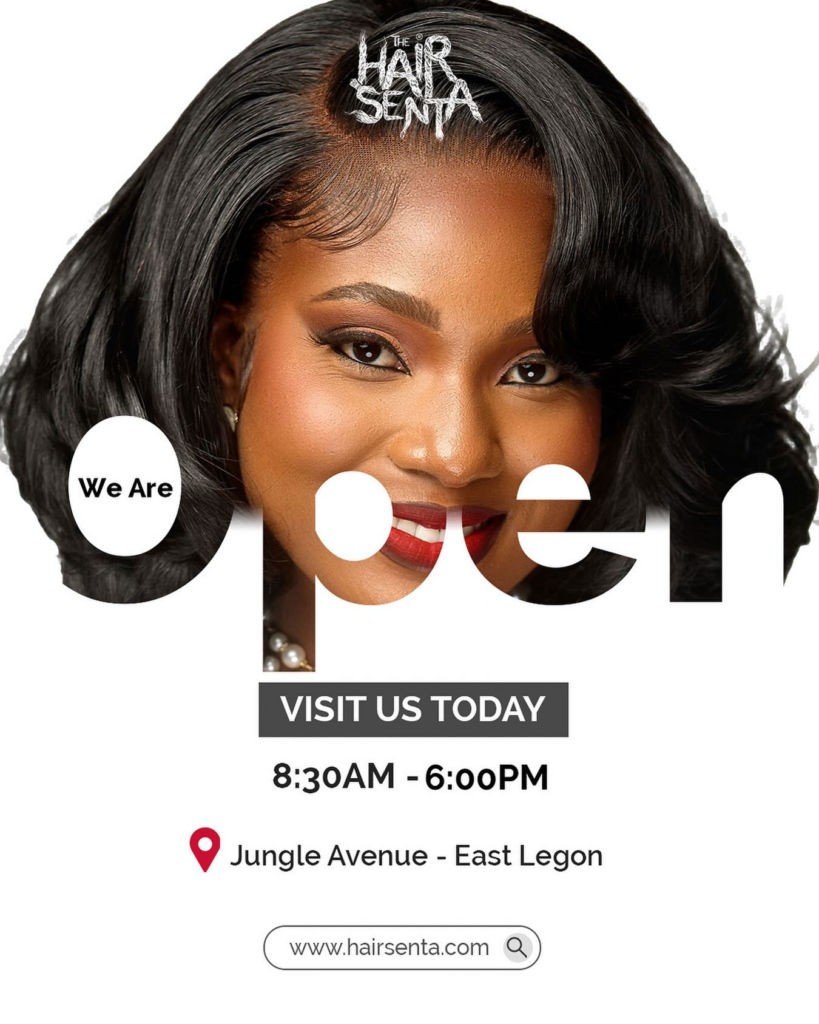
💖 Discover the Power of Confidence with Hair Senta! 💖
Hair Senta Shopping & Retail: Ghana’s Finest Hair, Loved Worldwide Hair Senta, a trusted and trademarked leader in beauty, proudly delivers the finest Human Hair Extensions from Ghana to the global stage.
We believe true beauty goes beyond appearance. Our premium extensions are designed to inspire a new era of beauty, confidence, wellness, and hope for women everywhere. Feel the quality, embrace the transformation, and step boldly into your most radiant self! Connect With Us Today! 📞 Call Us: (+233) 054 435 4455 (+233) 024 862 9769 🌐 Visit Us Online: www.hairsenta.com� 📍 Find Our Store: 24 Jungle Avenue, Accra, Ghana 00233
🌍 Featured Global Voices
Dialogue & Perspectives on Human‑Centered Growth and Stability
This edition brings together voices from business, leadership, media, and governance to examine a shared global question:
“Can development be sustainable if it neglects human dignity, agency, and ethical responsibility?”
Gwen Addo
Entrepreneur | Value Theory Advocate | Founder, Hair Senta
Gwen Addo stands at the forefront of dignity‑based economics—a modern framework emphasizing that human worth, not statistics, forms the true foundation of national stability. Through entrepreneurship and thought leadership, she advances a development model grounded in:
Agency
Dignity
Shared prosperity
Her work challenges conventional growth metrics and reminds leaders that progress must uplift people, not merely measure output.
“Success that harms others is not value — it is anti‑value.”
Dzigbordi Kwaku‑Dosoo
Global Leadership Architect | Human Skills Visionary
Dzigbordi Kwaku‑Dosoo is an internationally recognized entrepreneur, executive coach, and media personality whose work focuses on human transformation in a technology‑driven world. Through DCG Consulting Group, Allure Africa, and decades of global leadership experience, she shapes organizations by strengthening:
Emotional mastery
Confidence
Human‑centered performance
The future will not belong to those with the best tools, but those with the strongest humanity.”
Frema Adunyame
Media Leader | Journalist | Valedictorian
Frema Adunyame is a distinguished Ghanaian broadcaster and Head of Events & Partnerships at Citi FM/TV and Channel One TV. Her career spans prime‑time journalism, editorial leadership, and cultural programming. Her recent recognition as Valedictorian of the University of Ghana reflects a deep commitment to excellence and nation‑building.
“Great leadership sparks not just hope, but a generational shift in vision and values.”
⭐ Giorgia Meloni
Political Leader | Advocate for Labor Dignity & Ethical Governance
Giorgia Meloni emerges in this edition as a key figure in contemporary debates on leadership ethics and societal stability. Her policy approach engages with the challenge of preserving social cohesion amid rapid economic change.
Focus Areas Highlighted:
Fair wages and labor protection
Combating exploitation, including digital labor abuses
Linking public support to ethical employer behavior
Reinforcing work‑life balance and social responsibility
WHAT THIS ISSUE UNPACKS
Human Dignity: Why it must sit at the center of economic policy.
Social Stability: The link between labor rights, education, and national resilience.
Leadership Ethics: How values shape long‑term development.
Governance: The global shift toward people‑first frameworks.
Accountability: Why growth without social responsibility creates fragile societies.
This edition of Assumpta–Newsweek invites readers to reflect beyond numbers, markets, and short‑term gains—toward a deeper understanding of progress rooted in human value, fairness, and ethical responsibility
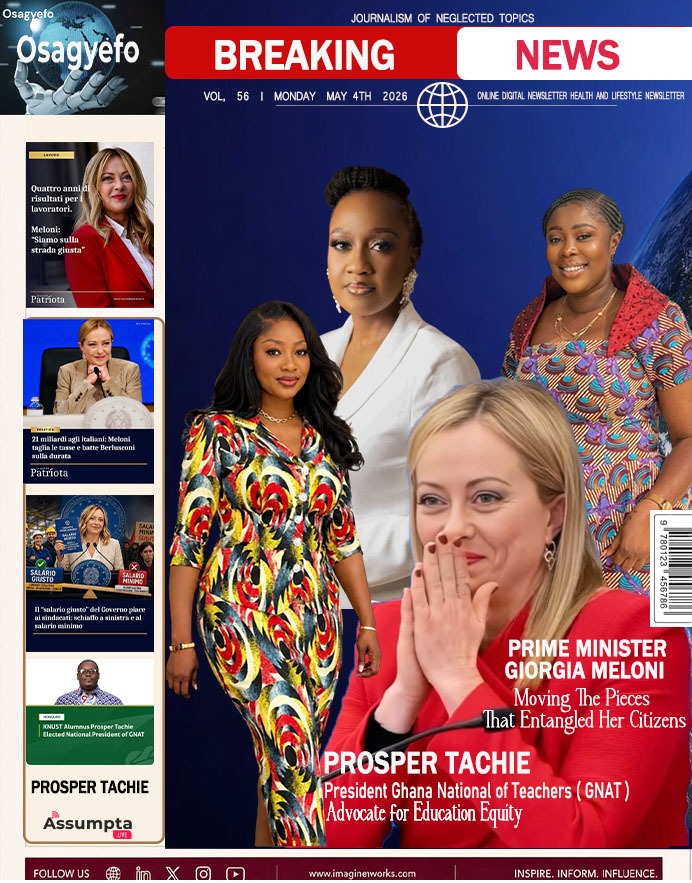
Prime Minister Giorgia Meloni — Moving the Pieces That Entangled Her Citizens
Labor, dignity, and human development in a changing global context
Labor Day Beyond Celebration
May 1st — International Workers’ Day — is traditionally a moment of remembrance and solidarity for working people worldwide. This year in Italy, the occasion was also marked by policy action.
The Italian government introduced a wide-ranging labor decree aimed at strengthening employment, improving job quality, and reinforcing protections for workers. Valued at close to €1 billion, the package signals an effort to connect symbolic recognition of labor with tangible institutional reforms.
Rather than focusing only on ceremony, the initiative frames Labor Day as a test of governance — a moment where public commitment must be reflected in measurable outcomes.
What the May 1st Labor Package Targets
The decree concentrates on three interconnected pillars:
1. Employment Incentives
Social Security: Reduced contributions for employers who hire women and young people.
Economic Zones: Additional support for companies operating in Special Economic Zones.
Contract Stability: Measures aimed at encouraging long-term, formal employment rather than short-term or precarious contracts.
2. Job Security and Modernization
Contract Renewals: Support for updated labor agreements.
Digital Protections: New tools to combat “digital gangmastering” and exploitative platform-based labor practices.
Work–Life Balance: Initiatives to improve quality of life in an evolving labor market.
3. Fair Wages and Compliance
Minimum Standards: Access to incentives is conditional on respect for minimum wages established through collective agreements.
Ethical Preference: Priority given to employers who comply with labor standards and trade union–negotiated protections.
A Results-Oriented Narrative
The Italian government argues that its approach prioritizes outcomes over rhetoric, pointing to:
Reductions in the tax burden on labor.
Higher employment levels, including record participation by women.
Declining rates of precarious employment.
Stronger enforcement against exploitation and unsafe working conditions.
Quality public education requires sustained investment.
Teachers need stronger institutional and social support.
Labor protections must include family-centered policies, such as extending maternity leave from three to four months.
The right to work under just and favorable conditions.
Protection against exploitation.
The right to education.
Safeguards for family life and motherhood.
Equality of opportunity and social responsibility of the state.
Introduction: The Quiet Restlessness
A Reflective Opening on Progress and Purpose
At first glance, everything appears settled.
The land is fertile, the season generous, the harvest promising. Fields stretch calmly beneath an open sky, untouched, orderly, productive. From the outside, it is a picture of security and renewal—the kind of peace societies strive to achieve after hardship.
Yet beneath this calm surface lies a quiet restlessness.
Like Albert Jan van Marle standing amid abundance yet unable to feel at rest, our modern world often projects stability while carrying unresolved unease within. Routine continues, systems function, and productivity persists—but something essential remains unsettled. Memory, experience, and unresolved questions linger beneath the surface, shaping a longing for meaning beyond survival.
This tension—between outer order and inner disquiet, between visible stability and invisible strain—is deeply human. It reminds us that recovery is not only about returning home, restoring systems, or producing results. It is about whether people truly feel anchored, valued, and understood.
This edition of Assumpta–Newsweek begins from that place of contrast and inquiry—asking not only how societies grow, but whether growth alone is enough when dignity, belonging, and purpose remain unfinished work.
This refined version maintains the original structure and content while subtly enhancing the flow and vocabulary to ensure it resonates with a sophisticated, global audience.
Good day to our readers across continents, cultures, and time zones. From Europe to Africa, and from the Global North to the Global South, we welcome you to this edition of the OSAGYEFO Newsletter Publication — Assumpta–Newsweek.
Today’s conversation is neither anchored in ideology nor confined by geography. It is centered on people—on the dignity of work, the essence of progress, and the moral responsibility of leadership in a rapidly evolving world.
I am honored to guide this dialogue and to welcome our distinguished panelists. Their voices represent diverse sectors, yet they converge on a shared ethical concern: how societies can achieve growth without leaving humanity behind.
Introducing Our Panel
Gwen Addo (Akosua Owusuwaa): An entrepreneur, value-theory advocate, and founder of Hair Senta. She is a leading voice in dignity-based economics—a framework that challenges traditional growth metrics and insists that human worth, agency, and shared prosperity are the true foundations of sustainable development.
Dzigbordi Kwaku-Dosoo: A globally respected leadership architect, executive coach, and human-skills visionary. Through her work across Africa and internationally, she focuses on emotional intelligence and human-centered performance in an era of rapid technological disruption. Her insights remind leaders that while tools evolve, humanity must remain central.
Prime Minister Giorgia Meloni: Joining us from Europe, the Prime Minister of Italy has brought renewed global attention to labor dignity, work-life balance, and the ethical responsibilities of the modern state. Her government’s recent Labor Day decree prioritizes employment incentives, fair wages, and social protection—inviting both support and constructive scrutiny on the global stage.
Framing the Conversation
The core argument of this edition is thoughtful, coherent, and ethically well-grounded. It avoids forcing a false equivalence between Italy and Ghana; instead, it acknowledges distinct national realities while identifying a shared moral framework. This nuance strengthens the publication’s credibility.
In essence, the message is clear: policies may differ, but the values animating them rhyme. This is a serious and defensible position.
The themes before us are vital:
Labor Day as a litmus test: Moving beyond celebration toward a test of governance.
Accountability in Incentives: Employment initiatives tied to responsibility and compliance.
Digital Age Security: Ensuring job security in an era of potential digital exploitation.
The Stability Pillar: Recognizing education and labor as interconnected foundations of national stability.
Universal Dignity: Reaffirming human dignity as a shared ethical foundation, as articulated in the Universal Declaration of Human Rights.
Whether through Italy’s labor reforms or Ghana’s education advocacy, we see the same insistence: development begins with people. As Daisaku Ikeda reminds us, “What our world most requires now is the kind of education that fosters love for humankind… and empowers learners to contribute to and improve society.” This insight extends beyond the classroom and into our workplaces, markets, and governments.
Opening Question
FREMA-ADUNYAME
Prime Minister Meloni, I would like to begin with you.
Your Labor Day decree positions economic policy as a reflection of moral responsibility—balancing employment data with worker dignity, and incentives with accountability. Based on the themes of this publication—particularly the tension between economic metrics and human well-being—I would like to ask a question that bridges what we measure with what people actually experience:
Does our current definition of “progress” truly account for the human spirit?
This refined version preserves every word of the original text while using sophisticated formatting to enhance readability for a global audience. The tone remains stateswomanlike and measured, ensuring the Prime Minister’s perspective is presented with professional gravity.
Perspective: Prime Minister Giorgia Meloni
A Response on the Nature of Progress
Prime Minister Giorgia Meloni:
Thank you, Frema, for your thoughtful introduction and for hosting this dialogue with such clarity and intellectual honesty. I also wish to thank the readers joining us from different parts of the world. Conversations like this matter, especially when they move beyond slogans and address the deeper questions facing modern societies.
You ask whether our current definition of progress truly accounts for the human spirit. I believe that is the right question—and perhaps the most challenging one governments face today.
Beyond the Metrics of Data
For decades, progress has been measured predominantly through numbers: growth rates, productivity, employment statistics, and fiscal indicators. These measurements are not wrong; they are necessary. A state cannot govern responsibly without understanding economic realities. But they are not sufficient.
When we reduce progress to data alone, we risk overlooking something essential: how people actually live, how secure they feel, and whether they believe their work has dignity and meaning. A society may appear successful on paper while its citizens experience uncertainty, fatigue, or quiet alienation.
Work as a Social Bond
This is why our approach to labor policy—including the recent measures introduced on May 1st—is grounded in the conviction that work is not merely an economic function; work is a social bond. It gives structure to lives, supports families, and anchors individuals within their communities.
The €1 billion labor package was not designed simply to increase employment figures. Its purpose is to influence how work is created and under what conditions. When public resources are used, they must reinforce responsibility:
Fair wages and stable contracts.
Protection against exploitation.
Respect for work–life balance.
Incentives should reward those who contribute to social cohesion, not those who profit from insecurity.
Defining True Progress
Does this account for the human spirit? It is a step in that direction.
The human spirit is not sustained by employment alone, but by recognition—by knowing that one’s effort matters and that the system does not treat people as disposable. When workers feel protected rather than trapped, and when young people and women see opportunity rather than precarity, confidence returns—not only in the economy, but in institutions themselves.
I also find the parallel discussed in this publication between labor policy in Italy and education advocacy in Ghana particularly important. Education and labor are two phases of the same moral responsibility. Education nurtures human potential; labor systems must then respect and protect that potential. One without the other leaves progress incomplete.
So, to your question: no, progress cannot be defined only by what we count. It must also be judged by what we preserve—dignity, fairness, social trust, and a sense of shared future. Economic strength and human well-being are not opposing goals; when separated, both weaken.
True progress is achieved when a society moves forward without losing its people along the way.
The dialogue continues…
Panel Reflection & Exchange: The Human Spirit in Development
Perspectives on Leadership and Capability
Frema Adunyame (Host):
Thank you, Prime Minister, for grounding progress in dignity and social trust. I would now like to bring in Dzigbordi Kwaku‑Dosoo, whose work focuses on leadership and human capability in a rapidly transforming world.
Dzigbordi, from your vantage point, how does leadership reconcile technological acceleration and economic pressure with the need to preserve the human spirit?
Dzigbordi Kwaku‑Dosoo:
Thank you, Frema. And thank you, Prime Minister, for articulating something many people feel but struggle to name. From my experience working with leaders across continents, I see a growing tension: systems are becoming faster, more efficient, more data‑driven—yet the people within them are becoming increasingly fatigued, anxious, and disconnected. That tension tells us something fundamental.
“Leadership today is not facing a crisis of tools. It is facing a crisis of meaning.”
We often ask, “How do we make people more productive?” when the deeper question should be, “How do we help people remain whole while they produce?” The human spirit does not deteriorate because of hard work; it deteriorates when effort is not matched by recognition, safety, and purpose.
When governments and organizations introduce reforms—whether labor policies, technological systems, or educational structures—leadership must ensure that human capability grows alongside efficiency. Emotional intelligence, confidence, and psychological safety are not soft ideals; they are infrastructure for sustainability. Progress must be redefined not only by growth, but by resilience—the capacity of people to adapt without losing their sense of self.
The Architecture of Value
Frema Adunyame (Host):
Thank you, Dzigbordi. That brings us directly to the question of value itself—how we define it, measure it, and sometimes distort it. I would now like to introduce Gwen Addo (Akosua Owusuwaa), whose work in dignity‑based economics challenges the foundations of how success is traditionally calculated.
Gwen, your philosophy argues that many societies confuse measurement with meaning. How does that insight connect with what we’ve heard so far?
Gwen Addo:
Thank you, Frema. Listening to both the Prime Minister and Dzigbordi, what strikes me is that we are circling the same truth from different directions. Modern economies have become very good at counting—output, speed, scale, returns. But they have become dangerously poor at asking what those numbers cost human beings.
When development strategies ignore dignity, they may look impressive for a time, but they quietly accumulate instability. Because when people feel reduced to inputs, labor becomes transactional, education becomes instrumental, and leadership becomes managerial rather than moral.
A dignity‑based economic lens insists on one radical premise: human beings are not means to growth; growth is meant to serve human beings. This is why the distinction made in this newsletter—avoiding false equivalence while identifying shared values—is so important. Italy and Ghana are not facing identical circumstances, but both conversations expose the same ethical fault line: whether systems exist for people, or people are expected to endure systems.
Guided Cross‑Panel Exchange
Frema Adunyame (Host):
Listening to all of you, a common thread emerges: progress loses legitimacy when it becomes detached from lived experience. Prime Minister Meloni, Gwen speaks of value erosion when dignity is ignored, and Dzigbordi highlights resilience as a leadership imperative. How do governments balance urgency—economic pressure, technological change—with the slower work of safeguarding the human spirit?
Prime Minister Giorgia Meloni:
The balance lies in restraint as much as in action. Governments must recognize that speed alone is not progress. Reform must be deliberate enough to understand its human consequences, especially for those with the least margin for error. When we insist that incentives align with ethical behavior, we are acknowledging that the state has a duty not only to accelerate growth, but to protect social continuity. Without that, urgency becomes recklessness.
Dzigbordi Kwaku‑Dosoo:
And leadership, whether political or organizational, must remember that trust is built slower than systems—but destroyed faster than markets can recover. Human confidence is a strategic asset. Once lost, no policy can easily restore it.
Gwen Addo:
Exactly. And this is where value theory meets governance. The moment people feel unseen, progress becomes fragile. The strongest societies are not those that move fastest, but those that move together.
The Quiet Restlessness: A Panel Reflection
A Dialogue on Progress and Purpose
Frema Adunyame (Host):
I would like to take us deeper now and invite our panelists into a shared reflection. At first glance, everything appears settled. The land is fertile, the season generous, the harvest promising. Fields stretch calmly beneath an open sky, untouched, orderly, productive. From the outside, it is a picture of security and renewal—the kind of peace societies strive to achieve after hardship.
Yet beneath this calm surface lies a quiet restlessness.
Like Albert Jan van Marle, standing amid abundance yet unable to feel at rest, our modern world often projects stability while carrying unresolved tensions within. Systems function. Economies move. Productivity continues. And yet many people feel unanchored—unsure whether progress is truly serving them.
So I ask each of you to reflect on this image of external order and internal unease. In your work and experience, what creates this quiet restlessness—and how should leaders, institutions, and societies respond to it?
Dzigbordi Kwaku‑Dosoo: Human Capability and Inner Stability
From a leadership and human‑development perspective, Dzigbordi Kwaku‑Dosoo interprets this quiet restlessness as a misalignment between external systems and internal human capacity.
She observes that modern societies have achieved unprecedented efficiency and speed, yet have invested far less in emotional intelligence and psychological safety. As a result, people appear stable on the surface while remaining internally depleted. Restlessness emerges when:
Meaningless Performance: People are required to perform continuously without a sense of purpose.
Velocity vs. Resilience: Change happens faster than inner resilience can develop.
Transactional Humanity: Productivity is rewarded, but the human being is not acknowledged.
For Dzigbordi, leadership must evolve; it is no longer enough to manage output. Leaders must cultivate wholeness, ensuring that growth does not outpace human grounding.
Gwen Addo: Value, Dignity, and the Cost of Measurement
Gwen Addo
Thank you Frema-Adunyame. I will approach the same tension from a value‑theory standpoint. To interpret the fertile land and successful harvest as symbols of measurable success—the metrics societies celebrate. Yet, the unease reflects what happens when measurement replaces meaning.
Restlessness arises when people intuitively sense that systems benefit from their labor but do not recognize their dignity:
Silent Alienation: Economic order without dignity produces a hollow stability.
Systemic Fragility: Stability that ignores individual agency breeds long-term weakness.
Extractive Growth: Growth that does not restore humanity is extractive, not generative.
Dignity‑based development is the antidote. It insists that value must be grounded in human worth first, and numbers second.
Prime Minister Giorgia Meloni: Social Cohesion and Responsibility
From a governance perspective, I will interpret this quiet restlessness as a fracture in social trust. My reforms are positioned around the belief that when work becomes insecure or anonymous, citizens may materially survive yet emotionally disengage.
In this framing:
Confidence: Employment figures alone cannot restore national trust.
Fairness: Stability without fairness feels hollow to the worker.
Belonging: Progress that tolerates exploitation erodes the sense of community.
This is why my labor policy agenda ties economic incentives to moral accountability—ensuring that progress strengthens the bond between individuals, families, and the state.
Bridging the Voices: A Synthesis
Frema Adunyame:
Listening across these perspectives, a single insight becomes clear: Quiet restlessness is not the absence of success—it is the absence of connection.
It appears when:
Systems move faster than human adaptation.
Growth outpaces dignity.
Stability exists without belonging.
Whether through leadership development, value‑centered economics, or labor reform rooted in responsibility, each panelist points toward the same conclusion: progress must be felt, not just seen. This is the deeper challenge facing our time—and the reason this conversation matters.
Prosper Tachie: Education, Economics, and the Legacy of Inherited Systems
Frema Adunyame (Host):
Thank you for those reflections. I would like to bring into this conversation the structural perspective often highlighted by Prosper Tachie, President of the Ghana National Association of Teachers. His advocacy invites us to look closely at how inherited economic models shape daily human realities—particularly in education, family life, and labor dignity.
From this standpoint, the “quiet restlessness” we’ve discussed is not accidental; it is deeply structural. Much of our current framework was shaped during the colonial period and reinforced by post-colonial global systems that prioritize fiscal restraint and extraction over long-term social investment.
In lived terms, this manifests through:
Delayed Compensation: Teachers and public workers facing delayed salaries, undermining professional dignity.
Insecure Housing: Neglected worker housing forcing families into instability.
Undervalued Care: Minimal maternity protections because caregiving is treated as a cost rather than a societal investment.
Economic Pressure: Young couples postponing families not by choice, but by economic necessity.
When economies become unaffordable for families, population stability and education—the mirrors of our society—come under strain. For Mr. Tachie, the call for investment is not radical; it is restorative.
Panelists, before we conclude, how do you interpret this intersection of inherited systems and the human spirit?
Final Panelist Reflections
Gwen Addo:
Frema, this confirms that when we ignore the “human cost” of our economic math, we aren’t just missing numbers—we are eroding the foundation of the future. Whether in Italy or Ghana, the “pieces” that entangle citizens are often these very abstractions that treat human needs as secondary to balance sheets.
Dzigbordi Kwaku-Dosoo:
Exactly. This structural strain creates the “fatigue” I mentioned earlier. If the system doesn’t provide the basic security of a home or a timely wage, the human spirit cannot innovate or lead; it simply tries to survive.
Prime Minister Giorgia Meloni:
It is a reminder that the duty of the State is to untangle these knots. Whether it is addressing the “demographic winter” in Europe or supporting the educators in Africa, our policies must ensure that the “pieces” move in favor of the family unit and the dignity of the individual.
Closing the Dialogue: Moving the Pieces That Entangled Citizens
Frema Adunyame (Host):
Listening across continents and disciplines, one truth becomes unmistakable: the question is not whether societies are moving, but what they are moving toward, and whom they are carrying with them.
The quiet restlessness we have explored today arises when systems promise order but deliver strain. It emerges in workplaces without security, classrooms without support, and economies without room for ordinary human life.
The title of this edition—“Prime Minister Giorgia Meloni: Moving the Pieces That Entangled Her Citizens”—speaks to a broader global moment. It captures a shared recognition that inherited systems have entangled people in structures that no longer fully serve human dignity.
What this dialogue suggests is a shared direction:
Accountability: Progress must be accountable to lived human experience.
Family Sustainability: Economic models must sustain families, not erode them.
Moral Foundations: Education and labor must be treated as moral priorities, not administrative costs.
Belonging: Leadership must measure success by a sense of belonging, not just output.
Across different realities, the values rhyme. Perhaps that is the task before our time: to move the pieces—carefully, ethically, and humanely—so that progress no longer entangles citizens, but frees them to live with dignity, purpose, and hope.
Closing Transition
Frema Adunyame (Host):
Thank you all. What this exchange reveals is that development, at its core, is not an economic contest but a moral conversation—one that asks whether our systems recognize the full humanity of the people they are meant to serve. And that, perhaps, is where true progress begins.
Our Shared Humanity Soka Gakkai Buddhist Movement.
An introduction to the Soka Gakkai and Nichiren Buddhism. Where do the teachings originate from? What is the philosophy of Buddhism? How do Soka Gakkai members apply it in their daily lives?
The Soka Gakkai is a global community-based Buddhist organization that promotes peace, culture and education centered on respect for the dignity of life. Its members in 192 countries and territories study and put into practice the humanistic philosophy of Nichiren Buddhism.
Soka Gakkai members strive to actualize their inherent potential while contributing to their local communities and responding to the shared issues facing humankind. The conviction that individual happiness and the realization of peace are inextricably linked is central to the Soka Gakkai, as is a commitment to dialogue and nonviolence.
Subscribe to our channel: / sgivideosonline Visit our website: https://www.sokaglobal… Like us on Facebook: / sgi.info Follow us on Instagram: / sgi.info Follow us on Twitter: / sgi_info
The ideas of the Principal of Babies Todds Daycare, Assumpta Gahutu, Esq., have had an enduring impact not only in Africa but across the globe. Her vision emerged at a time when the lingering effects of imperial and oppressive structures appeared to limit the possibilities for African-centered educational development.
Yet, through determination, compassion, and clarity of purpose, she forged a new path for early childhood education. Under her leadership, Babies Todds Daycare has grown into far more than a childcare facility; it has become a value-creating environment where the character of the future is gently formed.
Through this mission, she has nurtured the growth of young children whose lives will embody the values the world will need in the centuries to come. Her work reflects a profound belief: that the foundation of a just and humane society begins with how we educate and care for our youngest generation. In this way, the philosophy behind Babies Todds represents not simply an institution, but a lifelong commitment to shaping the character, dignity, and future of humanity.
Babies Todds
A Safe and Nurturing Daycare and Preschool in the Heart of Windhoek
Babies Todds is a warm and welcoming space where young children are encouraged to grow, learn, share, and create in a supportive environment. Our daycare and preschool are dedicated to providing quality early childhood education that fosters curiosity, creativity, and confidence in every child.
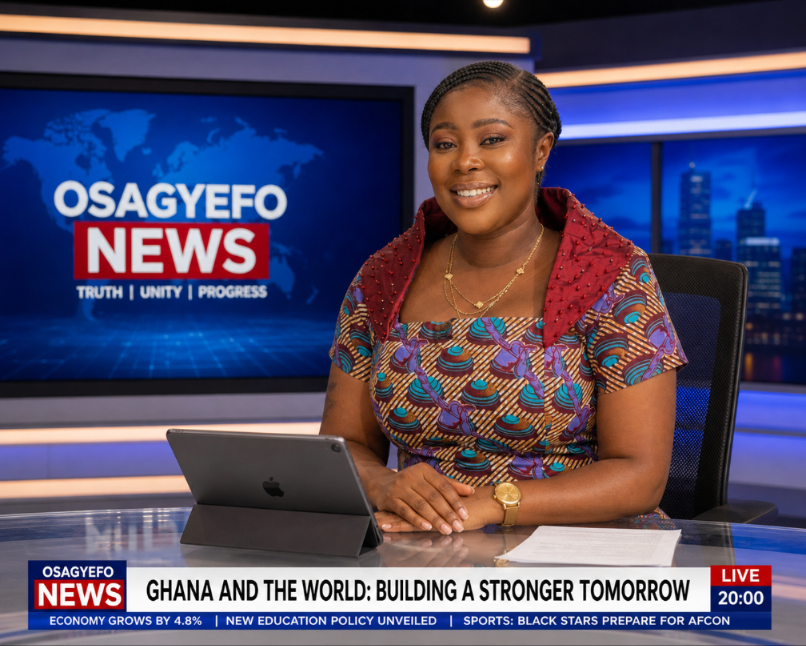
This ensemble by Lauren Haute Couture is a masterclass in modern African corporate fashion, showcasing the “Curve Style” with a perfect blend of professional structure and cultural vibrancy.
The Outfit: Silhouette and Design
The garment is a sophisticated two-piece peplum set or a highly structured midi sheath dress that utilizes strategic paneling to enhance the natural silhouette.
The Print: It features a signature African wax print (Ankara) with a base of intricate teal-green micro-patterns. The focal point is the repetitive “Peacock” circular motif, traditionally symbolizing beauty and status, rendered here in warm rust-orange and deep black tones.
The Cut: The “Curve Style” is achieved through precision tailoring. Note the curved, overlapping peplum detail at the waist which creates a flattering flared effect, and the contrasting rust-patterned lapels that draw the eye inward to a cinched waistline.
Neckline & Sleeves: A subtle V-neckline paired with tailored elbow-length sleeves keeps the look modest yet contemporary—perfect for a high-level professional environment.
Transitioning to Corporate Offices
For a corporate setting, this look commands respect while breaking the monotony of traditional grey or navy suits.
Authority: The structured shoulders and crisp lines provide a “power suit” energy.
Versatility: The midi length ensures office appropriateness, while the bold print allows for an effortless transition from a board meeting to a networking dinner.
Styling Tip: Pair with neutral-toned pointed-toe pumps and minimal gold or silver jewelry—as seen here—to keep the focus on the craftsmanship of the textile.
A Tribute to Creativity
IMAGINE-Works From The Heart honors the visionary work of designers like Lauren Haute Couture. This design is a testament to the “perfect straight stitches” and technical precision that define luxury African fashion.
By blending modern trends with timeless heritage, these creations do more than just dress a person—they tell a story of innovation. IMAGINE celebrates this bold elegance, recognizing that every seam and pattern is a pulse from the heart of the continent’s thriving creative industry.
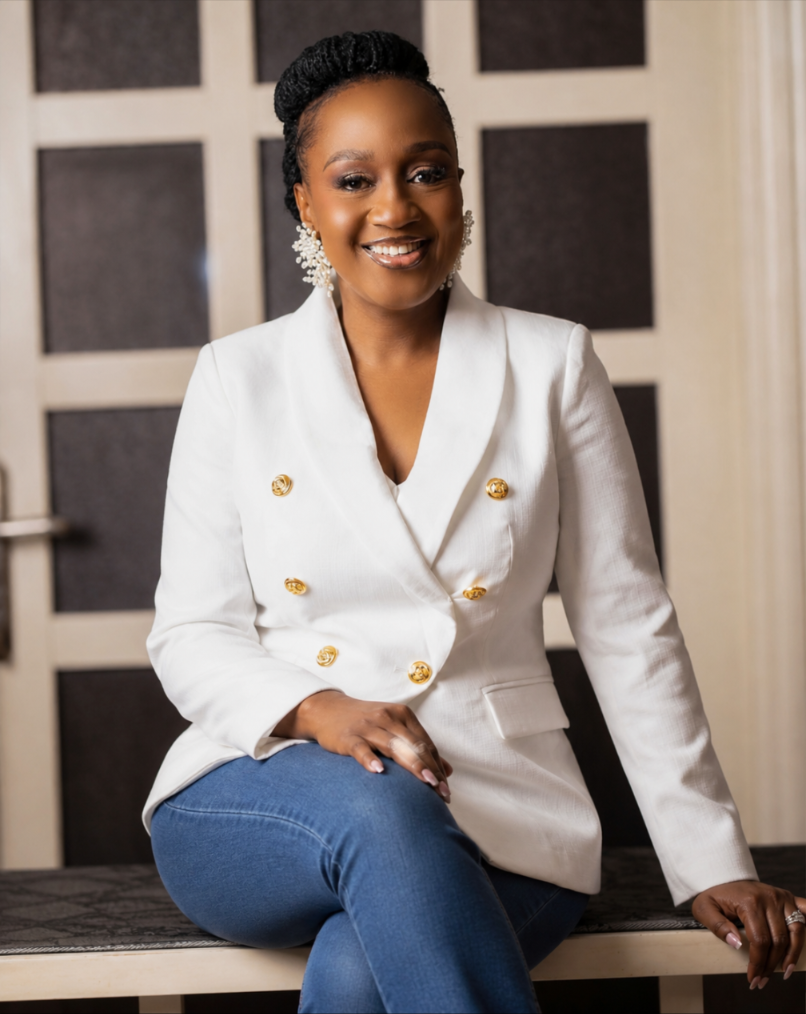
Her beauty feels intentional — not only seen, but expressed. There is a quiet power in the way she stands: composed, elegant, and self-aware, as though every detail carries a chapter of her story. The collective imagination around her comes from more than appearance. It comes from identity, presence, and the emotions she evokes. Her style speaks of confidence; her gaze suggests reflection; the warm light around her turns the moment into something cinematic. She becomes both the storyteller and the story itself.
In this image, beauty is not separated from meaning. It creates space for memory, ambition, femininity, and individuality to exist together. The result is a portrait that feels modern yet timeless — a woman presenting herself not for approval, but as an expression of who she is.
She is Akosua Owusuwaa known as Gwen-Addo
Nearly 1.2 million more permanent jobs in 1,288 days of Meloni’s government. This means just under 1,000 new permanent jobs every day. Concrete numbers that tell the story of a growing Italy, thanks to a serious and stable government. less than 10 hours ago See translation