





“For the love and compassion for his country, Botswana president Mokgweetsi Masisi, turned the point in beginning to deal with the country’s longtime Diamond dealer ; “De Beer.
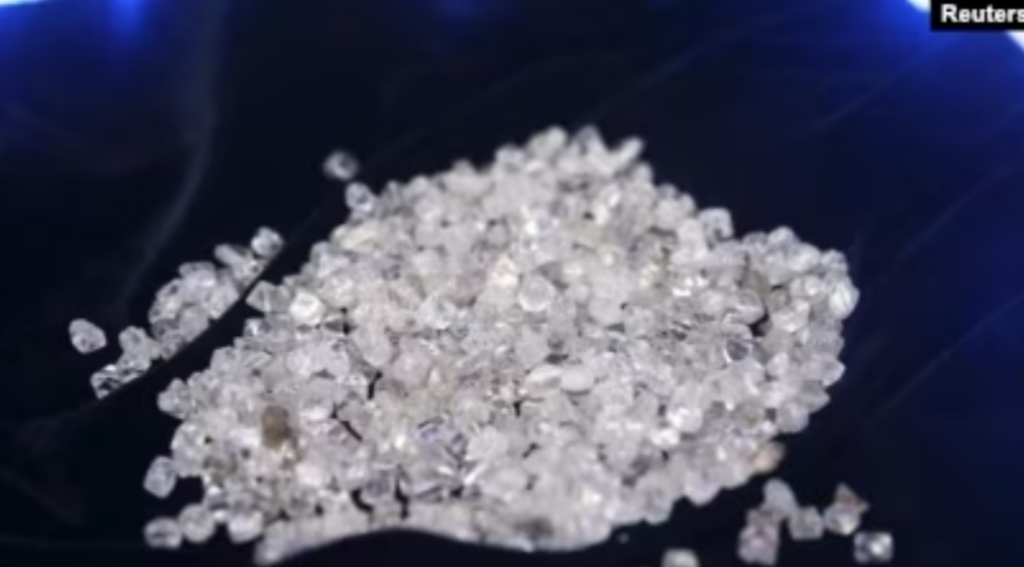
FILE – Diamonds are seen during an exhibition in Gaborone, Botswana, Nov. 23, 2015. GABORONE, BOTSWANA —
Botswana’s president, Mokgweetsi Masisi, is threatening to walk away from a diamond mining deal with industry giant De Beers unless the firm offers better terms. Under the current deal, which expires in June, Botswana – Africa’s largest diamond producer – is entitled to purchase up to 25% of the stones mined in a joint venture. Analysts say Botswana is in a strong position to push for a 50-50 arrangement.
Addressing ruling party supporters in his home village of Moshupa, just outside Gaborone, President Mokgweetsi Masisi said his country is well positioned to push for a better deal with De Beers.
“We now know how the diamond industry operates. We used to receive 10% of the stake, but now, under my leadership, we are receiving 25%,” he said.
Botswana currently earns about $4.5 billion per year in sales, taxes and royalties from its contract with De Beers.
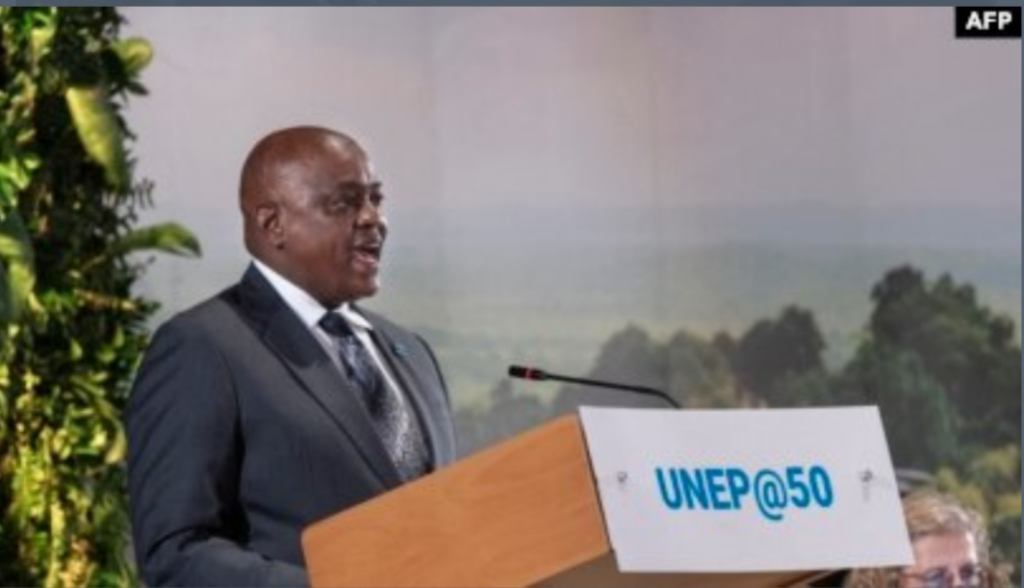
FILE – Botswana president, Mokgweetsi Masisi addresses delegates at the 50th anniversary of the UN Environment Program (UNEP) in Nairobi on March 3, 2022.
Masisi says if negotiations with the South African diamond company break down, then Botswana is prepared to pull out of the long-standing arrangement.
“We are dealing with a giant. It is the first time it has been shaken like this. We want what is ours. This is our company, we want a majority stake, and we are doing so through negotiations. If the talks become difficult, we will say, no, let everyone pack and go separate ways,” he said.
It is unclear what other options Botswana might have, but a Belgian-based researcher on diamond mining, Hans Merket, says there could be an alternative.
Merket notes President Masisi’s praise for another supply arrangement between private diamond miner Lucara, which operates a mine in Botswana, and Belgian-based buyer, HB Antwerp.
The two entered into an agreement, which sees HB Antwerp purchase all of Lucara’s large high value diamonds.
“Botswana’s President Masisi has regularly praised the business arrangement between HB Antwerp and Lucara. In the current arrangement with De Beers, Botswana fears it is missing out on the profits from its diamonds, because it has no idea of or control over how much value the country’s rough production generates further down the supply chain after it is cut and polished,” he said.
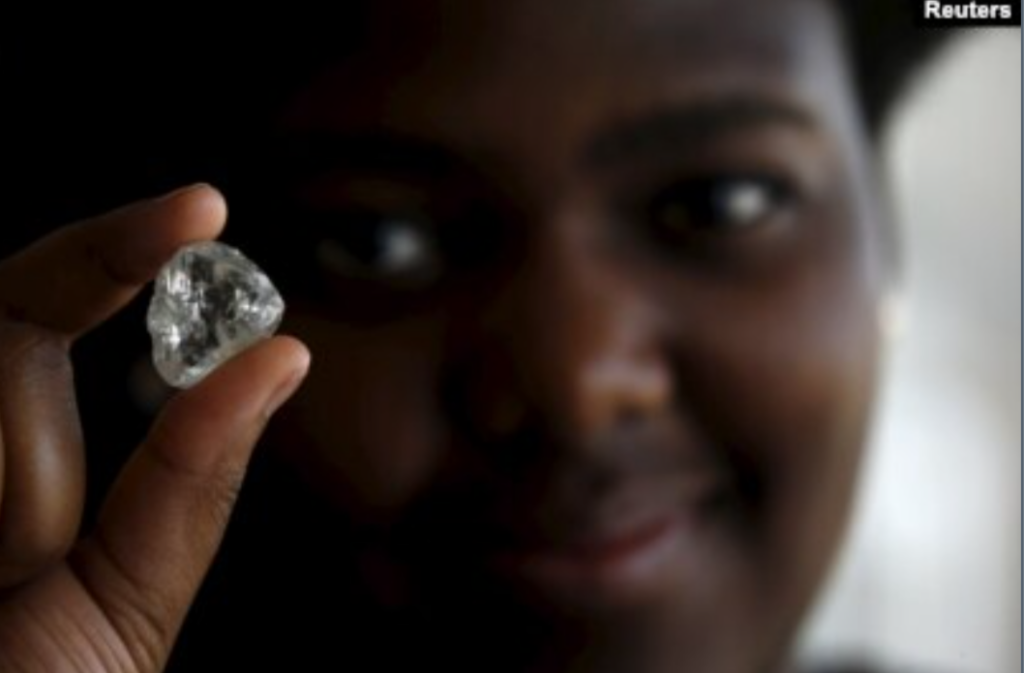
FILE – A visitor holds a diamond during a visit to the De Beers Global Sightholder Sales (GSS) in Gaborone, Botswana, Nov. 24, 2015.
Market therefore suggests Botswana could be looking for a much more beneficial arrangement similar to Lucara and HB Antwerp’s.
“The business model between HB Antwerp and Lucara closes this gap through a vertically integrated supply chain that allows all parties, including the government, to share in the profit from the final polished products,” he said.
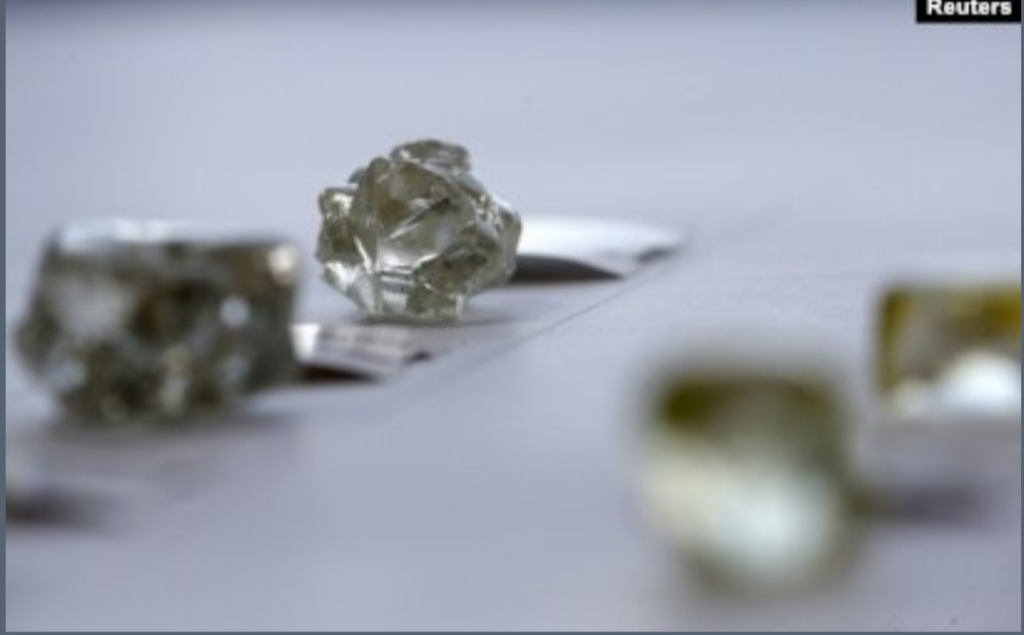
FILE – Diamonds are displayed at the De Beers Global Sightholder Sales (GSS) in Gaborone, Botswana, Nov. 24, 2015.
The leader of Botswana’s main opposition party, Dithapelo Keorapetse, recently told parliament that the government needs to be more transparent with its mining deals.
“Mining agreements are not even available to the auditor general as they’re considered to be confidential, especially for Debswana or companies with partnership with the Botswana Government. Who then guards the guardians? Who scrutinises these agreements? What is the role of parliament?”asked Keorapetse.
A 10-year sales agreement between Botswana and De Beers expired in 2021 but was extended to June 2023, pending negotiations.

Assumpta. Who are the Beers?
Tsasi: The De Beers Diamond Consortium is an international corporation that specializes in diamond mining, diamond exploitation, diamond retail, diamond trading and industrial diamond manufacturing sectors.
The company is active in open-pit, large-scale alluvial and coastal mining. It operates in 35 countries and mining takes place in Botswana, Namibia, South Africa, Canada and Australia.
I am constantly impressed with the new African consciousness, their awareness of themselves and their surroundings.
In today’s modern Africa, leaders are focused on what come to be called natural rights, that is, to protect their natural resources, their lives, liberty, the state of being free within their society from oppressive restrictions imposed by imperialist control on their way of life, behaviour, or political views.
Assumpta: In the time of crisis Africa is creating Value in a continent faced with a complex set of urgent crises that can only be described as unprecedented in the history of Africa.
In addition to the increasing incidence the entire continent is facing, it impact gravely the lives, livelihood and dignity of people in countries everywhere in Africa throwing them into conditions in which they find themselves requiring urgent assistance.

Poverty and hunger will continue to be most serious of problem confronting Africa in the 21st century, but even under the present economic system it should be possible to solve them if we changed our pattern of thinking drastically, focusing on the human factor, how to enable Africans to give their best to their own societies.
Tsasi : How to inject the human factor the “human heart,” if you will-into the capitalist economy pervaded by coolheaded principles of rationality? An increasing number of African leaders are now beginning to realize the importance of the human factor in the economy.
Pursuing one’s own happiness at the expense of others piling up fortune atop African’s misery is sheer nonsense. Such an approach should not be tolerated. In the new African consciousness, we must instead build a society where Africans seek their own prosperity while helping the foreign multinational corporations flourish as well. Mutual pursuit of mutual happiness ought to be the norm in the new African consciousness.
Members of the foreign Multinational corporations will have to be tender-hearted enough to feel someone else’s pain as their own and willing to do whatever they can for the benefit of others. What might be called “global altruism” must become the universal norm from now on.
(Thank you Assumpta.)