








How can universities better support Syrian and Ukrainian refugees?


Consciously or unconsciously, man has inherited a frightening destiny. What has possibly brought war and misunderstanding.
But what can possibly bring about the marvel of changing this destiny?
Perhaps nothing can, except the idea that putting peace into practice is worth staking one’s life on.
Where can we find the soil in which to plant and nurture an absolute concept of peace?
As things now stand, is there anyone who can give a confident and definite answer to this question?
We can only hope that Human beings do not become evil, to mistreat one another, witj disrespect, to disregard, and exploited, their ignorance.
In the gloom of lack of higher education cast over societies, I am sure that a philosophy of life should be embraced by all of us.

Oneday at my holiday in the UK, I calmly observed the campaign for a petition against education reforms. I saw the awareness and popular trend of the time.
Although many people approved of this trend, they did not think that such a petition alone was not sufficient to attain its objective.
Tsasi: In the light of Buddhist principles regarding the phenomena of life, you have to be thoroughly aware of the reality of the human mind, that is, its fickle, changeable nature.
For example, when you observe the African societies, you can observe the desire of the force who only want Africa’s impoverished because of Africa’s natural resources.
The universal demand for approval of higher education is now turning on, completely at the right time.
Assumpta: History abounds in cases when outcry to restore Swahili in Africans schools as Africans first language. The idea of Swahili as a pan-African language was pushed in the 1960s by Tanzania’s first President Julius Nyerere, who used Swahili to unify his nation after independence. Despite this post-colonial vision and the current boosted status of Swahili there has to be a dose of realism.
Tsasi: I painfully remember many such facts. Do Africans really actually know each other?
Assumpta: Are you talking about our collective identity as Africans?
Tsasi: Yes. How much wonder. Well I tried to travel through Africa on my own and it happened to travel by car and it took me four years because you barely get a visa to travel through Africa.
When you look at the Roman empire, one of the biggest thing they did was to facilitate easy travel between their different regions.
And here we are as Africans, it’s more expensive to fly from Ghana to South Africa than to fly to Dubai.
We need to understand that the conversation of higher education can be facilitated by our minds through how we feel, what we choose and how we want to live our lives.


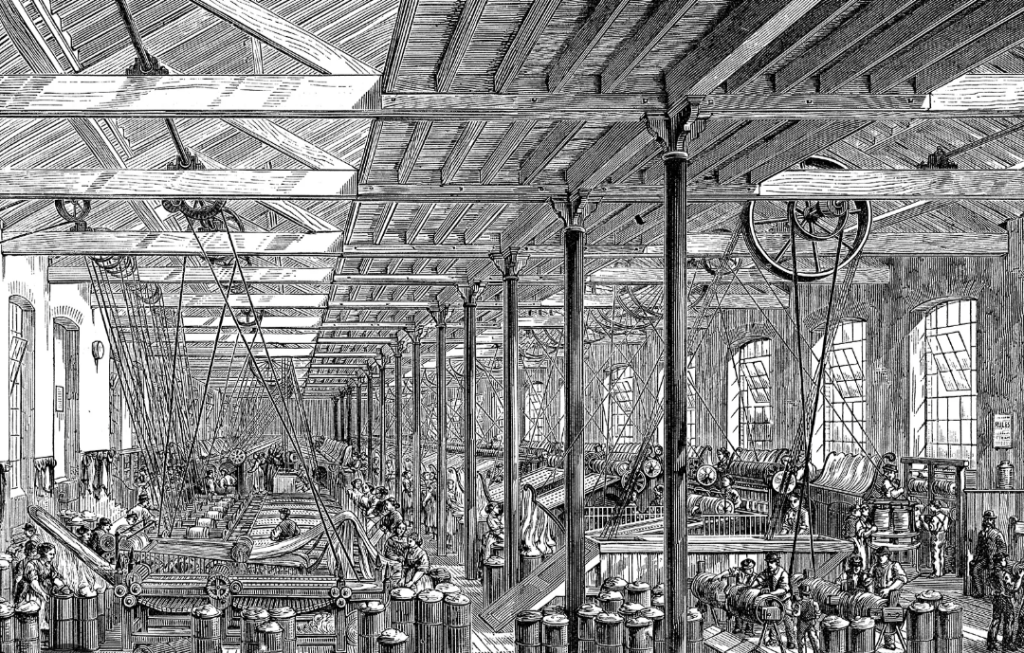

{ Intervention in Educational Activities}
Assumpta: The same reasoning which has led the state to intervene in and promote industrial activities led it to intervene also in educational activities.
The recent rapid progress in industrial development has made it clear that no nation can succeed in international competition with an uneducated workforce.
The fundamental source of all the activities required to insure the future prosperity of a society is, indeed, in the education of the individuals who collectively organize it.
Tsasi: Educational activity, therefore, is the most fundamental work of the state with respect to planning of its future.
Rural and urban population of Ghana 1990-2021. Published by Doris Dokua Sasu, Feb 2, 2023
The urban population in Ghana reached roughly 19 million in 2021, around 58 percent of the country’s total inhabitants. In the same year, approximately 13.8 million lived in rural areas. From 1990 onwards, Ghana’s urbanization steadily gathered strength, eventually surpassing the rural population.
In rural Ghana we don’t know exactly how many parents have left-behind their children to experience such a prolonged separation from their parents who imigrate in urban cities for work. They are vulnerable to a range of psychosocial problems.
There was a study conducted to determine whether a community-based intervention consisting of Children’s Centres can improve psychosocial well-being and school performance of these children.
The intervention was carried out in many villages, for children aged 7 to 15 years, irrespective of left-behind status. Many of the children living with parents attended the Centres.
At follow-up after one year, there were improvements compared to baseline in total difficulties measured with the strengths and difficulties questionnaire in children left behind by both parents, children left behind by one parent.
Findings from interviews with key stakeholders were overwhelmingly positive about the impacts. With strong local leadership and community motivation, a low-cost intervention can improve children’s psychosocial well-being in these settings. Allowing communities to adapt the model to their own situation fosters local ownership, commitment, with benefits for children, parents, carers, and communities.

In conclusion, prolonged separation following migration often disrupts parent-child relationships and results in psychosocial difficulties, especially among those who live with multiple adversities in the family.
Community-based interventions may help migrant parents and co-resident caregivers to better engage children and promote their resilience.
In the last 11 years, Syrians has undergone one of the largest rural-to-urban migrations in human history, with some children left behind because of parental migration.
It appears that, similar to processes found in the Ukraine migrants, the experience of economic and acculturation stress as well as disrupted parent-child relations constitute a risk for nonoptimal child functioning.
There are voices that are calling for favorable development and better education for these Syrians and Ukrainians migrant children.
Tsasi: It is natural that the state has to come to regard education, which is the very basis of it existence, as one of its major responsibilities and functions.
https://www.instagram.com/reel/CoX2IFMIGMn/?igshid=YmMyMTA2M2Y=
The refugees awareness should lead to the development of a higher education activities for all, both Syria refugees and Ukraine refugees. Needless to say, however, because education is such an important element in society, further improvement is needed
Thank you


