






We must build a society that has more than it’s short-term profit as it goal. Sgi president Ikeda

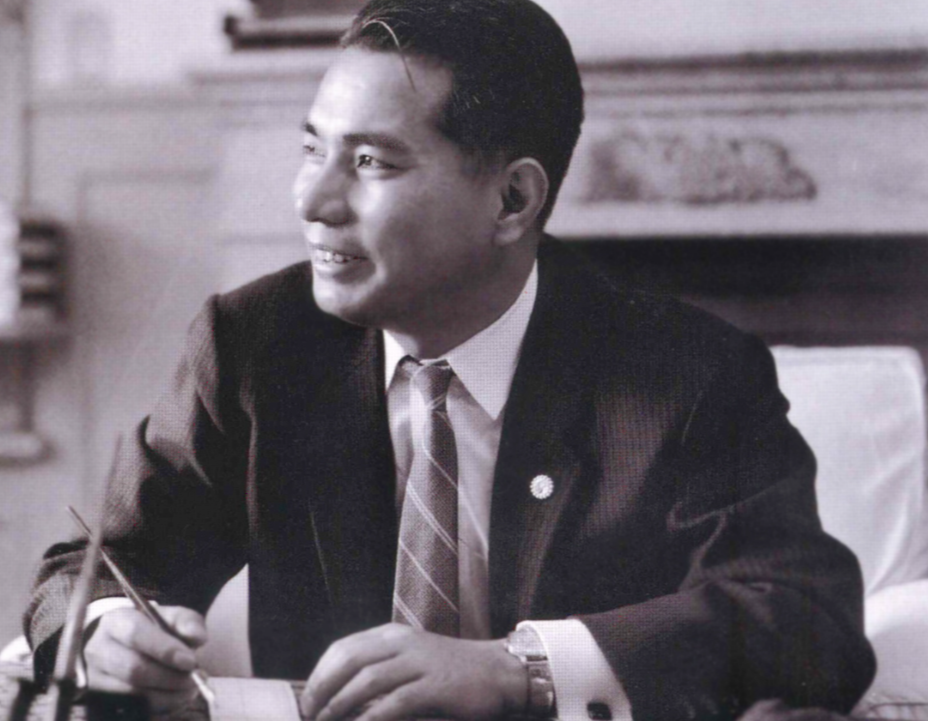
Humanitarian Competition
Part 2 of The Geography of Human Life, on nature as the medium for mutual interactions between humans and the land, continues the work of analysis, looking first at inanimate elements such as the atmosphere and weather, then at life forms such as plants, animals and human beings.

In Part 3, on the phenomena of humanity’s life activities with Earth as their stage, Makiguchi examines the nature of human social organization, including the social division of labor, the location of various productive activities, the nature of national states, cities and villages. In the final chapters of Part 3, Makiguchi examines the nature of the state as well as the changing role of competition within and among human societies.
The question of competition was one of pressing importance to the world in which Makiguchi lived. The final decades of the 19th and first years of the 20th centuries were marked by a global competition among the major imperial powers seeking to expand colonial acquisitions.
Darwinian notions of competition and survival of the fittest were enlisted to justify the domination and subjugation of supposedly weaker peoples by the stronger, more “fit” races of Europe.
These ideas gained currency within Japan, also, and played a role in justifying its own program of imperial expansion within Asia.
When The Geography of Human Life was published in 1903, Japan stood on the verge of war with Russia and many in Japan felt the nation was engaged in an unavoidable competition for survival. In fact, among many academics and intellectuals the prospect of war was greeted with outright enthusiasm.
Just a few days ago I was thinking about my previous marriage in Italy, a beautiful Island nation.
Naturally I was excited by the prospect of locating to a new country with my newly married wife, another adventure for us all.
I was equally excited to start my new ‘life of prosperity’ role as a husband.
But to confirm my intentions, I was eager to define what delivering ‘Prosperity’ might mean in an Italian context.
The ultimate goal? Was to deliver activities that lead to mutually beneficial opportunities for both me and my wife.
But first I had a few initial questions to ponder: What was my ‘prosperity’ strategy? Where could I connect between me and her? First, my health, and her health.
Second, I need to start working to be economically sufficient to support the household, which includes paying energy bills, and other things.
These were the areas we both worked to affect real changes and we created a family network and connections that helped us deliver this positive change.
Assumpta: Having clarity on everything ensures victory.
Commitment” is another name of your prosperity ideas. In the sense, to have commitment is to view the Suffering of others as injustice and to sacrifice oneself to eliminate that injustice.
Tsasi : You mentioned good intentions, following initial discussions. To the contrary, other views are quite different from the typically biased orientalist image of predatory, cunning merchants who give no room to citizens to manouvre.
I am expressing the implications of increasingly acquisitive societies when carefully observed, they are greedy in their nature.
Assumpta: Clarity on everything show that there’s always increase on fuel prices, home cares are denied. In our acquisitive societies, we are constantly bombarded by commercial advertising that induces false needs and real appetites.
Tsasi: Exactly. After all this, though, there remains the question of why such an ugly economic prosperity achievement is accepted?
Assumpta: Finally, practically speaking, the events of Africa’s economic history demonstrate how ill we live out our fate to create our destiny.
Tsasi: Fate and destiny are both terms that tend to be used interchangeably in conversations.
We hear people saying “Africans met their fate” and “It must be their destiny” but have you ever wondered what the actual differences between fate and destiny are?
Assumpta: What is Fate?
Tsasi :“Fate” comes from the Latin word Fatum meaning “that which has been spoken.” Therefore, through the ages, fate has come to be associated with that which has been predetermined for our lives.
Fate is based on the notion that there is a natural order in the Universe which cannot be changed, no matter how hard we try. The ancient Greeks and Romans even believed that three goddesses called Clotho, Lachesis, and Atropos (or the “Three Fates”) had the role of determining a person’s ultimate life path
Tsasi: Regrettable as it is, the experience shared by a young black girl with her mother in a supermarket.
She asked her mother why the security man in the supermarket was following them?
And her mother pointed out sincerely to her daughter saying: Blacks are always treated like nothing.
Until Black people start to build their own supermarkets, ships, planes, ect taking your own destiny into your own hands they will always disrespect you.
https://www.instagram.com/reel/Cmoj0djJtCg/?igshid=YmMyMTA2M2Y=
Assumpta: Spiritually, fate is what occurs when we ignore our life calling and don’t actively work to reconnect with our souls or True Nature.
When we leave our lives up to fate, we are basically handing over the reins of control to other people and outside circumstances.
When we don’t put any effort into consciously changing and evolving, then what happens is our fate to be under the white man’s control becomes our destiny.
The meaning of Destiny has much more positive connotations than fate. Deriving from the Latin word Destinare, destiny means “that which has been firmly established.” While this definition also refers to the idea of predetermined events, destiny is something we can actively shape and alter.
Unlike fate, there is an element of choice in destiny. Qualities such as courage, compassion, willpower, and patience can all help to change your destiny.
Spiritually, destiny is intimately connected to our ultimate life path. When we choose to step up and take responsibility for our lives, then we are actively shaping our destiny instead of leaving our lives to fate. Fulfilling our destiny involves consciously developing a connection to our deepest inner selves and maturing on an emotional, mental, and spiritual level.
So the answer to the question “do we have control” is paradoxical: we do and we do not have control. However, while we are still operating on the level of having a sense of self (ego), it is vital that we proactively work to step up and take responsibility for our destiny.
How to Fulfil Your Destiny
As long as you are consciously seeking to learn, grow, and spiritually evolve, you are fulfilling your destiny. However, if you’re wanting to achieve your highest potential, you might benefit from the following tips:
Develop understanding of what is Nam-Myoho-Renge-Kyo?
There are so many free resources out there (including our website which can help us understand who we are better.