




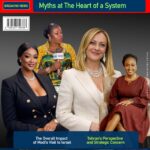


Assumpta Weekly News Magazine
Presents ”The Lawyer “ with Ms. Assumpta-Gahutu CEO of Assumpta Newsletter publication and principal of B enables and Toddlers DayCare highlights her perspective on the Article.
She’s joined by Three Brilliant Outstanding Ghanaian female Broadcast Journalists; Serwaa-Amihere, Berla-Mundi, and Frema-Adunyame.
A Special edition coming on Monday 24 February 2025 at: assumptagh.live/
AFRICAN STREAM: The Lawyer Update:
The Lawyer: Assumpta-Gahutu:


https://www.instagram.com/hairsenta?igsh=MXAzOThhNGZ0Nm15dQ==
Discover Hair Senta – Where Style Meets Excellence!
Looking for a top-tier hair salon that delivers stunning results? Hair Senta is your go-to destination for expert styling, flawless cuts, and premium hair treatments.
✨ Why Choose Us?
✔ Skilled stylists who bring your vision to life
✔ High-quality products for healthy, vibrant hair
✔ Relaxing atmosphere with top-notch customer service
📍 Visit Us: [ www.hairsenta.com/ 24 Jungle Avenue, Accra, Ghana 00233 ]
📞 Call Now: [+233) 0544354455/ 0248629769 /visit
www.hairsenta.com/ 24 Jungle Avenue, Accra, Ghana 00233
Transform your look today—walk in or book an appointment!

Article Title: Every Person Counts!
Content: The Hidden History of White Wealth in South Africa.
Since the unification of South Africa in 1910, government policies have overwhelmingly focused on uplifting White citizens while systematically excluding Black, Coloured, and Indian communities. This deliberate economic engineering created deep inequalities that persist to this day, shaping the country’s wealth distribution, access to opportunities, and overall well-being.
For too long, South Africa has been governed by a prejudicial spirit of mistrust and exclusion, where economic policies reinforced racial privilege instead of fostering unity. The time has come for President Cyril Ramaphosa to affirm a new national conviction—that every person matters, and every South African deserves the right to prosperity, regardless of race or background.
South Africa needs policies that bridge the divides of ethnicity and social standing, creating a society where people share in both joys and hardships. True transformation means going beyond symbolic gestures—it requires bold economic reforms, land redistribution, and education equity that reflect a nation where every citizen counts.

Elevate Your Space with Ambiance Diffuser – A Scented Escape!
Immerse yourself in an atmosphere of mystery and tranquillity with Ambiance Diffuser. Designed to captivate your senses, our premium diffusers create an alluring, long-lasting fragrance that transforms any space into a haven of elegance and relaxation.
✨ Why Choose an Ambiance Diffuser?
✔ Luxurious, high-quality scents
✔ Long-lasting and evenly diffused fragrance
✔ Perfect for homes, offices, and special moments
Let the air around you tell a story—one of mystery, comfort, and sophistication.
🛍 Get Yours Today!
📍 Location:
📞 Call Now:

1. The Foundation of White Wealth (1910–1948)
Political Control & Voting Rights
After the Union of South Africa was formed in 1910, the government ensured that only White South Africans (mostly British and Afrikaners) could vote and control the country’s economic policies.
- Black, Indian, and Coloured South Africans were stripped of voting rights, which meant they had no political power to challenge unfair policies.
The 1913 Land Act
- This law restricted Black South Africans to just 7% of the land (later 13% in 1936), even though they made up over 80% of the population.
- Black people were pushed into overcrowded reserves and forced to work as cheap labour on White-owned farms and mines.
- This land dispossession meant that White families could own and pass down wealth, while Black South Africans were denied the same opportunity.
Job Reservation & Public Works for Whites
- In the 1920s, the government responded to Afrikaner poverty by ensuring that public works projects only employed White workers. Examples:
- Hartbeespoort Dam and railways were built with White-only labour.
- Black workers, who had more experience in some industries, were deliberately excluded.
- The 1925 Wage Act set a minimum wage only for White workers, allowing them to earn significantly more than Black workers in the same jobs.
- Government contracts favoured businesses that employed more White workers, ensuring that private companies also prioritized White employment.

https://www.instagram.com/lois_cosmetics_?igsh=MTlhZjdzd2dmYXlzMA==
Serwaa Amihere & Lois Cosmetics – Connecting Ghana to the World with Authentic Beauty Supplies!
Renowned broadcast journalist Serwaa Amihere brings you Lois Cosmetics, the ultimate destination for health and beauty products. Experience the best in skincare, haircare, and cosmetics—trusted by Ghanaians and beyond.
✨ Why Choose Lois Cosmetics?
✔ 100% authentic beauty products
✔ Perfect for all skin and hair types
✔ Available for wholesale & retail
📍 Visit Us: Adjiringanor 69, before the Allied Oil, Adum near Ama Lena’s
📞 Call Now: 0533303267 / 0244522020
Glow with confidence—because beauty begins with authenticity!

2. Apartheid & Economic Privilege (1948–1994)
Social Welfare for Whites, Poverty for Blacks
- When the National Party came to power in 1948, they expanded massive welfare programs for White people, including housing, education, healthcare, and social grants.
- Black South Africans were deliberately underfunded, with lower wages, worse schools, and little access to basic services.
Unequal Pensions
- Black pensions were fixed—as inflation increased, their value decreased.
- Meanwhile, White pensions increased significantly, helping White families pass down wealth across generations.
Education & Bantu Education (1953)
- The Bantu Education Act made sure that Black children received a deliberately inferior education, designed to prepare them for nothing more than low-wage labour.
- White schools were funded at nearly 10 times the rate of Black schools.
- This meant White South Africans had access to skilled jobs, while Black South Africans were trapped in poorly paid, unskilled labour.
3. Post-1994: Why White Wealth Still Dominates
Generational Wealth
- By 1994, White South Africans had enjoyed decades of free land, jobs, and education, while Black South Africans had been deliberately kept in poverty.
- Wealth was passed down in White families through property, businesses, and education advantages.
Corporate South Africa Still White-Dominated
- The biggest companies were founded and built using cheap Black labour but remained White-owned.
- Even after apartheid, many top companies still have White executives and shareholders.
The Backlash Against BEE
- Many White South Africans oppose Black Economic Empowerment (BEE), claiming it’s unfair while ignoring the massive advantages their families received under apartheid.
- Some say, “30 years of democracy should be enough,” but 400 years of oppression can’t be undone in just three decades.
Conclusion
White South Africans became wealthy not just through hard work but because the government created an economy designed for them to succeed while suppressing everyone else.
The legacy of land dispossession, job reservation, welfare inequality, and education discrimination continues to shape South Africa’s extreme inequality today. Undoing this will take land reform, investment in Black businesses, and real economic transformation.
The Purpose of Elections, Voting, and Leadership
At its core, democracy is meant to serve the people—to create a fair system where leaders represent the interests of all citizens, not just a privileged few. The purpose of elections is to ensure that power remains accountable, that governments act in the interest of the people, and that society continuously progresses toward justice, equality, and dignity for all.
Leadership for Society or Self-Interest?
Too often, elections become a game of self-interest, where political elites focus on personal power rather than the well-being of the people. In many cases, politicians use poverty as a tool—keeping citizens dependent on the government instead of empowering them. True leadership should uplift society, not exploit it.
Ethnic Supremacy in Politics—A Global Problem
South Africa’s racial and ethnic divisions in leadership mirror global struggles, from Palestine and Israel to the U.S. and Britain. When power is concentrated in the hands of one group, it often leads to systemic oppression, exclusion, and conflict. The question is: can we break this cycle?
The Choice: Building New Habits or Staying in Prejudice?
We must choose to build a new political culture—one that values justice over race, fairness over favouritism, and equality over historical divisions. Otherwise, we remain trapped in systems that favour one group while keeping others marginalized.
A Call for Change
Should we continue the same prejudicial habits, reinforcing inequality? Or should we develop new habits, fostering inclusivity, economic justice, and human dignity? The choice is ours—but the future depends on it.
This newsletter article is structured into a clear and compelling narrative, ensuring accuracy and a strong impact.
Examining Trump’s Proposal to Stop Aid to South Africa, Land Reform, and Zionism Operation in South Africa
- Do you agree with former US President Trump’s proposal to remove aid from South Africa because the country has not addressed the illegalities of how land was taken by Whites, which challenges fundamental principles of international law?
- If the UN was unable to address this issue, does that mean it did not recognise the need for South African Whites and Blacks to coexist peacefully?
- This brings us to a similar footprint of the Zionist idea, which wanted to create a Jewish state at the expense of the Palestinians just like in South Africa where whites wanted to create their state but at the expense of Black South Africans.
- Zionism is the concept of privileging and granting exclusive rights to one group of people at the expense of another.
- Therefore, Trump’s proposal to stop aid to South Africa is a strategy to push South African leaders to recognise the need for coherence and to create a more equal society.
Article Title: Article Title: Every Person Counts!
Content: The Hidden History of White Wealth in South Africa
Introduction:
South Africa is often called the most unequal society in the world, but few fully understand how this inequality was engineered over generations. While some argue that 30 years of democracy should have erased the past, the reality is that centuries of economic policies systematically privileged White South Africans while oppressing Black, Coloured, and Indian communities.
From the moment South Africa was unified in 1910, the government implemented laws to secure White economic dominance, starting with land dispossession, job reservation, and state-funded programs exclusively for White workers. These policies created generational wealth for White families, while Black South Africans were deliberately kept in cycles of poverty. Even after apartheid officially ended in 1994, its economic impact remains deeply embedded in the country’s financial landscape.
Understanding this history is essential—not just to recognize where we are today, but to shape a more just and equitable future.
Assumpta Weekly News Magazine Presents: “The Lawyer”
A Special Dialogue on “Every Person Counts!”
Participants:
- Ms. Assumpta-Gahutu – CEO of Assumpta Newsletter & Principal of Babies and Toddlers DayCare
- Berla Mundi – Renowned Ghanaian Broadcast Journalist
- Frema Adunyame – Award-Winning Ghanaian Broadcast Journalist
- Serwaa Amihere – Acclaimed Ghanaian Broadcast Journalist
Date: Monday, 24 February 2025
Live Stream: assumptagh.live/
African Stream: The Lawyer Update
Opening Remarks

Berla Mundi: Good evening, everyone. It’s an honour to be here with such brilliant minds as we unpack this thought-provoking article, “Every Person Counts!” by Ms Assumpta-Gahutu. We are here to engage in a meaningful dialogue about the economic history of South Africa, its present inequalities, and the implications for leadership and governance. To start, Ms. Assumpta-Gahutu, could you share your perspective on why you felt this article was necessary at this time?

Ms. Assumpta-Gahutu: Thank you, Berla. The disparities in South Africa’s wealth distribution are not random—they are the result of deliberate policies that date back over a century. The world often discusses inequality, but few truly dissect its root causes. This article sheds light on how economic privilege was systematically structured to benefit White South Africans while marginalizing Black, Coloured, and Indian populations. I aim to ignite a broader conversation about justice, reparations, and economic transformation—not just in South Africa, but across Africa and the world.

Frema Adunyame: That’s an incredibly important point. When we talk about racial disparities in wealth, many people argue that apartheid ended in 1994, so there should be economic balance by now. But the article illustrates why that is far from reality. Can you elaborate on how the foundation of White wealth was built between 1910 and 1948?

Ms. Assumpta-Gahutu: Absolutely. After the unification of South Africa in 1910, the government designed laws that granted political power exclusively to White South Africans. This meant Black South Africans had no say in economic policies. The 1913 Land Act was a major turning point—it restricted Black ownership to just 7% of the land, despite them making up over 80% of the population. White families, on the other hand, accumulated generational wealth through land ownership, agriculture, and state-funded job programs that excluded Black workers. The 1925 Wage Act even mandated higher wages for White workers while keeping Black labour cheap.

Serwaa Amihere: It’s devastating to see how those early policies created cycles of poverty that persist today. When apartheid officially began in 1948, how did it expand economic privileges for White South Africans?

Ms. Assumpta-Gahutu: The National Party introduced even more aggressive policies to entrench White economic dominance. They expanded social welfare for White citizens—giving them better healthcare, housing, and education—while underfunding Black communities. The 1953 Bantu Education Act ensured that Black children were only trained for low-wage jobs, while White children received high-quality education, allowing them to enter lucrative professions. The state also provided White pension benefits that increased with inflation, while Black pensions remained stagnant. All of this ensured that economic power remained in White hands, long after apartheid officially ended.

Frema Adunyame: Fast forward to post-1994, and we still see that wealth is largely in the hands of White South Africans. What do you think about the argument that 30 years of democracy should have been enough to balance the scales?

Ms. Assumpta-Gahutu: That argument ignores the fact that centuries of racial privilege cannot be undone in three decades. In 1994, White South Africans already owned the majority of land, businesses, and capital. Corporate South Africa remained White-dominated, with top companies still run by White executives. Even Black Economic Empowerment (BEE) policies faced backlash from White South Africans who claimed they were being disadvantaged—yet they ignored the historic advantages they benefited from.

Berla Mundi: This leads us to a critical discussion on global leadership and its response to these injustices. Newly elected U.S. President Donald Trump proposed cutting aid to South Africa, arguing that the country had not addressed land dispossession. Do you agree with this approach?

Ms. Assumpta-Gahutu: Trump’s proposal was a double-edged sword. While his stance on land dispossession highlights an important issue, his method—cutting aid—would disproportionately harm the same Black South Africans who have already suffered under systemic inequality. True leadership should push for policies that redistribute wealth fairly, not impose economic sanctions that could deepen poverty.

Serwaa Amihere: That’s an interesting point. The article also touches on Zionism and the idea that privileged groups often create exclusive states at the expense of others. Can we draw a parallel between South Africa and the Israel-Palestine conflict?

Ms. Assumpta-Gahutu: Absolutely. Zionism and apartheid share a common thread—both involve systemic exclusion based on ethnicity or race. In South Africa, White South Africans structured an economy that privileged them while marginalizing others. Similarly, Zionist policies have systematically displaced Palestinians to create a Jewish-majority state.
- The question is: can these historical patterns be reversed?
- Can leaders recognize the damage caused and take bold steps toward true inclusivity?

Frema Adunyame: That brings us to the role of elections and leadership. Do you think South Africa’s leadership has done enough to address economic disparity?

Ms. Assumpta-Gahutu: Unfortunately, no. Many politicians campaign on promises of economic reform but fail to deliver real change. Some leaders have even used poverty as a political tool, keeping people dependent on the government instead of empowering them through land redistribution, education, and business investments. Real leadership should dismantle historic injustices, not maintain them for political gain.

Berla Mundi: Finally, as we wrap up, what’s your call to action for South Africans and the world at large?

Ms. Assumpta-Gahutu: We must actively dismantle structures of inequality. This means land reform, access to quality education, and investment in Black-owned businesses. It also requires a shift in mindset—recognizing that historical injustices don’t just disappear with time; they need intentional correction. It’s up to both leaders and citizens to choose justice over prejudice, economic fairness over privilege, and a truly inclusive society over one built on exclusion.

Berla Mundi: The United Nations played a significant role in ending apartheid, yet some believe it failed to ensure racial unity in South Africa. Does this mean the UN did not recognize the necessity for Black and White South Africans to coexist peacefully?

Ms. Assumpta-Gahutu: The UN was instrumental in opposing apartheid and advocating for South Africa’s transition to democracy. However, land reform is a deeply complex national issue. While the UN has supported reconciliation, economic and social factors have made achieving true racial unity difficult. Blaming the UN alone overlooks the domestic and historical factors that continue to shape South African society.

Serwaa Amihere: That is a powerful message. Thank you, Ms. Assumpta-Gahutu, for this enlightening discussion, and to my colleagues, Berla and Frema, for their sharp insights. The conversation doesn’t end here—let’s continue to challenge inequality and advocate for true economic justice.

Berla Mundi: And with that, we invite our audience to join the conversation on assumptagh.live/ this Monday. Let’s keep the dialogue going. Thank you all for tuning in!


Liked by Assumpta Newsletter and Lifestyle Publications_shot_it, goba_kente and others pixah_photo With Hajia Nasira Afrah.
The first outfit from @pistisgh paired perfectly with the other designs from @detailsbyneyomi
Makeup: @polkadot bl
Turban styling: @bridal_affairr
Photo: @pixah_photo


https://www.instagram.com/laurenhautecouture?igsh=MWxzNXN1Ym5nZ3o3Mg==
Liked by Assumpta Newsletter Magazine Publication and others, Lauren Haute Couture Fashion defines elegance and dignity.
Featuring the stunning @iamamamcbrown, wearing an outfit by @laurenhautecouture, beautifully captured by @kaysphotographs and styled by @nealdavids.


https://www.instagram.com/officeandcobysa?igsh=dmxucTZ2a2t1eDBn
Liked by Assumpta Newsletter Magazine Publication and others, Outfit: @officeandcobysa / Hair: @oh_my_hairr Makeup: @kukiethemakeupgirl
Our Shared Humanity:


