








📰 Assumpta Newsletter Magazine
Presents: Osagyefo Newsletter Publication
Journalism of Neglected Topics:
🚨 BREAKING FEATURE
Myths at the Heart of a System
Overall Impact of Modi’s Visit to Israel: Tehran’s Perspective and Strategic Concern
📅 PUBLICATION DETAILS
Release Date: Monday, 16th March 2026
Platform: Exclusively on Assumptagh.live
Edition: Global Affairs & Strategic Narratives
Join the conversation:
#OsagyefoNewsletter #TheEnabler #HistoricalPhysics #AssumptaDigital #HumanRevolution #GwenAddo








https://www.instagram.com/hairsenta?igsh=MXAzOThhNGZ0Nm15dQ==
The “Bloom & Breakthrough”
Something Unbelievable Is Coming to 24 Jungle Avenue This Spring… 🌱🌸
Accra is shedding its old skin. A new energy is beginning to stir—a whisper of silk, a shimmer of new life.
They say beauty is power. But this spring, what if your hair could radiate your true light, stop a room, and carry the warmth of Ghana like the sun?
HAIR SENTA — the secret behind every unforgettable bloom. ✨
Straight from the heart of Ghana, our 100% luxury human hair extensions arrive like a fresh start you didn’t know you needed: natural, unmatched, undeniable. This season, we’re cultivating heritage, craft, and total glamour in every strand.
Will you be the one to bloom this spring morning… or the one who only hears the story later? 🔔
Call now: 📞 (+233) 0544354455 / 0248629769
Visit: 🌐 www.hairsenta.com�
Location: 📍 24 Jungle Avenue, Accra, Ghana 00233
Hair Senta. Real Hair. Real Power. Real Radiance

🌍 A GLOBAL PERSPECTIVE
The stakes have undeniably risen.
📅On Monday, 16th March 2026, Assumpta Digital presents a rare, cross‑continental dialogue examining geopolitics, narrative power, and sovereignty in an era of shifting alliances. This edition brings together prominent female voices from politics, business, media, and strategy to explore the deeper implications of global realignment.
At the centre of this intellectual exchange stands Gwen Addo, whose insights anchor a broader debate that transcends borders, ideologies, and traditional power structures.
FEATURED VOICES

GWEN ADDO
Global Entrepreneur | Economic Visionary | Author of Direction
Gwen Addo is a Ghanaian global entrepreneur, leadership coach, and business strategist. She is the Founder and CEO of:
- The Hair Senta
- The Leading Senta
- HIBS Africa
- CAGA Heights
A food educator and beauty advocate, Gwen Addo is widely recognised for her work in empowering the next generation of African and global business leaders, blending economic strategy with human‑centred leadership.
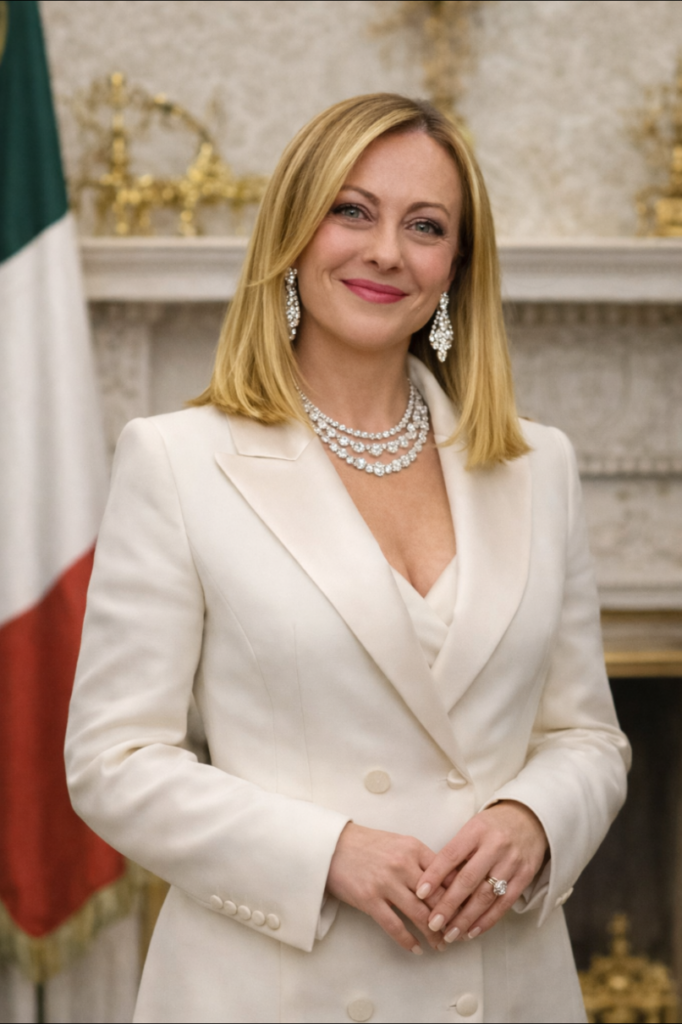
GIORGIA MELONI
Prime Minister of Italy
A central figure in contemporary European politics, offering insights into sovereignty, national interest, and shifting geopolitical alignments within a multipolar world.

DZIGBORDI KWAKU‑DOSOO
Global Keynote Speaker | The Human‑Centered Strategist
A leading voice in re‑imagining leadership, transformation, and values‑driven governance in complex global systems.

📺 FREMA ADUNYAME
Broadcast Journalist, Channel One TV
A respected media analyst known for cutting through political public relations to examine the realities behind policy decisions and power narratives.
THE CENTRAL QUESTION
How do global narratives, strategic partnerships, and perceptions of power influence national choices—and who ultimately bears the consequences?
🔑INSIDE THIS EDITION
Modi’s Israel Visit, Strategic Narratives, and the Impact on Tehran
Prime Minister Narendra Modi’s visible alignment with Israel has intensified long‑standing debates about the real drivers of India’s foreign partnerships. Many observers question whether India’s expanding cooperation with Israel—particularly in areas such as investment, technology, and security—fully serves India’s long‑term national interests, or whether it risks prioritising external alignments over domestic and regional stability.

This scepticism has grown in the aftermath of Modi’s Israel visit, which, while strengthening ties with Tel Aviv, also carried implications for Tehran. From Iran’s perspective, the visit reinforced perceptions that India is drifting closer to Israel and the Western security ecosystem, thereby narrowing India’s traditional space for strategic balancing. Although India has not severed ties with Iran, the visit signalled caution and distance at a moment of heightened regional tension.
Within India, critics argue that certain foreign investment initiatives associated with Israel often arrive wrapped in powerful narratives of innovation and opportunity, yet may deliver limited structural benefits. These initiatives, they suggest, can sometimes create inflated expectations, shift domestic priorities, and deepen political or ideological divisions without addressing core economic and social needs. Similar concerns have historically been raised about the symbolic influence of globally prominent financial and asset‑management institutions, whose narratives can loom larger than their practical role in domestic development.
From this perspective, the issue is not one of control or conspiracy, but of narrative power—the capacity of influential partnerships to shape perceptions of progress, legitimacy, and inevitability. When such narratives dominate public discourse, they risk diverting attention from India’s own social responsibilities, development priorities, and long‑term sovereignty.
For a society that places high value on harmony, coexistence, and internal stability, these concerns are particularly significant. India’s strategic choices abroad inevitably ripple inward, affecting domestic cohesion and regional relationships—especially with Pakistan. Many Indians therefore hope that foreign partnerships, including those with Israel, remain carefully calibrated to avoid entanglement in conflicts or dependencies that could undermine peace, balance, and national unity.
WHY THIS EDITION MATTERS
This publication does not seek to dictate conclusions. Instead, it invites readers worldwide to:
- Question dominant narratives
- Examine strategic choices critically
- Reflect on sovereignty, responsibility, and long‑term consequences
Myths at the Heart of the System — Overview
“Myths at the Heart of the System” refers to the foundational beliefs and narratives that societies construct around powerful financial institutions and global actors. Figures and organizations often cited in these discussions—such as major banking dynasties or global asset‑management firms—have become symbols through which people interpret global finance, influence, and political power. Whether accurate, exaggerated, or contested, these narratives play a significant role in shaping public perception.
In the Indian context, however, influences closer to home may be equally—if not more—impactful. India’s long and complex historical relationship with Pakistan has produced enduring assumptions and strategic perceptions that continue to shape national security thinking, foreign policy choices, and public debate. These deeply rooted experiences often provide the emotional and political backdrop against which newer global partnerships are assessed.
This does not suggest uniform agreement within India. On the contrary, India is a nation defined by intellectual diversity and democratic plurality. Scholars, policymakers, and citizens hold widely differing views, particularly regarding India’s evolving strategic relationship with Israel. Support, scepticism, and caution coexist within the national discourse.
Within this debate, some observers question whether certain foreign investment initiatives genuinely advance India’s long‑term interests. Critics argue that some partnerships may generate superficial expectations of progress while subtly influencing domestic priorities, public narratives, or political divisions, without addressing deeper structural needs.
At the same time, Indian society has long drawn strength from traditions that emphasise harmony, spirituality, and social responsibility. For many citizens, the highest values lie in preserving social cohesion, peaceful coexistence, and internal balance rather than engaging in geopolitical rivalry.
For this reason, when Prime Minister Narendra Modi pursues international partnerships—especially those with strategic and security implications, such as Israel—it becomes essential to consider their broader consequences. These include implications for sovereignty, regional stability, and long‑term peace. A nation that places a high value on harmony would not wish to see its people drawn into escalating conflicts, particularly in a region already shaped by sensitive relations with Pakistan.
Below is a scripted opening dialogue for the panel, written in a polished, respectful, international broadcast tone, with Frema Adunyame as host, followed by Gwen Addo’s first response.
The structure follows your instructions precisely.
🌍 Assumpta Newsletter Magazine
Osagyefo Newsletter Publication
Live Panel Dialogue

FREMA ADUNYAME (Host)
Good day to our readers, viewers, and listeners across the world.
On behalf of Assumpta Newsletter Magazine and the Osagyefo Newsletter Publication, I warmly welcome you to this special global dialogue. Wherever you are joining us from—Africa, Europe, Asia, the Middle East, or the diaspora—we are grateful for your time and your engagement.
I also wish to extend my deepest appreciation and warm welcome to our distinguished panelists, women whose leadership, intellect, and global perspectives enrich this conversation immensely. Thank you all for being here.
Let me briefly introduce our panel:

- Ms. Gwen Addo, a Ghanaian global entrepreneur, economic visionary, author, and leadership strategist, whose work intersects business transformation, human‑centered leadership, and global economic thought.

- Her Excellency Giorgia Meloni, Prime Minister of Italy, a central figure in contemporary European political discourse on sovereignty, national interest, and global alignment.

- Ms. Dzigbordi Kwaku‑Dosoo, a globally respected keynote speaker and human‑centered strategist, whose work challenges conventional leadership models in complex systems.

And I am Frema Adunyame, broadcast journalist with Channel One TV, honoured to serve as your host and moderator for today’s dialogue.
SETTING THE CONTEXT
Before I invite our panelists to speak, allow me to briefly analyse and frame the foundation of this edition of the newsletter.
Our article is titled:
“Myths at the Heart of a System”
Subtitle: Overall Impact of Modi’s Visit to Israel: Tehran’s Perspective and Strategic Concern
This framing invites us to look beyond headlines and examine the narratives—often powerful, sometimes exaggerated—that shape how societies understand global finance, geopolitical power, and international alliances.
FRAMING THE DEBATE: MYTHS, POWER, AND PERCEPTION
The phrase “Myths at the Heart of the System” captures the narratives that influence how policies and partnerships are perceived. In this context, these myths revolve around:
- Prominent global financial institutions,
- Historical banking legacies often cited in discussions of financial influence,
- And strategic partnerships between states, notably India and Israel.
Some of these narratives are grounded in reality, others less so—but together, they shape public understanding of how national priorities, alliances, and economic strategies are formed.
🇮🇳 INDIA’S STRATEGIC CALCULUS
India’s foreign policy cannot be understood without acknowledging its historical rivalry with Pakistan, which continues to influence its security thinking and diplomatic posture.
Within this framework:
- Some analysts argue that closer ties with Israel offer India advanced technology, defense cooperation, and investment opportunities.
- Others caution that these partnerships may entangle India in wider geopolitical tensions or external agendas that do not fully align with India’s long‑term interests.
🧩 DIVERSITY OF THOUGHT
India, of course, is not monolithic. There is wide diversity in opinions regarding:
- India–Israel cooperation,
- The role of global financial institutions,
- And strategic alignment in international conflicts.
This diversity underscores the need for careful, nuanced policymaking that balances global realities with domestic sentiment.
🕊️ CULTURAL AND ETHICAL CONSIDERATIONS
Indian society carries a legacy rooted in harmony, spirituality, and social responsibility. For many citizens, peace and social cohesion hold greater value than geopolitical confrontation.
From this perspective, any international partnership—particularly one involving security and strategic alignment—must be assessed for its impact on sovereignty, regional stability, and the safety of ordinary citizens, especially given India’s delicate relationship with Pakistan.
🔑 IN SUMMARY
The “myths at the heart of the system” challenge us to move past simplistic explanations. They remind us that India’s choices—particularly under Prime Minister Narendra Modi—must strike a balance between geopolitical ambition, domestic values, diverse perspectives, and the enduring desire for peace and stability.
INVITING THE FIRST VOICE
With that context respectfully laid out, I would now like to turn to our first panelist.
Ms. Gwen Addo, thank you once again for joining us and for your continued contribution to global strategic thinking.
Gwen, with your background in economic transformation and human‑centered leadership, may I kindly invite you to share your thoughts on “Myths at the Heart of a System” and the implications of India’s strategic choices following Prime Minister Modi’s visit to Israel?

GWEN ADDO (Panelist)
Thank you very much, Frema, for that thoughtful framing—and thank you for the warm introduction. It is truly an honour to be part of this dialogue alongside such distinguished leaders and voices.
When we speak of “myths at the heart of the system,” I believe we are really talking about perception versus substance. In global affairs, narratives often move faster than realities, yet they carry enormous power. They influence markets, public opinion, and even national confidence.
From my perspective, India’s situation is particularly complex. India is a civilisation‑state with deep spiritual, cultural, and social values, and at the same time, it is navigating a highly competitive global economic system. When strategic partnerships—such as those with Israel—are formed, the critical question should not only be what is gained, but at what cost, and to whom.
There is often an assumption that alignment with technologically advanced partners automatically translates into long‑term prosperity. However, if such partnerships are driven more by narrative prestige than by sustainable local development, they risk creating dependency rather than empowerment. Development should strengthen a nation’s internal capacity, not merely enhance its global image.
Equally important is the human dimension. Economic strategy must remain anchored in social harmony and responsibility. If external alignments intensify regional tensions or distract from internal cohesion—particularly in sensitive contexts involving Pakistan—then leaders must pause and reassess.
For me, true leadership is about discernment: knowing when to engage, when to resist pressure, and how to protect a nation’s soul while participating in a global system that often rewards speed over wisdom.
Thank you, Frema.

FREMA ADUNYAME (Host )
Thank you very much, Gwen, for that deeply thoughtful contribution. We truly appreciate the clarity with which you framed the balance between narrative power, economic strategy, and the human and cultural dimensions of leadership. Your emphasis on discernment and internal capacity adds an important lens to this discussion.
Your Excellency, Prime Minister Giorgia Meloni, thank you once again for joining us today. We recognise the weight of responsibility you carry as a national leader within a complex European and global landscape.
From your perspective as Prime Minister of Italy—and as someone who has consistently spoken on issues of sovereignty, national interest, and strategic independence—how do you interpret the narratives surrounding global power and strategic partnerships that we are discussing today? In particular, how do you view India’s alignment choices following Prime Minister Modi’s visit to Israel, and their implications for regional balance and international stability?

GIORGIA MELONI (Prime Minister of Italy)
Thank you, Frema, for the invitation, and thank you for the respectful and balanced way in which this conversation has been framed. I am honoured to take part in this dialogue with such distinguished panelists.
When we speak of “myths at the heart of the system,” we are addressing a reality that many nations face today: the tension between perception and sovereignty. In global politics, narratives can become as influential as military or economic power. They shape expectations, alliances, and sometimes even the internal confidence of nations.
From a European standpoint, I understand very well the challenge India faces. Strategic partnerships—whether with Israel, European states, or other global actors—are often presented as pathways to progress, security, and technological advancement. These opportunities are real. However, every partnership also carries strategic costs, particularly when it risks narrowing a nation’s diplomatic flexibility.
India, like Italy, must constantly evaluate whether alignment strengthens autonomy or quietly limits it. When partnerships are framed as inevitable or unquestionable, they can become less about choice and more about momentum. This is where leadership becomes critical.
Regarding Iran’s perspective, it is understandable that Tehran perceives Modi’s visit to Israel as a signal. In international relations, symbolism matters greatly. Even when policy remains formally open and balanced, symbolism can reshape trust, expectation, and regional calculations.
I would also emphasise that sovereignty today is not only territorial—it is strategic. It includes the freedom to say yes, the freedom to say no, and the freedom to change course when circumstances evolve. Nations that allow external narratives—whether economic, ideological, or security‑driven—to dominate internal priorities risk weakening their long‑term independence.
In this context, India’s deep cultural foundation, which values balance, restraint, and coexistence, should be viewed as a strategic asset rather than a constraint. These values can guide policy choices that preserve peace while still engaging confidently with the world.
Thank you, Frema.

🎙️ FREMA ADUNYAME (Host |
Thank you very much, Your Excellency, for that thoughtful and measured response. We truly appreciate your emphasis on sovereignty—not only in territorial terms, but as strategic freedom and the ability of nations to retain choice amid powerful global narratives.
If I may respectfully follow up, Prime Minister Meloni:
given your experience navigating Europe’s own complex alliances and external pressures, what practical lessons could India draw from Europe’s attempts to balance strategic partnerships while preserving autonomy? In your view, how can a country like India engage with powerful partners such as Israel without allowing strategic symbolism or external expectations to unduly shape its regional relationships—particularly with neighbours like Iran and Pakistan?

GIORGIA MELONI (Prime Minister of Italy)
Thank you, Frema, for that important follow‑up, and thank you once again for the opportunity to reflect on these issues in a serious and principled setting.
From Europe’s experience, one of the most practical lessons we have learned is that strategic autonomy is not maintained by rhetoric, but by discipline. Alliances are necessary; isolation is not an option in today’s world. However, alliances must remain tools of national interest rather than definitions of national identity.
In Europe, we have often faced the challenge of engaging with powerful partners—whether in matters of security, technology, or energy—while still preserving the ability to act independently. What this has taught us is the importance of clear red lines. A country must know, in advance, which areas are open to cooperation and which are not negotiable. Without that clarity, external expectations can slowly become internal obligations.
For a country like India, this lesson is particularly relevant. India is not merely a regional power; it is a civilisation with a long historical memory and a strong sense of sovereignty. Engagement with Israel can certainly bring benefits, but it should not be framed as inevitable or permanent in a way that narrows India’s room to manoeuvre. Strategic partnerships should always be reversible, adjustable, and conditional on national interest.
On the matter of symbolism, Europe has learned—sometimes the hard way—that symbolism can be as powerful as policy. High‑profile visits and public alignment send messages not only to allies but also to neighbours. Even when intention is cooperation rather than confrontation, perception can reshape regional dynamics. This is particularly important in regions where trust is fragile, and where historical tensions—such as those between India, Iran, and Pakistan—remain close to the surface.
I would also stress the value of multi‑directional diplomacy. Europe’s efforts to balance relationships with competing powers have shown that dialogue must be maintained even under strain. Engagement with one partner should never close the door to communication with another. Strategic balance is not passivity; it is active diplomacy in multiple directions at once.
Ultimately, preserving autonomy requires internal confidence. Nations that are secure in their values, social cohesion, and institutions are better positioned to engage externally without losing themselves. India’s cultural emphasis on balance, restraint, and continuity can serve as a guide—not only morally, but strategically.
The question, therefore, is not whether India should engage with Israel or any other partner. The question is how India ensures that each partnership strengthens its independence, contributes to regional stability, and remains aligned with the deeper values of its society.
Thank you, Frema.
FREMA ADUNYAME (Host )
Thank you very much, Your Excellency, Prime Minister Meloni, for that rich and illuminating response. We truly appreciate your emphasis on strategic discipline, multi‑directional diplomacy, and the importance of preserving national autonomy within complex global partnerships.
I would now like to respectfully invite our next panelist into the conversation.
Ms. Dzigbordi Kwaku‑Dosoo, thank you for being with us. You are widely recognised for your human‑centered approach to leadership and systems thinking, particularly in times of complexity and transformation.
Dzigbordi, from your perspective as a strategist who places people, values, and culture at the centre of decision‑making, how do you interpret the themes raised in “Myths at the Heart of a System”? In particular, how should nations like India balance powerful global narratives, strategic alliances, and economic ambition with human well‑being, social cohesion, and long‑term peace?
We would greatly value your thoughts.
🌍 DZIGBORDI KWAKU‑DOSOO
Global Keynote Speaker | Human‑Centered Strategist
Thank you very much, Frema, for that thoughtful question—and thank you as well for the careful way you’ve held space for this dialogue. I am honoured to contribute alongside such distinguished voices.
When I reflect on “Myths at the Heart of a System,” I see it as an invitation to examine what we choose to centre in leadership and decision‑making. My work consistently brings me back to one core truth: systems—whether economic, political, or geopolitical—exist to serve people, not the other way around.
In moments of global uncertainty, powerful narratives tend to rise quickly. They promise security, progress, or inevitability. But myths become dangerous when they override human context, when they ask societies to accept alignment or sacrifice without careful consideration of social impact, cultural values, or long‑term consequences.
For nations like India, the challenge is profound. India stands at the intersection of history, culture, and ambition. Strategic alliances—such as those with Israel—can offer innovation, technology, and security cooperation. However, if these partnerships are pursued without a parallel investment in social cohesion, internal dialogue, and ethical reflection, they risk hollowing out the very foundations that sustain national strength.
A human‑centered approach asks different questions:
- Who ultimately benefits from this alignment?
- How does it affect ordinary citizens—economically, emotionally, and socially?
- Does it strengthen trust at home and stability in the region, or does it increase anxiety and division?
From a systems perspective, narrative dominance is a form of power. When certain stories—about progress, security, or inevitability—become unquestioned, they can silence alternative voices and marginalise lived experience. This is why diversity of thought, which you spoke to earlier, Frema, is not a luxury; it is a necessity for resilience.
I also want to highlight the importance of collective well‑being. Countries are not corporations. Success cannot be measured solely through strategic advantage or market metrics. True sustainability comes from alignment between policy, culture, and people’s sense of purpose and belonging.
In regions marked by historical sensitivity—such as South Asia—leaders must be especially conscious of how external partnerships reverberate internally. Escalation or perceived alignment in global power struggles can unsettle fragile balances, particularly when neighbouring relationships, like those with Pakistan, carry deep historical weight.
Ultimately, human‑centered leadership does not reject global engagement; it re‑anchors it. It insists that sovereignty is not just about borders or treaties, but about preserving dignity, agency, and harmony within society.
If alliances begin to undermine those values, then the system—no matter how powerful—must be questioned.
Thank you, Frema.
🎙️ FREMA ADUNYAME (Host )
Thank you very much, Dzigbordi, for that deeply grounded and human‑centered response. We appreciate the way you brought the discussion back to people, values, and the long‑term social implications of leadership decisions within complex systems.
As we continue this dialogue, I would like to gently guide us into the next phase of our conversation—because one of the strengths of this edition of Assumpta Newsletter Magazine is its effort to move beyond perception alone and toward clarity.
In fact, explaining the business structure of major global financial institutions strengthens this article precisely because it helps us transition from narratives—often described as “myths”—to institutional realities. Understanding how these organizations actually operate allows readers worldwide to distinguish influence from control, symbolism from structure, and perception from function.
Understanding the Structure of Global Financial Institutions
To move beyond speculation, it is important to understand how influential financial institutions are organized and how they function within the global financial system. Institutions such as BlackRock, JPMorgan Chase, and Rothschild & Co play different—but clearly defined—roles.
Asset Management Firms
Companies like BlackRock operate primarily as asset managers. Their core responsibility is to manage capital on behalf of clients, which typically include:
- Pension funds
- Governments
- Sovereign wealth funds
- Insurance companies
- Individual and institutional investors

It is important to note that asset managers do not own most of the capital they invest. Instead, they allocate and manage client funds, earning fees for portfolio oversight and risk management.
Investment Banks
Institutions such as JPMorgan Chase fall under the category of investment and commercial banking, with functions that include:
- Corporate financing
- Mergers and acquisitions advisory
- Capital markets services
- Trading and market‑making
- Underwriting stocks and bonds
Investment banks facilitate the movement of capital across markets and help corporations and governments raise funds, expand operations, or restructure.
Financial Advisory Firms
Firms such as Rothschild & Co typically operate as financial advisers rather than mass‑market banks. Their work often includes:
- Strategic corporate advisory
- Mergers and acquisitions guidance
- Government financial advisory
- Wealth management for families and institutions
Historically, advisory firms have built reputations based on discretion, expertise, and long‑term strategic counsel rather than direct market control.
Why This Context Matters
Understanding these structures allows us to separate institutional role from institutional mythology. While such organizations undeniably influence global markets through capital allocation, advisory services, and market participation, they operate within regulated systems and distinct mandates.
This context is particularly important when assessing how global finance intersects with national policy decisions, such as India’s strategic choices under Prime Minister Narendra Modi, and how financial ecosystems may intersect—directly or indirectly—with geopolitical partnerships, including those involving Israel.
By grounding our discussion in structural understanding, we ensure that our analysis remains credible, informed, and constructive rather than reactive.
With that foundation laid, I would like us to reflect collectively on how this institutional architecture interacts with the political, social, and ethical dimensions we have been discussing.
And so, as we move forward, I will soon invite our panel to respond to this institutional backdrop—how it clarifies, complicates, or reframes the so‑called “myths” at the heart of the system.
Thank you for staying with us in this important conversation.

🎙️ FREMA ADUNYAME (Host)
Thank you for staying with us as we move into this next and important layer of the discussion.
Having now shifted from narratives to the actual structure of global financial institutions—including asset managers like BlackRock, investment banks such as JPMorgan Chase, and advisory firms like Rothschild & Co—it becomes important to reflect on what this institutional clarity means for countries navigating strategic and economic partnerships.
Ms. Gwen Addo, thank you once again for your earlier insights and your patience as we laid this groundwork.
Gwen, may I respectfully invite you to respond:
from your perspective as a global entrepreneur and economic strategist, how should nations like India interpret the role of these major financial institutions now that we understand how they are structured and operate? And how can policymakers ensure that engagement with such institutions supports sustainable development and social cohesion—rather than reinforcing myths or expectations that may distract from domestic priorities?
We would greatly appreciate your thoughts.

🌍 GWEN ADDO
Global Entrepreneur | Economic Visionary | Leadership Strategist
Thank you very much, Frema, for that thoughtful question—and thank you for the clear and grounded way in which you’ve helped us move from perception to structure. That transition is essential, because it allows us to engage this subject with intelligence rather than assumption.
Understanding how institutions like BlackRock, JPMorgan Chase, and Rothschild & Co actually function changes the tone of the conversation. It reminds us that influence in global finance is systemic rather than absolute. These institutions do not operate as single commanding centres of power; rather, they function within layered ecosystems of regulation, client mandates, governance rules, and market accountability.
From my perspective as a global entrepreneur and economic strategist, the key issue for nations like India is intentional engagement. Financial institutions are tools. Like any tool, their impact depends on who is using them, for what purpose, and under what conditions. Problems arise not because such institutions exist, but when countries engage with them without a clearly defined national development framework.
Policymakers must begin by asking: What specific problem are we trying to solve? Is the objective technological upskilling, employment creation, infrastructure building, or capital mobilisation for local enterprise? When that question is unclear, financial partnerships can drift into symbolism—creating the illusion of progress without embedding real capacity on the ground.
A second critical point is local absorption. Sustainable engagement requires that financial inflows translate into domestic knowledge, local enterprise growth, and institutional strengthening. If capital enters an economy but does not deepen local capability, the result is dependency rather than development. This applies to any country, whether in the Global South or elsewhere.
I also believe that governments must actively manage the narrative that accompanies these relationships. As we’ve discussed, myths thrive when communication is absent or vague. Transparency—about terms, expectations, risks, and limitations—protects societies from inflated expectations and helps maintain public trust. Citizens should understand not only what their leaders are partnering on, but why and how it serves long‑term national goals.
From a human‑centered perspective, social cohesion must remain the anchor. Economic strategies that fracture communities, deepen inequality, or heighten geopolitical anxiety undermine national resilience. Especially in regions with historical sensitivities, like South Asia, leaders must recognise that economic decisions are never purely economic—they are emotional, cultural, and psychological as well.
Ultimately, nations like India do not need to fear global financial institutions—but neither should they revere them. Respect, clarity, and boundaries are the foundation of healthy engagement. When leaders operate from confidence rather than urgency, they can engage global systems without losing their national direction.
The goal should always be empowerment: building systems that serve people, honour cultural values, and strengthen sovereignty over time. When that principle is upheld, myths lose their power—and informed choice takes its place.
Thank you, Frema.
🎙️ FREMA ADUNYAME (Host )
Thank you very much, Gwen, for that robust and enlightening response. We truly appreciate the way you connected institutional clarity with intentional leadership, national confidence, and social cohesion. Your emphasis on engagement with boundaries rather than reverence is a powerful takeaway for this discussion.
With that perspective in mind, I would now like to return to Her Excellency, Prime Minister Giorgia Meloni.
Your Excellency, thank you once again for your patience and for the depth you’ve already brought to this dialogue. Building on Gwen’s reflections and our shared understanding of how global financial institutions actually operate, may I respectfully invite you to respond?
From a government‑leader’s standpoint, how should nations safeguard strategic autonomy and public trust while engaging with powerful financial institutions and international partners? And how can political leadership ensure that economic and strategic decisions remain aligned with national values, social stability, and long‑term sovereignty rather than being driven by external momentum or expectation?
We would greatly value your thoughts.

🇮🇹 GIORGIA MELONI (Prime Minister of Italy)
Thank you, Frema, for that thoughtful question, and thank you as well, Gwen, for the clarity and balance you brought to the discussion. I believe your remarks provide a very strong foundation for this response.
From the standpoint of political leadership, safeguarding strategic autonomy while engaging with powerful financial institutions begins with transparency and accountability. Governments must be clear—both internally and publicly—about the purpose of such engagements. When citizens understand why a partnership exists, what it aims to achieve, and how it will be governed, trust is strengthened rather than eroded.
One lesson we have learned in Europe is that public trust cannot be an afterthought. Economic decisions that are perceived as opaque or elite‑driven, even if technically sound, can destabilise societies. Therefore, leaders must ensure that engagement with global financial institutions is embedded within democratic oversight, strong regulation, and clear national development strategies.
Strategic autonomy is also protected through diversification. No nation should allow itself to become overly reliant on a single institution, market, or geopolitical partner. Healthy sovereignty is maintained when governments preserve alternatives—economically, diplomatically, and strategically. This principle applies equally to financial capital and political alignment.
Another crucial factor is alignment with national values. Economic efficiency alone is not sufficient grounds for policy. Leaders must continually ask whether a decision supports social cohesion, employment, long‑term stability, and the dignity of citizens. When economic momentum begins to override these considerations, leadership must be willing to slow down, reassess, or even resist external pressure.
In this sense, institutions like BlackRock, JPMorgan Chase, or Rothschild & Co should be approached as service providers within defined limits, not agenda‑setters. They bring expertise, capital management, or advisory capability—but direction must always come from elected governments accountable to their people.
Lastly, leadership requires courage. The courage to say yes when partnership genuinely serves the national interest, and the courage to say no when it does not—even if saying no carries short‑term costs. Long‑term sovereignty is preserved not by constant alignment, but by the ability to choose independently.
For countries like India, with deep civilisational roots and complex regional dynamics, this balance is especially important. Strategic partnerships must enhance confidence at home, not uncertainty; unity, not division; stability, not escalation.
When political leadership remains grounded in values, institutional clarity, and public accountability, engagement with global finance can be constructive rather than disruptive. That, ultimately, is how autonomy and trust are preserved in an interconnected world.
Thank you, Frema.
🎙️ FREMA ADUNYAME (Host )
Thank you for staying with us as we continue to deepen this conversation.
So, when we ask the question — do the business structures of major financial institutions deny the individual citizen? — it is important to approach this carefully and honestly.
The real question raised in political and economic debates is not simply whether citizens are excluded, but whether global financial structures adequately reflect public interests, transparency, and national priorities.
If we frame it as “do these institutions deny or exclude the individual citizen?” the answer is more nuanced.
🏦DO THESE FINANCIAL STRUCTURES EXCLUDE THE INDIVIDUAL CITIZEN?
Institutions such as BlackRock, JPMorgan Chase, and Rothschild & Co are not designed primarily to engage with individual citizens on a direct, personal level. Their business models are built to manage and advise large pools of capital, rather than household‑level finances.
Institutional Clients
The majority of their work is carried out on behalf of:
- Governments
- Pension funds
- Sovereign wealth funds
- Large corporations
- Insurance companies
- High‑net‑worth families
Because of this structure, ordinary citizens are rarely direct clients of these institutions.
🔄INDIRECT PARTICIPATION
However, this does not mean citizens are entirely absent from the system.
Most people participate indirectly through:
- National or occupational pension schemes
- Mutual funds and exchange‑traded funds (ETFs)
- Insurance investments
- Public market investments accessed via banks or brokers
For example, when a pension fund allocates capital to an asset manager like BlackRock, the citizens whose retirement savings are held in that pension become indirect participants in global financial markets.
PERCEPTION OF DISTANCE
Despite this indirect connection, many critics argue that these structures create a sense of distance between financial power and everyday lived realities.
Decision‑making often occurs primarily among:
- Financial executives
- Institutional investors
- Government regulators
As a result, the system can appear opaque, technical, and disconnected from public concerns such as cost of living, employment security, inequality, or regional stability.
This perceived distance is often where myths emerge — not necessarily because information is hidden, but because communication and accountability feel remote.
THE KEY ISSUE FOR POLICY AND DEMOCRACY
So the central question is not merely: “Are citizens excluded?”
But rather:
- Do financial structures sufficiently reflect public interest?
- Is there transparency in how capital decisions affect society?
- Are national priorities clearly defined and protected when governments engage these institutions?
These are the questions that matter for democratic governance, sovereignty, and public trust.
⚖️ WHY THIS MATTERS FOR “MYTHS AT THE HEART OF THE SYSTEM”
When citizens feel distant from systems that profoundly affect their lives, narratives fill the gap. Some narratives exaggerate power; others oversimplify it. The result is confusion, suspicion, or resignation.
Understanding the structure of these institutions allows us to separate:
- Influence from control
- Scale from domination
- Complexity from conspiracy
And most importantly, it returns responsibility to where it belongs: with political leadership, public accountability, and informed civic engagement.
As we move forward, the question we must ask is not whether global financial institutions should exist — they are already part of modern economic systems — but how nations like India, and indeed countries everywhere, ensure that engagement with such institutions ultimately serves their people.
And with that framing, I would like to invite our panel to reflect further on how this institutional reality reshapes the myths, assumptions, and responsibilities at the heart of global systems.

🎙️ FREMA ADUNYAME (Host )
Thank you for staying with us as we explore this deeply important dimension of global finance and public trust.
At this point, I would like to bring the conversation back firmly to the citizen—the individual whose life, security, and future are ultimately affected by decisions made within these large systems.
Ms. Dzigbordi Kwaku‑Dosoo, thank you once again for your patience and for the depth you continuously bring to these discussions.
Dzigbordi, from a citizens‑first and human‑centered perspective, how should we understand the distance many people feel from global financial institutions? And how can leaders, governments, and institutions themselves rebuild trust and ensure that ordinary citizens feel seen, represented, and protected within systems that often appear remote and complex?
We would greatly value your insights.
🌍 DZIGBORDI KWAKU‑DOSOO
Global Keynote Speaker | Human‑Centered Strategist
Thank you, Frema, for that insightful question—and thank you for centering this conversation where it truly belongs: with the citizen. I deeply appreciate the care with which you’ve navigated this dialogue.
From a citizens‑first perspective, the sense of distance people feel from global financial institutions is not accidental—it is structural. These systems were designed for scale, efficiency, and capital flow, not for emotional connection, visibility, or everyday human experience. As a result, many citizens encounter global finance only when its outcomes affect them—through pensions, inflation, employment conditions, or public debt—without feeling they have voice, agency, or understanding.
This perceived distance becomes a trust issue.
Citizens do not expect to sit at boardroom tables in New York or London, but they do expect clarity, accountability, and relevance. When decisions made far away shape local realities without meaningful explanation or engagement, frustration fills the gap. And where understanding is absent, narratives—often framed as myths—take hold.
A human‑centered lens asks us to redesign not the institutions themselves overnight, but the interfaces between systems and society. Leaders and governments play a critical role here. They must act as translators—bridging the technical complexity of financial structures with the lived realities of citizens. This means openly explaining why certain partnerships are pursued, what safeguards exist, and how the outcomes will tangibly benefit people’s lives.
Rebuilding trust also requires participatory accountability. Citizens need to feel that public interest is embedded into decision‑making—not only through elections, but through transparent policy processes, regulatory oversight, and clear societal impact assessments. When people see that decisions are measured not just in financial returns but in social outcomes—jobs, stability, dignity, and peace—confidence begins to grow.
There is also an ethical dimension. Systems that affect millions cannot remain emotionally neutral. Human‑centered leadership insists that empathy is not weakness; it is strategic intelligence. Understanding public anxiety, regional sensitivities, and cultural values allows leaders to anticipate friction before it turns into division.
Finally, I would emphasise that inclusion is not about direct access; it is about felt representation. Citizens must believe that their well‑being is present in the room when decisions are made—even if they are not physically there.
When people feel seen, systems become legitimate. When they feel unseen, myths replace meaning.
So the path forward is not dismantling global finance, but anchoring it—firmly and visibly—in public interest, ethical leadership, and human responsibility. Only then can complexity coexist with trust, and power coexist with purpose.
Thank you, Frema.
🎙️ FREMA ADUNYAME (Host )
Thank you very much, Dzigbordi, for that compelling citizens‑first perspective. We truly appreciate how you centred trust, felt representation, and ethical responsibility as essential to restoring legitimacy within complex global systems.
I’d like to now return to Ms. Gwen Addo, and thank you, Gwen, for your continued engagement in this dialogue.
Gwen, building on Dzigbordi’s reflections about distance, trust, and representation, may I respectfully invite you to respond from your vantage point as a global entrepreneur and strategist? How can nations and leaders translate these large, institutional financial structures into outcomes that citizens can genuinely feel—without oversimplifying complexity or sacrificing long‑term national priorities?
We would greatly value your thoughts.
🌍 GWEN ADDO
Global Entrepreneur | Economic Visionary | Leadership Strategist
Thank you very much, Frema, and thank you, Dzigbordi, for that deeply grounded and moving reflection. I appreciate how clearly you brought the citizen back into focus, because that is precisely where this conversation must land.
From my perspective, translating large, institutional financial structures into outcomes that citizens can genuinely feel requires intentional design, disciplined leadership, and moral clarity.
First, nations must recognise that complexity is not the enemy—disconnection is. Global financial systems will always be complex; what matters is whether leaders take responsibility for mediating that complexity on behalf of citizens. Governments cannot outsource meaning to institutions. Financial partnerships must be framed within a national story that people can understand: What problem is this partnership solving for us? How does it improve our lives today, and how does it protect our future tomorrow?
Second, policymakers must focus on tangible transmission mechanisms. Citizens do not experience “asset management” or “capital advisory” as abstract concepts; they experience jobs created, businesses supported, prices stabilised, infrastructure built, or opportunities expanded. If engagement with powerful institutions does not clearly translate into such outcomes, then the partnership remains symbolic rather than substantive.
This is where many nations fall short. They announce global partnerships but fail to build local pipelines—from capital to skills, from investment to enterprise, from strategy to community impact. When people cannot trace a line between global engagement and local benefit, trust erodes, regardless of how sound the economics may be.
Third, leaders must guard against narrative inflation. There is a temptation to present alliances with major financial actors as proof of credibility or modernity. But credibility, especially in fragile or diverse societies, is built through consistency and inclusion—not prestige alone. Overselling partnerships can be as damaging as hiding them, because expectations rise faster than reality.
From a strategic standpoint, this means communicating limits as clearly as opportunities. Citizens respect honesty. They can accept complexity and trade‑offs when they feel respected as stakeholders rather than managed as spectators.
Finally, and most importantly, leaders must ensure that people remain the purpose, not the by‑product, of economic strategy. If growth deepens inequality, if investment heightens social anxiety, or if global alignment undermines regional stability, then the system—however impressive—fails its most basic test.
True sovereignty today is not isolation, but agency. It is the ability to engage global systems without surrendering direction, values, or social cohesion. When citizens feel that agency reflected in policy—when they see themselves present in decisions, even indirectly—the myths lose their grip, because reality becomes visible.
So the work before leaders is not to simplify global finance, but to humanise its outcomes; not to reject institutions, but to anchor them firmly in public purpose. That is how nations move from distance to trust, from narrative to meaning, and from systems of power to systems of service.
Thank you, Frema.
🎙️ FREMA ADUNYAME (Host | Channel One)
Thank you very much, Gwen, for that clear, thoughtful, and people‑focused response. We truly appreciate how you highlighted the importance of intentional design, honest communication, and ensuring that citizens remain the purpose—not the by‑product—of economic strategy.
I would now like to bring Her Excellency, Prime Minister Giorgia Meloni, back into the conversation.
Your Excellency, thank you for staying with us and for the depth you continue to bring to this dialogue. Having heard Gwen and Dzigbordi speak about trust, human‑centered leadership, and the need to translate complex systems into tangible benefits for ordinary people, may I respectfully invite you to share your perspective?
From a head‑of‑government viewpoint, how can political leaders ensure that engagement with global financial institutions and strategic partners is communicated and governed in a way that truly serves citizens—strengthening social cohesion and democratic trust—rather than reinforcing distance or disillusionment?
We would greatly value your reflections.

🇮🇹 GIORGIA MELONI (Prime Minister of Italy)
Thank you, Frema, for that thoughtful question—and thank you, Gwen and Dzigbordi, for the insights you’ve shared. I believe together they point to the central responsibility of political leadership in an age of complex systems.
From the perspective of a head of government, engagement with global financial institutions and strategic partners must always begin with democratic responsibility. Governments are not managers of abstract systems; they are stewards of public trust. That trust is sustained not by the scale of partnerships, but by the clarity with which those partnerships are governed and communicated.
One of the most important lessons we have learned in Europe is that distance breeds disillusionment. When economic or strategic decisions are made without clear explanation, citizens may perceive them as elite‑driven or detached from everyday realities—even when the intentions are sound. Leaders must therefore take ownership of the narrative, not surrender it to technical language or institutional complexity.
This means explaining policies in human terms:
What does this partnership mean for employment?
How does it protect national stability?
What safeguards are in place to ensure accountability?
When citizens understand both the benefits and the limits of engagement, they are more willing to accept complexity and trade‑offs.
Another essential element is institutional discipline. Engagement with powerful financial actors must be firmly embedded in national legal frameworks, regulatory oversight, and long‑term development strategies. Institutions should operate within the priorities defined by democratic governments—not shape those priorities themselves. Political leaders must ensure that advisory relationships or capital flows never replace public decision‑making.
Social cohesion must also remain central. Economic growth that undermines unity, regional balance, or public confidence is ultimately fragile. Leaders must therefore assess not only whether a decision is economically efficient, but whether it strengthens the social contract. Prosperity that leaves people behind, or makes them feel unseen, weakens democracy itself.
Finally, leadership requires consistency and courage. Consistency in aligning decisions with national values, even when external pressure suggests faster or more fashionable alternatives. Courage in acknowledging uncertainty, correcting course when necessary, and resisting the idea that alignment with powerful systems is the same as progress.
In the end, trust is built when citizens feel that decisions—however complex—are made with them in mind. When people recognise that their dignity, security, and future are present in the room where power operates, confidence replaces suspicion.
That is how engagement with global finance and international partnerships can serve citizens rather than alienate them—and how democratic leadership remains strong in an interconnected world.
Thank you, Frema.

🎙️ FREMA ADUNYAME (Host )
Thank you, Your Excellency, for that deeply reflective response. We truly appreciate your emphasis on democratic responsibility, social cohesion, and the courage required of leadership in navigating complex global systems on behalf of citizens.
At this juncture, I would like to invite Ms. Dzigbordi Kwaku‑Dosoo back into the dialogue.
Dzigbordi, thank you once again for your thoughtful contributions throughout this discussion. Having heard Prime Minister Meloni speak about democratic trust, institutional discipline, and the role of leadership in bridging distance between systems and society, may I kindly ask you to respond from your human‑centered lens?
In your view, what practical shifts—whether in leadership mindset, governance structures, or civic engagement—are needed to ensure that citizens feel genuinely represented and protected as nations engage with powerful financial systems and global partnerships?
We would be grateful for your insights.

🌍 DZIGBORDI KWAKU‑DOSOO
Global Keynote Speaker | Human‑Centered Strategist
Thank you very much, Frema—and thank you, Your Excellency, for articulating so clearly the burden and responsibility that leadership carries in this moment. I am grateful for the opportunity to respond.
From a human‑centered and citizens‑first lens, the practical shifts we need are less about adding complexity and more about re‑anchoring leadership in intention.
The first shift is from governance as control to governance as care. Many systems today are efficient, regulated, and technically sound, yet emotionally distant. Citizens do not feel abandoned because institutions exist; they feel abandoned when decisions that shape their lives are made without visible concern for their lived realities. Leaders must therefore move beyond compliance‑based governance toward relational governance—where people can see themselves reflected in policy outcomes.
The second shift is from representation on paper to representation in experience. Citizens may vote, pay taxes, and contribute economically, yet still feel unheard. Feeling represented is not the same as being represented. It requires leaders to consistently ask: What does this decision feel like at street level? How will it land in households, communities, and workplaces? When people feel the impact before they hear the explanation, trust is already weakened.
Third, there must be a shift in how complexity is communicated. Too often, leaders hide behind technical language, believing that complexity excuses distance. In reality, people are capable of understanding difficult trade‑offs when they are treated with respect. Clarity is not simplification; it is translation. Leadership must translate systems into meaning—showing not only the what and how, but the why.
Fourth, we must rethink who is considered a stakeholder. In many global financial and geopolitical engagements, stakeholders are defined narrowly—institutions, markets, allies. A citizens‑first approach broadens that lens to include future generations, marginalised communities, and those who bear indirect costs such as insecurity, inflation, or social tension. If citizens only appear in policy discussions as statistics, they will eventually respond politically as emotions.
Finally, there must be a shift from performance to presence. In a highly connected world, leaders are constantly performing—announcing partnerships, asserting strength, signalling alignment. But presence is different. Presence means listening, pausing, and sometimes choosing restraint over visibility. Citizens take cues not only from what leaders say, but from what they are willing not to escalate.
If these shifts occur—intentional governance, lived representation, honest communication, inclusive stakeholder thinking, and grounded presence—trust can be rebuilt even within complex global systems.
Citizens do not demand perfection. They demand sincerity, accountability, and the sense that human dignity still matters in rooms where power operates.
When people feel protected rather than managed, included rather than described, myths lose their grip—because lived reality replaces speculation.
Thank you, Frema.
🎙️ FREMA ADUNYAME (Host )
Thank you to each of our panelists for a dialogue marked by thoughtfulness, restraint, and depth. Before we close, allow me to return—briefly but deliberately—to our article’s title and the spirit in which this edition of Assumpta Newsletter Magazine was conceived.
Myths at the Heart of a System is not an accusation; it is a mirror.
It tells a short, cautionary story—an allegory—about men who seek to take everything, to control the universe not by creation, but by extraction. They believe power is seized rather than earned, that order is imposed through fear, and that progress can be achieved by stealing, silencing, and destroying what they do not understand.
In this story, the figure sometimes called “Kommicult” is not a person, a nation, or a people. It is an idea—the manifestation of unchecked ambition divorced from ethics, of systems that value domination over dignity. It is the belief that might makes right, and that complexity can be ruled through force alone.
The purpose of telling this story is not to sensationalise, but to invite discernment.
Because systems—financial, political, or strategic—do not become dangerous by scale alone. They become dangerous when citizens stop asking questions, when leaders stop listening, and when narratives replace judgment. Power that is unexamined turns myth into mandate.
Our dialogue today has shown another path:
- One that places human dignity at the centre,
- That recognises sovereignty as agency,
- And that understands engagement as a choice—not a surrender.
And so the invitation we leave you with is simple:
First, know the stories that shape the world.
Then, understand who benefits from them and why.
And finally, decide—consciously and collectively—whether you wish to become a partner in those stories, or an author of something better.
On behalf of Assumpta Newsletter Magazine, the Osagyefo Newsletter Publication, and our distinguished panelists—Gwen Addo, Prime Minister Giorgia Meloni, and Dzigbordi Kwaku‑Dosoo—thank you for joining us in this global conversation.
May clarity replace myth, purpose replace fear, and humanity remain at the heart of every system we build.
Thank you, and good night.
Our Shared Humanity Soka Gakkai Buddhist Movement.
An introduction to the Soka Gakkai and Nichiren Buddhism. Where do the teachings originate from? What is the philosophy of Buddhism? How do Soka Gakkai members apply it in their daily lives?
The Soka Gakkai is a global community-based Buddhist organization that promotes peace, culture and education centered on respect for the dignity of life. Its members in 192 countries and territories study and put into practice the humanistic philosophy of Nichiren Buddhism.
Soka Gakkai members strive to actualize their inherent potential while contributing to their local communities and responding to the shared issues facing humankind. The conviction that individual happiness and the realization of peace are inextricably linked is central to the Soka Gakkai, as is a commitment to dialogue and nonviolence.
Subscribe to our channel: / sgivideosonline
Visit our website: https://www.sokaglobal…
Like us on Facebook: / sgi.info
Follow us on Instagram: / sgi.info
Follow us on Twitter: / sgi_info


https://www.instagram.com/babies_and_todds_day_care?igsh=MWs0ZHlsbjcxNXEyZg==
The Vision of Assumpta Gahutu, Esq.
The ideas of the Principal of Babies Todds Daycare, Assumpta Gahutu, Esq., have had an enduring impact not only in Africa but across the globe. Her vision emerged at a time when the lingering effects of imperial and oppressive structures appeared to limit the possibilities for African-centered educational development.
Yet, through determination, compassion, and clarity of purpose, she forged a new path for early childhood education. Under her leadership, Babies Todds Daycare has grown into far more than a childcare facility; it has become a value-creating environment where the character of the future is gently formed.
Through this mission, she has nurtured the growth of young children whose lives will embody the values the world will need in the centuries to come. Her work reflects a profound belief: that the foundation of a just and humane society begins with how we educate and care for our youngest generation. In this way, the philosophy behind Babies Todds represents not simply an institution, but a lifelong commitment to shaping the character, dignity, and future of humanity.
Babies Todds
A Safe and Nurturing Daycare and Preschool in the Heart of Windhoek
Babies Todds is a warm and welcoming space where young children are encouraged to grow, learn, share, and create in a supportive environment. Our daycare and preschool are dedicated to providing quality early childhood education that fosters curiosity, creativity, and confidence in every child.
- 📍 Location: Windhoek, Namibia
- 📞 Phone: +264 81 673 7599
- 🌐 Website: www.babiestodds.com
A beautiful place where the journey of learning begins and where every child is given the opportunity to flourish.


https://www.instagram.com/ankara.africa?utm_source=ig_web_button_share_sheet&igsh=ZDNlZDc0MzIxNw==


https://www.instagram.com/adjoayeboahclothing?igsh=MWx3MG5vMTV6YnV6bA==
https://www.instagram.com/laurenhautecouture?igsh=MWxzNXN1Ym5nZ3o3Mg==
